
The NCP blog
Best Garage Epoxy Flooring Options for Fort Lauderdale Homeowners
Residential9 min read
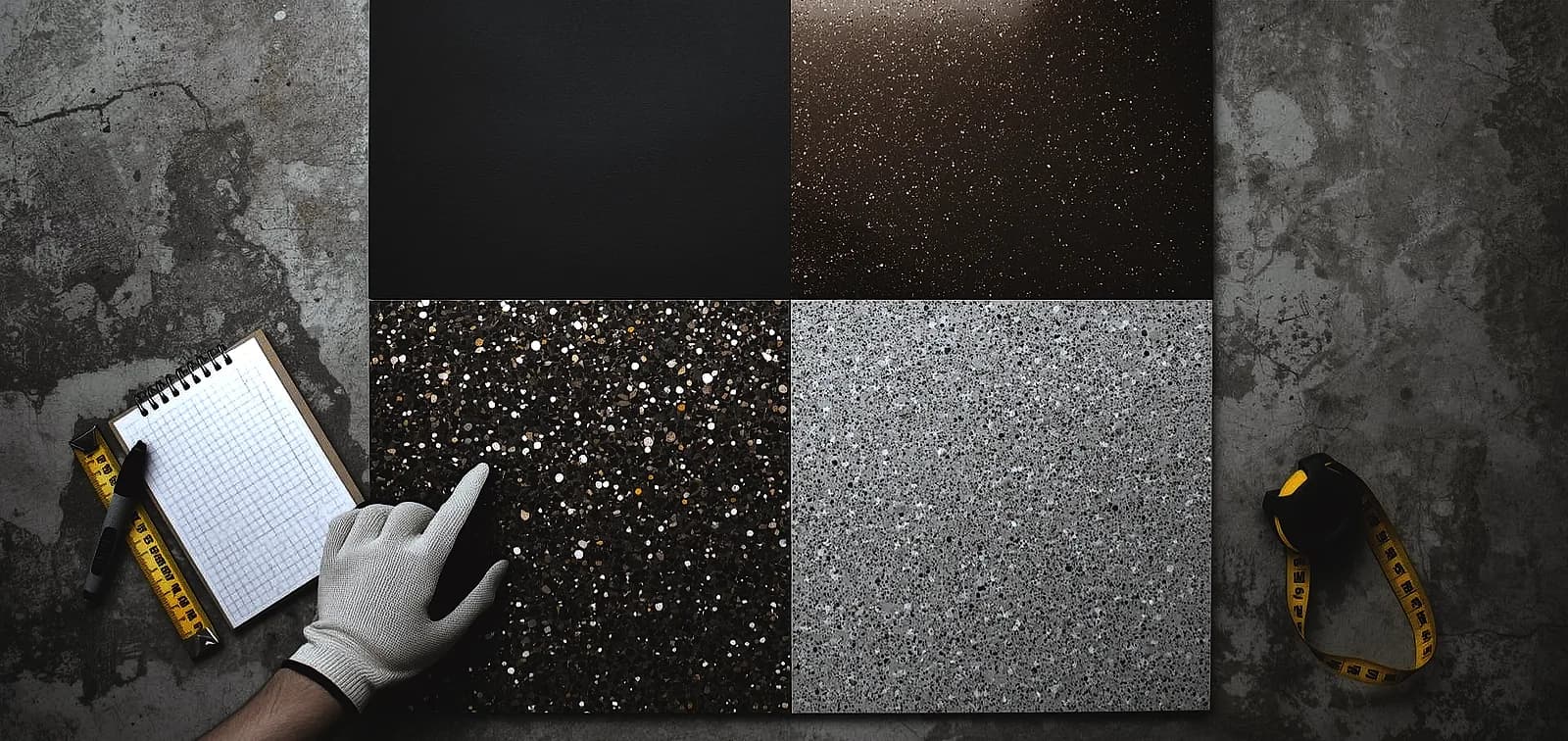
Solid color epoxy provides a clean, uniform appearance at the most affordable price point.
Garage epoxy flooring transforms bare concrete into a durable, chemical-resistant surface that withstands Fort Lauderdale’s demanding climate conditions. Professional-grade epoxy systems last 15-20 years when properly installed, compared to just 2-3 years for DIY kits from big-box stores. According to the International Concrete Repair Institute (ICRI), 100% solids epoxy coatings achieve bond strengths exceeding 350 PSI when applied to properly prepared concrete, making them ideal for high-traffic residential garages.
Fort Lauderdale homeowners face unique challenges including 76% average humidity, salt air corrosion, and garage floor temperatures that can exceed 100°F during summer months. This guide covers the best epoxy flooring options engineered to handle Broward County’s coastal environment, along with realistic costs, installation timelines, and performance expectations.
Types of Garage Epoxy Flooring Systems
Five primary epoxy flooring systems dominate the Fort Lauderdale market, each offering distinct advantages for different homeowner needs and budgets.
Solid Color Epoxy
Solid color epoxy provides a clean, uniform appearance at the most affordable price point. These systems use pigmented 100% solids epoxy applied at 8-12 mils thickness, creating a seamless, easy-to-clean surface. Popular colors for Fort Lauderdale garages include light gray (reflects heat and improves visibility), tan (hides tire marks), and white (maximizes light reflection).
The Concrete Polishing Association of America (CPAA) notes that solid color systems show scratches and imperfections more readily than textured alternatives, making them best suited for garages with light vehicle traffic and minimal heavy equipment use.
Flake/Chip Epoxy Systems
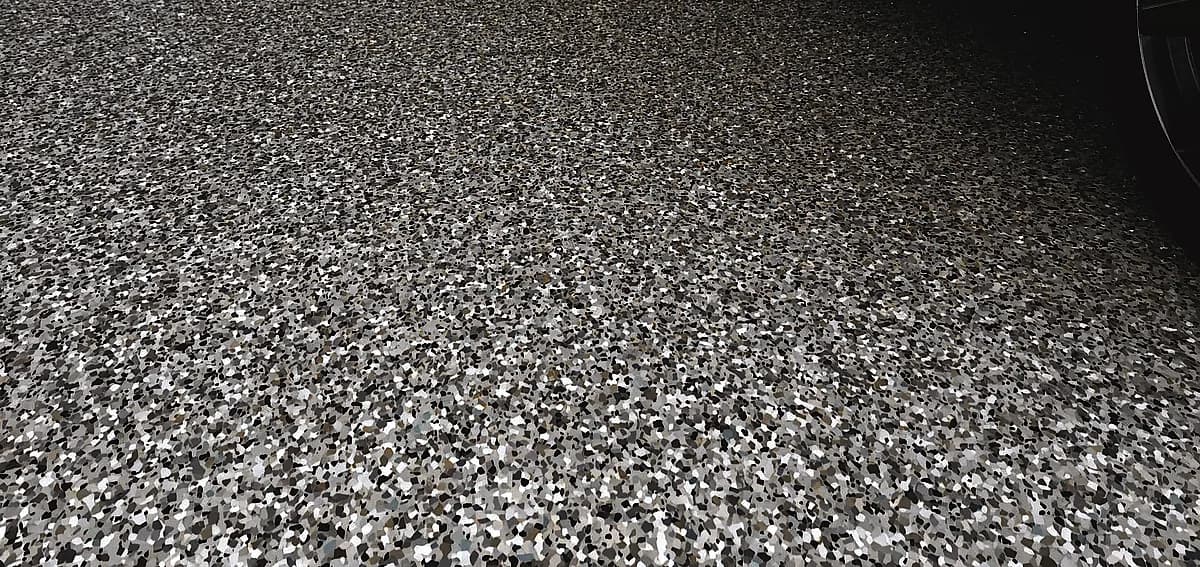
Flake epoxy systems broadcast decorative vinyl chips into wet epoxy, creating a terrazzo-like appearance that hides imperfections and provides slip resistance. The polyaspartic quartz flake variation uses quartz aggregate instead of vinyl for increased durability and chemical resistance.
Coverage density ranges from 25% (light scatter showing base color) to 100% (full broadcast hiding all base coat). Fort Lauderdale installers typically recommend 75-100% coverage for maximum durability and aesthetic appeal. View our complete garage floor epoxy color options to explore available combinations.
Metallic Epoxy
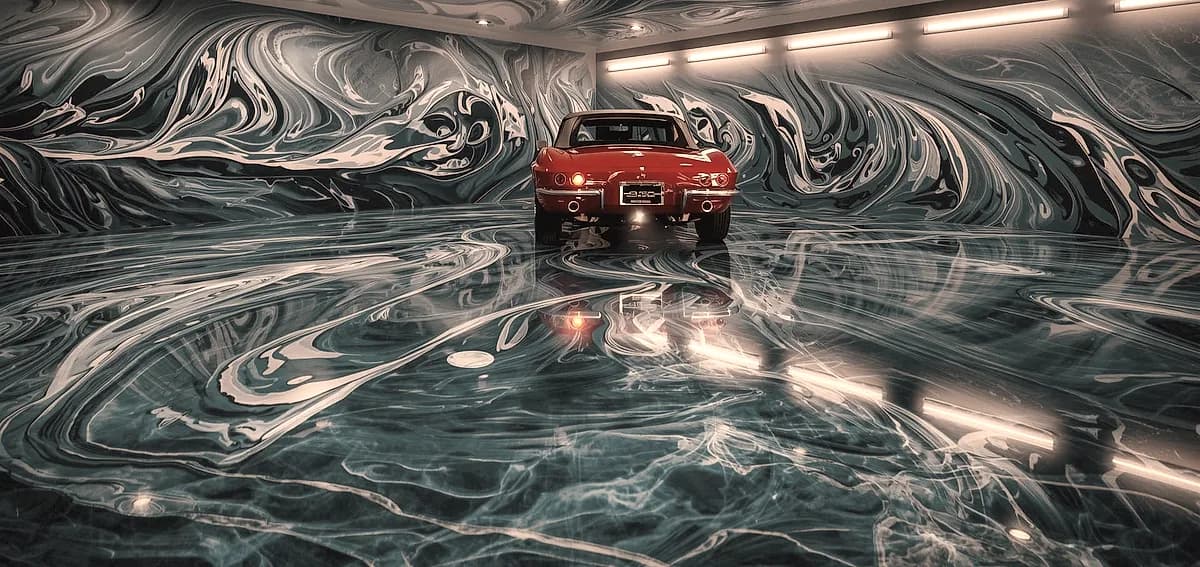
Metallic epoxy creates stunning three-dimensional effects using metallic pigments suspended in clear epoxy. The metallic epoxy application process involves manipulating the wet material with brushes, rollers, or leaf blowers to create swirling, flowing patterns unique to each installation.
According to industry data, metallic epoxy installations have increased 340% in South Florida luxury homes since 2019. Our metallic epoxy design ideas showcase popular color combinations including silver/charcoal, copper/bronze, and ocean blue/pearl for Fort Lauderdale coastal properties.
Polyaspartic Coatings
Polyaspartic coatings cure 4-6 times faster than traditional epoxy, making them ideal for Fort Lauderdale’s humid conditions where extended cure times increase contamination risk. Our comprehensive polyaspartic vs epoxy comparison details the performance differences between these systems.
The American Concrete Institute (ACI) reports that polyaspartic coatings maintain flexibility at temperatures from -40°F to 140°F, significantly outperforming standard epoxy in hot tire pickup resistance. This makes them particularly well-suited for Fort Lauderdale garages where vehicles park on sun-heated floors.
Polyurea Systems
Polyurea represents the most advanced coating technology, offering superior flexibility, UV stability, and chemical resistance. Our polyurea vs epoxy analysis explains why these premium systems command higher prices but deliver exceptional long-term value.
Polyurea coatings achieve 98% cure within 1 hour of application, allowing same-day return to service. This rapid cure makes them virtually immune to humidity-related issues that plague traditional epoxy installations in Fort Lauderdale’s climate.
Garage Epoxy Flooring Options Comparison
The following table compares the primary garage epoxy flooring systems available to Fort Lauderdale homeowners:
| System Type | Cost/Sq Ft | Cure Time | Lifespan | Hot Tire Resistance | UV Stability |
|---|---|---|---|---|---|
| Solid Color Epoxy | $4-$7 | 72 hours | 10-15 years | Moderate | Fair |
| Flake/Chip Epoxy | $6-$10 | 72 hours | 15-20 years | Good | Good |
| Metallic Epoxy | $8-$15 | 72 hours | 15-20 years | Good | Excellent |
| Polyaspartic | $7-$12 | 24 hours | 15-20 years | Excellent | Excellent |
| Polyurea | $10-$18 | 1-4 hours | 20-25 years | Superior | Superior |
Why Fort Lauderdale Garages Need Professional Epoxy Installation
Broward County’s coastal climate creates conditions that cause DIY epoxy kits to fail within 1-3 years. Professional installation addresses these challenges through proper preparation, material selection, and application techniques.
Humidity Challenges
Fort Lauderdale’s average relative humidity of 76% significantly impacts epoxy adhesion and cure chemistry. The humidity effects on epoxy floors include extended cure times, amine blush (white haze), and reduced bond strength. Professional contractors use moisture meters and hygrometers to verify conditions fall within acceptable parameters before application.
ASTM E1907 establishes dew point guidelines requiring substrate temperature to remain at least 5°F above dew point throughout application and initial cure. In Fort Lauderdale’s humid conditions, this often requires running air conditioning 24-48 hours before installation and maintaining climate control for 72 hours post-application.
Moisture Vapor Transmission
Concrete slabs in Fort Lauderdale frequently exhibit elevated moisture vapor emission rates (MVER) due to high water tables and lack of vapor barriers in older construction. Understanding how moisture barriers work is essential for preventing coating delamination.
The ICRI specifies maximum acceptable MVER of 3 lbs per 1,000 square feet over 24 hours for most epoxy systems. Professional substrate testing using ASTM F1869 calcium chloride tests identifies slabs requiring moisture mitigation before epoxy application.
Hot Tire Pickup Prevention
Vehicles driven in Fort Lauderdale summer heat develop tire temperatures exceeding 150°F. When parked on insufficiently cured or improperly formulated epoxy, tires can lift coating from the concrete. Professional systems incorporate polyaspartic or polyurea topcoats specifically engineered to resist hot tire pickup, a critical consideration detailed in our garage floor coating durability guide.
Professional Garage Epoxy Installation Process
A proper garage epoxy installation in Fort Lauderdale follows a systematic process designed to ensure long-term performance:
Step 1: Pre-Installation Assessment
Contractors begin with comprehensive evaluation including moisture testing (ASTM F1869 and F2170), concrete hardness assessment, existing coating identification, and crack/damage documentation. This assessment determines whether the slab requires moisture mitigation, crack repair, or other preparatory work.
Step 2: Surface Preparation
Diamond grinding creates the optimal concrete surface profile (CSP 2-4) required for epoxy adhesion. This mechanical process removes laitance, opens concrete pores, and creates microscopic texture for mechanical bond. Professional grinding methods also eliminate oil stains, previous coatings, and surface contaminants.
For severely damaged slabs, shot blasting provides more aggressive surface preparation, achieving CSP 4-7 profiles suitable for thick-build systems.
Step 3: Crack and Joint Repair
All cracks receive proper treatment based on type and cause. Static cracks are filled with epoxy paste, while active cracks require flexible polyurea fillers that accommodate ongoing movement. Proper joint treatment prevents coating failure at control joints where most DIY installations fail.
Step 4: Primer Application
Penetrating epoxy primers seal concrete pores and create chemical bonding sites for subsequent coats. In Fort Lauderdale’s humid conditions, professional contractors use moisture-tolerant primers that cure even with elevated substrate humidity. Proper primer adhesion testing verifies bond strength before proceeding.
Step 5: Base Coat and Build Coats
100% solids epoxy base coats provide the primary wear surface and color. Professional systems apply 10-20 mils total thickness, compared to 2-4 mils from DIY kits. Understanding epoxy thickness requirements helps homeowners evaluate contractor proposals and avoid undersized systems.
Step 6: Topcoat Application
UV-stable polyurethane or polyaspartic topcoats protect the color coat from yellowing and provide enhanced chemical/abrasion resistance. For Fort Lauderdale garages with natural light exposure, UV-stable topcoats are essential. Compare coating options in our epoxy vs urethane coatings guide.
DIY vs Professional Garage Epoxy: What Fort Lauderdale Homeowners Should Know
Big-box store epoxy kits typically cost $100-$300 for a two-car garage, while professional installation ranges from $1,500-$4,500. This price difference reflects substantial differences in materials, preparation, and longevity.
| Factor | DIY Kit | Professional |
|---|---|---|
| Solids Content | 40-60% | 100% |
| Applied Thickness | 2-4 mils | 15-25 mils |
| Surface Preparation | Acid etch (often inadequate) | Diamond grinding (proper CSP) |
| Expected Lifespan | 1-3 years | 15-20 years |
| Hot Tire Resistance | Poor | Excellent |
| Warranty | None or limited | 5-15 years |
Our detailed DIY vs professional installation comparison provides additional factors to consider when evaluating options. For homeowners who have already attempted DIY installation, our epoxy floor peeling fix guide explains remediation options.
Cost Factors for Garage Epoxy Flooring in Fort Lauderdale
Several factors influence the final cost of professional garage epoxy installation in Broward County:
Garage size: Two-car garages (400-500 sq ft) typically cost $2,400-$6,000 for professional systems. Three-car garages (600-800 sq ft) range from $3,600-$9,600. Per-square-foot costs decrease for larger projects.
Concrete condition: Slabs requiring extensive crack repair, leveling, or moisture mitigation add $1.50-$4.00 per square foot to base installation costs.
System selection: Solid color systems start at $4-$7/sq ft, flake systems at $6-$10/sq ft, and premium metallic epoxy at $8-$15/sq ft.
Existing coating removal: Removing failed DIY coatings or previous professional systems adds $1.00-$2.50 per square foot for grinding and disposal.
For detailed pricing information, see our complete epoxy floor cost breakdown and warranty coverage guide.
Maintenance Requirements for Garage Epoxy Floors
Properly maintained garage epoxy flooring in Fort Lauderdale provides decades of service. Follow these care guidelines:
Weekly cleaning: Dust mop or sweep to remove sand and debris that act as abrasives. Fort Lauderdale’s proximity to beaches means more frequent cleaning during high-traffic seasons.
Monthly deep cleaning: Mop with pH-neutral cleaners and warm water. Our epoxy floor cleaning guide details approved products and techniques.
Immediate spill cleanup: While epoxy resists most chemicals, prolonged exposure to brake fluid, battery acid, or certain solvents can cause damage. Clean spills promptly to prevent staining.
Annual inspection: Check for chips, scratches, or wear patterns annually. Early detection allows for spot repairs rather than full recoating. Learn about epoxy lifespan factors affecting maintenance intervals.
Frequently Asked Questions
How long does garage epoxy flooring installation take in Fort Lauderdale?
Professional installation typically takes 2-3 days for a standard two-car garage. Day one includes surface preparation and primer application. Day two applies base coat and decorative elements. Day three applies topcoat. Full cure for vehicle traffic requires an additional 5-7 days, though light foot traffic is possible within 24-48 hours depending on system type.
What is the best epoxy flooring for Fort Lauderdale humidity?
Polyaspartic and polyurea systems perform best in Fort Lauderdale’s humid climate because they cure quickly (1-24 hours) and resist moisture-related issues. Traditional epoxy systems work well when installed with proper climate control and moisture-tolerant primers. Our humidity impact analysis explains how different systems respond to Broward County conditions.
Will epoxy flooring make my garage slippery?
Smooth epoxy can become slippery when wet. Professional installers address this by broadcasting anti-slip aggregate (aluminum oxide or polymer grit) into the topcoat or specifying textured flake systems. Full-broadcast flake floors provide excellent traction even when wet. See our garage floor finishes guide for slip-resistance options.
Can epoxy be applied over existing painted or coated garage floors?
Yes, but only after proper assessment and preparation. Failed coatings must be completely removed. Well-adhered coatings can sometimes be overcoated after abrasion and adhesion testing. Learn about coating compatibility in our floor coating comparison or epoxy vs interlocking tiles analysis.
How long does garage epoxy flooring last in Florida?
Professional-grade garage epoxy flooring lasts 15-20 years in Fort Lauderdale when properly installed and maintained. Premium polyurea systems can exceed 25 years. DIY kits typically fail within 1-3 years due to inadequate thickness, poor surface preparation, and formulations unsuited for Florida conditions. Our epoxy longevity guide details factors affecting lifespan.
What happens if my garage epoxy starts peeling?
Peeling indicates adhesion failure, typically from moisture issues, inadequate surface preparation, or material incompatibility. Repair requires identifying the root cause, removing failed coating, addressing underlying issues, and recoating with appropriate materials. Our epoxy failure solutions guide covers common causes and remediation approaches.
Get Professional Garage Epoxy Flooring in Fort Lauderdale
National Concrete Polishing provides expert garage coating services throughout Broward County. Our certified installers use commercial-grade materials and proper preparation techniques specifically designed for Fort Lauderdale’s challenging climate.
Every garage epoxy installation includes comprehensive moisture testing, diamond grinding surface preparation, and UV-stable topcoats backed by industry-leading warranties. We work around your schedule to minimize disruption and deliver results that last.
Contact our Fort Lauderdale team for a free consultation and detailed estimate. We also serve Miami, Pompano Beach, Fort Myers, and all of South Florida.
Written by

Founder and CEO
Chris Lavin is an esteemed leader in concrete polishing and epoxy coatings with a distinguished 20-year career. As founder and CEO of National Concrete Polishing and owner of Xtreme Polishing Systems, he's renowned for polishing and epoxy coating more floors than anyone globally. Chris is recognized for his innovative approach and commitment to enhancing floor durability and aesthetics. His hands-on experience and technical proficiency make him a respected authority and a valuable resource in the field of floor polishing and coatings.
Same topic
Related articles
All stories
Residential8 min read
What Restaurants Need to Pass a Health Inspection Floor Check
It endures heavy foot traffic, dropped equipment, boiling water spills, and harsh degreasing chemicals daily.
Read it
Residential9 min read
How Restaurants Replace Their Floors Without Closing for Long
The average food service establishment loses approximately $3,500 in daily revenue during unexpected closures in 2026.
Read it
Residential8 min read
Where Polished Concrete Beats Epoxy in a Home (and Where It Doesn’t)
Before evaluating specific rooms, it is essential to understand how these two flooring systems function.
Read it
Tell us about the floor
Tell us the space and roughly how big it is.We come back with what it would cost and when we could start.
Prefer to talk? Call +1 844-876-5474
- Leads@
nationalconcretepolishing.net - 2200 NW 32nd St #600,
Pompano Beach, FL 33069 Mon to Fri, 9:00 to 5:30