
The NCP blog
Epoxy vs Paint vs Stain: Complete Garage Floor Coating Comparison
Residential10 min read
Paint, stain and epoxy compared on life span, cost and upkeep, so the garage floor decision gets made once.
Choosing the right garage floor coating comparison Miami homeowners need starts with understanding three popular options: epoxy, paint, and concrete stain. Epoxy coatings dominate Miami garages due to superior durability lasting 10-20 years, while paint typically lasts only 1-2 years in Florida’s harsh climate. Concrete stain offers aesthetic enhancement but minimal protection compared to these alternatives. National Concrete Polishing helps South Florida property owners select the ideal garage floor coating based on budget, usage patterns, and long-term performance expectations for their Pompano Beach, Fort Lauderdale, and Miami properties.
Overview
This comprehensive comparison analyzes three garage floor coating options available to Miami-area homeowners. You’ll discover how epoxy, paint, and concrete stain differ in durability, cost, application complexity, chemical resistance, and maintenance requirements. We’ll examine which coating handles Florida’s humidity, hot tires, and automotive fluids best while providing actionable guidance for selecting the right solution for your specific garage needs.
What is Epoxy Garage Floor Coating?
Epoxy garage floor coating forms a thick, chemically-bonded layer that penetrates concrete pores and creates a rigid protective shell. This two-part system combines resins and hardeners that trigger a chemical reaction, transforming from liquid into an incredibly durable solid surface. The resulting multi-layered application creates a monolithic block that cannot be separated from the concrete’s top layer.
Professional epoxy installations typically include a primer coat, base layer with optional decorative flakes, and clear topcoat for maximum protection. This comprehensive system handles car weight, hot tires, rolling tool boxes, floor jacks, and dropped equipment without damage. The high-gloss finish resists stains from oil, transmission fluid, antifreeze, and cleaning chemicals that would permanently mark other coatings.
What is Garage Floor Paint?
Garage floor paint provides a thin, single-product coating that sits on top of concrete and dries through air exposure rather than chemical curing. These water-based, latex, or acrylic formulations offer quick color freshness and simple application—just open the can and roll. Paint works best for light foot traffic and storage areas where vehicles rarely park or maneuver.
The thin layer provides minimal protection compared to epoxy, with a matte or semi-gloss finish rather than the glossy appearance epoxy delivers. Paint bonds only to the concrete surface with shallow contact, making it vulnerable to peeling when subjected to hot tires, sharp turns, or heavy equipment. DIY garage floor paint costs $30-50 per gallon at hardware stores but requires reapplication every 1-2 years.
What is Concrete Stain?
Concrete stain is a penetrating colorant that chemically reacts with concrete or absorbs into pores to change the floor’s appearance without creating a protective film layer. Acid-based stains create variegated, translucent tones through chemical reactions with the concrete’s minerals. Water-based stains offer more consistent colors and easier application but less durability than acid stains.
Stained concrete requires sealing with separate products to provide any moisture, stain, or abrasion resistance. Even with sealers applied, stained floors lack the chemical resistance and impact protection that epoxy provides. Staining works best for decorative applications in low-traffic areas rather than active garages with automotive use.
Durability Comparison
Epoxy creates the most durable garage floor surface available to Miami homeowners, lasting 15-20 years with proper care. The chemical bonding process forms strong molecular chains that grip concrete and withstand heavy traffic, abrasions, and impacts. Professional installations handle decades of parking, turning vehicles, dropped tools, and equipment movement without visible wear.
Paint breaks down within 1-2 years under normal garage conditions, especially in Florida’s humid climate. The thin surface coat loses adhesion when exposed to hot tires, sharp turns, and heavy weight. Scratches form easily, and the soft chemical structure cannot handle the stress active garages create. Stained concrete with sealer falls between these extremes, typically lasting 2-5 years before needing resealing, though high-traffic areas show wear much sooner.
Chemical Resistance Performance
Epoxy floors resist chemicals including all vehicle fluids, road salt, deicer residues, and harsh cleaning products. The non-porous surface prevents oil, transmission fluid, antifreeze, and gasoline from staining or penetrating the coating. Spills wipe clean without leaving permanent marks or requiring special treatment.
Paint stains easily from oil, grease, and automotive chemicals that soak into the porous coating. Even light spills can create permanent discoloration that makes floors look worn and dirty. Road salt tracked in during winter travels accelerates paint deterioration through chemical breakdown. Stained concrete, even when sealed, absorbs automotive fluids that create dark spots requiring intensive cleaning or refinishing.
Hot Tire Pickup Issues
Hot tire pickup represents paint’s most significant failure mode in active garages. When vehicles park after driving, heated tires press against soft paint and temporarily reliquefy the coating. As tires cool, the paint dries and bonds to the rubber, pulling away from the concrete when the vehicle moves. This creates permanent bare spots that expand with each parking cycle.
Epoxy’s chemical structure resists hot tire pickup because the cured coating maintains rigidity even under heated tire pressure. The thick, heat-resistant layers don’t soften or bond to rubber, allowing tires to sit without damage. This makes epoxy essential for garages where vehicles park immediately after driving or during Florida’s intense summer heat.
Application Process Differences
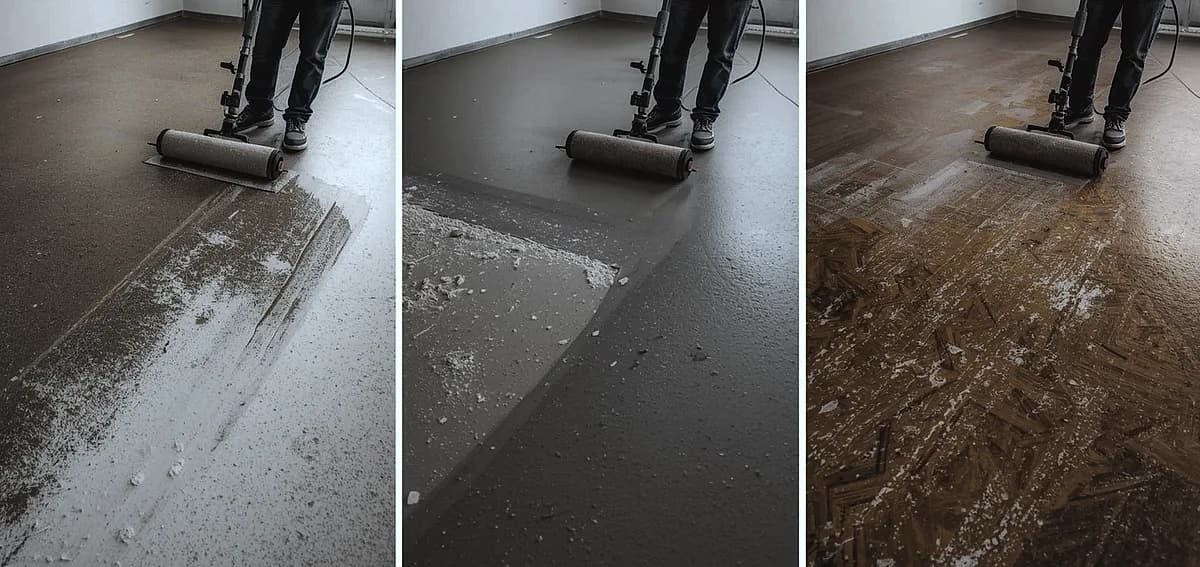
Epoxy installation requires meticulous surface preparation including diamond grinding, crack repair, and moisture testing before coating application. Professional installers apply multiple layers—primer, base coat with optional decorative elements, and protective topcoat—over 2-3 days. The installation timeline includes careful curing periods with restricted access for 72 hours minimum.
Paint application is simpler, requiring only basic cleaning before rolling on a single thin coat. Most homeowners complete paint projects in a few hours with immediate cleanup. However, this simplicity comes with the tradeoff of significantly shorter lifespan and weaker performance. Concrete staining requires thorough cleaning and sometimes acid etching before stain application, followed by neutralization and sealer application once the stain dries.
Cost Analysis
Professional epoxy installations in Miami cost $5-15 per square foot depending on coating quality, decorative options, and surface condition. A standard two-car garage (400 square feet) runs $2,000-6,000 for complete professional installation. While initial investment is substantial, the 15-20 year lifespan provides excellent long-term value.
Garage floor paint costs $30-50 per gallon at hardware stores, with enough coverage for 200-300 square feet per gallon. A two-car garage requires 2-3 gallons ($60-150 total), making it affordable upfront. However, the 1-2 year lifespan means repainting 8-10 times during the period one epoxy application lasts, ultimately costing more in materials, labor, and inconvenience. Concrete staining costs $2-4 per square foot professionally, but requires sealer reapplication every 1-3 years adding ongoing maintenance expenses.
Maintenance Requirements
Epoxy floor maintenance involves simple sweeping and occasional mopping with mild detergent. The non-porous surface doesn’t trap dirt or require waxing, sealing, or special treatments. Spills wipe away without staining, and the glossy finish maintains its appearance for years with minimal effort.
Paint requires frequent touch-ups as chips, scratches, and wear patterns develop within months of application. The porous surface traps dirt and stains that resist cleaning. Most painted garage floors need complete recoating every 1-2 years to maintain acceptable appearance and minimal protection. Stained and sealed concrete requires regular resealing, careful cleaning to avoid damaging the sealer, and eventual restaining as color fades.
Aesthetic Options
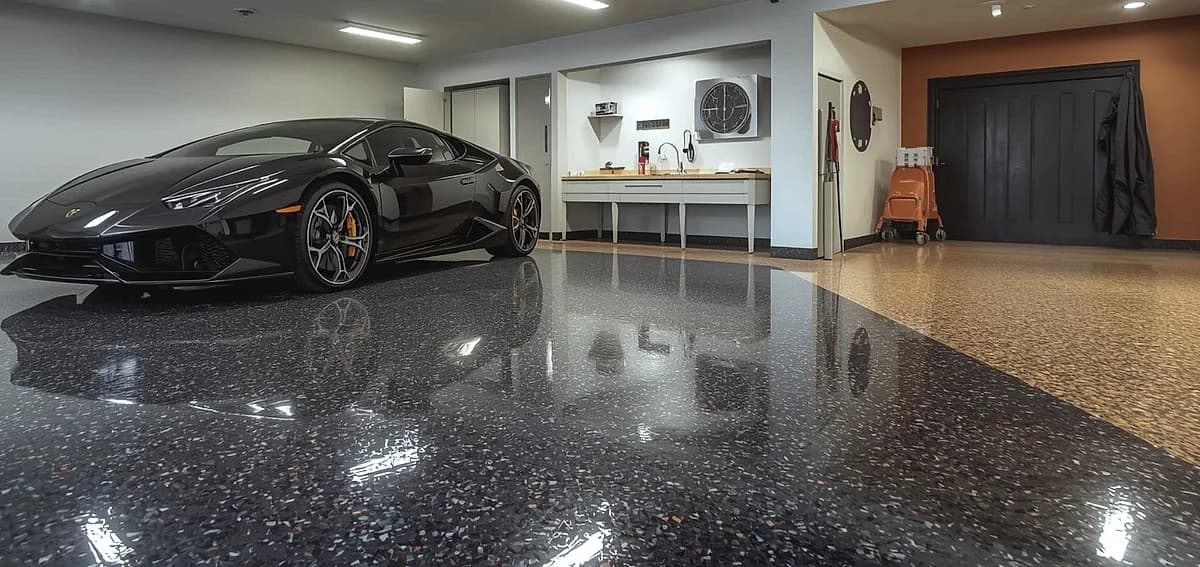
Epoxy coating systems offer extensive customization including solid colors, decorative flakes, metallic finishes, and glitter effects. Over 140 color combinations allow homeowners to match any décor or style preference. The high-gloss finish creates a showroom-quality appearance that makes garages look clean, professional, and well-maintained.
Paint provides basic color options in matte or semi-gloss finishes without decorative enhancements. The thin coating cannot support flakes or special effects that epoxy systems accommodate. Concrete stains excel at creating unique, variegated appearances with earth tones and translucent color variations that highlight the concrete’s natural character, though color options are more limited than epoxy.
Installation Timeline
Epoxy installations typically span 3-5 days including surface preparation, multiple coating layers, and proper curing time. Some professional teams complete residential garages in one day using fast-cure polyaspartic systems, though standard epoxy requires waiting 24 hours for foot traffic and 72 hours before parking vehicles. Full chemical resistance develops over 7 days.
Paint projects finish in a single day with surfaces ready for light foot traffic within hours. However, this speed advantage disappears when considering the frequent reapplication schedule paint demands. Concrete staining usually takes 2-3 days including preparation, stain application, neutralization, and sealer application.
Performance in Florida Climate
Miami’s humidity and heat significantly impact garage floor coating performance. Epoxy systems designed for Florida conditions include moisture-mitigating primers and UV-resistant topcoats that prevent yellowing and degradation. The chemical-resistant surface handles road salt, humidity, and temperature fluctuations without failure.
Paint struggles in South Florida’s climate, with humidity causing poor adhesion and heat accelerating breakdown. The thin coating cannot handle moisture vapor transmission from concrete slabs, leading to bubbling and peeling. Paint’s short 1-2 year lifespan in Miami makes it impractical for permanent garage solutions. Sealed stained concrete can experience sealer failure from moisture vapor, requiring frequent maintenance.
Which Coating is Right for Your Garage?
For active Miami garages where vehicles park daily, tools are used frequently, and chemical spills occur, epoxy flooring provides the only practical long-term solution. The superior durability, chemical resistance, and minimal maintenance justify the higher initial investment. Commercial-grade epoxy systems excel in high-traffic environments requiring maximum protection.
Paint works for light-duty storage areas, workshops with minimal vehicle traffic, or temporary solutions where budget constraints prevent epoxy installation. Accept that paint requires annual recoating and provides minimal protection against common garage hazards. Concrete stain suits decorative applications in attached garages that function more as extended living spaces than active automotive work areas, though protection remains limited even with quality sealers.
Frequently Asked Questions
How long does epoxy last compared to paint in Miami garages?
Epoxy lasts 15-20 years in Miami’s climate, while garage floor paint typically lasts only 1-2 years before requiring reapplication.
Why does paint peel from garage floors but epoxy doesn’t?
Paint sits on the concrete surface with shallow bonding, while epoxy chemically penetrates and bonds into concrete pores creating inseparable adhesion.
Can I apply epoxy over existing garage floor paint?
No, paint must be completely removed before epoxy application to ensure proper bonding and prevent delamination issues.
What causes hot tire pickup with garage floor paint?
Hot tires reliquefy soft paint, which then dries and bonds to the rubber, pulling away from concrete when vehicles move.
Is concrete stain more durable than paint?
Stained concrete with proper sealer lasts 2-5 years, longer than paint but significantly shorter than epoxy systems.
Which coating resists automotive chemicals best?
Epoxy provides superior chemical resistance against oil, transmission fluid, antifreeze, and cleaning products compared to paint or stained concrete.
Can I install epoxy myself or do I need professionals?
DIY epoxy kits exist, but professional installation ensures proper surface preparation, mixing ratios, and application technique for maximum durability.
How much does professional epoxy cost compared to paint?
Professional epoxy costs $5-15 per square foot versus $0.15-0.50 per square foot for paint, but epoxy lasts 10x longer.
Does garage floor coating add home value?
Does epoxy garage floor add value to your home? Quality epoxy flooring increases home value by enhancing garage appearance and functionality, while paint provides minimal value addition.
Which coating works best for hot Florida climates?
Which garage floor coating lasts longest in Florida’s heat? Epoxy handles Florida’s heat and humidity better than paint or stain, with specialized UV-resistant formulations preventing yellowing and degradation.
Conclusion
The garage floor coating comparison Miami homeowners face ultimately comes down to balancing upfront cost against long-term performance and value. While paint offers immediate affordability and simple application, its 1-2 year lifespan and vulnerability to hot tires, chemicals, and Florida’s climate make it suitable only for temporary solutions or light-duty spaces. Concrete stain provides aesthetic enhancement but minimal protection even with regular sealing. Epoxy flooring delivers unmatched durability lasting 15-20 years, superior chemical resistance, and minimal maintenance that justifies the higher initial investment.
National Concrete Polishing specializes in professional epoxy installations designed specifically for South Florida’s demanding conditions, ensuring your Pompano Beach, Fort Lauderdale, or Miami garage receives a coating that performs flawlessly for decades. Contact us today for a free estimate and discover why epoxy remains the smart choice for serious garage floor protection.
For those considering alternatives, epoxy vs interlocking tiles is another common comparison for the Miami climate. If you already have a system in place, following a complete epoxy garage floor maintenance schedule will ensure its longevity. For high-end properties, high-end epoxy systems offer the ultimate aesthetic and functional upgrade.
Written by

Founder and CEO
Chris Lavin is an esteemed leader in concrete polishing and epoxy coatings with a distinguished 20-year career. As founder and CEO of National Concrete Polishing and owner of Xtreme Polishing Systems, he's renowned for polishing and epoxy coating more floors than anyone globally. Chris is recognized for his innovative approach and commitment to enhancing floor durability and aesthetics. His hands-on experience and technical proficiency make him a respected authority and a valuable resource in the field of floor polishing and coatings.
Same topic
Related articles
All stories
Residential8 min read
What Restaurants Need to Pass a Health Inspection Floor Check
It endures heavy foot traffic, dropped equipment, boiling water spills, and harsh degreasing chemicals daily.
Read it
Residential9 min read
How Restaurants Replace Their Floors Without Closing for Long
The average food service establishment loses approximately $3,500 in daily revenue during unexpected closures in 2026.
Read it
Residential8 min read
Where Polished Concrete Beats Epoxy in a Home (and Where It Doesn’t)
Before evaluating specific rooms, it is essential to understand how these two flooring systems function.
Read it
Tell us about the floor
Tell us the space and roughly how big it is.We come back with what it would cost and when we could start.
Prefer to talk? Call +1 844-876-5474
- Leads@
nationalconcretepolishing.net - 2200 NW 32nd St #600,
Pompano Beach, FL 33069 Mon to Fri, 9:00 to 5:30