
The NCP blog
Should You Epoxy Your Garage Floor? Pros, Cons, and What to Expect
Residential6 min read
Transforming your garage into a functional and aesthetically pleasing space is a growing trend among homeowners.
Transforming your garage into a functional and aesthetically pleasing space is a growing trend among homeowners. One of the most effective ways to achieve this is by upgrading your garage floor with epoxy flooring.
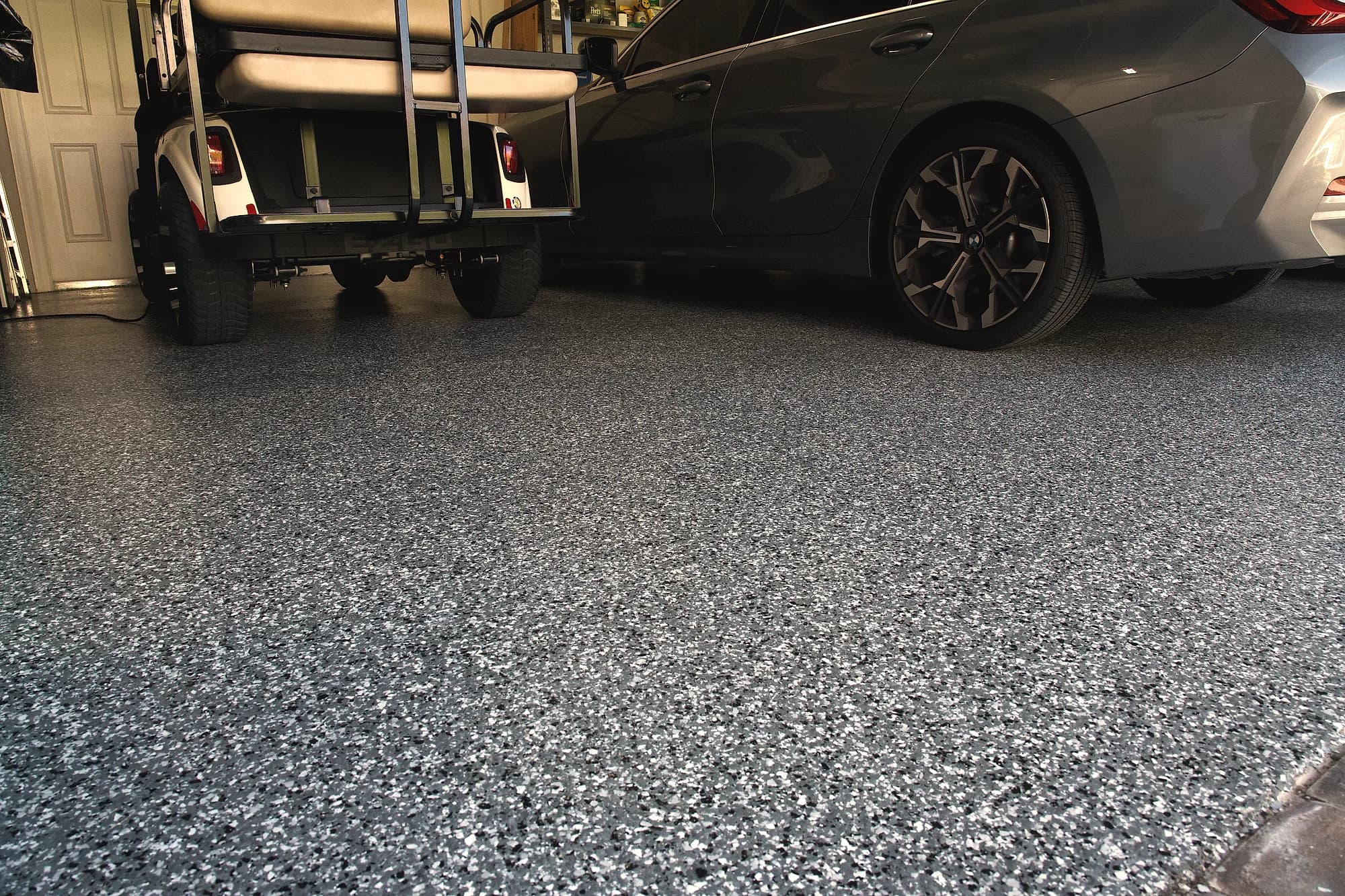
Epoxy flooring is a durable, resin-based coating that can be applied to concrete surfaces, turning them into polished and long-lasting floors. With its increasing popularity, many homeowners are considering epoxy for their garage floors due to its durability and attractive finish.
Understanding Epoxy Garage Floor Coatings
If you’re considering upgrading your garage floor, understanding the basics of epoxy coatings is crucial. Epoxy is a durable, resin-based coating that can be applied to concrete surfaces, transforming your garage floor into a polished and long-lasting surface.
What Is Epoxy Flooring?
Epoxy flooring consists of a two-part system combining epoxy resin and a polyamine hardener. When applied to concrete, these components chemically bond to create a rigid, plastic-like surface. This process results in a much stronger and more durable surface than simple paint, capable of withstanding heavy traffic and resisting damage.
How Epoxy Garage Floors Work
The application process involves thorough preparation of the concrete surface, including cleaning, degreasing, and often mechanical grinding. Epoxy garage floors typically consist of multiple layers: a primer coat, one or more build coats, and sometimes a clear topcoat. This multi-layer system creates a seamless, non-porous surface that prevents moisture penetration and protects the underlying concrete.
The Benefits of Epoxy Garage Floors
Epoxy garage floors offer numerous benefits that can transform your garage into a durable, safe, and visually appealing space. By understanding these advantages, you can make an informed decision about whether epoxy flooring is the right choice for your garage.
Exceptional Durability and Longevity
Epoxy floors are highly resistant to wear, tear, and impact from vehicles and heavy equipment, providing a long-lasting lifespan of 10-20 years or more with proper maintenance. This durability makes epoxy flooring a cost-effective option for garage floors.
Easy Maintenance and Cleaning
The seamless, non-porous surface of epoxy flooring makes cleaning remarkably easy. Most spills can be wiped away with minimal effort, and regular maintenance typically requires only sweeping and occasional mopping.
Aesthetic Appeal and Customization Options
Epoxy floors offer a wide range of color and design options, allowing you to customize the look of your garage and create a professional, polished appearance. You can choose from solid colors, metallic finishes, decorative flakes, and custom patterns.
Improved Safety and Visibility
Properly installed epoxy floors with anti-slip additives provide better traction than bare concrete, reducing the risk of slips and falls. The reflective properties of epoxy flooring also enhance visibility and lighting reflection for better illumination of the garage space.
Should I Epoxy My Garage Floor? Potential Drawbacks
Before deciding to epoxy your garage floor, it’s crucial to consider the potential drawbacks. While epoxy flooring offers numerous benefits, there are several significant disadvantages to be aware of.
Complex Installation Process
The installation process for epoxy flooring is technically demanding and requires meticulous surface preparation. Any shortcuts or errors during this phase can lead to premature failure of the coating through delamination or peeling, compromising the floor’s integrity.
Extended Curing Time
One significant inconvenience of epoxy application is the extended curing time, which can take up to 5-7 days before you can park vehicles on the surface. This means you’ll need temporary storage for both your vehicles and garage contents during this period.
Temperature and Moisture Sensitivity
Epoxy is highly sensitive to temperature and moisture conditions during application. If installed in high humidity or extreme temperatures, the coating may not cure properly, leading to adhesion problems and a compromised finish.
UV Exposure and Fading Issues
Unlike some alternative coatings, standard epoxy is not UV-stable and can yellow or fade with prolonged exposure to sunlight. This is a particular concern for garages with windows or those where the door remains open for extended periods.
Hot Tire Pickup and Adhesion Problems
“Hot tire pickup” is a common issue where the heat from recently driven vehicle tires can cause the epoxy to soften and stick to the tires, pulling the coating away from the concrete and creating permanent damage to the floor’s appearance and integrity.
What to Expect During and After Installation
Installing an epoxy garage floor is a significant undertaking that involves preparation, application, and curing. Understanding the process and timeline helps you plan accordingly.
The Installation Timeline
The complete installation process typically takes 3-4 days from start to finish. This includes thorough concrete preparation, primer application, base coat application, optional decorative elements, and a clear topcoat. You’ll need to empty your garage during this time.
Maintenance Requirements and Lifespan
To maximize the lifespan of your epoxy garage floor, regular maintenance is essential. This includes sweeping, cleaning with pH-neutral cleaners, and avoiding harsh chemicals. With proper care, an epoxy garage floor can last between 10 to 20 years.
| Maintenance Task | Frequency | Benefits |
|---|---|---|
| Sweeping | Regularly | Removes abrasive debris |
| Cleaning | As needed | Maintains appearance |
| Recoating | Every 10-15 years | Extends lifespan |
By understanding the installation timeline and maintenance requirements, you can ensure your epoxy garage floor remains in excellent condition for years to come.
Alternative Flooring Options to Consider
Beyond epoxy, there are modern and traditional alternatives for garage flooring that may better suit your needs. When evaluating your coating options, it’s essential to consider factors like durability, maintenance, and aesthetic appeal.
Polyurea Coatings: A Modern Alternative
Polyurea coatings have emerged as a superior alternative to traditional epoxy coatings. With a 15-year warranty covering chipping, peeling, and delamination, polyurea offers significantly faster curing times, better UV stability, and superior flexibility. Key benefits include:
- 4x stronger than epoxy
- 1-day installation
- Diverse colors and finishes available
Other Garage Flooring Solutions
If you prefer not to use epoxy or polyurea, other options are available. Interlocking tile systems offer a DIY-friendly alternative that requires no curing time and can be installed over imperfect concrete. Additionally, concrete staining and sealing provide a more economical choice that enhances the natural appearance of concrete. Rubber flooring and roll-out mats represent simple, temporary solutions.
Conclusion
Epoxy garage flooring offers durability and aesthetic appeal, but consider its complex installation and sensitivity to temperature and UV exposure. Assess your garage’s conditions and needs. Investing in quality materials and professional installation ensures a long-lasting floor coating that meets your expectations.
Frequently Asked Questions
What is the ideal temperature for applying epoxy coating to a concrete garage floor?
The ideal temperature for applying epoxy coating is between 50°F to 90°F (10°C to 32°C). Applying epoxy outside this range can affect its adhesion and curing process.
How long does it take for epoxy to cure on a garage floor?
Epoxy typically takes 24 hours to cure, but it can take up to 72 hours or more depending on the specific product and environmental conditions.
Can I install epoxy flooring over existing coatings or paint?
It’s generally not recommended to install epoxy flooring over existing coatings or paint, as it can lead to adhesion issues and delamination. Proper surface preparation is essential.
What are the most common causes of epoxy delamination on garage floors?
Common causes of epoxy delamination include poor surface preparation, moisture issues, and exposure to extreme temperatures or chemicals.
How do I maintain my epoxy-coated garage floor?
Regular cleaning with mild detergents and water is recommended. Avoid using harsh chemicals or abrasive cleaners, which can damage the epoxy coating.
Can epoxy flooring be used on driveways or other outdoor surfaces?
While epoxy can be used on outdoor surfaces, it’s not always the best choice due to its sensitivity to UV exposure and temperature fluctuations. Alternative coatings like polyurea may be more suitable.
What is the average lifespan of an epoxy-coated garage floor?
The average lifespan of an epoxy-coated garage floor is 5-10 years, depending on the quality of the coating, maintenance, and environmental conditions.
Can I apply epoxy coating to a garage floor with cracks or uneven surfaces?
It’s possible to apply epoxy coating to a garage floor with cracks or uneven surfaces, but it’s essential to properly prepare the surface by filling cracks and leveling the floor before applying the coating.
Written by

Founder and CEO
Chris Lavin is an esteemed leader in concrete polishing and epoxy coatings with a distinguished 20-year career. As founder and CEO of National Concrete Polishing and owner of Xtreme Polishing Systems, he's renowned for polishing and epoxy coating more floors than anyone globally. Chris is recognized for his innovative approach and commitment to enhancing floor durability and aesthetics. His hands-on experience and technical proficiency make him a respected authority and a valuable resource in the field of floor polishing and coatings.
Same topic
Related articles
All stories
Residential8 min read
What Restaurants Need to Pass a Health Inspection Floor Check
It endures heavy foot traffic, dropped equipment, boiling water spills, and harsh degreasing chemicals daily.
Read it
Residential9 min read
How Restaurants Replace Their Floors Without Closing for Long
The average food service establishment loses approximately $3,500 in daily revenue during unexpected closures in 2026.
Read it
Residential8 min read
Where Polished Concrete Beats Epoxy in a Home (and Where It Doesn’t)
Before evaluating specific rooms, it is essential to understand how these two flooring systems function.
Read it
Tell us about the floor
Tell us the space and roughly how big it is.We come back with what it would cost and when we could start.
Prefer to talk? Call +1 844-876-5474
- Leads@
nationalconcretepolishing.net - 2200 NW 32nd St #600,
Pompano Beach, FL 33069 Mon to Fri, 9:00 to 5:30