
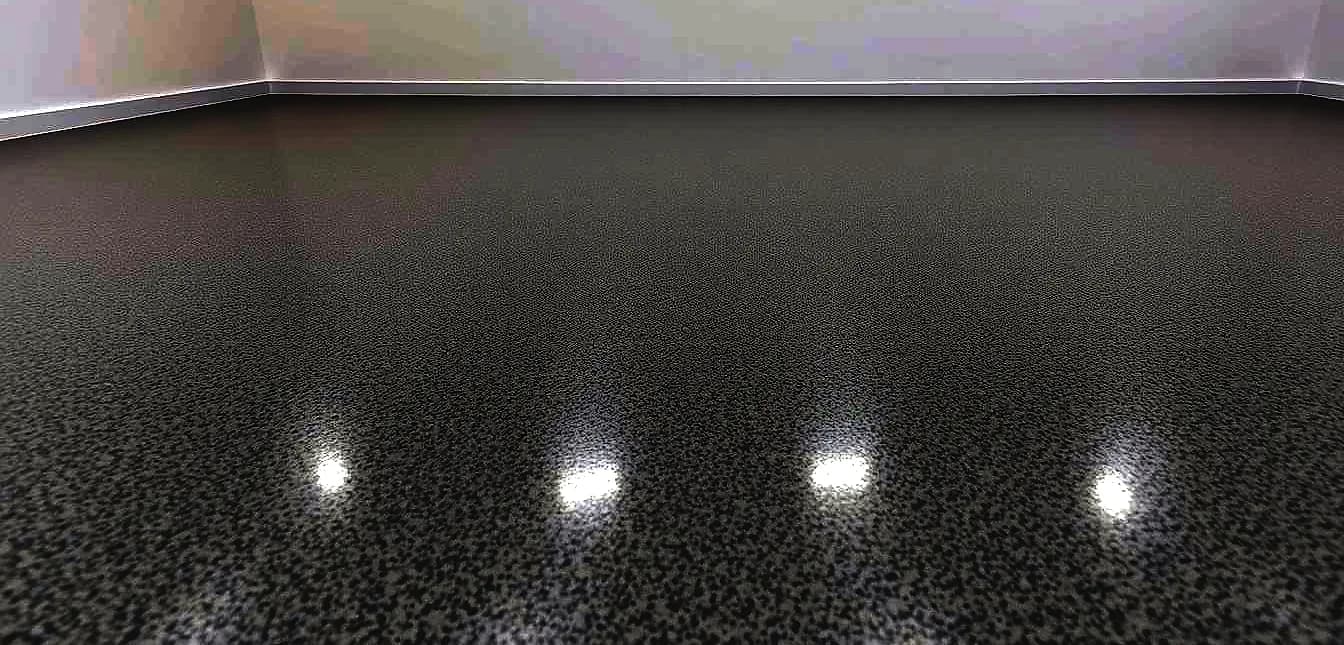
The NCP blog
What is the difference between epoxy flooring types
Epoxy & coatingsUpdated 10 min read
Did you know that over 70% of industrial facilities use resin-based floor systems to prevent cracks and chemical damage?
Resin-based floor systems are used in factories and also in garages and retail spaces. But with so many options available, how do you pick the right one?
Synthetic resin systems bond tightly to concrete, creating durable layers that resist stains, impacts, and heavy traffic. They also add a polished look, blending practicality with style. Whether you need a slip-resistant surface for a workshop or a glossy finish for a showroom, choosing the correct category matters.
National Concrete Polishing installs resin floor systems in homes and in commercial buildings, and the right one depends on how the space is used. Let’s break down what sets each option apart.
Epoxy Flooring
From sleek showrooms to bustling warehouses, modern surfaces are revolutionizing how we protect and enhance concrete bases. These systems combine resin layers with hardeners to create surfaces that withstand daily wear while adding visual appeal. Let’s explore what makes them a go-to choice for both homes and businesses.
Overview and Key Concepts
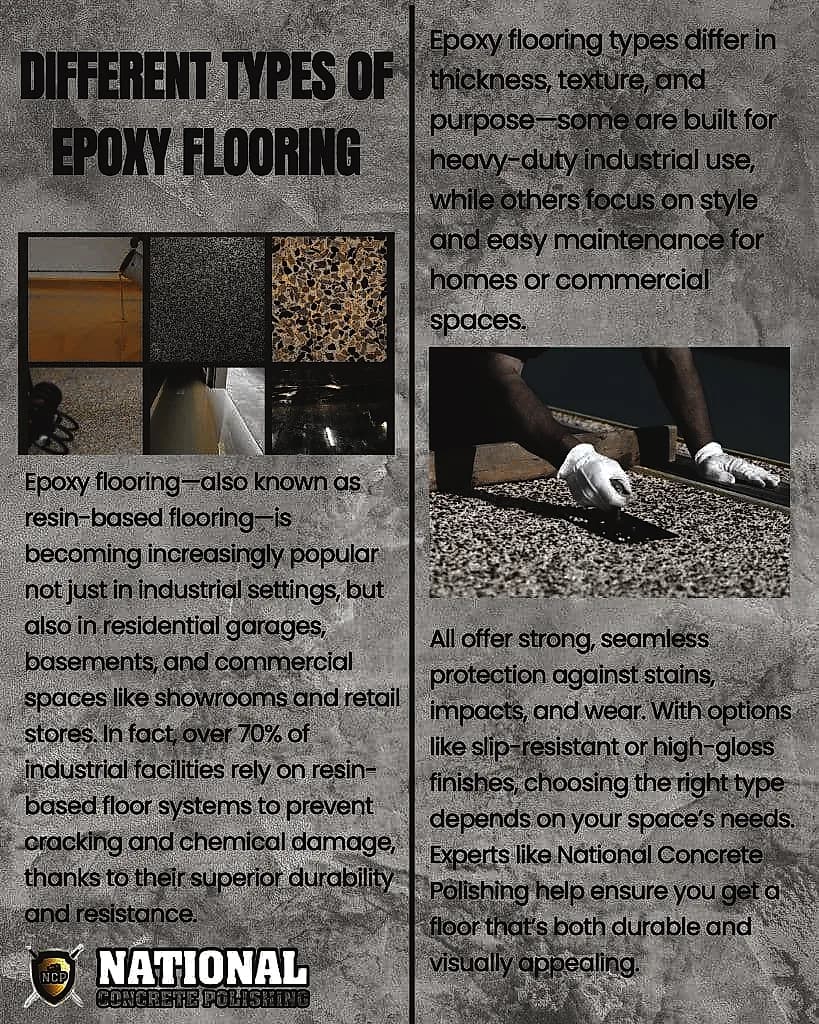
Resin-based systems involve a two-part mixture applied directly to prepared concrete. When cured, they form a seamless shield resistant to spills, scratches, and heavy loads. A cured coating sheds spills, but moisture rising through the slab can still push it off. ASTM F2170, the standard for measuring relative humidity in concrete slabs, says excessive moisture in a slab can cause debonding and deterioration of coatings, which is why the slab is tested first.
National Concrete Polishing’s projects range from residential garage floors to commercial spaces, including healthcare and medical buildings.
Why It Stands Out
Durability defines these surfaces. Standard epoxy is not UV-stable, though: in sunlight it can yellow. Chemical resistance makes them ideal for labs or garages where oil spills occur. Their glossy finish also reflects light and brightens a space.
Homeowners appreciate the low upkeep, with no waxing or harsh cleaners needed. Businesses can specify slip-resistant finishes for areas that get wet. Whether you need a showroom shine or a factory-floor toughness, these solutions adapt to your needs.
Epoxy flooring types: A Comprehensive Guide
With countless protective coatings available, selecting the ideal one requires understanding their unique benefits. Each option combines visual appeal with practical solutions tailored to your space’s demands, whether you prioritize slip resistance, easy cleaning, or eye-catching designs.
Exploring the Wide Range of Options
Resin-based systems come in specialized formulas for diverse settings. Metallic coatings create swirling, marble-like patterns using mineral pigments. Flake finishes embed colorful chips for texture and hide minor imperfections. Self-leveling varieties smooth uneven surfaces while resisting heavy impacts.
For high-traffic areas like hospitals, terrazzo blends stone chips with clear resins. It offers a polished look without grout lines. Antistatic coatings prevent electrical buildup in tech labs, while screed options add industrial-grade thickness for factories.
| Coating Type | Best For | Key Features |
|---|---|---|
| Metallic | Showrooms, lobbies | Custom designs, best kept out of direct sun |
| Flake | Garages, pool decks | Slip resistance, scratch hiding |
| Self-Leveling | Retail stores, kitchens | Seamless finish, easy cleaning |
| Terrazzo | Schools, airports | Decorative, no grout lines |
Different Aesthetic and Functional Features
Your choice affects both safety and style. Textured coatings improve grip in wet areas, while glossy surfaces reflect light to brighten rooms. Thicker layers handle forklift traffic, and antimicrobial additives suit sterile environments.
Color stability matters outdoors. Epoxy can yellow in sunlight, as laboratory work on cured epoxy resins under UV radiation reports. For homes, quartz blends add subtle sparkle without overwhelming décor. Always match the coating’s hardness to your expected foot traffic.
What are the Benefits and Advantages of Epoxy Floors
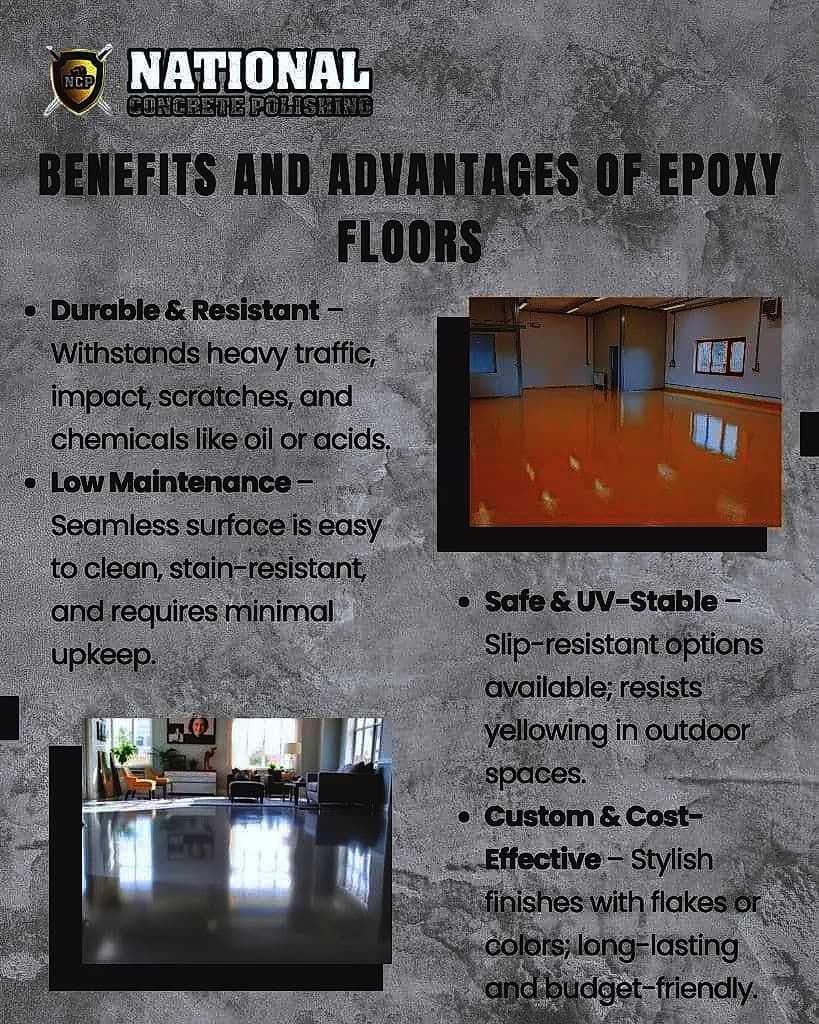
Imagine a surface that shrugs off forklift tires and chemical spills while keeping its shine for years. Resin-based systems deliver this toughness while transforming spaces into visually striking environments. Let’s explore how these solutions outperform traditional materials in demanding settings.
Enhanced Durability and Resistance
These coatings create armor-like layers that repel scratches, impacts, and harsh cleaners. Industrial facilities choose them for their abrasion resistance, which matters in areas with constant machine traffic. Chemical resistance depends on the system and the chemical, so the product data sheet should be checked against what will actually be spilled.
National Concrete Polishing installs these systems on prepared concrete, with its own crews in South Florida. How well a coating bonds depends on the surface preparation and on moisture in the slab, so both need to be dealt with before the first coat goes down.
Low Maintenance and Safety Benefits
Spills wipe up effortlessly, saving hours of scrubbing. Unlike porous materials, these continuous finishes resist staining, which suits labs and restaurants. Non-slip additives add texture and traction in wet areas. OSHA has no standard that mandates a particular coefficient of friction for walking-working surfaces.
Colored flakes add texture for grip while enhancing aesthetics. You get a custom design that complements your space’s style. Over time, simple upkeep can mean fewer repairs than tile or paint.
| Benefit | Impact | Example Use |
|---|---|---|
| Chemical Resistance | No damage from spills | Auto repair shops |
| Slip Resistance | Better traction when wet | Pool decks |
| UV Stability | Epoxy can yellow in sunlight, so check UV exposure outdoors | Patios |
Commercial vs Residential Applications
Choosing the right protective coating for your space depends on looks and on how well performance matches daily demands. Commercial and residential settings require distinct approaches to ensure safety, durability, and visual harmony.
Meeting the Needs of Various Environments
High-traffic areas like warehouses need thicker, industrial-grade layers to handle heavy equipment. Retail spaces often prioritize glossy finishes that reflect light and simplify cleaning. In homes, garage surfaces benefit from textured options that resist oil stains and tire marks.
Moisture control is critical in bathrooms or basements. Resin-based systems with vapor barriers prevent water damage in these sensitive areas. Humidity and slab moisture should be assessed before a system is recommended.
| Feature | Commercial | Residential |
|---|---|---|
| Thickness | Thicker, built for equipment loads | Thinner, built for foot and vehicle traffic |
| Safety Additives | Non-slip grit | Subtle texture |
| Cure Time | Foot traffic in 10 to 24 hours, wheels in 24 to 72 | Same product windows as commercial |
Industry-Specific Considerations
Hospitals require seamless, antimicrobial coatings for sterile areas. Auto shops use chemical-resistant formulas to withstand oil spills. Metallic epoxy adds decorative flair to hotel lobbies while maintaining scratch resistance under luggage carts.
For homes, lighter metallic accents create modern aesthetics without overwhelming living spaces. Always consult professionals to match your project’s load requirements and style goals. National Concrete Polishing’s in-house crews work in South Florida, where heat and humidity affect cure times and moisture in the slab.
Comparing Popular Epoxy Finishes
Selecting the right finish transforms your space from functional to extraordinary. Each option balances style with performance, adapting to demands ranging from heavy machinery to designer aesthetics. Let’s explore how these solutions meet diverse needs.
Metallic, Flake, and Terrazzo Finishes
Metallic coatings create dynamic swirls using reactive pigments, ideal for hotel lobbies or retail spaces needing wow factor. Flake systems scatter colored chips for slip resistance, which suits garage floors and pool decks. Terrazzo blends stone aggregates with clear resins, mimicking polished concrete in schools or airports.
- Metallic: custom designs in a wide range of colors; epoxy-based metallics can yellow in direct sun
- Flake: Hides imperfections and adds texture for grip
- Terrazzo: Zero grout lines, and a long modeled service life
Self-Levelling, Antistatic, and Screed Options
Self-levelling coats give a smooth, continuous surface that is easy to clean. Antistatic formulas control static buildup in electronics labs. Industrial screed adds the most thickness, for factory zones with forklifts. For scale, the industry’s product category rules for resinous floor coatings describe self-leveling and slurry systems as typically 60 to 120 mils (1.52 to 3.05 mm) thick and mortar systems as typically greater than 250 mils (6.35 mm).
| Finish | Thickness | Best Use Case |
|---|---|---|
| Self-Levelling | 1.5-3 mm | Commercial kitchens |
| Antistatic | Thin build | Data centers |
| Screed | 3 mm to over 6 mm | Manufacturing plants |
This wide range ensures you get solutions matching residential or commercial industrial needs. NIST’s BEES model assumes a 75-year useful life for a properly installed epoxy terrazzo floor with general maintenance. That is a modeling assumption, not a measured lifespan.
Polyaspartic and Urethane Cement
Polyaspartic is the fast-cure option among the systems National Concrete Polishing installs. It plans on about 6 hours to foot traffic and about 24 hours to vehicle traffic, with the product data sheet setting the final release.
Urethane cement is the heavy-duty option for floors that see heavy loads. Planning windows are longer: about 8 to 12 hours to foot traffic and 24 to 36 hours to wheeled traffic. National Concrete Polishing installs both systems.
Installation Tips and Best Practices
Your project’s success hinges on what happens before the first layer touches the ground. A flawless finish starts with careful planning and execution. Skip shortcuts, and you’ll avoid costly rework later.
Epoxy Flooring Surface Preparation and Application
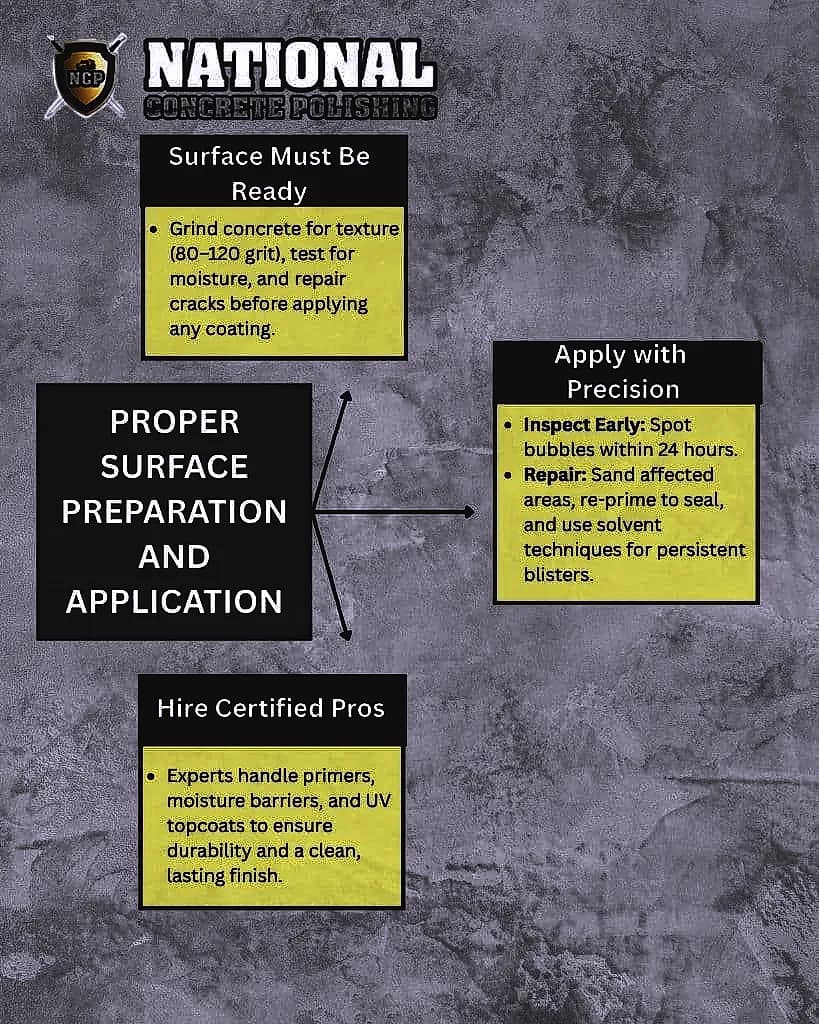
Concrete must be clean, dry, and free of contaminants. Professionals grind surfaces to create a rough profile, so the coating can bond to the concrete. Moisture testing before application reduces the risk of bubbles or peeling, which matters in humid climates like South Florida.
- Repair cracks and fill joints with materials the coating manufacturer approves
- Use diamond grinders or shot blasting to create the surface profile the coating manufacturer specifies
- Apply the primer within the window the product data sheet gives
Mixing ratios matter: one manufacturer’s data sheet for a pigmented epoxy warns that an incorrect ratio or mixing procedure may cause moisture sensitivity, whitening, slow cure and soft spots. Temperature limits are product-specific too; that same data sheet gives 50 to 85°F for both ambient and substrate temperature. Work in small sections for consistent coverage.
| Step | Residential Focus | Commercial Focus |
|---|---|---|
| Surface Prep | Diamond grinding for garages | Shot blasting for warehouses |
| Coating Thickness | Thinner decorative build | Thicker industrial build |
| Cure Time | Foot traffic in 10 to 24 hours, wheels in 24 to 72 | Same windows; fast-cure polyaspartic about 6 hours to foot traffic |
Choose applicators certified by manufacturers. They’ll handle technical details like moisture barriers or antistatic additives. For low maintenance results, apply a UV-stable topcoat, which simplifies cleaning.
Different types of coatings require unique tools. Rollers work for thin layers, while squeegees spread thicker formulas. Always back-roll to eliminate streaks. Let each layer cure fully, because rushing can cause delamination.
How long a resin floor lasts depends on the system, the traffic and how well the slab was prepared. National Concrete Polishing can walk you through these steps for your space.
Cost, Lifespan, and Maintenance Considerations
What does a resin floor really cost over its life? The first price is only part of it. ASTM E917, the standard practice for measuring life-cycle costs of buildings, compares options over a set study period by adding initial cost to maintenance, repair and replacement. Let’s break down how to think about long-term value for your project.
Evaluating Long-Term Value
Consider these factors when analyzing costs:
- Thicker industrial-grade layers cost 30% more upfront
Resin systems differ in the temperatures and chemicals they withstand, so check the data sheet for your conditions. The industry’s product category rules for resinous floor coatings (Part B #25-007 v2.0, February 2026, initiated by the American Coatings Association) use a reference service life of 6 years for thin-mil coatings, 7 for self-leveling or slurry systems and 9 for mortar systems. That is the interval between periodic refurbishments, not a replacement date, and the document itself notes that actual service life durations vary considerably. Compare warranties term by term, because length and exclusions vary by manufacturer and system.
| System Type | Avg Cost/sq ft | Service Life |
|---|---|---|
| Decorative Residential | $3.50-$5.00 | Depends on traffic and upkeep |
| Industrial Screed | $7.00-$9.50 | Depends on loads and upkeep |
| Antistatic Commercial | $6.25-$8.75 | Depends on use and upkeep |
Practical Advice for Your Project
Follow these steps to maximize ROI:
- Calculate daily traffic levels, because heavy machinery demands thicker applications
- Test moisture levels in basements or pool areas before choosing resins
- Request samples showing wear patterns for your specific environment
National Concrete Polishing reviews system and finish options with you during the consultation. Ask for a moisture test of the slab before any system is chosen.
Conclusion
Your choice of protective coatings determines how well your space performs under pressure. Resin-based systems blend strength with style, offering solutions for garages needing grip or hospitals requiring sterile surfaces. Each type serves distinct needs: metallic finishes dazzle in showrooms, while thick industrial layers handle warehouse traffic.
Proper installation and upkeep make these solutions last. Simple cleaning preserves their shine, and professional application prevents peeling. Consider traffic patterns and safety needs when selecting your system.
National Concrete Polishing can match a system to your space and how it is used. Call us to talk through your project.
With this knowledge, you’re ready to choose durable, visually appealing systems. Whether upgrading a home garage or commercial facility, the right combination of function and design transforms any concrete base into a long-lasting asset. Contact us today for epoxy flooring solutions.
Frequently Asked Questions
How do aesthetic options vary between epoxy finishes?
You can choose from metallic, flake, or terrazzo designs for decorative styles, while self-leveling or screed systems prioritize smooth surfaces. Each option balances visual appeal with functional needs like slip resistance or texture.
What makes these floors suitable for high-traffic areas?
Their chemical-resistant coatings and seamless surfaces withstand heavy use, spills, and impacts. Industrial-grade systems, for example, handle machinery weight, while antistatic options protect sensitive electronics in labs or warehouses.
Can you install this solution over existing concrete?
Yes, but proper preparation like grinding, crack repair, and moisture testing is critical. Without these steps, adhesion issues or bubbling may occur, reducing the coating’s lifespan.
Are there eco-friendly choices available?
Low-VOC and water-based resins exist. Compare the VOC content on each product’s safety data sheet before you choose.
How does temperature affect the curing process?
The range depends on the product, so follow its data sheet. The pigmented epoxy data sheet cited above, for example, gives 50 to 85°F for both ambient and substrate temperature. High humidity or cold slows curing and can leave an uneven finish.
What maintenance routines extend longevity?
Sweep regularly and use pH-neutral cleaners. Avoid abrasive tools or harsh chemicals. A fresh topcoat can restore shine once it shows wear.
Why choose polished concrete instead?
Polished surfaces offer a minimalist look with similar durability but lack the customization of colored flakes or metallic pigments. They’re also more prone to staining without a protective sealant.
Are there slip-resistant options for wet environments?
Yes. Adding anti-slip additives like quartz sand or aluminum oxide creates textured surfaces. This is ideal for garages, pool decks, or commercial kitchens where moisture is common.
How do costs compare to traditional tiles or hardwood?
Initial expenses are higher, but lower upkeep can provide better long-term value, depending on the system and how the floor is used. The industry’s reporting rules assume a refurbishment about every 6 to 9 years, depending on thickness, and actual service life varies considerably. Unlike tiles, there’s no grout to clean, and it resists water damage better than wood.
Written by

Founder and CEO
Chris Lavin is an esteemed leader in concrete polishing and epoxy coatings with a distinguished 20-year career. As founder and CEO of National Concrete Polishing and owner of Xtreme Polishing Systems, he's renowned for polishing and epoxy coating more floors than anyone globally. Chris is recognized for his innovative approach and commitment to enhancing floor durability and aesthetics. His hands-on experience and technical proficiency make him a respected authority and a valuable resource in the field of floor polishing and coatings.
Same topic
Related articles
All stories
Residential7 min read
Epoxy Garage Floor DIY vs Professional Installation: What You Need to Know
DIY epoxy flooring involves homeowners applying the coating using pre-packaged kits that include resin, hardener, and tools.
Read it
Epoxy & coatings6 min read
What Happens When Concrete Prep Is Skipped
What happens when concrete prep is skipped? Good contractors will tell you it's a disaster, so don't let your contractor skip the work!
Read it
Epoxy & coatings11 min read
Why Proper Joint Treatment is Critical for Epoxy Floors in Florida
Concrete floors contain three main joint types that serve distinct purposes and require specialized treatment approaches.
Read it
Tell us about the floor
Tell us the space and roughly how big it is.We come back with what it would cost and when we could start.
Prefer to talk? Call +1 844-876-5474
- Leads@
nationalconcretepolishing.net - 2200 NW 32nd St #600,
Pompano Beach, FL 33069 Mon to Fri, 9:00 to 5:30