The NCP blog
Discover How Moisture Barriers Work Under Florida Epoxy Floors
Epoxy & coatingsUpdated 9 min read
Moisture moves through concrete by capillary action and vapor diffusion. How a vapor barrier under epoxy prevents delamination.
Moisture in a concrete slab is a documented cause of blisters under epoxy and other resin coatings. The problem has been known since the 1970s, and the blisters can appear anywhere from a few days to years after the coating cures. In South Florida, where the air is warm and humid most of the year, moisture is the first thing to check before a coating goes down.
Without proper containment systems, trapped vapor bubbles form under surfaces. Peeling edges and cloudy discoloration can follow.
Moisture-mitigating primers and coatings are made to slow the vapor coming up from the slab. Each product has a limit that its maker sets, so the match between product and slab starts with test results.
Introduction to Moisture and Epoxy Flooring in South Florida
Coastal conditions make moisture a constant concern for floor coatings. Florida is the most humid state in the nation, and summer dew points typically run between 65 and 75°F. That water vapor can end up under a floor finish.
Understanding the Regional Challenges
South Florida’s weather patterns create three primary obstacles. Daily temperature shifts, about 12 to 15°F in Miami’s monthly climate normals, make materials expand and contract. Coastal air carries salt, one more contaminant to clean off before coating. High humidity is one of the conditions data sheets cap during application and cure.
What Moisture Means for the Job
On a garage job, moisture mitigation can extend the schedule, and moisture treatment can add cost to a system such as metallic epoxy. National Concrete Polishing’s final scope and schedule follow the actual conditions of the slab, not a fixed assumption.
On a humid day, a typical epoxy data sheet, such as Sika’s Sikafloor-264 sheet, asks for the following:
- A slab temperature at least 5°F above the dew point, so condensation can’t form under or on the fresh coating.
- No application while air and slab temperatures are still rising, because pinholes can form.
- Humidity inside the data sheet’s limit during application and cure, which is 85% at most on that data sheet.
The Science Behind Moisture Movement in Concrete
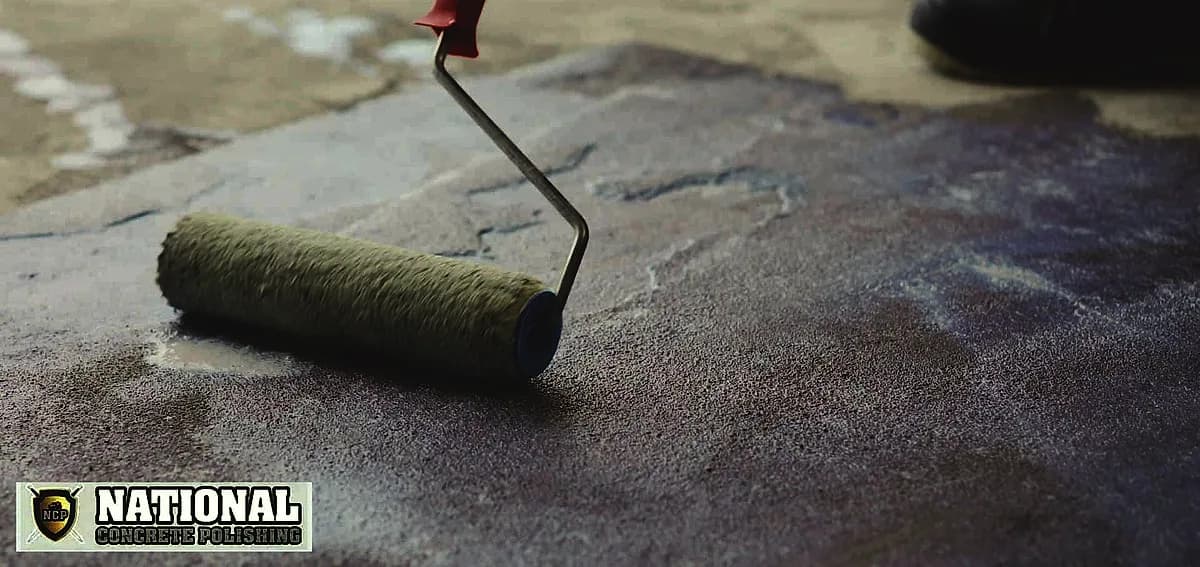
Concrete’s porous nature makes it vulnerable to hidden water activity. Three key processes drive this movement, each influencing coating performance differently. Recognizing these forces helps predict where and why failures occur.
Capillary Action and Vapor Diffusion
Microscopic channels in slabs act like natural pipelines. Groundwater can travel upward through these pathways by capillary action, similar to ink spreading through paper.
Gaseous water moves differently. It spreads through the pores of the concrete. This can happen even in a slab that looks dry.
Evaporation, Condensation, and Their Effects
When warm, humid air meets a cooler slab, vapor can condense into liquid droplets on the surface. Condensation under or on a fresh coating can lead to adhesion failure, as coating data sheets warn.
Dew can form on a cool slab overnight and dry off in the afternoon heat. A coating needs a dry slab with a margin above the dew point when it goes down.
| Process | Mechanism | Impact |
|---|---|---|
| Capillary Action | Liquid water rises through pores | Subsurface saturation |
| Vapor Diffusion | Gas moves through concrete matrix | Moisture reaching the coating |
| Condensation | Air moisture becomes surface water | Risk of adhesion failure |
Modern testing methods measure these forces quantitatively. Calcium chloride kits report how much moisture leaves the slab surface, and in-slab probes report the relative humidity inside the concrete. This data guides effective containment strategies.
Exploring how moisture barriers work under florida epoxy floors
A moisture barrier is a coating that slows the moisture moving up out of the slab, so less of it reaches the floor finish. How much it slows depends on the product and how it is applied.
The Role of Vapor Barriers in Preventing Coating Failure
High-performance primers soak into the prepared slab and cure into a film that slows upward vapor movement.
A moisture-control system can combine these parts:
| Component | Function | Benefit |
|---|---|---|
| Polymer Membranes | Slows liquid and gas transfer | Limits saturation |
| Epoxy Primers | Seal microscopic pores | Reduces pressure points |
| Sealant Tapes | Secure edges/joints | Maintains continuity |
How Trapped Moisture Causes Delamination
A coating that lets little vapor through can trap moisture beneath it. Researchers who study blistering still disagree on the exact cause, and the proposed causes include hydrostatic pressure, capillary pressure, osmosis and solvents in the coating. Either way, the fix starts with knowing how much moisture the slab holds.
Left unchecked, small blisters can grow into widespread peeling. Treating the moisture first addresses the cause instead of the symptom.
Surface Preparation and Moisture Testing Techniques
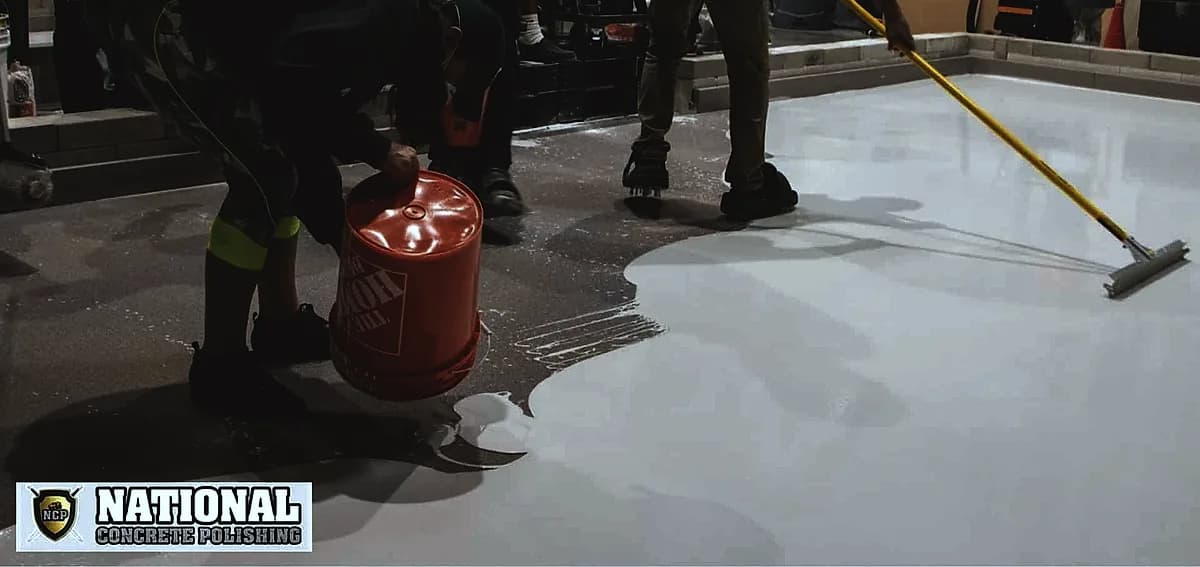
Testing protocols reveal hidden threats beneath concrete surfaces. Professionals use precise measurement tools to identify risks before applying protective layers. Testing does not guarantee the bond, but it shows whether the slab is within the limits the coating maker sets.
Effective Testing Methods
Calcium chloride testing (ASTM F1869) puts a sealed container of salt on the bare slab and weighs the moisture it takes up. The result is reported as pounds of moisture per 1,000 square feet per 24 hours. The test sets no pass mark of its own. The coating’s data sheet does, and those limits differ from product to product.
RH probe testing reads the relative humidity inside the slab. Probes go into drilled holes, and ASTM F2170 is the standard for the method. A reading describes the slab only on the day and at the spots where it was taken, so tests are spread across the floor and repeated close to the install date. The pass mark comes from the coating maker: the example data sheet above calls for 85% or less by ASTM F2170.
A plastic sheet taped to the slab is a quick, rough check for moisture moving up through the concrete. The same data sheet names ASTM D4263 as a visual indication of vapor drive. It shows whether moisture is moving, but it is not a measurement, so it does not replace the calcium chloride or RH test.
Essential Preparation Steps
Mechanical grinding removes old coatings and opens pores for better adhesion. Shot blasting vs Grinding cleans contaminants while creating optimal surface profiles. These steps help primers bond to the substrate.
XPS’s data sheet for its MVB moisture barrier calls for a surface cleaned and mechanically prepared by shot blasting, sand blasting or diamond grinding, and its Super FC MVB sheet specifies a CSP-3 to CSP-4 profile. Multiple test locations help contractors make informed material choices.
| Method | Purpose | Key Metric |
|---|---|---|
| Calcium Chloride | Surface vapor measurement | Limit set by the data sheet |
| RH Probe | Internal humidity analysis | ASTM F2170 compliance |
| Grinding | Profile creation | CSP range set by the data sheet |
Moisture Mitigation Solutions and Protective Materials
Moisture mitigation means testing the slab and, when the results call for it, applying a system that limits how much moisture reaches the coating.
Choosing how to protect a concrete surface requires understanding material capabilities. Three common options address slab moisture differently, and the right one depends on the slab’s test results and the product’s data sheet.
Comparing Epoxy Coatings and Urethane Cement Options
Epoxy-based products create durable surfaces resistant to chemicals and heavy traffic. When paired with a moisture-vapor-control primer, they form a low-permeability barrier. Epoxy systems are common in warehouses, workshops and showrooms.
Urethane cement is a different class of material, and some products are made for slabs that hold more moisture than a standard epoxy accepts. The data sheet still says to check moisture transmission first. Food processing plants and commercial kitchen floors are typical places for it. National Concrete Polishing installs both epoxy and urethane cement systems.
| Solution | Best Use | Key Benefit | Maintenance |
|---|---|---|---|
| Epoxy + Barrier | Warehouses, workshops, showrooms | Chemical resistance | Routine inspection |
| Urethane Cement | High-moisture areas | Higher moisture tolerance | Routine cleaning |
| Polished Concrete | Floors where no coating is wanted | No coating to trap moisture | Routine cleaning |
The example data sheet shows how the choice follows the numbers. Between 85% and 96% relative humidity by ASTM F2170, it moves to a moisture-vapor-control primer, and at 96% and above, to a urethane cement. Other makers draw these lines in other places, so match the product to your slab’s test results and that product’s own data sheet.
Benefits of Installing a Moisture Vapor Barrier
A moisture-control system adds cost up front, and that cost has to be weighed against a coating that fails. In blistering cases, the entire coating system has to be replaced. These products act as insurance against humidity-related damage.
A bare polished slab is a different approach: with no coating on top, there is no film to trap moisture beneath it.
Consult professionals to match materials with your operational needs.
Tailoring Epoxy Coatings for South Florida’s Climate
South Florida’s warm, humid air affects when and how a coating can go down. Humidity and temperature matter most, and the data sheet sets limits for both.
Adapting to Environmental Extremes
Four practices keep an install inside the data sheet’s limits:
- Dehumidifiers and temperature control hold the work area inside the data sheet’s limits
- The cure time on the data sheet sets how long the work area has to stay in range
- Slab temperature and dew point are logged during the job; the example data sheet asks for readings at least every 3 hours
- Moisture-tolerant primers are made for slabs with more moisture, up to the limit on their data sheet
Installations go best when the slab stays at least 5°F above the dew point, the margin the example data sheet gives to reduce the risk of condensation. Specialized epoxy blends are made to cope with daily temperature swings, which normally run about 12 to 15°F in Miami.
Three readings drive the go or no-go call:
| Metric | Target Range | Tool |
|---|---|---|
| Ambient humidity | Per data sheet (85% maximum on the example sheet) | Digital Hygrometer |
| Slab Temperature | 5°F or more above the dew point, within the data sheet’s temperature range | Infrared Thermometer |
| Vapor Emission | Per data sheet | Calcium Chloride Test |
These adjustments matter because condensation on a fresh coating can lead to adhesion failure or blushing, a cloudy film on the finish. Keeping the work area inside the data sheet’s limits is what protects the finish.
National Concrete Polishing in South Florida
National Concrete Polishing has worked in South Florida since 2013, and its own crews are based in the region.
For lasting results, contact National Concrete Polishing at +1 844-876-5474 to discuss your project’s unique needs.
Advanced Application Strategies for Lasting Durability
Getting a coating down in humid weather comes down to staying inside the data sheet’s limits at every stage.
Optimizing Curing Conditions and Material Selection
Dehumidifiers keep the work area under the humidity limit, which is 85% during application and cure on the example data sheet.
Some polymer-based products are formulated to tolerate temperature shifts. Proper bonding means staying inside the data sheet’s temperature range, which is 50 to 85°F for both air and slab on the example data sheet.
Utilizing Climate-Controlled Application Techniques
Climate control is about meeting the data sheet’s numbers, not about a particular piece of equipment: humidity, air and slab temperature, and the margin above the dew point.
Cured resinous flooring can let very little vapor through: the example data sheet lists 0.33 g/hour/m2 for its epoxy (ASTM E96). That is why testing comes before the coating, not after. ASTM F2170 lists debonding and deterioration of finish flooring and coatings among the failures that excess slab moisture can cause, and epoxy floor peeling is one way that shows up.
Frequently Asked Questions
Why is moisture testing critical before installing epoxy flooring?
Testing shows how much moisture the slab holds, so the system can be matched to it. Calcium chloride kits measure vapor emission rates, and relative humidity probes measure the humidity inside the slab. High readings call for a moisture-mitigation system or a product rated for them.
How does Florida’s climate impact epoxy floor performance?
Slabs in South Florida can hold moisture from the ground and from the humid air. When a coating traps that moisture, it can lead to bubbles, peeling or delamination. Keeping humidity and temperature inside the data sheet’s limits helps a coating cure as intended.
What causes delamination in epoxy-coated floors?
Moisture trapped under a coating can weaken the bond between the coating and the concrete. Poor surface prep can make this worse, and a mitigation system suited to the slab’s moisture can lower the risk.
Can polished concrete replace epoxy in humid environments?
Polished concrete has no coating to trap moisture, but the slab’s moisture level still matters, so start with a moisture test. For areas with spills or heavy traffic, ask how the finish you choose holds up to the chemicals and loads in use.
What do vapor barriers do for an epoxy floor?
Barriers slow upward vapor movement so less moisture reaches the coating. That lowers the risk of blisters and peeling, but service life still depends on the system, the traffic and the upkeep. Moisture-tolerant epoxies and two-part sealers are examples of products made for this job.
What repairs fix existing moisture-damaged epoxy floors?
Grinding removes compromised coatings, allowing proper surface prep. After moisture testing, installers apply a primer or sealer matched to the results to slow vapor from the slab.
Are there eco-friendly options for moisture control under coatings?
Low-VOC epoxy systems and water-based sealers are made to release fewer volatile compounds. Always check product certifications for sustainability claims.
Written by

Founder and CEO
Chris Lavin is an esteemed leader in concrete polishing and epoxy coatings with a distinguished 20-year career. As founder and CEO of National Concrete Polishing and owner of Xtreme Polishing Systems, he's renowned for polishing and epoxy coating more floors than anyone globally. Chris is recognized for his innovative approach and commitment to enhancing floor durability and aesthetics. His hands-on experience and technical proficiency make him a respected authority and a valuable resource in the field of floor polishing and coatings.
Same topic
Related articles
All stories
Residential7 min read
Epoxy Garage Floor DIY vs Professional Installation: What You Need to Know
DIY epoxy flooring involves homeowners applying the coating using pre-packaged kits that include resin, hardener, and tools.
Read it
Epoxy & coatings6 min read
What Happens When Concrete Prep Is Skipped
What happens when concrete prep is skipped? Good contractors will tell you it's a disaster, so don't let your contractor skip the work!
Read it
Epoxy & coatings11 min read
Why Proper Joint Treatment is Critical for Epoxy Floors in Florida
Concrete floors contain three main joint types that serve distinct purposes and require specialized treatment approaches.
Read it
Tell us about the floor
Tell us the space and roughly how big it is.We come back with what it would cost and when we could start.
Prefer to talk? Call +1 844-876-5474
- Leads@
nationalconcretepolishing.net - 2200 NW 32nd St #600,
Pompano Beach, FL 33069 Mon to Fri, 9:00 to 5:30