
The NCP blog
Concrete Moisture Testing: How It Works and Why It’s Essential in Florida
Polished concrete12 min read
In South Florida’s tropical climate, excess moisture creates a hidden battle for polished floors.
In South Florida’s tropical climate, excess moisture creates a hidden battle for polished floors. Without proper care, your flooring can risk bubbling, peeling, or cracking within months.
Your concrete slab acts like a sponge, absorbing airborne water vapor. If sealed too quickly or with the wrong products, trapped moisture pushes coatings upward. Temperature swings worsen the problem, expanding and contracting materials, potentially leading to failures in the surface of your floors.
The Hidden Moisture Challenge in Florida’s Concrete
Managing moisture in concrete is crucial in Florida, where high humidity and temperature fluctuations can lead to a myriad of problems. The state’s subtropical climate creates an environment where moisture can easily become a major issue for concrete, affecting its durability and stability.
How Florida’s Climate Affects Concrete Moisture Levels
Florida’s climate is characterized by high humidity and significant rainfall, presenting a unique set of challenges for maintaining dry, stable concrete. Excess airborne water vapor can create invisible barriers between coatings and slabs, leading to adhesion failures within weeks of application. Studies have shown that 60% of premature peeling can be traced back to improper curing during high-humidity days.
Common Moisture-Related Floor Failures
When moisture testing is inadequate or ignored, it can lead to various floor failures. Common problems include blistering from trapped moisture pushing against sealants, cloudy finishes caused by amine blush formation, and uneven textures due to rushed drying cycles. The following table outlines some common moisture-related failures and their causes:
| Failure Type | Cause | Flooring System |
|---|---|---|
| Blistering | Trapped moisture | Epoxy, Vinyl |
| Cloudy Finish | Amine blush formation | Coated Floors |
| Uneven Texture | Rushed drying cycles | Various |
Understanding these challenges is crucial for preventing costly repairs and ensuring the longevity of your flooring investment.
Understanding Concrete Moisture Dynamics
Understanding how moisture interacts with concrete is essential for successful flooring installations in Florida’s humid climate. Moisture dynamics within concrete slabs play a crucial role in determining the longevity and integrity of flooring.
How Moisture Moves Through Concrete Slabs
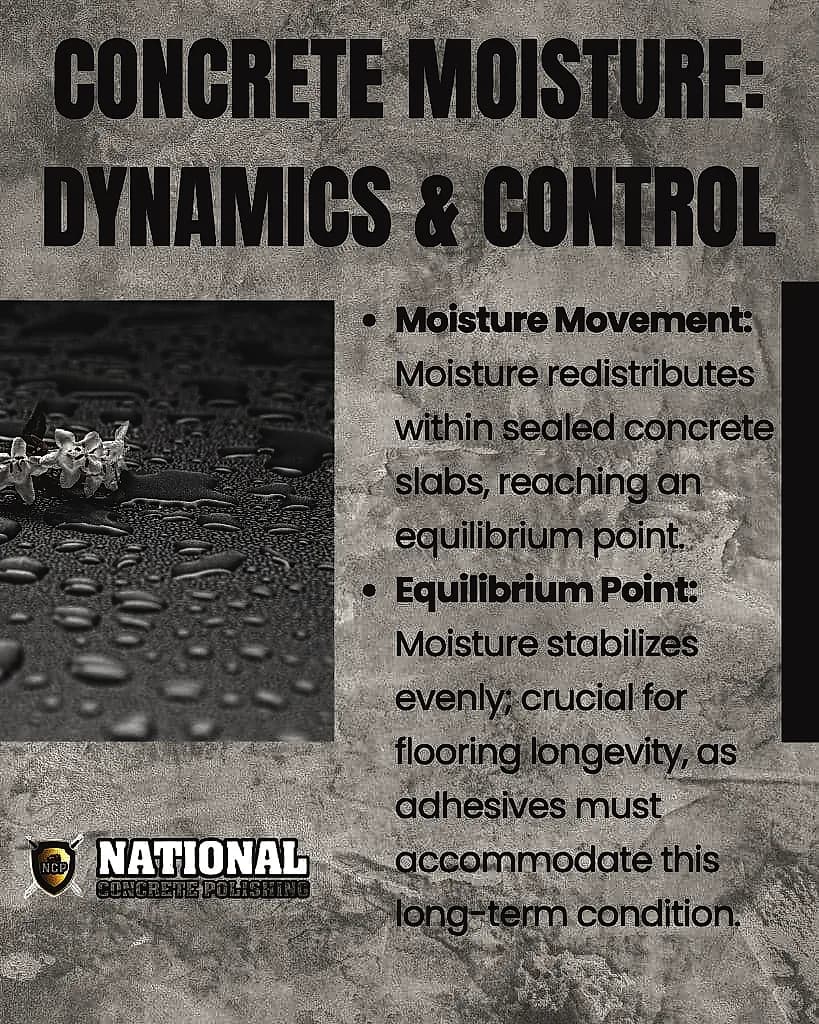
Moisture never stops moving in concrete; it reacts relative to its environment. The movement of moisture through a concrete slab is influenced by various factors, including the slab’s composition, environmental conditions, and the presence of vapor retarders. As moisture moves, it can affect the slab’s moisture condition, which in turn impacts the flooring installation.
The process of moisture redistribution is critical, especially after a floor covering is installed. At this point, the slab is sealed, and moisture is unable to escape freely. This leads to a redistribution of moisture within the slab, ultimately reaching an equilibrium point.
The Equilibrium Point: When Moisture Stabilizes
The equilibrium point is reached when the moisture within the slab stabilizes, distributing evenly throughout. This occurs because both the vapor retarder beneath the slab and the floor installation on top restrict moisture evaporation, causing the remaining moisture to spread out more or less evenly.
Understanding this equilibrium point is crucial for making informed decisions about flooring installations. The moisture condition at this point is what the flooring adhesive and finish must accommodate over the long term. Testing needs to predict this eventual equilibrium point rather than just measuring current surface conditions to avoid potential flooring failures.
| Factors Affecting Equilibrium | Description | Impact on Flooring |
|---|---|---|
| Environmental Conditions | Temperature and humidity levels | Affects drying time and moisture levels |
| Vapor Retarders | Presence and type of vapor retarders | Influences moisture evaporation rate |
| Flooring Installation | Type and timing of installation | Impacts final moisture condition and equilibrium point |
How Does Concrete Moisture Testing Work in Florida
To ensure the durability and integrity of flooring installations, it’s essential to comprehend the mechanisms and importance of concrete moisture testing in Florida. Concrete moisture testing is a critical process that assesses the moisture levels within a concrete slab, helping builders and contractors make informed decisions about the suitability of the slab for various flooring materials.
The Science Behind Moisture Testing
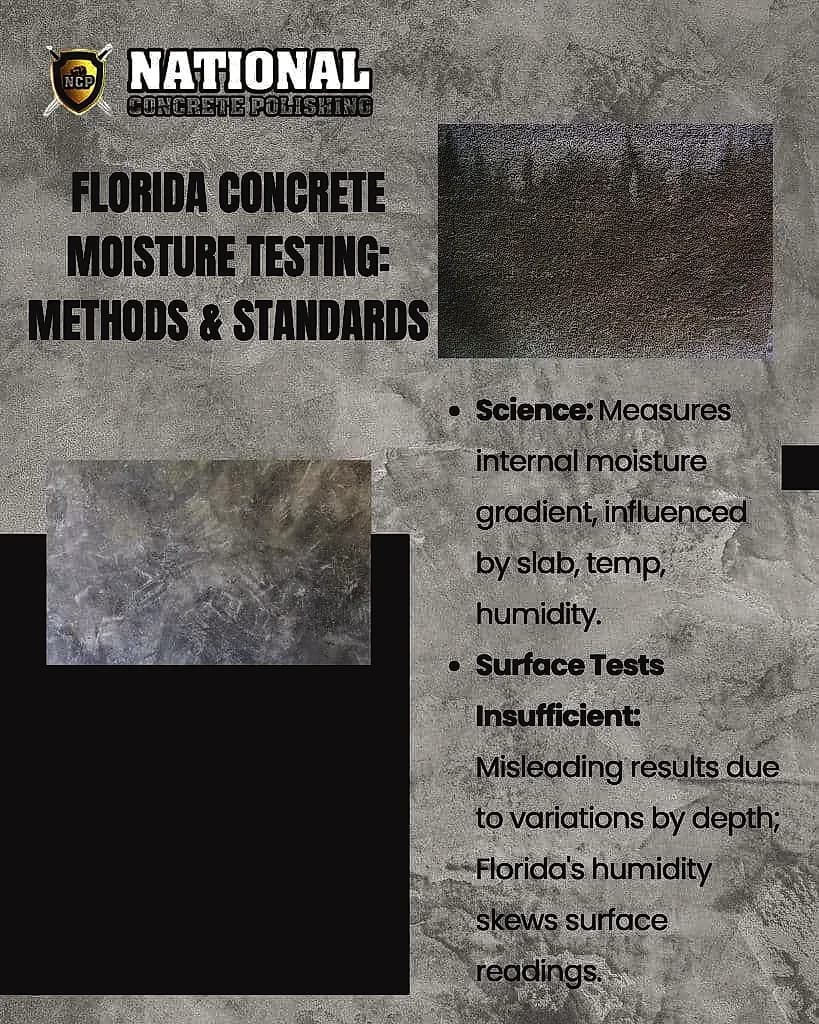
Moisture testing in concrete involves measuring the moisture content within the slab to predict its behavior after flooring installation. The process relies on understanding how moisture moves through the concrete and how it affects the slab’s condition. Moisture within a concrete slab is not uniform; it varies by depth, creating a moisture gradient. This gradient is crucial in determining the slab’s overall moisture condition.
The movement of moisture within a concrete slab is influenced by several factors, including the slab’s thickness, the ambient temperature, and the relative humidity. As the slab dries, moisture from the deeper layers migrates towards the surface, affecting the slab’s moisture content. Accurate moisture testing must account for this dynamic process to provide reliable data.
Why Surface Testing Alone Is Insufficient
Many concrete moisture testing procedures, such as the CaCl test and the plastic sheet test, measure moisture escaping from the surface of the concrete slab. However, since moisture within a slab varies by depth, surface testing alone cannot provide consistently reliable results. The chances are high that the results will be misleading regarding the overall moisture condition of the slab.
Florida’s high humidity and potential for surface condensation can particularly skew surface test results, affecting the evaporation rate at the concrete surface. This can lead to false readings that do not accurately reflect the internal slab conditions. It’s crucial for construction professionals to understand the difference between surface measurements and internal moisture content to make informed decisions.
| Testing Method | Limitation | Impact on Results |
|---|---|---|
| CaCl Test | Measures surface moisture only | May not accurately reflect internal slab moisture |
| Plastic Sheet Test | Affected by surface condensation | Can lead to false readings |
| Surface Meters | Limited to surface measurements | Does not account for moisture gradient within the slab |
Understanding the limitations of surface testing methods is vital for accurate moisture assessment. By recognizing the potential for misleading results, professionals can adopt more comprehensive testing strategies that account for the moisture gradient within the slab, ensuring more reliable data for flooring installation decisions.
Essential Moisture Testing Methods for Florida Projects
To ensure the longevity of concrete structures in Florida, it’s crucial to employ the right moisture testing techniques. The state’s humid climate and frequent rainfalls make moisture testing a critical step in construction and renovation projects.
Calcium Chloride Testing (ASTM F1869)
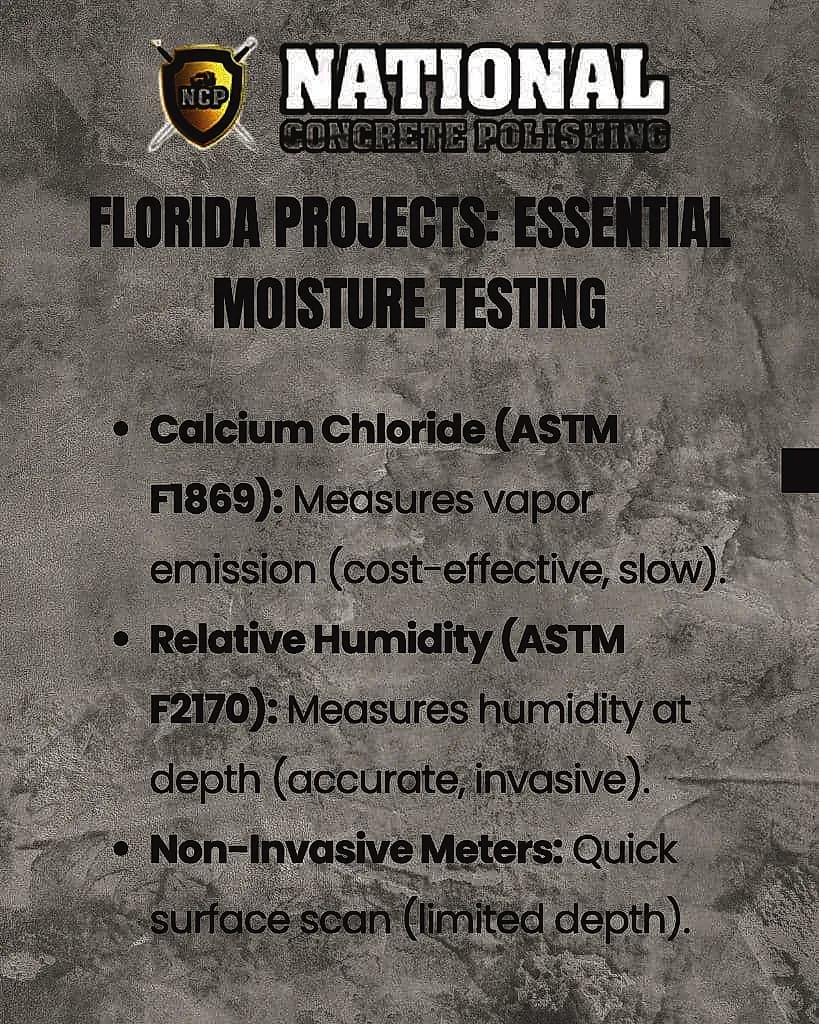
Calcium Chloride Testing, as outlined in ASTM F1869, is a widely used method for measuring moisture vapor emission rate from concrete slabs. This test involves placing a dome containing calcium chloride on the concrete surface and measuring the amount of moisture absorbed over a specified period. It’s a straightforward and cost-effective method, but it requires a waiting period and may not provide real-time data.
Relative Humidity Testing (ASTM F2170)
Relative Humidity Testing, following ASTM F2170, involves drilling into the concrete slab to insert a probe that measures the relative humidity at a specific depth. This method provides a more accurate and deeper assessment of the concrete’s moisture condition. It’s particularly useful for determining the moisture condition of thick slabs or when preparing for flooring installations.
Non-Invasive Moisture Meters
Non-invasive moisture meters offer a quick and efficient way to assess the moisture condition of concrete without causing damage. These meters use technologies such as electrical impedance, radio frequency, or infrared to scan the subsurface conditions. While they provide valuable initial assessments and can be used to map moisture variations across large areas, they may not offer the depth of information required for final installation decisions.
| Testing Method | Description | Advantages | Limitations |
|---|---|---|---|
| Calcium Chloride Testing | Measures moisture vapor emission rate | Cost-effective, straightforward | Requires waiting period, not real-time |
| Relative Humidity Testing | Measures relative humidity at depth | Accurate, assesses deep moisture | Invasive, requires drilling |
| Non-Invasive Moisture Meters | Scans subsurface moisture conditions | Quick, non-destructive, maps variations | Limited depth information, affected by ambient conditions |
Interpreting Moisture Test Results
Interpreting moisture test results accurately is key to ensuring that your concrete slab is ready for the next phase of construction. Moisture testing provides critical data about the condition of the slab, helping you make informed decisions about flooring installation.
Acceptable Moisture Levels for Different Flooring Types
Different flooring materials have varying tolerances to moisture. For instance, hardwood flooring requires a much drier slab than carpeted floors. Manufacturers of flooring products specify acceptable moisture levels for their products. It’s crucial to consult these guidelines when interpreting test results to ensure compatibility between the slab’s moisture condition and the chosen flooring.
For example, some flooring materials may require the slab’s relative humidity (RH) to be below 80%, while others may necessitate a moisture vapor emission rate (MVER) of less than 3 pounds per 1,000 square feet in 24 hours. Understanding these requirements helps in determining whether your slab meets the necessary conditions for the intended flooring.
What the Numbers Really Mean
Moisture test results are typically presented in terms of MVER or RH. MVER measures the rate at which moisture is emitted from the slab, while RH measures the moisture content within the slab. Both metrics provide insights into the slab’s moisture condition but from different perspectives.
Understanding the difference between these measurements and what they indicate about the slab’s condition is crucial. For instance, a high MVER might indicate that the slab is still drying out, while a high RH could suggest that the slab is at or near its equilibrium moisture content. Interpreting these results correctly helps predict future moisture behavior and ensures that the slab is ready for flooring installation.
Environmental Factors Affecting Concrete Drying in Florida
In Florida, the drying of concrete is not just a matter of time; it’s heavily influenced by environmental factors such as temperature and humidity. The flow of moisture in and out of a concrete slab is a dynamic process, significantly affected by external conditions.
Temperature and Humidity Considerations
Temperature and humidity play crucial roles in the concrete drying process. High humidity can impede the drying process by reducing the moisture gradient between the concrete and the surrounding air. Conversely, high temperatures can accelerate drying, but they can also increase the risk of uneven drying and cracking.
The capillaries within the concrete act like a sponge, absorbing moisture from external sources. When the air is humid, the concrete can absorb moisture instead of releasing it, or it can significantly slow down the drying process. Understanding these dynamics is essential for managing concrete moisture effectively.
| Environmental Factor | Effect on Concrete Drying |
|---|---|
| High Humidity | Slows down drying, can lead to moisture absorption |
| High Temperature | Accelerates drying, risk of uneven drying and cracking |
Seasonal Variations and Their Impact
Florida’s distinct seasonal patterns significantly affect concrete moisture management. During the wet season (May to October), rainfall patterns impact both new concrete pours and existing slabs. High humidity during these months slows down the drying process.
Seasonal humidity fluctuations can either slow drying in summer or accelerate it during drier winter periods. Adjusting construction schedules and testing protocols according to these seasonal variations is crucial. Extreme weather events like hurricanes and tropical storms can disrupt concrete drying and testing processes, necessitating strategies to mitigate these impacts.
- Adjust construction schedules to account for seasonal humidity fluctuations.
- Implement environmental controls to manage moisture during extreme weather events.
- Use adjusted testing protocols to ensure accurate moisture assessment.
Moisture Mitigation Strategies for Florida Concrete
In Florida’s challenging environmental conditions, implementing robust moisture mitigation strategies is essential for concrete durability. Effective moisture management is critical to preventing a range of issues that can compromise the integrity of concrete structures.
Vapor Barriers and Moisture Mitigation Systems
Vapor barriers and moisture mitigation systems play a crucial role in controlling moisture levels within concrete structures. These systems are designed to prevent excessive moisture from entering the concrete, thereby reducing the risk of moisture-related problems. A well-designed vapor barrier can significantly enhance the longevity of the concrete by minimizing the potential for moisture-induced damage.
| Moisture Mitigation Method | Description | Benefits |
|---|---|---|
| Vapor Barriers | Plastic sheeting or specialized membranes installed beneath the concrete slab to prevent moisture ingress. | Reduces risk of moisture-related damage, enhances concrete durability. |
| Moisture Mitigation Systems | Topical treatments or coatings applied to the concrete surface to reduce moisture vapor emission. | Effective for existing concrete slabs, can be used in conjunction with vapor barriers. |
Climate Control During Installation
Maintaining optimal environmental conditions during the installation process is vital for ensuring the quality and durability of concrete. This involves controlling temperature and humidity levels to create a stable environment conducive to proper curing.
Industrial systems, including portable dehumidifiers and climate-controlled tents, are employed to regulate environmental conditions. These systems maintain air moisture levels between 45-55% and temperatures within 65-85°F, preventing thermal shock to fresh sealants and ensuring optimal curing conditions.
By implementing these moisture mitigation strategies, you can protect your investment and ensure that your concrete structures remain durable and resilient in Florida’s challenging climate.
- Custom drying schedules based on real-time data
- Vapor-barrier primers that block subsurface moisture
- Post-application inspections to ensure sealant integrity
Conclusion: Protecting Your Investment Through Proper Moisture Testing
In Florida’s challenging climate, moisture testing is not just a step, but a necessity for successful concrete installations. You’re in control of moving your construction project forward, and it’s your reputation on the line if bad decisions are made.
Given the realities of moisture in concrete, ASTM F2170 in-situ RH testing provides the most reliable information to manage your flooring project successfully. Reliable test results lead to more confident decision-making and ultimately, to quality flooring installed on time and on budget.
By prioritizing proper moisture testing and working with experienced professionals like National Concrete Polishing, you can prevent costly moisture-related flooring failures. Contact us at +1 844-876-5474 to ensure your flooring project’s success in South Florida.
Frequently Asked Questions
What is the recommended moisture level for installing flooring in Florida?
The acceptable moisture level varies depending on the type of flooring. For instance, ASTM F2170 recommends relative humidity levels not exceeding 75% for most flooring applications. You should consult the flooring manufacturer’s guidelines for specific requirements.
How often should I perform moisture testing on my concrete slab?
Moisture testing should be conducted before installing flooring, especially in Florida’s humid climate. It’s also a good practice to test at regular intervals during the drying process to ensure the slab is ready for installation.
Can I use calcium chloride testing and relative humidity testing interchangeably?
No, these tests measure different aspects of moisture. Calcium chloride testing (ASTM F1869) measures the rate of moisture vapor emission, while relative humidity testing (ASTM F2170) measures the internal relative humidity of the slab. Both tests provide valuable information, but they are not interchangeable.
What are the consequences of not performing moisture testing before flooring installation?
Failing to conduct moisture testing can lead to flooring failures, such as delamination, warping, or buckling, due to excess moisture. This can result in costly repairs, replacements, and potential safety hazards.
How do ambient conditions affect the drying time of concrete in Florida?
Temperature, humidity, and air circulation significantly impact the drying time of concrete. Florida’s subtropical climate means high temperatures and humidity levels, which can slow down the drying process. You should consider these factors when planning your project.
Can non-invasive moisture meters provide accurate results?
Non-invasive moisture meters can provide a good indication of moisture levels near the surface. However, they may not accurately represent the internal moisture condition of the slab. For critical applications, more invasive methods like ASTM F2170 may be necessary.
What role do vapor barriers play in moisture mitigation?
Vapor barriers help prevent moisture from migrating into the slab from the ground. When properly installed, they can be an effective component of a moisture mitigation strategy, especially in areas with high water tables or moisture-rich soils.
How can I ensure that my concrete slab is properly prepared for flooring installation?
Proper preparation involves ensuring the slab is level, clean, and dry. Conducting moisture testing according to relevant ASTM standards and following the flooring manufacturer’s guidelines are crucial steps in preparing your slab for successful flooring installation.
Written by

Founder and CEO
Chris Lavin is an esteemed leader in concrete polishing and epoxy coatings with a distinguished 20-year career. As founder and CEO of National Concrete Polishing and owner of Xtreme Polishing Systems, he's renowned for polishing and epoxy coating more floors than anyone globally. Chris is recognized for his innovative approach and commitment to enhancing floor durability and aesthetics. His hands-on experience and technical proficiency make him a respected authority and a valuable resource in the field of floor polishing and coatings.
Same topic
Related articles
All stories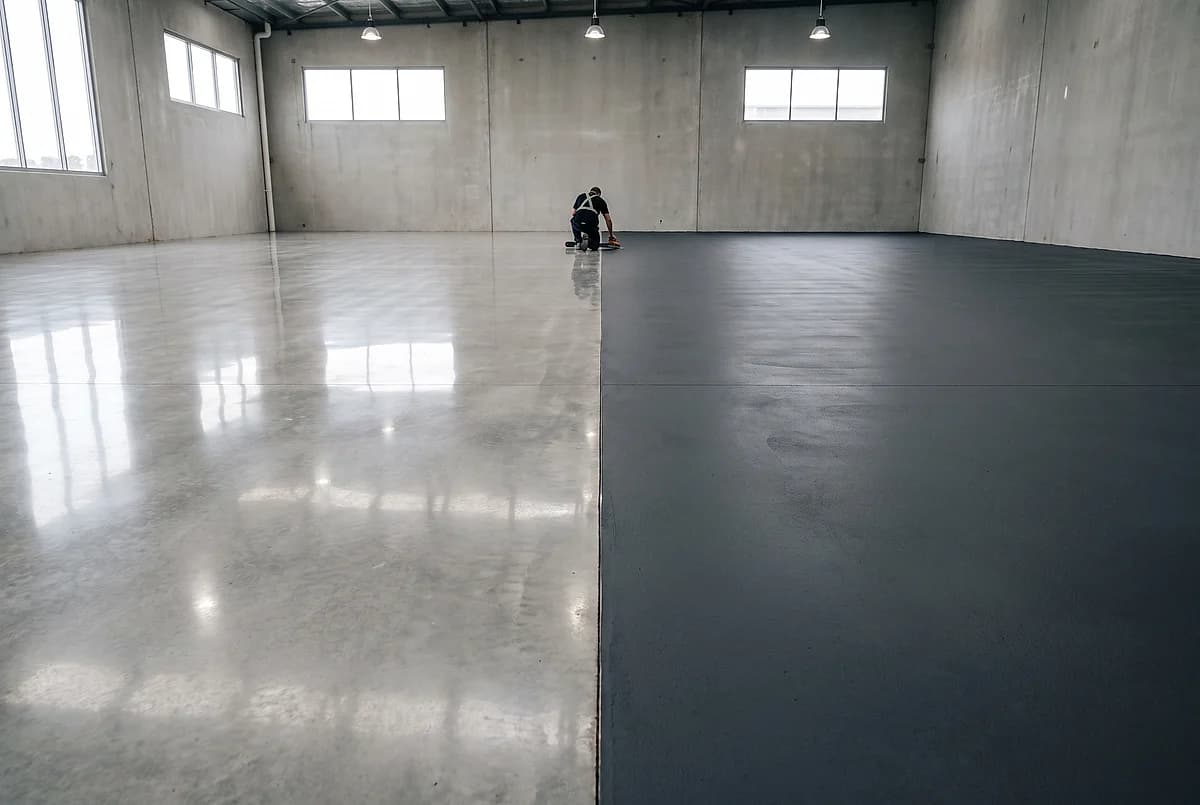
Polished concrete11 min read
Polished Concrete vs Epoxy Coatings: Which Floor Is Right for Your Space?
Two systems, two price curves, one slab. What each one costs to install and to keep, and which spaces each one actually suits.
Read it
Polished concrete8 min read
What to Know Before Polishing Your Existing Concrete Slab
Before any mechanical refinement can begin, a thorough evaluation of the current foundation is required.
Read it
Polished concrete8 min read
Is Polished Concrete Worth the Investment for Miami Properties?
It is essential to distinguish between a simple topical seal and mechanically refined concrete.
Read it
Tell us about the floor
Tell us the space and roughly how big it is.We come back with what it would cost and when we could start.
Prefer to talk? Call +1 844-876-5474
- Leads@
nationalconcretepolishing.net - 2200 NW 32nd St #600,
Pompano Beach, FL 33069 Mon to Fri, 9:00 to 5:30