


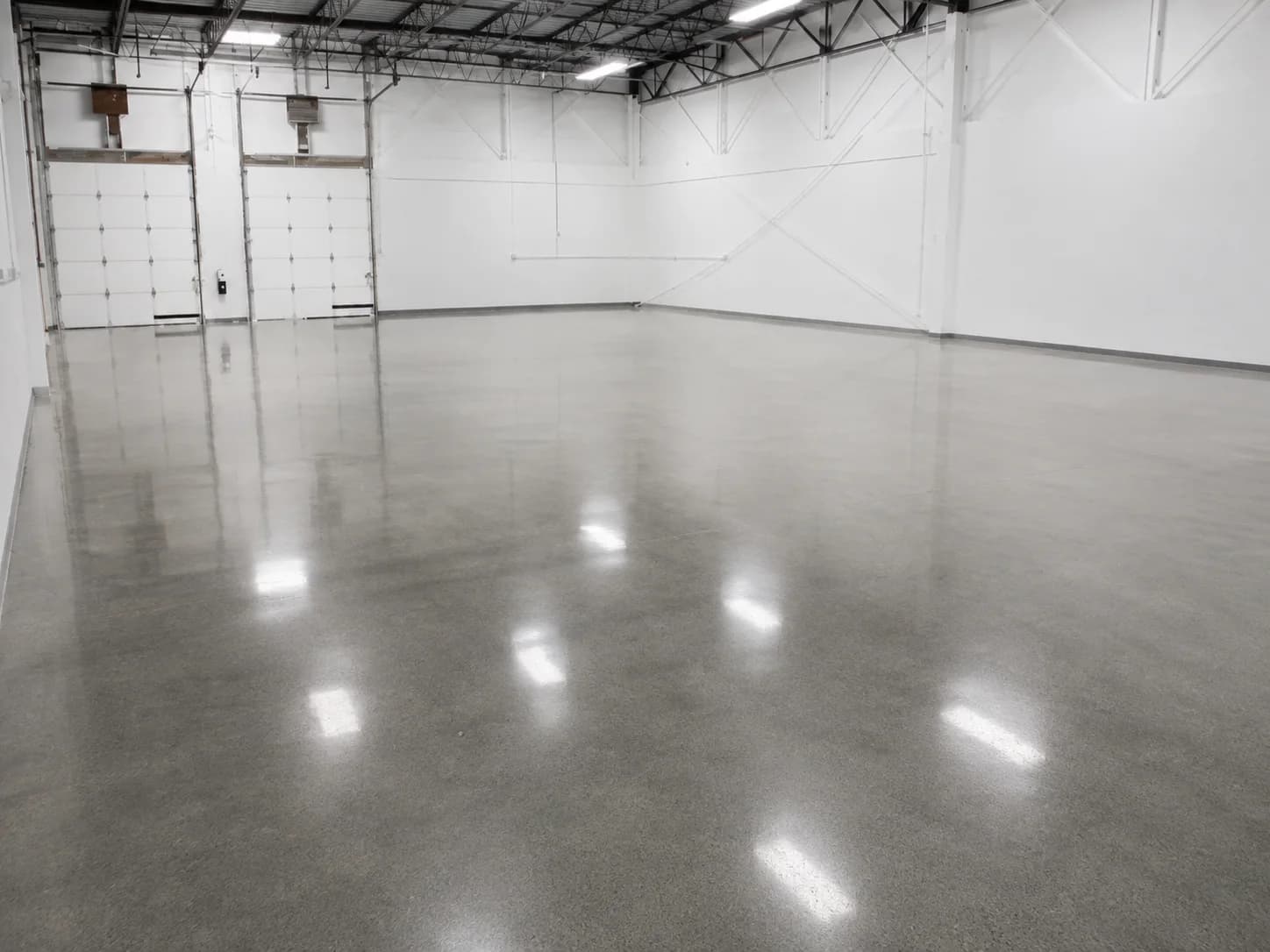
Selected for Warehouse & Distribution
- Best for
- Warehouses, showrooms, lobbies, schools and light industrial spaces
- Back in service
- Bare polish: same day, after the final clean. With a guard or sealer: about 24 hours.
Flooring systems · Nationwide
Nine floor systems in three families, so pick by material below, or tell us the building and we will tell you which one holds up.











Nine floor systems
Two ways to finish a slab, one way to take one off, and one that is not a floor at all. Pick the family first and the floor second.
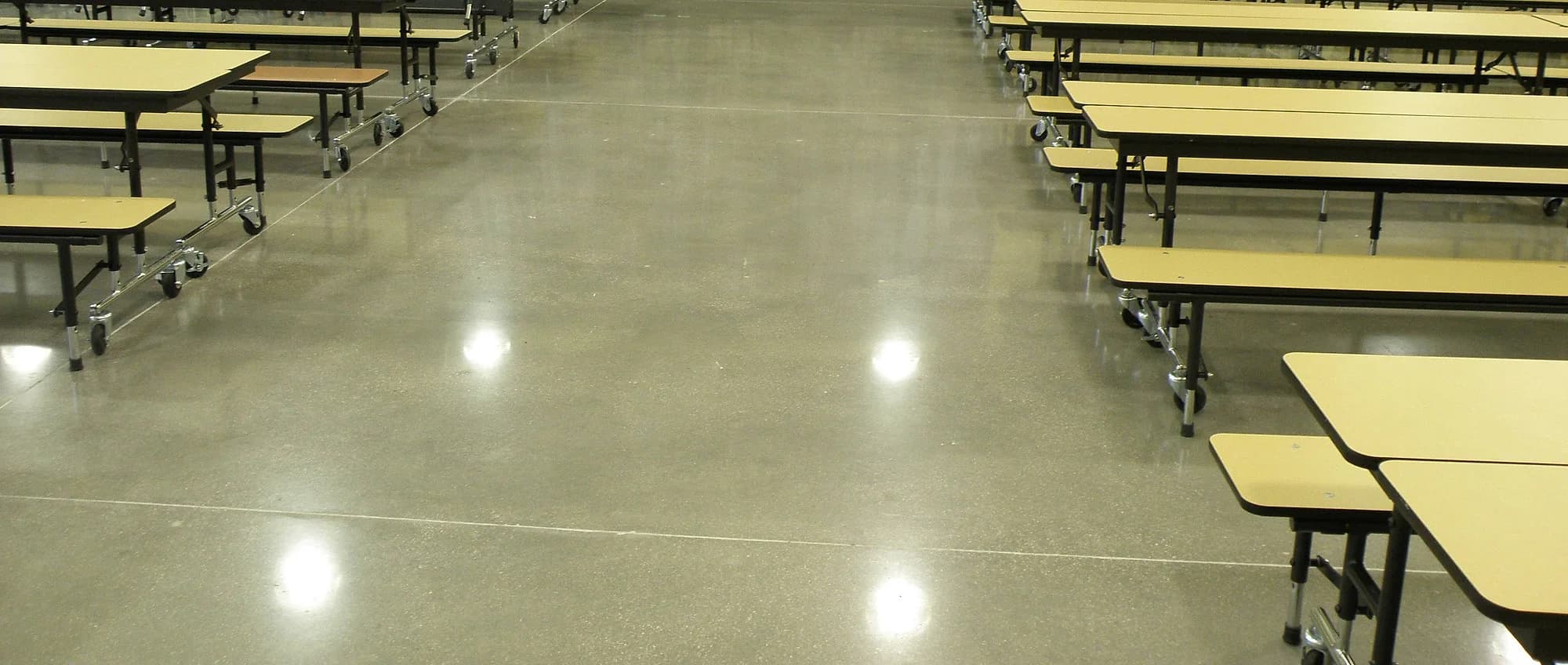
Ground and honed with industrial diamonds until the concrete itself holds the finish.
Every price here is a range. Moisture is what makes coatings fail, so it gets tested before anybody quotes a number, and the written price comes after we see the floor.
The comparison
Three questions decide this, and none of them is the color. What is the slab like now. What rolls over it. How long can you have it out of use.
Polished concrete is the slab you already have, ground and honed until it holds a finish. Nothing is laid on top of it, so there is no coating to re-coat later. It suits showrooms, warehouses, lobbies and schools, where the floor takes foot and light wheel traffic and has to read clean and level.
Epoxy and resin coatings go on top of the slab. A primer, a body coat, sometimes a broadcast of flake or quartz, then a clear top coat. They suit kitchens, service bays, plants and garages, where the floor takes spills and wash downs and you want color in it.
Prep and removal is not a finish. It is what happens to the slab before one goes down. What is bonded to the concrete decides the method: grinding for thin coatings and adhesive, blasting where the bond is heavier. Pick it on its own when a floor has to come up and nothing goes back down yet.
Each resin system carries its own clear top coat: epoxy, polyaspartic or urethane. Epoxy ambers under direct sun and polyaspartic does not. Xtreme Polishing Systems, our sister company under the same ownership, publishes the comparison between epoxy and polyaspartic.
Which building
Pick the space instead of the material. The matrix names the family we would put in it, and the floors inside that family.
Start with your space
Selected for Warehouse & Distribution
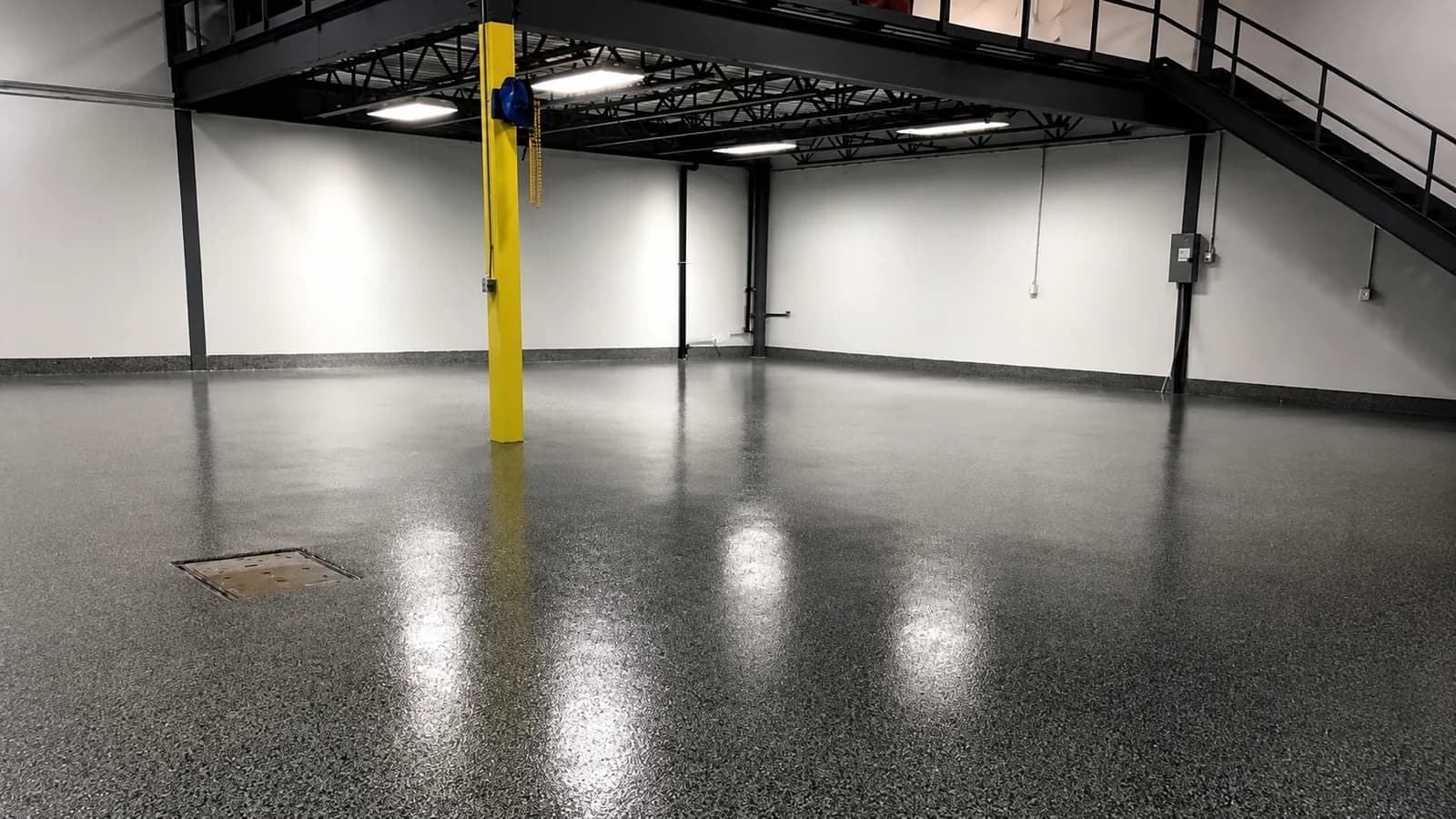
Polyaspartic Quartz Flake · Metallic · Glitter · Garage Floors · Countertops
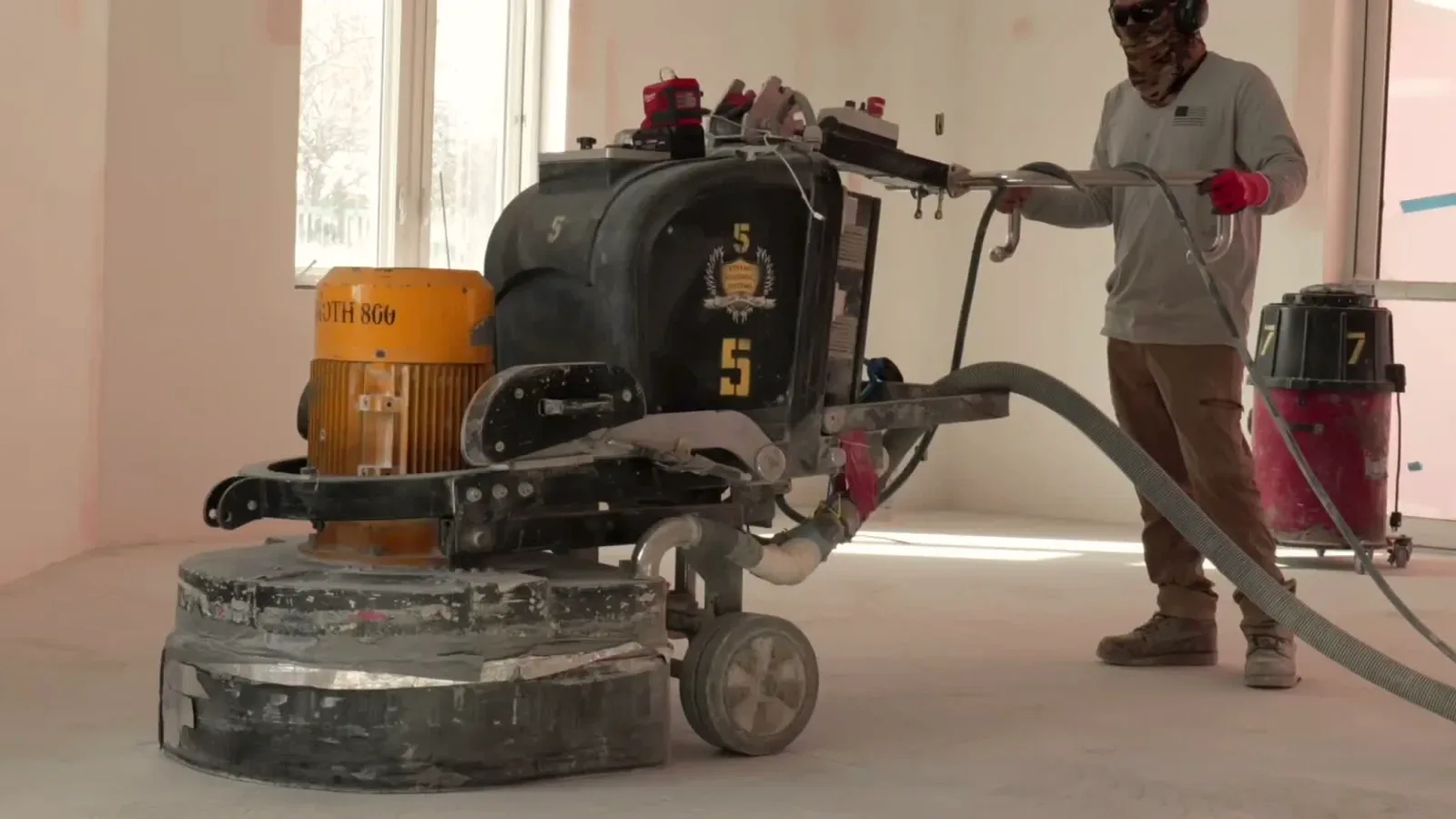
Floor Removal · Shot Blasting
Selected for Warehouse & Distribution
Polished concrete. Selected for Warehouse & Distribution.
Projects of record
One job per family, with the facts attached. The rest are in the gallery.
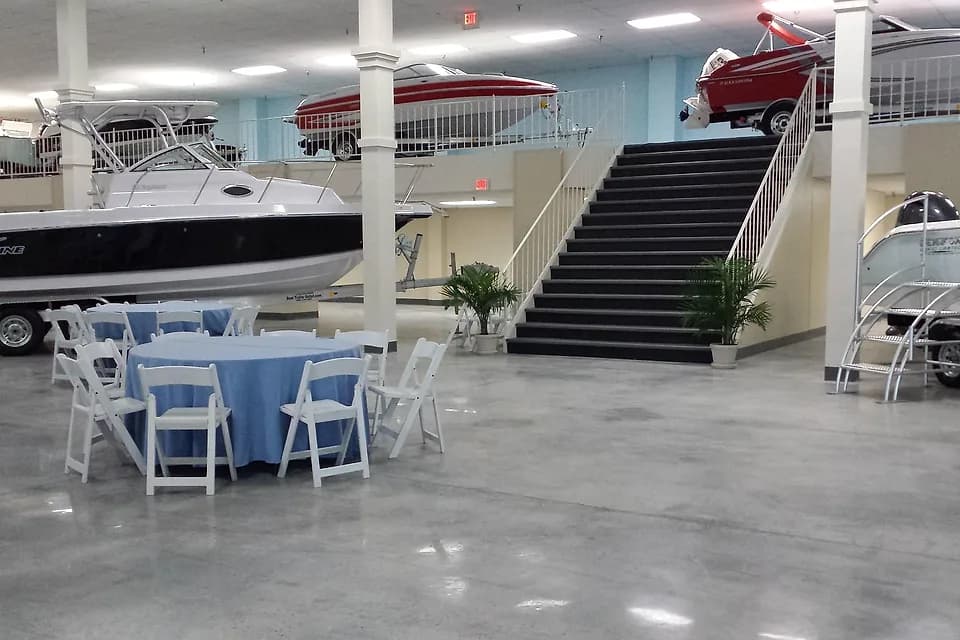
Polished concrete
Pompano Beach, FL · boat showroom · polished concrete
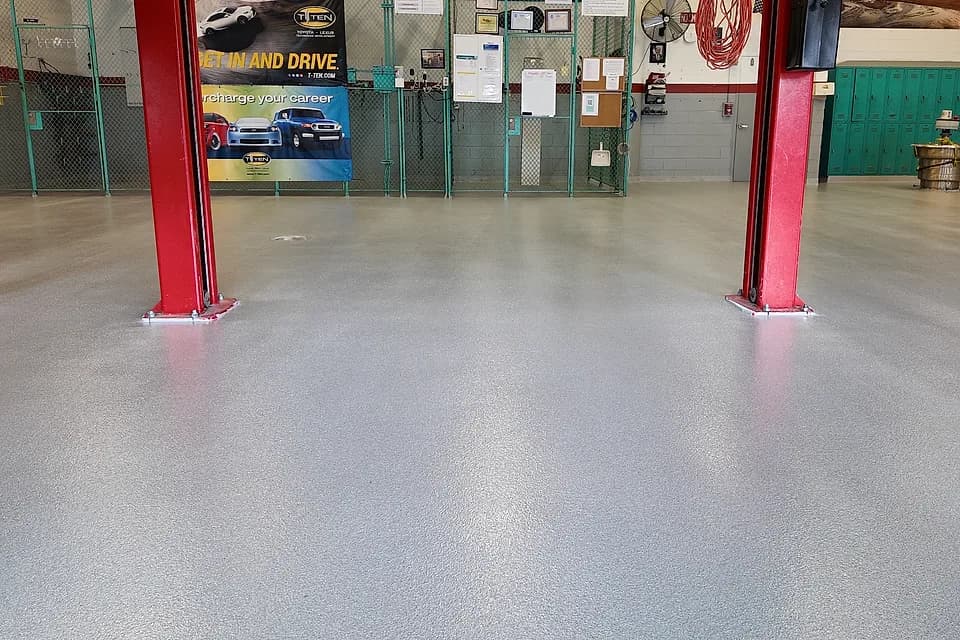
Epoxy and resin coatings
Miami, FL · automotive training bays · quartz traffic coat · about 20,000 sq ft · diamond grind and clean · Finished July 2026
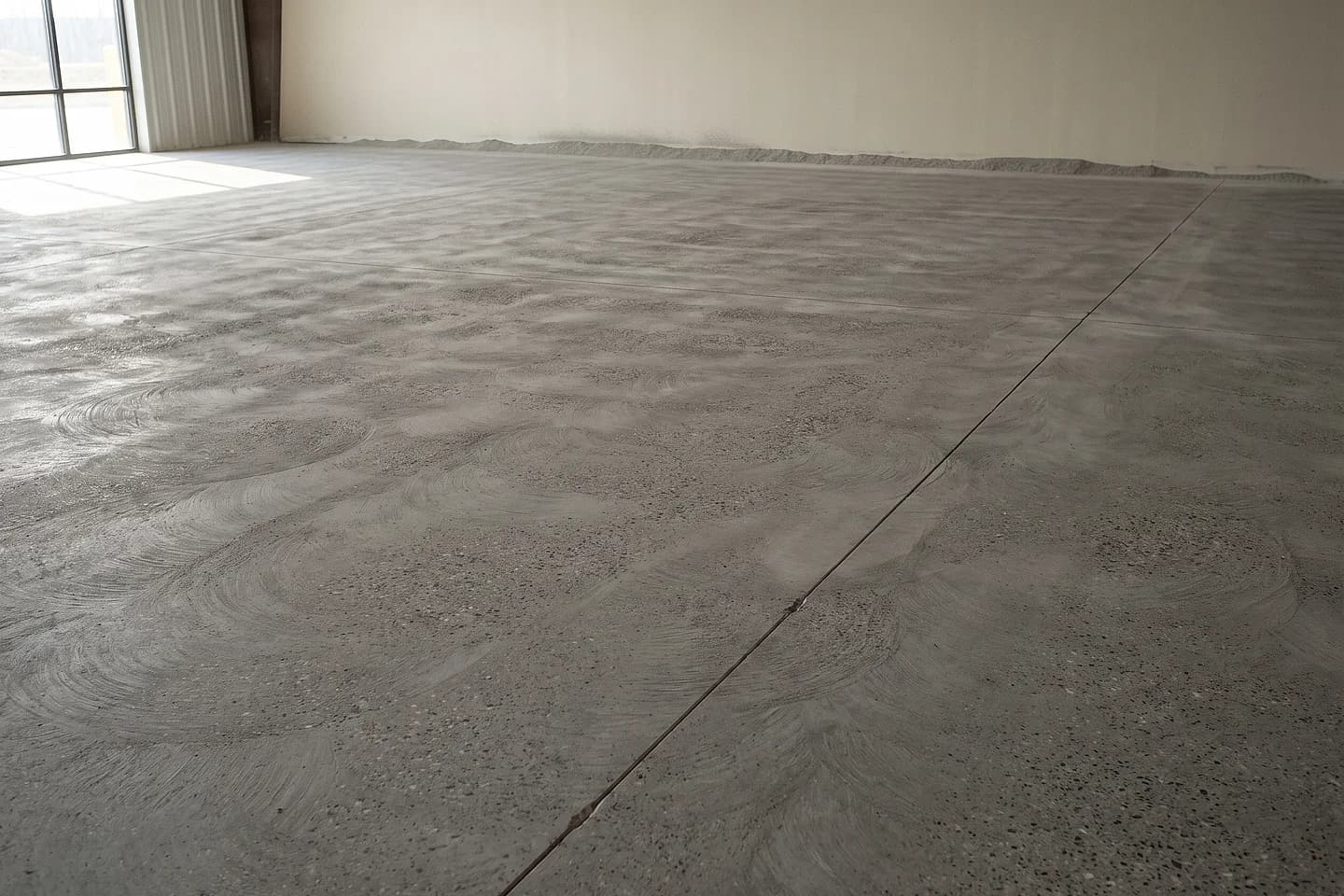
Prep and removal
A removal job ends with a bare slab like this one. Prep is the first step under every other floor on this page. Sometimes it is the whole job, when your old floor comes out and nothing goes back down.
The process
Five passes over the same slab, and each one changes what the floor does. In South Florida it is our crew, the machines and the materials on the floor for all five.
These five passes are polished concrete. A coating is not a pass over the slab, it is a layer on it, and a coating system runs from three layers to six. What both families share is the start, because the slab is ground and patched before anything goes on it. Everything after that is where they part.
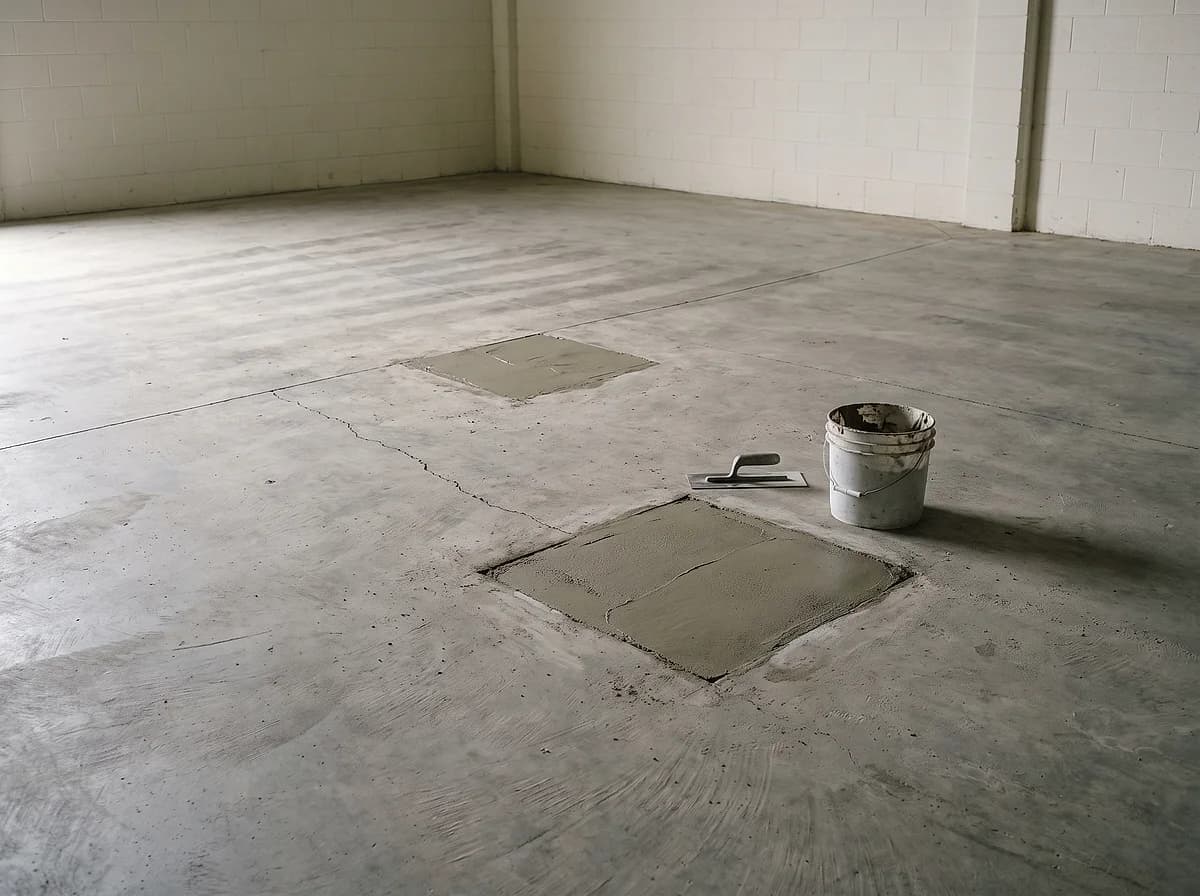
We cut through the surface of your slab to get it flat and fill what we find.
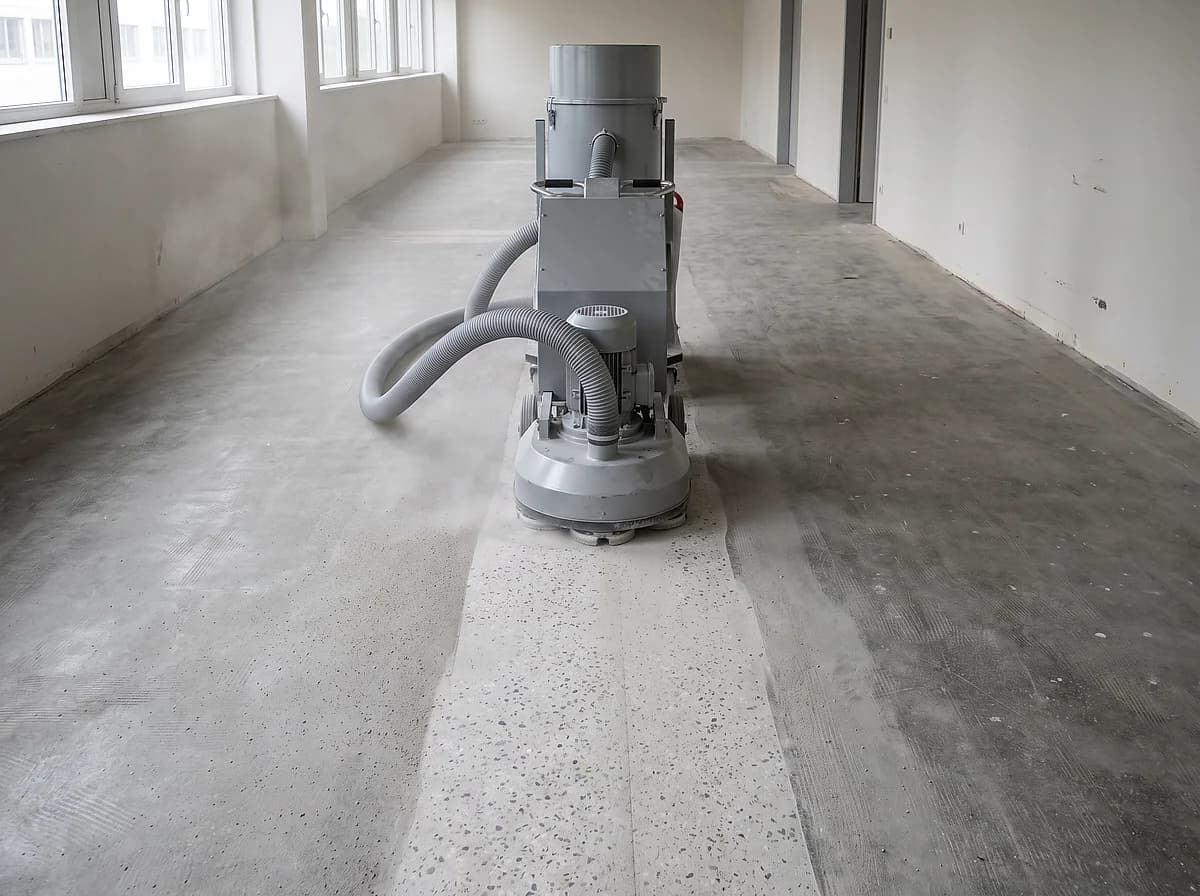
We grind with industrial diamonds until the unfinished concrete is exposed. The grit we start on is set by the slab.
No single sequence fits every slab; the starting grit depends on the slab. A typical 800-grit job runs 30, 70 and 120 metal, then 50, 100 and 200 resin, a densifier, 400 and 800 resin, then a guard and a high-speed burnish. 800 grit is our common finish; 1,500 and 3,000 are upgrades.
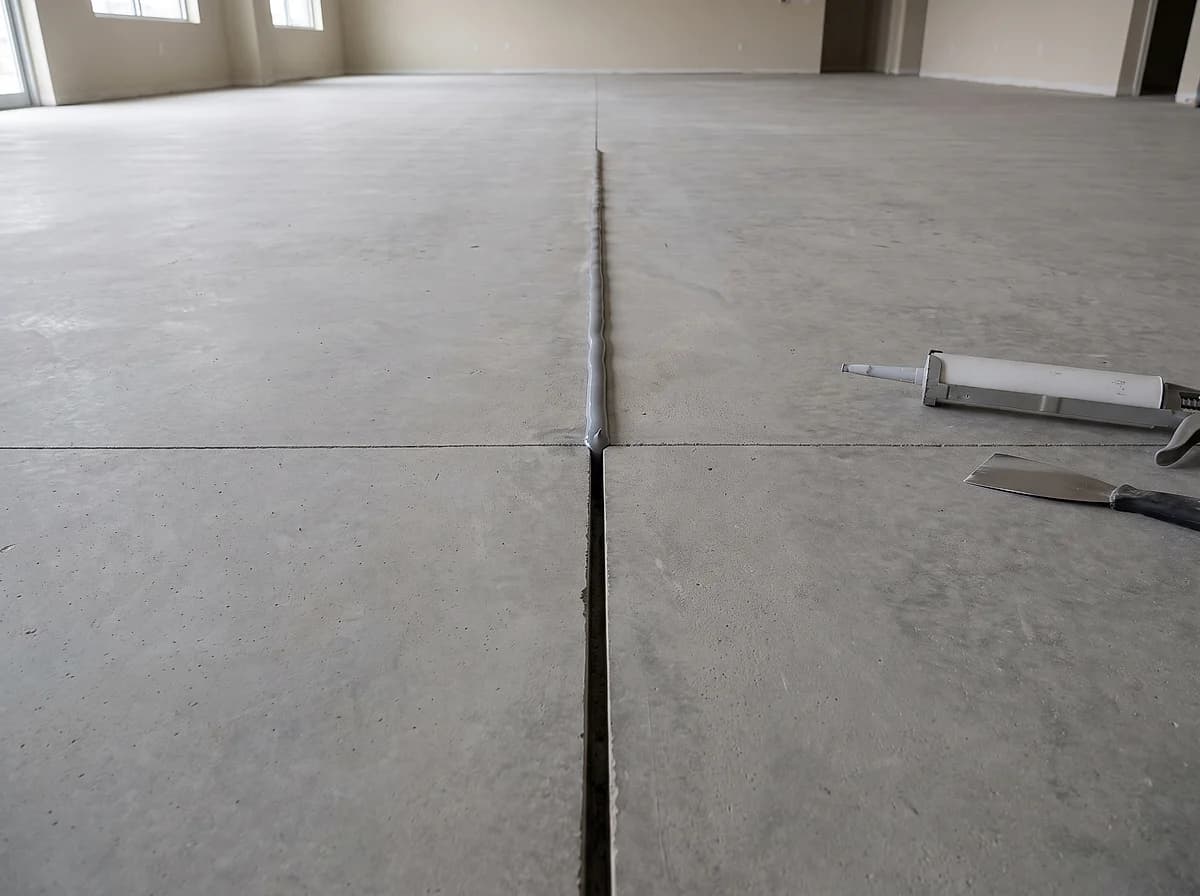
Control joints and expansion joints get filled where they need it.
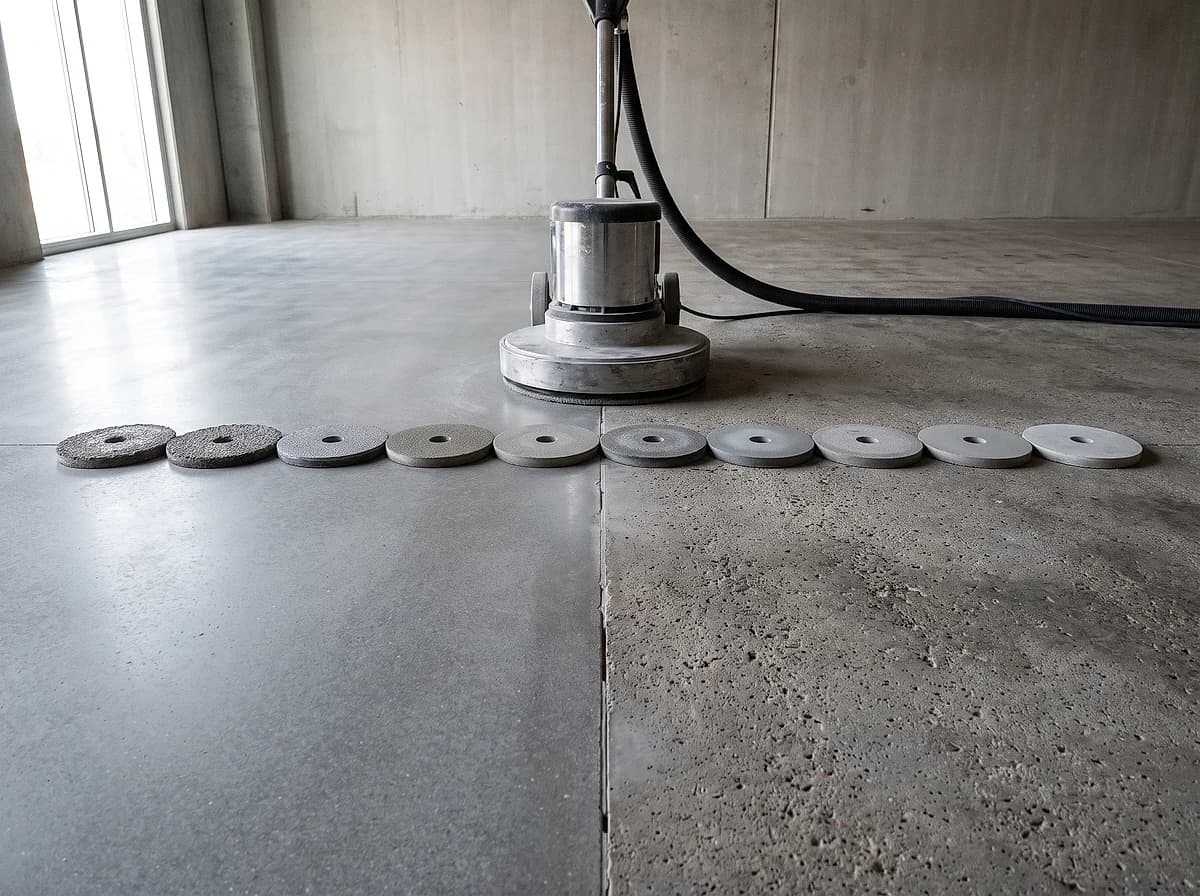
We go back over the floor with progressively finer diamonds, and this pass decides how the finish reads.
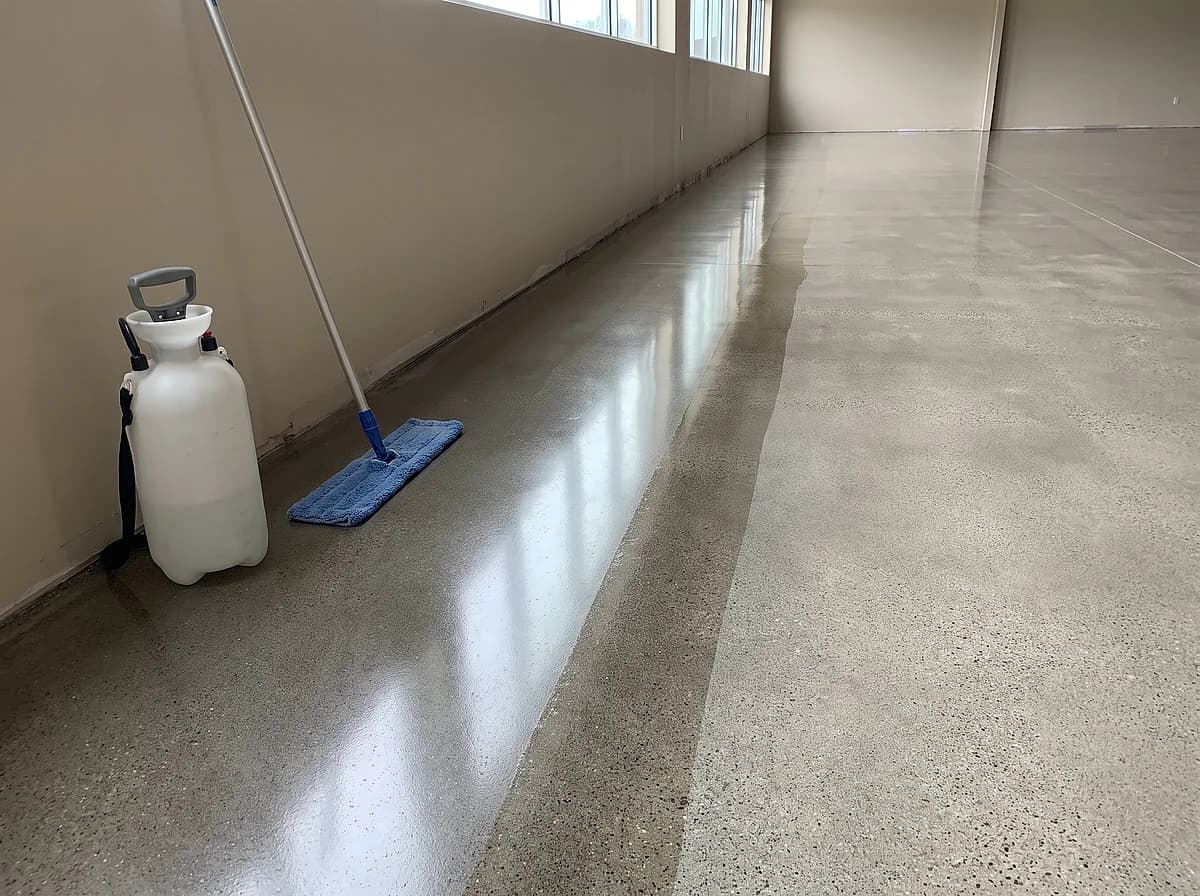
You pick the sheen. Bonded abrasives and densifiers are what make the floor resist dust and stains.
Polished concrete has four real drawbacks and a coating has two. They are why we do not put either one everywhere.
Polished concrete
Concrete is cold underfoot and it has no give in it. If people stand on it all shift, tell us before we quote.
A polished floor is slippery once water is on it. Anti-slip coating is on our own scope list and it goes where the water lands.
A high-gloss polish costs more up front than a lower-sheen finish on the same slab. There is no coating on it to re-coat later.
Resistant is not proof. Polished concrete is not completely resistant to spills, and in high traffic it needs re-polishing.
A coating
A coating is a layer, so one day it comes up and goes back down. Polished concrete has nothing on it to re-coat.
A coating sits over the slab, so moisture in the concrete can lift it. That is why the slab gets tested first.
SERVICE AREAS
In Miami-Dade, Broward and Palm Beach, our own crews do the work. One person owns your job from the first walk to the day you get the building back.
Outside South Florida, how we deliver a project depends on its scope, location and mobilization. Either way, the schedule is ours.
Tell us where the building is and we will tell you straight away how your area is covered.
Commercial or residential
Anywhere your business operates: eight building types, the standard that governs the ones that have one, and how long you are off the floor.
Anywhere around the house you live in: five spaces, the finishes to pick from, and how a home floor is priced.
You do not pick the system. The slab does. Moisture is what makes coatings fail, so it gets tested before anybody quotes a number. Whatever is bonded to the concrete now decides how much prep goes in. Tell us the address and we come out and read the floor before we quote.
One building often takes more than one system. A warehouse aisle, an office and a wash-down area do not have the same duty, so they do not get the same floor. We read the slab and the traffic room by room, and the scope names which system goes where before you sign it.
Time off the floor changes by system and by how many coats go on. Foot traffic comes back first, wheels later, and full cure last. Start with the date you need the floor back. That date narrows down which system fits.
You do not have to know. Tell us the space and roughly how big it is, and we will tell you which of the nine holds up.
Prefer to talk? Call +1 844-876-5474
Mon to Fri, 9:00 to 5:30

