
The NCP blog
Matte Polished Concrete Floors: The Complete Guide for South Florida Homes
Residential7 min read
The technical measurement that categorizes these finishes relies on Gloss Unit (GU) readings.
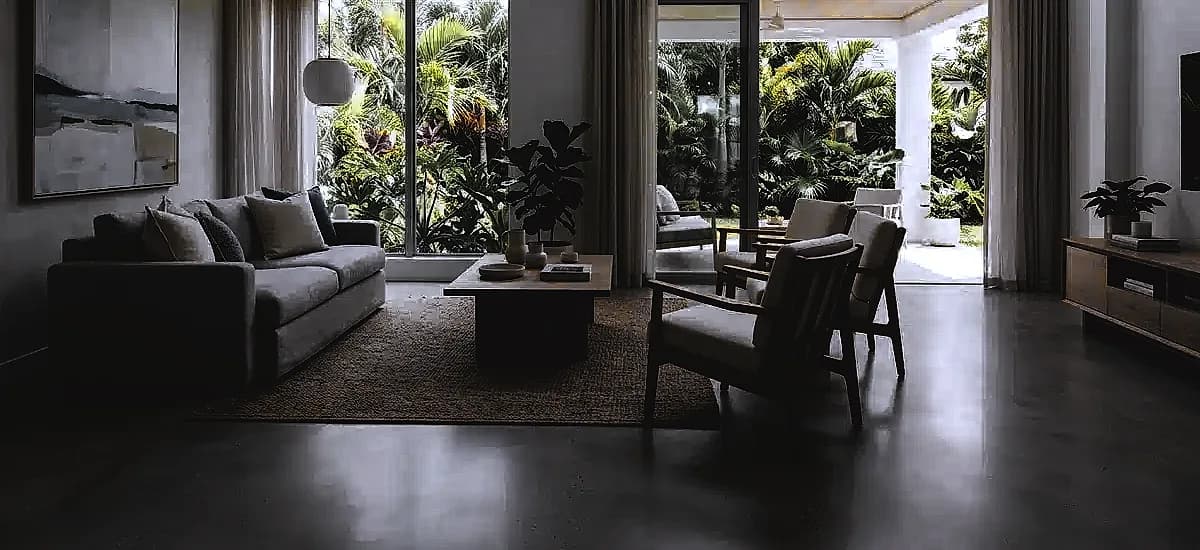
Matte polished concrete is a mechanically refined flooring surface that stops at a lower diamond grit level—typically between 100 and 400—to produce a highly durable, low-sheen finish measuring between 20 and 40 Gloss Units (GU). For South Florida homeowners, this specific finish offers the ultimate combination of architectural elegance and environmental resilience, delivering extreme durability against coastal sand, a 60-75% reduction in harsh solar glare, and natural thermal cooling properties that high-gloss alternatives simply cannot match.
What Defines a Matte Polished Concrete Finish?
The distinction between matte and high-gloss concrete is not merely aesthetic; it is a highly technical measurement of light reflectance. Matte polished concrete is achieved by intentionally halting the diamond polishing sequence before the surface becomes highly reflective. While mirror-like floors progress through diamond grits up to 3,000 or higher, matte finishes are typically completed between 100 and 400 grit.
This controlled termination point creates a smooth, refined micro-texture. The technical measurement that categorizes these finishes relies on Gloss Unit (GU) readings. According to the National Institute of Standards and Technology (NIST), matte surfaces are strictly defined as those measuring below 40 GU when evaluated at a 60-degree angle. Professional contractors utilize these strict parameters to ensure consistency across large residential spaces.
Why South Florida Homeowners Prefer Matte Over High-Gloss
South Florida’s unique coastal environment introduces specific architectural challenges that matte polished concrete addresses exceptionally well. The region experiences an average of 248 sunny days annually, with UV index ratings frequently exceeding 10 during the extended summer months. In 2026, as contemporary home designs continue to feature expansive floor-to-ceiling glass, managing natural light has become a primary interior design focus.
Research conducted by the Lawrence Berkeley National Laboratory indicates that matte surfaces reduce reflected glare by 60-75% compared to high-gloss finishes under direct sunlight exposure. For luxury homes facing east toward the Atlantic or west toward the Gulf, this light diffusion transforms the livability of main living spaces.
As David Chen, Lead Architect at Miami Coastal Design, explains: “Matte finishes absorb and diffuse the intense Florida sun rather than reflecting it directly into the eyes of homeowners. We’ve seen a massive shift in client preference; they want the industrial strength of concrete without the showroom glare.” This shift explains why many locals are choosing a low-sheen finish over high-gloss alternatives for their primary residences.
Comparing Matte Polished Concrete to Other Flooring Options
Homeowners evaluating durable concrete floor finishes often weigh matte polishing against high-gloss concrete, epoxy coatings, and traditional stained concrete. Understanding the technical trade-offs is crucial for making an informed investment.
| Feature | Matte Polished | High-Gloss Polished | Epoxy Coating | Stained Concrete |
|---|---|---|---|---|
| Gloss Units (GU) | 20-40 GU | 85+ GU | 70-90 GU | Variable |
| Glare Level | Very Low | High | Medium-High | Low-Medium |
| Footprint Visibility | Excellent Concealment | Highly Visible | Moderately Visible | Moderately Visible |
| Lifespan | 20-25+ years | 20-25+ years | 10-20 years | 15-20 years |
When evaluating polished concrete against epoxy coatings, the natural breathability of mechanically polished concrete makes it vastly superior for South Florida’s high-moisture environment, as it eliminates the risk of hydrostatic pressure causing the floor to peel or blister.
The Step-by-Step Matte Polishing Process for Humid Climates
Achieving a flawless matte finish in a tropical climate requires strict adherence to specialized protocols. The combination of high ambient humidity and elevated concrete moisture levels demands precise execution of the concrete polishing stages.
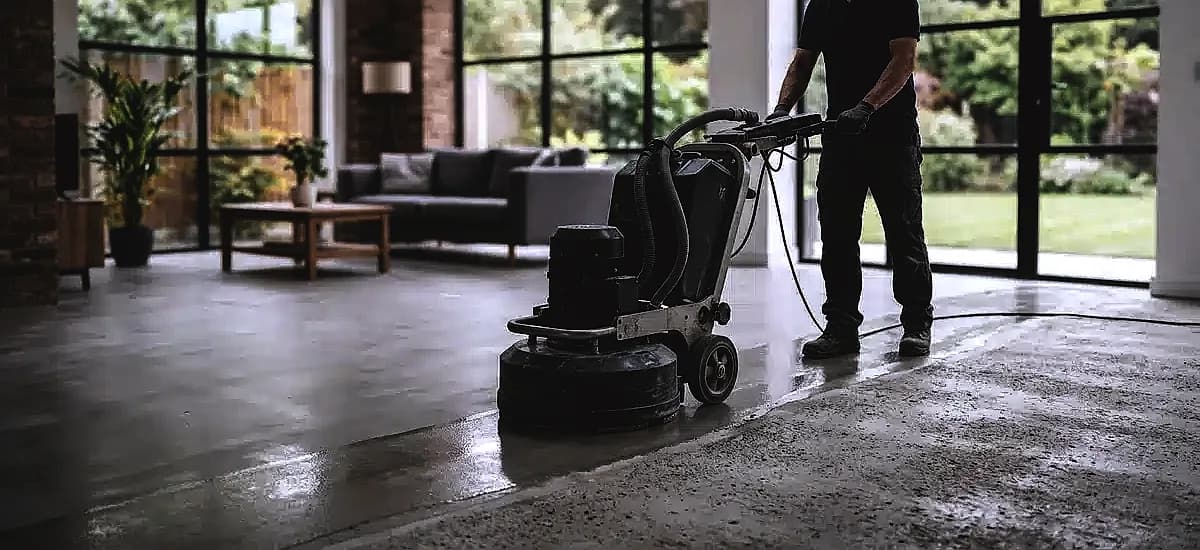
- Surface Profiling and Preparation: The process begins with aggressive concrete grinding using 30-50 grit metal bond diamonds. The International Concrete Repair Institute (ICRI) recommends achieving a Concrete Surface Profile (CSP) of 2-3 to ensure all existing coatings, adhesives, and surface contaminants are completely eradicated.
- Surface Refinement: Contractors transition to 80-grit metal bond diamonds to remove the deep scratches left by the initial grinding phase, creating a uniform canvas.
- Densification Treatment: Before moving to resin diamonds, a lithium silicate densifier is applied. This chemical penetrates the porous concrete, reacting with free calcium hydroxide to form dense calcium silicate hydrate crystals. This critical step increases the slab’s surface hardness by up to 40%.
- Resin Polishing: The floor is honed using 100-grit, followed by 200-grit resin bond diamonds. For a standard matte finish, the process often stops here. For a slightly tighter, “satin-matte” look, a final pass at 400-grit is executed.
- Protective Guard Application: A penetrating micro-guard is applied to provide oil and water repellency. Unlike topical sealers, this guard works within the concrete matrix, preserving the low-sheen aesthetic while offering crucial stain resistance.
Ideal Residential Applications in Miami and Fort Lauderdale
Matte polished concrete performs exceptionally well in specific residential zones where its unique characteristics align with both aesthetic desires and functional necessities.
Open Floor Plans and Great Rooms
Modern South Florida architecture heavily features indoor-outdoor living concepts with sliding glass walls. These designs flood interiors with natural light. Matte finishes maintain visual comfort throughout the day regardless of the sun’s position, ensuring the space feels warm and inviting rather than sterile and glaring.
Kitchens and High-Traffic Zones
The same high-gloss surface that looks pristine in a controlled showroom quickly becomes a frustrating maintenance nightmare in an active family kitchen. Matte concrete provides exceptional aesthetic appeal without the heavy upkeep burden. It effortlessly hides dropped water droplets, pet prints, and minor dust accumulation.
Pool Houses and Covered Lanais
Transitional spaces face the brunt of South Florida’s elements. Foot traffic constantly tracks in chlorinated pool water, beach sand, and organic debris. Sarah Jenkins, Technical Director at a leading concrete surface association, notes: “By stopping the diamond progression at 400-grit, we create a micro-texture that is virtually impervious to the micro-scratches caused by beach sand, making it the ultimate flooring for coastal transitional spaces.” This makes achieving a perfectly smooth concrete surface with a matte finish the most logical choice for lanais.
Maintenance and Long-Term Care Guidelines
Proper maintenance extends the life of matte polished concrete indefinitely while preserving its intended architectural appearance. Fortunately, matte finishes require significantly less frequent attention than their high-gloss counterparts.
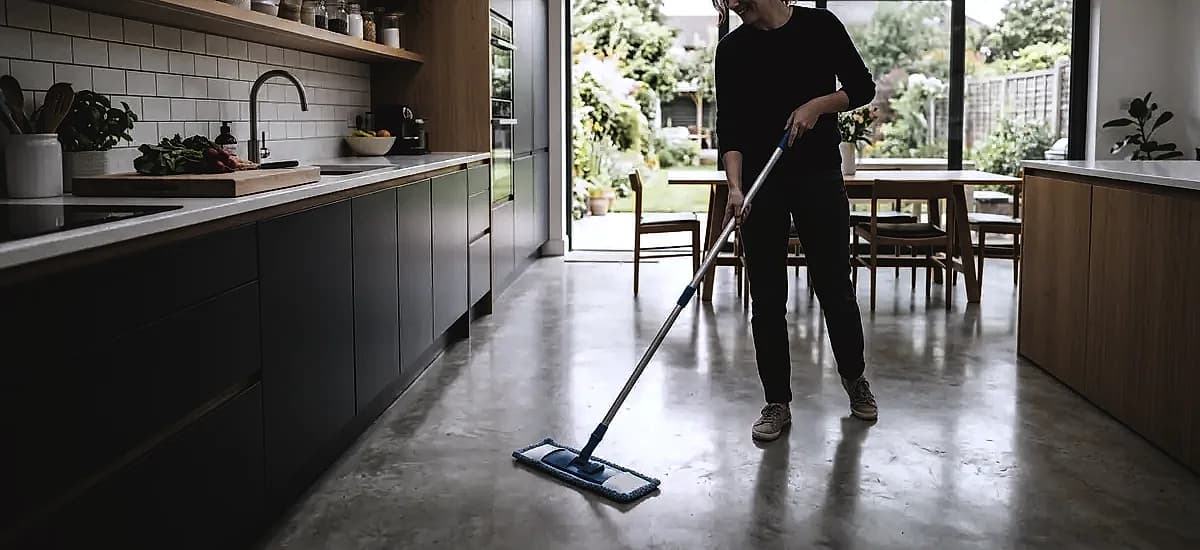
Daily and Weekly Care: Routine maintenance involves simple dust mopping with a dry microfiber pad to remove abrasive sand particles. Weekly damp mopping using clean water and a pH-neutral concrete cleaner will lift accumulated organic residue. Never use acidic cleaners like vinegar or citrus-based solutions, as these will etch the calcium carbonate in the concrete and destroy the densified surface.
Thermal Benefits: Beyond simple cleaning, maintaining an exposed concrete floor offers passive energy benefits. According to the U.S. Department of Energy, utilizing the thermal mass of a concrete slab can significantly stabilize indoor temperatures. Dr. Robert Vance of the Florida Building Science Institute states: “The thermal mass of a densified concrete slab can reduce ambient room temperatures by up to 4 degrees during peak summer months, directly lowering HVAC cooling loads.”
Hiring the Right Concrete Polishing Professional
The difference between an adequate floor and an exceptional matte polished concrete installation comes down entirely to installer expertise. South Florida’s climate demands contractors who deeply understand regional moisture dynamics.
When vetting professionals, inquire about their specific moisture testing protocols. A qualified contractor will always perform ASTM F1869 (calcium chloride) or ASTM F2170 (in-situ relative humidity) testing before beginning work. Furthermore, ask about their project timeline expectations, as proper densifier penetration and curing cannot be rushed in 80% ambient humidity.
Frequently Asked Questions
Does matte polished concrete stain easily?
While concrete is naturally porous, the combination of chemical densifiers and penetrating micro-guards makes matte polished concrete highly resistant to everyday stains. However, acidic spills like wine or lemon juice should be wiped up promptly to prevent surface etching.
Is matte polished concrete slippery when wet?
Matte polished concrete actually offers better slip resistance than high-gloss concrete or traditional glazed tile. The lower grit finish (100-400) leaves a microscopic texture that provides excellent traction, even in damp environments like bathrooms or pool houses.
Can you change the color of a matte polished concrete floor?
Yes. Matte polished floors can be customized using integral dyes or reactive acid stains during the polishing process. Because the floor is not highly reflective, these colors often take on a rich, earthy, and natural appearance that complements modern decor.
How much does matte polished concrete cost in South Florida?
In 2026, professional matte polished concrete typically ranges from $3 to $8 per square foot, depending on the condition of the existing slab, the size of the space, and any custom coloring requirements. It is generally more cost-effective than high-end large-format tile.
Will a matte finish show pet scratches?
No. Because the surface is mechanically hardened with lithium silicate densifiers and lacks a mirror-like reflection, the micro-scratches caused by large dogs’ claws are virtually invisible on a matte polished floor.
Conclusion
Matte polished concrete represents the perfect synthesis of modern interior design and rugged durability. By actively reducing solar glare, hiding daily wear and tear, and utilizing the natural thermal mass of the earth to cool your home, it stands as the premier flooring choice for South Florida residences in 2026. Whether you are renovating a beachfront condo in Fort Lauderdale or building a custom home in Miami, this low-sheen finish delivers decades of value with minimal maintenance.
Ready to transform your home with a beautiful, durable, and glare-free flooring solution? Contact us today to schedule a consultation and discover how matte polished concrete can elevate your South Florida property.
Written by

Founder and CEO
Chris Lavin is an esteemed leader in concrete polishing and epoxy coatings with a distinguished 20-year career. As founder and CEO of National Concrete Polishing and owner of Xtreme Polishing Systems, he's renowned for polishing and epoxy coating more floors than anyone globally. Chris is recognized for his innovative approach and commitment to enhancing floor durability and aesthetics. His hands-on experience and technical proficiency make him a respected authority and a valuable resource in the field of floor polishing and coatings.
Same topic
Related articles
All stories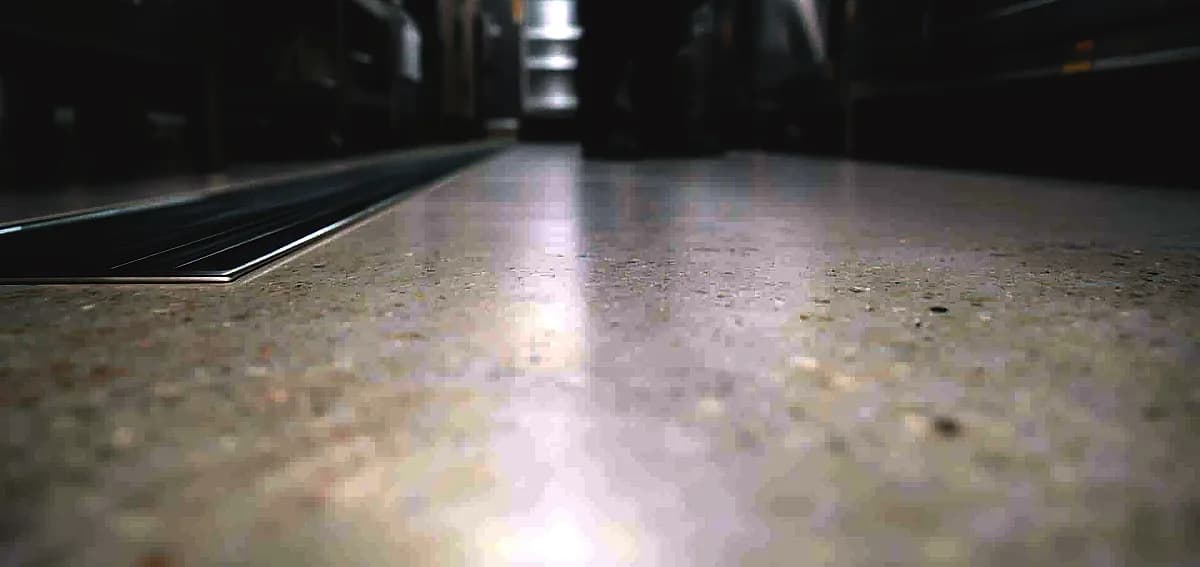
Residential8 min read
What Restaurants Need to Pass a Health Inspection Floor Check
It endures heavy foot traffic, dropped equipment, boiling water spills, and harsh degreasing chemicals daily.
Read it
Residential9 min read
How Restaurants Replace Their Floors Without Closing for Long
The average food service establishment loses approximately $3,500 in daily revenue during unexpected closures in 2026.
Read it
Residential8 min read
Where Polished Concrete Beats Epoxy in a Home (and Where It Doesn’t)
Before evaluating specific rooms, it is essential to understand how these two flooring systems function.
Read it
Tell us about the floor
Tell us the space and roughly how big it is.We come back with what it would cost and when we could start.
Prefer to talk? Call +1 844-876-5474
- Leads@
nationalconcretepolishing.net - 2200 NW 32nd St #600,
Pompano Beach, FL 33069 Mon to Fri, 9:00 to 5:30