
The NCP blog
Polished Concrete Garage Floor vs Epoxy: Pros and Cons
Residential7 min read
This process smooths the surface, and a densifier hardens it, so polished concrete is used in high-traffic areas.
A polished concrete garage floor is a flooring option created by grinding and polishing the surface of concrete to achieve a smooth, glossy finish. This process smooths the surface, and a densifier hardens it, so polished concrete is used in high-traffic areas.
Epoxy flooring is a coating applied directly to the concrete surface. It is composed of a resin and hardener that chemically bond to create a thick, durable layer. This coating gives a glossy finish and a surface that resists spills and abrasion, which suits many garages.
The key difference between polished concrete and epoxy flooring lies in their application and finish. Polished concrete offers a natural look with varying degrees of shine and is more integrated with the existing concrete slab, while epoxy creates a continuous coating that resists many chemicals and stains, depending on the product.
Factors impacting the lifespan of both flooring options include the quality of materials used, installation techniques, maintenance practices, and exposure to heavy impacts or chemical spills.
Maintenance for polished concrete involves regular cleaning and occasional re-polishing to maintain its shine, while epoxy flooring requires minimal upkeep but benefits from periodic cleaning and recoating to preserve its protective qualities.
What Are Polished Concrete Garage Floors?
Polished concrete garage floors are created by grinding, honing, and sealing existing concrete to achieve a smooth, glossy finish. This process smooths the floor and hardens the surface, which suits high-traffic areas.
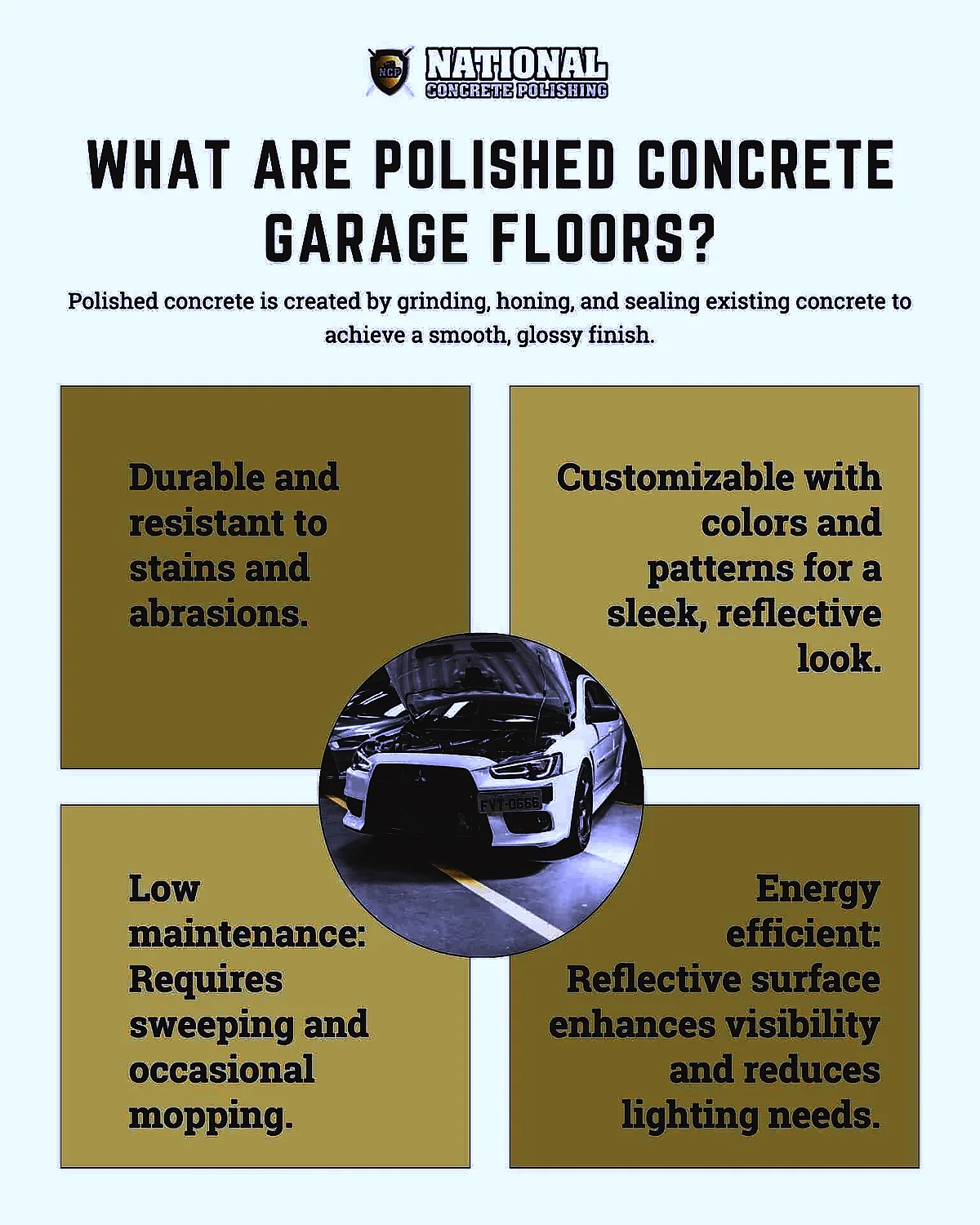
Polished concrete features a sleek, reflective surface customized with various colors and patterns. Upkeep is light, with regular sweeping and occasional mopping, but polished floors are not maintenance-free: floors that are not properly maintained will eventually lose their shine.
Key features of polished concrete in garage settings include light upkeep and a reflective surface that brightens the space. This combination of aesthetics and practicality is why many homeowners consider it.
What Are Epoxy Garage Floors?
Epoxy garage floors are a durable flooring solution created by applying a layered combination of epoxy resin and hardener to a concrete substrate. This two-part system forms a strong, chemically bonded coating that cures into a tough, protective layer, ideal for withstanding the demands of garage environments.
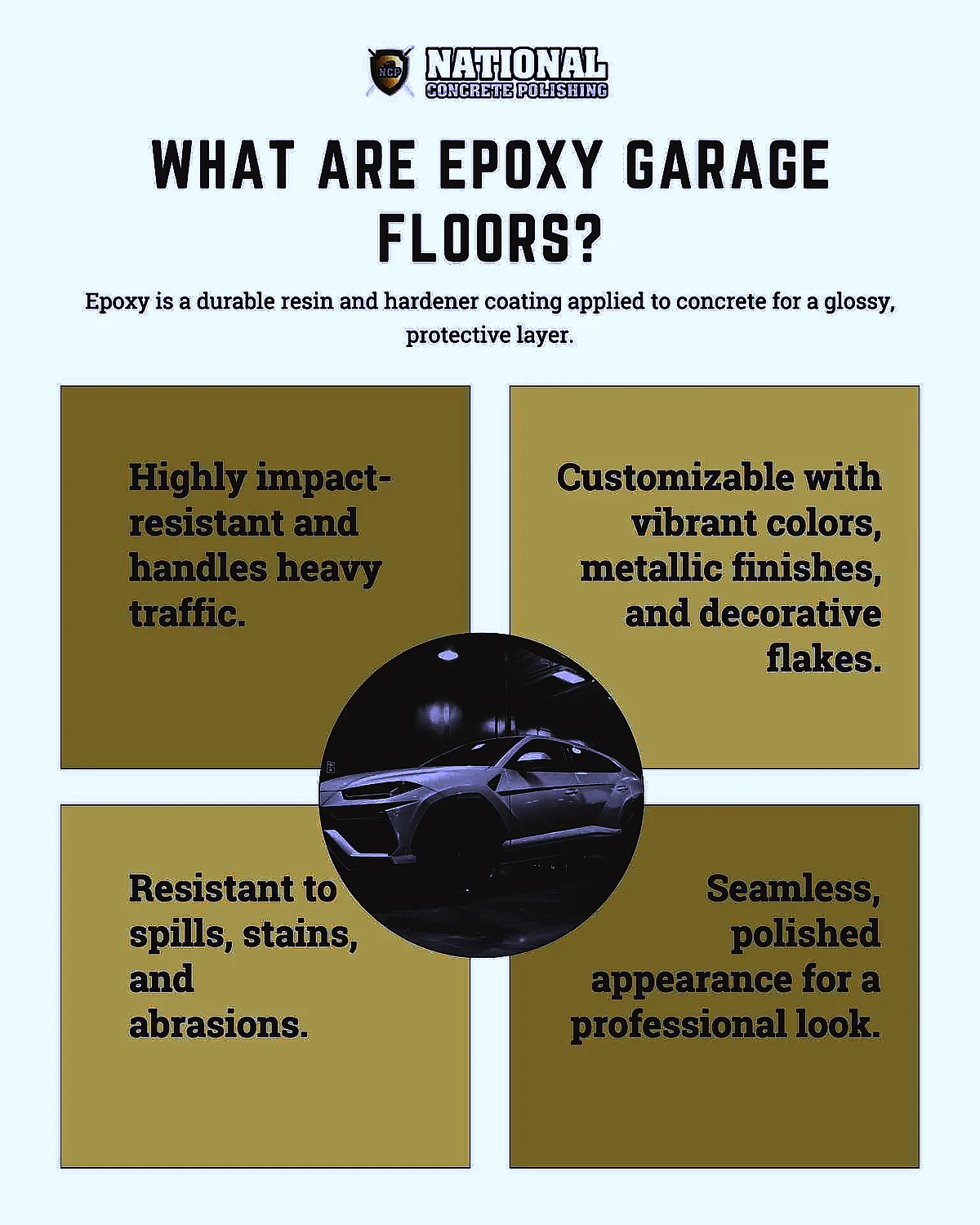
Epoxy flooring’s appearance is characterized by its glossy finish and color versatility. This allows for various decorative options, such as solid colors, metallics, or flake designs. Epoxy also provides a surface that can be customized to fit different aesthetic preferences and functional needs.
A standout feature of epoxy flooring is its protective properties, making it highly impact-resistant and capable of withstanding heavy traffic in garages. Its resistance to spills, stains and abrasion helps it stay functional and visually appealing.
How Does Durability Compare Between Polished Concrete and Epoxy?
Polished concrete and epoxy compare in durability in terms of resistance to wear, scratches, and chemical spills. Each option has unique properties that influence its longevity and performance under heavy use.
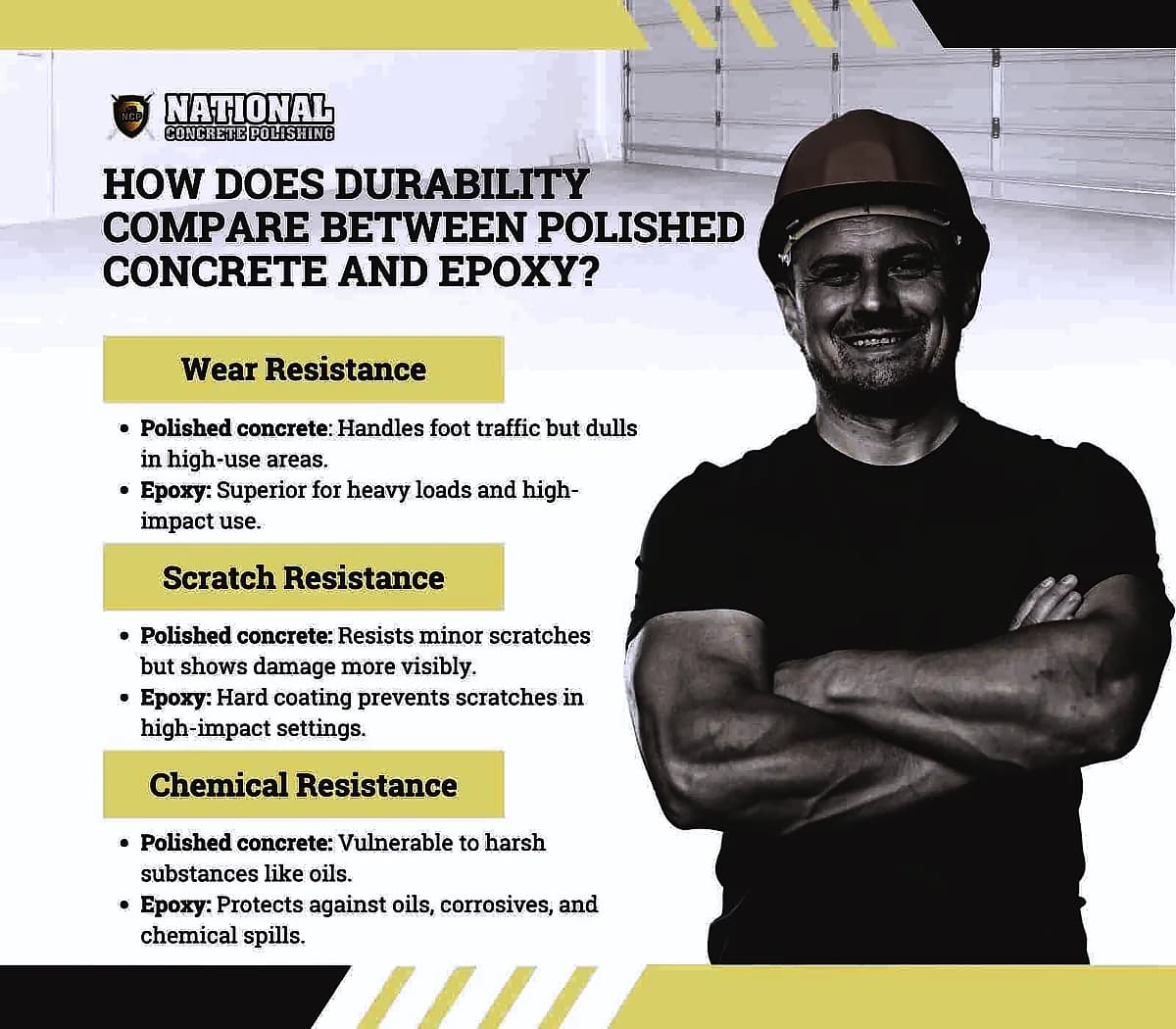
The ways by which polished concrete and epoxy compare in durability include:
- Wear Resistance: Polished concrete offers good resistance to daily wear, with its hardened surface capable of handling foot traffic and light vehicle use. However, it is susceptible to dulling over time in high-traffic areas.
How well an epoxy coating resists wear depends on the system, the preparation and the use, and the manufacturer’s data sheet shows what each product has been tested against.
- Scratch Resistance: Polished concrete is resistant to minor scratches but lacks the protective layer epoxy provides. Deep scratches or gouges are more noticeable on polished concrete, especially in areas with heavy equipment or sharp objects.
Epoxy flooring’s coating can resist minor scratches, though sharp or heavy impacts can still chip or scratch it.
- Chemical Resistance: Polished concrete is moderately resistant to chemicals but acidic spills such as battery acid can etch the polished surface if not removed quickly, and oils can stain a floor that is not guarded.
A coating shields the concrete from spills, and resistance to specific chemicals varies by product, so check the manufacturer’s chemical resistance chart. Polished concrete is porous, so liquids can soak in unless the floor is sealed with a guard.
Which Flooring Option Requires Less Maintenance Over Time?
Polished concrete takes light upkeep, but it is not maintenance-free. Routine maintenance involves regular sweeping to remove dirt and occasional damp mopping to maintain its shine. Re-polishing restores the reflective finish when it dulls, and the interval depends on usage. Maintenance costs are low, a guard or sealer may be reapplied over time, and the lifespan depends on use and care, not on one fixed number.
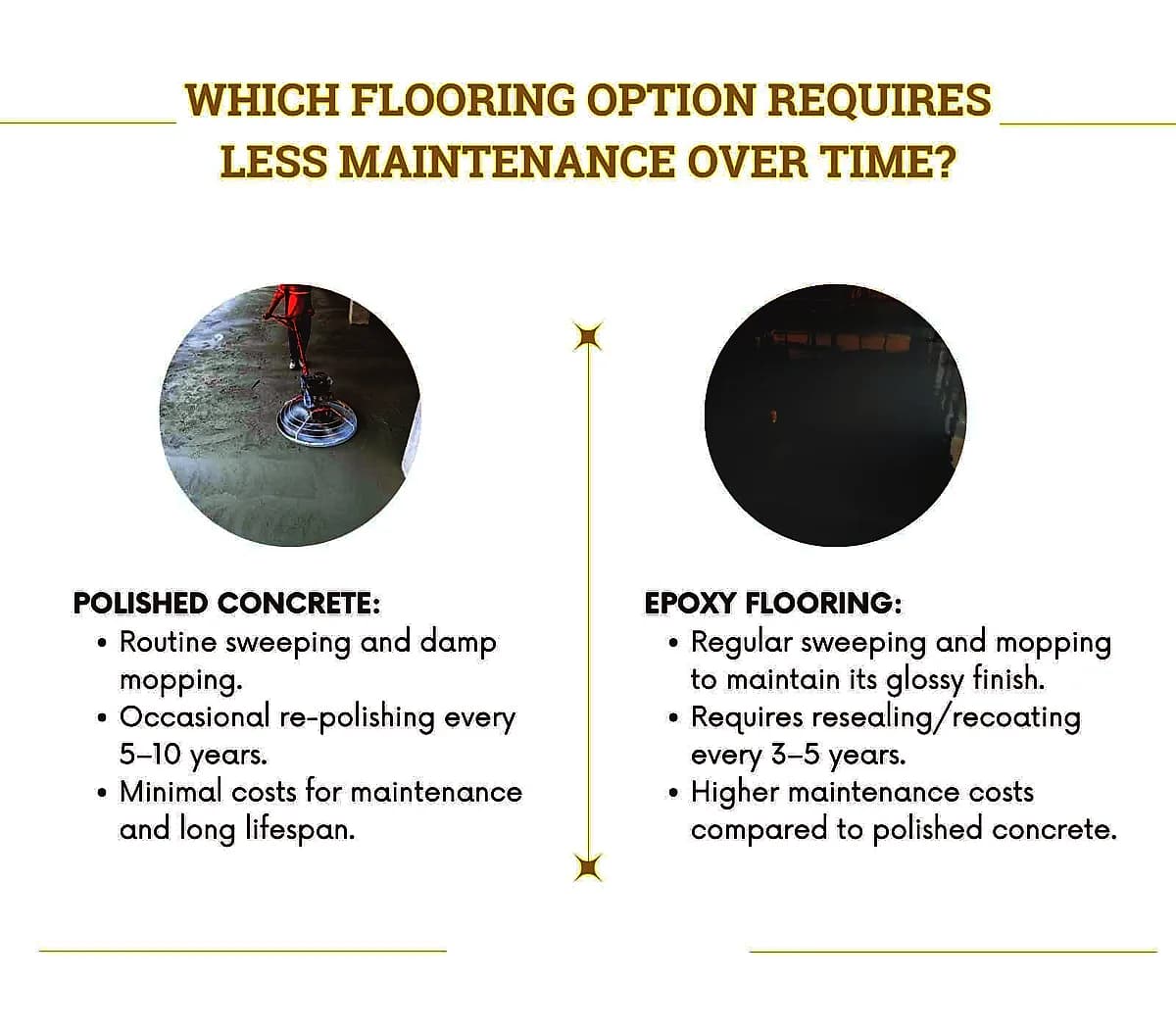
Epoxy flooring requires minimal upkeep but involves periodic maintenance, such as sweeping and damp mopping, to remove dirt and prevent staining. It requires periodic resealing or recoating, particularly in high-traffic areas, to preserve its glossy finish and protective properties. Recoating adds to long-term maintenance costs, and the interval depends on the system and the traffic. For reporting purposes, the industry’s reference table for resinous floor coatings assumes a refurbishment about every 6 to 9 years depending on system thickness. Both options need care: for epoxy it is the recoat, for polished concrete the re-polish.
Which Is More Cost-Effective: Polished Concrete or Epoxy?
Choosing the more cost-effective flooring option comes down to the slab and the system. Polished concrete works with the existing slab and needs no coating material, but a slab with old coatings, cracks or heavy stains takes more preparation. Both options have maintenance costs over time, and our written price comes after we have seen the floor.
Which Garage Flooring Option Is Easier to Install?
Polished concrete requires grinding and polishing the existing concrete slab to achieve a smooth, reflective finish. Preparation comes first, and professional equipment is needed even for a garage. A bare polish can be back in service the same day after the final clean, and a floor with a guard or sealer in about 24 hours.
Epoxy installation has more steps. It involves multiple steps, including cleaning and leveling the slab, repairing any cracks, applying a primer, mixing and applying the epoxy in layers, and allowing curing time between coats. Professional installation is recommended, as improper application can lead to peeling or uneven surfaces. For epoxy, foot traffic is typically possible in 10 to 24 hours and wheels in 24 to 72, with full cure in about 7 days. As a planning guide, National Concrete Polishing allows 2 to 3 working days on site for a garage with a standard coating system, and heavy removal, repairs or moisture mitigation can extend that.
How Do Polished Concrete and Epoxy Perform in Different Temperatures?
In South Florida the main concerns for either floor are heat and humidity rather than freezing. In climates with freeze-thaw cycles, moisture in an unsealed slab can damage the surface.
How an epoxy coating handles temperature swings depends on the formulation: ASTM C884 exists to determine which epoxy formulations debond from concrete when temperatures change, so the data sheet’s temperature range matters.
How Does Moisture in the Slab Affect the Choice?
Moisture matters most for a coating. ASTM F2170 notes that excessive moisture in floor slabs can cause failures such as debonding and deterioration of coatings, so the slab is tested before epoxy goes down. Polished concrete is not a coating, so there is no film to debond. It also shows the slab as it is: cracks and stains that a coating would hide stay visible, so it works best on a sound, fairly smooth slab.
Which Option Offers Better Aesthetic Choices?
Epoxy offers the wider range of colors and patterns. It provides a wide variety of customization options, including high-gloss finishes, vibrant colors, and decorative chips that are embedded into the surface. These features allow epoxy to complement modern and industrial garage styles while offering a polished, professional appearance. Metallic effects and custom patterns add to that range.
Polished concrete offers a more minimalistic aesthetic, with finishes ranging from matte to high gloss. Its natural appearance works well for industrial or contemporary garage designs, creating a sleek and clean look. While polished concrete lacks the vibrant color options of epoxy, it is enhanced with stains or dyes to achieve subtle tones. Varying levels of polish allow for customization, but it remains better suited for understated aesthetics compared to epoxy’s bold visual options.
What Are the Environmental Impacts of Polished Concrete and Epoxy?
The environmental impacts of polished concrete and epoxy include production emissions, VOC levels, disposal challenges, and maintenance requirements. Each material has distinct environmental aspects that affect its eco-friendliness.
The environmental impacts of polished concrete and epoxy are:
- Production Emissions: This refers to the environmental impact of manufacturing the materials. Polished concrete works with the existing slab and adds few materials. Epoxy adds resins and hardeners, which are manufactured materials.
- VOC Levels: This refers to the release of volatile organic compounds during installation and curing. The safety data sheet of each product states its VOC content, for densifiers and guards as well as for epoxy, and ventilation is needed during application and curing.
- Disposal Challenges: This refers to the ease of managing waste and the material’s biodegradability. Polished concrete adds no coating that has to be removed later. Cured epoxy is not biodegradable, and removing a coating produces waste.
Which Flooring Option Is Best for Your Garage?

Epoxy flooring suits garages where chemical spills and a wide choice of colors and patterns matter most. Polished concrete suits garages where a natural look and light upkeep matter most. Which one is best depends on how the garage is used, and a site visit settles it.
Written by

Founder and CEO
Chris Lavin is an esteemed leader in concrete polishing and epoxy coatings with a distinguished 20-year career. As founder and CEO of National Concrete Polishing and owner of Xtreme Polishing Systems, he's renowned for polishing and epoxy coating more floors than anyone globally. Chris is recognized for his innovative approach and commitment to enhancing floor durability and aesthetics. His hands-on experience and technical proficiency make him a respected authority and a valuable resource in the field of floor polishing and coatings.
Same topic
Related articles
All stories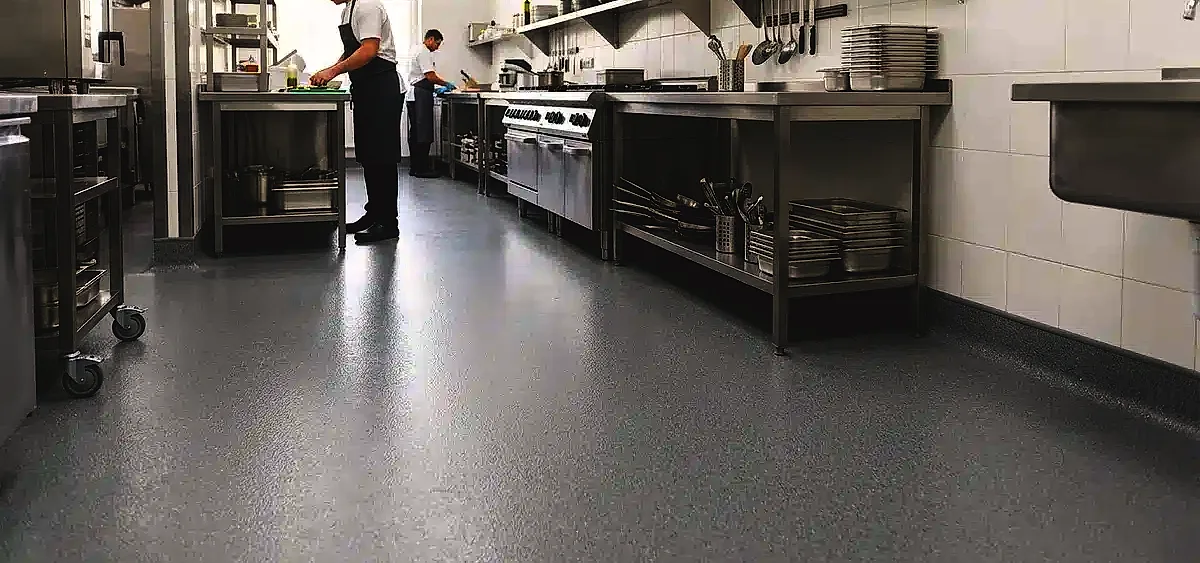
Commercial10 min read
Commercial Kitchen Floor Requirements in Florida
What Florida food code rules (Chapter 61C-4) ask of commercial kitchen floors: smooth, non-absorbent surfaces and coving at the walls.
Read it
Residential7 min read
Matte Polished Concrete Floors: The Complete Guide for South Florida Homes
A complete guide to matte polished concrete floors for South Florida homes, covering how they look, wear and hide everyday marks.
Read it
Residential8 min read
Epoxy Over Tile Floors: What Miami Homeowners Need to Know
Many Miami homeowners wonder whether epoxy can be applied over tile floors instead of removing them entirely.
Read it
Tell us about the floor
Tell us the space and roughly how big it is.We come back with what it would cost and when we could start.
Prefer to talk? Call +1 844-876-5474
- Leads@
nationalconcretepolishing.net - 2200 NW 32nd St #600,
Pompano Beach, FL 33069 Mon to Fri, 9:00 to 5:30