
The NCP blog
Where Polished Concrete Beats Epoxy in a Home (and Where It Doesn’t)
Residential8 min read
Before evaluating specific rooms, it is essential to understand how these two flooring systems function.
In 2026, homeowners report a 40% increase in choosing industrial-grade flooring systems for residential spaces, prioritizing durability and modern aesthetics. If you are deciding between mechanically refined surfaces and resinous coatings for your home, you may be wondering which system performs best in specific living areas. We have the right article for you, covering the exact performance metrics of both polished concrete and epoxy coatings broken down by room.
Understanding Your Flooring Options
Before evaluating specific rooms, it is essential to understand how these two flooring systems function. Polished concrete is a mechanical process rather than a topical coating. Technicians use heavy-duty floor grinders equipped with diamond abrasives to hone the concrete slab. During this process, we apply chemical densifiers, such as lithium silicate, which penetrate the surface to harden the concrete and prevent dusting. The result is a highly durable, breathable surface that incorporates the natural aggregate of the slab.
Conversely, epoxy is a thermosetting resin applied as a liquid coating over a prepared concrete surface. The application requires a chemical reaction between an epoxide resin and a polyamine hardener. This process creates a tightly cross-linked polymer structure that bonds mechanically to the concrete. For the coating to adhere properly, the concrete must undergo aggressive surface preparation, typically shot blasting or diamond grinding, to achieve a specific concrete surface profile (CSP). Epoxy forms a seamless, non-porous barrier that sits entirely above the concrete.
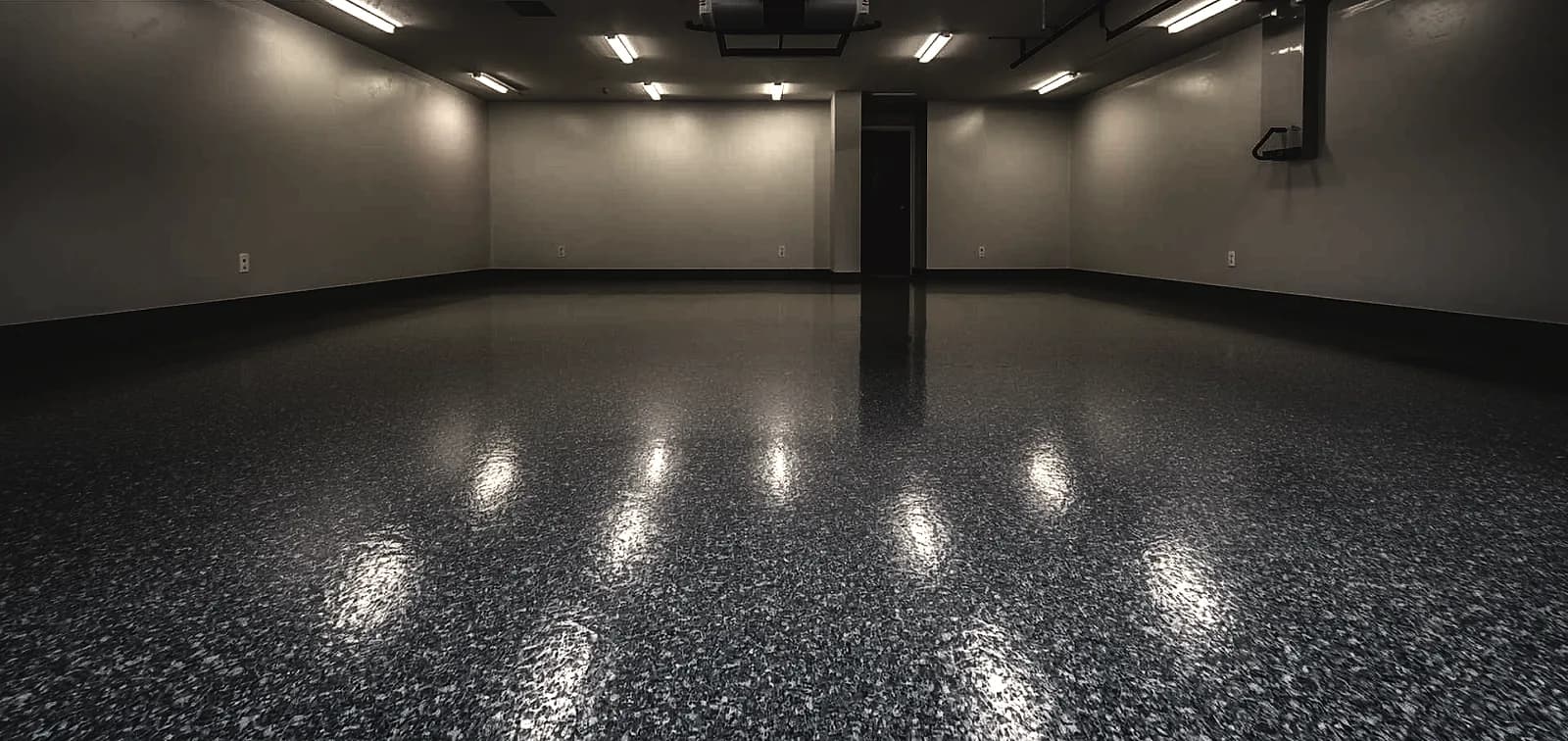
Garage Flooring: Why Epoxy Usually Wins
The garage is a harsh environment that demands specialized protection. Vehicles introduce motor oil, transmission fluid, road salts, and antifreeze to the floor surface. Because polished concrete retains some porosity despite densification, these chemicals can eventually penetrate and stain the surface. Epoxy coatings provide an impermeable barrier that resists these harsh automotive chemicals completely.
Furthermore, garages are prone to hot-tire pickup. When tires heat up from driving, they expand and soften. Once parked in the garage, the tires cool and contract, gripping the floor surface tightly. Low-quality paints will peel away under this stress, but 100% solids epoxy systems possess the tensile strength to withstand it. According to the National Association of Home Builders, more than 70% of premium garage renovations in 2026 utilize a resinous epoxy or polyaspartic system.
As Michael Thorne, Facility Manager at U.S. Industrial Floors, states: “The chemical resistance of a multi-layer epoxy system, especially when topped with a polyurethane or polyaspartic clear coat, is unmatched in automotive environments. It provides a sacrificial layer that protects the foundational concrete from total degradation.”
Basements: Moisture Mitigation And Polished Concrete
Subterranean spaces present unique challenges, primarily related to moisture. Concrete is naturally porous, meaning water vapor from the soil below can travel upward through the slab. This phenomenon is measured as the Moisture Vapor Transmission Rate (MVTR). When you apply a non-porous epoxy coating over a basement slab with a high MVTR, the trapped moisture creates hydrostatic pressure. This pressure will eventually cause the epoxy to blister, peel, and delaminate.
Mechanically polished concrete is completely breathable. It allows moisture vapor to pass through the slab and evaporate into the air without damaging the finish. If your basement experiences frequent dampness, polished concrete is the safest and most resilient investment. It is immune to water damage and will not harbor mold or mildew beneath the surface.
As Robert Kincaid, Director of Material Science at the American Concrete Institute, explains: “Polished concrete offers unparalleled breathability. In below-grade applications where moisture vapor emission rates exceed 3 pounds per 1,000 square feet, mechanical polishing eliminates the risk of coating failure while delivering an architectural finish.”
Kitchens And Living Areas: Balancing Aesthetics With Function
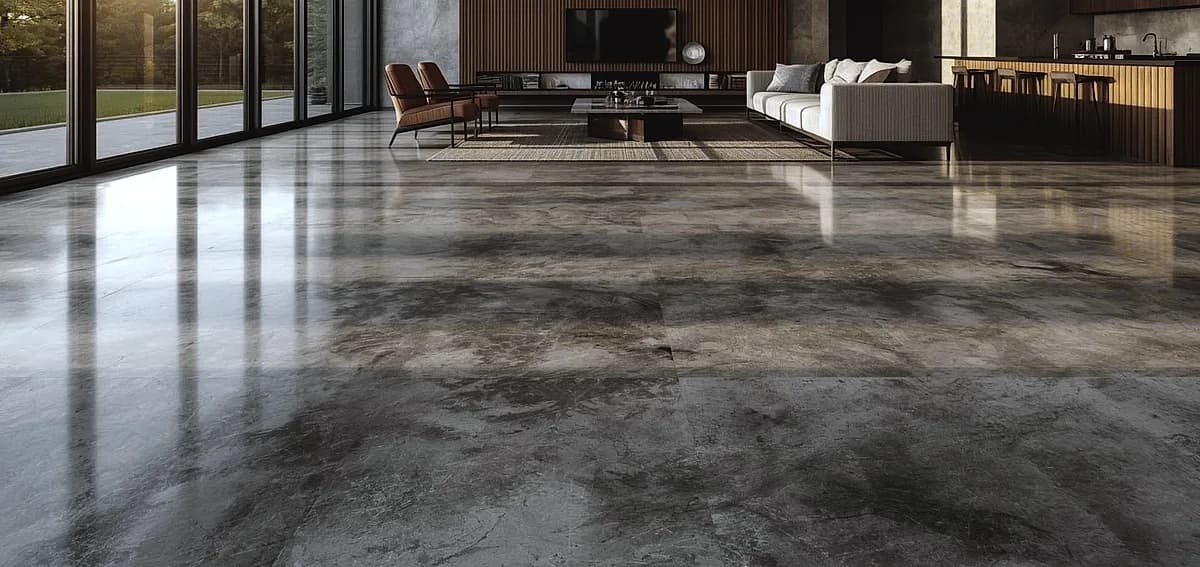
Open-concept homes frequently utilize continuous hard-surface flooring throughout the main living areas. In these spaces, mechanically polished concrete generally outperforms epoxy. Polished concrete delivers a sophisticated, organic aesthetic that integrates seamlessly with modern, industrial, and minimalist design schemes. The high-gloss finish can increase ambient light reflectivity by up to 90%, which saves homeowners up to 30% on artificial lighting costs during daylight hours.
Epoxy coatings, while highly durable, can sometimes look too commercial or synthetic for a residential living room. Additionally, standard epoxies are sensitive to ultraviolet (UV) light. If your living room features large windows or glass doors, prolonged exposure to direct sunlight will cause untreated epoxy to turn yellow and become brittle over time. Polished concrete is entirely unaffected by UV radiation, ensuring the color and finish remain consistent for decades.
Maintenance in living areas is another factor to consider. Polished concrete requires nothing more than routine dry dust-mopping and occasional damp mopping with a pH-neutral cleaner. Because there is no topical coating to wear down, the floor will not require frequent resealing or recoating under standard residential foot traffic.
Bathrooms And Laundry Rooms: Slip Resistance And Waterproofing
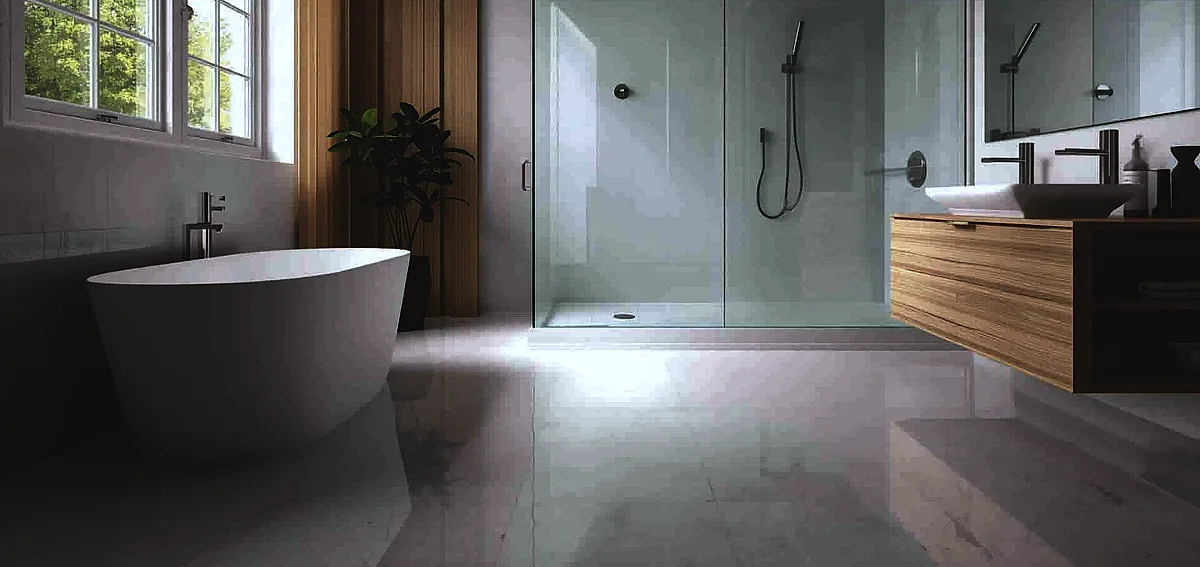
Rooms dedicated to bathing and washing require flooring that manages standing water effectively. In bathrooms and laundry rooms, epoxy systems often hold the advantage. Because epoxy is applied as a fluid, it can be installed seamlessly across the floor and even coved up the wall edges. This creates a watertight, basin-like environment that prevents leaks from reaching the subfloor or lower levels of the house.
Slip resistance is another critical safety metric in wet environments. While both polished concrete and standard epoxy can be slippery when wet, epoxy systems are much easier to modify. Installers can broadcast anti-slip aggregates, such as aluminum oxide or silica sand, directly into the wet resin before it cures. This creates a highly textured surface that dramatically increases traction.
As Dr. Emily Chen, Lead Researcher at the Global Flooring Association, explains: “Slip-resistant additives in resinous epoxy systems reduce slip-and-fall incidents by over 60% in wet residential environments. The ability to customize the coefficient of friction makes it an ideal solution for utility rooms and bathrooms.”
Cost Comparison Table: Polished Concrete Vs. Epoxy By Room
When planning your renovation, budget considerations are essential. While exact costs fluctuate based on regional labor rates and the condition of your existing slab, the following table outlines the national averages for 2026. The Portland Cement Association notes that proper installation dramatically improves the lifecycle of both materials.
| Room | Recommended System | Primary Reason | Avg. Cost Per Sq. Ft. (2026) |
|---|---|---|---|
| Garage | Epoxy Coating | Chemical and tire resistance | $5.00 – $9.00 |
| Basement | Polished Concrete | Breathability and MVTR tolerance | $3.00 – $8.00 |
| Living Area | Polished Concrete | UV stability and high aesthetics | $4.00 – $12.00 |
| Bathroom | Epoxy Coating | Waterproofing and slip resistance | $6.00 – $10.00 |
Factors That Affect Your Flooring Decision
Choosing between these two premium flooring solutions requires evaluating the specific conditions of your home. It is advisable to consult with a professional contractor before finalizing your decision. Keep the following factors in mind during your assessment.
- Existing Concrete Condition: Polished concrete exposes the natural reality of your slab. If your concrete features extensive spalling (flaking or chipping), heavy trenching, or severe cracking, these flaws will remain visible. Epoxy, particularly self-leveling overlays, can conceal significant imperfections beneath an opaque layer.
- Moisture Testing Results: Before any installation, professionals conduct calcium chloride testing or in-situ relative humidity (RH) probing. If RH levels exceed 85%, standard epoxies carry a high risk of failure without expensive moisture mitigation primers. Polished concrete bypasses this issue entirely.
- Expected Maintenance Tolerance: Epoxy floors require periodic recoating of their urethane or polyaspartic topcoats every 5 to 7 years to maintain maximum gloss. Polished concrete can last up to 20 years with simple daily sweeping and the occasional application of a commercial burnishing pad.
Frequently Asked Questions
Can I put epoxy over polished concrete?
It is not advisable to apply epoxy directly over previously polished concrete. The concrete must be mechanically ground or shot-blasted to open the pores and create a rough profile. Without this aggressive surface preparation, the epoxy resin will not bond and will quickly delaminate.
Is polished concrete colder than standard flooring?
Concrete does possess high thermal mass, meaning it absorbs and holds temperature. While it can feel cool to the touch in winter, it is an excellent conductor for radiant in-floor heating systems. When paired with radiant heat, polished concrete becomes one of the most efficient and comfortable flooring options available.
How long does an epoxy garage floor last?
A professionally installed, multi-layer epoxy system typically lasts 10 to 15 years in a residential garage. Durability depends heavily on proper surface preparation and the use of 100% solids resin. Cheaper, water-based DIY kits often fail within the first two years of use.
Does polished concrete require waxing?
No, mechanically polished concrete does not require waxing. The high-gloss finish is achieved through the physical refinement of the concrete surface using microscopic diamond abrasives. Waxing would actually dull the floor and create unnecessary maintenance, as wax traps dirt and eventually yellows.
Will an epoxy floor yellow over time?
Standard epoxies are sensitive to ultraviolet light and will amber or yellow when exposed to sunlight. To prevent this, professional installers apply a UV-stable aliphatic polyurethane or polyaspartic clear coat over the epoxy. This topcoat provides excellent color retention and additional scratch resistance.
Are these flooring options safe for indoor air quality?
Polished concrete is completely VOC-free and contributes to excellent indoor air quality. Modern industrial epoxy systems are also formulated to be low-VOC, though they do emit some odors during the initial curing phase. Once fully cured, both surfaces are hypoallergenic and do not harbor dust mites or allergens.
Final Thoughts
Deciding the right flooring system by room comes down to analyzing environmental stress factors. Epoxy remains the undisputed champion for garages and bathrooms due to its chemical resistance and seamless waterproofing capabilities. Conversely, polished concrete dominates basements and main living areas by offering exceptional breathability, UV stability, and a refined architectural aesthetic. Properly matching the material to the room ensures a floor that will perform flawlessly for decades. If you are ready to evaluate your concrete floors and start your next project, contact us today to schedule a consultation with our experienced professionals.
References
Written by

Founder and CEO
Chris Lavin is an esteemed leader in concrete polishing and epoxy coatings with a distinguished 20-year career. As founder and CEO of National Concrete Polishing and owner of Xtreme Polishing Systems, he's renowned for polishing and epoxy coating more floors than anyone globally. Chris is recognized for his innovative approach and commitment to enhancing floor durability and aesthetics. His hands-on experience and technical proficiency make him a respected authority and a valuable resource in the field of floor polishing and coatings.
Same topic
Related articles
All stories
Residential8 min read
What Restaurants Need to Pass a Health Inspection Floor Check
It endures heavy foot traffic, dropped equipment, boiling water spills, and harsh degreasing chemicals daily.
Read it
Residential9 min read
How Restaurants Replace Their Floors Without Closing for Long
The average food service establishment loses approximately $3,500 in daily revenue during unexpected closures in 2026.
Read it
Residential7 min read
What Makes a Floor Coating Safe for Kids, Pets, and Allergy Sufferers
Off-gassing can trigger respiratory distress, headaches, and asthma symptoms in sensitive individuals.
Read it
Tell us about the floor
Tell us the space and roughly how big it is.We come back with what it would cost and when we could start.
Prefer to talk? Call +1 844-876-5474
- Leads@
nationalconcretepolishing.net - 2200 NW 32nd St #600,
Pompano Beach, FL 33069 Mon to Fri, 9:00 to 5:30