The NCP blog
Best Cleaners for Epoxy Floors
Epoxy & coatings5 min read
Epoxy floors withstand heavy machinery, chemical spills, and daily wear in industrial spaces.
Epoxy floors withstand heavy machinery, chemical spills, and daily wear in industrial spaces. Yet improper cleaning can dull their glossy finish. Choosing the right cleaner protects your investment and helps you avoid recoating.
These durable surfaces are common wherever floors take a beating, from garages to hospitals. Their seamless design resists stains and simplifies sweeping. But strong chemicals that the coating maker has not approved can damage the finish over time. Even pressure washers can force water under the coating if misused.
National Concrete Polishing has worked in South Florida since 2013. For lasting results, stick to pH-neutral formulas designed for epoxy flooring needs.
what is the best cleaner for epoxy floors
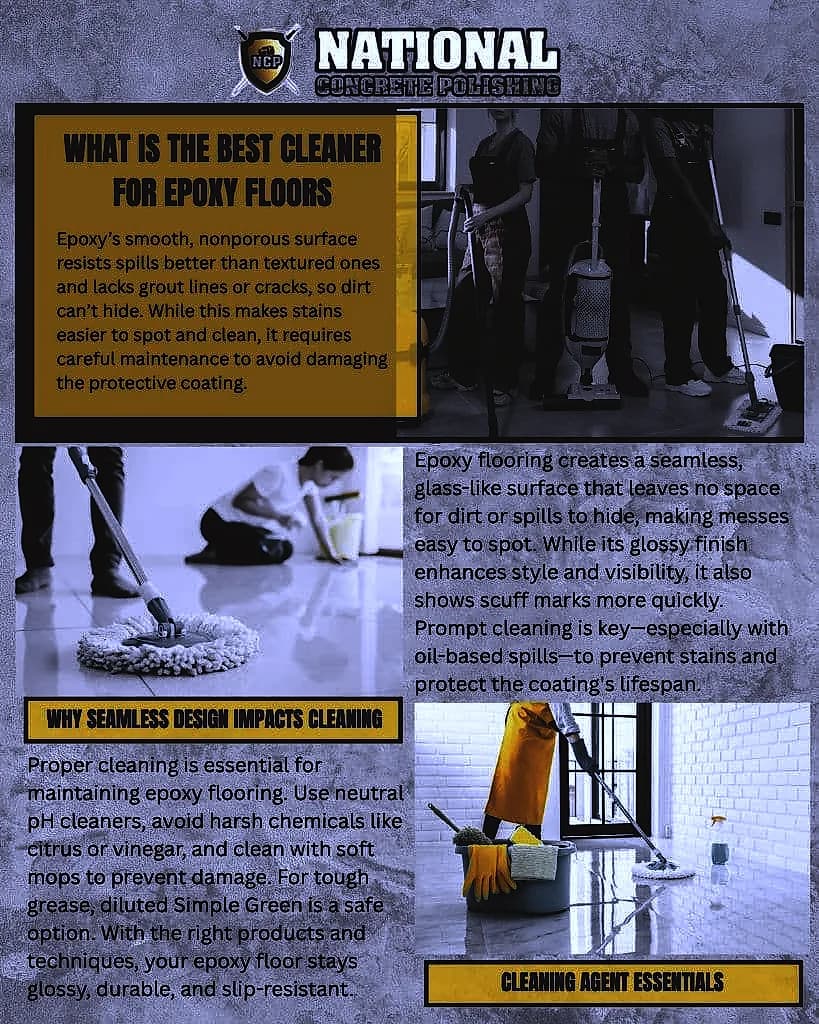
The best cleaner for epoxy floors is the one the coating maker approves, and for most floors that is a neutral or mildly alkaline floor cleaner diluted as the label says. Sika's maintenance guidelines for its floor systems, for example, call for regular cleaning with a neutral or mildly alkaline floor cleaner, depending on the soiling, and warn against strong chemicals that have not been approved. Test any new cleaner on a small area first.
Avoid acidic or abrasive cleaners, vinegar, and any strong chemical the coating maker has not approved. They can damage the finish.
Epoxy’s smooth, nonporous coating keeps spills on the surface. Without grout lines or cracks, dirt can’t hide, making stains instantly noticeable. This visibility speeds up maintenance but demands proper techniques to avoid damaging the protective layer.
Why Seamless Design Impacts Cleaning
Industrial-grade epoxy flooring bonds tightly to concrete, creating a glass-like shield. Scuff marks show up more on a glossy surface. Removing spills right away helps prevent lasting stains, especially from oil-based liquids.
Cleaning Agent Essentials
Three factors determine cleaner safety:
- pH balance: Neutral formulas, which the cleaning trade accepts at about pH 6 to 8, or mildly alkaline ones are the usual choice for epoxy
- Chemical content: Check the coating maker's approved-cleaner list before using citrus-based, enzymatic or solvent products
- Application method: Soft mops prevent micro-scratches better than stiff brushes
Vinegar mixtures and ammonia can dull or damage a coating unless the maker approves them. For stubborn grease, use a degreaser the manufacturer approves, diluted as the label says, instead of harsh solvents. Regular care helps keep floors clean and slip resistance intact.
Step-by-Step Guide to Cleaning Your Epoxy Floors
Proper maintenance keeps epoxy flooring resilient against daily wear while preserving its glossy finish. Follow these cleaning steps to clean the floor without harming the coating.
Preparation and Debris Removal
Start by sweeping loose particles with a soft-bristle broom or vacuum. Embedded grit acts like sandpaper, creating micro-scratches during cleaning. Pay extra attention to corners and edges where debris accumulates.
Mixing and Applying the Cleaning Solution
Dilute a neutral cleaner to the concentration on its label, and test it on a small area first, as the coating maker's instructions advise. Avoid ammonia-based cleaners, and check whether a citrus cleaner is approved for your coating before you use it. Pour the solution evenly across small sections and let it sit for the time on the label to loosen grease.
Effective Rinsing and Drying Techniques
Scrub gently with a deck brush, focusing on stained areas. Rinse thoroughly using a garden hose or low-pressure washer to prevent water seepage. Remove standing water immediately with a neoprene squeegee, then air-dry with fans for faster results.
Expert Tips on Epoxy Floor Maintenance and Cleaning Techniques
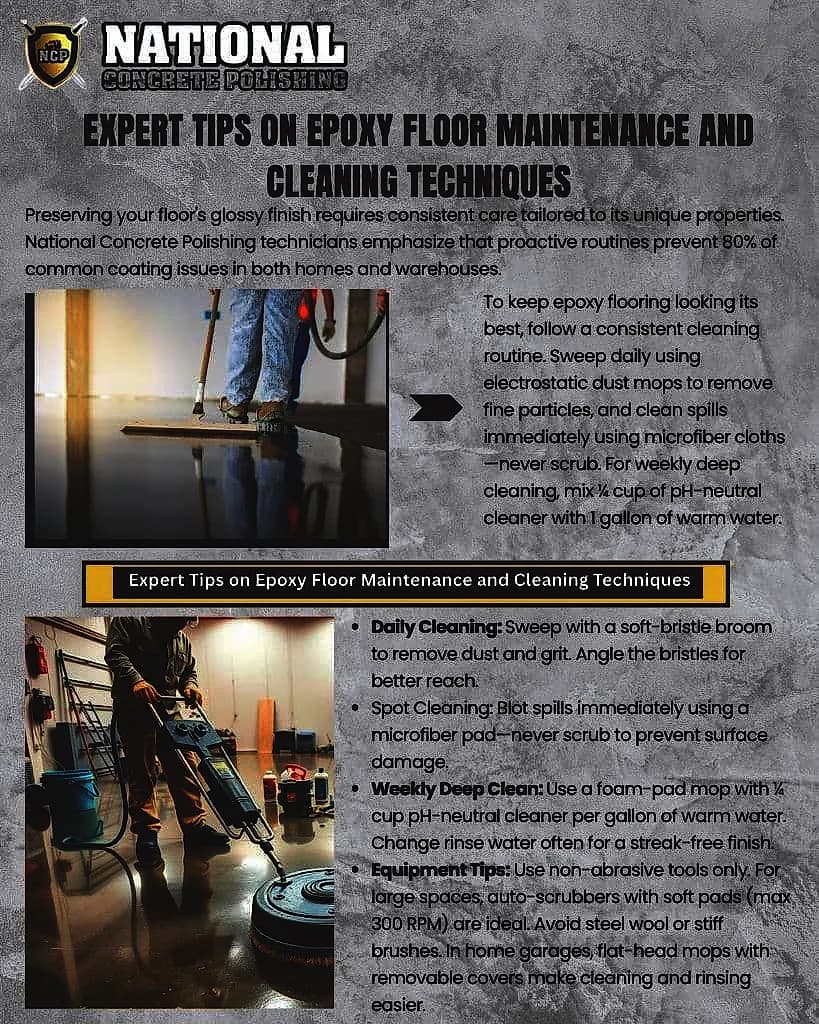
Preserving your floor’s glossy finish requires consistent care tailored to its unique properties. Regular cleaning helps prevent common coating issues in both homes and warehouses.
Daily and Weekly Maintenance Best Practices
Sweep daily with electrostatic dust mops to capture fine particles. Immediate spill cleanup prevents stains from setting: blot liquids with microfiber cloths instead of rubbing. For weekly care, mix a pH-neutral cleaner with warm water at the dilution on the label.
| Task | Frequency | Tool | Pro Tip |
|---|---|---|---|
| Debris Removal | Daily | Soft-bristle broom | Angle bristles to lift grit |
| Spot Cleaning | As needed | Microfiber pad | Blot, don’t scrub |
| Deep Clean | Weekly | Foam-pad mop | Change rinse water often |
Using the Right Cleaning Equipment
Choose non-abrasive tools to protect the surface. Auto-scrubbers with soft pads work well for large areas, and the pad type and speed should follow the coating maker's guidance. Avoid steel wool or stiff-bristle brushes that create micro-scratches. For home garages, flat-head mops with removable covers simplify rinsing.
Commercial kitchens benefit from walk-behind scrubbers with dual tanks. Always test new equipment in inconspicuous areas first. Need customized advice? Call us and we will help.
Oil, Tire Marks and Steam
For an oil spill, blot it up first, then absorb what is left with an absorbent such as cat litter or sawdust, sweep it up, and clean the spot with a degreaser the coating maker approves. For tire marks, start with the neutral cleaner and a soft pad before trying anything stronger. Test any product on a small area first.
Steam is not suitable for every coating system, so check the product data sheet before using a steam cleaner. If the sheet does not allow it, use a damp mop with warm water and a neutral cleaner instead.
Conclusion
Maintaining epoxy surfaces properly helps them stay durable and good-looking. Selecting pH-neutral solutions helps avoid chemical damage, while daily sweeping keeps abrasive dirt from scratching the coating. Immediate spill removal preserves slip resistance and shine.
Follow the outlined routine: use soft tools, avoid harsh soaps, and rinse thoroughly. These steps protect your investment while minimizing wear. Well-kept flooring resists stains better and maintains its glossy appeal through heavy use.
National Concrete Polishing has worked in South Florida since 2013. For stubborn stains or recoating needs, contact us today.
Consistent care helps your surface last longer. Pair sensible product choices with regular upkeep, and the floor will keep its appearance.
Frequently Asked Questions
Can you use a pressure washer on epoxy floors?
Yes, with care. Use low pressure and a wide fan tip. One coating maker, for example, recommends not exceeding 1,000 psi for its systems, and high-pressure streams can damage the coating or force water under it. Pair it with a mild cleaner the coating maker approves for stubborn stains.
Does vinegar harm epoxy flooring?
Vinegar is acidic and can dull a coating, so avoid it unless the coating maker approves it. Use a neutral cleaner instead.
How do you remove oil stains from epoxy surfaces?
Blot spills immediately with absorbent cloths. For dried stains, apply a degreaser that the coating maker approves and scrub gently. Rinse thoroughly to prevent residue buildup.
Are ammonia-based cleaners safe for epoxy coatings?
Avoid ammonia unless the coating maker approves it, because strong chemicals can damage the finish. Use a pH-neutral cleaner instead.
What equipment works best for daily epoxy floor care?
Use microfiber mops for dust and soft-bristle brooms for debris. A shop vac handles larger particles. For deep cleans, auto scrubbers with non-abrasive pads maintain luster.
How often should you reseal epoxy flooring?
Epoxy is not resealed on a fixed schedule. A worn topcoat is recoated when the wear shows, so inspect the floor once a year for dulling, fading or scratches. If the floor gets sun, ask the installer about a UV-stable topcoat, because epoxy yellows under UV light.
Written by

Founder and CEO
Chris Lavin is an esteemed leader in concrete polishing and epoxy coatings with a distinguished 20-year career. As founder and CEO of National Concrete Polishing and owner of Xtreme Polishing Systems, he's renowned for polishing and epoxy coating more floors than anyone globally. Chris is recognized for his innovative approach and commitment to enhancing floor durability and aesthetics. His hands-on experience and technical proficiency make him a respected authority and a valuable resource in the field of floor polishing and coatings.
Same topic
Related articles
All stories
Residential7 min read
Epoxy Garage Floor DIY vs Professional Installation: What You Need to Know
DIY epoxy flooring involves homeowners applying the coating using pre-packaged kits that include resin, hardener, and tools.
Read it
Epoxy & coatings6 min read
What Happens When Concrete Prep Is Skipped
What happens when concrete prep is skipped? Good contractors will tell you it's a disaster, so don't let your contractor skip the work!
Read it
Epoxy & coatings11 min read
Why Proper Joint Treatment is Critical for Epoxy Floors in Florida
Concrete floors contain three main joint types that serve distinct purposes and require specialized treatment approaches.
Read it
Tell us about the floor
Tell us the space and roughly how big it is.We come back with what it would cost and when we could start.
Prefer to talk? Call +1 844-876-5474
- Leads@
nationalconcretepolishing.net - 2200 NW 32nd St #600,
Pompano Beach, FL 33069 Mon to Fri, 9:00 to 5:30