
The NCP blog
Which Garage Floor Coating Lasts Longest in Florida’s Heat?
Residential10 min read
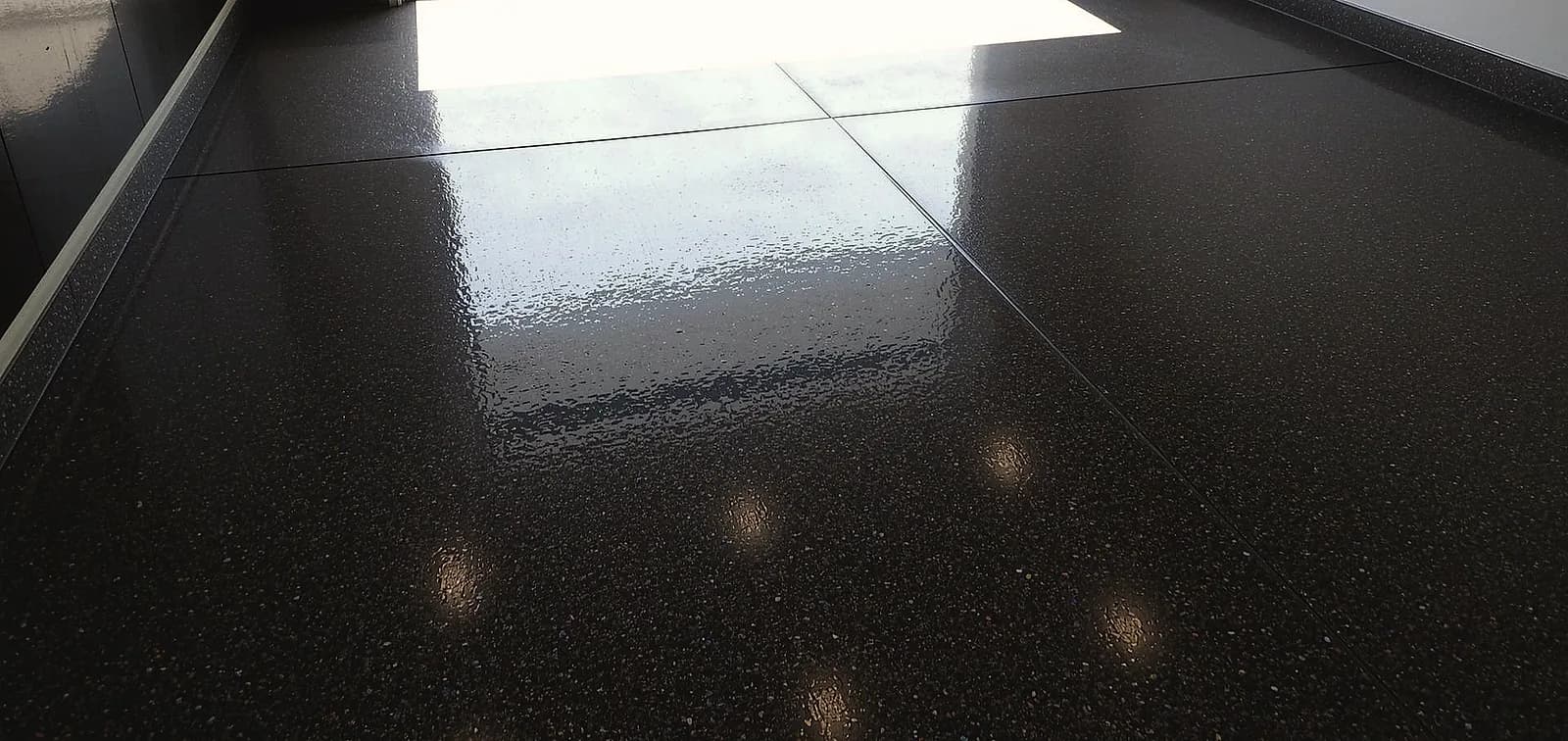
This comprehensive guide examines garage floor coating options specifically for Florida’s heat and humidity.
garage floor coating durability in Florida’s extreme heat depends on UV resistance, temperature tolerance, and flexibility—qualities where polyaspartic and polyurea coatings significantly outperform traditional epoxy. While standard epoxy lasts 3-5 years before showing wear, polyaspartic and polyurea systems maintain their integrity for 10-20 years in South Florida’s demanding climate. Understanding how different coatings respond to intense heat, UV exposure, and hot tire stress helps homeowners choose the longest lasting garage floor coating that protects their investment while withstanding Florida’s challenging conditions.
Overview
This comprehensive guide examines garage floor coating options specifically for Florida’s heat and humidity. You’ll learn how different coating systems respond to UV radiation, temperature extremes, and hot tire contact, plus discover which materials offer superior longevity in South Florida’s climate. We’ll compare epoxy, polyaspartic, polyurea, and hybrid systems based on durability, heat resistance, maintenance requirements, and cost-effectiveness for Pompano Beach, Miami, and Fort Lauderdale garages.
Understanding Florida’s Garage Floor Challenges
Florida’s climate creates a perfect storm of conditions that test garage floor coating durability beyond typical environments. Garage temperatures regularly exceed 95°F during summer months, while concrete surface temperatures can reach 130-150°F in direct sunlight. This extreme heat causes thermal expansion that stresses rigid coating systems and accelerates chemical degradation.
UV radiation intensity in South Florida ranks among the highest in the continental United States, causing standard epoxy to yellow, chalk, and fade within months. Humidity levels averaging 75% promote moisture vapor transmission through concrete, which can cause coatings to bubble or delaminate when they lack proper moisture resistance. Hot tires from vehicles driven on sun-baked roads create localized temperatures exceeding 180°F that can soften weak coatings and cause pickup or marking.
Epoxy Coating Performance in Heat
Traditional epoxy garage floor coatings provide 3-5 years of service in Florida before showing significant wear signs. Standard epoxy lacks UV stability, causing yellowing and discoloration when exposed to sunlight streaming through garage doors. Heat above 85°F during application extends curing times and can trap imperfections, while excessive heat after installation causes brittleness that leads to cracking.
Hot tire pickup is a common epoxy failure in Florida garages where heated tires bond to softened epoxy and pull coating away from concrete. Thermal cycling from daily temperature swings creates stress that rigid epoxy cannot accommodate, eventually causing adhesion failure. While moisture-resistant primers help epoxy perform better, fundamental limitations make standard epoxy less suitable for Florida’s extreme heat than advanced alternatives.
Polyaspartic Coating Advantages
Polyaspartic floor coatings deliver 10-15 years of durability in Florida’s heat through superior UV resistance and thermal stability. Unlike epoxy, polyaspartic maintains color stability and gloss retention even under direct sunlight exposure. The coating’s UV-stable formulation prevents yellowing, chalking, and fading that plague standard epoxy within months.
Polyaspartic excels in heat tolerance, remaining stable at temperatures that soften epoxy. This thermal stability eliminates hot tire pickup problems common with epoxy systems. Fast curing times of 2-4 hours allow same-day installations and quick return to service—critical for homeowners who cannot afford multi-day garage access loss. The coating’s flexibility accommodates concrete thermal expansion without cracking, a significant advantage over brittle epoxy.
Polyurea Coating Performance
Polyurea represents the longest lasting garage floor coating for Florida conditions, providing 15-20 years or more of superior performance. This advanced coating offers exceptional flexibility that allows it to expand and contract with concrete during temperature changes without cracking—a critical advantage in Florida’s thermal cycling. Polyurea is approximately 4 times stronger than standard epoxy, resisting chips, cracks, and impact damage that compromise lesser coatings.
The material’s seamless, waterproof barrier prevents moisture infiltration that causes bubbling and delamination in humid environments. UV resistance matches or exceeds polyaspartic, ensuring polyurea maintains appearance and performance even in garages with significant sun exposure. Rapid curing allows foot traffic within 8 hours and vehicle traffic within 24 hours. While polyurea costs more than epoxy, its exceptional longevity makes it the most cost-effective option over the coating’s lifespan.
UV Resistance Comparison
UV stability is the critical differentiator between coating systems in Florida’s intense sunlight. Standard epoxy completely lacks UV resistance, yellowing within months and losing gloss and color integrity within a year of sun exposure. This degradation is irreversible and requires complete coating removal and replacement.
Polyaspartic formulations incorporate UV-stable resins that maintain color and gloss for their entire 10-15 year lifespan. Laboratory testing shows polyaspartic retains over 90% of its original appearance after 5,000 hours of accelerated UV exposure—equivalent to many years of Florida sunlight. Polyurea offers similar or superior UV resistance, with some formulations rated for up to 30 years without yellowing or fading. For garages with windows, skylights, or doors that allow direct sun, UV-stable coatings are not optional—they’re essential for durability in Florida’s climate.
Hot Tire Resistance
Hot tire pickup damages more Florida garage floors than any other single cause. When vehicles drive on superheated pavement (often exceeding 150°F), tire rubber temperatures rise dramatically. Upon parking, these hot tires can soften epoxy coatings and create a bond that rips the coating from concrete when the vehicle moves.
Standard epoxy begins softening around 140-160°F, making it vulnerable to hot tire damage during Florida summers. Polyaspartic coatings maintain hardness at temperatures up to 180-200°F, providing a safety margin that eliminates pickup problems. Polyurea offers even higher temperature stability, remaining rigid at temperatures exceeding 200°F. This thermal stability is why professional garage installations in Florida increasingly specify polyaspartic or polyurea over traditional epoxy.
Flexibility & Thermal Expansion
Florida’s daily temperature swings cause concrete to expand and contract, creating stress that rigid coatings cannot accommodate. Standard epoxy is inherently brittle, developing microcracks under thermal cycling that eventually lead to coating failure. These cracks allow moisture infiltration that accelerates delamination.
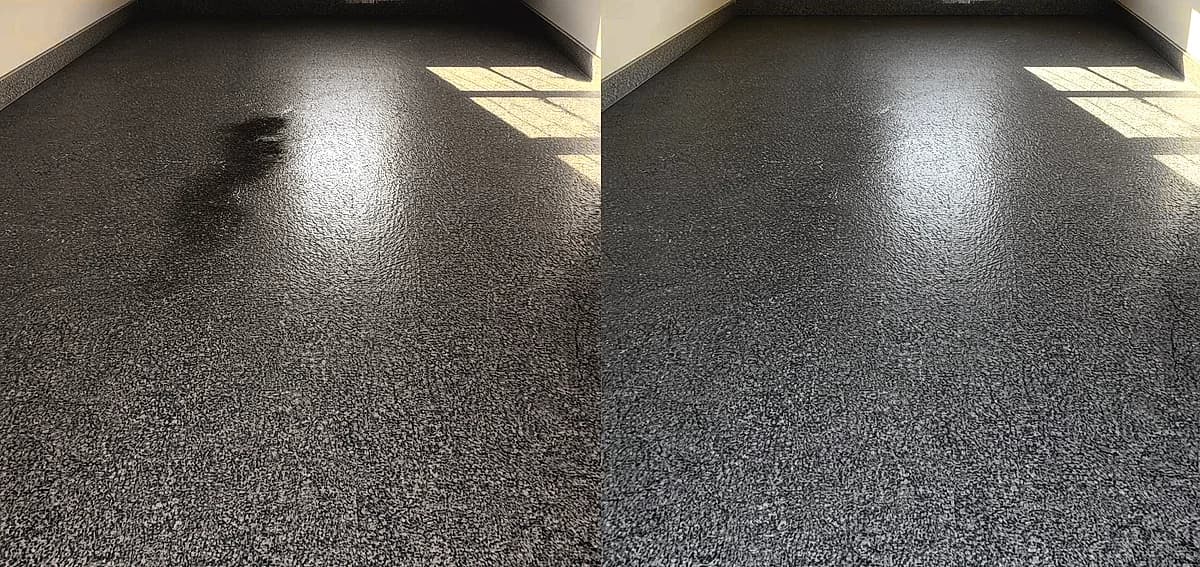
Polyaspartic coatings offer moderate flexibility that reduces cracking risk compared to epoxy. Polyurea provides exceptional flexibility—up to 400% elongation—allowing it to move with concrete without cracking or losing adhesion. This flexibility becomes increasingly important as concrete ages and develops its own thermal stress cracks. Flexible coatings bridge these cracks, maintaining a waterproof seal that protects both the coating system and underlying concrete.
Installation Speed & Curing
Traditional epoxy installation timelines require 3-5 days from surface preparation through full cure before parking vehicles. Florida’s humidity can extend epoxy curing times, particularly during summer months when moisture levels peak. This extended downtime creates inconvenience and limits when installations can be scheduled.
Polyaspartic systems cure in 2-4 hours, allowing complete installations to finish in a single day with vehicle traffic permitted within 24 hours. Polyurea cures even faster, with some formulations allowing foot traffic in 1-2 hours and vehicle traffic in 8-12 hours. This rapid curing provides significant advantages for homeowners who cannot accommodate multi-day garage closures. Fast-cure coatings also reduce the risk of moisture-related failures by minimizing exposure time to Florida’s humidity during installation.
Cost vs Value Analysis
Initial coating costs vary significantly, with standard epoxy starting at $3-5 per square foot, polyaspartic ranging $6-10 per square foot, and polyurea costing $8-12 per square foot. While polyurea costs 2-3 times more upfront than epoxy, the long-term value proposition strongly favors advanced coatings.
Consider a 400 square foot garage: epoxy ($1,600-2,000) requires replacement every 3-5 years, totaling $4,800-6,000 over 15 years plus three separate installations. Polyaspartic ($2,400-4,000) lasts 10-15 years with one installation, while polyurea ($3,200-4,800) provides 15-20 years of service. Factor in the convenience of avoiding repeated installations, and premium coatings deliver superior value despite higher initial costs. Professional installation warranties further protect the investment.
Chemical & Stain Resistance
Chemical resistance is essential for garage environments where oil, gasoline, brake fluid, and cleaning products regularly contact floors. Standard epoxy offers good chemical resistance initially but degrades over time as UV damage and thermal stress create microscopic surface cracks that allow chemical penetration.
Polyaspartic maintains excellent chemical resistance throughout its lifespan due to its dense, impermeable surface that resists staining. Polyurea provides superior chemical resistance to nearly all automotive fluids, solvents, and household chemicals. The non-porous surface of advanced coatings prevents oil absorption and allows easy cleanup with simple mopping—automotive fluids bead on the surface rather than penetrating. This stain resistance keeps Florida garages looking new for years while simplifying maintenance requirements.
Maintenance Requirements
Epoxy floor maintenance becomes increasingly demanding as coatings age and UV damage accumulates. Yellowed, chalked epoxy requires aggressive cleaning to maintain appearance, and damaged areas need patching or recoating within a few years. Florida’s heat accelerates this degradation cycle.
Polyaspartic requires minimal maintenance—regular sweeping and occasional damp mopping with pH-neutral cleaners maintain appearance and performance. The UV-stable surface doesn’t yellow or chalk, eliminating the declining appearance common with epoxy. Polyurea demands even less maintenance due to its superior durability and stain resistance. Both advanced coatings typically need only periodic cleaning rather than repairs or recoating, saving time and money over their lifespan.
Hybrid Coating Systems
Some Florida contractors offer hybrid systems combining epoxy base coats with polyaspartic or polyurea topcoats. These systems use epoxy’s cost-effectiveness and strong concrete adhesion while adding advanced coating’s UV protection and durability as the wear surface. Hybrid systems typically cost $5-8 per square foot—between pure epoxy and pure polyaspartic prices.
Performance falls between pure systems: hybrids last 7-10 years versus 3-5 for pure epoxy or 10-15 for pure polyaspartic. The polyaspartic topcoat provides UV protection and hot tire resistance, while the epoxy base provides thickness and impact resistance. For budget-conscious homeowners seeking better performance than epoxy but lower costs than pure polyaspartic or polyurea, hybrids offer a middle-ground solution. However, the topcoat must be adequately thick (minimum 2-3 mils) to provide effective protection.
Professional vs DIY Installation
DIY epoxy kits cost less initially but rarely include UV-stable formulations or proper moisture mitigation for Florida conditions. Inadequate surface preparation and improper application during humid conditions commonly cause DIY coating failures.
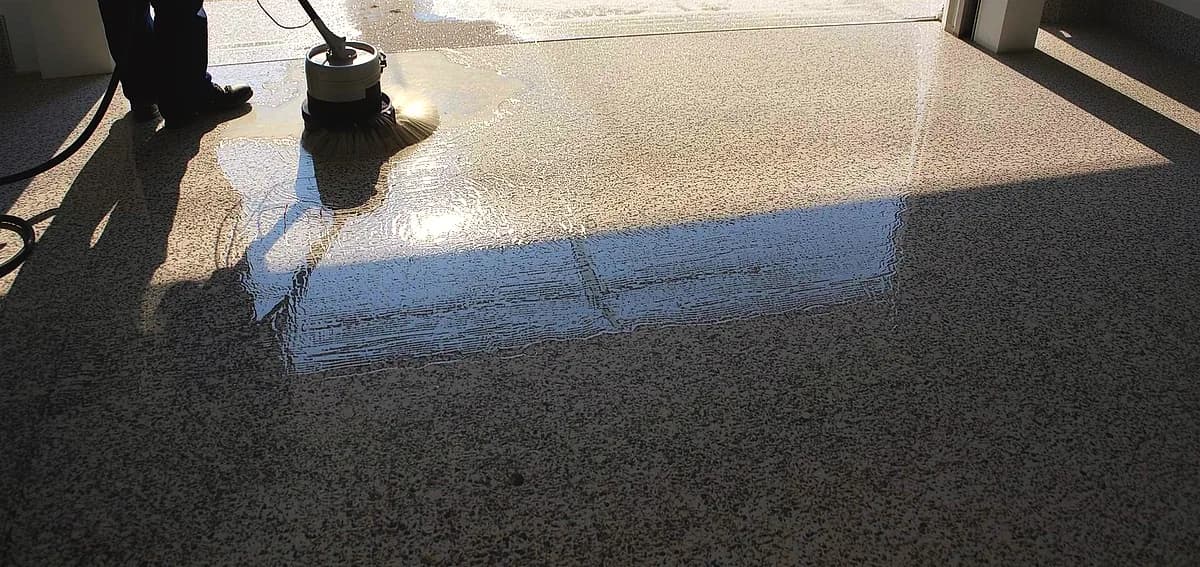
Professional installations ensure proper concrete moisture testing, adequate surface profile creation, and climate-controlled application conditions. Polyaspartic and polyurea require specialized equipment and expertise that DIY approaches cannot replicate. Professional warranties protect against coating failures, while DIY installations offer no recourse when problems arise. For Florida’s challenging climate, professional installation is essential for achieving the advertised durability and performance.
Choosing the Right Coating
Selecting the optimal garage floor coating depends on your specific needs, budget, and garage conditions. For budget-conscious projects with minimal sun exposure, high-quality epoxy with UV-stable topcoats may suffice for 5-7 years. Garages with significant sunlight, high use, or where longevity is prioritized should specify polyaspartic or polyurea.
Consider your timeline: if you need rapid installation and quick return to service, polyaspartic or polyurea’s fast cure times provide significant advantages. For luxury garages or high-end homes where appearance and durability are paramount, polyurea represents the premium choice. National Concrete Polishing can assess your specific garage conditions, budget, and performance requirements to recommend the coating system that provides the best value and longest service life for your South Florida property.
Frequently Asked Questions
What garage floor coating lasts longest in Florida?
Polyurea coatings last 15-20 years in Florida’s heat, making them the longest-lasting option, followed by polyaspartic at 10-15 years and epoxy at 3-5 years.
Why does epoxy fail in Florida garages?
Standard epoxy lacks UV stability and heat resistance, causing yellowing, hot tire pickup, and brittleness from thermal cycling within 3-5 years.
Is polyaspartic worth the extra cost over epoxy?
Yes, polyaspartic lasts 2-3 times longer than epoxy with superior UV and heat resistance, providing better long-term value despite higher upfront costs.
Can garage floor coatings withstand Florida’s heat?
Polyaspartic and polyurea coatings withstand temperatures exceeding 180-200°F without softening, while standard epoxy begins failing around 140-160°F.
What prevents hot tire pickup in Florida garages?
UV-stable coatings like polyaspartic and polyurea maintain hardness at high temperatures, preventing the softening that causes hot tire pickup with epoxy.
How long does polyaspartic take to install?
Polyaspartic installations complete in one day with vehicle traffic permitted within 24 hours, compared to 3-5 days for epoxy.
Do UV rays damage garage floor coatings?
UV radiation yellows and degrades standard epoxy within months, while polyaspartic and polyurea are UV-stable and maintain appearance for their entire lifespan.
What coating is best for Florida humidity?
Polyurea offers the best moisture resistance with seamless, waterproof barriers that prevent humidity-related bubbling and delamination.
Can I install polyaspartic coating myself?
Polyaspartic requires specialized equipment and expertise for proper application—professional installation is strongly recommended for Florida conditions.
How much does long-lasting garage coating cost?
Polyaspartic costs $6-10 per square foot and polyurea $8-12 per square foot, compared to $3-5 for standard epoxy.
Conclusion
garage floor coating durability in Florida’s extreme heat clearly favors polyaspartic and polyurea systems over traditional epoxy. While standard epoxy costs less initially, its 3-5 year lifespan, UV degradation, and hot tire pickup problems make it a poor long-term investment for South Florida garages. Polyaspartic delivers 10-15 years of UV-stable, heat-resistant performance that justifies its moderate premium, while polyurea represents the longest lasting garage floor coating with 15-20+ years of exceptional durability. When factoring in replacement costs, installation downtime, and maintenance requirements, advanced coatings provide superior value despite higher upfront investment.
National Concrete Polishing installs professional-grade polyaspartic and polyurea systems specifically engineered for Florida’s challenging climate, backed by comprehensive warranties and expert surface preparation techniques. Contact us today for a free assessment and discover which garage floor coating delivers the durability and longevity your Pompano Beach, Miami, or Fort Lauderdale garage deserves.
Written by

Founder and CEO
Chris Lavin is an esteemed leader in concrete polishing and epoxy coatings with a distinguished 20-year career. As founder and CEO of National Concrete Polishing and owner of Xtreme Polishing Systems, he's renowned for polishing and epoxy coating more floors than anyone globally. Chris is recognized for his innovative approach and commitment to enhancing floor durability and aesthetics. His hands-on experience and technical proficiency make him a respected authority and a valuable resource in the field of floor polishing and coatings.
Same topic
Related articles
All stories
Residential8 min read
What Restaurants Need to Pass a Health Inspection Floor Check
It endures heavy foot traffic, dropped equipment, boiling water spills, and harsh degreasing chemicals daily.
Read it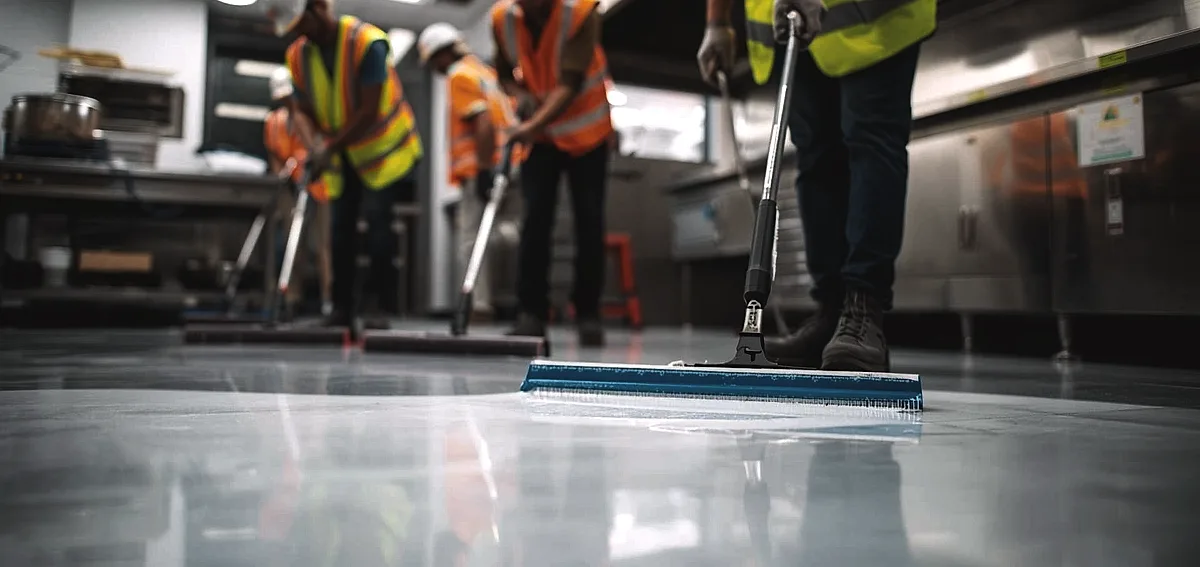
Residential9 min read
How Restaurants Replace Their Floors Without Closing for Long
The average food service establishment loses approximately $3,500 in daily revenue during unexpected closures in 2026.
Read it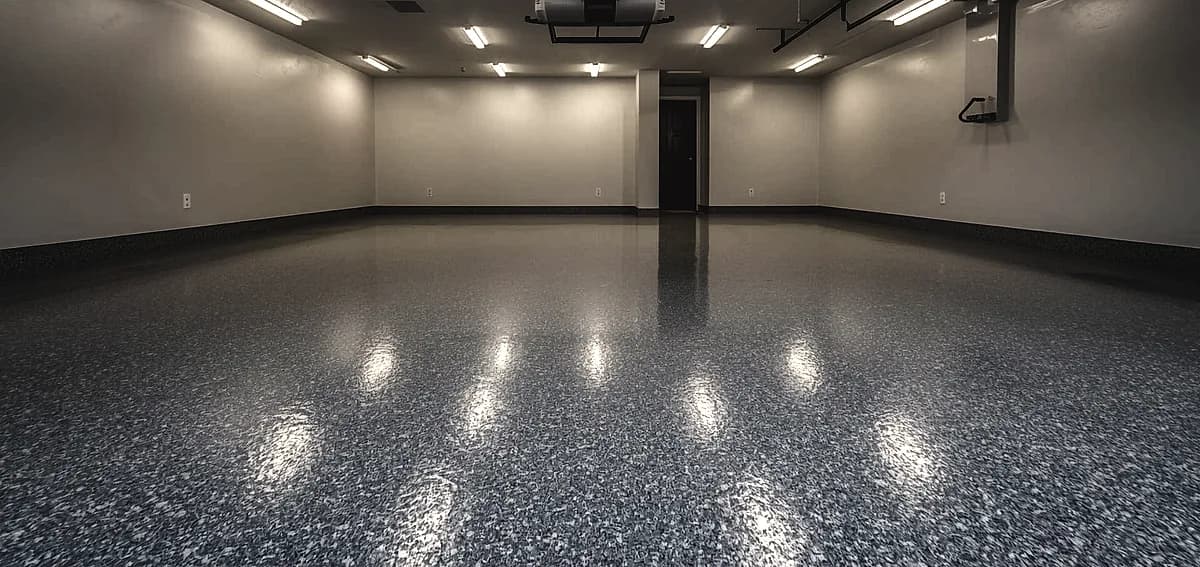
Residential8 min read
Where Polished Concrete Beats Epoxy in a Home (and Where It Doesn’t)
Before evaluating specific rooms, it is essential to understand how these two flooring systems function.
Read it
Tell us about the floor
Tell us the space and roughly how big it is.We come back with what it would cost and when we could start.
Prefer to talk? Call +1 844-876-5474
- Leads@
nationalconcretepolishing.net - 2200 NW 32nd St #600,
Pompano Beach, FL 33069 Mon to Fri, 9:00 to 5:30