
The NCP blog
DIY Epoxy Garage Floor Guide by National Concrete Polishing
ResidentialUpdated 8 min read
This process not only enhances the appearance of your garage but also provides a hardwearing, stain-resistant finish.
A dull, stained concrete garage floor can be transformed into a sleek, durable surface with a simple epoxy coating application.
Epoxy coatings, consisting of a resin and a hardener, form a tough, plastic-like material that adheres strongly to concrete surfaces. This process not only enhances the appearance of your garage but also provides a hardwearing, stain-resistant finish.
National Concrete Polishing offers a comprehensive DIY guide to help homeowners achieve professional-quality results. By following this guide, you can protect your garage floor against oil stains, chemical spills, and general wear and tear.
Understanding Epoxy Garage Floor Coatings
When it comes to protecting and beautifying garage floors, epoxy coatings stand out as a top option. Epoxy garage floor coatings have gained popularity due to their durability and aesthetic appeal.
What Is Epoxy and Why Choose It for Your Garage
Epoxy is a resin-based coating that, when applied to a garage floor, creates a durable and attractive surface. It is chosen for its ability to withstand heavy traffic, resist chemicals, and provide a glossy finish. The epoxy coating is available in various formulations, making it suitable for different garage environments.
Types of Epoxy Coatings Available
Epoxy coatings come in several types, each with its own set of characteristics and benefits. The main types include water-based, solvent-based, and 100% solid epoxy kits.
| Type of Epoxy | Price per Gallon | Characteristics |
|---|---|---|
| Water-based Epoxy | $30-$50 | Beginner-friendly, minimal odor, good adhesion |
| Solvent-based Epoxy | $50-$100 | Enhanced durability, chemical resistance, requires ventilation |
| 100% Solid Epoxy | $75-$150 | Highest durability, thickness per coat, challenging for beginners |
Other options include self-leveling epoxy for correcting minor imperfections, metallic epoxy for unique effects, and fast-curing epoxy for quick project completion. When selecting an epoxy coating, consider factors such as experience level, budget, and desired durability.
Assessing Your Garage Floor
Before applying an epoxy coating, it’s crucial to assess the condition of your garage floor. This step is vital to ensure a successful and long-lasting finish.
Testing Concrete Porosity and Condition
Testing the porosity and condition of your concrete floor is essential. This involves checking how porous the concrete is, which affects how well the epoxy will adhere. You can perform a simple water test by sprinkling water on the surface; if it absorbs quickly, the concrete is porous.
Understanding the condition of your concrete floor helps in determining the preparation needed before applying epoxy.
Identifying Problem Areas and Damage
Common issues with garage floors include hairline cracks, spalling, pitting, oil stains, and efflorescence. Carefully inspect your floor to identify these problems. For a clean finish, address existing imperfections before applying the epoxy coating.
- Clean minor cracks with a wire brush and apply an epoxy crack filler.
- For larger holes or spalling, remove loose concrete and apply an epoxy patching compound.
- Degrease oil and grease stains to ensure proper epoxy adhesion.
By identifying and addressing these issues, you can create a smooth, even surface for the epoxy coating, ensuring a professional-looking finish.
Preparing Your Concrete Surface
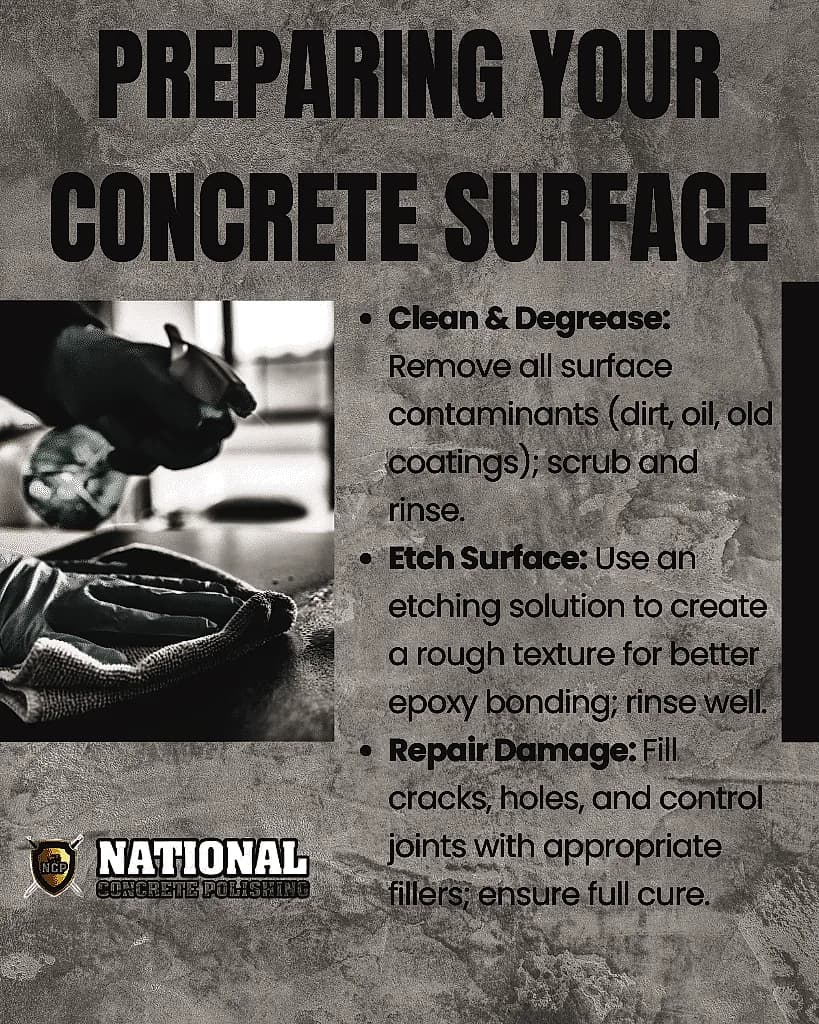
A well-prepared concrete surface is crucial for a successful epoxy garage floor installation. Proper preparation ensures a strong bond between the epoxy and the concrete, leading to a durable and long-lasting finish.
Thorough Cleaning and Degreasing Process
Begin by thoroughly cleaning the garage floor to remove dirt, grime, and any previous coatings that might interfere with the epoxy’s adhesion. Use a degreaser to remove oil stains and other contaminants. Scrub the floor with a stiff-bristled brush or broom to loosen stubborn dirt, then rinse thoroughly with clean water.
For particularly stubborn stains, a concrete cleaner or etching solution may be necessary. Ensure the floor is completely clean and free of debris before proceeding.
Etching the Concrete for Better Adhesion
Etching the concrete is a critical step that helps create a surface profile suitable for epoxy adhesion. Use a concrete etching solution to open up the pores of the concrete, allowing the epoxy to penetrate and bond more effectively. Follow the manufacturer’s instructions for application and dwell time, then rinse the floor thoroughly.
Repairing Cracks and Filling Joints
Addressing cracks and joints is essential before applying epoxy. Clean minor cracks thoroughly with a wire brush and apply an epoxy crack filler to patch them up. For larger holes or spalling, remove loose concrete, apply an epoxy patching compound, and let it cure completely.
Control joints should be filled with a flexible joint filler that can accommodate slight movements, preventing the epoxy from cracking. Ensure all repair materials are fully cured before proceeding with the epoxy application.
DIY Epoxy Garage Floor Application Process
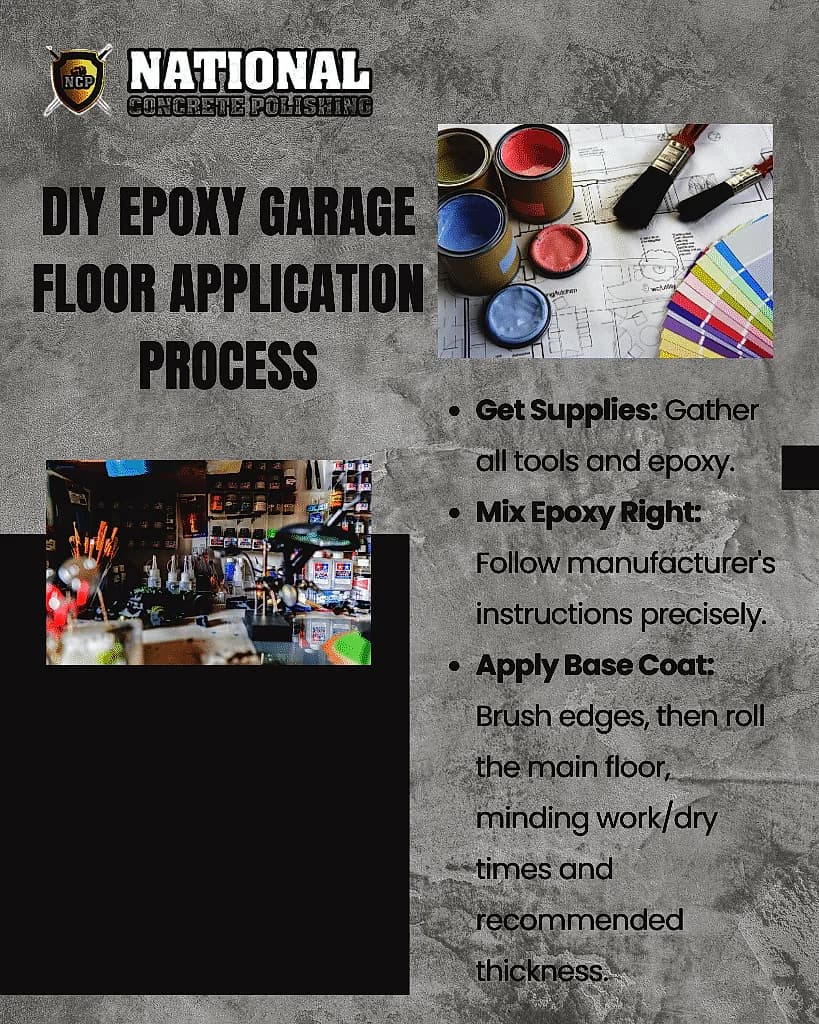
To achieve a professional-looking epoxy garage floor, it’s essential to understand the application process. This involves several key steps, from gathering the necessary tools and materials to applying the base coat effectively.
Gathering Necessary Tools and Materials
Before starting your epoxy garage floor project, ensure you have all the necessary tools and materials. This includes a 3-inch paintbrush for cutting in along the edges, a roller with an extension handle for the main floor area, and the epoxy coating itself. Having everything ready will streamline the process and help you achieve a smooth, even finish.
Mixing the Epoxy Properly
Mixing the epoxy is a critical step that requires attention to detail. Follow the manufacturer’s instructions to mix the components correctly, ensuring a uniform color and consistency. Proper mixing is crucial for the epoxy to cure correctly and achieve the desired durability.
| Component | Ratio | Mixing Time |
|---|---|---|
| Epoxy Resin | 2:1 | 3 minutes |
| Hardener | 1 |
Applying the Base Coat Effectively
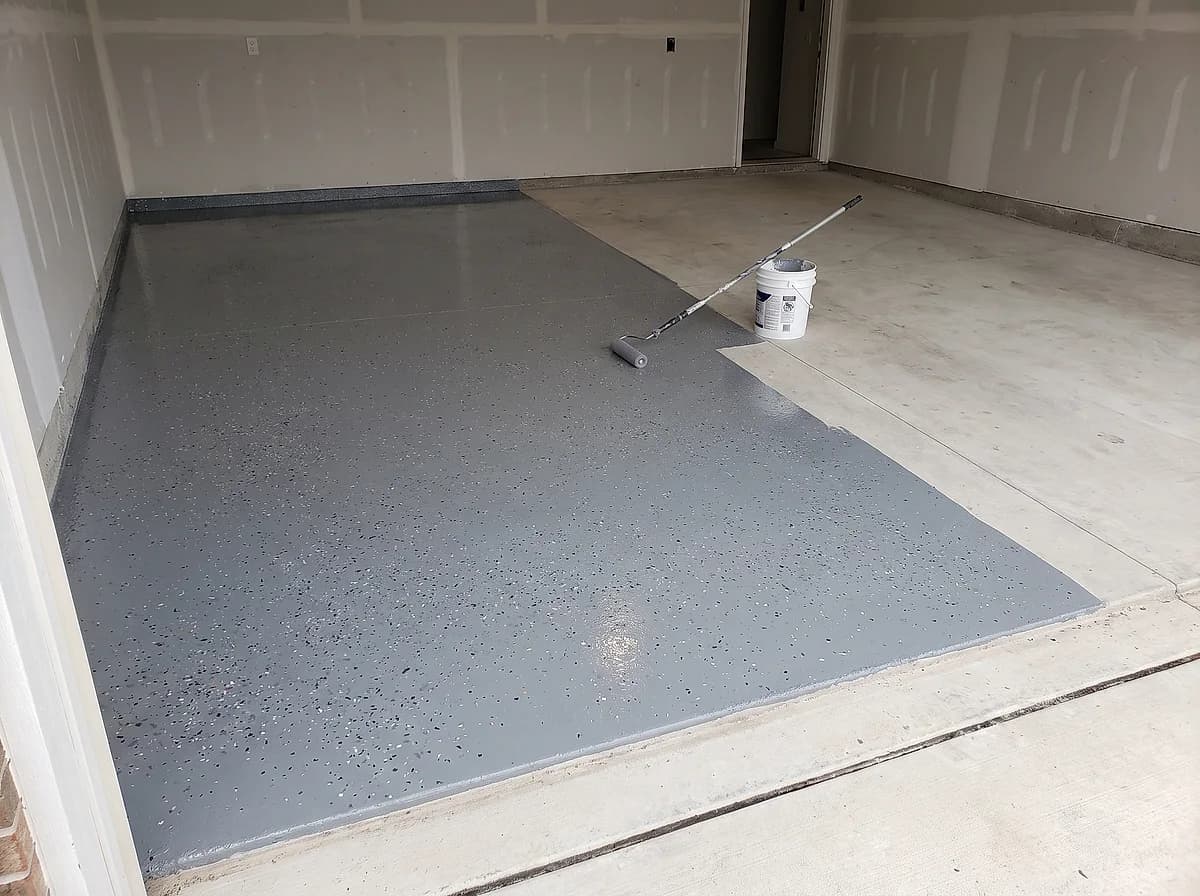
Begin by applying a coating to the edges of your garage with a 3-inch paintbrush, working about 3-4 inches out from walls and other obstacles. For the main floor area, pour a ribbon of mixed epoxy onto the floor and spread it with a roller attached to an extension handle. Work in sections about 2 feet deep by 6 feet wide, using finishing strokes perpendicular to your initial application for even coverage.
To ensure a uniform coat, apply the epoxy using a “W” or “M” pattern initially, then back-roll in perpendicular strokes. Maintain awareness of your working time, typically ranging from 30 minutes to 2 hours, depending on the product and temperature. Apply the base coat at the manufacturer’s recommended coverage rate to avoid applying too thin or too thick, which can affect durability and curing.
After applying the base coat, let it dry according to the manufacturer’s instructions, typically 12-24 hours, before proceeding to the next step. This patience will ensure a strong foundation for your epoxy floor system.
Adding Decorative Elements and Finishing Touches
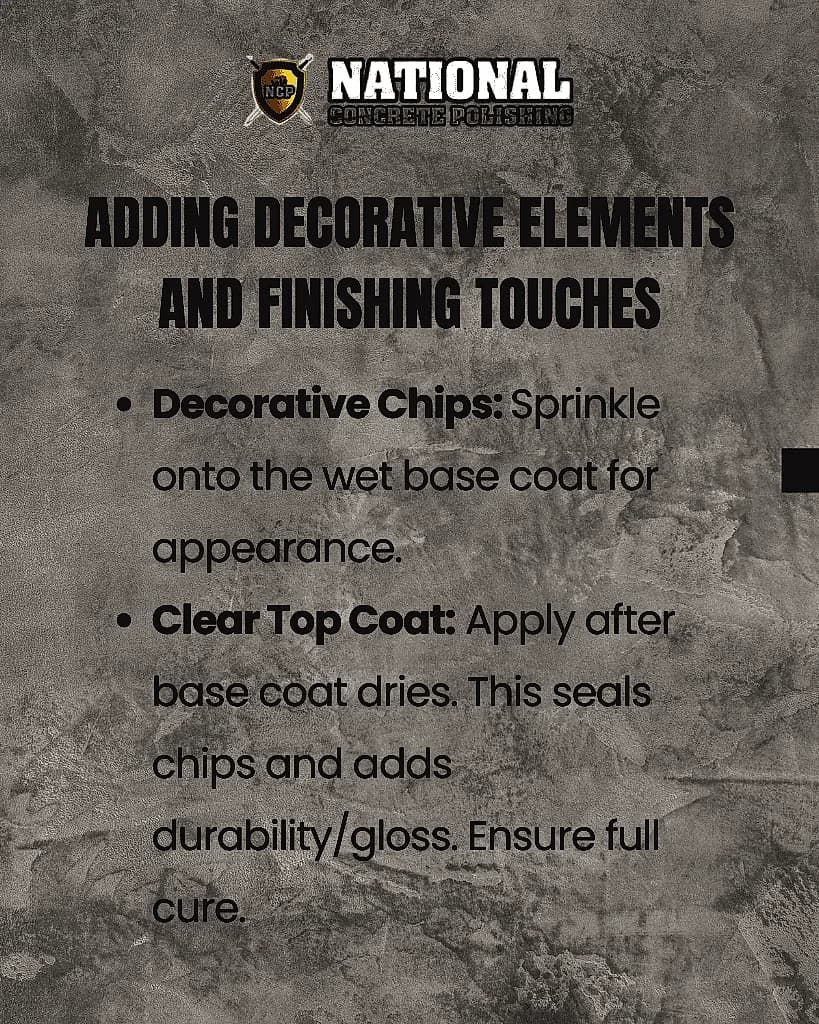
The penultimate step in your garage renovation involves adding decorative elements and a clear epoxy top coat for a professional finish. This stage is crucial for both aesthetics and durability.
Working with Decorative Color Chips
Decorative color chips can significantly enhance the appearance of your epoxy garage floor. To incorporate them effectively, sprinkle the chips onto the wet epoxy base coat evenly. The chips will adhere to the surface, creating a unique and personalized look. The number of chips you use can vary depending on your desired level of decoration.
Applying the Clear Top Coat
Applying a clear top coat is a critical step that provides enhanced durability, UV protection, and a glossy finish. It’s recommended to apply the clear coat approximately 24 hours after the base coat application, ensuring it’s dry to the touch. The clear coat will fully embed the decorative color chips, making them an integral part of the floor coating and preventing them from collecting dirt or getting snagged.
- The clear topcoat is a critical component of a professional epoxy floor system, providing enhanced durability, UV protection, chemical resistance, and a glossy finish.
- Clear epoxy topcoats come in different sheens, allowing customization of the final appearance.
- For enhanced slip resistance, consider adding an anti-slip additive to the clear coat.
- The application technique for the clear coat is similar to the base coat – cut in edges first, then roll the main areas.
- Allow the clear coat to cure according to the manufacturer’s instructions before returning items to the garage.
By following these steps and applying a clear top coat, you’ll achieve a durable, high-gloss finish that enhances the overall appearance of your garage floor.
Conclusion: Maintaining Your New Epoxy Garage Floor
After investing time and effort into your DIY epoxy garage floor, maintaining it properly will ensure it remains in excellent condition. Your newly installed epoxy garage floor coating represents a significant investment that can last for many years with proper care.
To keep your floor looking its best, regular cleaning with a dust mop or soft-bristled broom is recommended. Make sure to address spills promptly, especially automotive fluids, by blotting with absorbent materials. For deeper cleaning, use a neutral pH cleaner specifically formulated for epoxy floors. Protect your coating from extreme heat by using mats under heavy equipment.
By following these maintenance tips and inspecting your floor periodically, you can enjoy a beautiful and durable garage floor for 10-20 years. For specific maintenance questions or repair needs, contact National Concrete Polishing.
Frequently Asked Questions
What is the recommended preparation for applying an epoxy coating to a concrete surface?
The concrete surface should be thoroughly cleaned and degreased. Etching the concrete is also necessary to create a better bond between the concrete and the epoxy coating.
How long does it take for the epoxy coating to dry and cure?
The drying and curing time of the epoxy coating depends on the specific product and environmental conditions. Typically, it can take anywhere from a few hours to several days for the coating to fully cure.
Can I apply an epoxy coating over a previously coated or painted surface?
It’s generally not recommended to apply an epoxy coating over a previously coated or painted surface. The new coating may not adhere properly, and the existing coating or paint may interfere with the new coating’s performance.
What are the benefits of using a clear top coat over the epoxy coating?
A clear top coat provides additional protection against wear and tear, UV damage, and chemicals. It also enhances the appearance of the epoxy coating and makes it easier to clean.
How do I choose the right type of epoxy coating for my concrete surface?
The type of epoxy coating to use depends on the condition of the concrete, the desired appearance, and the level of durability required. It’s essential to consider factors such as porosity, damage, and traffic when selecting an epoxy coating.
Can I mix different types of epoxy coatings or additives?
It’s not recommended to mix different types of epoxy coatings or add additives unless specified by the manufacturer. This can affect the performance, durability, and appearance of the coating.
How do I remove loose material and debris from the concrete surface before applying an epoxy coating?
Use a wire brush or a water hose to remove loose material and debris from the concrete surface. Ensure the surface is clean and dry before applying the epoxy coating.
What is the recommended application temperature and humidity for epoxy coatings?
The recommended application temperature and humidity for epoxy coatings vary depending on the product. Typically, the temperature should be between 50°F to 90°F (10°C to 32°C), and the humidity should be below 60%.
Written by

Founder and CEO
Chris Lavin is an esteemed leader in concrete polishing and epoxy coatings with a distinguished 20-year career. As founder and CEO of National Concrete Polishing and owner of Xtreme Polishing Systems, he's renowned for polishing and epoxy coating more floors than anyone globally. Chris is recognized for his innovative approach and commitment to enhancing floor durability and aesthetics. His hands-on experience and technical proficiency make him a respected authority and a valuable resource in the field of floor polishing and coatings.
Same topic
Related articles
All stories
Residential8 min read
What Restaurants Need to Pass a Health Inspection Floor Check
It endures heavy foot traffic, dropped equipment, boiling water spills, and harsh degreasing chemicals daily.
Read it
Residential9 min read
How Restaurants Replace Their Floors Without Closing for Long
The average food service establishment loses approximately $3,500 in daily revenue during unexpected closures in 2026.
Read it
Residential8 min read
Where Polished Concrete Beats Epoxy in a Home (and Where It Doesn’t)
Before evaluating specific rooms, it is essential to understand how these two flooring systems function.
Read it
Tell us about the floor
Tell us the space and roughly how big it is.We come back with what it would cost and when we could start.
Prefer to talk? Call +1 844-876-5474
- Leads@
nationalconcretepolishing.net - 2200 NW 32nd St #600,
Pompano Beach, FL 33069 Mon to Fri, 9:00 to 5:30