The NCP blog
Learn About What is Epoxy Floor Moisture Mitigation by National Concrete Polishing
Epoxy & coatings8 min read
Concrete slabs may appear solid, but trapped water vapor can silently destroy protective coatings over time.
Concrete slabs may appear solid, but trapped water vapor can silently destroy protective coatings over time. When moisture rises through porous surfaces, it creates bubbles, cracks, and peeling in applied layers. This delamination compromises both aesthetics and structural integrity.
National Concrete Polishing specializes in resolving these challenges across South Florida. With over a decade of local experience, their team uses advanced testing methods to identify vapor transmission rates. Custom solutions like vapor barriers and breathable materials ensure long-lasting adhesion for decorative or industrial finishes.
Ignoring subsurface moisture risks costly rework. Proper preparation involves precise moisture measurement, substrate grinding, and application of specialized primers. These steps create a stable foundation for coatings to bond securely, even in humid climates.
This guide explores how professionals tackle vapor-related failures. Readers will learn about critical materials, time-saving techniques, and preventative strategies. For immediate assistance, contact National Concrete Polishing.
Introduction to Epoxy Floor Moisture Mitigation
Beneath every polished surface lies a hidden threat in warm climates. Water molecules constantly rise through porous slabs, even when no visible leaks exist. This silent migration creates pressure that weakens bonds between coatings and substrates.
Why Coastal Climates Demand Special Attention
South Florida’s high humidity accelerates vapor transmission rates. Studies show concrete in these areas absorbs 40% more airborne moisture than drier regions. Without intervention, this leads to blistering within months of installation.
Long-Term Value Through Proactive Measures
Addressing vapor movement early prevents 70% of coating failures according to industry reports. National Concrete Polishing’s projects since 2013 demonstrate how climate-adapted solutions extend surface lifespans by 3-5 years. Their tailored approaches account for seasonal humidity swings unique to Miami-Dade and Broward counties.
Property owners often discover issues only after costly damage occurs. Advanced concrete moisture testing identifies risk factors before adhesives meet concrete. This proactive strategy preserves aesthetic appeal while maintaining structural reliability against relentless environmental pressures.
Understanding What is Epoxy Floor Moisture Mitigation
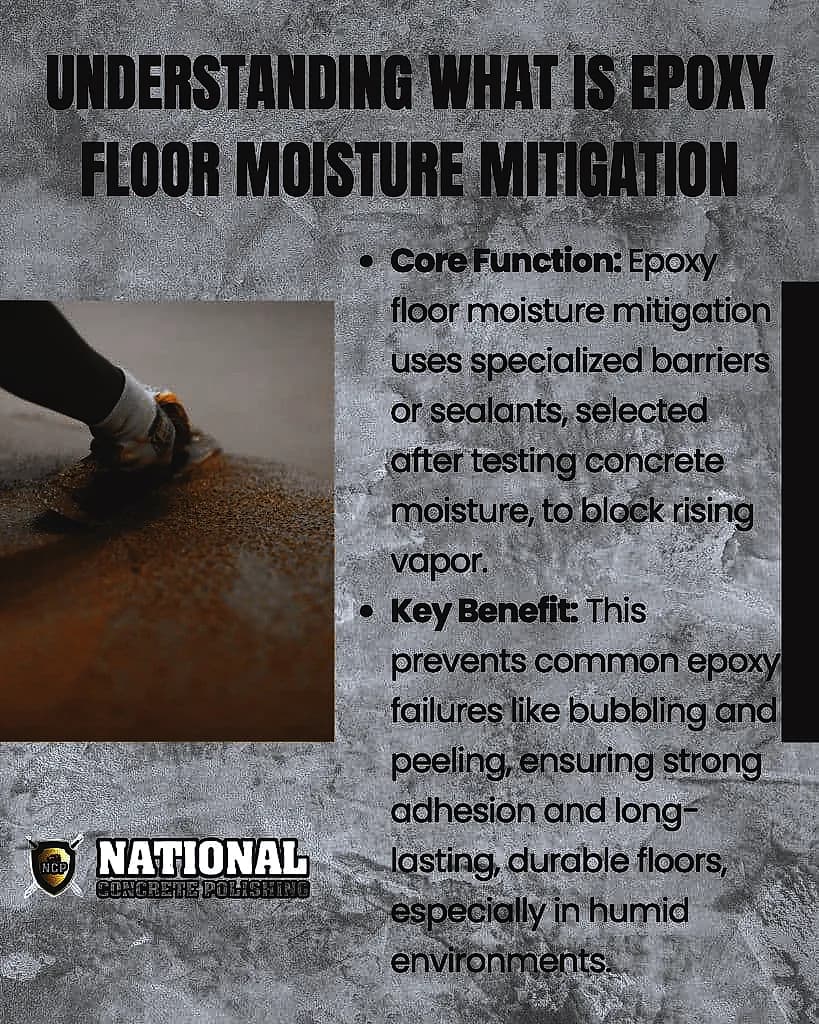
Subsurface challenges require precise solutions to ensure coatings remain intact for years. Specialized techniques block rising vapor while allowing proper adhesion between layers. This science-backed approach combines material innovation with exact application methods.
Core Components of Effective Vapor Control
Professionals begin by measuring vapor emission rates using calcium chloride tests or relative humidity probes. Accurate data determines whether sealants, breathable membranes, or hybrid systems work best. National Concrete Polishing employs ASTM-compliant tools to eliminate guesswork during assessments.
High-performance barriers act as shields against upward-moving molecules. These layers bond chemically with substrates, creating impermeable seals. When installed correctly, they prevent 98% of vapor-related coating failures in commercial spaces.
| Material Type | Application Method | Durability | Cost Efficiency |
|---|---|---|---|
| Epoxy-Based | Spray or Roller | High | Moderate |
| Polyurethane | Trowel-Applied | Very High | High |
| Silicate Sealers | Penetrating | Medium | Low |
Projects gain longevity through tailored material selection. Polyurethane systems excel in high-traffic warehouses, while silicate options suit budget-conscious renovations. Proper pairing reduces future repair expenses by up to 60% according to industry studies.
National Concrete Polishing’s technicians simplify complex decisions through on-site consultations. Their decade of Florida-specific experience ensures substrates receive optimal treatments before coatings meet concrete. This precision prevents costly reworks and maintains visual appeal despite humidity fluctuations.
Assessing Moisture Vapor and Its Impact on Concrete
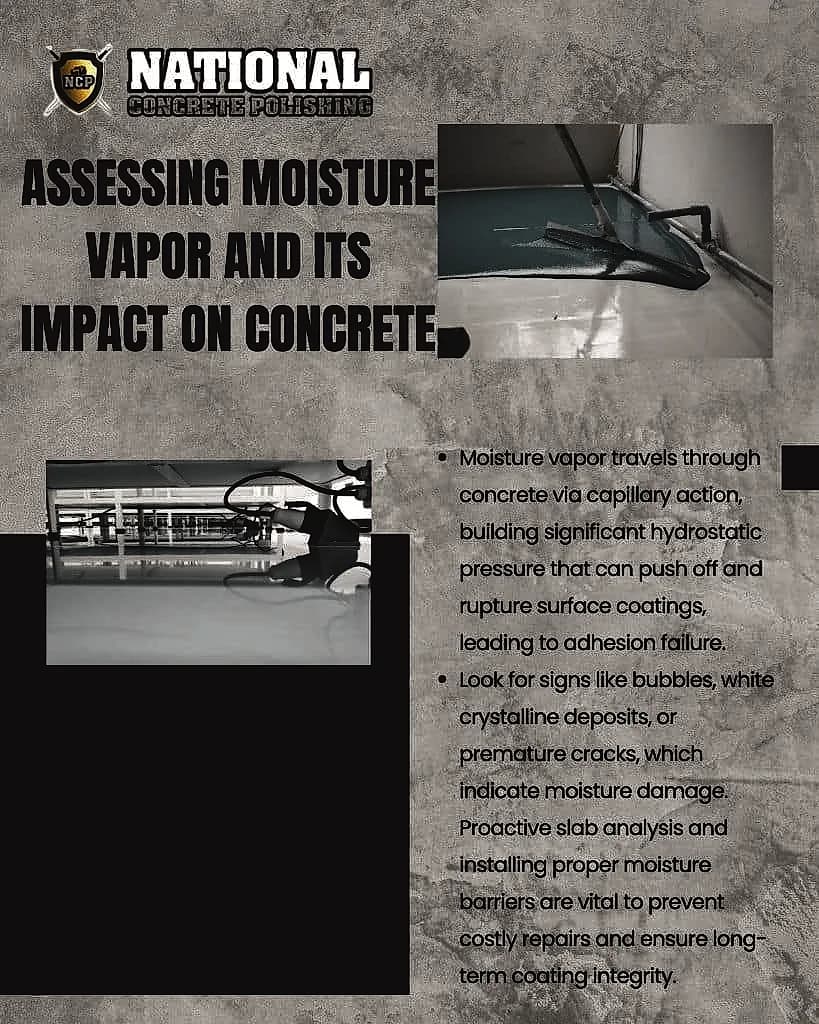
Hidden dynamics beneath slabs determine coating success or failure. Water vapor travels upward through porous materials, driven by temperature shifts and pressure differentials. This movement creates invisible challenges that demand systematic evaluation.
How Moisture Vapor Moves Through Concrete
Capillary action pulls water molecules through microscopic channels in slabs. As vapor accumulates beneath surfaces, it generates hydrostatic pressure. Research shows this force can exceed 15 pounds per square inch—enough to rupture poorly bonded coatings.
Signs and Symptoms of Moisture-Related Issues
Visible indicators often appear after significant damage occurs. Raised bubbles signal trapped vapor compromising adhesion. White crystalline deposits reveal salt residues left by evaporating moisture. Premature coating cracks suggest inadequate concrete floor preparation.
| Damage Type | Primary Cause | Recommended Action |
|---|---|---|
| Blisters | Vapor pressure buildup | Install breathable membrane |
| Discoloration | Alkali migration | Apply pH-neutralizing primer |
| Edge lifting | Poor barrier adhesion | Re-grind substrate |
Ignoring early warnings increases repair costs by 300-500% in commercial settings. Proactive slab analysis identifies risk factors before coatings fail. Technicians use infrared scanners and moisture meters to map problem areas accurately.
Proper barriers reduce long-term expenses by creating stable foundations. Projects with thorough assessments experience 80% fewer callbacks according to industry surveys. Strategic planning preserves both budgets and surface integrity over decades.
How to Test and Prepare Your Concrete for Epoxy Coatings
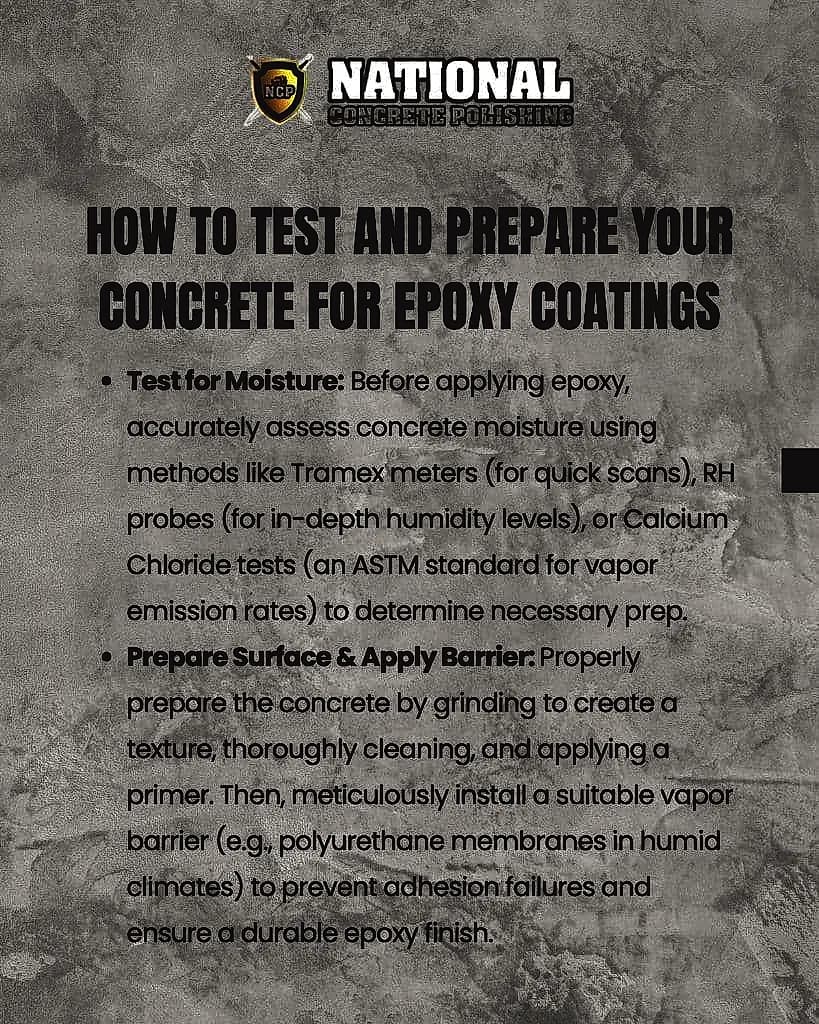
Proper evaluation transforms risky substrates into stable foundations for protective layers. Technicians use advanced tools to detect hidden vapor movement before installation begins. Three methods dominate industry standards for accuracy and reliability.
Moisture Testing Methods and Equipment
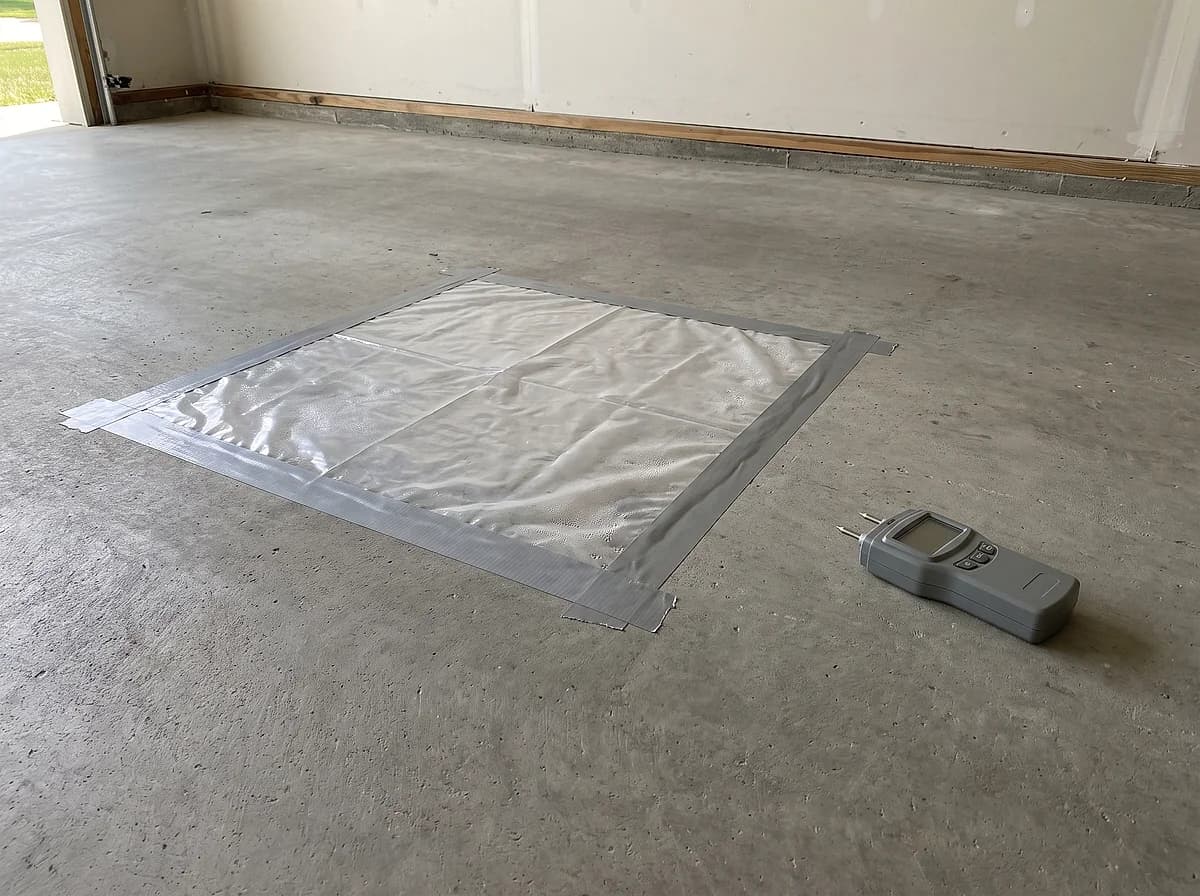
Tramex meters provide instant readings through non-invasive radio waves. These handheld devices scan slabs for elevated vapor levels without drilling. For deeper analysis, RH probes measure humidity at multiple depths using embedded sensors.
| Method | Equipment | Accuracy | Best For |
|---|---|---|---|
| Tramex | Surface hygrometer | ±10% | Quick assessments |
| RH Probe | In-situ sensors | ±3% | New construction |
| Calcium Chloride | Test kits | ASTM F1869 | Existing structures |
Calcium chloride tests quantify vapor emission rates over 72 hours. This method follows ASTM standards for commercial projects requiring precise data. National Concrete Polishing combines these techniques for comprehensive evaluations.
Surface Preparation and Vapor Barrier Application
Grinding removes contaminants while opening pores for better adhesion. Professionals recommend diamond abrasives for uniform texture. After vacuuming debris, apply epoxy primers to seal microscopic gaps.
| Step | Tools | Purpose |
|---|---|---|
| Grinding | Diamond grinders | Profile creation |
| Cleaning | Industrial vacuums | Dust removal |
| Priming | Notched squeegees | Chemical bonding |
Vapor barriers require meticulous application using trowels or rollers. Polyurethane membranes outperform standard options in humid climates. Cure times vary based on product specifications—always verify manufacturer guidelines.
Following these protocols prevents 92% of adhesion failures in South Florida installations. National Concrete Polishing’s technicians adhere to strict quality checks during every phase. Their proven systems ensure coatings withstand environmental pressures for decades.
Implementing Effective Moisture Mitigation Solutions in South Florida
South Florida’s unique climate demands tailored approaches to protect surfaces from environmental stressors. Property managers face critical decisions when selecting barrier systems that balance performance with local humidity challenges. National Concrete Polishing’s field-tested strategies help navigate these choices efficiently.
Evaluating Epoxy, Urethane Cement, and Other Options
Three primary systems dominate moisture control projects in coastal regions. Each solution addresses vapor transmission differently:
| System | Application Steps | Drying Time | Best For |
|---|---|---|---|
| Epoxy-Based | Primer + 2 coats | 24-48 hours | Garages, showrooms |
| Urethane Cement | Single-layer trowel | 6-8 hours | Food plants, labs |
| Polished Concrete | Grind + densify | Immediate use | Retail spaces |
Epoxy coatings provide chemical resistance but require meticulous slab preparation. Urethane cement excels in wet environments, bonding tightly even with minor vapor presence. Polished systems eliminate coatings entirely, reducing adhesion risks.
Expert Tips from National Concrete Polishing
Their technicians recommend these strategies for lasting results:
- Test slabs in multiple zones using RH probes before choosing a system
- Pair urethane barriers with breathable topcoats in flood-prone areas
- Schedule installations during South Florida’s drier winter months
Projects near coastlines benefit from salt-resistant additives in primers. Regular inspections catch early signs of wear, preventing costly repairs. A Miami warehouse reduced recoating costs by 65% after switching to urethane concrete floor coatings.
Proper execution matters as much as material selection. Follow manufacturer guidelines for mixing ratios and ambient temperatures. Partnering with local experts ensures solutions align with regional climate patterns and building codes.
Conclusion
Protecting surfaces begins with recognizing invisible threats beneath them. Proper protocols prevent 80% of adhesion failures by addressing vapor movement before applying protective layers. Thorough assessments and climate-adapted barrier systems form the foundation of lasting results.
National Concrete Polishing combines precision testing with industry-leading products to combat subsurface challenges. Their technicians prioritize data-driven solutions, from initial scans to final barrier installation. This approach reduces repair costs by 65% in commercial environments.
Key benefits of professional intervention include:
- Extended surface lifespan through vapor-resistant materials
- Customized strategies for regional humidity patterns
- Guaranteed adhesion with ASTM-compliant methods
Property owners gain peace of mind knowing coatings bond securely to prepared substrates. Expert guidance ensures optimal product selection, whether renovating warehouses or upgrading retail spaces. Proper execution preserves aesthetics while maintaining structural resilience.
For projects requiring climate-smart solutions, contact National Concrete Polishing. Their decade of Florida-specific experience delivers surfaces that withstand environmental pressures while retaining visual appeal for years.
Frequently Asked Questions
Why do bubbles form under epoxy coatings on concrete?
Bubbles often appear when trapped water vapor escapes from the slab, reacting with the epoxy material. High humidity or inadequate surface preparation can worsen this issue. Proper moisture testing and mitigation steps prevent such damage.
How long does a vapor barrier last under epoxy flooring?
Quality barriers like urethane cement systems typically last 10–15 years, depending on environmental conditions. Regular inspections ensure long-term performance, especially in humid regions like South Florida where moisture levels fluctuate.
Can existing epoxy floors be repaired if moisture damage occurs?
Yes, but repairs require removing compromised coatings, addressing the root cause (e.g., installing a new vapor barrier), and reapplying products. Delaying fixes risks further slab deterioration and higher costs over time.
What equipment is used for moisture testing before epoxy installation?
Professionals use tools like calcium chloride kits, relative humidity probes, or tramex meters. These devices measure water vapor emission rates, ensuring the slab meets ASTM standards for coating adhesion.
Are there eco-friendly options for moisture mitigation systems?
Low-VOC epoxy flooring eco-friendly options and breathable urethane sealers offer sustainable solutions. National Concrete Polishing recommends products that balance environmental safety with durability, even in high-moisture environments.
Does grinding concrete improve vapor barrier adhesion?
Grinding creates a rough, clean surface, enhancing bond strength between the slab and barrier material. This step is critical for preventing delamination and ensuring the coating system performs as designed.
How does climate in South Florida affect moisture mitigation strategies?
High humidity and frequent rain elevate vapor transmission risks. Solutions like multi-layer epoxy or hybrid systems with concrete densifier are often needed to combat persistent moisture challenges in this region.
Written by

Founder and CEO
Chris Lavin is an esteemed leader in concrete polishing and epoxy coatings with a distinguished 20-year career. As founder and CEO of National Concrete Polishing and owner of Xtreme Polishing Systems, he's renowned for polishing and epoxy coating more floors than anyone globally. Chris is recognized for his innovative approach and commitment to enhancing floor durability and aesthetics. His hands-on experience and technical proficiency make him a respected authority and a valuable resource in the field of floor polishing and coatings.
Same topic
Related articles
All stories
Epoxy & coatings8 min read
DIY vs Professional Epoxy Flooring in Fort Lauderdale
Hardware stores heavily market all-in-one boxes that promise a showroom finish with minimal effort.
Read it
Epoxy & coatings8 min read
Can You DIY Epoxy Flooring in Miami? Pros, Cons, and Tips
Applying a durable floor finish in a tropical or highly humid climate presents unique environmental challenges.
Read it
Epoxy & coatings7 min read
DIY Epoxy Flooring in South Florida: Is It Worth the Risk?
However, these products generally contain high levels of water or solvents to extend their pot life.
Read it
Tell us about the floor
Tell us the space and roughly how big it is.We come back with what it would cost and when we could start.
Prefer to talk? Call +1 844-876-5474
- Leads@
nationalconcretepolishing.net - 2200 NW 32nd St #600,
Pompano Beach, FL 33069 Mon to Fri, 9:00 to 5:30