The NCP blog
How Long Do Epoxy Floors Actually Last?
Epoxy & coatings17 min read
How long an epoxy floor lasts depends on the system, the traffic it carries and how well it is maintained.
Understanding how long do epoxy floors last is crucial before investing in this popular flooring solution for your Pompano Beach property. The answer depends on multiple factors including installation quality, traffic levels, and maintenance practices. The reporting rules that coating makers use for environmental declarations of resinous floors assume a refurbishment about every 6 years for thin-mil coatings, 7 years for self-leveling and slurry systems and 9 years for mortar systems. Those are agreed reporting intervals, not promised lifespans, and the rules themselves state that actual service life varies considerably with use and conditions. Many homeowners and business owners have misconceptions about epoxy durability, often expecting either unrealistic permanence or underestimating how long quality installations actually perform. National Concrete Polishing has installed epoxy floors throughout Pompano Beach, Fort Lauderdale, and Miami.
The durability of epoxy flooring isn’t just about the product itself: it’s a combination of proper surface preparation, quality materials, professional installation techniques, and ongoing care. While epoxy is renowned for its exceptional strength, chemical resistance, and ability to withstand heavy loads, even the best epoxy systems will fail prematurely if installed incorrectly or subjected to conditions beyond their design limits. South Florida’s unique climate presents additional challenges, including high humidity, temperature fluctuations, and salt air exposure that can impact performance.
This guide explains epoxy floor longevity across different applications, from residential garages in Miami to commercial warehouses in Fort Lauderdale. You’ll discover the factors that extend or shorten lifespan, how DIY installations compare to professional work, and proven strategies to maximize your investment. Whether you’re considering epoxy for the first time or wondering when to replace an existing floor, this guide gives you what you need to make informed decisions.
Average Epoxy Floor Lifespan by Application
Residential Epoxy Flooring Durability
Residential epoxy floors, including those in garages and basements, generally outlast commercial ones because traffic is lighter. Nobody can promise a fixed number of years. A life-cycle review of resin floors in Building magazine says service life rises with floor thickness and falls with traffic intensity and loads. Residential garages sit at the easier end of that scale because of the relatively low traffic levels in residential settings compared to commercial environments, combined with the ability to implement protective measures like floor mats and careful vehicle placement.
The longevity advantage of residential epoxy becomes even more apparent when compared to alternative flooring options. Paint-based garage floor coatings typically chip and wear sooner, while epoxy bonds chemically to the concrete substrate and creates a hard, protective shell that resists abrasion, impacts, and chemical exposure. For Pompano Beach homeowners, this means a properly installed residential epoxy garage floor can serve as a one-time investment that outlasts multiple paint applications, providing better long-term value despite higher upfront costs. The key to achieving maximum lifespan lies in choosing quality materials, ensuring proper installation, and maintaining the floor according to manufacturer guidelines.
Commercial and Industrial Epoxy Lifespan
Commercial and industrial epoxy floors face significantly more demanding conditions than residential applications, resulting in shorter lifespans. In the same Building magazine review, a resin floor of 0.3 to 1 mm has an anticipated life of five to seven years in a light-duty setting and two to four years in a medium-duty one with regular foot traffic and frequent forklift traffic, and thicker systems last longer. Facilities with extreme heavy traffic (such as busy restaurants, auto repair shops, manufacturing plants, and warehouse loading areas) may see their epoxy floors wear down quickly without proper maintenance and reinforcement. The constant exposure to foot traffic, heavy equipment, vehicular movement, forklifts, and chemical spills creates abrasion patterns and stress points that gradually degrade even the most robust epoxy systems.
However, commercial property owners who invest in high-performance epoxy formulations specifically designed for heavy-duty applications can significantly extend these timelines. Industrial-grade epoxy systems with increased thickness, specialized aggregate additives for impact resistance, and UV-stable topcoats can last longer even in demanding environments when combined with professional maintenance programs. The same Building review, published in the UK in 2009, notes that, in theory, a life of 15 to 20 years and longer can be achieved, although it ties that figure to no particular floor thickness and it sits well above the 6 to 9 year refurbishment intervals at the top of this page. For Fort Lauderdale commercial facilities and Miami retail stores, this means the initial investment in premium materials and expert installation pays dividends through reduced replacement frequency and lower lifetime costs. Evaluating your specific traffic patterns and operational requirements helps you select the appropriate epoxy system that balances performance needs with budget constraints.
DIY Epoxy Kits vs Professional Installations
The installation method dramatically impacts epoxy floor longevity, with DIY kits typically wearing out sooner than professional installations using commercial-grade materials. This significant difference stems from multiple factors including surface preparation quality, material composition, application technique, and curing conditions. Some DIY epoxy kits sold at hardware stores contain water-based formulations with lower solids content, making them easier to apply but less durable than the 100% solids epoxy systems used by professional contractors. The thinner coatings and reduced chemical resistance of DIY products mean they’re more susceptible to wear, hot tire pickup, chemical staining, and delamination.
Surface preparation represents the most critical factor separating DIY from professional results. Proper concrete preparation requires specialized equipment including diamond grinders, shot blasters, and industrial vacuums to achieve the surface profile necessary for optimal epoxy adhesion. DIY enthusiasts typically lack access to this equipment and rely on acid etching or minimal grinding, resulting in poor bonding that leads to premature failure. Professional contractors also perform moisture testing, repair cracks and surface defects, and apply appropriate primers, steps that DIY installers often skip or execute improperly. For Pompano Beach property owners seeking maximum lifespan and return on investment, professional epoxy installation provides superior long-term value despite higher initial costs.
Critical Factors That Determine Epoxy Longevity
Surface Preparation and Concrete Condition
Proper concrete surface preparation stands as the single most important factor affecting epoxy floor lifespan. Before applying epoxy, the concrete substrate must be thoroughly cleaned to remove all dust, dirt, oil, grease, existing coatings, and other contaminants that prevent proper adhesion. Professional contractors use mechanical methods such as diamond grinding or shot blasting to create the appropriate surface profile. The ICRI 310.2R guideline provides benchmark profiles, called CSPs, as visual standards for specifying and verifying the texture the coating needs to bond securely. Inadequate surface preparation causes the epoxy to adhere to contaminants rather than the concrete itself, leading to delamination, bubbling, and premature failure often within the first year.
The condition of the concrete substrate also plays a crucial role in determining how long epoxy will last. Cracks, divots, surface spalling, and structural defects must be properly repaired before epoxy application to prevent these issues from telegraphing through the coating and causing stress points that lead to failure. Moisture content presents another critical concern, especially in South Florida where high humidity and groundwater levels can introduce vapor transmission problems. Concrete with excessive moisture will develop bubbling, blistering, and adhesion failure as water vapor tries to escape through the impermeable epoxy coating. Testing the slab before installation is how that risk is caught: ASTM F2170, the standard for measuring relative humidity in concrete slabs, says excessive moisture in a slab can cause floor covering failures such as debonding and deterioration of finish flooring and coatings, and that manufacturers of such systems generally require moisture testing before installation on concrete.
Traffic Levels and Usage Patterns
The amount and type of traffic an epoxy floor experiences directly correlates with its lifespan. Foot traffic, mechanical traffic from carts and equipment, and vehicular traffic from cars and forklifts all create wear patterns that gradually degrade the epoxy surface through abrasion and impact. High-traffic commercial areas require epoxy formulations with enhanced abrasion resistance and often benefit from aggregate additives that increase surface hardness and impact resistance. Residential garages with two vehicles and minimal daily use experience far less wear than busy warehouse facilities with constant forklift traffic, explaining why residential installations tend to last longer.
The specific usage patterns within a facility also affect longevity in ways that raw traffic counts don’t capture. Repetitive traffic along the same pathways creates concentrated wear zones that deteriorate faster than surrounding areas, while point loads from heavy machinery or improperly supported equipment can cause cracking and indentation. For Pompano Beach automotive repair shops and manufacturing facilities, strategically placing protective mats under stationary equipment and implementing traffic management protocols helps distribute wear more evenly across the floor surface. Understanding your specific usage patterns allows you to select appropriate epoxy systems and implement protective measures that maximize lifespan for your particular application.
Material Quality and System Thickness
The quality of epoxy materials used significantly impacts durability and longevity. Professional-grade 100% solids epoxy contains no water or solvents that evaporate during curing, resulting in a thicker, harder coating with superior chemical resistance and mechanical strength. These premium formulations bond more securely to concrete, resist hot tire marks and chemical staining, and withstand heavy loads far better than water-based or lower-solids DIY products. The resin-to-hardener ratio, cure time, and chemical composition all affect final performance characteristics including flexibility, impact resistance, and UV stability.
System thickness also plays a crucial role in determining how long epoxy will last. Thicker epoxy applications provide more material to wear through before reaching the concrete substrate, effectively extending service life in high-traffic areas. Professional installations are built in layers, with a base coat, decorative flake layers or color chips, and clear topcoats, and the finished thickness decides which class the system falls into: the ICRI selector guide, as reproduced by the Minnesota Concrete Council, lists thin films at 4 to 10 mils and high-build coatings at 10 to 40 mils. Adding polyaspartic or urethane topcoats provides UV resistance, enhanced chemical protection, and superior abrasion resistance that can extend total system life. For Miami commercial properties with heavy loads, a thicker multi-layer system lasts longer, because service life rises with floor thickness and falls with traffic intensity and loads.
Environmental Conditions and Climate
Environmental factors including temperature extremes, humidity levels, UV exposure, and chemical exposure significantly affect epoxy floor longevity. High temperatures cause epoxy to undergo thermal expansion and contraction, creating internal stresses that can lead to cracking or delamination over time. South Florida’s intense heat and temperature fluctuations between air-conditioned interiors and outdoor conditions present particular challenges for epoxy systems. Humidity levels also contribute to moisture-related issues that can compromise floor integrity, making proper moisture mitigation and vapor barriers essential in coastal areas where groundwater and humidity levels remain consistently high.
UV radiation exposure represents another critical environmental factor, particularly for epoxy floors in areas with direct sunlight or outdoor applications. Standard epoxy formulations yellow and deteriorate when exposed to UV light, losing their glossy appearance and becoming brittle over time. Garage floors with windows allowing prolonged sun exposure, outdoor patios, and loading dock areas all require UV-stable topcoats to prevent premature degradation. Chemical exposure from automotive fluids, cleaning products, and industrial substances also impacts lifespan depending on the specific chemicals involved and duration of contact. Selecting epoxy formulations engineered for South Florida’s climate conditions and implementing protective measures like window treatments and immediate spill cleanup extends service life significantly in challenging environmental conditions.
Maintenance Practices That Extend Lifespan
Regular Cleaning and Debris Removal
Implementing consistent cleaning protocols prevents abrasive particles from wearing down the epoxy surface and extends floor life. Daily sweeping or dust mopping removes dirt, sand, and debris before it gets ground into the floor by foot and vehicle traffic, preventing the gradual abrasion that dulls the glossy finish and weakens the protective coating. Soft-bristle brooms, microfiber dust mops, or commercial dust collection systems work best for removing loose contaminants without scratching the epoxy surface. For high-traffic areas, multiple daily cleaning cycles may be necessary to maintain optimal conditions and prevent particle accumulation.
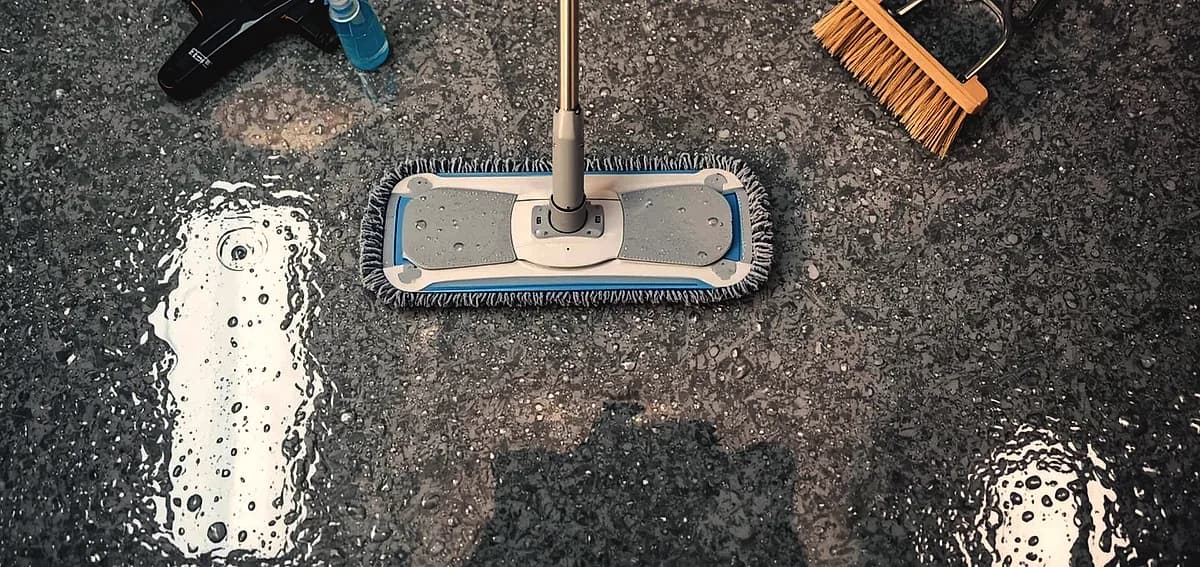
Weekly mopping with pH-neutral, epoxy-safe cleaners removes oils, tire marks, and sticky residues that sweeping can’t address. Using approximately one tablespoon of non-enzymatic detergent per gallon of warm water creates an effective cleaning solution that cuts through grime while remaining gentle on the epoxy coating. Avoid excessive water use: damp mopping rather than soaking wet application prevents water from pooling in seams and low spots where it could potentially penetrate the coating over time. For Fort Lauderdale retail stores and commercial facilities, automated floor scrubbers with soft brushes and epoxy-safe cleaning solutions provide efficient maintenance for large areas while ensuring consistent cleaning quality that extends floor life.
Immediate Spill Response and Chemical Management
Prompt cleanup of spills prevents chemical penetration that can soften, stain, or degrade epoxy coatings even in formulations designed for chemical resistance. While quality epoxy systems resist many automotive fluids, petroleum products, and common chemicals, prolonged exposure can still cause damage that reduces longevity. Gasoline, motor oil, battery acid, brake fluid, and industrial solvents should be wiped up immediately using absorbent materials, followed by cleaning with pH-neutral detergent and thorough rinsing. The longer aggressive chemicals remain in contact with the epoxy surface, the deeper they penetrate and the more extensive the damage becomes.
Maintaining spill response kits in strategic locations throughout commercial facilities ensures quick access to absorbent pads, neutralizing agents, and appropriate cleaning solutions when accidents occur. For Miami automotive facilities and industrial settings where chemical exposure is routine, implementing drip pans under vehicles and equipment catches fluids before they contact the floor. Training staff on proper spill response procedures (including which cleaning products are safe for epoxy and which should never be used) prevents well-intentioned cleaning efforts from causing more damage than the original spill.
Protective Measures and Load Distribution
Strategic use of protective mats, floor protectors, and load distribution methods significantly extends epoxy floor lifespan by preventing concentrated wear and impact damage. Placing commercial-grade mats or plywood sheets under heavy equipment, tool chests, welding stations, and stationary machinery distributes weight over larger areas and prevents point-loading that can crack or indent the epoxy coating. Entrance mats at doorways capture dirt and moisture before it’s tracked onto the floor, reducing the abrasive particles that cause wear and minimizing cleaning requirements. These protective measures cost relatively little but provide substantial benefits in preserving floor condition over time.
Equipment selection also impacts longevity: using wheeled carts and machinery with non-marking rubber casters rather than hard plastic or metal wheels prevents the scratching and surface damage that metal components cause. For facilities that must use metal-wheeled equipment, installing protective track systems or designated pathways limits concentrated wear to specific zones that can be more easily maintained or refinished. Avoiding dragging heavy objects across the floor and using proper lifting techniques when moving equipment prevents the gouging and surface damage that shortens lifespan. These simple operational practices, when combined with quality installation and regular maintenance, help Pompano Beach commercial properties achieve maximum return on their epoxy flooring investment.
Signs Your Epoxy Floor Needs Replacement
Visual Indicators of Wear and Deterioration
Significant loss of gloss across large areas signals that the protective topcoat has worn through, exposing the base epoxy layers to accelerated degradation. While minor dulling in high-traffic pathways is normal over time, widespread loss of shine indicates the coating has reached the end of its effective service life and requires refinishing or replacement. Widespread discoloration, yellowing, or color inconsistencies that can’t be cleaned away suggest UV damage, chemical exposure, or coating breakdown that compromises both aesthetics and protective properties. These visual changes often accompany reduced chemical resistance and increased susceptibility to staining and damage.
Visible cracking, peeling, or bubbling represents serious structural failure that requires immediate attention. Small hairline cracks may be repairable if caught early, but extensive cracking networks indicate underlying substrate problems or adhesion failure that typically requires complete removal and reinstallation. Peeling edges around doors, drains, or expansion joints signal loss of adhesion that will progressively worsen and spread across larger areas. Bubbling or blistering usually results from moisture vapor transmission or improper installation and won’t resolve on its own. These defects will continue expanding and eventually cause large sections of coating to delaminate. Regular professional inspections help commercial facilities identify early warning signs before minor issues escalate into complete floor failure.
Functional Performance Decline
Increased difficulty in cleaning, with stains penetrating the surface rather than wiping away easily, indicates the protective coating has deteriorated and lost its non-porous properties. Fresh epoxy floors resist staining because liquids bead up on the smooth, sealed surface rather than absorbing into the material. When oils, automotive fluids, or common spills begin leaving permanent marks despite prompt cleanup, the coating can no longer provide adequate protection and allows contaminants to penetrate into the underlying layers or concrete substrate.
Surface roughness, pitting, or texture changes affect both functionality and safety. Rough, uneven areas collect dirt and become progressively more difficult to clean, creating sanitation concerns in food service, healthcare, and commercial environments. Pitting from chemical exposure or enzymatic cleaner damage creates small craters where bacteria and contaminants can collect, making the floor harder to sanitize. Changes in slip resistance (either becoming too slippery from worn aggregate exposure or developing rough patches that catch on footwear) create safety hazards that liability concerns make unacceptable in commercial settings. These functional deficiencies typically occur alongside visual deterioration and collectively indicate replacement or refinishing is necessary.
When Refinishing vs Replacement Makes Sense
Professional refinishing can restore the look of many epoxy floors and usually costs less than complete replacement, making it the preferred option when damage is primarily superficial. Surface wear, minor discoloration, loss of gloss, and shallow scratching typically respond well to refinishing, which involves light surface abrading to improve adhesion followed by application of fresh topcoats. This process restores the protective barrier, chemical resistance, and aesthetic appearance while extending floor life. For older residential epoxy garage floors, refinishing provides an economical alternative to full replacement.
Complete replacement becomes necessary when damage extends to the substrate, adhesion failure affects large areas, or structural concrete problems exist beneath the coating. Widespread delamination, extensive cracking networks, moisture-related bubbling, and substrate deterioration all require removal of the existing epoxy system and starting fresh with proper surface preparation. In these situations, attempting refinishing would only provide temporary improvement before the underlying problems cause renewed failure. The most cost-effective solution, whether refinishing, partial replacement, or complete reinstallation, depends on the actual condition of the floor rather than its age alone.
Maximizing Your Epoxy Investment
Choosing the Right Epoxy System for Your Needs
Selecting an epoxy system matched to your specific application ensures optimal performance and longevity. Light-duty residential garage applications may perform well with standard 100% solids epoxy systems, while heavy industrial facilities require specialized high-performance formulations with enhanced chemical resistance, increased thickness, and aggregate reinforcement. Understanding your traffic patterns, chemical exposure risks, environmental conditions, and aesthetic requirements allows you to invest in the appropriate system without overspending on unnecessary features or underspecifying for your actual needs.
An experienced contractor can match the system to the application and supply professional-grade materials. Premium topcoat options including polyaspartic and urethane coatings provide UV stability, enhanced abrasion resistance, and chemical protection that extends total system life. For South Florida properties, selecting formulations specifically designed for high humidity, temperature fluctuations, and coastal conditions prevents premature failure from environmental factors that standard epoxy systems may not adequately address.
Professional Installation Best Practices
Investing in professional installation provides long-term value that far exceeds the cost savings of DIY approaches. Experienced contractors bring specialized equipment for proper surface preparation, knowledge of correct mixing ratios and application techniques, and understanding of curing requirements that dramatically affect final performance. Professional installations typically include comprehensive surface evaluation, moisture testing, crack repair, appropriate primer selection, and multi-layer application with proper cure times between coats, steps that DIY installers often skip or execute incorrectly.
Quality contractors also back their work with a workmanship warranty, which DIY projects can’t match. National Concrete Polishing provides a one-year limited workmanship warranty on eligible commercial and residential epoxy system installations, running from substantial completion unless the accepted proposal states a different written term. Manufacturer material warranties are separate and apply only when available and expressly included for the selected system. Professional installation eliminates the common mistakes (improper mixing, inadequate surface prep, rushed application, incorrect cure conditions) that cause DIY epoxy to fail prematurely.
Frequently Asked Questions
How long does epoxy last on a residential garage floor?
Expected life depends on the system and how the floor is used, not one fixed number. Service life rises with floor thickness and falls with traffic intensity and loads, according to a Building magazine review of resin floors. Good surface preparation, a system suited to the traffic, and regular cleaning help a garage floor last.
What is the lifespan of commercial epoxy flooring?
Heavy traffic and equipment use shorten the life of commercial epoxy floors, though thicker, high-performance systems with proper maintenance last longer. In a Building magazine review, a resin floor of 0.3 to 1 mm has an anticipated life of five to seven years in light-duty use and two to four years in medium-duty use.
Do DIY epoxy kits last as long as professional installations?
No, DIY epoxy kits typically wear out sooner than professional installations using commercial-grade materials and proper surface preparation.
What factors most affect how long epoxy flooring lasts?
Surface preparation quality, material type and thickness, traffic levels, environmental conditions, and maintenance practices are the primary factors determining epoxy floor longevity.
Can epoxy floors last 30 years or more?
Nobody can promise that. Expected life depends on the system and how the floor is used, not one fixed number. A sound slab, a thick enough system, light traffic, and regular cleaning all favor a longer life.
How does South Florida climate affect epoxy floor lifespan?
High humidity, temperature fluctuations, UV exposure, and salt air can reduce epoxy lifespan unless systems are specifically formulated for coastal conditions with appropriate moisture barriers and UV-stable topcoats.
What maintenance extends epoxy floor life the most?
Regular cleaning to remove abrasive particles, immediate spill response, using pH-neutral cleaners, and implementing protective measures like mats and proper load distribution can extend lifespan.
When should epoxy floors be refinished instead of replaced?
Refinishing works well for surface wear, minor discoloration, and loss of gloss, while replacement is necessary for widespread delamination, extensive cracking, or substrate damage.
How long does epoxy last in high-traffic commercial areas?
Extremely high-traffic areas like busy restaurants and auto shops may see epoxy wear down quickly without proper maintenance, though reinforced systems last longer.
Does adding a topcoat increase epoxy floor lifespan?
Yes, polyaspartic or urethane topcoats provide additional UV protection, chemical resistance, and abrasion resistance that can extend total system life.
Conclusion
Understanding how long epoxy floors last empowers property owners to make informed decisions about installation, maintenance, and replacement timing. No single number fits every floor: traffic, floor thickness, the condition of the slab, and how well the floor is cleaned all shape how long it lasts, and proper installation and maintenance extend it. The difference between DIY results and professional installations underscores the value of investing in quality materials and expert application from the start.
Surface preparation, material selection, environmental conditions, traffic patterns, and ongoing maintenance collectively determine whether your epoxy floor delivers maximum value or requires premature replacement. For Pompano Beach, Fort Lauderdale, and Miami properties, choosing contractors experienced with South Florida’s unique climate challenges ensures your flooring system addresses humidity, temperature, and UV exposure issues that standard installations may not adequately handle. National Concrete Polishing has worked in concrete flooring since 2013, with in-house crews in South Florida.
Written by

Founder and CEO
Chris Lavin is an esteemed leader in concrete polishing and epoxy coatings with a distinguished 20-year career. As founder and CEO of National Concrete Polishing and owner of Xtreme Polishing Systems, he's renowned for polishing and epoxy coating more floors than anyone globally. Chris is recognized for his innovative approach and commitment to enhancing floor durability and aesthetics. His hands-on experience and technical proficiency make him a respected authority and a valuable resource in the field of floor polishing and coatings.
Same topic
Related articles
All stories
Residential7 min read
Epoxy Garage Floor DIY vs Professional Installation: What You Need to Know
DIY epoxy flooring involves homeowners applying the coating using pre-packaged kits that include resin, hardener, and tools.
Read it
Epoxy & coatings6 min read
What Happens When Concrete Prep Is Skipped
What happens when concrete prep is skipped? Good contractors will tell you it's a disaster, so don't let your contractor skip the work!
Read it
Epoxy & coatings11 min read
Why Proper Joint Treatment is Critical for Epoxy Floors in Florida
Concrete floors contain three main joint types that serve distinct purposes and require specialized treatment approaches.
Read it
Tell us about the floor
Tell us the space and roughly how big it is.We come back with what it would cost and when we could start.
Prefer to talk? Call +1 844-876-5474
- Leads@
nationalconcretepolishing.net - 2200 NW 32nd St #600,
Pompano Beach, FL 33069 Mon to Fri, 9:00 to 5:30