The NCP blog
Urethane vs Epoxy Floor Coating: A Detailed Guide
Epoxy & coatings7 min read
Epoxy floor coatings are rigid surfaces created by a resin and hardener that chemically bond to the substrate.
A urethane floor coating is a durable surface layer known for its flexibility and resistance to UV light, temperature changes, and scratches. It provides a matte or satin finish, offering a subtle aesthetic suitable for environments requiring durability and adaptability.
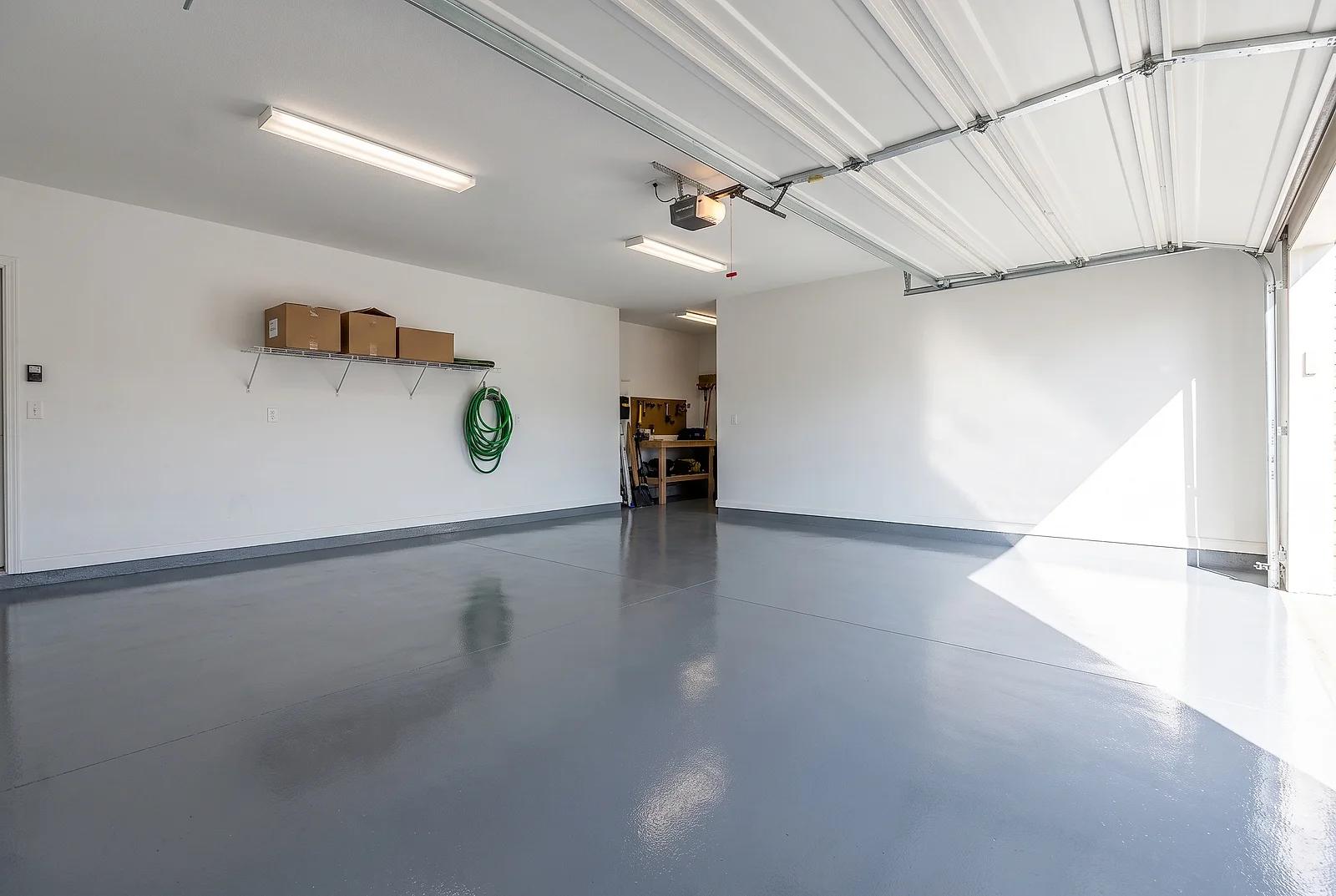
Epoxy floor coatings are rigid surfaces created by a resin and hardener that chemically bond to the substrate. These coatings deliver high strength and resistance to heavy impacts, abrasions, and chemical spills, making them practical for industrial and garage floors.
The key difference between urethane and epoxy coatings is their flexibility and UV resistance. Epoxy coatings, while stronger and more resistant to heavy use, yellow under ultraviolet light, making them better for indoor applications.
The maintenance of urethane coatings involves regular cleaning to remove dirt and inspecting for scratches. Epoxy coatings require similar cleaning routines and need resealing or recoating in high-traffic areas to maintain their protective qualities.
What Are Urethane Floor Coatings?
Urethane floor coatings are protective layers made from a synthetic compound that provides flexibility and resilience. Known for their resistance to UV light, scratches, and temperature fluctuations, urethane coatings are used in environments requiring durability and adaptability. Their flexibility lets them tolerate some substrate movement.
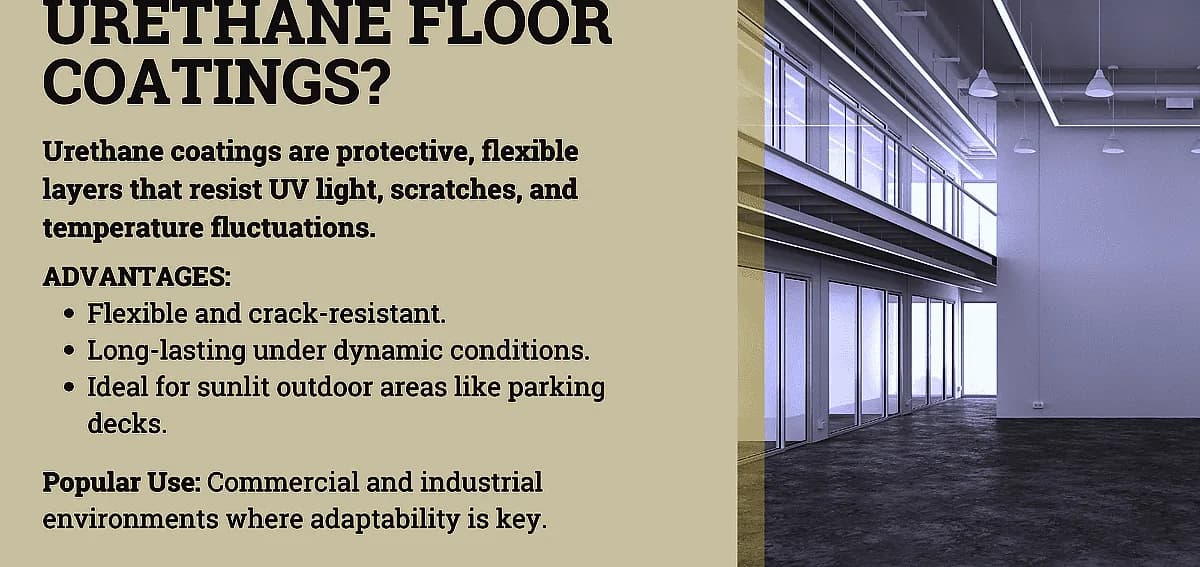
Urethane coatings are popular in commercial and industrial settings, particularly in areas exposed to sunlight, such as outdoor spaces or parking decks. A common misconception about urethane is that it lacks strength compared to epoxy. However, its flexibility enhances its durability in environments with dynamic conditions, making it a reliable choice for various applications.
What Are Epoxy Floor Coatings?
Epoxy floor coatings are rigid surface layers created by combining a resin and a hardener that chemically bond to form a tough and durable material. These coatings excel in resistance to heavy impacts, abrasions, and chemical spills, making them a preferred choice for high-traffic areas. Epoxy’s strength and adherence to substrates provide long-lasting protection in static environments.
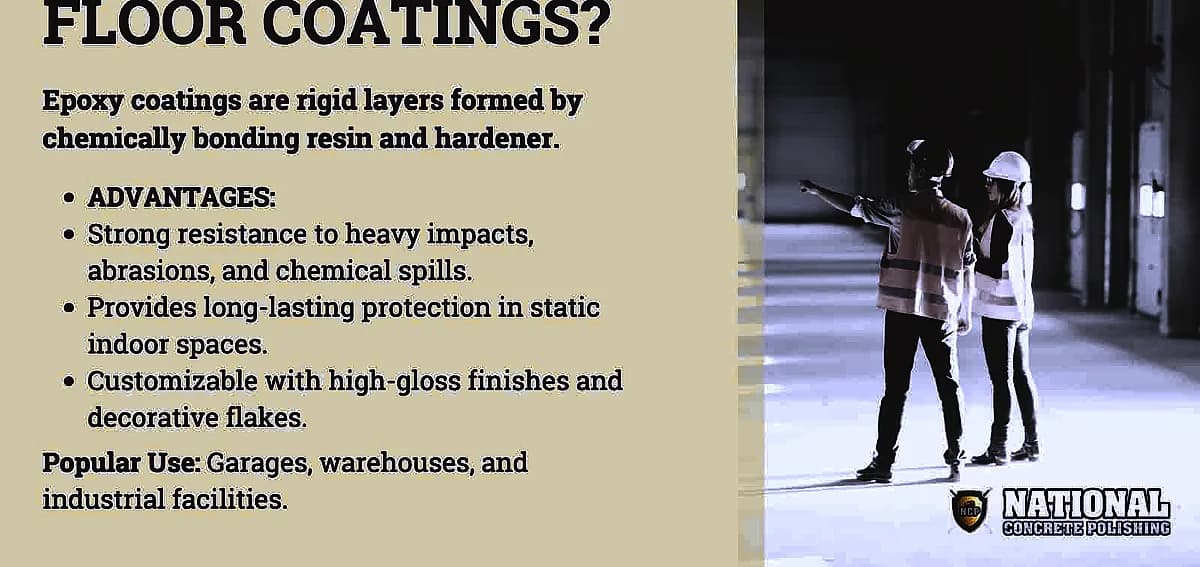
Epoxy is commonly used in industrial, commercial, and residential spaces, particularly for garage floors, warehouses, and manufacturing facilities. A frequent misconception is that epoxy is suitable for outdoor use, but its lack of UV stability makes it prone to discoloration and degradation under sunlight. Despite this, its strength and resistance to wear make it ideal for indoor applications.
In South Florida, where the sun is strong most of the year, this matters most in garages with windows or a door that faces the sun. A clear UV-stable topcoat protects itself, but one installer writing in Concrete Decor points out that it does not protect the layers underneath, so ask how the whole system is rated for sun exposure.
How Do Urethane and Epoxy Coatings Differ in Durability?
Durability differences between urethane and epoxy coatings include scratch resistance, impact tolerance, chemical resilience, and longevity. Both coatings are durable, but their performance varies depending on the environment.
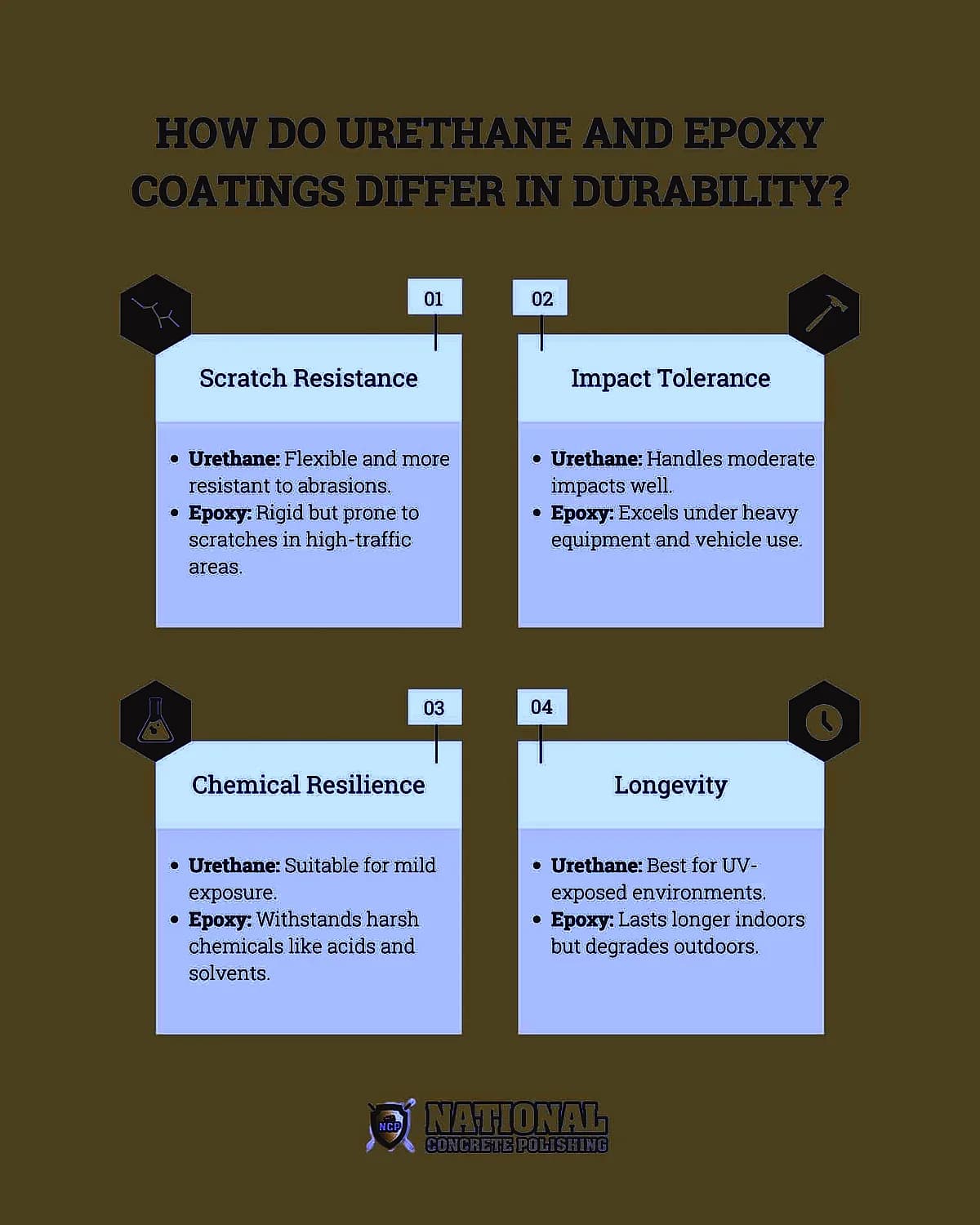
The ways by which urethane and epoxy coatings differ in durability are:
- Scratch Resistance: This refers to the ability of a surface to resist marks or abrasions from external forces. Urethane coatings are more resistant to scratches due to their flexible nature, which allows them to recover from surface abrasions.
Epoxy coatings, while strong, are more prone to scratching, especially in high-traffic areas where sharp objects or debris are common.
- Impact Tolerance: This is the capacity of a surface to absorb and withstand heavy force or weight without damage. Epoxy coatings excel in handling heavy impacts, offering superior strength and rigidity. This makes them ideal for industrial spaces and garages with heavy equipment or vehicles.
While durable, urethane coatings, due to their flexibility, have a slightly lower tolerance for heavy impacts, making them better suited for moderate-use environments.
- Chemical Resilience: This describes the surface’s resistance to damage or degradation from exposure to harsh substances like solvents or acids. Both urethane and epoxy coatings resist chemicals effectively, but resistance depends on the product and the chemical.
In industrial settings with frequent chemical exposure, check the data sheet for the chemicals involved. Urethane also offers chemical resistance and is commonly used in environments with milder exposure, such as residential spaces.
- Longevity: This is the ability of a coating to maintain its functionality and appearance over time with proper care. Urethane coatings last longer in environments with sunlight due to their UV stability and flexibility.
Epoxy coatings, though durable, degrade faster in outdoor settings. Proper maintenance extends the lifespan of both, but urethane’s adaptability gives it an edge in diverse conditions.
Which Floor Coating Offers Better Chemical Resistance?
Chemical resistance depends on the product and the chemical. Epoxy coatings resist many chemicals, but not all equally. One manufacturer's data sheet, for example, reports a 100% solids epoxy as unaltered by mineral spirits, toluene, xylene, unleaded petrol and 10% hydrochloric acid after seven days under ASTM D1308, but with some yellowing in 10% nitric acid and slight discoloration in 10% sulfuric acid.
Where exposure to harsh substances is frequent, as in industrial settings and laboratories, check the data sheet for the chemicals involved. Its bond with the substrate helps protect against many spills, as long as spills are cleaned up promptly.
How Do Urethane and Epoxy Compare in Terms of Installation Process?
The ways by which urethane and epoxy compare in terms of the installation process are preparation, application layers, curing times, and environmental conditions. Each coating requires specific steps that influence the complexity and effectiveness of the installation.
The ways by which urethane and epoxy compare in terms of the installation process include:
- Preparation: Urethane coatings require thorough cleaning and repairing of the substrate to remove dirt, grease, and cracks. Any existing coatings must be removed to ensure proper adhesion.
Epoxy coatings involve a similar preparation process, but concrete etching or grinding is needed to create a textured surface for better bonding. Surface repair and priming are essential for both to achieve optimal performance.
- Application Layers: Urethane coatings are applied in multiple thin layers, with careful timing between applications to ensure proper adhesion. This requires precision, as urethane cures quickly.
Epoxy coatings involve fewer layers, typically starting with a primer followed by one or two coats of resin mixed with a hardener. Each layer must cure before the next is applied, resulting in a slower process compared to urethane.
- Curing Times: Urethane coatings generally cure faster than epoxy, allowing for rapid application and reduced downtime. However, this quick curing time demands skillful and efficient application.
Epoxy coatings take longer to cure. With the epoxy systems we install, foot traffic is back in 10 to 24 hours and wheels in 24 to 72, with full cure in about 7 days, and temperature and humidity can extend that. While this extends the timeline, it allows more flexibility during application.
- Environmental Conditions: Temperature and humidity affect how both coatings cure, and they matter more in Florida's humid climate, so installers check conditions before and during application.
Epoxy is more sensitive to low temperatures, which slows curing and affects adhesion. Controlled environments are preferable for achieving the best results.
What Are the Maintenance Requirements for Urethane and Epoxy Coatings?
The maintenance required for urethane coatings includes regular cleaning to remove dirt, dust, and debris that accumulate on the surface. Urethane’s resistance to scratches and UV light minimizes the need for frequent maintenance, making it a low-effort option for high-traffic or sunlit areas. Occasional inspections for surface wear or minor damage are recommended, but repairs are less common thanks to the coating’s flexibility and durability.
Epoxy coatings require routine maintenance, including cleaning with mild soap and water to maintain their appearance and protective properties. In high-traffic areas, periodic resealing or recoating is necessary to restore their glossy finish and resistance to wear. Epoxy coatings also require repairs for cracks or scratches, especially in spaces subjected to heavy impacts or temperature changes. Proper maintenance ensures the coating retains its durability and polished appearance over time.
Which Coating Is More Aesthetic?
Epoxy is the more aesthetic coating. It offers a wide range of color, gloss, and texture options, making it highly customizable for various settings. Its high-gloss finish enhances light reflection, creating a polished and professional look. Epoxy coatings also allow for decorative elements, such as metallic finishes, decorative flakes, and vibrant colors, making them ideal for spaces where aesthetics are a priority, such as showrooms or residential garages.
What Are the Costs Associated with Urethane and Epoxy Floor Coatings?
Urethane floor coatings cost between $3 and $7 per square foot, reflecting their advanced UV stability and flexibility. Labor costs are higher due to precise application and quick curing times. Additional expenses include surface repairs and priming, which ensure proper adhesion and performance. Factors like floor size and environmental conditions further influence costs.
Epoxy floor coatings cost between $2 and $5 per square foot, making them a more affordable choice. The straightforward application process lowers labor costs, though priming and repairs add to the total. Optional decorative finishes, like metallic or color flakes, also increase overall expenses. Larger areas typically offer better cost efficiency.
Which Floor Coating Is More Environmentally Friendly?
Neither coating is greener by default. VOC content varies widely between epoxy and urethane products, so compare the VOC figure on each product's data sheet.
What Is the Best Choice for Your Floor: Urethane or Epoxy?
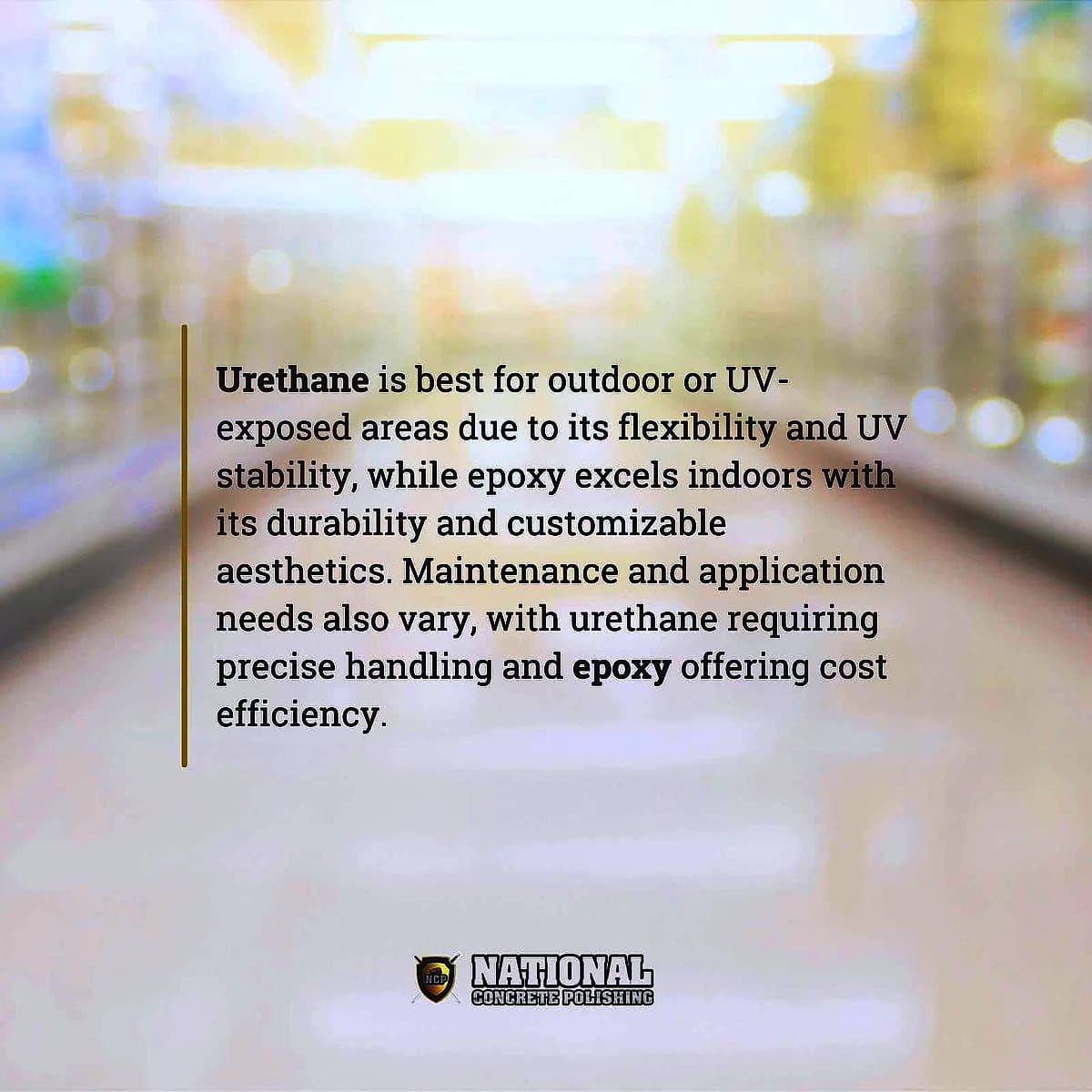
Urethane concrete floor coating is best for outdoor or UV-exposed areas due to its flexibility and UV stability, while epoxy excels indoors with its durability and customizable aesthetics. Epoxy vs Urethane Coatings maintenance and application needs also vary, with urethane requiring precise handling and epoxy offering cost efficiency.
Written by

Founder and CEO
Chris Lavin is an esteemed leader in concrete polishing and epoxy coatings with a distinguished 20-year career. As founder and CEO of National Concrete Polishing and owner of Xtreme Polishing Systems, he's renowned for polishing and epoxy coating more floors than anyone globally. Chris is recognized for his innovative approach and commitment to enhancing floor durability and aesthetics. His hands-on experience and technical proficiency make him a respected authority and a valuable resource in the field of floor polishing and coatings.
Same topic
Related articles
All stories
Residential7 min read
Epoxy Garage Floor DIY vs Professional Installation: What You Need to Know
DIY epoxy flooring involves homeowners applying the coating using pre-packaged kits that include resin, hardener, and tools.
Read it
Epoxy & coatings6 min read
What Happens When Concrete Prep Is Skipped
What happens when concrete prep is skipped? Good contractors will tell you it's a disaster, so don't let your contractor skip the work!
Read it
Epoxy & coatings11 min read
Why Proper Joint Treatment is Critical for Epoxy Floors in Florida
Concrete floors contain three main joint types that serve distinct purposes and require specialized treatment approaches.
Read it
Tell us about the floor
Tell us the space and roughly how big it is.We come back with what it would cost and when we could start.
Prefer to talk? Call +1 844-876-5474
- Leads@
nationalconcretepolishing.net - 2200 NW 32nd St #600,
Pompano Beach, FL 33069 Mon to Fri, 9:00 to 5:30