
The NCP blog
Complete Guide to Moisture Mitigation Before Epoxy in Florida
Epoxy & coatings10 min read
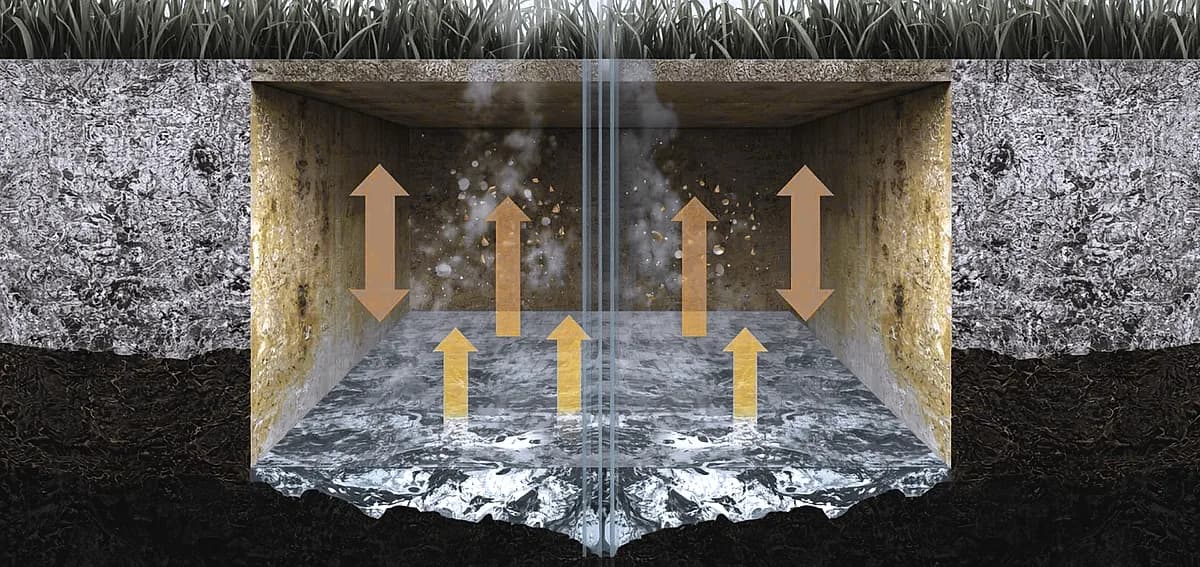
Capillary action pulls liquid water upward through porous concrete, creating subsurface saturation.
Moisture mitigation is the critical first step for successful epoxy floor installations in Florida, where humidity levels regularly exceed 70% and concrete slabs release 30% more vapor during summer months. South Florida’s unique climate destroys 1 in 3 improperly sealed floor coatings within 18 months, making professional moisture management essential. National Concrete Polishing has developed specialized protocols that prevent vapor transmission damage and ensure long-lasting epoxy performance in Pompano Beach and throughout the region.
Overview
This comprehensive guide covers moisture mitigation strategies specifically designed for Florida’s challenging climate. You’ll learn about moisture vapor transmission mechanics, testing methods, barrier systems, material selection, and installation best practices. We’ll also explore how South Florida’s humidity creates unique challenges and the advanced solutions that protect your flooring investment for decades.
Understanding Moisture Vapor Transmission
Moisture vapor transmission (MVT) occurs when water molecules in gas form migrate through concrete pores, creating destructive pressure beneath floor coatings. Concrete slabs act as thirsty sponges when no vapor barrier exists between soil and concrete, continuously pulling ground moisture upward. South Florida’s air holds 20% more water vapor than other U.S. regions, with daily temperature swings pushing vapor upward at rates 3x faster than Northern states.
Three distinct mechanisms drive moisture movement through concrete slabs. Capillary action pulls liquid water upward through porous concrete, creating subsurface saturation. Vapor diffusion moves gas molecules through the concrete matrix, building internal pressure. Condensation occurs when airborne moisture contacts cooler concrete surfaces, forming liquid water that compromises coating adhesion.
Water trapped in concrete during construction creates long-term emission problems even years after installation. The water-to-cement ratio during mixing significantly impacts future moisture susceptibility—higher water content creates more pathways for vapor migration. In Florida’s climate, the issue isn’t whether moisture is present but how effectively you manage it.
Why Florida Requires Special Moisture Mitigation
South Florida’s tropical climate presents unique moisture challenges that standard epoxy systems cannot handle. Concrete releases trapped water vapor during afternoon heat spikes, with emission rates spiking when surface temperatures exceed 85°F. Hurricane seasons bring extreme humidity cycles that test coating adhesion limits.
National Concrete Polishing’s field data from over 400 rescued installations reveals that uncontrolled vapor movement causes 72% of premature coating failures in the region. Morning installations often fail due to overnight moisture accumulation in concrete pores. Without proper mitigation, excessive moisture damages epoxy through bubbling, blistering, delamination, and adhesive breakdown.
Florida’s humidity affects epoxy curing times and bond strength significantly. When there’s too much moisture in the air, it slows the chemical reaction required for proper curing. The epoxy may take longer to cure, leading to extended drying times and potentially weaker bonds.
Moisture Testing Methods for Florida Concrete
Professional moisture testing must occur before any epoxy application to establish baseline vapor emission rates. Concrete moisture testing uses multiple methods to reveal hidden saturation levels and vapor transmission rates. Digital sensors track real-time vapor emission rates, while moisture meters measure subsurface water content at various depths.
The calcium chloride test involves placing unhydrated calcium chloride on the concrete slab and covering it with a domed plastic lid. After 72 hours, contractors weigh the calcium chloride to determine how much moisture it absorbed from the concrete. ASTM standards state that moisture vapor transmission rates of 4 pounds per 1,000 square feet over 24 hours is the maximum rate allowable for successfully applying adhesive, sealer, or coating.
Relative humidity testing provides more accurate data for Florida conditions where ground moisture and atmospheric humidity both contribute to vapor transmission. National Concrete Polishing deploys environmental sensors tracking real-time humidity and slab temperatures to guide precise application windows when conditions favor proper adhesion.
Types of Moisture Barrier Systems
Modern moisture mitigation systems use specialized epoxy primers and vapor barriers engineered to penetrate concrete subfloors and create solid surface layers that reduce vapor emissions to practically nothing. Two-component epoxy systems with built-in moisture mitigation properties offer the most reliable protection for Florida installations.
Advanced polymer membranes now block 99.9% of vapor transmission when installed correctly. These barriers maintain surface integrity through hurricane seasons and extreme heat cycles. Moisture-mitigating primers create chemical barricades between concrete slabs and chosen epoxy flooring layers.
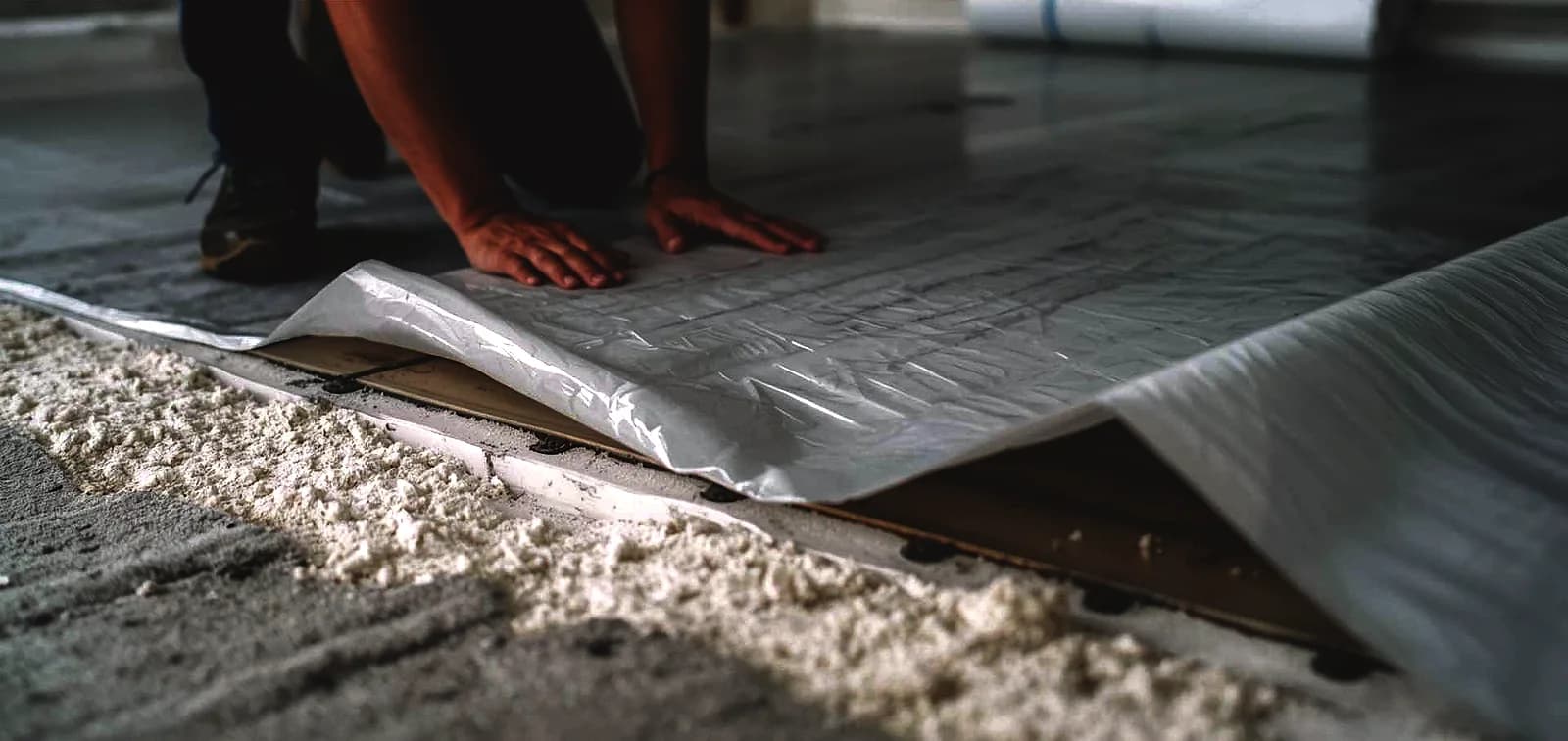
Moisture Mitigation System products can tolerate moisture vapor emission rates up to 25 lbs per 1,000 square feet per 24 hours when tested according to ASTM standards. This exceeds the standard 4 lb limit by over 6x, providing exceptional protection for high-moisture environments. Waterproofing membranes can be applied beneath tile or epoxy installations, while vapor barriers with plastic sheeting components completely block moisture.
Application Process for Moisture Barriers
Professional moisture barrier application begins with thorough surface preparation including grinding, cleaning, and testing. Dense concrete requires low-viscosity primers that penetrate deeply, while porous surfaces need thicker sealants that fill voids. Material selection must match specific slab conditions and moisture test results.
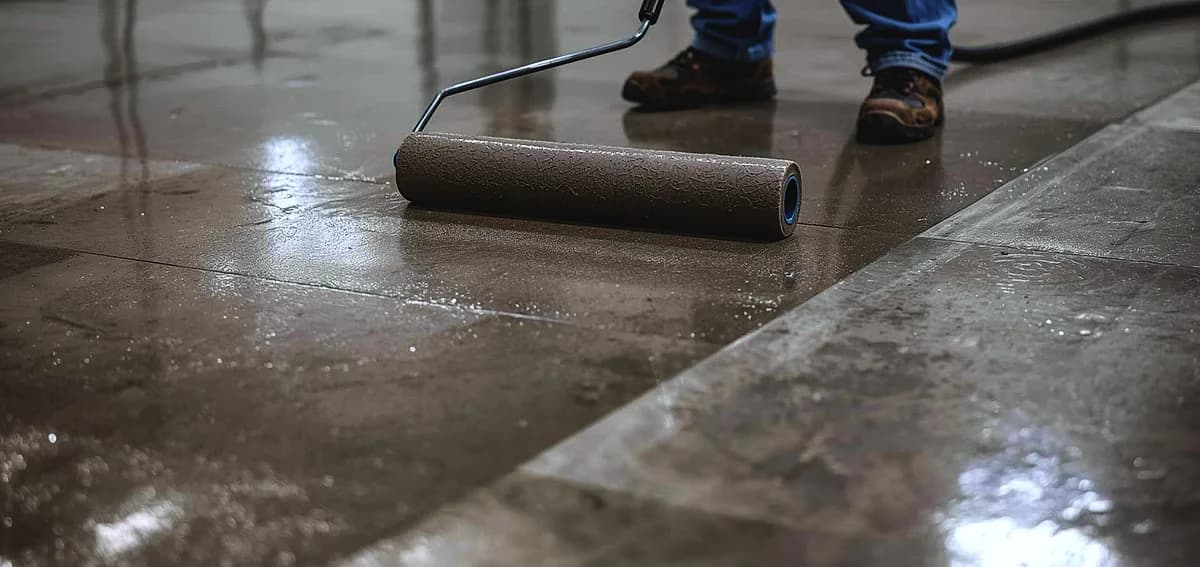
Most moisture vapor barrier coatings have very short curing times—drying can occur in as little as 5 to 10 hours. This makes them ideal for new construction and fast-tracked projects with tight schedules. Epoxy moisture mitigating solutions are so versatile they can be applied when humidity levels reach 90% or above.
Industrial dehumidifiers maintain 45-55% relative humidity during installations to prevent premature curing caused by airborne water content. Surface temperatures must stay between 65-85°F throughout the process, verified using infrared thermometers. Multi-layer sealing prevents 94% of humidity-related adhesion issues when applied following manufacturer specifications.
Material Selection for High-Moisture Environments
Advanced polymer-based products adapt to Florida’s temperature shifts without cracking or delaminating. Polymer-modified epoxy products consistently outperform standard resins in humid settings according to National Concrete Polishing’s field testing. Special formulations are designed to tolerate high alkalinity caused by moisture in cement.
Epoxy’s nonporous nature makes it naturally suitable for areas with high humidity and temperature fluctuations. It resists excess moisture buildup better than other flooring options. However, even the best epoxy requires proper moisture barriers to perform optimally in South Florida conditions.
The right barrier system depends on project specifics and scope of work. Waterside properties, garages, laundry rooms, kitchens, and any area where high humidity prevails are ideal candidates for moisture-mitigating epoxy systems. Including a vapor barrier base layer adds significant long-term life and protection.
Installation Timing and Environmental Control
Timing installations around Florida’s daily humidity cycles dramatically improves success rates. Morning applications often fail due to overnight moisture accumulation in concrete pores. Concrete releases trapped water vapor during afternoon heat spikes, making mid-day installations problematic.
Professional contractors use digital sensors to map vapor emission points and identify optimal installation windows. This data reveals when concrete is at its driest state relative to atmospheric conditions. Temperature swings between air-conditioned interiors and hot exteriors create condensation challenges that require careful environmental management.
Most concrete slabs need to cure for at least five days before floor coatings or coverings can be applied. However, in Florida’s climate, extended curing times of 7-14 days may be necessary depending on humidity levels and ground moisture conditions. Rushing this process guarantees premature failure.
Commercial vs Residential Moisture Challenges
Commercial epoxy flooring faces more complex moisture challenges due to larger slab areas and varied use conditions. Warehouses, manufacturing facilities, and retail spaces often have higher ground moisture levels and less climate control than residential garages. Industrial facilities require moisture barriers that can handle forklift traffic and chemical exposure while managing vapor transmission.
Residential garage epoxy floors typically deal with smaller areas but face unique challenges from vehicle moisture, seasonal humidity swings, and temperature cycling. Homes near waterways or with high water tables require the most aggressive moisture mitigation strategies.
Versatile moisture mitigation solutions work with most floor covering options including VCT, tile, and various epoxy systems. They not only prevent topcoat blisters and bubbles but also protect underlying concrete from moisture-related damage.
Common Moisture-Related Failure Modes
Excessive moisture emissions are a leading cause of epoxy floor coating damage, yet these failures are easily avoidable with proper mitigation. Damage from MVT typically happens when moisture barriers are not applied or not applied correctly. Visual signs include bubbling, blistering, delamination, white haze formation, and surface discoloration.
Moisture can break down water-based adhesives used to secure costly floor coverings and discolor or deform flooring products. To avoid moisture imbalance and flooring failure, choose a concrete floor vapor barrier with lower permeance than the flooring cover above the slab. Moisture reduces concrete’s compressive strength as water weakens the cement matrix.
Alkaline salts pulled through concrete by moisture can damage epoxy coatings chemically. Corrosion of embedded rebar and steel reinforcement leads to structural concerns beyond just cosmetic coating failures. Compromised indoor air quality from mold spores and mildew growth often accompanies moisture problems.
Cost Considerations and Long-Term Value
Professional moisture mitigation adds 15-25% to initial epoxy installation costs but prevents 94% of humidity-related failures that require complete floor replacement. The average cost of repairing a failed epoxy floor exceeds 3x the original installation price when moisture damage occurs. Investing in proper mitigation from the start provides decades of reliable performance.
Using the best moisture barrier products available ensures optimal results and long-term value. Depending on the project, professionals can apply a range of vapor barriers to suit any concrete subfloor—residential, commercial, or industrial. Most moisture barriers can be applied in a day and cure within hours, minimizing project delays.
The return on investment becomes clear when comparing properly mitigated floors that last 20+ years versus unprotected systems that fail within 18 months. For commercial applications, avoiding business disruption from premature floor failure justifies the additional upfront investment in moisture mitigation.
Maintenance and Long-Term Performance
Properly mitigated epoxy floors require minimal maintenance while delivering exceptional durability. Regular cleaning with pH-neutral cleaners preserves the coating without damaging the moisture barrier beneath. Avoid harsh chemicals that could compromise the barrier system’s integrity over time.
Periodic inspections should check for any signs of moisture intrusion, especially in areas with high water exposure or drainage issues. Early detection of moisture problems allows for targeted repairs before widespread damage occurs. Professional resealing every 5-7 years maintains optimal moisture protection in high-humidity environments.
The right moisture mitigation system transforms vulnerable floors into durable assets that withstand Florida’s extreme climate conditions. Advanced polymer membranes maintain effectiveness through countless humidity cycles and temperature swings when properly installed and maintained.
Frequently Asked Questions
What is moisture mitigation for epoxy floors?
Moisture mitigation uses specialized barriers and primers to block water vapor transmission through concrete, preventing epoxy coating damage from ground moisture and humidity.
Do I need moisture mitigation in Florida?
Yes, Florida’s high humidity causes 72% of epoxy failures without proper mitigation—it’s essential for long-lasting floor performance.
How long does moisture mitigation take to cure?
Most moisture vapor barriers cure in 5-10 hours, though full system cure before epoxy application may require 24 hours.
What moisture level is acceptable for epoxy?
ASTM standards allow maximum 4 lbs moisture per 1,000 sq ft per 24 hours, though specialized barriers can handle up to 25 lbs.
Can epoxy be applied in high humidity?
Yes, specialized moisture-mitigating epoxy systems can be applied at humidity levels up to 90% when proper protocols are followed.
How much does moisture mitigation cost?
Professional moisture mitigation adds 15-25% to installation costs but prevents failures that cost 3x more to repair.
What happens if moisture mitigation is skipped?
Epoxy coatings bubble, blister, delaminate, and fail within 18 months when moisture barriers are not properly applied.
How do you test concrete moisture levels?
Professionals use calcium chloride tests, relative humidity probes, and digital sensors to measure vapor emission rates before installation.
Can moisture barriers be applied to old concrete?
Yes, moisture mitigation systems work on both new and existing concrete slabs when properly prepared.
How long do moisture barriers last?
Properly installed moisture barrier systems last 20+ years, protecting epoxy coatings throughout their full lifespan.
Conclusion
Moisture mitigation is non-negotiable for successful epoxy floor installations in Florida’s challenging climate. While South Florida’s extreme humidity destroys unprotected coatings within 18 months, advanced moisture barrier systems block 99.9% of vapor transmission and enable decades of reliable performance. Professional Critical Tests Before Epoxy Installation, proper material selection, and expert installation timing make the difference between premature failure and long-lasting durability. National Concrete Polishing’s climate-smart protocols have protected hundreds of installations across Pompano Beach, Miami, and Fort Lauderdale using specialized techniques developed specifically for South Florida conditions. Contact us today for professional moisture testing and epoxy floor repair process solutions that ensure your epoxy floor investment delivers maximum value and performance for years to come.
Written by

Founder and CEO
Chris Lavin is an esteemed leader in concrete polishing and epoxy coatings with a distinguished 20-year career. As founder and CEO of National Concrete Polishing and owner of Xtreme Polishing Systems, he's renowned for polishing and epoxy coating more floors than anyone globally. Chris is recognized for his innovative approach and commitment to enhancing floor durability and aesthetics. His hands-on experience and technical proficiency make him a respected authority and a valuable resource in the field of floor polishing and coatings.
Same topic
Related articles
All stories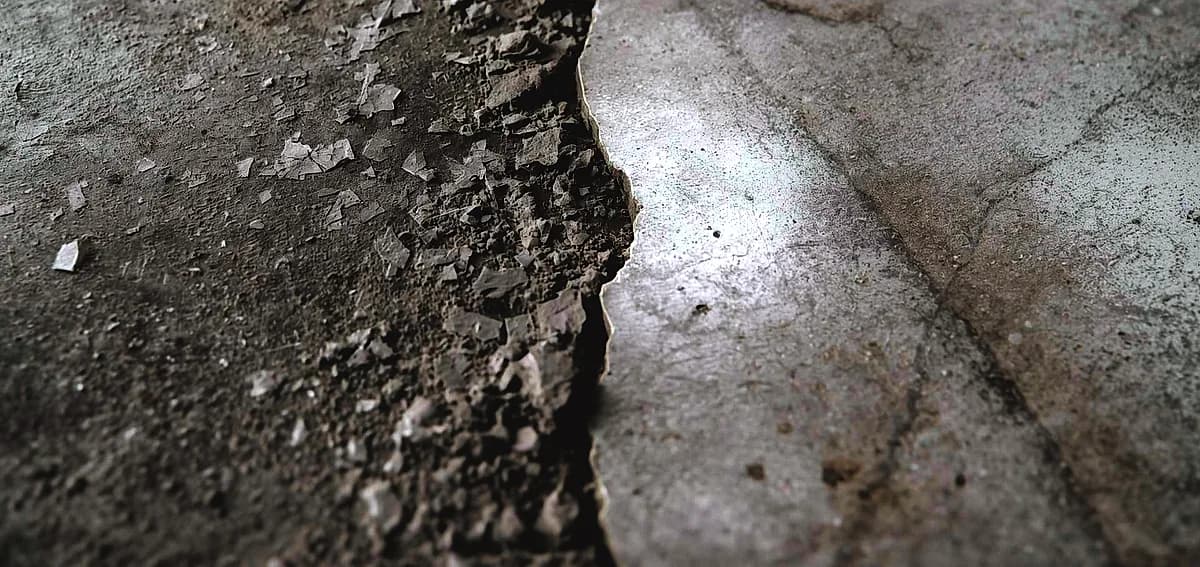
Epoxy & coatings8 min read
DIY vs Professional Epoxy Flooring in Fort Lauderdale
Hardware stores heavily market all-in-one boxes that promise a showroom finish with minimal effort.
Read it
Epoxy & coatings8 min read
Can You DIY Epoxy Flooring in Miami? Pros, Cons, and Tips
Applying a durable floor finish in a tropical or highly humid climate presents unique environmental challenges.
Read it
Epoxy & coatings7 min read
DIY Epoxy Flooring in South Florida: Is It Worth the Risk?
However, these products generally contain high levels of water or solvents to extend their pot life.
Read it
Tell us about the floor
Tell us the space and roughly how big it is.We come back with what it would cost and when we could start.
Prefer to talk? Call +1 844-876-5474
- Leads@
nationalconcretepolishing.net - 2200 NW 32nd St #600,
Pompano Beach, FL 33069 Mon to Fri, 9:00 to 5:30