
The NCP blog
Garage Floor Finishes in South Florida Built for Heat and Humidity
Residential11 min read
Professional-grade systems address all three failure points through specialized formulations and installation protocols.
The best garage floor finishes for South Florida homes combine polyaspartic topcoats with moisture-mitigating primers to withstand 90% humidity, temperatures exceeding 95°F, and constant salt air exposure. According to the Concrete Polishing Association of America (CPAA), properly installed garage floor systems in coastal climates last 15 to 20 years when engineered specifically for subtropical conditions.
Standard garage coatings fail in South Florida within 2 to 3 years. The combination of moisture vapor transmission from concrete slabs, extreme UV exposure through garage door openings, and chemical exposure from vehicles creates conditions that destroy conventional finishes. Professional-grade systems address all three failure points through specialized formulations and installation protocols.
This guide covers which finishes perform best in South Florida garages, how humidity affects installation timing, and what separates lasting installations from premature failures.
Why South Florida Demands Specialized Garage Floor Finishes
South Florida’s climate creates a unique set of challenges that standard garage floor finishes cannot handle. The Portland Cement Association identifies three primary factors that determine coating longevity in subtropical environments: moisture vapor transmission rates, thermal cycling stress, and UV degradation resistance.
Humidity and Moisture Challenges
South Florida’s average relative humidity exceeds 76% year-round, with summer months routinely hitting 90% or higher. This humidity doesn’t just affect the air inside your garage. It creates constant moisture pressure from below the concrete slab.
Concrete slabs in South Florida often exhibit moisture vapor transmission rates of 5 to 8 pounds per 1,000 square feet over 24 hours. The acceptable threshold for most epoxy systems is 3 pounds. When coatings are applied over slabs exceeding this limit, hydrostatic pressure builds beneath the finish, causing bubbling, peeling, and complete delamination within months.
The water table across much of South Florida sits just 2 to 10 feet below grade. During rainy season, this water table rises, pushing additional moisture through concrete slabs that lack adequate moisture barriers.
Heat and UV Exposure
Garage floors in South Florida experience temperature swings from overnight lows of 70°F to afternoon surface temperatures exceeding 140°F when direct sunlight enters through open garage doors. This thermal cycling creates expansion and contraction stress that rigid coatings cannot accommodate.
Research from Lawrence Berkeley National Laboratory shows that dark-colored garage floor coatings absorb up to 90% of incident solar radiation. Light-colored finishes reflect 60% to 80% of this energy, reducing both surface temperatures and cooling loads on adjacent living spaces.
UV exposure also accelerates yellowing in standard epoxy formulations. Aliphatic polyurethane and polyaspartic topcoats resist UV degradation, maintaining their color and gloss for 10+ years in direct sunlight exposure.
Salt Air and Chemical Exposure
Properties within 3 miles of the coastline face constant salt air exposure that corrodes unprotected concrete and accelerates coating breakdown. According to the International Concrete Repair Institute (ICRI), chloride penetration in coastal concrete can reach concentrations of 0.4% by weight within 10 years without protective coatings.
Garage floors also face chemical exposure from vehicle fluids, including gasoline, oil, brake fluid, and antifreeze. Professional-grade finishes require minimum chemical resistance ratings to withstand these common contaminants without staining or softening.
Best Garage Floor Finish Options for South Florida Homes
Four primary finish types perform reliably in South Florida’s climate. Each offers distinct advantages depending on your budget, aesthetic preferences, and performance requirements.
Polyaspartic Coatings
Best for: Homeowners who want maximum durability, UV stability, and fast return to service.
Polyaspartic coatings represent the gold standard for South Florida garage floors. These advanced formulations cure in 4 to 6 hours regardless of humidity levels, allowing same-day installation and 24-hour vehicle traffic.
Key advantages of polyaspartic systems include:
UV stability that prevents yellowing for 15+ years in direct sunlight
Temperature tolerance from -40°F to 140°F without softening
4x higher abrasion resistance than standard epoxy
Moisture tolerance during application that allows installation at up to 85% relative humidity
Cost ranges from $6 to $12 per square foot installed, depending on surface preparation requirements and decorative options.
Epoxy with Polyaspartic Topcoat
Best for: Budget-conscious homeowners who want professional results.
This hybrid system combines the excellent adhesion and chemical resistance of epoxy with the UV stability and abrasion resistance of polyaspartic. The epoxy base coat bonds directly to prepared concrete, while the polyaspartic topcoat provides the wear surface.
Installation requires 2 to 3 days due to epoxy cure time requirements. Surface preparation remains critical. Diamond grinding creates the optimal profile for mechanical adhesion.
Cost ranges from $4 to $8 per square foot installed, making this the most popular choice for South Florida homeowners seeking professional-grade results.
Metallic Epoxy
Best for: Homeowners who want a dramatic, one-of-a-kind appearance.
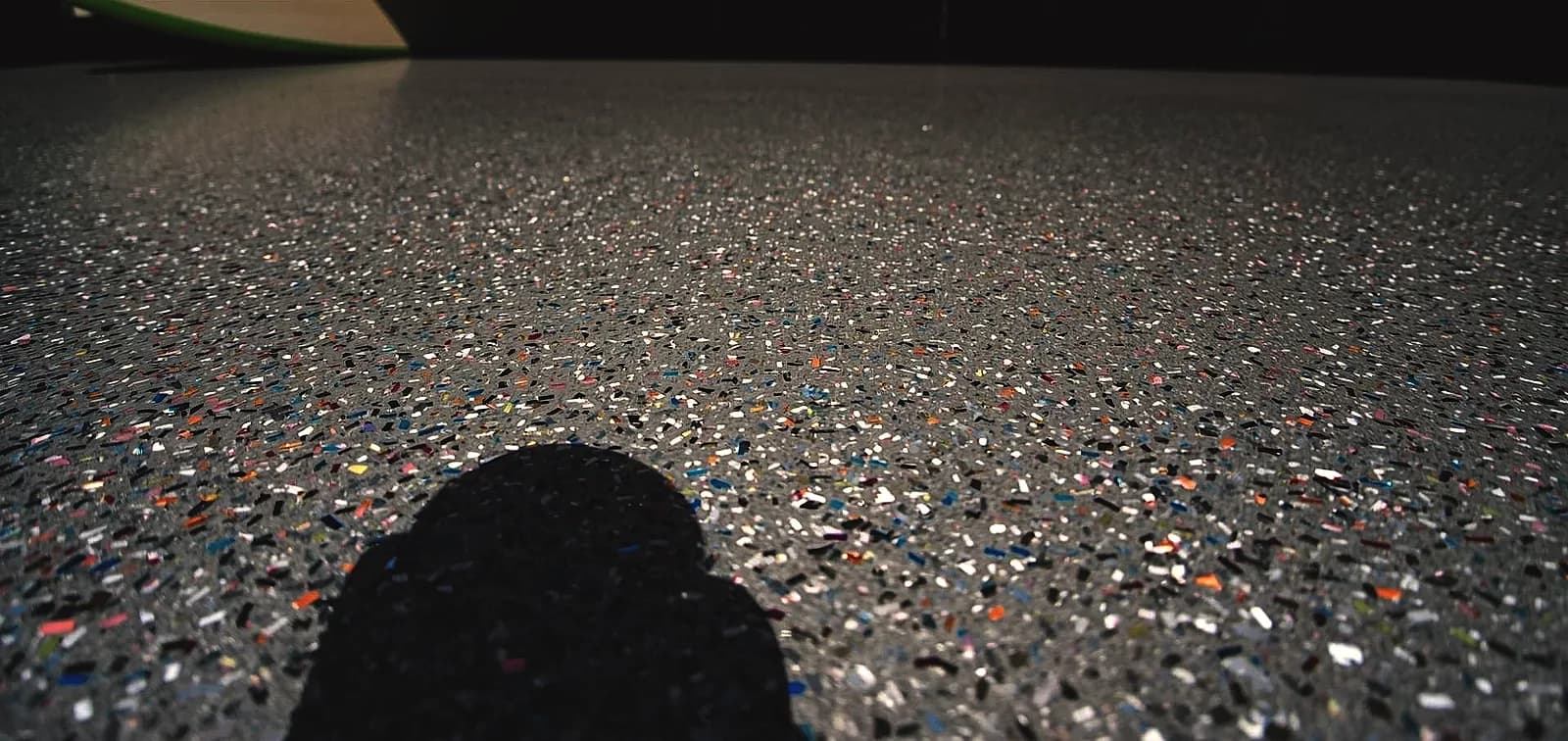
Metallic epoxy systems create three-dimensional visual effects using metallic pigments suspended in high-build epoxy. Each installation produces unique patterns resembling polished marble, flowing water, or molten metal.
For South Florida applications, metallic epoxy requires a UV-stable polyaspartic or polyurethane topcoat to prevent color fading. Without this protection, direct sunlight will amber the finish within 2 to 3 years. Learn more about metallic epoxy maintenance requirements.
Cost ranges from $8 to $15 per square foot installed due to the artistic skill required for application.
Polished Concrete
Best for: Homeowners who prefer a natural, industrial aesthetic with minimal maintenance.
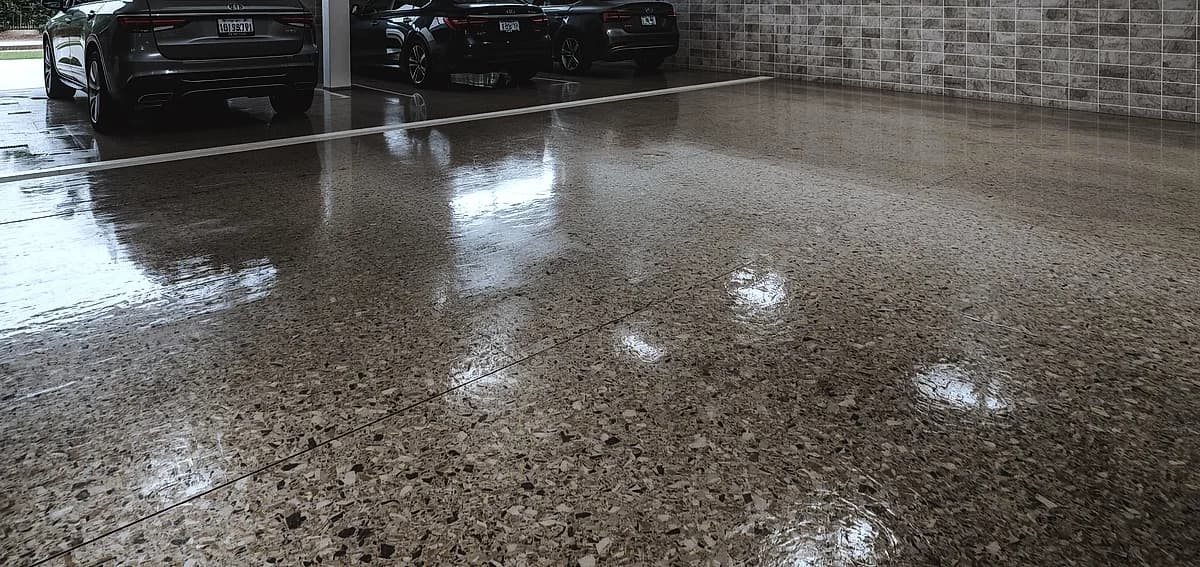
Polished concrete transforms existing slabs into durable, low-maintenance surfaces through progressive diamond grinding and chemical densification. Unlike coatings, polished concrete cannot peel, bubble, or delaminate because the finish is integral to the concrete itself.
The polishing process involves grinding with progressively finer diamond abrasives (typically 50 to 3000 grit) and applying lithium silicate densifiers that chemically react with the concrete to increase hardness by 40%.
Cost ranges from $3 to $8 per square foot depending on desired gloss level and aggregate exposure.
Garage Floor Finish Comparison for South Florida
| Finish Type | Cost/Sq Ft | UV Resistance | Cure Time | Lifespan |
|---|---|---|---|---|
| Polyaspartic | $6-$12 | Excellent | 4-6 hours | 15-20 years |
| Epoxy + Polyaspartic | $4-$8 | Excellent | 2-3 days | 12-18 years |
| Metallic Epoxy | $8-$15 | Good (with topcoat) | 2-3 days | 10-15 years |
| Polished Concrete | $3-$8 | N/A | 1-2 days | 20-25 years |
Professional Installation Process for South Florida Garage Floors
Proper installation separates garage floor finishes that last 15+ years from those that fail within 24 months. The process requires specific steps tailored to South Florida’s climate conditions.
Step 1: Moisture Testing
Every professional installation begins with moisture testing using both calcium chloride (ASTM F1869) and relative humidity probe (ASTM F2170) methods. The calcium chloride test measures moisture vapor emission rate over 72 hours. The RH probe test measures moisture content within the slab at 40% depth.
For South Florida installations, acceptable readings are:
Calcium chloride: Under 3 lbs/1000 sq ft/24 hours for standard coatings
Relative humidity: Under 75% for epoxy, under 85% for polyaspartic
Slabs exceeding these thresholds require moisture mitigation systems before coating application.
Step 2: Surface Preparation
Surface preparation accounts for 80% of coating success. Professional installers use diamond grinding to create a concrete surface profile (CSP) of 2 to 3, which provides optimal mechanical adhesion for coating systems.
Grinding also removes:
Previous coatings, sealers, and curing compounds
Oil stains and chemical contamination
Efflorescence and mineral deposits
Weak surface layers (laitance)
For severely damaged surfaces, shot blasting may be required to achieve adequate profile depth.
Step 3: Crack and Joint Repair
All cracks, spalls, and control joints require treatment before coating application. Crack repair typically involves routing (widening) the crack to accept polyurea or epoxy filler, then grinding flush with the surrounding surface.
Control joints can be filled to create a monolithic appearance or left unfilled and coated over (they’ll telegraph through the finish). Most South Florida homeowners prefer filled joints for easier cleaning and a seamless look.
Step 4: Primer Application
Moisture-mitigating primers are essential for South Florida applications. These specialized primers penetrate concrete pores and react with moisture to form a crystalline barrier that blocks vapor transmission from below.
Standard primers tolerate MVT rates up to 3 lbs. Moisture-mitigating primers handle rates up to 15 lbs, making them suitable for even problematic South Florida slabs.
Step 5: Base Coat and Topcoat
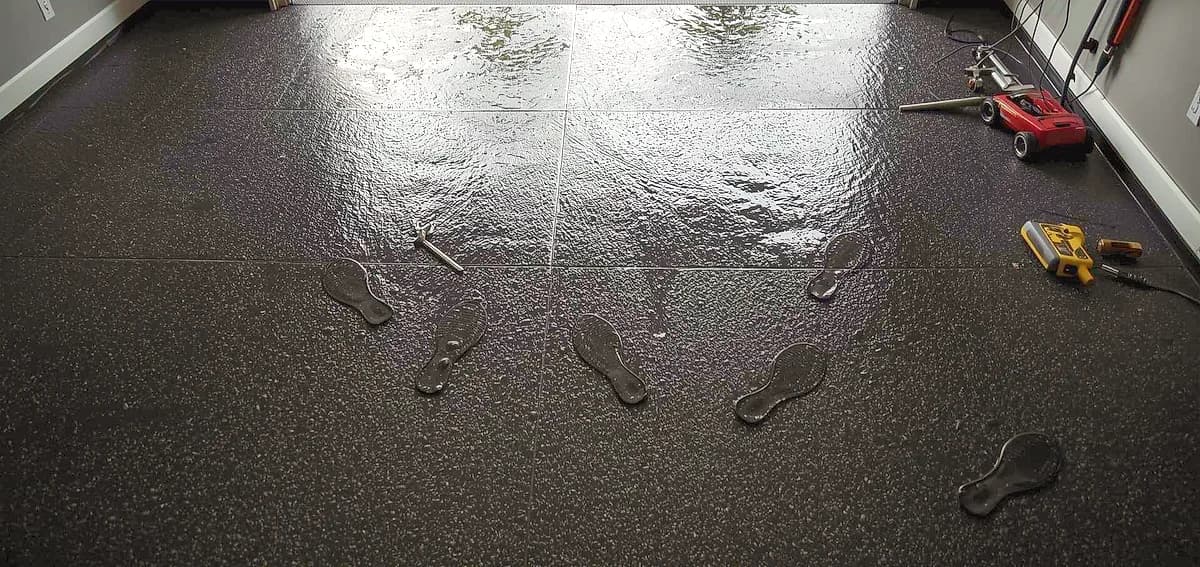
Professional systems include a minimum of three coats: primer, base coat, and topcoat. The base coat provides thickness, chemical resistance, and color. Decorative flakes or metallic pigments are broadcast into the wet base coat if desired.
The topcoat provides the wear surface, UV protection, and desired gloss level. For South Florida, polyaspartic or aliphatic polyurethane topcoats are mandatory for UV stability. Learn more about epoxy floor thickness requirements.
Common Garage Floor Finish Problems in South Florida
Understanding why garage floor finishes fail helps homeowners make informed decisions about materials and contractors.
Peeling and Delamination
Cause: Moisture vapor transmission exceeding coating tolerance, inadequate surface preparation, or contamination beneath the coating.
Solution: Complete removal of failed coating, proper moisture testing, diamond grinding to CSP 2-3, and application of moisture-mitigating primer system. See our guide on fixing peeling epoxy floors.
Yellowing and Discoloration
Cause: UV exposure degrading aromatic (standard) epoxy formulations. This is purely aesthetic and doesn’t affect performance.
Solution: Apply UV-stable polyaspartic or aliphatic polyurethane topcoat over existing finish, or replace with UV-stable system. Learn about different types of epoxy floors.
Hot Tire Pickup
Cause: Inadequate cure time, insufficient coating thickness, or use of low-quality materials. Hot tires from driving soften the coating and pull it away when the vehicle moves.
Solution: Allow full cure time (7 days for epoxy, 24 hours for polyaspartic) before parking vehicles. Professional-grade coatings with proper thickness (12-20 mils dry film thickness) resist hot tire pickup. Check our garage floor coating durability guide.
Bubbling During Installation
Cause: Outgassing from concrete as coating cures. Air trapped in concrete pores expands due to temperature changes and rises through wet coating.
Solution: Apply coatings during temperature-stable periods (early morning), use breathable primer systems, and back-roll coatings to release trapped air. Understanding humidity’s effect on epoxy helps prevent this issue.
Maintaining Your South Florida Garage Floor Finish
Proper maintenance extends the lifespan of any garage floor finish and keeps it looking new. South Florida’s climate requires attention to specific factors.
Daily and Weekly Care
Remove loose debris with a dust mop or soft-bristle broom. Sand and grit act as abrasives under foot and tire traffic, dulling the finish over time. For weekly cleaning, use a microfiber mop with clean water or a pH-neutral cleaner. Avoid harsh chemicals that can degrade the topcoat. For detailed instructions, see our epoxy floor cleaning guide.
Monthly and Quarterly Maintenance
Deep clean with an auto scrubber or deck brush and commercial floor cleaner monthly. Inspect for chips, scratches, or wear patterns quarterly. Small chips can be touched up with matching coating material to prevent moisture infiltration.
For polished concrete, apply maintenance sealers quarterly to maintain gloss and stain resistance.
What to Avoid
Harsh chemicals including citrus cleaners, vinegar, and ammonia-based products
Pressure washing (can force water beneath edges)
Rubber-backed mats (trap moisture and can stain)
Dragging heavy objects without protective pads
Choosing a Garage Floor Finish Contractor in South Florida
The contractor you choose matters as much as the materials used. Ask these questions before signing any contract:
Do you perform moisture testing? Any contractor who skips this step is setting you up for failure.
What surface preparation method do you use? Diamond grinding is the minimum standard. Acid etching alone is inadequate for South Florida conditions.
What is the total dry film thickness of your system? Professional systems measure 15-25 mils. Budget coatings are often 5-8 mils and won’t last.
Is your topcoat UV-stable? If they can’t name the specific chemistry (polyaspartic, aliphatic polyurethane), look elsewhere.
What warranty do you provide? Professional contractors offer 5-15 year warranties. Read the fine print for exclusions. Learn more about epoxy flooring warranty terms.
Frequently Asked Questions
How long do garage floor finishes last in South Florida?
Professional-grade garage floor finishes last 12 to 20 years in South Florida when properly installed with moisture mitigation and UV-stable topcoats. Polished concrete can last 25+ years with proper maintenance. DIY kits and budget installations typically fail within 2 to 5 years due to inadequate surface preparation and moisture management.
What is the best time of year to install garage floor coatings in South Florida?
Late fall through early spring (November through April) offers the best installation conditions with lower humidity and stable temperatures. However, professional contractors can install year-round using climate control measures. Polyaspartic systems are particularly forgiving of South Florida’s summer humidity due to their rapid cure time.
Are epoxy garage floors slippery when wet?
Standard smooth epoxy can be slippery when wet. Professional installers add anti-slip aggregates (aluminum oxide, silica, or polymer grit) to the topcoat to increase coefficient of friction. Broadcast flake systems also provide natural texture that improves traction. Ask your contractor about slip-resistance options during the quoting process.
Can I install garage floor coating over existing paint or sealer?
No. Existing paints, sealers, and coatings must be completely removed before new coating application. These materials prevent proper adhesion and trap moisture. Professional removal involves diamond grinding to expose fresh concrete and create adequate surface profile. Attempting to coat over existing finishes leads to premature failure.
How much does professional garage floor coating cost in South Florida?
Professional garage floor coating in South Florida costs $4 to $15 per square foot, depending on the system selected and surface preparation requirements. A standard 400 square foot two-car garage typically costs $2,000 to $5,000 for a complete polyaspartic system including moisture testing, diamond grinding, crack repair, and UV-stable topcoat.
Why do DIY epoxy kits fail in South Florida?
DIY epoxy kits fail because they lack moisture-mitigating primers needed for South Florida’s high water table, include only acid etching (inadequate surface preparation), use thin coatings that can’t resist hot tire pickup, and contain aromatic epoxies that yellow rapidly in UV exposure. Professional systems address each of these failure points with specialized materials and proper installation techniques.
Transform Your South Florida Garage with Professional Floor Finishes
National Concrete Polishing delivers garage floor finishes engineered specifically for South Florida’s demanding climate. Our systems include comprehensive moisture testing, diamond grinding surface preparation, moisture-mitigating primers, and UV-stable topcoats backed by manufacturer warranties.
We serve homeowners throughout South Florida, including Miami, Fort Lauderdale, Pompano Beach, Port St. Lucie, and surrounding communities.
Request your free estimate today and discover why South Florida homeowners trust NCP for lasting garage floor solutions.
Call us at +1 844-876-5474 or visit our contact page to schedule your consultation.
Written by

Founder and CEO
Chris Lavin is an esteemed leader in concrete polishing and epoxy coatings with a distinguished 20-year career. As founder and CEO of National Concrete Polishing and owner of Xtreme Polishing Systems, he's renowned for polishing and epoxy coating more floors than anyone globally. Chris is recognized for his innovative approach and commitment to enhancing floor durability and aesthetics. His hands-on experience and technical proficiency make him a respected authority and a valuable resource in the field of floor polishing and coatings.
Same topic
Related articles
All stories
Residential8 min read
What Restaurants Need to Pass a Health Inspection Floor Check
It endures heavy foot traffic, dropped equipment, boiling water spills, and harsh degreasing chemicals daily.
Read it
Residential9 min read
How Restaurants Replace Their Floors Without Closing for Long
The average food service establishment loses approximately $3,500 in daily revenue during unexpected closures in 2026.
Read it
Residential8 min read
Where Polished Concrete Beats Epoxy in a Home (and Where It Doesn’t)
Before evaluating specific rooms, it is essential to understand how these two flooring systems function.
Read it
Tell us about the floor
Tell us the space and roughly how big it is.We come back with what it would cost and when we could start.
Prefer to talk? Call +1 844-876-5474
- Leads@
nationalconcretepolishing.net - 2200 NW 32nd St #600,
Pompano Beach, FL 33069 Mon to Fri, 9:00 to 5:30