
The NCP blog
The Unique Coating Challenges of South Florida Parking Garage Floors
Residential7 min read
Standard parking garage coatings designed for northern climates simply cannot withstand South Florida conditions.
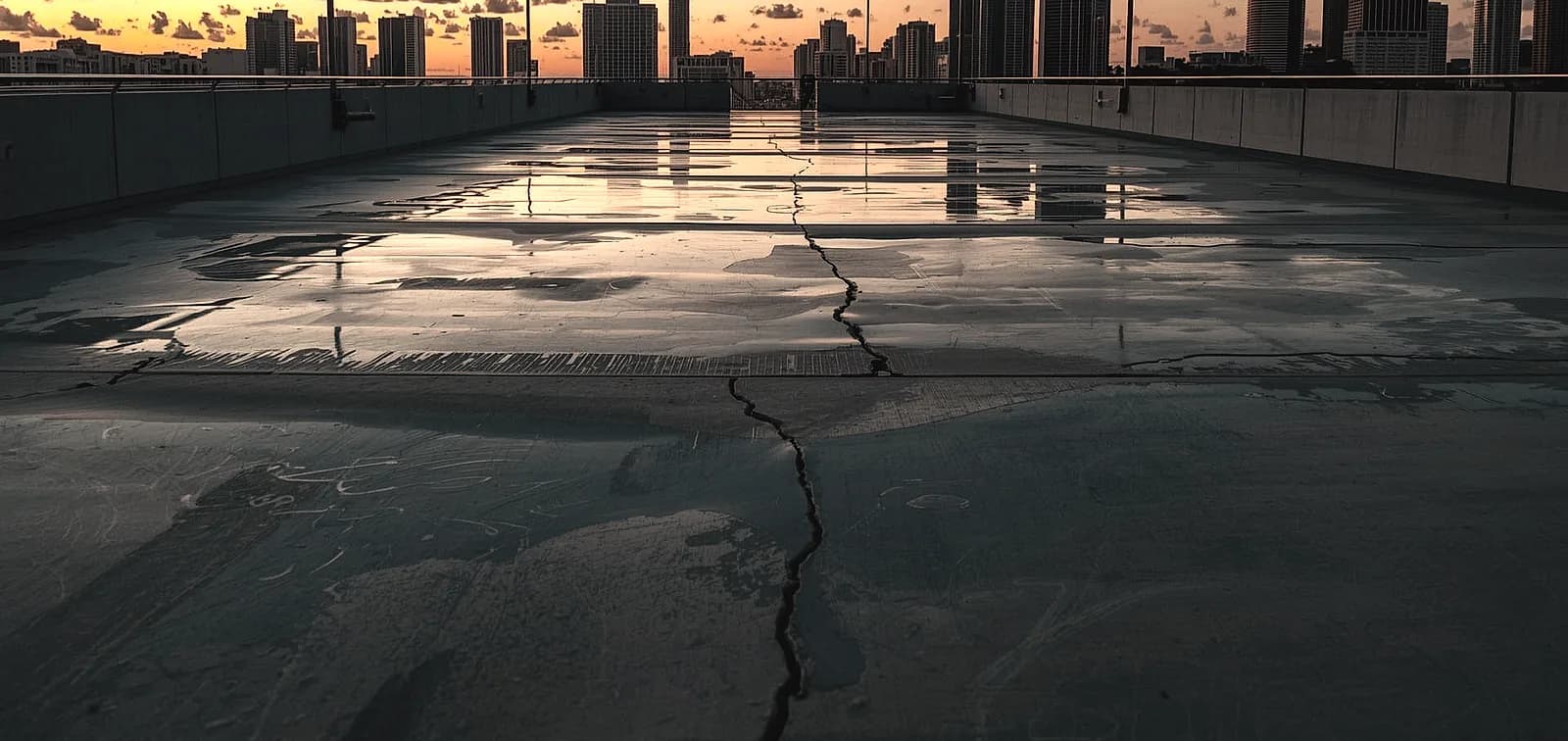
Parking garage floor coating presents unique challenges in South Florida that property managers and facility owners rarely encounter elsewhere. The combination of year-round humidity averaging 76%, temperatures exceeding 90 degrees Fahrenheit for six months annually, and constant exposure to vehicle fluids creates conditions that cause standard coatings to fail within 2-3 years. According to the International Concrete Repair Institute (ICRI), parking structures in coastal Florida experience coating failure rates 47% higher than national averages due to these environmental factors.
This guide explains why parking garage floor coating unique requirements exist in South Florida and provides the technical specifications needed for coatings that actually last.
Why South Florida Parking Garages Demand Specialized Coatings
Standard parking garage coatings designed for northern climates simply cannot withstand South Florida conditions. The Florida Building Code (FBC 2023) recognizes this reality by requiring enhanced coating specifications for structures within 3,000 feet of saltwater.
Moisture and Humidity Factors
South Florida parking garages face moisture challenges from multiple sources. The National Ready Mixed Concrete Association reports that concrete slabs in this region typically maintain moisture levels between 4-6 lbs per 1,000 square feet per 24 hours, well above the 3 lb threshold most standard coatings can tolerate.
Humidity levels averaging 76% create constant hydrostatic pressure beneath coating systems. This pressure forces moisture vapor through the concrete, causing bubbling, delamination, and complete coating failure if moisture barriers are not properly installed.
Vehicle Traffic and Chemical Exposure
Parking garages experience 200-400 vehicle passes daily per space, according to the International Parking & Mobility Institute. Each vehicle introduces motor oil, transmission fluid, brake dust, and tire compounds that attack coating integrity. Professional-grade chemical-resistant coatings must resist these substances while maintaining slip resistance.
Salt Air and Chloride Intrusion
Properties within 15 miles of the Atlantic Ocean or Gulf of Mexico face accelerated corrosion from airborne chlorides. Research from Florida Atlantic University found chloride concentrations in South Florida parking structures reach levels 3.2 times higher than inland facilities. This salt exposure attacks both the concrete substrate and the coating system, requiring specialized preparation methods and coating formulations.
Coating System Options for Parking Garages
Not all coating systems perform equally in parking garage environments. The selection depends on traffic volume, exposure conditions, and budget constraints. Here is a comparison of the primary options used in South Florida commercial applications.
| Coating Type | Lifespan | Cost/Sq Ft | Cure Time | Best For |
|---|---|---|---|---|
| Polyaspartic | 15-20 years | $6-$10 | 4-6 hours | High-traffic garages |
| Epoxy (100% solids) | 10-15 years | $4-$8 | 24-72 hours | Cost-effective projects |
| Polyurea | 20-25 years | $8-$14 | 1-2 hours | Premium installations |
| Urethane Topcoat | 8-12 years | $3-$6 | 12-24 hours | UV-exposed areas |
| Traffic Deck Membrane | 15-25 years | $10-$18 | 24-48 hours | Waterproofing + protection |
Critical Surface Preparation Steps
Surface preparation accounts for 80% of coating success, according to the Society for Protective Coatings (SSPC). In parking garage applications, this process becomes even more critical due to existing contamination and structural conditions. Professional concrete grinding methods must achieve the correct surface profile for coating adhesion.
Concrete Surface Profile Requirements
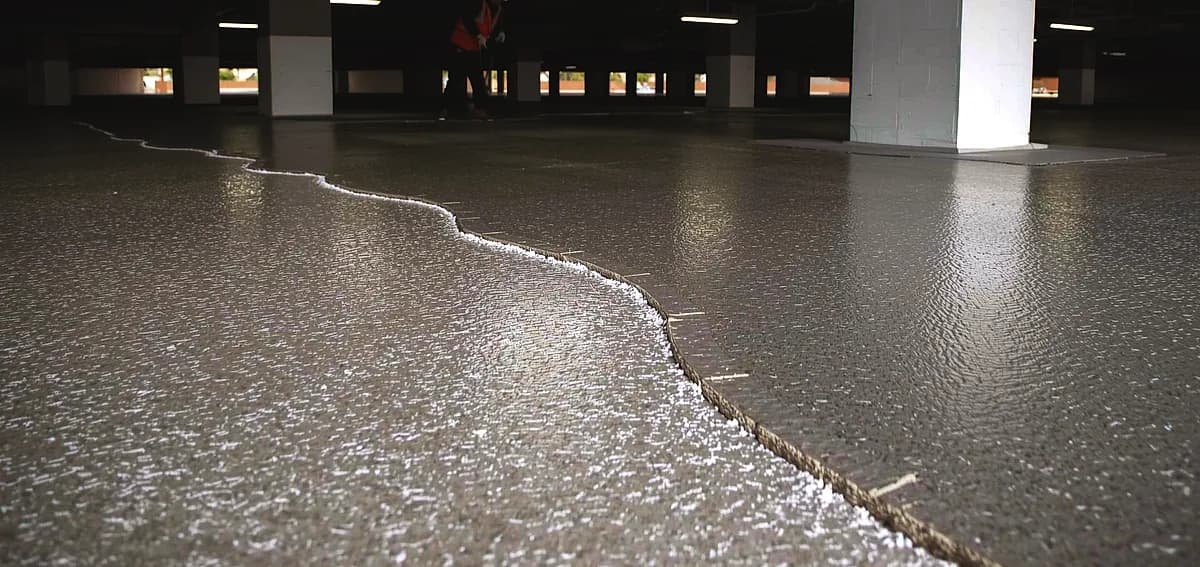
ICRI defines Concrete Surface Profile (CSP) on a scale of 1-10, with higher numbers indicating rougher surfaces. Parking garage coatings require CSP 3-5, achieved through shot blasting or diamond grinding. This profile creates mechanical adhesion points where the coating physically locks into the concrete substrate.
Oil and Contamination Removal
Years of vehicle traffic leave oil contamination that penetrates up to 1/4 inch into concrete pores. The American Concrete Institute (ACI 515.2RS) requires complete removal of all petroleum-based contaminants before coating application. This involves degreasing treatments, followed by substrate testing to verify cleanliness.
Moisture Testing Protocols
ASTM F2170 in-situ relative humidity testing provides the most accurate moisture assessment for parking structures. This test involves drilling holes to 40% slab depth and measuring humidity levels over 72 hours. Results above 75% relative humidity require moisture mitigation systems before coating installation.
Installation Considerations for Active Parking Facilities
Most parking garage coating projects must accommodate continued facility operations. This requires careful phasing strategies that maintain access while allowing proper cure times.
Zone-by-Zone Installation Strategy
Dividing the garage into coating zones allows continuous operation while work progresses. Typically, contractors complete one level or section at a time, with cure verification testing confirming each zone is ready for traffic before moving to the next area.
Temperature and Humidity Windows
South Florida installation windows are narrower than other regions. Most coatings require application temperatures between 50-90 degrees Fahrenheit with relative humidity below 85%. During summer months, this often limits work to early morning hours or climate-controlled environments. The Florida Department of Transportation specifies that concrete temperatures should not exceed 95 degrees Fahrenheit during coating application.
Common Parking Garage Coating Failures and Prevention
Understanding failure modes helps prevent costly repairs and premature recoating. The epoxy floor peeling fix process is far more expensive than proper initial installation.
Delamination and Bubbling
Moisture vapor transmission causes 67% of parking garage coating failures, according to ICRI Technical Guideline 310.2. When moisture vapor pressure exceeds coating bond strength, the coating lifts from the substrate. Prevention requires accurate moisture testing and appropriate moisture barrier systems when needed.
Hot Tire Pickup
Vehicle tires reach temperatures of 160-200 degrees Fahrenheit during highway driving. When parked on coatings with insufficient heat resistance, the coating softens and adheres to the tire, pulling away from the concrete. High-performance polyaspartic systems resist this phenomenon due to their higher crosslink density.
UV Degradation
Open-air parking decks and areas near entry points receive significant UV exposure. Standard epoxy coatings yellow and chalk within 6-12 months under South Florida sun. Urethane topcoats or aliphatic polyaspartic systems provide the UV stability needed for these exposed areas.
Maintenance Requirements for Long-Term Performance
Proper maintenance extends coating life by 30-50% while preserving appearance and slip resistance. The commercial epoxy floor cleaning protocols for parking garages differ from other commercial applications.
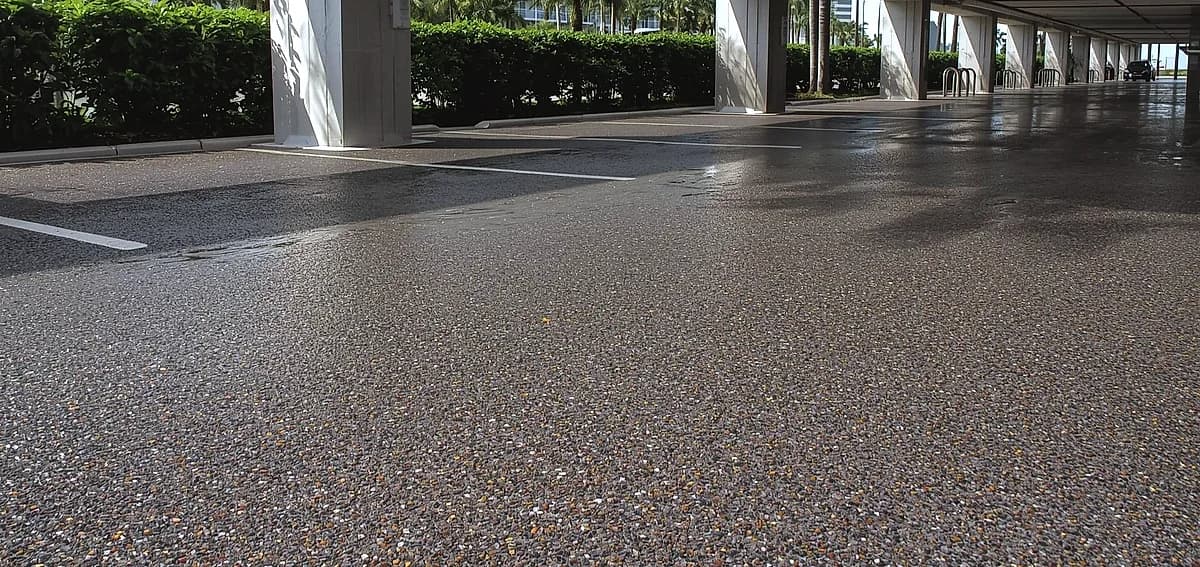
Weekly cleaning with pH-neutral detergents removes tire marks and oil drips before they penetrate the coating surface. Monthly inspections identify wear patterns and minor damage requiring attention. Annual professional assessments evaluate overall coating condition and identify areas needing spot repair or recoating.
Cost Analysis and ROI
Parking garage coating investments deliver measurable returns through reduced maintenance costs, extended structural life, and improved property values. According to the Building Owners and Managers Association (BOMA), properly coated parking structures see 23% lower annual maintenance costs compared to uncoated facilities.
A typical 50,000 square foot parking garage coating project in South Florida costs between $200,000-$500,000 depending on system selection and condition of existing surfaces. With a 15-20 year lifespan, this translates to $0.67-$1.67 per square foot annually, far less than the $3-$5 per square foot cost of concrete repairs resulting from unprotected surfaces.
Warranty Considerations
Understanding coating warranty terms prevents disputes and ensures appropriate coverage. Quality parking garage coating warranties should include material defects, adhesion failure, and premature wear coverage.
Manufacturer warranties typically cover material performance for 10-25 years, while contractor warranties address installation quality for 2-5 years. Request written documentation of both warranty types, including specific exclusions and maintenance requirements that maintain warranty validity.
Frequently Asked Questions
How long does parking garage floor coating installation take?
Installation timeline depends on garage size and system selection. A 50,000 square foot garage typically requires 2-3 weeks using zone-by-zone installation. Polyaspartic systems with 4-6 hour cure times allow faster project completion than epoxy systems requiring 24-72 hour cure periods. Factor in 3-5 days for surface preparation before coating application begins.
Can parking garage coatings be applied during rainy season?
Yes, but with careful planning. Interior areas of enclosed garages can be coated year-round with proper humidity control. Open-air decks and exposed areas require scheduling around afternoon thunderstorms common from June through September. Professional contractors monitor weather forecasts and maintain dehumidification equipment to manage South Florida conditions.
What coating thickness is required for parking garages?
Parking garage coatings require 10-40 mils total system thickness, depending on traffic intensity and exposure conditions. Standard installations use 15-20 mil systems, while heavy-duty applications such as loading areas and drive lanes require 30-40 mil systems. Refer to coating thickness requirements for detailed specifications.
How do I choose between epoxy and polyaspartic for my parking garage?
Choose epoxy for budget-conscious projects where extended cure time is acceptable. Choose polyaspartic when rapid return-to-service is essential or when UV exposure requires superior stability. Many contractors recommend hybrid systems using epoxy base coats with polyaspartic topcoats to optimize cost and performance. Review the polyaspartic vs epoxy comparison for detailed guidance.
Do parking garage coatings require permits in South Florida?
Most municipalities do not require permits for coating applications alone. However, if the project includes structural repairs, waterproofing membrane installation, or significant surface preparation, permits may be required. Check local permit requirements before beginning work.
What slip resistance rating should parking garage coatings achieve?
OSHA and ADA standards require a minimum coefficient of friction (COF) of 0.5 for walking surfaces. Parking garages should target 0.6-0.8 COF due to oil and water exposure. This is achieved through aggregate broadcast in the topcoat or textured finish applications. Test slip resistance annually using ASTM C1028 or ANSI A326.3 protocols.
Get Expert Parking Garage Coating Solutions
National Concrete Polishing provides professional parking garage floor coating services throughout South Florida. Our certified technicians understand the unique challenges of this region and specify systems engineered for long-term performance in high-humidity, high-traffic environments.
Contact our team for parking garage coating projects in Miami, Fort Lauderdale, Pompano Beach, and throughout South Florida. We provide detailed assessments, moisture testing, and system recommendations tailored to your facility requirements.
Written by

Founder and CEO
Chris Lavin is an esteemed leader in concrete polishing and epoxy coatings with a distinguished 20-year career. As founder and CEO of National Concrete Polishing and owner of Xtreme Polishing Systems, he's renowned for polishing and epoxy coating more floors than anyone globally. Chris is recognized for his innovative approach and commitment to enhancing floor durability and aesthetics. His hands-on experience and technical proficiency make him a respected authority and a valuable resource in the field of floor polishing and coatings.
Same topic
Related articles
All stories
Residential8 min read
What Restaurants Need to Pass a Health Inspection Floor Check
It endures heavy foot traffic, dropped equipment, boiling water spills, and harsh degreasing chemicals daily.
Read it
Residential9 min read
How Restaurants Replace Their Floors Without Closing for Long
The average food service establishment loses approximately $3,500 in daily revenue during unexpected closures in 2026.
Read it
Residential8 min read
Where Polished Concrete Beats Epoxy in a Home (and Where It Doesn’t)
Before evaluating specific rooms, it is essential to understand how these two flooring systems function.
Read it
Tell us about the floor
Tell us the space and roughly how big it is.We come back with what it would cost and when we could start.
Prefer to talk? Call +1 844-876-5474
- Leads@
nationalconcretepolishing.net - 2200 NW 32nd St #600,
Pompano Beach, FL 33069 Mon to Fri, 9:00 to 5:30