
The NCP blog
Polyaspartic or Epoxy for Your Miami Garage? A Direct Comparison
Residential12 min read
Both coating systems protect concrete and transform dingy garage slabs into durable, attractive surfaces.
Miami homeowners face a critical decision when upgrading their garage floors: polyaspartic vs epoxy in Miami’s demanding climate. Both coating systems protect concrete and transform dingy garage slabs into durable, attractive surfaces. However, South Florida’s intense heat, high humidity, and year-round UV exposure create conditions that challenge even professional-grade products. Selecting the wrong coating can result in peeling, yellowing, or hot tire pickup within months of installation.
This comparison breaks down how each coating type performs under Miami’s specific environmental stresses. Understanding the differences in cure time, durability, UV stability, and cost helps property owners make informed decisions that deliver lasting results.
Overview
This guide examines the core differences between polyaspartic and epoxy garage floor coatings in the context of Miami’s tropical climate. Topics include chemical composition, installation requirements, performance under heat and humidity, resistance to common garage hazards, maintenance needs, and total cost of ownership. Property owners will learn which coating type suits their specific garage conditions and usage patterns.
Understanding Garage Floor Coating Chemistry
Garage floor coatings fall into several chemical categories, with epoxy and polyaspartic being the most common choices for residential and commercial applications. Each coating type relies on different chemical reactions to create a protective film over concrete.
Epoxy coatings form through a reaction between epoxide resins and amine or polyamide hardeners. This two-component system creates strong chemical bonds that produce a hard, impact-resistant surface with excellent adhesion to properly prepared concrete. The curing process depends heavily on temperature, with optimal application occurring between 50°F and 85°F.
Polyaspartic coatings belong to the aliphatic polyurea family. They cure through a reaction between polyaspartic ester and aliphatic polyisocyanate, producing a flexible yet durable coating. This chemistry allows application in temperatures ranging from approximately 35°F to 140°F, giving contractors greater scheduling flexibility in Miami’s variable conditions.
The molecular structure of each coating determines its performance characteristics. Epoxy’s rigid cross-linked structure provides hardness and chemical resistance but lacks flexibility. Polyaspartic’s more flexible molecular bonds allow the coating to expand and contract with concrete movement while maintaining adhesion.
Cure Time Comparison
One of the most significant differences between polyaspartic and epoxy involves cure time. This factor directly impacts how quickly a garage returns to normal use after coating installation.
Epoxy Cure Timeline
Standard epoxy coatings require 24 to 72 hours before light foot traffic and up to seven days before vehicle parking. In cooler conditions below 60°F, cure times extend significantly. High humidity can also slow the curing process and may cause cloudiness or improper hardening if conditions fall outside the manufacturer’s specifications.
Miami’s humidity levels, which regularly exceed 70%, present challenges for epoxy installations. Installers must carefully monitor both ambient and substrate conditions to ensure proper curing.
Polyaspartic Cure Timeline
Polyaspartic coatings reach light foot traffic readiness within 4 to 6 hours under typical conditions. Vehicle traffic can resume within 24 hours in most cases. Full chemical cure continues over 5 to 7 days, during which the coating develops maximum hardness and chemical resistance.
The rapid cure of polyaspartic coatings offers practical advantages for Miami homeowners who cannot leave their garage unused for extended periods. Same-day or next-day return to service minimizes disruption while reducing the window during which humidity or contaminants can affect the curing coating.
UV Stability and Color Retention
Miami’s intense sunlight delivers significant UV radiation to garage floors, particularly in the first 12 to 18 inches near the door opening. UV exposure affects epoxy and polyaspartic coatings very differently.
Epoxy UV Performance
Standard epoxy coatings use aromatic hardeners that break down under UV exposure through a process called photodegradation. UV photons provide enough energy to break chemical bonds in the polymer backbone, causing yellowing and eventual structural degradation. Even partial sunlight exposure can produce noticeable color changes within 18 to 24 months.
Aliphatic epoxy formulations offer improved UV stability compared to aromatic versions, though they typically cost more. Regardless of epoxy type, applying a UV-stable topcoat over epoxy base layers has become standard practice for garage floors in South Florida.
Polyaspartic UV Performance
Polyaspartic coatings use aliphatic hardeners that maintain UV stability throughout their service life. The coating chemistry resists yellowing and maintains gloss even with direct sun exposure over many years. This inherent UV stability eliminates the need for protective topcoats solely for sun protection.
For Miami garages that receive direct sunlight during portions of the day, polyaspartic coatings or polyaspartic-topped systems provide superior long-term color retention compared to bare epoxy.
Hot Tire Pickup Resistance
Hot tire pickup occurs when vehicle tires heated from driving soften a floor coating, then bond to and lift portions of that coating when the vehicle moves. This problem affects South Florida garages more severely due to higher pavement temperatures that heat tires before vehicles enter the garage.
Causes of Hot Tire Pickup
Tires can reach temperatures exceeding 140°F after highway driving in Miami’s summer heat. When parked on a coated floor, this heat transfers to the coating surface. If the coating’s softening point falls below the tire temperature, the coating becomes tacky. As the tire cools, plasticizers in the rubber interact with the softened coating, creating adhesion between tire and floor. Moving the vehicle then tears the coating from the concrete.
Epoxy Performance
Lower-quality epoxy coatings, particularly water-based formulations sold at retail stores, are highly susceptible to hot tire pickup. Professional-grade 100% solids epoxies perform better but may still soften at elevated temperatures. Proper surface preparation and full cure time before vehicle traffic are essential for minimizing hot tire issues with epoxy.
Polyaspartic Performance
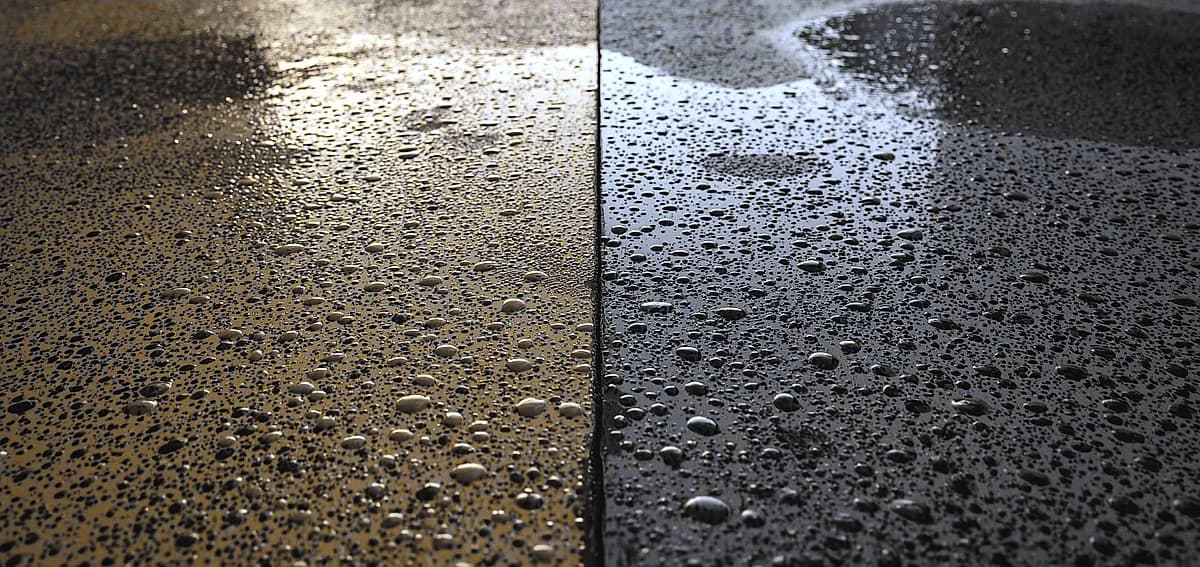
Polyaspartic coatings generally demonstrate better hot tire resistance due to their flexible molecular structure and higher heat tolerance. The coating maintains hardness at temperatures that would soften lower-grade epoxies. However, even polyaspartic coatings require full cure before exposure to hot tires. Parking vehicles with hot tires during the first week after installation increases the risk of damage.
Moisture and Humidity Considerations
Miami’s high water table and tropical humidity create moisture challenges that affect both coating types. Moisture vapor continuously migrates upward through concrete slabs, particularly in older homes without effective vapor barriers.
Moisture Testing Requirements
Before any coating installation, professionals test concrete moisture content using methods aligned with industry standards such as ASTM F2170 for relative humidity testing or ASTM F1869 for calcium chloride testing. Excessive moisture vapor emission rates can cause coating failure regardless of product quality.
Impact on Each Coating Type
Epoxy coatings can be formulated to tolerate higher moisture vapor emission rates through specialized moisture mitigation primers. These primers create a barrier that prevents vapor pressure from pushing against the coating and causing blisters or delamination.
Polyaspartic coatings, while generally more flexible, are not specifically formulated for high-moisture applications. In garages with significant moisture issues, a moisture-tolerant epoxy primer followed by a polyaspartic topcoat often provides the best combination of moisture resistance and surface performance.
Surface Preparation Requirements
Both coating types require thorough concrete preparation for proper adhesion. The quality of surface preparation often determines coating longevity more than the specific product selected.
Concrete Profiling
Professional installers use diamond grinding or shot blasting to create the proper surface profile for coating adhesion. Industry guidance from organizations like ICRI (International Concrete Repair Institute) specifies surface profile requirements, with most thin-film coating systems requiring a CSP (Concrete Surface Profile) of 2 to 3. This mechanical preparation removes the weak top layer of concrete and opens pores for coating penetration.
Acid etching, once common for DIY applications, rarely creates adequate surface profile for professional coatings. The shot blasting or grinding process also removes previous coatings, sealers, and contaminants that would prevent proper bonding.
Crack and Joint Treatment
Existing cracks require filling with appropriate repair materials before coating application. Control joints may be filled to create a seamless appearance or left unfilled, depending on the property owner’s preference. Proper joint treatment prevents coating failure at these stress points.
Durability and Lifespan Comparison
Both coating types offer significant durability improvements over bare concrete or concrete paint, though their performance characteristics differ in key areas.
Abrasion Resistance
Polyaspartic coatings typically demonstrate superior abrasion resistance compared to standard epoxies. Their flexible molecular structure allows them to absorb impact and wear without cracking or chipping. This makes polyaspartic coatings particularly suitable for garages that see daily vehicle traffic and occasional dropped tools.
Professional-grade epoxy coatings, especially those with novolac or other specialized formulations, can match or exceed polyaspartic abrasion resistance in certain applications. However, these high-performance epoxies command premium pricing.
Chemical Resistance
Epoxy coatings excel in chemical resistance, particularly against petroleum products, solvents, and acids commonly encountered in garages. This characteristic makes epoxy popular for automotive workshops and commercial garages where chemical spills occur regularly.
Polyaspartic coatings provide good chemical resistance for typical residential garage exposures, including motor oil, gasoline, brake fluid, and household chemicals. For environments with frequent chemical exposure, epoxy systems or epoxy/polyaspartic hybrids may offer advantages.
Expected Lifespan
Professionally installed polyaspartic coatings typically last 15 to 20 years in residential garage applications when properly maintained. Some manufacturers and installers offer warranties of 15 years or more for complete coating systems.
Quality epoxy installations can last 10 to 15 years, though lifespan varies significantly based on formulation quality, surface preparation, and exposure conditions. UV-protected epoxy systems in low-traffic applications may exceed these estimates.
Cost Analysis
Cost comparison between polyaspartic and epoxy involves both material and installation expenses.
Material Costs
Polyaspartic coatings typically cost more per gallon than standard epoxies due to their specialized chemistry. However, the faster cure time reduces labor hours and allows installers to complete jobs more efficiently.
Epoxy materials range widely in price from economical water-based products to premium 100% solids formulations. High-performance epoxies approach or exceed polyaspartic pricing.
Installation Costs
Professional installation for a standard two-car garage (approximately 400 to 500 square feet) typically ranges from $5 to $12 per square foot depending on the system selected, required repairs, and surface preparation complexity. Total project costs for professional installation generally fall between $2,000 and $6,000 for residential garages.
Polyaspartic’s faster cure time may reduce installation costs despite higher material prices, as crews can complete projects more quickly. Properties requiring minimal prep work and repairs typically fall at the lower end of the price range.
Long-Term Value
When calculating total cost of ownership, consider the lifespan of each coating type and maintenance requirements. A coating that costs 20% more but lasts twice as long delivers better long-term value than a lower-priced option requiring earlier replacement.
Hybrid Coating Systems
Many professional installers in South Florida have adopted hybrid systems that combine the strengths of both coating types. These multi-layer systems typically include an epoxy primer and base coat topped with a polyaspartic clear coat.
Benefits of Hybrid Systems
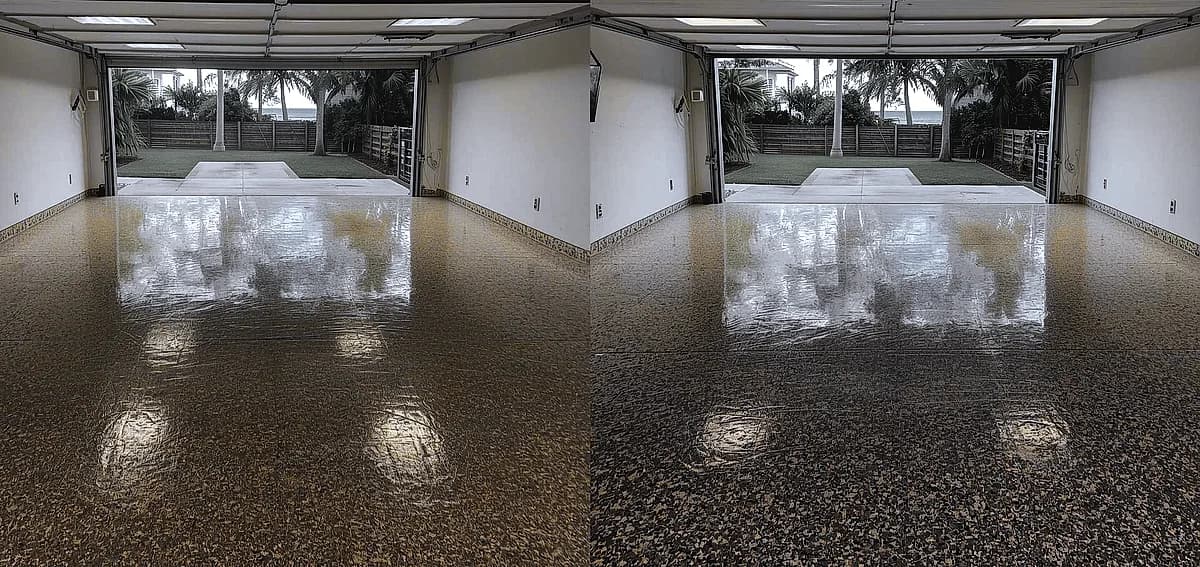
The epoxy base coat provides strong adhesion, chemical resistance, and the ability to tolerate higher moisture vapor emission rates. The polyaspartic topcoat delivers UV stability, rapid cure, and excellent abrasion resistance. This combination often outperforms either coating type used alone.
Decorative flake systems commonly use this hybrid approach. The color flakes broadcast into the wet epoxy base coat provide texture and visual interest, while the polyaspartic topcoat seals the flakes and creates a durable, easy-to-clean surface.
Application Considerations
Hybrid systems require careful timing between coats. The polyaspartic topcoat must be applied within the epoxy’s recoat window to achieve proper intercoat adhesion. Experienced installers understand these timing requirements and plan their work accordingly.
Selecting the Right Option for Your Miami Garage
Several factors should guide the choice between polyaspartic, epoxy, or hybrid systems for Miami garage floors.
Choose Polyaspartic When:
- The garage receives significant direct sunlight
- Quick return to service is important (same-day or next-day)
- The primary concern is hot tire pickup resistance
- UV-stable color retention is a priority
- The garage is used for general vehicle storage and light activities
Choose Epoxy or Hybrid When:
- The garage sees regular chemical exposure from automotive work
- Moisture vapor issues require specialized primer systems
- Budget constraints favor lower initial material costs (with appropriate topcoat)
- Maximum chemical resistance is needed
- Commercial applications demand specialized performance characteristics
Always Require:
- Professional moisture testing before installation
- Mechanical surface preparation (grinding or shot blasting)
- Proper crack and joint treatment
- Written warranty from the installer
- Detailed information about products and application methods
Maintenance Requirements
Both coating types require minimal maintenance compared to bare concrete but benefit from regular care to maximize lifespan.
Routine Cleaning
Sweep or dust mop weekly to remove abrasive debris that can scratch the surface over time. Mop monthly with a pH-neutral cleaner diluted in water. Avoid harsh chemicals, citrus-based cleaners, and abrasive scrubbing pads that can damage the coating finish.
Stain Management
Clean spills promptly to prevent staining, particularly oil, gasoline, and other petroleum products. Most quality coatings resist these substances, but prolonged exposure can cause discoloration or damage.
Recoating Timeline
Polyaspartic coatings may require resealing or topcoat refresh every 10 to 15 years depending on traffic and exposure conditions. Epoxy systems may need attention sooner, particularly if the UV-protective topcoat shows wear or yellowing.
Frequently Asked Questions
Which coating handles Miami’s humidity better—polyaspartic or epoxy?
Both coatings can perform well in high humidity when properly installed with appropriate moisture mitigation. Epoxy systems offer more moisture-tolerant primer options, while polyaspartic’s rapid cure reduces the time humidity can affect the curing process.
How long must I keep my car off the floor after coating installation?
Polyaspartic coatings typically allow vehicle traffic after 24 hours. Epoxy requires 48 to 72 hours or longer depending on formulation and conditions. Let hot tires cool for 30 minutes before parking during the first week after any coating installation.
Will epoxy yellow in my garage even if it doesn’t get direct sun?
Reflected UV light and indirect exposure can still cause yellowing in standard epoxy coatings over time, though the effect is less pronounced than with direct sunlight. UV-stable topcoats prevent this discoloration.
Can I apply polyaspartic over existing epoxy?
Yes, polyaspartic can be applied over properly prepared existing epoxy coatings. The surface must be cleaned, scuff-sanded, and free of contamination for proper adhesion. Professional assessment ensures compatibility.
What causes coating to peel near garage door openings?
Peeling near door openings often results from UV degradation of non-UV-stable epoxy, inadequate surface preparation, or moisture issues. This area receives the most sun and weather exposure.
Is polyaspartic worth the extra cost over epoxy?
For Miami garages with sun exposure and regular vehicle traffic, polyaspartic’s UV stability, hot tire resistance, and faster cure time often justify the higher initial cost through extended service life and fewer problems.
How do I know if my concrete has moisture problems before coating?
Professional installers perform moisture testing using standardized methods. Signs of potential issues include white mineral deposits (efflorescence), dark discoloration, or previous coating failures. Testing provides objective data for product selection.
Can either coating be repaired if damaged?
Both coatings can be repaired, though matching the original appearance may require professional work. Polyaspartic is generally easier to repair due to better intercoat adhesion characteristics.
What preparation does my garage need before coating?
Most garages require diamond grinding or shot blasting, crack and joint treatment, and thorough cleaning. Older coatings, paint, or sealers must be removed. The installer assesses specific needs during an on-site evaluation.
How do decorative flake systems compare between polyaspartic and epoxy?
Both can incorporate decorative flakes effectively. Hybrid systems using epoxy base coats for flake broadcast and polyaspartic topcoats deliver excellent durability while maximizing aesthetic options.
Sources
- ASTM International. “ASTM F2170 Standard Test Method for Determining Relative Humidity in Concrete Floor Slabs.” https://www.astm.org
- ASTM International. “ASTM F1869 Standard Test Method for Measuring Moisture Vapor Emission Rate of Concrete Subfloor.” https://www.astm.org
- ASTM International. “ASTM D4541 Standard Test Method for Pull-Off Strength of Coatings.” https://www.astm.org
- International Concrete Repair Institute (ICRI). “Concrete Surface Profile Standards.” https://www.icri.org
- Florida Building Code. “Building Codes and Standards.” https://www2.myfloridalicense.com/building-codes-and-standards/
Take the Next Step
Choosing between polyaspartic and epoxy for your Miami garage depends on your specific conditions, priorities, and budget. National Concrete Polishing provides professional assessment, proper surface preparation, and quality coating installation throughout South Florida. Our team evaluates your concrete condition, tests for moisture issues, and recommends the coating system that delivers the best long-term value for your situation.
Contact us today to schedule your free consultation and discover which garage floor coating solution fits your needs.
Written by

Founder and CEO
Chris Lavin is an esteemed leader in concrete polishing and epoxy coatings with a distinguished 20-year career. As founder and CEO of National Concrete Polishing and owner of Xtreme Polishing Systems, he's renowned for polishing and epoxy coating more floors than anyone globally. Chris is recognized for his innovative approach and commitment to enhancing floor durability and aesthetics. His hands-on experience and technical proficiency make him a respected authority and a valuable resource in the field of floor polishing and coatings.
Same topic
Related articles
All stories
Residential8 min read
What Restaurants Need to Pass a Health Inspection Floor Check
It endures heavy foot traffic, dropped equipment, boiling water spills, and harsh degreasing chemicals daily.
Read it
Residential9 min read
How Restaurants Replace Their Floors Without Closing for Long
The average food service establishment loses approximately $3,500 in daily revenue during unexpected closures in 2026.
Read it
Residential8 min read
Where Polished Concrete Beats Epoxy in a Home (and Where It Doesn’t)
Before evaluating specific rooms, it is essential to understand how these two flooring systems function.
Read it
Tell us about the floor
Tell us the space and roughly how big it is.We come back with what it would cost and when we could start.
Prefer to talk? Call +1 844-876-5474
- Leads@
nationalconcretepolishing.net - 2200 NW 32nd St #600,
Pompano Beach, FL 33069 Mon to Fri, 9:00 to 5:30