
The NCP blog
What’s the ROI of Commercial Epoxy Flooring?
Cost & ROI10 min read
We’ll explore real-world examples, payback periods, and the factors that maximize your flooring investment returns.
The ROI of commercial epoxy flooring typically ranges from 200-400% over a 15-year period, with most businesses recovering their initial investment within 3-5 years through reduced maintenance costs, eliminated downtime, and extended floor lifespan. Commercial epoxy flooring ROI calculations must account for both direct savings like maintenance reduction and indirect benefits including improved safety, enhanced lighting efficiency, and increased property value. Understanding the complete financial picture helps Pompano Beach business owners make informed decisions about their flooring investments. National Concrete Polishing breaks down the numbers so you can evaluate whether commercial epoxy flooring delivers the returns your facility needs.
Overview
This comprehensive financial analysis examines the return on investment for commercial epoxy flooring systems across various industries. You’ll learn how to calculate true ROI, understand lifecycle cost analysis, identify cost-saving opportunities, and compare epoxy against traditional flooring alternatives. We’ll explore real-world examples, payback periods, and the factors that maximize your flooring investment returns.
Understanding ROI Calculation for Epoxy Flooring
ROI for commercial epoxy flooring is calculated by comparing cumulative annual savings to the initial installed cost, expressed as ROI = (Annual Savings / Initial Cost) × 100. This formula accounts for maintenance reduction, labor savings, downtime avoidance, energy reductions, and eliminated replacement costs over the floor’s lifespan. For example, if a facility invests $50,000 in epoxy flooring and saves $10,000 annually in maintenance and downtime costs, the total savings over 15 years would be approximately $150,000, yielding a 200% ROI.
Total cost of ownership (TCO) provides a more comprehensive view by including all direct and indirect costs over the floor’s useful life. TCO encompasses initial installation, ongoing maintenance, repair frequency, energy consumption, safety improvements, and eventual replacement expenses. This lifecycle cost analysis divides total expenses by the number of years the flooring lasts, creating a “cost per year” metric that reveals the true financial impact.
Initial Investment vs Long-Term Savings
Commercial epoxy flooring might initially appear as a higher upfront investment compared to traditional options like painted concrete or vinyl. Professional installation for a 10,000 square foot warehouse typically ranges from $3-$12 per square foot depending on system complexity, surface preparation requirements, and decorative elements. However, this initial cost becomes economical over time as epoxy requires less labor, fewer materials, and minimal prep work when applied over existing concrete floors.
The quick installation process—typically 2-3 days with some advanced polyaspartic coatings allowing foot traffic in just 6 hours—significantly reduces business downtime. Fast-cure systems minimize revenue loss during installation, a critical consideration for 24/7 operations. When evaluating long-term ROI, facilities must factor in the extended floor life and dramatic savings in maintenance and repairs that make epoxy flooring a financially smart choice.
Maintenance Cost Reduction
Industrial epoxy flooring significantly cuts maintenance and repair costs compared to traditional concrete surfaces. These floors need only simple sweeping and mopping to stay clean, eliminating the need for harsh chemicals or professional cleaning services. The ease of upkeep saves both time and money, keeping surfaces pristine with minimal effort.
Warehouses operating 24/7 often see annual maintenance and repair costs drop by 40-50% after switching to epoxy flooring. This reduction in maintenance expenditures contributes directly to ROI as less capital is diverted into recurring expenses. The seamless, non-porous surface resists staining, doesn’t harbor bacteria, and eliminates the dust generation common with bare concrete. Proper maintenance practices extend these savings even further while preserving the floor’s appearance and performance.
Extended Lifespan and Durability Benefits
Commercial epoxy floors last 10-20 years with proper care, far outlasting traditional flooring options that may require replacement every 5-7 years. This extended durability means fewer replacements, less waste, and significant long-term savings for businesses. A leading automotive manufacturing plant reported that their epoxy flooring not only outlasted original lifespan estimates but also significantly reduced repair needs over a 15-year period, saving thousands in replacement costs.
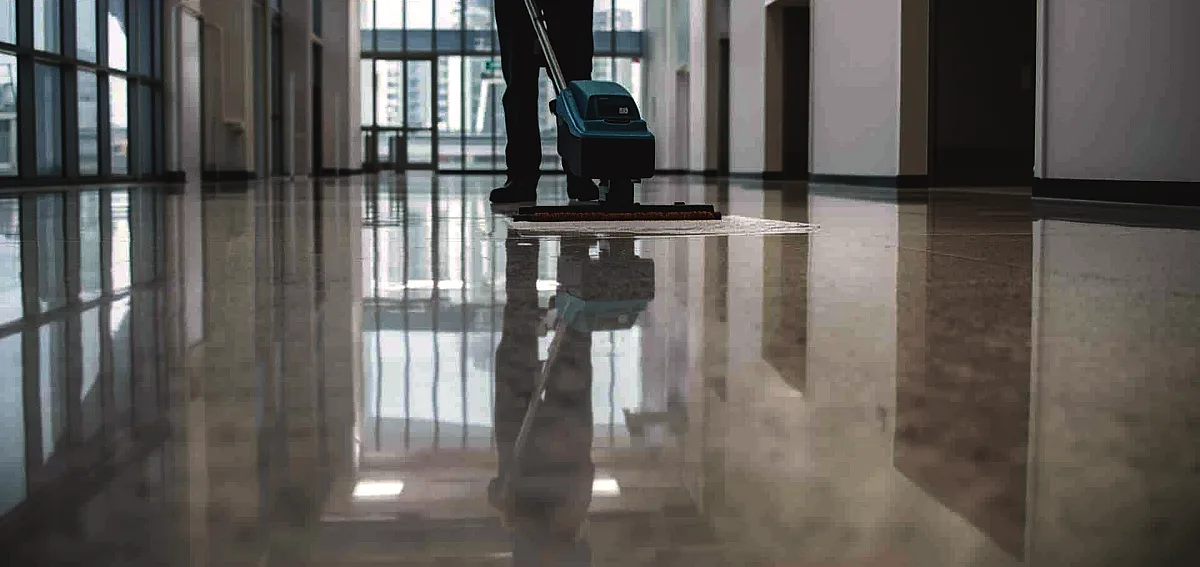
The coating forms a tough, seamless surface resistant to wear, chemicals, impacts, and heavy machinery traffic. Unlike laminate or tile flooring that needs frequent replacement in high-traffic areas, industrial epoxy floor coating stands up to demanding conditions without deterioration. This resilience not only cuts costs but also minimizes disruptions to operations, allowing businesses to focus resources on core activities rather than constant floor repairs.
Operational Efficiency and Downtime Reduction
Reduced downtime during repairs and maintenance represents one of epoxy flooring’s most valuable ROI contributors. A large-scale industrial warehouse that experienced frequent shutdowns to repair deteriorating concrete floors reported a 30% increase in operational uptime after upgrading to epoxy flooring. The cumulative effect of fewer shutdowns resulted in significant revenue gains and quicker payback on the flooring investment.
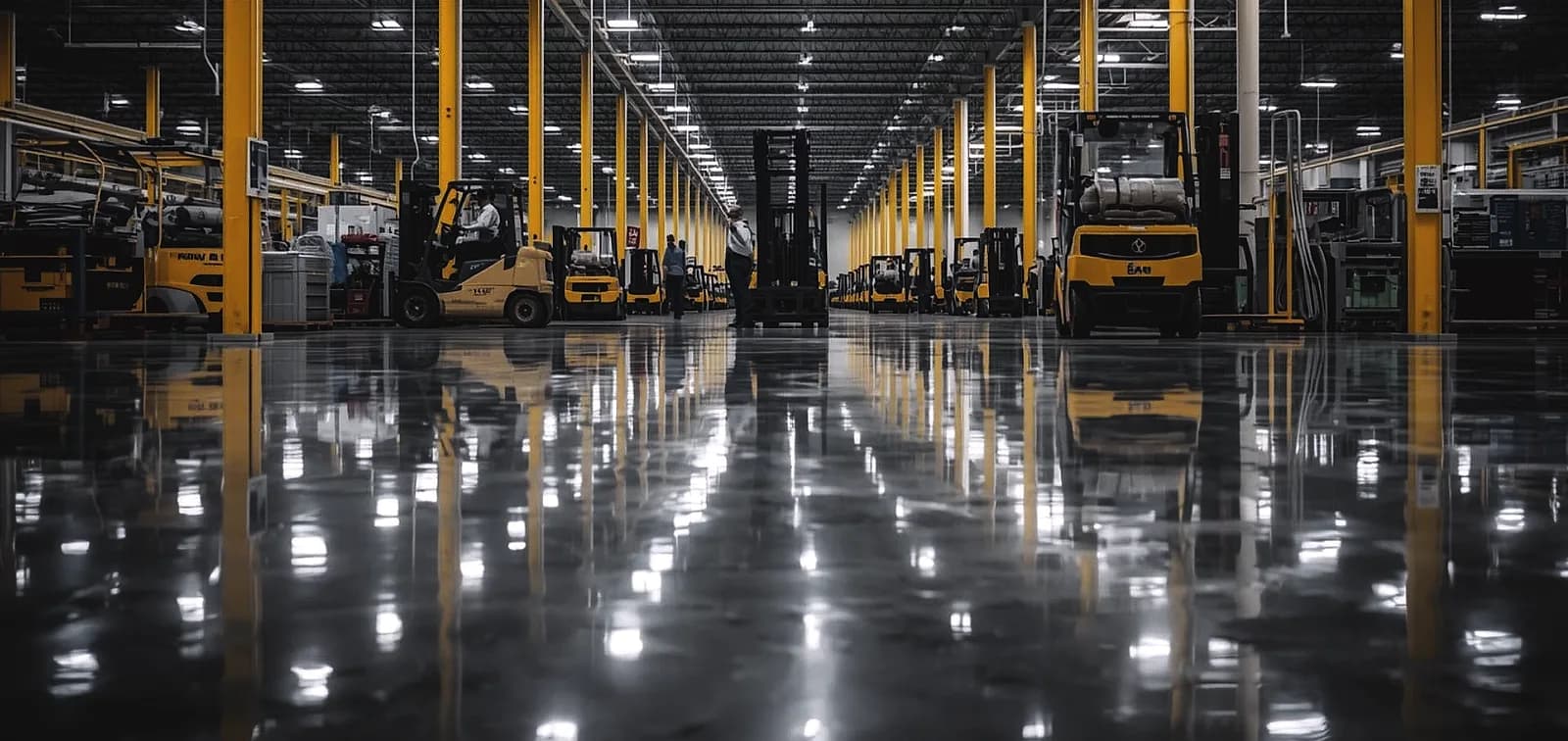
Epoxy floors can be quickly installed and cured, minimizing disruption to business operations during initial installation. The durable concrete surface withstands heavy traffic, spills, and impacts without showing wear, reducing the need for frequent touch-ups or emergency repairs. Chemical-resistant properties make epoxy ideal for manufacturing, food processing, and pharmaceutical facilities where spills are common but downtime is costly.
Energy Efficiency and Cost Savings
Epoxy’s reflective properties cut lighting costs by brightening work areas naturally, reducing the need for additional fixtures. The glossy surface can improve lighting efficiency by 15-30%, translating to measurable decreases in electricity bills. High-gloss finishes maximize this benefit, particularly in warehouses and manufacturing facilities with high ceilings where improved light reflection significantly impacts visibility.
The thermal conductivity of epoxy flooring helps regulate temperatures within facilities, leading to decreased HVAC energy consumption. For many businesses, these combined energy savings offset a portion of the initial installation cost within just a few years. The smooth, seamless finish also speeds up cleaning processes, saving time and labor costs while contributing to overall operational efficiency.
Safety Improvements and Liability Reduction
Commercial epoxy flooring enhances workplace safety through slip-resistant additives, clear safety marking capabilities, and elimination of trip hazards from cracked or uneven concrete. Reduced workplace accidents translate directly to lower workers’ compensation insurance premiums and decreased liability exposure. The bright, reflective surface improves visibility throughout facilities, helping prevent accidents in high-traffic areas.
Slip-resistant options are particularly valuable in food processing, healthcare, and manufacturing environments where wet conditions increase fall risks. The seamless installation eliminates joints and seams where contaminants can collect, creating cleaner and safer working conditions. These safety improvements contribute indirectly to ROI through reduced incident costs and improved employee productivity.
Industry-Specific ROI Examples
Different industries experience varying ROI timelines based on operational demands and floor usage intensity. Food processing facilities benefit from epoxy’s seamless, antimicrobial properties that meet health code requirements while reducing cleaning time by 50%. Automotive dealerships see immediate value through enhanced aesthetics that improve customer experience and property value.
Warehouse operations achieve the fastest payback periods—often 2-3 years—due to heavy forklift traffic that rapidly deteriorates unprotected concrete. Retail spaces value epoxy’s design flexibility and low maintenance, which keep stores looking fresh without frequent closures for floor work. Healthcare and pharmaceutical facilities appreciate the chemical resistance and easy sanitization that reduce contamination risks.
Comparing Epoxy to Alternative Flooring Options
When compared to polished concrete, vinyl, or tile, epoxy flooring offers superior long-term ROI through reduced replacement frequency and maintenance requirements. Painted concrete requires reapplication every 1-2 years at significant labor cost, while epoxy lasts 10-20 years with minimal upkeep. Vinyl and tile present ongoing repair expenses as individual pieces crack, lift, or stain under commercial use.
Resinous flooring systems like epoxy provide seamless installations that eliminate the grout lines and seams where traditional flooring collects dirt and bacteria. The lifecycle cost analysis clearly favors epoxy when all factors—installation, maintenance, repairs, energy impact, and replacement frequency—are considered. For businesses planning to occupy facilities long-term, epoxy’s superior durability delivers unmatched value.
Property Value Enhancement
Installing commercial epoxy flooring increases property value by improving aesthetics, functionality, and marketability. Potential buyers or tenants recognize the long-lasting quality and low maintenance requirements as valuable assets. Modern, well-maintained floors create positive first impressions for clients, customers, and employees, enhancing brand perception and workplace appeal.
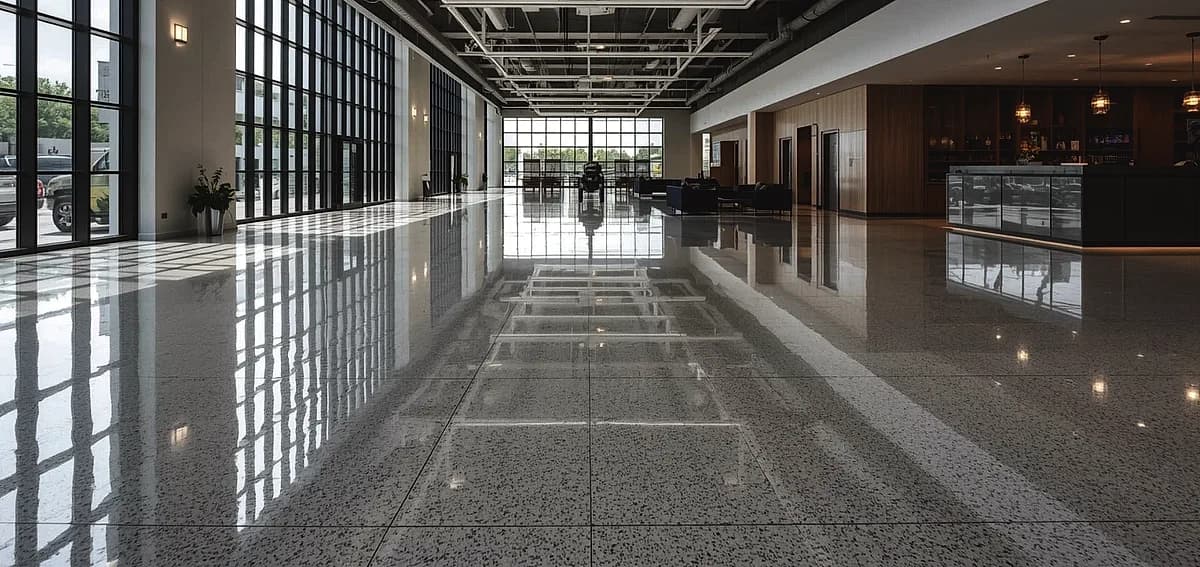
Decorative epoxy options allow businesses to incorporate branding elements, safety markings, and aesthetic designs that differentiate properties in competitive commercial real estate markets. The investment in quality flooring demonstrates commitment to facility maintenance, making properties more attractive to prospective lessees. This added value contributes to ROI not through direct savings but through enhanced asset worth and marketability.
Calculating Your Facility’s ROI
To calculate your specific ROI, start by determining your total installation cost including materials, labor, surface preparation, and any downtime expenses. Next, estimate annual savings across all categories: maintenance reduction, eliminated repairs, energy savings, reduced downtime, and extended replacement timeline. Divide total annual savings by initial cost and multiply by 100 to get your annual ROI percentage.
For a more comprehensive analysis, project these savings over the expected 15-20 year lifespan of the flooring. Factor in indirect benefits like improved safety, enhanced aesthetics, and increased property value that contribute to overall returns. Professional contractors can provide detailed cost estimates and help you build realistic projections based on your facility’s specific usage patterns and requirements.
Maximizing Your Epoxy Flooring ROI
Choosing the right epoxy system for your application ensures maximum return on investment. Heavy-duty formulations for manufacturing and warehouse environments prevent premature wear, while food-safe systems meet industry regulations in processing facilities. Proper surface preparation creates optimal adhesion, extending floor life and preventing costly failures.
Regular maintenance using recommended cleaning methods preserves the floor’s appearance and protective properties throughout its lifespan. Professional installation by experienced contractors ensures proper application, appropriate system selection, and warranty coverage that protects your investment. Addressing moisture issues before installation prevents future problems that could compromise ROI.
Financing and Budget Considerations
Many businesses spread the initial investment through capital improvement budgets or equipment financing options. The documented ROI and payback period make epoxy flooring an attractive candidate for capital expenditure approval. Some facilities phase installations across multiple budget cycles, starting with highest-traffic areas to demonstrate value before expanding.
When presenting epoxy flooring proposals to decision-makers, emphasizing total cost of ownership rather than just initial price helps frame the investment appropriately. Comparing the lifecycle costs of epoxy versus current flooring over 10-15 years clearly demonstrates financial advantage. Professional contractors can provide detailed proposals that break down costs and projected savings to support internal approval processes.
Frequently Asked Questions
What is the typical ROI for commercial epoxy flooring?
Commercial epoxy flooring typically delivers 200-400% ROI over 15 years, with most businesses recovering their initial investment within 3-5 years through maintenance savings and extended floor life.
How long does it take to see a return on epoxy flooring investment?
Most facilities achieve payback within 3-5 years, though high-traffic warehouses and manufacturing plants often recover costs in just 2-3 years due to rapid deterioration of alternative surfaces.
How much can businesses save on maintenance with epoxy floors?
Facilities typically see maintenance and repair costs decrease by 40-50% after installing epoxy flooring compared to traditional concrete or painted surfaces.
How long does commercial epoxy flooring last?
With proper maintenance, commercial epoxy floors last 10-20 years, significantly longer than painted concrete (1-2 years) or vinyl flooring (5-7 years).
Does epoxy flooring reduce energy costs?
Yes, epoxy’s reflective properties improve lighting efficiency by 15-30%, reducing electricity bills, while thermal conductivity helps regulate temperatures and lowers HVAC costs.
What industries benefit most from epoxy flooring ROI?
Warehouses, manufacturing facilities, food processing plants, automotive dealerships, and healthcare facilities see the highest ROI due to demanding conditions that rapidly deteriorate alternative flooring.
Is the initial cost of epoxy flooring worth it?
Yes, while upfront costs are higher than painted concrete, the extended lifespan, minimal maintenance, and operational benefits make epoxy significantly more economical over time.
How does epoxy flooring ROI compare to polished concrete?
Both offer excellent ROI, but epoxy provides superior chemical resistance and faster installation with less downtime, while polished concrete offers slightly lower maintenance needs.
Can epoxy flooring increase property value?
Yes, quality epoxy flooring enhances property value through improved aesthetics, reduced maintenance requirements, and increased marketability to potential buyers or tenants.
What factors maximize epoxy flooring ROI?
Proper system selection, professional installation, appropriate surface preparation, regular maintenance, and addressing moisture issues before installation all maximize long-term returns.
Conclusion
The ROI of commercial epoxy flooring extends far beyond simple cost-per-square-foot comparisons, encompassing maintenance savings, operational efficiency, energy reductions, and property value enhancement that compound over decades. With typical returns of 200-400% over 15 years and payback periods of just 3-5 years, epoxy flooring represents one of the smartest infrastructure investments businesses can make. The dramatic reduction in maintenance costs, elimination of frequent replacements, and improved workplace safety create measurable financial benefits that directly impact your bottom line. National Concrete Polishing helps Pompano Beach businesses maximize their flooring ROI through expert system selection, professional installation, and comprehensive lifecycle planning. Contact us today for a detailed cost-benefit analysis tailored to your facility and discover how commercial epoxy flooring can deliver exceptional returns for your business.
Written by

Founder and CEO
Chris Lavin is an esteemed leader in concrete polishing and epoxy coatings with a distinguished 20-year career. As founder and CEO of National Concrete Polishing and owner of Xtreme Polishing Systems, he's renowned for polishing and epoxy coating more floors than anyone globally. Chris is recognized for his innovative approach and commitment to enhancing floor durability and aesthetics. His hands-on experience and technical proficiency make him a respected authority and a valuable resource in the field of floor polishing and coatings.
Same topic
Related articles
All stories
Cost & ROI10 min read
A Facility Manager's Guide to Long-Term Floor Maintenance Budgeting
A budgeting frame for the floor you already have. What to set aside each year, and which repairs beat a replacement.
Read it
Cost & ROI11 min read
Polished Concrete vs. LVT and VCT in Retail — Total Cost of Ownership
Sticker price against years of waxing and replacement. The total cost of polished concrete versus LVT and VCT in retail.
Read it
Cost & ROI7 min read
Understanding Polished Concrete Pricing in Fort Lauderdale
The average cost of professional concrete polishing in 2026 generally ranges from $3 to $12 per square foot.
Read it
Tell us about the floor
Tell us the space and roughly how big it is.We come back with what it would cost and when we could start.
Prefer to talk? Call +1 844-876-5474
- Leads@
nationalconcretepolishing.net - 2200 NW 32nd St #600,
Pompano Beach, FL 33069 Mon to Fri, 9:00 to 5:30