
The NCP blog
The Complete Guide to Food-Safe Epoxy Flooring for Miami Restaurants
Epoxy & coatingsUpdated 8 min read
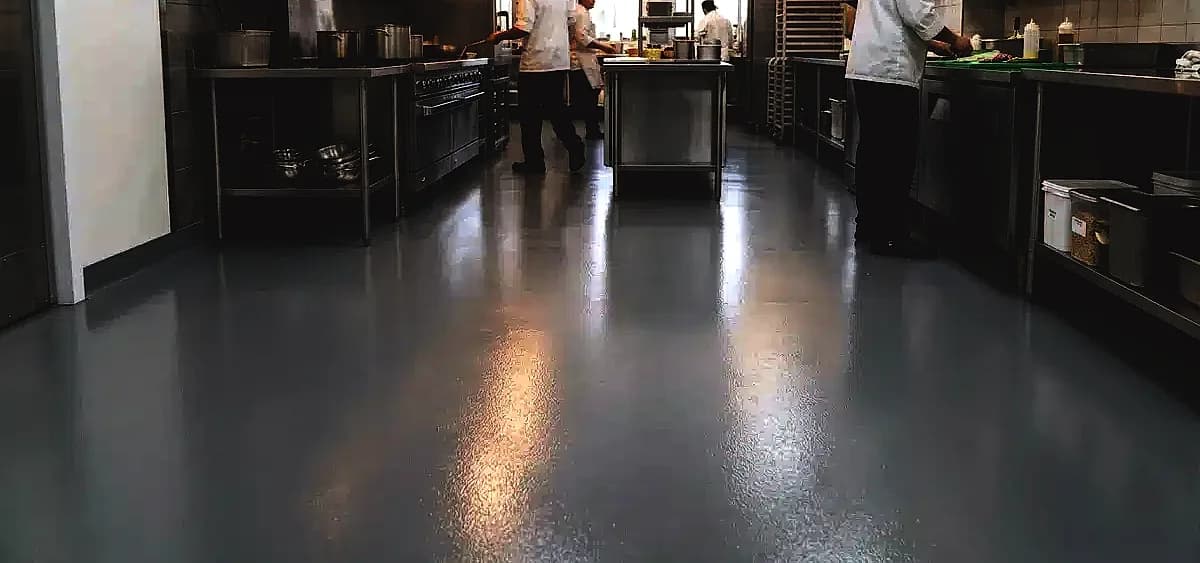
Epoxy floors are food-safe for Miami restaurants because their seamless, nonporous surface prevents moisture absorption.
Epoxy floors are food-safe for Miami restaurants because their seamless, nonporous, and chemical-resistant polymer structure prevents moisture absorption, eliminates bacterial breeding grounds, and withstands the rigorous sanitation protocols mandated by the FDA and Florida health codes. In the high-stakes environment of commercial food service, flooring is not merely a structural component; it is a frontline defense against contamination. As health inspectors increasingly scrutinize facility hygiene in 2026, upgrading to an engineered polymer surface is the most effective way to protect your staff, your patrons, and your business license.
The Unique Climate Challenges for Miami Commercial Kitchens
Operating a food service establishment in South Florida presents environmental hurdles that compound standard kitchen wear and tear. With average humidity levels hovering around 74% year-round and salt-laden coastal air infiltrating buildings, traditional flooring materials face an accelerated degradation cycle. When porous surfaces like quarry tile or vinyl composite absorb this ambient moisture, they create an ideal microclimate for mold and bacterial proliferation.
According to research from the Centers for Disease Control and Prevention (CDC), environmental cross-contamination is a leading factor in foodborne illness outbreaks. In a commercial kitchen, this often starts at the floor level. Spilled organic matter seeps into failing grout lines, where it ferments and breeds pathogens that can easily be tracked into food preparation zones.
As Marcus Thorne, Lead Structural Engineer at Coastal Commercial Flooring, explains: “In South Florida, we see ambient humidity and thermal shock destroy standard concrete near fryers within months. Cross-linked polymer coatings are the only viable long-term defense against this specific combination of environmental stressors.” This is why evaluating concrete and epoxy flooring solutions tailored to the local climate is a critical first step for any facility manager.
How Seamless Epoxy Meets FDA and Florida Health Codes
Navigating the regulatory landscape of food service requires a deep understanding of both federal guidelines and local municipal amendments. The state of Florida enforces the FDA Food Code guidelines through Chapter 61C-4 of the Florida Administrative Code. A core mandate of these regulations is that all flooring in food preparation, storage, and dishwashing areas must be “smooth, durable, and easily cleanable.”
Traditional seamed flooring inherently violates the spirit of this rule over time. Grout lines erode, vinyl edges curl, and tiles crack under the weight of heavy equipment. Elena Rodriguez, a former Miami-Dade Health Inspector, notes: “Health inspectors in 2026 are specifically targeting flooring seams and drainage slopes during unannounced audits. A seamless epoxy system practically guarantees compliance on these fronts because it leaves zero room for ambiguity or hidden buildup.”
Miami-Dade County Specific Drainage Rules
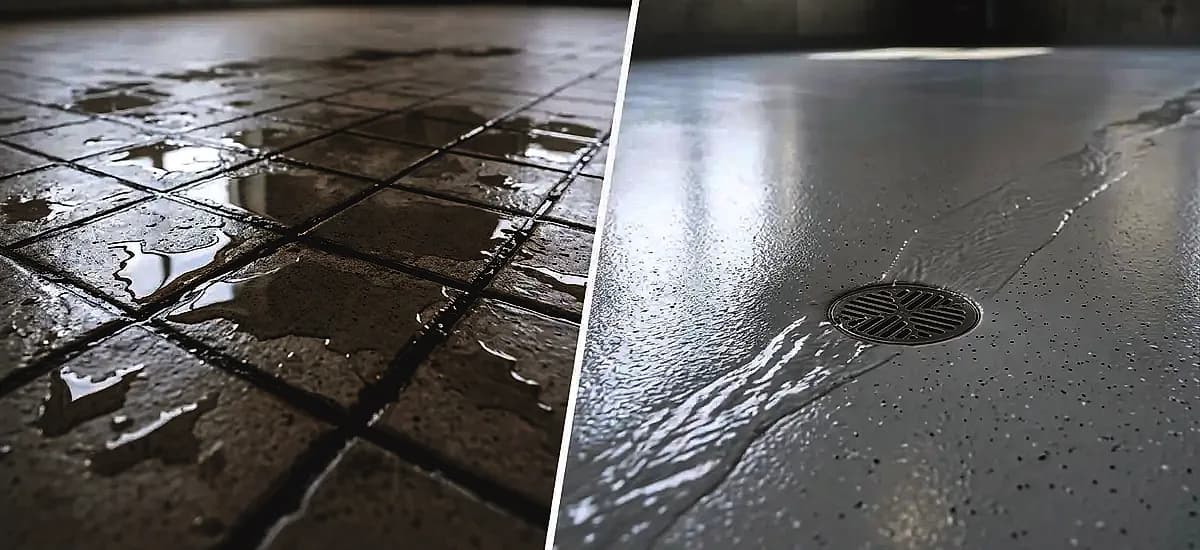
Local jurisdictions often layer additional requirements on top of state codes. Miami-Dade County, for instance, enforces strict liquid management rules to prevent pooling water, which is a major slip hazard and biological risk. Drainage systems in high-spill areas must handle 50% more flow capacity than the state minimums. Proper installation requires a precise 1/8″ to 1/4″ slope per foot toward floor drains. Failing to meet these grading standards is a common violation, highlighting the importance of ADA floor slope compliance during the initial concrete pour or coating application.
The Science Behind Food-Safe Polymer Coatings
Modern commercial floor coatings are marvels of material science. They are not simply “paint” applied to concrete; they are reactive polymer systems that bond molecularly with the substrate. This creates a monolithic barrier that boasts a compressive strength of 300+ pounds per square inch (PSI), far exceeding the durability of standard concrete.
One of the most critical properties of these systems is their resistance to thermal shock. Commercial kitchens experience rapid, extreme temperature fluctuations. A floor might be subjected to 140°F boiling grease spills near the fryers, while simultaneously enduring freezing drafts near the walk-in coolers. Traditional materials expand and contract at different rates, leading to structural failure. Engineered epoxy and urethane cements flex under these conditions, preventing the thermal shock damage near freezers that plagues so many restaurants.
Furthermore, these coatings are highly chemically resistant. The National Restaurant Association emphasizes that daily sanitation requires harsh degreasers, bleach, and quaternary ammonium compounds. While these chemicals break down the glazes on ceramic tiles and dissolve the adhesives under vinyl, aliphatic urethane topcoats repel them entirely.
Epoxy vs. Traditional Flooring: A 2026 Comparative Analysis
To truly understand the value of polymer systems, facility owners must compare them directly against legacy materials. The following table illustrates why 60% of food safety violations involving flooring failures are linked to traditional seamed surfaces.
| Feature | Seamless Epoxy/Urethane | Quarry Tile | Commercial Vinyl |
|---|---|---|---|
| Surface Continuity | 100% Seamless Monolithic | Grouted Joints (High Risk) | Heat-Welded Seams (Moderate Risk) |
| Moisture Resistance | Impermeable Barrier | Porous Grout Absorbs Liquids | Water Seeps Under Edges |
| Thermal Shock Resilience | Excellent (Flexes with temp changes) | Poor (Cracks under rapid shifts) | Poor (Adhesive fails under heat) |
| Daily Cleaning Time | 15-20 Minutes | 45-60 Minutes (Scrubbing required) | 30-40 Minutes |
| Antimicrobial Properties | Integrated Silver-Ion Additives | None | Surface Level Only |
“The integration of antimicrobial additives into modern polyaspartic and epoxy blends has revolutionized commercial kitchen sanitation,” states David Chen, Materials Scientist at the Polymer Research Consortium. “These additives actively disrupt the cellular walls of bacteria upon contact, providing a passive layer of continuous protection between active cleaning cycles.”
7-Step Professional Installation Process for Maximum Hygiene
The efficacy of a food-safe floor is entirely dependent on the quality of its installation. A poorly applied coating will delaminate, creating the very contamination hazards it was meant to prevent. Professional contractors follow a rigorous, documented protocol to ensure permanent adhesion and regulatory compliance.
- Substrate Evaluation & Scanning: Before any physical work begins, technicians assess the concrete slab. This often involves GPR scanning for concrete floors to locate hidden plumbing, post-tension cables, or structural anomalies that could compromise the installation.
- Diamond Grinding & Profiling: The concrete is mechanically ground using heavy-duty planetary grinders equipped with diamond tooling. This removes old adhesives, opens the concrete pores, and creates a rough surface profile (typically CSP 3 or 4) essential for mechanical bonding.
- Moisture Mitigation: South Florida’s high water table means concrete slabs constantly emit moisture vapor. Installers apply a specialized moisture vapor transmission (MVT) barrier to prevent hydrostatic pressure from pushing the coating off the slab.
- Cove Base Integration: To meet health codes, the floor must transition seamlessly up the wall. Installers trowel a 4-inch to 6-inch radius cove base, eliminating the sharp 90-degree corner where floors meet walls—a notorious trap for dirt and bacteria.
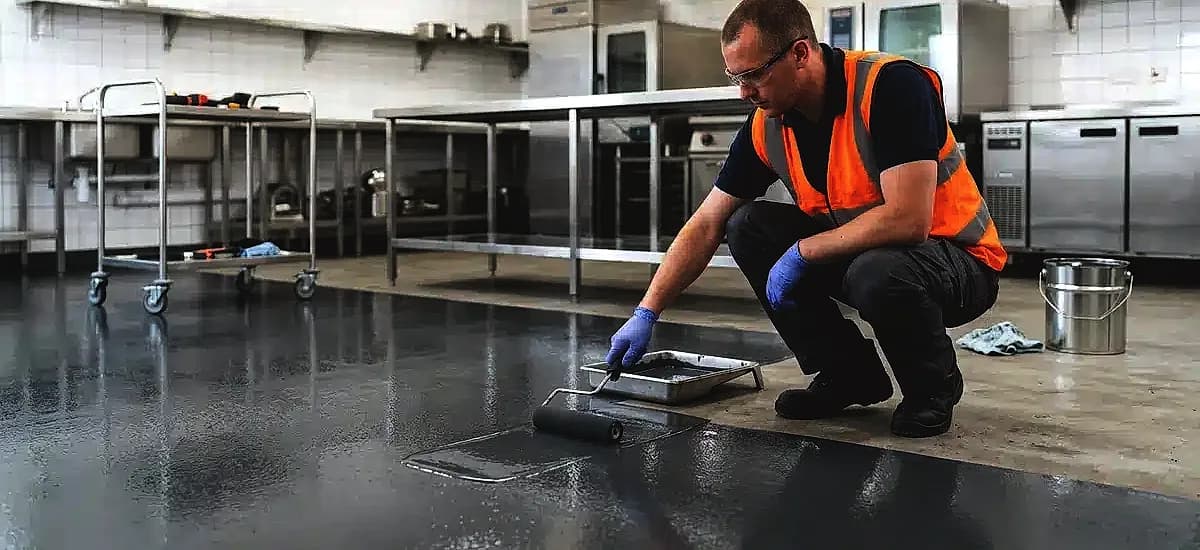
- Base Coat Application: A 100% solids epoxy base coat is squeegeed and back-rolled across the floor. This layer provides the structural thickness and impact resistance required for heavy commercial use.
- Broadcast Texturing: While the base coat is wet, technicians broadcast silica quartz or aluminum oxide across the surface. This creates a highly durable, slip-resistant texture that protects staff from falls in greasy environments.
- Topcoat Sealing & Curing: Finally, a chemical-resistant aliphatic urethane or polyaspartic topcoat is applied to lock in the aggregate and seal the system. Facility managers must then wait the appropriate time before resuming operations, verifying your floor coating is cured to prevent premature damage.
Understanding how long concrete polishing takes versus a full epoxy broadcast system helps restaurant owners schedule renovations during off-hours, minimizing operational downtime. Many modern polyaspartic systems offer rapid 24-hour cure times, allowing kitchens to reopen the next day.
Maintenance Protocols to Preserve FDA Compliance
While polymer floors drastically reduce maintenance labor, they are not entirely maintenance-free. Establishing a strict cleaning protocol ensures the floor retains its slip resistance, chemical barrier, and aesthetic appeal over its 15-year lifespan. The Florida Department of Health requires establishments to maintain written sanitation logs, and floor care should be a prominent part of this documentation.
Daily maintenance should begin with sweeping loose debris using a stiff-bristled broom. For wet cleaning, staff should use a deck brush or an automatic floor scrubber equipped with soft to medium pads. It is imperative to use pH-neutral enzymatic cleaners. Harsh, highly acidic, or heavily caustic cleaners can, over time, dull the topcoat and reduce its effectiveness. Enzymatic degreasers are particularly effective in commercial kitchens because they actively consume the organic fats and oils that cause slippery conditions.
Monthly deep cleaning should involve hot water extraction or low-pressure steam cleaning (kept below 160°F to protect the sealant). Always ensure that the floor is thoroughly rinsed with clean water and squeegeed toward the drains. Leaving chemical residue on the floor can create a slick film that compromises the integrated slip-resistant aggregates.
Conclusion
Securing a food-safe environment in a Miami restaurant requires proactive infrastructure choices. The unique combination of coastal humidity, rigorous health codes, and the intense physical demands of a commercial kitchen makes traditional flooring materials a liability. By investing in a seamless, nonporous, and chemical-resistant epoxy or urethane system, you eliminate bacterial breeding grounds, ensure FDA compliance, and protect your staff from slip-and-fall hazards. When evaluating your facility’s needs, choosing concrete and epoxy flooring engineered for your specific operational demands is the smartest long-term investment you can make. Ready to upgrade your commercial kitchen to meet 2026 health standards? Get in touch with our team today to schedule a comprehensive site evaluation.
Frequently Asked Questions
How long does a food-safe epoxy floor last in a commercial kitchen?
When professionally installed and properly maintained, a commercial epoxy floor can last 10 to 15 years. The lifespan depends heavily on the volume of foot traffic, the frequency of thermal shock events, and strict adherence to daily pH-neutral cleaning protocols.
Can epoxy flooring be installed over existing commercial kitchen tile?
Yes, but it requires rigorous surface preparation to be successful and code-compliant. Contractors must diamond-grind the existing tile to remove glazes and apply a specialized leveling primer to fill all grout lines, ensuring a completely seamless final surface.
What makes epoxy more hygienic than traditional quarry tile?
Epoxy creates a monolithic, nonporous surface that completely eliminates grout lines and seams. Because bacteria and pathogens require microscopic crevices and moisture to multiply, this seamless barrier effectively starves biological threats and simplifies sanitation.
How does thermal shock affect restaurant flooring?
Thermal shock occurs when floors experience rapid, extreme temperature changes, such as boiling water spilling near a walk-in freezer. Traditional materials expand and contract at different rates, leading to cracking, whereas engineered polymer coatings flex to absorb these rapid shifts without fracturing.
Are epoxy floors slippery when wet?
While a smooth epoxy surface can be slick when wet, commercial kitchen installations always include a broadcast layer of slip-resistant aggregates like quartz or aluminum oxide. This texturing provides essential traction for staff, even in high-spill zones, complying with OSHA safety standards.
Will installing a new kitchen floor require shutting down my restaurant for a week?
Not necessarily. While traditional epoxy systems may take several days to cure, modern polyaspartic and urethane cement systems offer rapid curing technologies. Professional teams can often complete the installation in phases or overnight, allowing for partial or full reopening within 24 to 48 hours.
Written by

Founder and CEO
Chris Lavin is an esteemed leader in concrete polishing and epoxy coatings with a distinguished 20-year career. As founder and CEO of National Concrete Polishing and owner of Xtreme Polishing Systems, he's renowned for polishing and epoxy coating more floors than anyone globally. Chris is recognized for his innovative approach and commitment to enhancing floor durability and aesthetics. His hands-on experience and technical proficiency make him a respected authority and a valuable resource in the field of floor polishing and coatings.
Same topic
Related articles
All stories
Epoxy & coatings8 min read
DIY vs Professional Epoxy Flooring in Fort Lauderdale
Hardware stores heavily market all-in-one boxes that promise a showroom finish with minimal effort.
Read it
Epoxy & coatings8 min read
Can You DIY Epoxy Flooring in Miami? Pros, Cons, and Tips
Applying a durable floor finish in a tropical or highly humid climate presents unique environmental challenges.
Read it
Epoxy & coatings7 min read
DIY Epoxy Flooring in South Florida: Is It Worth the Risk?
However, these products generally contain high levels of water or solvents to extend their pot life.
Read it
Tell us about the floor
Tell us the space and roughly how big it is.We come back with what it would cost and when we could start.
Prefer to talk? Call +1 844-876-5474
- Leads@
nationalconcretepolishing.net - 2200 NW 32nd St #600,
Pompano Beach, FL 33069 Mon to Fri, 9:00 to 5:30