
The NCP blog
The ADA Floor Slope Mistakes South Florida Businesses Keep Making
Epoxy & coatings8 min read
Access Board, improper floor slopes account for 23% of all ADA complaints filed against commercial properties.
Floor coating ADA slope compliance violations rank among the most expensive accessibility mistakes South Florida businesses make. According to the U.S. Access Board, improper floor slopes account for 23% of all ADA complaints filed against commercial properties. A single violation can trigger federal fines starting at $75,000 for first-time offenders and $150,000 for subsequent violations. Beyond financial penalties, non-compliant surfaces create genuine safety hazards for wheelchair users, people with mobility aids, and anyone navigating your facility. The good news: most slope violations are preventable with proper planning during floor coating installation.
Understanding ADA Floor Slope Requirements
The ADA establishes two critical slope measurements every business owner must know. Running slope, which is the slope parallel to the direction of travel, cannot exceed 1:20 (5%). Cross slope, measured perpendicular to travel, has a stricter limit of 1:48 (2.08%). These ratios translate to specific measurements: for every 20 inches of horizontal distance, the floor can rise no more than 1 inch in the running direction, and for every 48 inches, no more than 1 inch perpendicular to travel.
The 2010 ADA Standards for Accessible Design mandates these requirements apply to all commercial floor coatings in areas accessible to the public. This includes entrances, lobbies, retail spaces, restaurants, medical facilities, and any route to accessible features like restrooms or service counters.
Why South Florida Faces Unique Challenges
South Florida’s geological conditions create slope compliance challenges absent in most other markets. The region sits on porous limestone bedrock subject to settling, and many structures were built on reclaimed land or filled wetlands. According to the Florida Geological Survey, ground subsidence affects approximately 17% of commercial properties in Miami-Dade County alone.
Additionally, the Florida Building Code’s flood mitigation requirements sometimes conflict with ADA slope standards. Properties in flood zones must manage water drainage while maintaining accessible surfaces. Professional concrete floor leveling becomes essential to reconcile these competing requirements.
The 5 Most Common ADA Slope Violations in Floor Coating Projects
| Violation Type | Frequency | Avg. Repair Cost | Preventable? |
|---|---|---|---|
| Excessive cross slope at entrances | 34% | $8,500-$15,000 | Yes |
| Ramp slopes exceeding 1:12 | 28% | $12,000-$25,000 | Yes |
| Transition slope failures | 19% | $5,000-$10,000 | Yes |
| Level landing deficiencies | 12% | $6,000-$12,000 | Yes |
| Accessible route interruptions | 7% | $4,000-$8,000 | Yes |
Excessive Cross Slope at Entrances
The most frequent violation occurs at building entrances where drainage requirements often create excessive cross slopes. Florida Building Code Section 1503.4 requires a minimum 2% slope away from buildings for water management. However, when combined with existing grade conditions, this can push cross slopes beyond the ADA’s 2.08% limit.
The solution involves careful substrate preparation before any floor coating application. Professional installers use self-leveling epoxy underlayment to correct grade issues while maintaining proper drainage channels that direct water without creating accessibility barriers.
Ramp Slopes Exceeding 1:12
ADA-compliant ramps require a maximum running slope of 1:12 (8.33%), yet 28% of violations occur when floor coatings add thickness that steepens existing ramps. A standard epoxy system adds 10-20 mils of material. While seemingly minimal, on a ramp already at the compliance threshold, this additional thickness can push the slope over the legal limit.
According to research from the International Code Council, ramp compliance failures increase by 340% when floor coatings are applied without pre-installation slope verification. Understanding epoxy floor thickness requirements prevents this common mistake.
Transition Slope Failures
Where coated floors meet uncoated surfaces, improper transitions create compliance issues. The ADA requires changes in level greater than 1/4 inch to be beveled with a slope no steeper than 1:2. Floor coatings that create abrupt edges or steep tapers at termination points violate this standard.
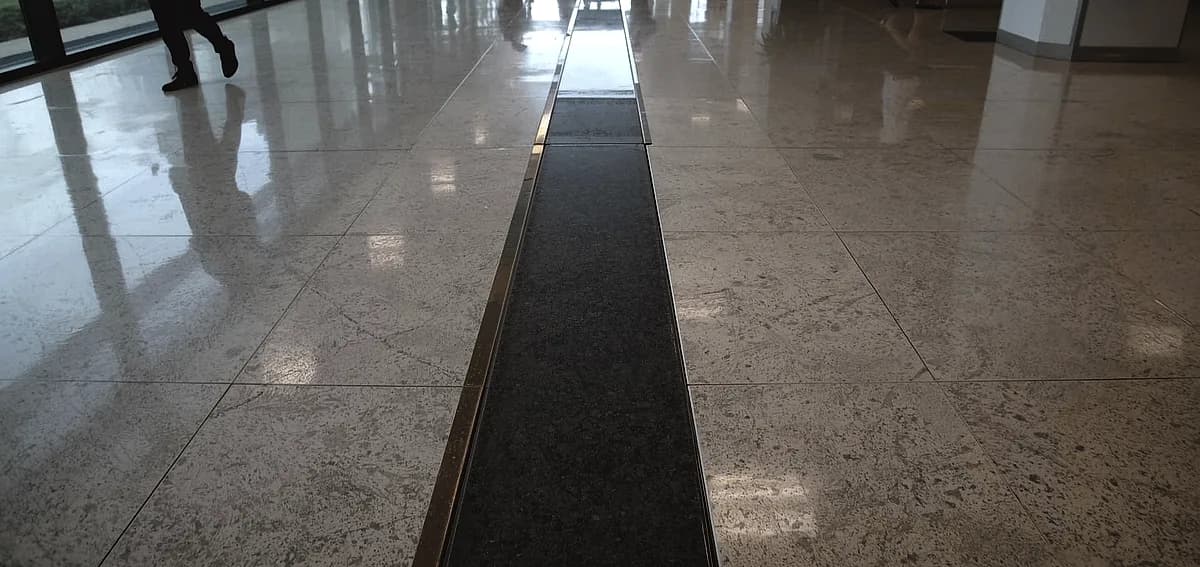
Professional installation includes proper epoxy floor joint treatment and transition detailing. Feathered edges and tapered termination strips ensure smooth, compliant transitions between floor surfaces.
How to Achieve ADA-Compliant Floor Coatings
Pre-Installation Assessment Protocol
Compliance starts with comprehensive substrate evaluation. Before any coating work begins, certified installers should complete the following steps.
Digital slope mapping: Using digital inclinometers accurate to 0.1 degrees, technicians document existing slopes at minimum 10-foot intervals throughout the accessible route. This creates a baseline map identifying areas requiring correction.
Substrate condition analysis: Proper concrete surface profiling identifies high and low spots that affect final slope. Testing concrete condition through substrate testing ensures the surface can support leveling compounds if needed.
Moisture verification: South Florida’s humidity requires thorough moisture testing before leveling compounds or coatings are applied. Excess moisture compromises adhesion and can cause coating failures that necessitate slope-altering repairs.
Leveling Solutions for Slope Correction
When existing slopes exceed ADA limits, correction requires professional intervention. The choice of leveling method depends on the severity of the slope deviation and the coating system being applied.
| Method | Slope Correction | Cost per Sq Ft | Best For |
|---|---|---|---|
| Self-leveling overlay | Up to 1 inch | $3-$6 | Minor corrections |
| Precision grinding | Up to 1/4 inch | $2-$4 | High spots, localized issues |
| Cementitious overlay | 1-3 inches | $6-$12 | Major corrections |
| Concrete resurfacing | 3+ inches | $8-$15 | Severe slope problems |
For severe slope issues, concrete resurfacing may be required before coating application. This process replaces the top layer of concrete entirely, allowing precise slope control during placement.
Industry-Specific ADA Slope Requirements
Medical Facilities
Healthcare facilities face the strictest ADA enforcement. The Department of Justice prioritizes medical facilities in compliance investigations because patients often have mobility limitations. According to the HHS Office for Civil Rights, epoxy flooring for medical facilities must meet both ADA slope requirements and infection control standards.
Hospital corridors require special attention. The ADA mandates that gurney routes maintain running slopes under 1:20 to ensure safe transport of patients. Cross slopes in patient care areas must remain under 2% to prevent wheelchair drift. These requirements apply to hospital-standard concrete polishing as well as epoxy coatings.
Retail and Restaurant Spaces
Commercial retail spaces present unique slope challenges. Restaurant flooring must balance ADA requirements with health code mandates for floor drainage in food service areas. The solution involves strategic placement of compliant slopes that direct water toward floor drains without creating accessibility barriers.
Commercial kitchen floor regulations require minimum 1/8 inch per foot slopes toward drains. However, these slopes must be carefully designed to avoid crossing accessible routes. Where slopes intersect customer areas, transitions must comply with the 1:48 cross-slope maximum.
Manufacturing and Warehouse Facilities
Industrial facilities often assume ADA requirements do not apply to production areas. This is incorrect. Any area accessible to employees must maintain compliant slopes along routes to emergency exits, restrooms, break rooms, and common areas. Warehouse flooring and manufacturing floor coatings must include accessible routes even in heavy industrial environments.
Post-Installation Compliance Verification
After floor coating installation, documented verification protects your business from future complaints. Professional installers provide slope certification showing measurements at all critical points along accessible routes.
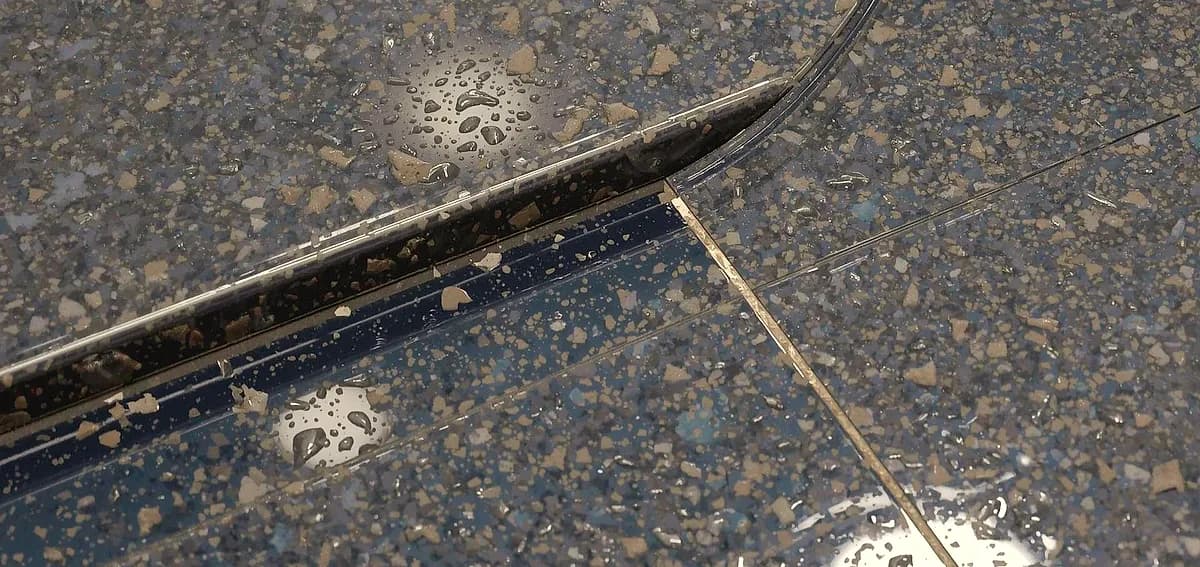
Verification documentation should include: digital slope readings at building entrances, measurements along all accessible routes at 10-foot intervals, ramp slope verification at top, middle, and bottom, transition point documentation where coated and uncoated surfaces meet, and cross-slope readings perpendicular to all travel directions.
This documentation proves compliance during ADA inspections and demonstrates due diligence if accessibility complaints arise. It should be maintained alongside your epoxy floor warranty documentation for future reference.
The Real Cost of Compliance vs. Non-Compliance
Addressing ADA slope requirements during initial floor coating installation costs 15-25% more than standard installation. However, this investment prevents far greater expenses down the line.
| Proactive Compliance Costs | Reactive Remediation Costs |
|---|---|
| Pre-installation slope survey: $500-$1,500 | First-offense federal fine: $75,000 |
| Slope correction during install: $2-$6/sq ft | Subsequent offense fine: $150,000 |
| Compliance documentation: $300-$600 | Coating removal and replacement: $8-$15/sq ft |
| Total for 2,000 sq ft: $5,800-$14,100 | Total potential cost: $91,000-$180,000+ |
Beyond financial penalties, ADA lawsuits require businesses to bring facilities into compliance at their own expense. The average settlement for accessibility lawsuits in Florida exceeds $25,000, according to the Florida Justice Association, and this amount does not include remediation costs.
Frequently Asked Questions
What is the maximum allowable slope for ADA-compliant floors?
The ADA allows a maximum running slope of 1:20 (5%) for accessible routes and a maximum cross slope of 1:48 (2.08%). Ramps have different requirements with a maximum slope of 1:12 (8.33%). These measurements must be verified after floor coating installation because coating thickness can affect final slopes.
Does floor coating thickness affect ADA compliance?
Yes. Standard epoxy systems add 10-20 mils of thickness, while high-build systems can add 60-125 mils. On surfaces already near compliance thresholds, this additional material can push slopes over ADA limits. Professional installers calculate coating thickness impact before application and adjust substrate grades accordingly.
How often should floor slopes be verified for ADA compliance?
Slopes should be verified immediately after coating installation and documented for records. Additionally, slopes should be rechecked after any floor repairs, if settlement or structural movement is suspected, or before lease renewals or property sales. In South Florida, where soil conditions can cause gradual settling, annual visual inspections and measurements every 3-5 years are recommended.
Can existing non-compliant floors be corrected with floor coatings?
Absolutely. Self-leveling underlayments and precision grinding can correct slope issues before coating application. For minor deviations (under 1/4 inch), self-leveling products cost $3-$6 per square foot. Major corrections requiring cementitious overlays or concrete resurfacing range from $6-$15 per square foot but achieve permanent compliance.
Who is responsible for ADA compliance in leased commercial spaces?
Both landlords and tenants share ADA compliance responsibility. The DOJ holds property owners responsible for common areas and building systems, while tenants are responsible for their leased spaces. Lease agreements should clearly specify which party handles floor modifications, but both parties can face penalties for violations regardless of lease terms.
What documentation proves ADA floor slope compliance?
Compliance documentation should include pre-installation slope surveys, contractor credentials showing ADA training, post-installation slope measurements at all critical points, photographs documenting accessible routes and transitions, and manufacturer certifications for coating materials. This documentation creates a defensible record if accessibility complaints arise.
Get ADA-Compliant Floor Coating Installation in South Florida
National Concrete Polishing specializes in commercial floor coatings that meet ADA slope requirements while delivering lasting performance in South Florida’s demanding climate. Our certified installers use digital slope mapping, precision leveling techniques, and documented verification protocols to ensure every project achieves full accessibility compliance.
We serve commercial clients throughout South Florida including Miami, Fort Lauderdale, Port St. Lucie, and Pompano Beach. Contact us for a slope assessment and compliant floor coating quote.
Written by

Founder and CEO
Chris Lavin is an esteemed leader in concrete polishing and epoxy coatings with a distinguished 20-year career. As founder and CEO of National Concrete Polishing and owner of Xtreme Polishing Systems, he's renowned for polishing and epoxy coating more floors than anyone globally. Chris is recognized for his innovative approach and commitment to enhancing floor durability and aesthetics. His hands-on experience and technical proficiency make him a respected authority and a valuable resource in the field of floor polishing and coatings.
Same topic
Related articles
All stories
Epoxy & coatings8 min read
DIY vs Professional Epoxy Flooring in Fort Lauderdale
Hardware stores heavily market all-in-one boxes that promise a showroom finish with minimal effort.
Read it
Epoxy & coatings8 min read
Can You DIY Epoxy Flooring in Miami? Pros, Cons, and Tips
Applying a durable floor finish in a tropical or highly humid climate presents unique environmental challenges.
Read it
Epoxy & coatings7 min read
DIY Epoxy Flooring in South Florida: Is It Worth the Risk?
However, these products generally contain high levels of water or solvents to extend their pot life.
Read it
Tell us about the floor
Tell us the space and roughly how big it is.We come back with what it would cost and when we could start.
Prefer to talk? Call +1 844-876-5474
- Leads@
nationalconcretepolishing.net - 2200 NW 32nd St #600,
Pompano Beach, FL 33069 Mon to Fri, 9:00 to 5:30