
The NCP blog
Why Ice Machines and Freezers Keep Cracking South Florida Restaurant Concrete
Commercial10 min read
South Florida restaurant owners face a unique flooring challenge that many never see coming.
South Florida restaurant owners face a unique flooring challenge that many never see coming. The concrete floor thermal shock from freezers and ice machines creates extreme temperature swings that crack, delaminate, and destroy floors far faster than normal wear. When a walk-in freezer operating at 0°F sits next to a kitchen that reaches 95°F, the concrete underneath experiences stress that most standard flooring systems simply cannot handle.
This article explains why thermal shock damages commercial kitchen floors, what warning signs to watch for, and which flooring solutions actually work in South Florida’s demanding environment.
Overview
Restaurant operators will learn how temperature differentials cause concrete failure, why Miami’s humidity makes the problem worse, and what flooring options resist thermal cycling. The guide covers FDA requirements for food service floors, explains the science behind thermal expansion, and provides actionable steps to protect concrete from ice machine and freezer damage.
Understanding Thermal Shock in Restaurant Environments
Thermal shock occurs when rapid temperature changes cause materials to expand or contract faster than they can accommodate. In a commercial kitchen, this happens constantly. Hot fryer oil spills onto cold concrete. Staff hose down freezer floors with warm water. Walk-in doors open and close, exposing sub-zero surfaces to ambient temperatures.
The coefficient of thermal expansion measures how much a material changes length when temperature shifts. Concrete typically expands at about 6 to 10 microstrains per degree Celsius. Standard epoxy resin expands at roughly 31 microstrains per degree Celsius, nearly four times the rate of concrete. This mismatch creates shear stress at the bond line between the coating and substrate.
When a South Florida kitchen floor reaches 85°F and the concrete substrate beneath stays cooler from AC cycling or ground contact, the coating wants to expand more than the concrete allows. This differential pulls the materials apart, causing bubbles, cracks, and delamination that spread quickly once they start.
Why South Florida Restaurants Face Greater Risk
Miami and Fort Lauderdale restaurants deal with conditions that amplify thermal shock damage beyond what kitchens face in other regions. Several factors combine to create a particularly harsh environment for commercial floors.
High ambient humidity means moisture constantly tries to penetrate concrete slabs. When that moisture reaches the cold zone near a freezer, it can freeze within the concrete itself. As water expands during freezing, it creates micro-fractures that weaken the substrate. These fractures then allow more moisture to enter, accelerating the damage cycle.
The temperature differential between indoor and outdoor environments also plays a role. A restaurant floor that reaches 90°F from afternoon sun exposure may cool to 70°F overnight when AC systems run continuously. This daily cycling fatigues both concrete and coatings before freezer-related thermal shock even enters the equation.
Salt air in coastal areas like Pompano Beach adds another complication. Chloride ions from marine environments penetrate concrete over time, contributing to rebar corrosion and surface degradation that makes floors more vulnerable to thermal cracking.
Common Failure Patterns Around Freezers and Ice Machines
Certain damage patterns indicate thermal shock rather than other causes of floor failure. Recognizing these signs early allows restaurant owners to address problems before they become health code violations or safety hazards.
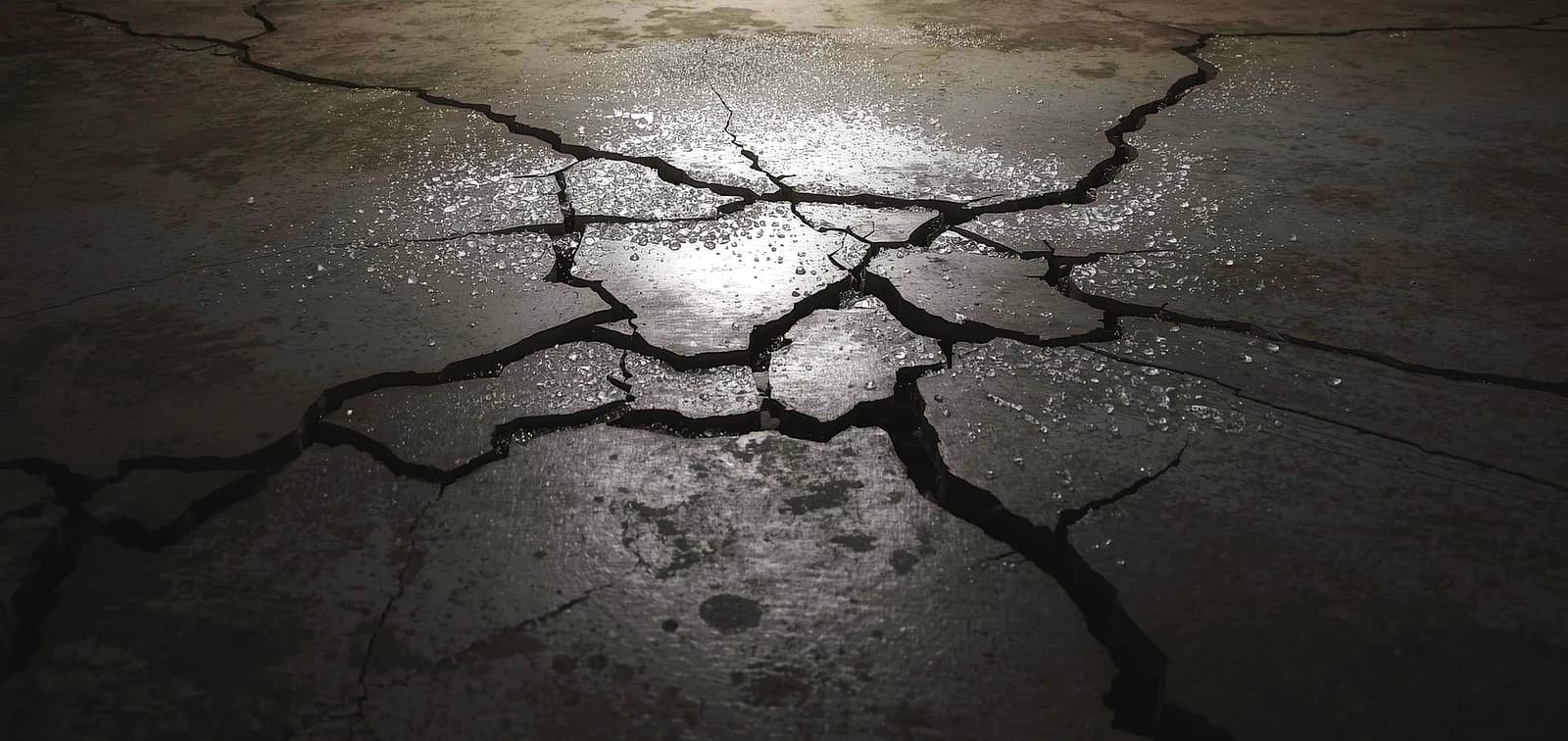
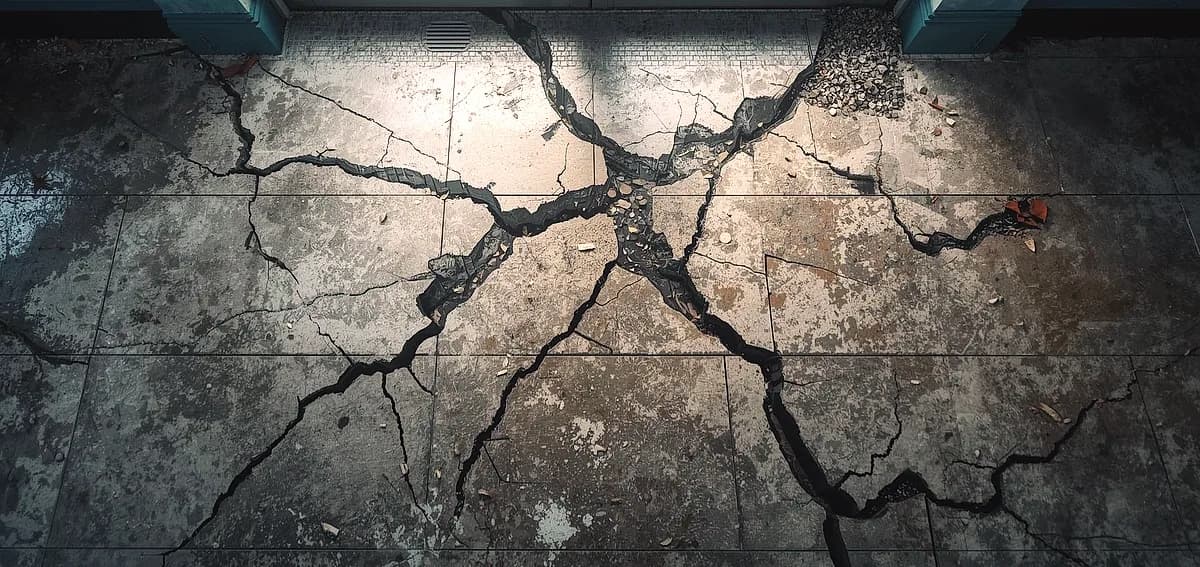
Spider cracking around the perimeter of walk-in freezers typically appears first. These fine cracks radiate outward from the cold zone as the coating repeatedly expands and contracts. Unlike random cracking from settling or overloading, thermal cracks follow predictable patterns related to temperature gradients.
Delamination often starts at transitions between different temperature zones. Where a hot kitchen meets a cold storage area, the floor coating may bubble and lift. This lifting creates pockets where water, grease, and bacteria accumulate, making proper floor cleaning nearly impossible.
Ice machines present a specific challenge because they generate localized cold spots while also producing condensation. The area directly beneath an ice maker may stay 20 to 30 degrees cooler than surrounding floor sections. Combined with moisture dripping from ice handling, this creates ideal conditions for coating failure.
Discoloration often accompanies thermal damage. As cracks allow moisture penetration, rust stains may appear where rebar corrodes. Whitish efflorescence can form as mineral deposits migrate to the surface through capillary action.
FDA and USDA Flooring Requirements
Food service facilities must maintain floors that meet federal sanitation standards. The FDA Food Code requires floors in food preparation areas to be smooth, durable, and easily cleanable. Cracks, chips, and delamination violate these requirements and can result in citations during health inspections.
The USDA maintains similar standards for facilities under its jurisdiction. Flooring must be non-porous to prevent bacteria harboring in surface imperfections. Seamless installations eliminate joints and seams where pathogens like Listeria and Salmonella can hide and multiply.
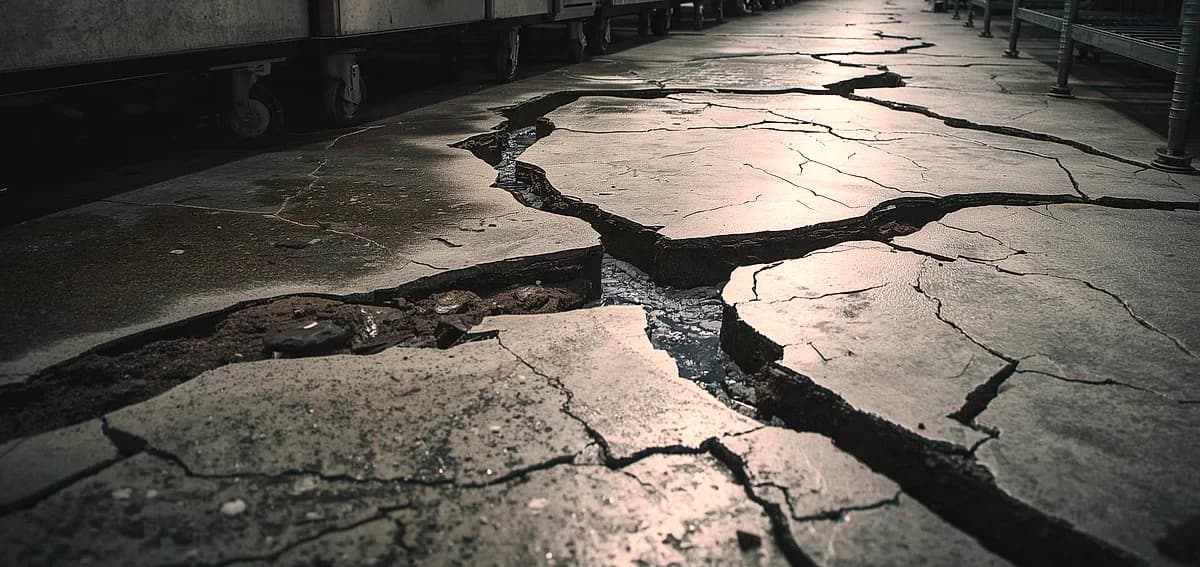
When thermal shock damages a floor, the resulting cracks immediately compromise sanitation compliance. Even small fissures create unreachable pockets that standard cleaning procedures cannot sanitize. Food processing facilities face particular scrutiny because any contamination can spread through an entire production run.
Beyond regulatory requirements, damaged floors increase slip and fall risks. The Occupational Safety and Health Administration identifies slips and falls as among the most common workplace injuries. Uneven surfaces, lifted coating edges, and accumulated ice from freezer condensation all create hazards for kitchen staff.
Flooring Solutions That Resist Thermal Shock
Not all floor coatings handle temperature extremes equally. Selecting the right system for areas near freezers and ice machines requires understanding how different materials respond to thermal cycling.
Cementitious urethane, also called polyurethane cement, offers the highest thermal shock resistance among resinous flooring options. This material expands and contracts at a rate very similar to concrete, allowing the coating and substrate to move together harmoniously. Systems designed for food processing environments can typically handle temperature swings exceeding 200°F without cracking or delaminating.
Standard epoxy works well for many applications but lacks the flexibility needed for extreme thermal cycling. In areas where temperatures remain relatively stable, commercial epoxy provides excellent durability and chemical resistance. However, installing standard epoxy directly adjacent to walk-in freezers often leads to premature failure.
Polyaspartic coatings cure quickly and offer better flexibility than traditional epoxies, making them suitable for some temperature-variable environments. These systems work best as topcoats over more robust base materials rather than as standalone solutions for extreme thermal exposure.
The thickness of any coating system affects its ability to absorb thermal stress. Thicker applications, typically 9mm or more for urethane cement systems, provide better insulation and distribute stress across a larger material volume. Thin-film coatings lack this buffering capacity and transmit temperature changes directly to the bond line.
Surface Preparation Requirements
No coating system, regardless of thermal shock resistance, will perform properly without correct substrate preparation. The concrete surface must provide adequate mechanical anchoring for the coating to bond.
Shot blasting or diamond grinding creates the necessary surface profile for coating adhesion. The International Concrete Repair Institute defines concrete surface profiles on a scale from CSP 1 to CSP 10, with higher numbers indicating rougher textures. Most urethane cement systems require CSP 3 to CSP 5 for optimal bonding.
Moisture testing becomes critical in South Florida installations. Concrete slabs on grade constantly draw moisture from the soil below. The ASTM F1869 calcium chloride test measures moisture vapor emission rates, while ASTM F2170 uses relative humidity probes placed within the slab. Acceptable readings vary by coating manufacturer, but most require emission rates below 3 to 5 pounds per 1,000 square feet per 24 hours.
When moisture levels exceed tolerances, mitigation systems can reduce vapor transmission before coating application. Epoxy moisture barriers penetrate the concrete surface and react to seal capillaries against upward moisture movement. Without this step, moisture accumulating beneath the coating will eventually cause bubbling and delamination regardless of thermal performance.
Existing cracks require evaluation and repair before any overlay installation. Structural cracks that continue to move need crack injection with flexible materials. Static cracks can be filled with rigid repair compounds. Ignoring cracks allows them to telegraph through new coatings, creating weak points that thermal stress will exploit.
Installation Considerations for Freezer Areas
Installing flooring near active freezers presents unique challenges that require careful planning. The concrete substrate temperature affects coating adhesion and cure times significantly.
Most epoxy-based systems will not cure properly below 50°F to 55°F substrate temperature. Urethane cement products generally tolerate lower temperatures, with some formulated to install in active cold storage environments. However, installation timeline and cure schedules must account for reduced chemical reaction rates in cold conditions.
For walk-in freezer interiors, specialized MMA (methyl methacrylate) coatings offer an alternative. These materials cure at temperatures as low as -20°F within hours rather than days. The tradeoff involves strong odors during application that may require facility shutdown and ventilation.
Transition zones between freezers and ambient temperature areas need particular attention. Installing flexible joint treatments at temperature boundaries accommodates differential movement without cracking. These joints require periodic inspection and maintenance as they wear from foot traffic and thermal cycling.
Maintenance Practices to Extend Floor Life
Proper maintenance can significantly extend the service life of any flooring system, even in demanding thermal environments. Establishing correct cleaning procedures helps preserve coating integrity while meeting sanitation requirements.
Avoid steam cleaning directly adjacent to freezer walls when possible. The extreme temperature differential between 200°F steam and cold concrete creates immediate thermal shock stress. If steam sanitation is required by protocol, allow surfaces to return to ambient temperature gradually afterward.
Regular inspection identifies damage early when repair remains economical. Check perimeter areas around freezers monthly for cracking or lifting. Address any adhesion loss immediately before moisture penetration compounds the problem.
Use cleaning chemicals compatible with your floor coating. Harsh acids or alkaline solutions can degrade some coating surfaces over time, weakening their ability to resist thermal stress. Manufacturer recommendations specify which cleaners are safe for each system type.
Frequently Asked Questions
What temperature difference causes thermal shock damage to concrete floors?
Rapid temperature changes exceeding 50°F can stress floor coatings. However, repeated cycling across smaller differentials also accumulates damage over time. Walk-in freezers create temperature swings of 100°F or more when doors open to ambient kitchen conditions.
How long do standard epoxy floors last near freezers?
Standard epoxy may begin showing thermal shock damage within 2 to 5 years when installed adjacent to freezers or ice machines. Proper thermal shock resistant systems can last 15 to 20 years with appropriate maintenance.
Can existing cracks from thermal shock be repaired?
Yes, cracks can be filled with flexible polyurea or urethane injection materials. However, if the underlying coating lacks thermal shock resistance, new cracks will continue forming. Complete overlay with appropriate materials often proves more cost-effective than repeated repairs.
What flooring thickness is needed for freezer areas?
Cementitious urethane systems typically require 6mm to 9mm thickness for adequate thermal shock resistance. Thicker applications provide better insulation and stress distribution.
Does humidity affect thermal shock damage?
High humidity accelerates damage by increasing moisture content in concrete. When this moisture freezes near cold equipment, expansion creates additional stress beyond thermal cycling alone. South Florida’s humid conditions make proper moisture mitigation essential.
Are polished concrete floors resistant to thermal shock?
Polished concrete handles moderate temperature variation well but lacks protective coating against extreme thermal cycling. For freezer-adjacent areas, polishing alone does not provide adequate protection.
How quickly does thermal shock damage spread?
Once cracking begins, damage typically accelerates. Initial spider cracks allow moisture penetration that expands during freeze cycles. Most floors showing thermal shock damage deteriorate significantly within 6 to 12 months without intervention.
What certifications should freezer-area flooring have?
Look for systems with USDA acceptance letters and FDA compliance documentation. Thermal shock resistance should be verified through independent testing showing performance across your expected temperature range.
Can ice machine drain lines cause floor damage?
Yes, improperly insulated drain lines create localized cold spots that stress surrounding floor areas. Condensation from cold lines also introduces moisture that compounds thermal damage. Proper insulation prevents these issues.
How do I know if my floor damage is from thermal shock?
Thermal shock damage typically radiates from cold equipment in predictable patterns. Spider cracking around freezer perimeters, delamination at temperature transition zones, and bubbling near ice machines all indicate thermal cycling problems rather than mechanical damage or installation defects.
Sources
- FDA Food Code 2022: https://www.fda.gov/food/fda-food-code/food-code-2022
- USDA Sanitation Performance Standards: https://www.fsis.usda.gov/inspection/compliance-guidance/sanitation-performance-standards-compliance-guide
- Federal Highway Administration Concrete Thermal Expansion Research: https://www.fhwa.dot.gov/pavement/concrete/coefficient.cfm
Get Your Restaurant Floor Evaluated
Thermal shock damage rarely reverses on its own. If you notice cracking near freezers, bubbling around ice machines, or coating lifting at temperature transitions, the problem will only grow. National Concrete Polishing serves restaurants throughout South Florida with flooring solutions designed for demanding commercial kitchen environments.
Contact us for a professional assessment of your restaurant flooring needs.
Written by

Founder and CEO
Chris Lavin is an esteemed leader in concrete polishing and epoxy coatings with a distinguished 20-year career. As founder and CEO of National Concrete Polishing and owner of Xtreme Polishing Systems, he's renowned for polishing and epoxy coating more floors than anyone globally. Chris is recognized for his innovative approach and commitment to enhancing floor durability and aesthetics. His hands-on experience and technical proficiency make him a respected authority and a valuable resource in the field of floor polishing and coatings.
Same topic
Related articles
All stories
Commercial9 min read
How Polished Concrete Solves Office Acoustic Problems
Hard floors and noise complaints. What polished concrete does to sound in an open office, and how to spec around it.
Read it
Commercial10 min read
Flooring for Hotel Wet Areas, Kitchens, and Parking Decks
Kitchens, pool decks and parking structures punish a floor daily. Which systems hold up in hotel service areas, and why.
Read it
Commercial11 min read
Specifying Floors for a New Hotel Build
For owners and architects on a new build. What to write into the flooring spec so the hotel opens on a floor that lasts.
Read it
Tell us about the floor
Tell us the space and roughly how big it is.We come back with what it would cost and when we could start.
Prefer to talk? Call +1 844-876-5474
- Leads@
nationalconcretepolishing.net - 2200 NW 32nd St #600,
Pompano Beach, FL 33069 Mon to Fri, 9:00 to 5:30