
The NCP blog
Understanding Polished Concrete Pricing in Fort Lauderdale
Cost & ROI7 min read
The average cost of professional concrete polishing in 2026 generally ranges from $3 to $12 per square foot.
The average cost of professional concrete polishing in 2026 generally ranges from $3 to $12 per square foot. If you are evaluating commercial or residential flooring options, you may be wondering what specific factors drive these expenses. We have the right article for you, covering the technical processes, the impact of existing slab conditions, and the long-term return on your investment.
The Importance of Existing Slab Conditions
Your current concrete slab plays a massive role in determining the final price of the project. A brand new, smoothly poured slab requires significantly less preparation than an older floor heavily damaged by industrial use. Contractors must evaluate the surface for cracks, uneven elevations, and spalling (flaking or chipping) before any polishing begins.
According to research from the Portland Cement Association, proper surface preparation accounts for up to 70 percent of a successful flooring installation. If your floor has thick layers of old epoxy, carpet mastic, or vinyl tile adhesive, crews must spend hours grinding these contaminants away. This removal process requires aggressive metal-bonded diamonds that wear down quickly, directly increasing material and labor costs.
In cases of severe damage, contractors may need to apply polymer-modified overlays (cement blends combined with synthetic resins) to create a fresh, polishable canvas. These specialized micro-toppings (ultra-thin resurfacing layers) restore the structural integrity of the floor but add material costs to the project.
The Multi-Step Mechanical Refinement Process
Creating a mirror-like finish on a concrete slab is not achieved by simply rolling on a clear coat. Mechanical polishing requires a meticulous sequence of grinding, honing, and polishing stages. Skipping steps to save time results in a cloudy finish that deteriorates quickly under foot traffic.
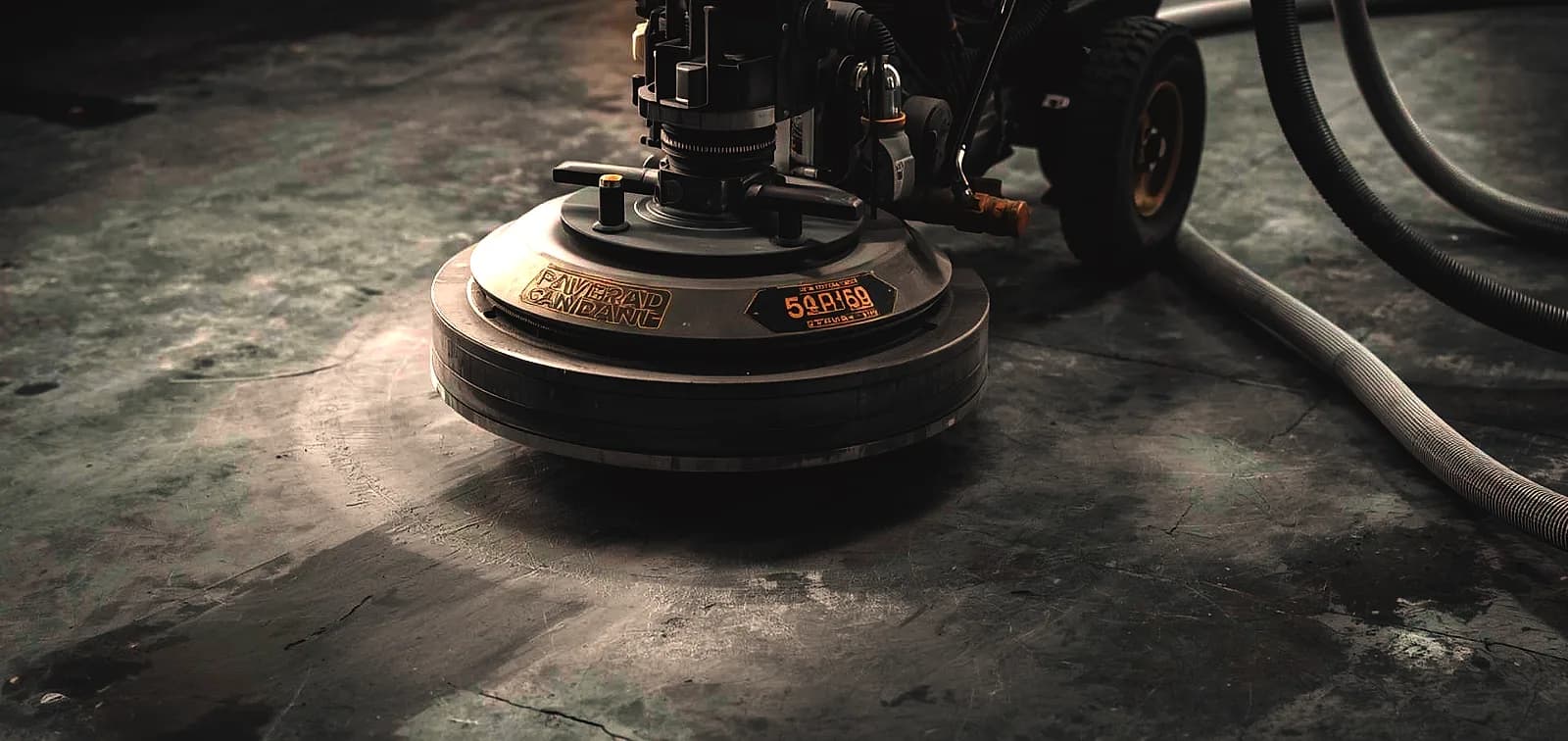
- Coarse Grinding: Operators use heavy planetary grinders equipped with aggressive metal-bonded diamonds to remove the top layer of the concrete. This exposes the durable aggregate beneath the surface.
- Joint and Crack Repair: Technicians manually route out cracks and fill them with polyurea or epoxy joint fillers to create a seamless, structurally sound floor.
- Densification: Crews apply liquid chemical hardeners to penetrate the porous concrete matrix, triggering a reaction that solidifies the slab.
- Honing: The floor is refined using progressively finer transitional resin-bonded diamonds, smoothing out the microscopic scratches left by the coarse grinding phase.
- Final Polishing: Operators make multiple passes with high-grit resin pads to achieve the specified gloss level, ranging from a matte satin to a high-gloss reflection.
Mechanical polishing requires precise multi-step grinding, which demands highly skilled operators and expensive diamond abrasives. This intensive labor is a primary reason why professional installations require a realistic budget.
Comparing Flooring Lifecycle Costs
While the initial cost of concrete refinement may seem substantial, the long-term financial benefits are remarkable. Facility managers must consider the total lifecycle cost of a flooring system, which includes routine maintenance, deep cleaning, and eventual replacement.
| Flooring Type | Average Lifespan | Maintenance Requirements |
|---|---|---|
| Polished Concrete | 20+ Years | Dust mopping, neutral pH cleaners. Occasional burnishing. |
| Vinyl Composition Tile (VCT) | 10 to 15 Years | Stripping, waxing, and sealing 2 to 3 times annually. |
| Commercial Carpeting | 5 to 7 Years | Daily vacuuming, frequent hot water extraction. |
Commercial VCT requires stripping and waxing multiple times a year, consuming thousands of dollars in janitorial labor and chemical supplies. In contrast, polished surfaces only require basic dust mopping and damp mopping with neutral cleaners.
The High Cost of Specialized Equipment
Professional concrete contractors carry immense overhead regarding equipment and consumable materials. Heavy-duty planetary grinders can weigh over 800 pounds and cost tens of thousands of dollars to purchase and maintain. These machines utilize advanced gear-driven technology to ensure an even, consistent scratch pattern across the floor.
Furthermore, the diamond abrasives attached to these grinders are highly engineered components. A single set of professional-grade metal diamonds can cost hundreds of dollars and requires replacement after approximately 5,000 square feet of heavy use. Contractors must constantly replenish their tooling inventory to maintain quality standards.
Dust control is another critical equipment expense. Industrial HEPA vacuums are required to capture 99.97 percent of airborne silica dust generated during the grinding process. Maintaining clean indoor air quality is vital to protect the health of workers and building occupants. Data from the U.S. Environmental Protection Agency emphasizes that proper particulate control during construction is essential for maintaining safe commercial environments.
Understanding Chemical Densifiers and Hardeners
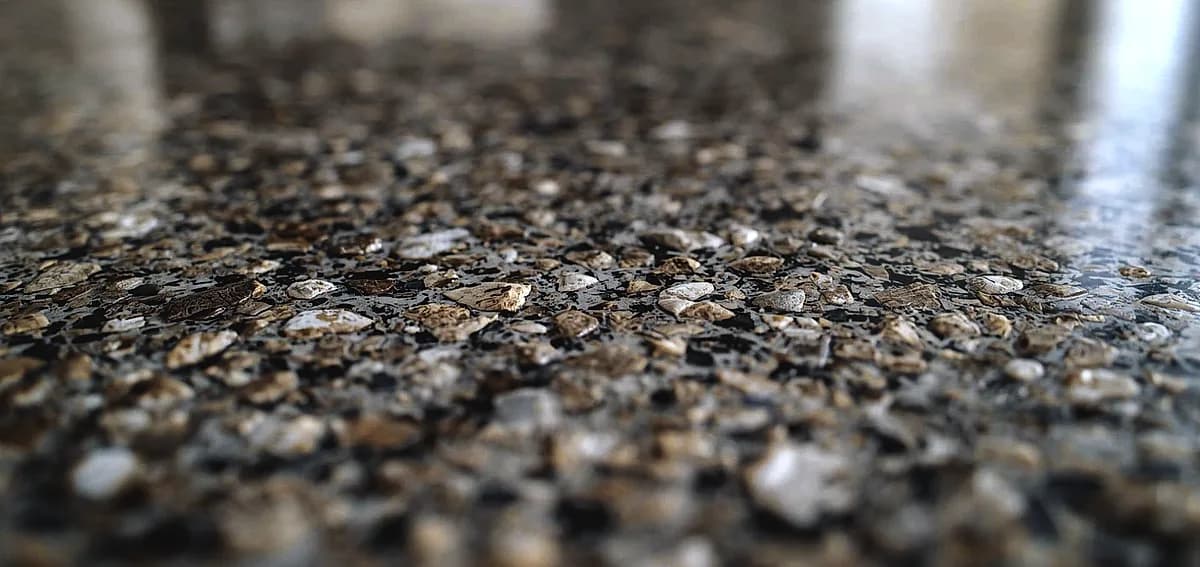
A crucial step in the refinement process is the application of chemical densifiers. These liquid silicates penetrate up to one-quarter inch into the concrete surface. They react with the free lime inside the slab to form calcium silicate hydrate, essentially filling the microscopic pores of the concrete with a dense, crystalline structure.
“Investing in densifiers and proper honing extends the lifecycle of concrete slabs by decades,” states Sarah Davis, Lead Material Scientist at the Concrete Network. This chemical reaction increases the abrasion resistance of the floor, preventing dusting and minimizing the risk of future surface deterioration. The cost of these premium densifiers directly impacts the overall project estimate, but they are indispensable for achieving a long-lasting result.
Environmental Benefits and LEED Compliance
Choosing to polish an existing slab is one of the most eco-friendly construction decisions a property owner can make. By utilizing the existing foundation, you eliminate the need to manufacture, transport, and install secondary flooring materials like vinyl or synthetic carpets. According to the U.S. Green Building Council, minimizing new material usage contributes heavily to achieving LEED certification for commercial buildings.
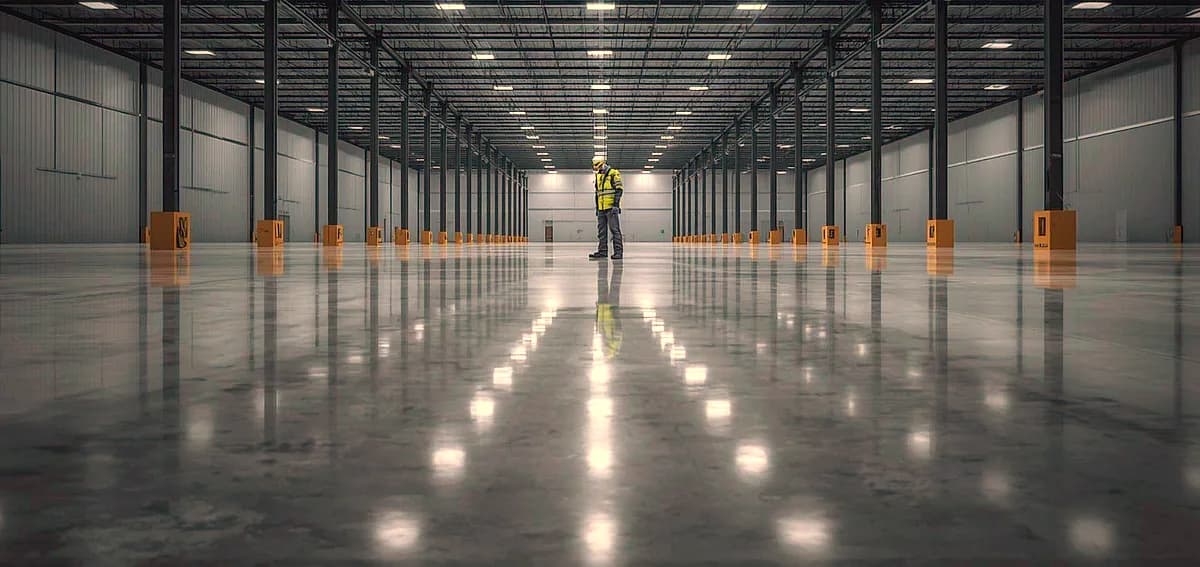
Additionally, the high light reflectivity of a polished floor offers measurable energy savings. The glossy surface maximizes the effectiveness of natural sunlight and overhead fixtures. Polished concrete can increase ambient lighting efficiency by up to 30 percent. Data from the U.S. Department of Energy indicates that optimizing ambient light directly lowers utility consumption and reduces the operational carbon footprint of a facility.
The Impact of Freeze-Thaw Cycles on Preparation
For properties in regions experiencing significant temperature fluctuations, historical freeze-thaw cycles (weather patterns causing expansion and contraction) can leave concrete slabs severely compromised. When moisture enters the pores of unsealed concrete and freezes, it expands, causing micro-fractures.
If a slab has endured years of seasonal stress without proper densification, contractors must spend additional days repairing the resulting structural flaws. They must clean out deteriorated expansion joints and apply flexible polyurea fillers to accommodate future thermal movement. This meticulous preparation is non-negotiable, as polishing over unstable concrete will inevitably lead to structural failure.
Frequently Asked Questions
Is polished concrete slippery?
No, mechanically polished floors generally meet or exceed strict slip-resistance standards. Despite their glass-like appearance, the microscopic texture of the refined surface provides excellent traction when kept clean and dry.
How long does the polishing process typically take?
The timeline depends entirely on the square footage and the condition of the existing slab. An average commercial space generally requires 3 to 5 days to complete the multi-step grinding and sealing procedure.
Can any concrete floor be successfully polished?
Most structurally sound slabs can be refined. However, severely degraded floors or those with extensive moisture issues may require a self-leveling overlay before polishing can be performed.
What is the recommended maintenance routine?
Maintenance is incredibly straightforward. It is advisable to perform daily dust mopping to remove abrasive dirt, followed by routine damp mopping using a specialized neutral pH concrete cleaner.
Does grinding weaken the concrete structure?
No, the process actually improves surface durability. The combination of removing the weak top layer of paste and applying chemical densifiers significantly increases the hardness and abrasion resistance of the slab.
How often does the surface need to be repolished?
This depends on the volume of foot and equipment traffic. High-traffic commercial floors generally benefit from a light maintenance burnish and reapplication of a stain guard every 2 to 3 years to restore maximum gloss.
Are traditional chemical sealers used?
Professional polishing relies on penetrating densifiers and micro-film stain guards rather than topical sealers. Topical coatings sit on the surface and eventually peel or flake, whereas penetrating products become a permanent part of the concrete matrix.
Final Thoughts
Refining a concrete slab is a rigorous, technical process requiring specialized diamond tooling, heavy machinery, and extensive manual labor. While the initial investment may seem high compared to applying a simple coat of paint, the value is undeniable. The procedure yields an incredibly durable, eco-friendly surface that costs significantly less to maintain over its 20-year lifespan. By understanding the variables that influence pricing, you can make an informed decision for your facility.
It is always advisable to consult with experienced contractors to evaluate your specific slab before budgeting. Contact us today to schedule a thorough site evaluation and receive a detailed project estimate.
References
Written by

Founder and CEO
Chris Lavin is an esteemed leader in concrete polishing and epoxy coatings with a distinguished 20-year career. As founder and CEO of National Concrete Polishing and owner of Xtreme Polishing Systems, he's renowned for polishing and epoxy coating more floors than anyone globally. Chris is recognized for his innovative approach and commitment to enhancing floor durability and aesthetics. His hands-on experience and technical proficiency make him a respected authority and a valuable resource in the field of floor polishing and coatings.
Same topic
Related articles
All stories
Cost & ROI10 min read
A Facility Manager's Guide to Long-Term Floor Maintenance Budgeting
A budgeting frame for the floor you already have. What to set aside each year, and which repairs beat a replacement.
Read it
Cost & ROI11 min read
Polished Concrete vs. LVT and VCT in Retail — Total Cost of Ownership
Sticker price against years of waxing and replacement. The total cost of polished concrete versus LVT and VCT in retail.
Read it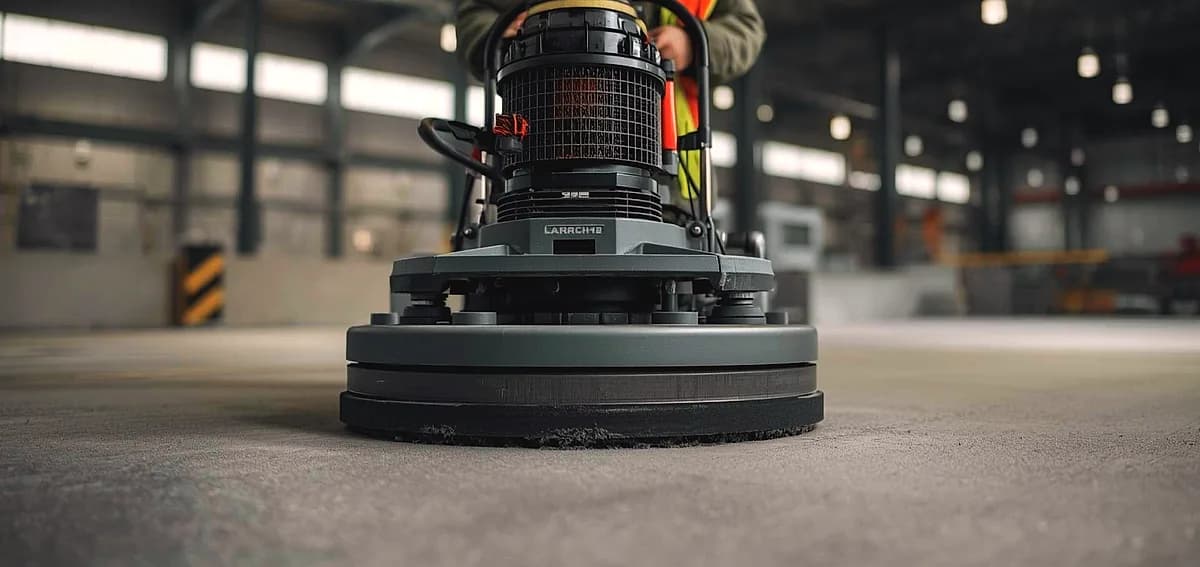
Cost & ROI7 min read
Why Polished Concrete Costs What It Does in South Florida
It is common to assume that refining an existing slab should be inexpensive because the base material is already present.
Read it
Tell us about the floor
Tell us the space and roughly how big it is.We come back with what it would cost and when we could start.
Prefer to talk? Call +1 844-876-5474
- Leads@
nationalconcretepolishing.net - 2200 NW 32nd St #600,
Pompano Beach, FL 33069 Mon to Fri, 9:00 to 5:30