
The NCP blog
Polished Concrete vs. LVT and VCT in Retail — Total Cost of Ownership
Cost & ROI11 min read
Sticker price against years of waxing and replacement. The total cost of polished concrete versus LVT and VCT in retail.
The total cost of ownership for retail flooring over a 10-year period averages $4.50 to $8.00 per square foot for luxury vinyl tile (LVT), while polished concrete remains significantly lower at $2.50 to $4.00. If you are evaluating flooring options for a commercial space, you may be wondering how initial installation costs compare to long-term maintenance expenses. We have the right article for you, covering the total cost of ownership between polished concrete, luxury vinyl tile, and vinyl composite tile (VCT) in retail environments.
Understanding Total Cost of Ownership in Retail Flooring
Total Cost of Ownership (TCO) is a financial estimate intended to help business owners and facility managers determine the direct and indirect costs of a product. In the commercial flooring sector, TCO extends far beyond the initial material and labor costs. It encompasses daily cleaning, periodic restorative maintenance, equipment, chemical supplies, and eventual replacement. According to the International Sanitary Supply Association (ISSA), maintenance typically accounts for up to 80% of a floor’s total lifecycle cost.
When analyzing retail spaces in 2026, foot traffic averages between 1,000 and 10,000 steps per day, depending on the store’s footprint and location. This constant wear immediately impacts synthetic surfaces. “The initial capital expenditure of flooring is rarely the financial burden; it is the daily operational maintenance that exhausts retail budgets over a decade,” notes David Chen, Financial Analyst at Commercial Property Economics.
To accurately compare options, it is essential to look at a 10-year or 20-year timeline. VCT may seem appealing during the construction phase due to low upfront material costs, but the intensive maintenance schedule quickly diminishes those savings. Conversely, systems that require heavier initial surface preparation often yield the lowest TCO.
Analyzing the Initial Installation Costs
The upfront expenditure is the first metric retailers examine. Installation costs vary widely based on the geographic market, the condition of the existing slab, and the complexity of the design. Generally, materials and labor in 2026 follow predictable industry averages.
Luxury Vinyl Tile and Vinyl Composite Tile Setup
VCT remains the cheapest material to purchase, often ranging from $1.00 to $3.00 per square foot installed. LVT, which offers enhanced aesthetic options mimicking wood or stone, generally costs between $4.00 and $7.00 per square foot installed. However, these figures often omit the necessary subfloor preparation. Synthetic tiles demand a perfectly smooth surface. Installers must frequently use self-leveling overlays to correct deviations in the concrete slab.
Additionally, moisture vapor transmission rate (MVTR, the measure of water vapor traveling through the concrete slab) must be tested. “Moisture mitigation is the hidden tax on LVT installations in commercial spaces. Without it, adhesives fail within the first three years,” states Sarah Jenkins, Senior Architect at BuildTech Commercial. Mitigating high MVTR can add an additional $2.00 to $4.00 per square foot to the initial project cost.
Polished Concrete Preparation and Execution
Polishing an existing concrete slab typically costs between $3.00 and $8.00 per square foot. The price fluctuates based on the required level of aggregate exposure and the gloss level desired. If the slab exhibits significant spalling (the flaking or chipping of the surface) or requires polymer-modified overlays to repair trenching, initial costs will rise.
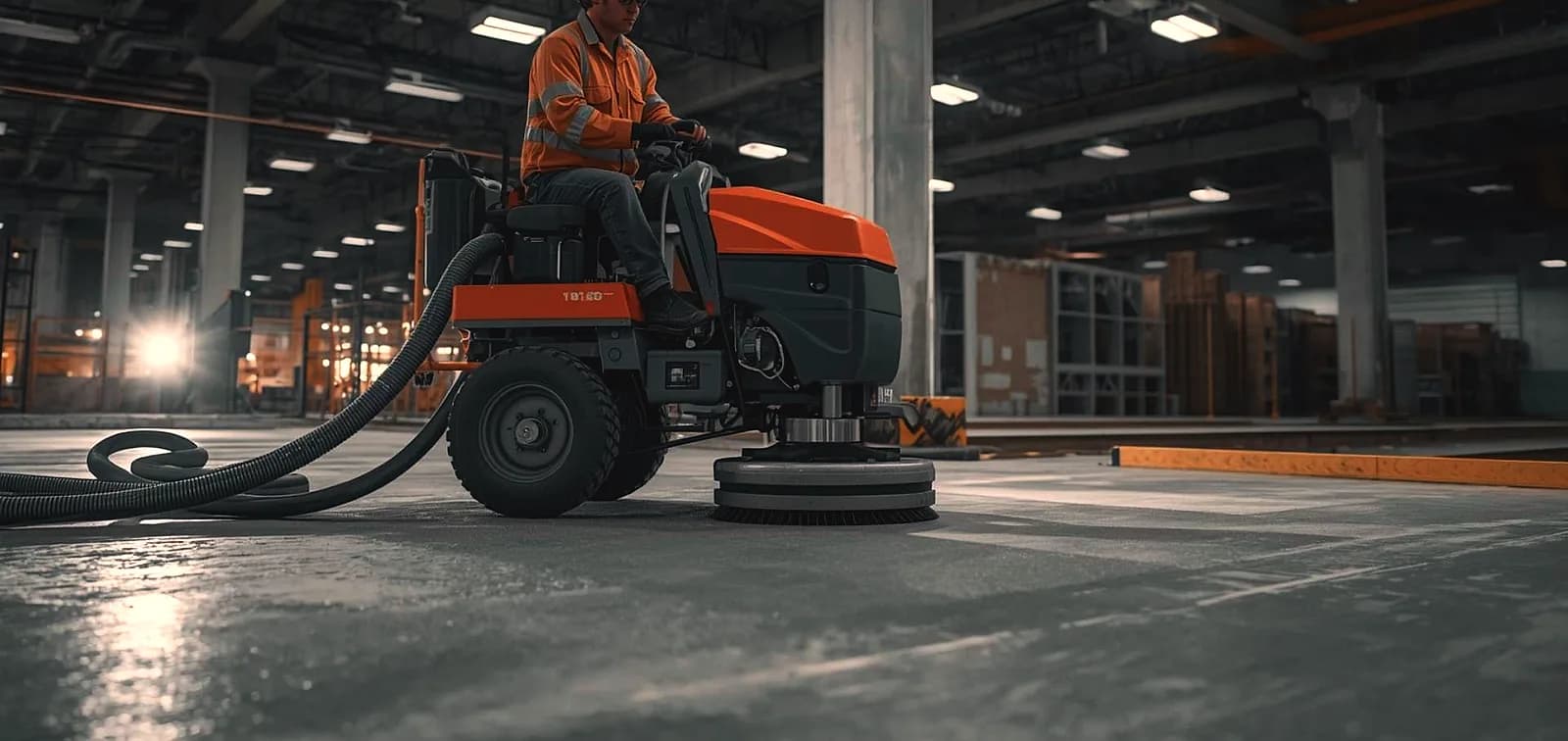
The installation involves grinding the surface with diamond tooling, applying chemical densifiers to harden the surface, and polishing to the specified sheen. While the labor is intensive, it eliminates the need for expensive adhesives, underlayments, and moisture mitigation systems. Once completed, the floor essentially becomes a permanent part of the building’s architecture.
Long-Term Maintenance and Upkeep Expenses
Maintenance is where the TCO divergence becomes most apparent. Retail environments demand immaculate presentation, which requires a rigorous janitorial schedule. The financial drain of floor maintenance directly correlates to the material selected.
VCT requires constant attention. To maintain a presentable shine, retailers must strip off the old wax, neutralize the floor, and apply multiple coats of new finish two to four times a year. Research from the National Retail Federation (NRF) indicates that retailers spend an average of $1.50 per square foot annually strictly on VCT maintenance. Over a decade, that is $15.00 per square foot in upkeep alone. “When facility managers factor in the intensive chemical stripping required for VCT, the lifetime cost equation shifts heavily toward polished surfaces,” explains John Davis, Facilities Director at Retail Management Group.
LVT requires less restorative maintenance than VCT, as it does not need wax. However, it requires specific neutral pH cleaners to avoid damaging the wear layer. In high-traffic zones, LVT is susceptible to scuffing and scratching, which cannot be polished out and often requires board replacement.
Polished concrete requires the lowest maintenance of the three. Daily care involves dry dust mopping to remove abrasive grit and routine cleaning with an auto-scrubber using water or a specialized densifying cleaner. There are no waxes to strip, and the surface naturally resists scuff marks from shoes and shopping carts. Annual maintenance costs for polished surfaces generally hover around $0.25 to $0.50 per square foot.
Durability and Lifespan in High-Traffic Zones
The frequency of replacement is the final major variable in calculating TCO. A floor that lasts twice as long effectively halves its capitalized replacement cost. Retail environments are uniquely punishing, subjecting floors to thousands of daily footsteps, pallet jacks, and heavy shelving units.
VCT typically has a lifespan of 10 to 15 years, provided the rigorous waxing schedule is strictly followed. If the wax barrier degrades, dirt will grind directly into the porous tile, ruining it permanently. LVT features a dedicated wear layer, but in high-traffic commercial settings, the replacement cycle is typically 7 to 10 years. Over a 20-year lease, a retailer will pay to remove and reinstall LVT at least twice.
Polished concrete is renowned for its longevity. With proper basic maintenance, these floors easily last 20 to 30 years or more. Furthermore, it easily supports the heavy point loads of retail racking systems. “Polished concrete inherently resists the heavy point loads of retail racking systems, eliminating the subfloor telegraphing commonly seen in synthetic tiles,” notes Marcus Thorne, Structural Engineer at Thorne Associates. Subfloor telegraphing occurs when imperfections in the base layer become visible through the flexible tile above.
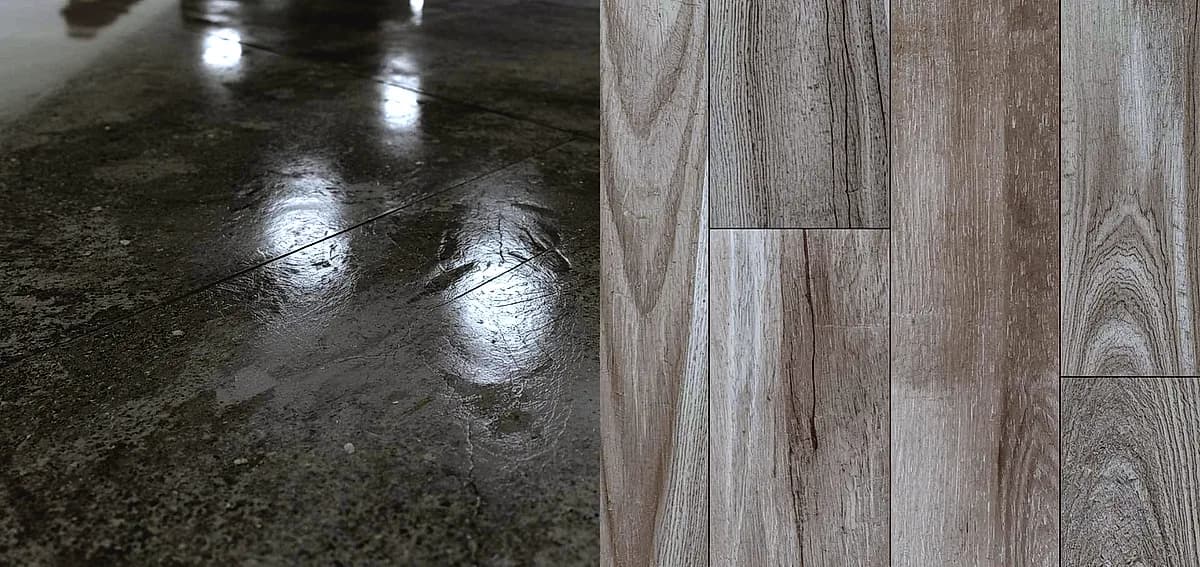
Comparing Polished Concrete, LVT, and VCT
To provide a clear perspective on the financial and operational differences, we have compiled the industry standard data for these three flooring options. The table below illustrates the core metrics that drive the total cost of ownership.
| Flooring Metric | Polished Concrete | Luxury Vinyl Tile (LVT) | Vinyl Composite Tile (VCT) |
|---|---|---|---|
| Initial Installed Cost | $3.00 – $8.00 / sq ft | $4.00 – $7.00 / sq ft | $1.00 – $3.00 / sq ft |
| Expected Lifespan | 20+ Years | 7 – 10 Years | 10 – 15 Years |
| Maintenance Level | Low (Sweep & Auto-scrub) | Moderate (Specific cleaners) | High (Strip & Wax regularly) |
| 10-Year TCO Estimate | $2.50 – $4.00 / sq ft | $4.50 – $8.00 / sq ft | $10.00 – $15.00+ / sq ft |
| Moisture Mitigation | Not typically required | Frequently required | Frequently required |
Environmental Impact and LEED Compliance
In 2026, corporate sustainability goals heavily influence construction decisions. The environmental impact of your flooring choice directly ties into the overarching total cost of ownership, especially when considering waste disposal and energy consumption. The U.S. Green Building Council (USGBC) frequently awards Leadership in Energy and Environmental Design (LEED) credits for incorporating existing structural elements into the final design.
By polishing the existing concrete slab, you eliminate the need to manufacture, transport, and install secondary flooring materials. This drastically reduces the project’s carbon footprint. Furthermore, LVT and VCT rely on petroleum-based adhesives, which can release volatile organic compounds (VOCs) into the indoor air environment over time. Polished concrete utilizes mechanical refinement and inorganic densifiers, maintaining pristine indoor air quality.
Additionally, highly reflective polished surfaces can reduce ambient lighting needs by up to 30%. This natural light amplification lowers electricity consumption, further decreasing the operational overhead of the retail facility.
Steps to Calculate Your Flooring TCO
If you are managing a retail portfolio and need to model out your localized expenses, it is advisable to follow a structured calculation process. The American Institute of Architects (AIA) suggests incorporating all lifecycle phases into your projections. Here is how you can estimate your specific costs:
- Measure the Total Square Footage: Determine the exact workable footprint, excluding permanent fixtures but including high-traffic transition zones.
- Request Comprehensive Installation Quotes: Ensure the estimates from contractors include necessary subfloor preparation, moisture mitigation, adhesives, and labor.
- Project Annual Maintenance Costs: Calculate the hourly labor rate for your janitorial staff, multiplied by the hours required weekly. Add the annual cost of cleaning solutions, waxes, and stripping chemicals.
- Factor in Expected Lifespan: Divide the initial installation cost by the expected years of service. For LVT, assume a replacement at the 8-year mark.
- Calculate Downtime Expenses: Replacing a failed LVT or VCT floor requires closing aisles or the entire store. Factor in the lost revenue from operational downtime during these renovations.

Frequently Asked Questions
Why does VCT have such a high maintenance cost?
VCT is highly porous and relies entirely on a layer of synthetic wax to protect it from dirt and scratching. Maintaining this barrier in a retail environment requires continuous cycles of chemical stripping, neutralizing, and reapplying multiple coats of finish, which demands significant labor and chemical supplies.
Can LVT handle heavy retail racking systems?
While modern LVT is durable, it is generally softer than concrete. Over time, heavy point loads from shelving units or repeated pallet jack traffic can cause indentations in the material, and imperfections in the subfloor may telegraph through the flexible planks.
Is polished concrete slippery for retail customers?
Despite its high-gloss appearance, properly polished concrete is not inherently slippery. When maintained correctly and kept dry, it meets or exceeds standard slip-resistance requirements for commercial retail environments. It provides comparable traction to traditional vinyl flooring.
How do freeze-thaw cycles affect polished concrete?
In exterior or unconditioned commercial spaces, freeze-thaw cycles can cause trapped moisture to expand, potentially leading to surface spalling. However, in climate-controlled retail interiors, this is generally not a concern, and the concrete will remain perfectly stable.
Does polished concrete require moisture mitigation?
Unlike synthetic flooring that traps moisture and causes adhesives to fail, polished concrete is breathable. Moisture vapor passes through the surface without causing structural damage, eliminating the need for expensive epoxy moisture barriers prior to finishing.
How often does polished concrete need to be re-polished?
In a standard retail environment, the surface rarely needs a full re-polishing. If the floor begins to dull in extreme high-traffic lanes, a quick pass with a specialized diamond-impregnated buffing pad—often done during routine auto-scrubbing—will easily restore the shine.
Final Thoughts
Choosing the right flooring for a retail environment requires looking past the initial price tag to understand the true financial impact over a decade or more. While vinyl composite tile presents an attractive upfront cost, the relentless burden of stripping and waxing quickly consumes facility budgets. Luxury vinyl tile offers excellent aesthetics but falls short in longevity under heavy commercial traffic. Polished concrete consistently delivers the lowest total cost of ownership by eliminating adhesives, resisting heavy loads, and reducing daily maintenance to simple sweeping and scrubbing. For a resilient surface that elevates your retail presentation while protecting your bottom line, consider the long-term advantages of concrete. Get in touch with our team to discuss your next commercial project.
References
Written by

Founder and CEO
Chris Lavin is an esteemed leader in concrete polishing and epoxy coatings with a distinguished 20-year career. As founder and CEO of National Concrete Polishing and owner of Xtreme Polishing Systems, he's renowned for polishing and epoxy coating more floors than anyone globally. Chris is recognized for his innovative approach and commitment to enhancing floor durability and aesthetics. His hands-on experience and technical proficiency make him a respected authority and a valuable resource in the field of floor polishing and coatings.
Same topic
Related articles
All stories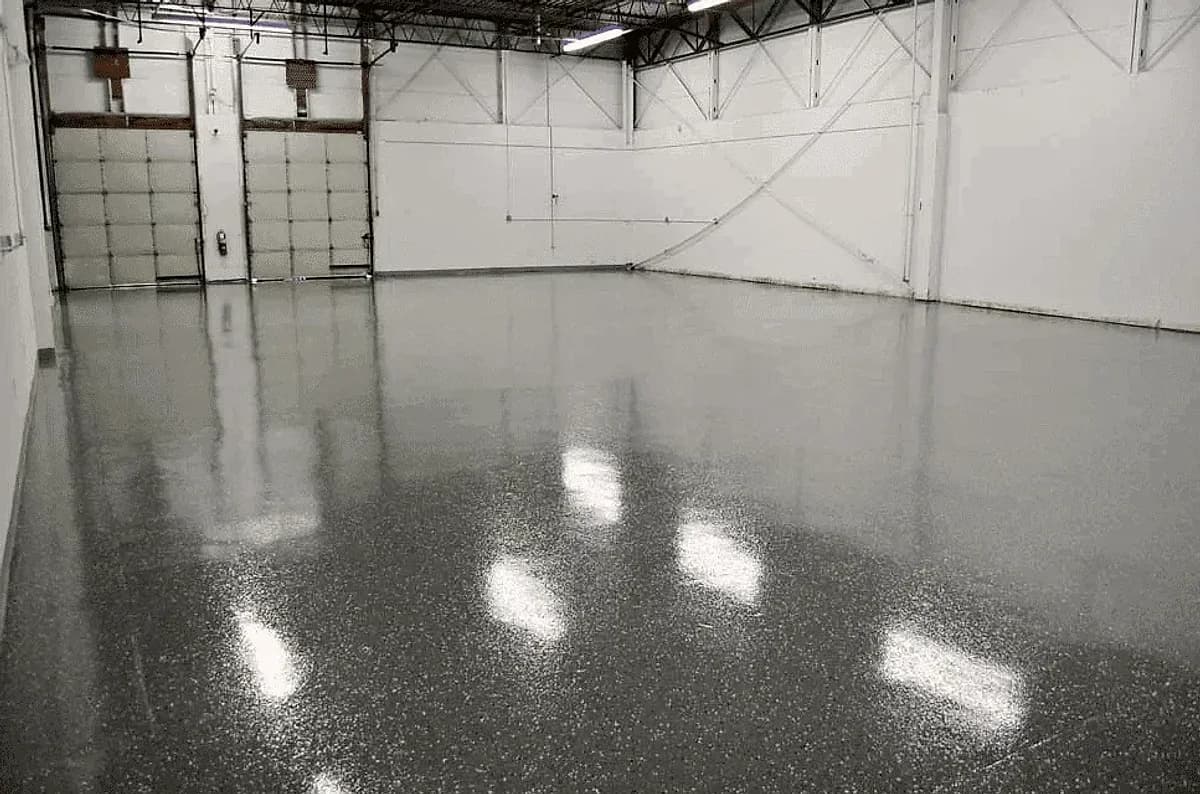
Cost & ROI10 min read
A Facility Manager's Guide to Long-Term Floor Maintenance Budgeting
A budgeting frame for the floor you already have. What to set aside each year, and which repairs beat a replacement.
Read it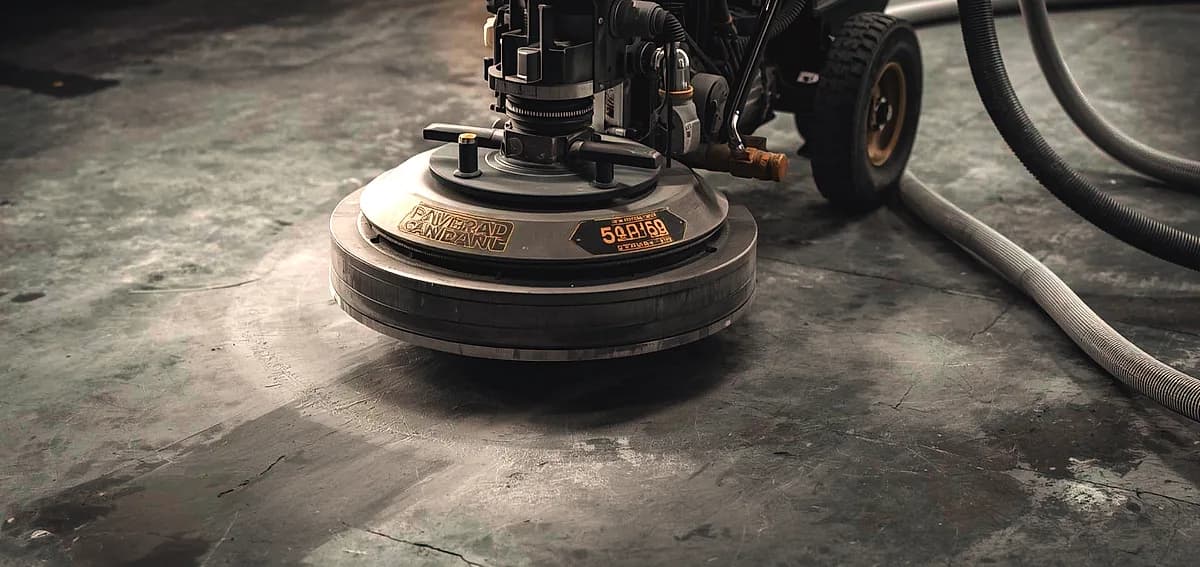
Cost & ROI7 min read
Understanding Polished Concrete Pricing in Fort Lauderdale
The average cost of professional concrete polishing in 2026 generally ranges from $3 to $12 per square foot.
Read it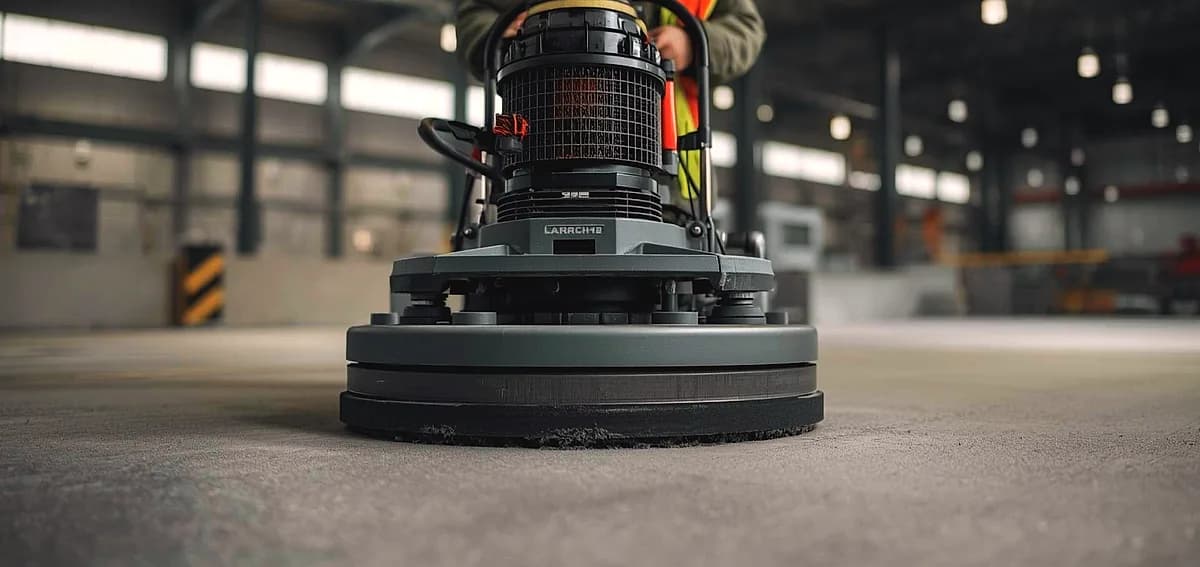
Cost & ROI7 min read
Why Polished Concrete Costs What It Does in South Florida
It is common to assume that refining an existing slab should be inexpensive because the base material is already present.
Read it
Tell us about the floor
Tell us the space and roughly how big it is.We come back with what it would cost and when we could start.
Prefer to talk? Call +1 844-876-5474
- Leads@
nationalconcretepolishing.net - 2200 NW 32nd St #600,
Pompano Beach, FL 33069 Mon to Fri, 9:00 to 5:30