
The NCP blog
Garage Epoxy Flooring That Survives Miami Heat and Humidity
Residential10 min read
This guide covers what separates garage coatings that last 15-20 years from those that fail in their first summer.
Garage epoxy flooring in Miami must withstand conditions that destroy standard coatings within months: surface temperatures exceeding 140°F from parked vehicles, 76% average humidity year-round, and moisture vapor transmission rates 40% higher than national averages. According to the International Concrete Repair Institute (ICRI), epoxy floor failures in South Florida occur at nearly triple the rate of northern installations, with hot tire pickup and delamination accounting for 78% of warranty claims.
The solution requires Miami-specific formulations, professional moisture mitigation, and installation protocols calibrated to tropical conditions. This guide covers what separates garage coatings that last 15-20 years from those that fail in their first summer.
Why Standard Epoxy Fails in Miami Garages
Big-box store epoxy kits and low-cost contractors use formulations designed for temperate climates. These products fail in Miami for three specific, predictable reasons that professional-grade systems address directly.
Hot Tire Pickup and Softening
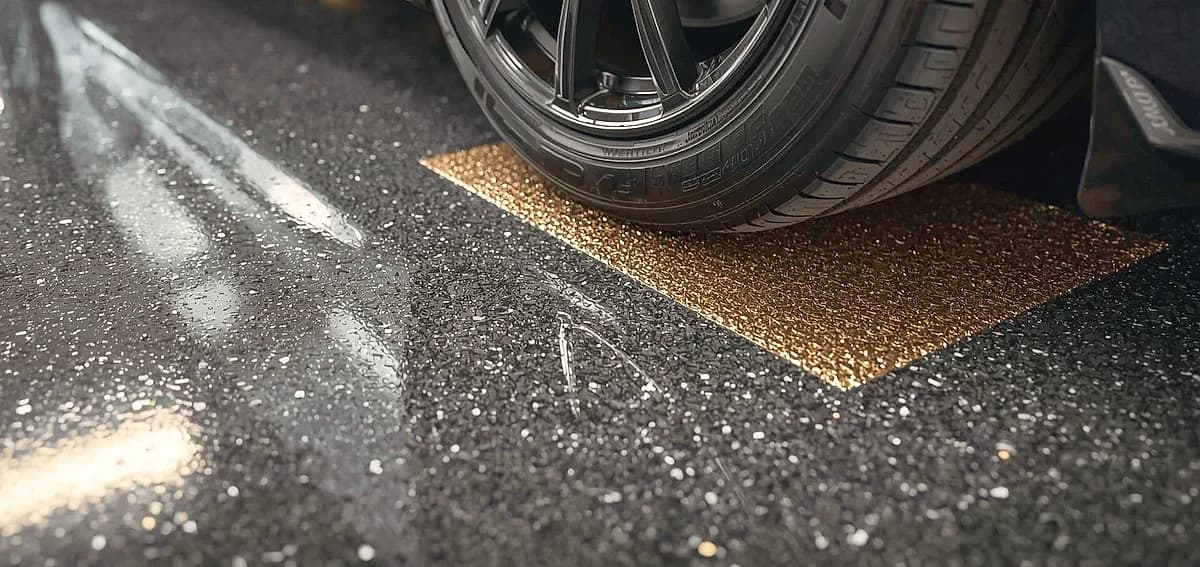
Vehicle tires reach temperatures of 150-180°F after highway driving in Miami’s summer heat. When parked on standard epoxy, these temperatures exceed the coating’s glass transition point, causing the surface to soften and bond to the tire rubber. The result is visible tire tracks, coating delamination, and premature failure.
The Portland Cement Association documents that standard epoxy formulations have glass transition temperatures (Tg) between 120-140°F. Miami garage floors regularly exceed these thresholds. Professional-grade systems use cycloaliphatic or novolac epoxies with Tg ratings above 180°F, or polyaspartic topcoats that resist thermal softening entirely.
Moisture Vapor Transmission
Miami sits on porous limestone bedrock with a high water table, creating constant upward moisture pressure through concrete slabs. ASTM F1869 testing in Miami-Dade County routinely reveals moisture vapor emission rates (MVER) of 5-8 lbs per 1,000 square feet over 24 hours. Most standard epoxies require MVER below 3 lbs.
Without proper moisture mitigation, this vapor pressure creates blisters, bubbles, and complete coating delamination. Research from the American Concrete Institute indicates that 67% of epoxy failures in Florida trace directly to inadequate moisture management.
Humidity During Installation
Epoxy curing chemistry is highly sensitive to atmospheric moisture. When relative humidity exceeds 85%, standard epoxies develop amine blush, a waxy surface film that compromises adhesion and appearance. Miami’s average humidity of 74-78% sits dangerously close to this threshold, with spikes above 90% common during summer afternoons.
Professional contractors address this through climate-controlled installation environments, humidity-aware scheduling, and formulations specifically designed for high-moisture cure conditions.
Epoxy Systems Engineered for Miami Conditions
Four coating technologies have proven effective in Miami garages, each addressing the climate challenges through different chemical approaches:
100% Solids Epoxy with Polyaspartic Topcoat
This system combines the chemical resistance and adhesion of 100% solids epoxy basecoats with the heat resistance and UV stability of polyaspartic topcoats. The polyaspartic layer has a glass transition temperature above 200°F, eliminating hot tire pickup concerns entirely.
Professional installations apply 10-12 mils of epoxy basecoat followed by 3-5 mils of polyaspartic clear coat. Total system thickness of 13-17 mils provides excellent impact resistance and longevity. Cure time is 24 hours to light foot traffic, 72 hours for vehicle traffic.
Polyurea Hybrid Systems
Polyurea coatings cure through a moisture-insensitive reaction, making them ideal for Miami’s humid conditions. These systems can be applied at humidity levels up to 95% without amine blush or curing defects. Polyurea vs epoxy comparisons show polyurea offers superior flexibility, thermal stability, and faster cure times.
The trade-off is cost: polyurea systems run 20-40% higher than comparable epoxy installations. For homeowners who need rapid turnaround or cannot control garage climate during installation, the premium is often justified.
Novolac Epoxy Systems
Originally developed for industrial chemical processing, novolac epoxies offer the highest heat and chemical resistance of any epoxy formulation. Glass transition temperatures exceed 250°F, far above any temperature Miami garage floors will encounter. These systems also resist gasoline, oil, brake fluid, and battery acid better than standard formulations.
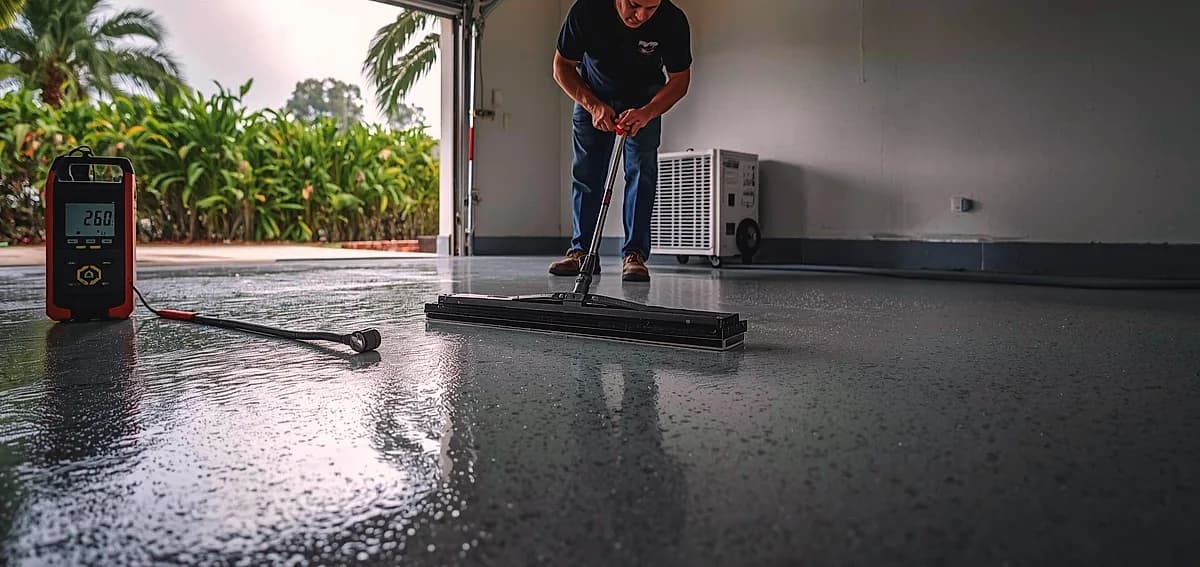
Novolac systems require precise mixing ratios and professional application equipment. They cure more slowly than standard epoxies, typically requiring 5-7 days before vehicle traffic. For luxury garage applications where ultimate durability matters more than installation speed, novolac represents the premium choice.
Metallic Epoxy Finishes
For homeowners seeking designer aesthetics, metallic epoxy creates flowing, three-dimensional patterns that transform garages into showroom-quality spaces. When formulated with high-performance resins and UV-stable topcoats, metallic systems provide the same durability as solid-color alternatives.
Application requires significant expertise. The metallic pigments must be manipulated while the epoxy remains fluid, and environmental conditions dramatically affect the final pattern. Professional metallic epoxy application in Miami demands climate control and experienced installers.
Miami Garage Epoxy Systems Comparison
The following table compares coating systems proven effective in Miami-Dade County garage applications:
| System | Cost/Sq Ft | Heat Rating | Cure Time | Lifespan | Best For |
|---|---|---|---|---|---|
| Epoxy + Polyaspartic | $7-$12 | 200°F+ | 24-72 hrs | 15-20 yrs | Most Miami garages |
| Polyurea Hybrid | $9-$14 | 220°F+ | 8-24 hrs | 15-20 yrs | Fast turnaround |
| Novolac Epoxy | $10-$16 | 250°F+ | 5-7 days | 20-25 yrs | Premium, chemical exposure |
| Metallic Epoxy | $10-$18 | 200°F+ | 3-5 days | 15-20 yrs | Designer aesthetics |
| Flake/Chip System | $6-$10 | 180°F+ | 24-48 hrs | 12-18 yrs | Budget-friendly, slip resistance |
Professional Installation Process for Miami Garages
Miami’s climate demands a more rigorous installation process than standard manufacturer guidelines. Professional contractors follow these essential steps:
Step 1: Comprehensive Moisture Testing
Before any work begins, contractors perform dual-method moisture testing using ASTM F1869 (calcium chloride) and ASTM F2170 (relative humidity probes). Miami’s variable moisture conditions require testing at multiple locations across the slab, particularly near exterior walls and plumbing penetrations where moisture accumulation is highest.
If testing reveals MVER above 3 lbs or relative humidity above 75%, moisture barriers must be installed before coating application. Skipping this step is the single most common cause of garage epoxy failure in Miami.
Step 2: Diamond Grinding Surface Preparation
Mechanical surface preparation creates the concrete surface profile required for coating adhesion. Professional contractors use planetary grinders with progressively finer diamond tooling to achieve ICRI CSP 2-3 profiles. This process also removes existing sealers, contaminants, and weak surface laitance.
Acid etching, once common, is no longer recommended for Miami installations. The process introduces additional moisture into already-challenged slabs and rarely achieves consistent profiles across entire garage floors.
Step 3: Crack and Joint Repair
Miami’s expansive soils and thermal cycling create concrete cracks that must be addressed before coating. Professional joint treatment involves routing cracks to consistent width, filling with flexible polyurea, and grinding flush with the surface. Control joints receive semi-rigid fillers that accommodate movement without telegraphing through the coating.
Step 4: Penetrating Primer Application
High-penetration epoxy primers soak into concrete pores, creating mechanical and chemical bonds that anchor the coating system. In Miami, contractors apply primers at higher coverage rates (200-250 sq ft per gallon vs. standard 300-350 sq ft) to ensure complete pore saturation.
The floor prep checklist includes verification that primers achieve full wetting without pooling. Under-application leaves weak adhesion points; over-application creates soft spots.
Step 5: Basecoat and Topcoat Application
Basecoats are applied using notched squeegees calibrated to achieve target mil thickness, then back-rolled to eliminate air bubbles. For flake systems, decorative chips are broadcast into wet coating until rejection, then excess is removed after cure.
Clear topcoats seal the system and provide UV protection. Miami installations should always specify UV-stable topcoats, as garages with windows or frequent door opening receive significant sun exposure. The epoxy thickness requirements for residential garages typically specify 12-20 mils total system thickness.
Miami Climate Considerations for Garage Epoxy
Optimal Installation Windows
Miami’s dry season (December through April) offers the most favorable installation conditions. Humidity drops to 60-70% during morning hours, and temperatures stay within the optimal 65-85°F range. Summer installations require dehumidification equipment and early morning start times to avoid afternoon humidity spikes.
The epoxy installation timeline should account for Miami’s unpredictable afternoon thunderstorms during wet season. Installers must complete coating applications before 2 PM when humidity typically exceeds 85%.
Hurricane Season Considerations
June through November brings tropical weather systems that can disrupt curing chemistry. Professional contractors monitor 5-day forecasts and avoid scheduling installations when storms approach. Post-storm installations require additional moisture testing, as flooding and elevated water tables can persist for weeks after major hurricanes.
Existing garage epoxy floors provide excellent flood resistance during storms. Properly installed systems are waterproof barriers that prevent water intrusion from below and are easily cleaned after flooding events.
Managing Substrate Temperature
Miami garage floors can reach surface temperatures of 100-120°F during summer afternoons. High substrate temperatures accelerate epoxy pot life, reduce working time, and can cause outgassing bubbles as trapped air expands through the coating.
Professional installers address this through early morning applications, pre-cooling with air conditioning, and selection of slower-curing formulations when temperature control is limited.
Common Miami Garage Epoxy Problems and Solutions
Hot Tire Pickup
Visible tire tracks and coating lift indicate insufficient heat resistance. The solution requires complete removal of the failed system and replacement with polyaspartic topcoat or higher-performance epoxy formulation. Attempting to patch over hot tire damage creates adhesion failures.
Bubbling and Delamination
Blisters, bubbles, or peeling indicate moisture vapor transmission or contaminated substrate. The repair process requires removal of all affected material, identification of moisture source, installation of moisture barriers, and re-application with proper protocols.
Yellowing and Discoloration
UV exposure causes standard epoxies to yellow over time. Miami garages with windows or frequent door opening are particularly susceptible. Prevention requires UV-stable topcoats; existing yellowed floors require full topcoat removal and replacement with aliphatic polyurethane or polyaspartic clear coats.
Amine Blush
A waxy, whitish film on cured epoxy indicates moisture contamination during cure. Mild cases can be removed with ammonia solution and light abrasion. Severe cases compromise intercoat adhesion and require complete removal and re-application.
Maintaining Garage Epoxy in Miami’s Climate
Proper maintenance extends garage epoxy lifespan and preserves appearance:
Weekly cleaning with dust mops or soft-bristle brooms removes abrasive sand and debris tracked in from Miami’s beaches and outdoor spaces. For detailed instructions, see our epoxy garage floor cleaning guide.
Monthly mopping with pH-neutral cleaners removes accumulated grime without damaging the coating surface. Avoid acidic cleaners that can dull gloss finishes.
Immediate spill cleanup prevents staining from automotive fluids. While professional epoxy resists most chemicals, prolonged exposure can cause surface discoloration.
Annual inspection identifies wear patterns, coating thinning, or early signs of moisture issues before they become major problems. Professional epoxy maintenance includes topcoat refresh every 5-7 years for high-traffic garages.
DIY vs. Professional Installation in Miami
Big-box store epoxy kits cost $100-$300 for materials covering a two-car garage. Professional installations run $1,500-$4,000 for the same space. The price difference reflects fundamental differences in materials, preparation, and outcomes:
DIY garage floor epoxy kits use water-based formulations with 40-50% solids content. This means half the applied thickness evaporates during cure, leaving thin, porous coatings vulnerable to Miami conditions. Professional systems use 100% solids formulations where applied thickness equals cured thickness.
Surface preparation makes the critical difference. DIY kits include acid etch solutions that rarely achieve consistent profiles and introduce additional moisture. Professional contractors use diamond grinding that removes contaminants and creates mechanical bonding texture uniformly across the entire floor.
Moisture mitigation is simply unavailable in DIY format. The specialized primers and moisture barriers required for Miami installations are contractor-only products that require professional application equipment.
Frequently Asked Questions
How long does garage epoxy flooring last in Miami?
Professional-grade systems with proper moisture mitigation and UV-stable topcoats last 15-20 years in Miami garages. DIY kits typically fail within 2-5 years due to hot tire pickup, delamination, or yellowing. The lifespan factors include coating quality, surface preparation, and maintenance frequency.
What causes garage epoxy to peel in Miami?
Moisture vapor transmission causes 67% of epoxy failures in Miami. Water vapor rising through concrete creates pressure that lifts coatings from the substrate. Prevention requires moisture testing before installation and moisture barriers when readings exceed acceptable limits. Other causes include inadequate surface preparation and contaminated substrates.
How much does garage epoxy flooring cost in Miami?
Professional installation runs $6-$18 per square foot depending on system selected and condition of existing concrete. A standard two-car garage (400-500 sq ft) costs $2,400-$9,000 for complete installation. Learn about pricing factors in our cost guide. Moisture mitigation adds $1.50-$3.00/sq ft when required.
Can I park on garage epoxy the same day it’s installed?
No. Most systems require 24-72 hours for light foot traffic and 5-7 days for vehicle traffic. Polyurea systems cure fastest at 8-24 hours to vehicle traffic. Parking vehicles before full cure causes permanent tire impressions and compromises coating durability. Miami’s heat and humidity can extend cure times beyond manufacturer specifications.
Is garage epoxy slippery when wet?
Smooth epoxy surfaces can become slippery when wet. Professional installations include anti-slip additives such as aluminum oxide, polymer beads, or silica sand broadcast into the topcoat. Flake systems provide inherent texture that improves traction. Slip resistance can be customized from light texture for easy cleaning to aggressive texture for commercial applications.
What’s the difference between epoxy and polyaspartic garage coatings?
Epoxy provides excellent adhesion and chemical resistance but has limited UV stability and heat resistance. Polyaspartic coatings cure faster, resist UV yellowing, and withstand higher temperatures without softening. Most Miami installations use both: epoxy basecoats for adhesion and polyaspartic topcoats for heat and UV protection.
Get Professional Garage Epoxy Flooring in Miami
National Concrete Polishing installs heat and humidity-resistant garage epoxy systems throughout Miami-Dade County. Our certified installers use commercial-grade materials specifically formulated for South Florida’s demanding climate.
Every installation includes comprehensive moisture testing, diamond grinding surface preparation, and climate-controlled application for guaranteed results. We back our work with warranties that cover hot tire pickup, delamination, and UV yellowing.
Contact our Miami team for a free consultation and estimate. We also serve Fort Lauderdale, Pompano Beach, Port St. Lucie, and all of South Florida.
Written by

Founder and CEO
Chris Lavin is an esteemed leader in concrete polishing and epoxy coatings with a distinguished 20-year career. As founder and CEO of National Concrete Polishing and owner of Xtreme Polishing Systems, he's renowned for polishing and epoxy coating more floors than anyone globally. Chris is recognized for his innovative approach and commitment to enhancing floor durability and aesthetics. His hands-on experience and technical proficiency make him a respected authority and a valuable resource in the field of floor polishing and coatings.
Same topic
Related articles
All stories
Residential8 min read
What Restaurants Need to Pass a Health Inspection Floor Check
It endures heavy foot traffic, dropped equipment, boiling water spills, and harsh degreasing chemicals daily.
Read it
Residential9 min read
How Restaurants Replace Their Floors Without Closing for Long
The average food service establishment loses approximately $3,500 in daily revenue during unexpected closures in 2026.
Read it
Residential8 min read
Where Polished Concrete Beats Epoxy in a Home (and Where It Doesn’t)
Before evaluating specific rooms, it is essential to understand how these two flooring systems function.
Read it
Tell us about the floor
Tell us the space and roughly how big it is.We come back with what it would cost and when we could start.
Prefer to talk? Call +1 844-876-5474
- Leads@
nationalconcretepolishing.net - 2200 NW 32nd St #600,
Pompano Beach, FL 33069 Mon to Fri, 9:00 to 5:30