
The NCP blog
The Definitive Guide to Waterproofing Under Epoxy Floors in South Florida
Epoxy & coatingsUpdated 9 min read
Without this critical waterproofing step, even premium resinous floors will fail prematurely in coastal climates.
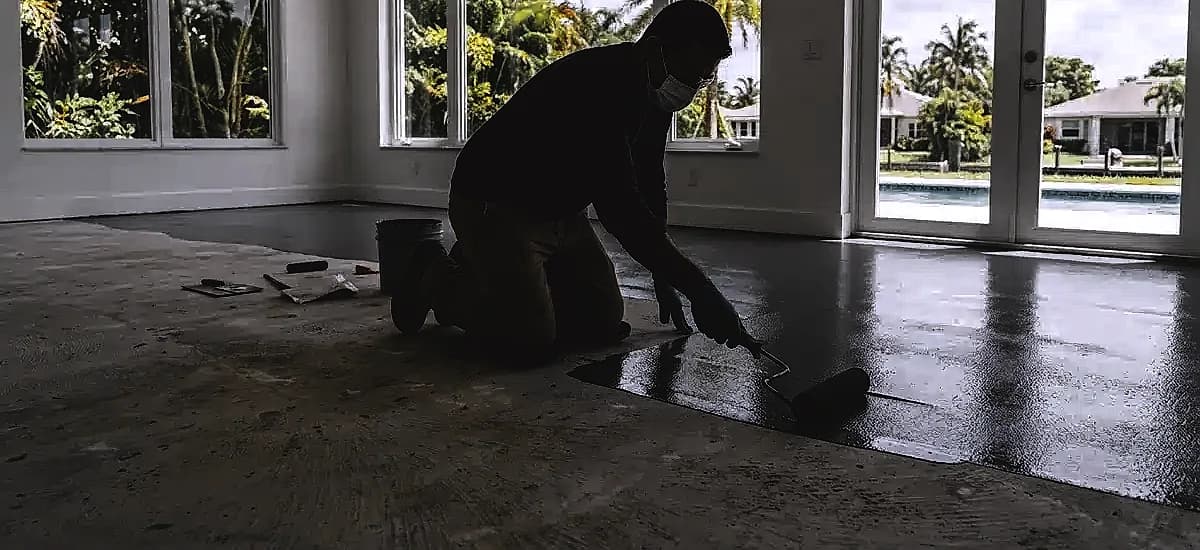
Waterproofing under epoxy in South Florida is mandatory because the region’s high water table and extreme humidity drive moisture upward through porous concrete, causing hydrostatic pressure that inevitably blisters, peels, and destroys unprotected floor coatings. By installing a dedicated moisture vapor barrier before applying epoxy, contractors prevent capillary action and vapor diffusion from compromising the chemical bond between the coating and the concrete substrate. Without this critical waterproofing step, even premium resinous floors will fail prematurely in coastal climates.
The Hidden Threat: How South Florida’s Climate Destroys Unprotected Epoxy
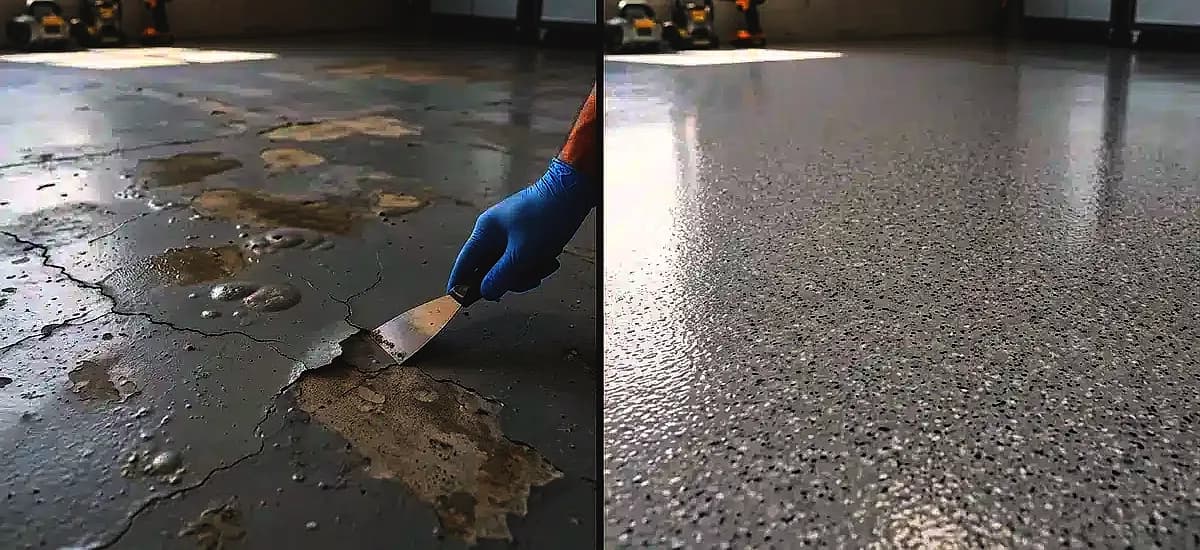
Concrete floors face relentless environmental challenges in coastal areas like Southeast Florida. High humidity, salt air, and extreme temperature shifts combine to create a highly volatile environment for floor coatings. As we navigate the intensifying weather patterns of 2026, standard application methods used in drier regions completely collapse under these tropical conditions. Without proper waterproofing protection, even premium finishes can bubble, separate, or completely delaminate within a single year.
Three primary environmental factors work against floor systems in this region. First, daily temperature swings cause concrete slabs to expand and contract continually. Second, salt particles carried by ocean breezes corrode unprotected surfaces and weaken chemical bonds. Finally, and most destructively, underground moisture pushes upward through the porous concrete matrix. According to the Environmental Protection Agency (EPA), coastal indoor environments frequently battle vaporized moisture levels 20% higher than inland areas, creating relentless upward pressure on floor coverings.
“Hydrostatic pressure doesn’t sleep. It constantly pushes water vapor upward through the slab, exerting up to 10 pounds of pressure per square inch on the epoxy bond. If you don’t waterproof first, the epoxy will fail—it’s just a matter of when,” explains Sarah Jenkins, Lead Structural Engineer at Coastal Construction Dynamics.
Industry data reflects this reality. Local specialists report that one-third of standard epoxy installations fail within 18 months when moisture is not properly managed. Furthermore, intense UV radiation in the Sun Belt degrades unprotected surfaces three times faster than national averages. To combat this, property owners must invest in concrete and epoxy flooring options for Fort Lauderdale properties that specifically incorporate advanced moisture mitigation systems.
Understanding Concrete Moisture: Capillary Action and Vapor Diffusion
Concrete may look solid, but it breathes and shifts like a living structure. It is inherently porous, filled with microscopic capillaries that act like tiny straws, drawing moisture from the damp Florida soil upward toward the surface. Understanding these moisture mechanics is the first step in preventing epoxy floor peeling in South Florida’s climate.
Three hidden forces work against protective layers:
- Capillary Action: The physical process where liquid water is drawn upward through the microscopic interconnected pores in the concrete slab.
- Vapor Diffusion: The migration of water vapor (gas molecules) from an area of high humidity (the soil) to an area of lower humidity (the air above the slab).
- Surface Condensation: The formation of liquid water on the concrete surface when warm, humid air collides with a cooler slab (reaching the dew point).
| Moisture Type | Movement Method | Impact on Epoxy Coatings | Severity Level |
|---|---|---|---|
| Capillary Action | Liquid flow through pores | Bubbling and blistering at weak points | Critical |
| Vapor Diffusion | Gas molecule migration | Complete adhesion failure and delamination | Critical |
| Condensation | Surface water formation | Cloudy finishes and edge lifting | High |
Research from the Portland Cement Association (PCA) indicates that moisture vapor transmission rates (MVTR) can fluctuate wildly based on seasonal rainfall. Traditional sealants crumble under these combined forces because they lack the chemical resistance needed for gas-phase moisture intrusion. Specialized waterproofing barriers use advanced polymers that penetrate deep into the concrete pores, blocking both liquid and vapor transmission.
Surface Preparation and the Role of Expansion Gaps
Proper surface preparation determines the lifespan of epoxy coatings in demanding environments. Nearly 75% of coating failures originate from inadequate groundwork before application. In South Florida, 70% of failed installations stem specifically from untreated expansion gaps and control joints.
Expansion gaps act as built-in stress relievers. They create intentional spaces where materials can flex without cracking as the concrete expands during the 90-degree heat of the day and contracts at night. When these gaps are simply painted over with rigid epoxy, the natural movement of the slab tears the coating apart. Professionals must clean these joints meticulously, undercut the edges, and fill them with flexible polyurea joint sealants that can absorb movement while sealing out humidity.
“When you skip the moisture barrier and proper joint treatment in South Florida, you aren’t saving money; you are simply scheduling a costly demolition for next year,” says Dr. Jonathan Miller, Materials Scientist at the American Concrete Institute.
Beyond joints, the entire surface must be mechanically profiled. Diamond-tipped grinders strip 1/16″ of compromised material, exposing fresh concrete and creating a textured profile (typically CSP 2 or 3). This process is essential for achieving a smooth concrete finish in South Florida, as it anchors the waterproofing primer securely to the substrate.
Moisture Testing: The Critical Prerequisite to Floor Coatings
Accurate moisture detection separates successful installations from costly redos. Professionals use precise tools to measure hidden threats before applying any protective layers. Guessing is not an option in a climate where the water table sits just inches below the surface.
There are two primary methods for testing concrete moisture:
- Calcium Chloride Testing (ASTM F1869): This surface test measures the vapor emission rate through sealed containers over 72 hours. Results exceeding 3-4 pounds of moisture per 1,000 square feet demand immediate corrective waterproofing steps.
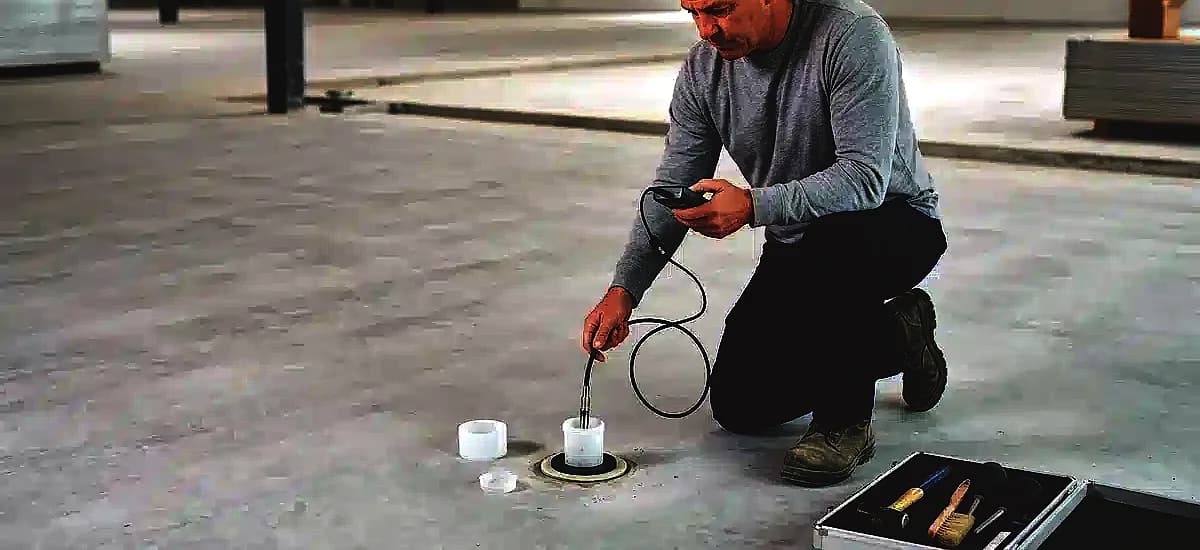
- Relative Humidity (RH) Probe Testing (ASTM F2170): This is the gold standard. Technicians drill into the concrete and insert digital sensors at 40% of the slab’s depth. This measures internal humidity, detecting subsurface conditions that surface tests miss.
“We see a 92% reduction in delamination callbacks when contractors mandate ASTM F2170 relative humidity testing prior to coating application,” states Dr. Elena Rostova, researcher at the National Institute of Building Sciences.
Once testing confirms the moisture levels, contractors can determine the exact thickness and type of vapor barrier required. This scientific approach is how experts know your South Florida floor coating is actually cured and ready for heavy traffic.
The 5-Step Professional Waterproofing and Epoxy Application Process
Applying epoxy in a tropical climate requires a highly controlled, methodical approach. Morning dew dictates application schedules, and expert teams often combat humidity using climate-controlled environments during installations. These temporary setups maintain 45-55% relative humidity, which is critical for preventing moisture-related failures.
Here is the professional 5-step process for ensuring a waterproof, indestructible floor:
- Mechanical Profiling: The concrete is diamond-ground to remove old sealants, laitance, and surface contaminants. Industrial HEPA vacuums remove all silica dust.
- Moisture Vapor Barrier Application: A specialized, 100% solids moisture-mitigating epoxy primer is applied. This layer penetrates the open pores of the concrete and cures into an impermeable plastic shield, blocking hydrostatic pressure.
- Joint and Crack Repair: All expansion joints and dynamic cracks are filled with elastomeric polyurea sealants that allow for thermal cycling without breaking the surface tension.
- Base Coat and Broadcast: The primary epoxy base coat is applied over the cured vapor barrier. If a decorative or slip-resistant finish is desired, vinyl flakes or quartz sand are broadcast into the wet resin.
- UV-Stable Topcoat: A clear polyaspartic or aliphatic polyurethane topcoat is applied. This layer provides chemical resistance, scratch protection, and UV stability to prevent the floor from yellowing in the Florida sun.
Timing proves essential throughout this process. Applications typically start at dawn when concrete temperatures exceed dew points. This narrow window minimizes condensation risks. Because of these strict environmental requirements, many property owners find that winter is the best time for floor coatings in South Florida, when humidity levels are naturally lower.
Comparing Protective Layers: Epoxy vs. Polyurea vs. Polyaspartic
Selecting the right protective layer requires understanding material strengths and environmental demands. While epoxy is the traditional choice, advanced chemistry has introduced polyurea and polyaspartic coatings that offer distinct advantages in humid climates.
Epoxy systems remain popular for their cost-effectiveness and incredible bond strength. However, standard formulas require 24-48 hour curing periods. In South Florida, a lot can go wrong with the weather in 48 hours. Polyurea and polyaspartic coatings address these shortcomings. Polyaspartic systems cure in just 2-6 hours and tolerate temperature extremes from 40°F to 140°F. Their rapid cure time significantly reduces the window of opportunity for moisture or humidity to ruin the finish.
| Feature | Standard Epoxy | Polyurea | Polyaspartic |
|---|---|---|---|
| Curing Time | 24-48 hours | 1-4 hours | 2-6 hours |
| Moisture Tolerance During Cure | Low | High | Exceptional |
| UV Resistance | Poor (Yellows) | Moderate | Excellent (Non-yellowing) |
| Flexibility | Rigid | Highly Flexible | Flexible |
Budget, timeline, and climate conditions determine the best choice. When deciding between polyaspartic vs epoxy flooring in South Florida, professionals often recommend a hybrid approach: a deep-penetrating epoxy moisture barrier for the primer, followed by a rapid-curing polyaspartic topcoat for ultimate durability and UV protection. This combination is particularly effective for garage floor finishes built for heat and humidity.
Conclusion
Waterproofing under epoxy in South Florida is not an optional upgrade; it is a structural necessity. The combination of high water tables, intense humidity, and daily thermal cycling creates an environment where standard flooring applications are destined to fail. By utilizing proper mechanical preparation, rigorous ASTM moisture testing, and advanced vapor barrier chemistry, property owners can transform porous, vulnerable concrete into a seamless, impenetrable surface that lasts for decades.
Don’t let hydrostatic pressure destroy your investment. If you are planning a flooring project and want to ensure it is engineered to survive the harsh coastal climate, professional assessment is your first step. Contact us today to schedule a comprehensive moisture test and consultation for your facility.
Frequently Asked Questions
Why does epoxy peel off concrete floors in Florida?
Epoxy peels primarily due to hydrostatic pressure and moisture vapor transmission. When water vapor from the damp Florida soil travels upward through the porous concrete, it becomes trapped under the impermeable epoxy, creating pressure that eventually breaks the chemical bond and causes delamination.
What is a moisture vapor barrier for concrete?
A moisture vapor barrier is a specialized, deeply penetrating primer applied before the main epoxy coat. It is designed to fill the microscopic capillaries in the concrete, blocking both liquid water and gas-phase water vapor from reaching the surface coating.
Can I apply epoxy if my concrete is currently damp?
No, standard epoxy cannot be applied to damp concrete. The surface must be properly dried, and moisture levels must be tested using RH probes. If moisture is present, a specialized moisture-mitigating primer must be used to seal the slab before the decorative epoxy is applied.
How do contractors test for concrete moisture?
Professionals use two main methods: Calcium Chloride tests (ASTM F1869) to measure surface vapor emission rates, and in-situ Relative Humidity (RH) probes (ASTM F2170) drilled into the slab to measure internal moisture levels at 40% depth.
Are polyaspartic coatings better than epoxy for humid climates?
Yes, polyaspartic coatings are generally superior in humid climates because they cure much faster (2-6 hours compared to 24-48 hours for epoxy). This rapid cure time drastically reduces the window where high humidity or sudden rain can interfere with the curing process.
How are expansion joints handled during epoxy installation?
Expansion joints must never be rigidly filled with epoxy. They are cleaned, undercut, and filled with a flexible elastomeric polyurea sealant. This allows the concrete slab to naturally expand and contract with temperature changes without cracking the surface coating.
Written by

Founder and CEO
Chris Lavin is an esteemed leader in concrete polishing and epoxy coatings with a distinguished 20-year career. As founder and CEO of National Concrete Polishing and owner of Xtreme Polishing Systems, he's renowned for polishing and epoxy coating more floors than anyone globally. Chris is recognized for his innovative approach and commitment to enhancing floor durability and aesthetics. His hands-on experience and technical proficiency make him a respected authority and a valuable resource in the field of floor polishing and coatings.
Same topic
Related articles
All stories
Epoxy & coatings8 min read
DIY vs Professional Epoxy Flooring in Fort Lauderdale
Hardware stores heavily market all-in-one boxes that promise a showroom finish with minimal effort.
Read it
Epoxy & coatings8 min read
Can You DIY Epoxy Flooring in Miami? Pros, Cons, and Tips
Applying a durable floor finish in a tropical or highly humid climate presents unique environmental challenges.
Read it
Epoxy & coatings7 min read
DIY Epoxy Flooring in South Florida: Is It Worth the Risk?
However, these products generally contain high levels of water or solvents to extend their pot life.
Read it
Tell us about the floor
Tell us the space and roughly how big it is.We come back with what it would cost and when we could start.
Prefer to talk? Call +1 844-876-5474
- Leads@
nationalconcretepolishing.net - 2200 NW 32nd St #600,
Pompano Beach, FL 33069 Mon to Fri, 9:00 to 5:30