
The NCP blog
How to Write Concrete Polishing Specifications for Contractors
Polished concrete10 min read
Clear concrete polishing specifications make sure contractors deliver the finish, durability, and appearance you expect.
Writing comprehensive concrete polishing specifications helps contractors deliver the finish and durability you expect for your South Florida project. Proper specifications prevent costly misunderstandings, establish clear performance standards, and protect your investment in polished concrete flooring. Whether you’re planning a commercial warehouse, retail space, or office building in Pompano Beach, detailed concrete polishing specifications guide contractors through every phase from concrete placement to final finish. National Concrete Polishing has polished concrete floors in South Florida since 2013.
Overview
This comprehensive guide walks you through creating professional-grade concrete polishing specifications that contractors can follow with confidence. You’ll learn essential elements including concrete mix design requirements, surface preparation standards, grinding and polishing sequences, chemical treatment specifications, and quality control measures. We’ll cover CSI format specifications, aggregate exposure classifications, gloss level definitions, and Florida-specific considerations for humidity and climate control.
Understanding Specification Components
Comprehensive concrete polishing specifications must address both the initial concrete slab installation and the subsequent polishing process. These two interconnected phases directly impact final floor quality and appearance. Specifications should clearly delineate responsibilities between the concrete placement contractor and the polishing contractor to avoid gaps in accountability.
Standard CSI format specifications follow Division 03 for concrete work. For the polished finish, the architect or engineer can cite ACI SPEC-310.1 in the project specifications; it is a reference specification for polished concrete slab finishes. This structure provides familiar organization for contractors and ensures all necessary elements are addressed systematically.
Concrete Mix Design Requirements
The concrete mix directly determines polishing outcomes, making mix design specifications critical for success. Normalweight, non-air-entrained concrete with a minimum compressive strength of 3,500 psi is often specified, and a well-proportioned mixture of 3,500 to 4,000 psi is more than sufficient, especially when polishing starts at least 28 days after placement. Higher strengths are not better: concrete specified above 6,000 psi has been so dense that it was hard to cut. Include requirements for aggregate type and size distribution. ACI 310.1 also asks for a Mohs hardness greater than 4 on the slab surface before polishing, as the Concrete Polishing Council quotes.
Portland cement content affects color consistency and polishing results throughout the slab. Some specifications restrict supplementary cementitious materials like fly ash or slag cement to specific percentages to control coloration. Concrete Decor puts the ideal water-cement ratio for polishing between 0.45 and 0.50: near 0.40 the slab may be too hard or unevenly troweled, and above 0.50 the concrete turns soft and abrasive. Agree the limit with the concrete producer.
Aggregate specifications must define both coarse and fine aggregate characteristics for desired aesthetic outcomes. Projects requiring exposed aggregate should specify aggregate color, size range, and percentage composition.
Surface Preparation Standards
Floor flatness (FF) and floor levelness (FL) numbers are fundamental specifications that impact polishing quality and cost. Common specification requirements for flatness before polishing are FF 40 for overall flatness and FL 20 for local flatness, measured to ASTM E1155. Some specifiers ask for FF 50 on the theory that flatter floors need less grinding, but that may simply move cost from the polishing contractor to the concrete contractor.
Specify concrete curing methods: most specifications allow membrane-forming curing compounds (ASTM C309), sheet-membrane curing (ASTM C171) or damp curing for 7 days, and Harris notes that acrylic curing and sealing compounds are not recommended. Curing compounds must be compatible with polishing or completely removed before work begins. Coordinate with the polishing contractor to ensure approved curing agents won’t interfere with densifier penetration.
Surface must be free of coatings, sealers, adhesives, and contaminants before polishing operations commence. Proper surface preparation prevents bonding issues and ensures uniform chemical penetration during treatment phases.
Aggregate Exposure Classifications
Industry-standard aggregate exposure classifications provide precise communication about desired finish appearance. The Concrete Polishing Council defines exposure levels from Class A (minimal exposure, cream finish) through Class C (full aggregate exposure). Specify the exact classification to eliminate ambiguity about final appearance.
Class A shows minimal aggregate with primarily cement paste visible, creating a smooth, refined look. Class B (salt and pepper) shows 85 to 95% fine aggregate, and Class C (full aggregate exposure) shows 80 to 90% full aggregate, according to the Concrete Polishing Council’s chart. The chart calls the percentages only a guide, measured in a randomly placed 10 by 10 foot square.
Each exposure level requires different grinding depths and equipment, directly affecting project costs and timelines. Include mockup requirements showing approved aggregate exposure before full-scale polishing begins.
Gloss Level Specifications
Gloss level determines light reflectivity and overall aesthetic character of polished concrete floors. Specify measurable gloss readings using standardized gloss meters rather than subjective terms like “high gloss”. The Concrete Polishing Council’s appearance chart defines four levels: exposed/flat (level 1), exposed/satin (level 2), polished (level 3) and highly polished (level 4).
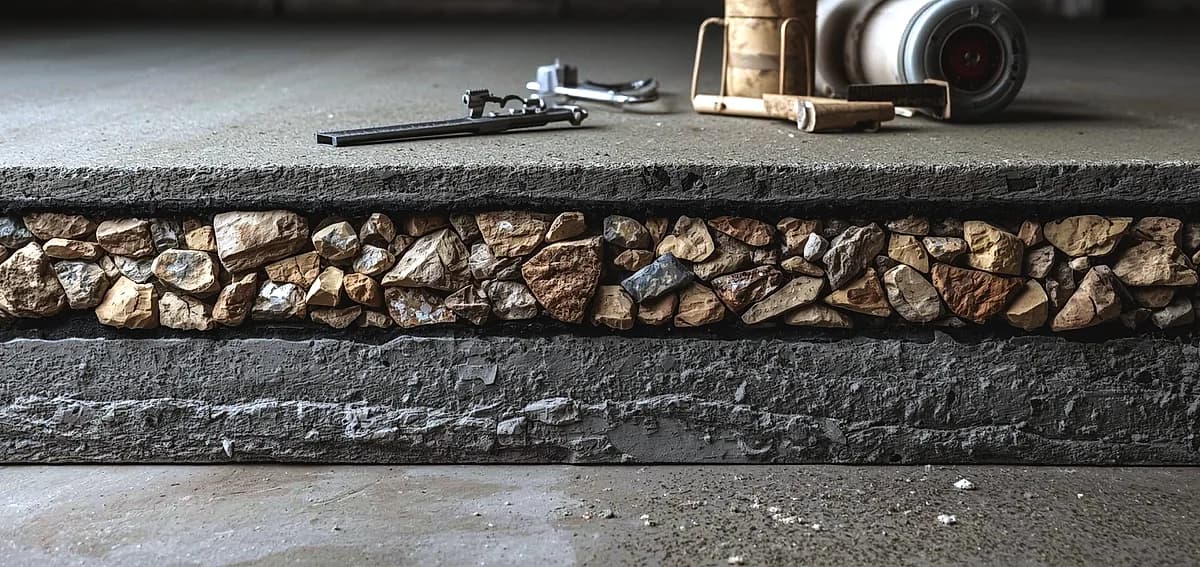
The chart gives average distinctness-of-image (DOI) values of 0 to 9 for level 1, 10 to 39 for level 2, 40 to 69 for level 3 and above 70 for level 4, with optional average gloss values of below 10, 5 to 25, above 35 and above 50, and a haze value below 12. Specify the level for each area and the number of tests: the chart asks for at least three tests on areas up to 1,000 square feet and one more for each additional 1,000 square feet.
Higher gloss levels require finer diamond grit progressions, extending project duration and cost. Diamond grit sequences follow stages the Concrete Polishing Council defines by grit: grinding at 100 grit or lower, honing from 100 to 400 grit, and polishing at 800 grit or higher.
Chemical Treatment Products
Densifiers and hardeners react with calcium hydroxide near the concrete surface to increase its hardness, and the Concrete Polishing Council notes that their effectiveness is limited by carbonation or pozzolanic reactions. Specify the type of silicate densifier (lithium, sodium or potassium) and take the coverage rate from the product data sheet. One lithium silicate data sheet, for example, lists 800 to 1,000 square feet per gallon on freshly placed, uncured, steel-troweled concrete and 500 to 800 on ground or polished concrete, and says to set the target rate by testing a representative section. A peer-reviewed study lists lower alkalinity and higher water resistance among the main advantages of lithium densifiers.
Chemical specifications should include manufacturer approval requirements, application methods, coverage rates, and dwell times. Some projects require specific brands while others allow approved equals meeting performance criteria. Include requirements for safety data sheets and VOC compliance for all chemical products.
If colored finishes are desired, specify approved concrete dyes or stains with application timing, coverage rates, and post-color polishing procedures. Color consistency requirements should address acceptable variation across the finished floor surface.
Diamond Grinding Sequence
The grinding and polishing sequence directly impacts final appearance, so the specification has to deal with it. Harris, writing in Concrete International, advises that it is not appropriate for the engineer or architect to specify the steps to be used in grinding and polishing floors, because the polishing contractor knows the means and methods best. Specify the result instead (aggregate exposure class, appearance level, flatness) and ask the contractor to submit its sequence for review. As an example, the traditional sequence Harris describes starts with 40 grit metal-matrix segments, then 80 and 150 grit, with a hardening silicate applied after the 80 or 150 grit pass; he adds that in current practice it is sometimes possible to polish with resin-matrix pads only.
Each grinding step removes scratches from the previous grit while exposing aggregate to the specified level. Metal-bond tooling is typically used in the grinding and early honing stages, and resin-bond tooling in the later honing and polishing stages. Specify wet or dry grinding methods based on project requirements: dry methods reduce cleanup but require dust control systems.
Include requirements for dust control measures during all grinding operations to maintain air quality and protect adjacent spaces. HEPA-filtered vacuum systems should be mandatory for occupied buildings.
Pre-Construction Requirements
Mandatory pre-construction meetings align all parties on expectations, timelines, and quality standards. Schedule one meeting before concrete placement and another before polishing operations begin. Attendees should include the architect, general contractor, concrete placement contractor, and polishing contractor.
Meeting agendas must cover concrete mix design review, curing methods, joint treatment procedures, embedded items coordination, and protection measures. Document all decisions and distribute meeting minutes to all parties. Address potential issues like concrete carbonation that could affect polishing outcomes.
Ask the polishing contractor to document completed projects similar to yours through portfolio review. Request references for comparable installations and site visits to completed projects when possible.
Mock-Up Sample Requirements
Mock-up samples provide tangible approval criteria before full-scale work proceeds. The Concrete Polishing Council’s aggregate exposure chart says a representative mock-up should always be provided for approval. Make it large enough to judge each specified color and finish, put it where other flooring will cover it, and place it under the same conditions, preferably in the same pour, as the floors receiving polish.
Perform complete grinding, honing, and polishing on mock-ups using the same personnel, equipment, and materials specified for the project. Evaluate samples for aggregate exposure consistency, color uniformity, gloss level, and freedom from scratches or surface defects. Approved mock-ups become the quality standard for the entire project.
Specify written approval process and timeline for mock-up evaluation. Rejected samples require corrective action and new mock-ups before project work can commence.
Floor Flatness and Finishing
Floor flatness specifications directly correlate with polishing quality and cost efficiency. Require hard-steel-troweled finish to a flat, smooth surface meeting specified FF/FL numbers. The theory is that higher flatness numbers reduce grinding time and give more uniform light reflection across the finished floor.
Specify acceptable joint spacing, joint treatment methods, and control joint filler materials. Sawcut joints should be filled with two-part epoxy or polyurea products color-matched to the polished concrete. Joint spacing affects appearance and should be addressed in specifications.
Surface finishing techniques impact final polish quality: many hard-trowel passes may increase surface hardness, which affects how much aggregate can be exposed, while under-finishing leaves weak surfaces prone to dusting. Coordinate finishing procedures with the polishing contractor to optimize outcomes.
Quality Control Standards
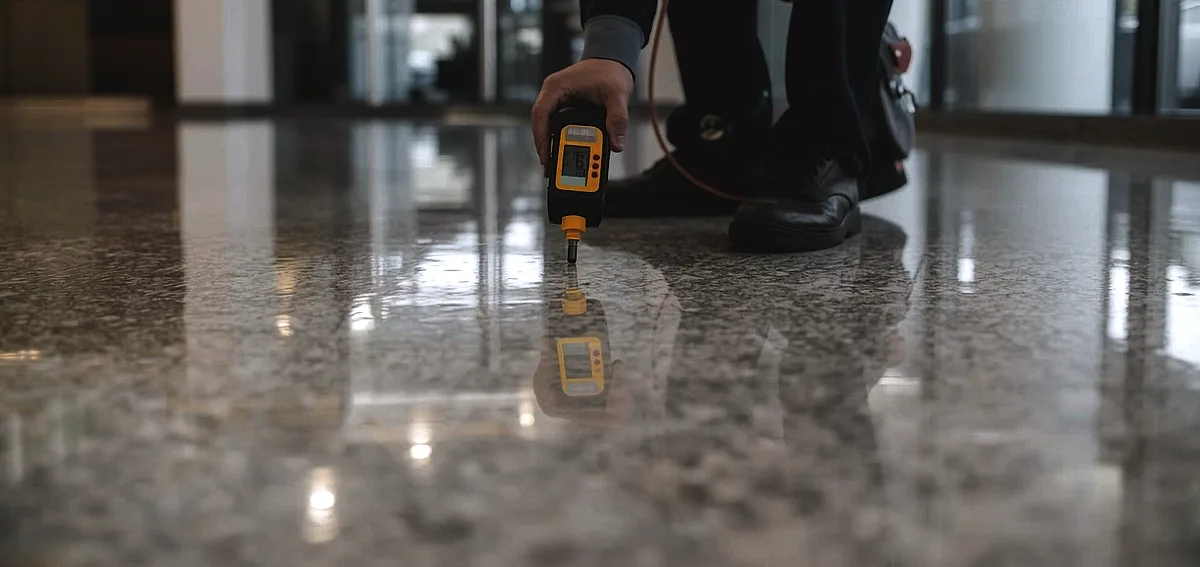
Establish measurable acceptance criteria for each specification element to enable objective quality assessment. Testing standards should include gloss meter readings at specified intervals, Mohs scale hardness testing, visual consistency evaluation, and scratch-free surface inspection. Define acceptable tolerance ranges for gloss variation, color consistency, and aggregate exposure uniformity.
Require concrete moisture testing before polishing begins, especially critical in Florida’s humid climate. Specify acceptable moisture vapor emission rates and relative humidity levels within the slab. Excess moisture causes densifier application issues and long-term performance problems.
Document all quality control testing results and maintain records throughout the project. Address non-conforming work procedures including notification, corrective action timelines, and re-testing requirements.
Protection and Maintenance Requirements
Specify protection measures for polished floors during remaining construction activities. Require floor protection boards, construction barriers, and restricted access until substantial completion. Address responsibility for damage repair and associated costs if protection fails.
Include maintenance program specifications informing owners of proper care procedures. Avoid cleaners that are highly alkaline or acidic, which will quickly dull a polished floor, and specify neutral-pH products for routine cleaning. Recommend white or red cleaning pads and soft brushes rather than abrasive equipment.
Provide maintenance guidelines covering proper cleaning methods, recommended cleaning products, and periodic re-densification schedules to maintain appearance and performance. Long-term maintenance programs matter because, as Harris notes, polished floors are not maintenance-free: floors that are not properly maintained eventually lose their shine.
Florida Climate Considerations
South Florida’s humidity and temperature require special specification attention for successful polishing outcomes. Address climate control requirements during grinding and chemical application phases, specifying acceptable temperature and humidity ranges. Florida humidity impacts densifier application and curing times.
Specify dehumidification equipment and HVAC operation requirements during sensitive work phases. Moisture barriers beneath slabs may be necessary for ground-level installations to prevent vapor transmission issues. Coordinate with mechanical contractors to ensure adequate environmental controls throughout the project.
Include provisions for seasonal scheduling considerations, potentially avoiding Florida’s wettest months for moisture-sensitive operations. Building temperature impacts should be factored into specifications for year-round comfort and performance.
Submittal Requirements
Require comprehensive submittal packages before work begins, including product data sheets for all chemicals and materials. Contractors should submit concrete mix designs with cylinder break certifications before placement, and all submittals go to the architect for review and approval.
Ask the contractor to submit its diamond tooling and sequence for review, rather than dictating bond types, grit sizes and steps in the specification. Request manufacturer literature, safety data sheets, and application instructions for all liquid-applied products. Substitution policies should be clearly stated, and many specifications prohibit substitutions to keep quality consistent.
Sample boards showing proposed aggregate exposure and gloss levels help verify contractor understanding before mock-up installation. Require written approval of all submittals before ordering materials or beginning work.
Contractor Qualifications
Specify minimum contractor experience levels to ensure capable project execution. Require polishing contractors to provide portfolio documentation of similar completed projects. Request references from recent projects of comparable size and complexity for verification.
Certification can give additional assurance. The Concrete Polishing Council, which absorbed the Concrete Polishing Association of America, certifies polishers: a CPC Craftsman has verified work experience of 4,500 hours. Specify crew qualifications including lead technician experience and equipment operator certifications. Address subcontractor restrictions if direct contractor performance is required.
Rather than naming equipment, ask contractors to describe the machines and tooling they will use, and judge whether they fit the floor size and finish for professional polishing.
Frequently Asked Questions
What are concrete polishing specifications?
Concrete polishing specifications are detailed technical documents that define concrete mix requirements, surface preparation standards, grinding sequences, chemical treatments, and quality criteria contractors must follow.
Why do I need written polishing specifications?
Written specifications prevent contractor disputes, establish clear quality expectations, help keep results consistent, and protect your investment by defining measurable acceptance criteria.
What is aggregate exposure classification?
Aggregate exposure classifications (Class A through C) define how much stone aggregate is revealed during polishing, from minimal exposure to maximum coarse aggregate visibility.
How do I specify gloss levels for polished concrete?
Specify a level from the Concrete Polishing Council’s appearance chart, which gives average distinctness-of-image values of 0 to 9, 10 to 39, 40 to 69 and above 70 for its four levels, rather than subjective terms.
What FF/FL numbers should I specify?
Common specification requirements are FF 40 overall and FL 20 local, and Harris cautions that requiring FF 50 may only move cost from the polishing contractor to the concrete contractor.
How long should concrete cure before polishing?
Polishing should wait until the slab has cured, and the curing method matters too. Harris notes that a 3,500 to 4,000 psi mixture is more than sufficient, especially when polishing starts at least 28 days after placement.
What chemical treatments should I specify?
Specify the densifier type with manufacturer approval requirements, application methods and performance criteria, and take coverage rates from the product data sheet. Coverage differs by surface: one lithium silicate data sheet lists 500 to 800 square feet per gallon on ground or polished concrete.
Do I need a pre-construction meeting?
Yes. Hold one before concrete placement and one before polishing begins so that all parties align on expectations.
What should mock-up specifications include?
Require a representative mock-up for each finish type, placed under the same conditions as the production floors, with complete grinding and polishing using project-specified materials and methods.
How do Florida’s conditions affect specifications?
Florida’s humidity requires moisture testing, climate control during application, dehumidification equipment, and consideration of seasonal scheduling for optimal results.
Conclusion
Comprehensive concrete polishing specifications form the foundation of successful projects by establishing clear expectations, measurable standards, and accountability for all parties involved. Well-written specifications address concrete mix design, surface preparation, grinding sequences, chemical treatments, quality control, and Florida-specific climate considerations that help the floor look and perform as intended. From defining aggregate exposure classifications to specifying gloss meter readings and FF/FL requirements, every detail contributes to achieving your vision while protecting your investment.
National Concrete Polishing has been in business since 2013 and polishes concrete floors across South Florida. Contact us today to discuss your project requirements and discover how proper specifications combined with expert installation deliver polished concrete floors that meet the specification.
Written by

Founder and CEO
Chris Lavin is an esteemed leader in concrete polishing and epoxy coatings with a distinguished 20-year career. As founder and CEO of National Concrete Polishing and owner of Xtreme Polishing Systems, he's renowned for polishing and epoxy coating more floors than anyone globally. Chris is recognized for his innovative approach and commitment to enhancing floor durability and aesthetics. His hands-on experience and technical proficiency make him a respected authority and a valuable resource in the field of floor polishing and coatings.
Same topic
Related articles
All stories
Residential7 min read
Polished Concrete Garage Floor vs Epoxy: Pros and Cons
This process smooths the surface, and a densifier hardens it, so polished concrete is used in high-traffic areas.
Read it
Polished concrete11 min read
Can You Polish Old Concrete? Transform Your Floors Today
Old concrete floors often hide tremendous potential beneath their weathered, dull surfaces.
Read it
Cost & ROI11 min read
How Much Does It Cost To Polish Concrete Floors?
Choosing polished concrete flooring for your residential or commercial space is a no-brainer these days.
Read it
Tell us about the floor
Tell us the space and roughly how big it is.We come back with what it would cost and when we could start.
Prefer to talk? Call +1 844-876-5474
- Leads@
nationalconcretepolishing.net - 2200 NW 32nd St #600,
Pompano Beach, FL 33069 Mon to Fri, 9:00 to 5:30