

The NCP blog
Why Concrete Floor Flatness Affects Your Polishing Results
Polished concrete5 min read
Over 60% of polished surface issues trace back to uneven slabs most contractors never measured.
Over 60% of polished surface issues trace back to uneven slabs most contractors never measured. Floor flatness (FF) ratings determine how light reflects off finished surfaces and whether aggregate exposure appears consistent. Without proper FF evaluation upfront, you risk delivering results that fall short of client expectations.
Architects use FF/FL numbers to ensure slabs meet specifications during placement. While levelness matters for structural purposes, flatness dictates polishing outcomes. Grinding equipment can adjust for minor elevation differences, but uneven surfaces leave permanent visual flaws no amount of buffing can fix.
National Concrete Polishing teams often encounter slabs where low FF scores created unpredictable high spots. These areas reflect light differently, creating patchy appearances after final sealing. Addressing these issues early saves 15-30% in material waste and labor overruns compared to post-polishing corrections.
Understanding Concrete Floor Flatness and Levelness
Slab quality metrics form the foundation of durable finishes. Two critical measurements—floor flatness (FF) and floor levelness (FL)—determine how surfaces perform under polishing equipment. Think of FF as the smoothness of a pool table’s felt and FL as its tilt. One affects tool movement, the other impacts water drainage and structural alignment.
Defining Floor Flatness (FF) and Floor Levelness (FL)
FF measures microscopic bumps and dips across 10-foot sections. It’s calculated using specialized profilometers that map surface variations. FL tracks elevation changes over 20-foot spans, ensuring proper slope for drainage. Contractors test both within 72 hours of slab placement using ACI-approved methods.
Comparing Specifications and Industry Standards
The Construction Specifications Institute mandates FF/FL benchmarks in section 03300 for commercial projects. Residential slabs often skip formal testing, but polished surfaces require stricter compliance. See how requirements differ:
| Factor | Floor Flatness (FF) | Floor Levelness (FL) |
|---|---|---|
| Measurement Focus | Local surface variations | Overall elevation changes |
| Testing Equipment | Profilometer | Digital level |
| Impact on Polishing | Tool vibration & aggregate exposure | Material distribution & sealer pooling |
| Typical Minimum | FF 35 | FL 20 |
Certified professionals should handle measurements before saw cuts or joint placement. This prevents false readings from temporary surface disruptions. Clear FF/FL documentation helps negotiate surface prep requirements with construction teams.
Why Concrete Floor Flatness Affects Polishing Results
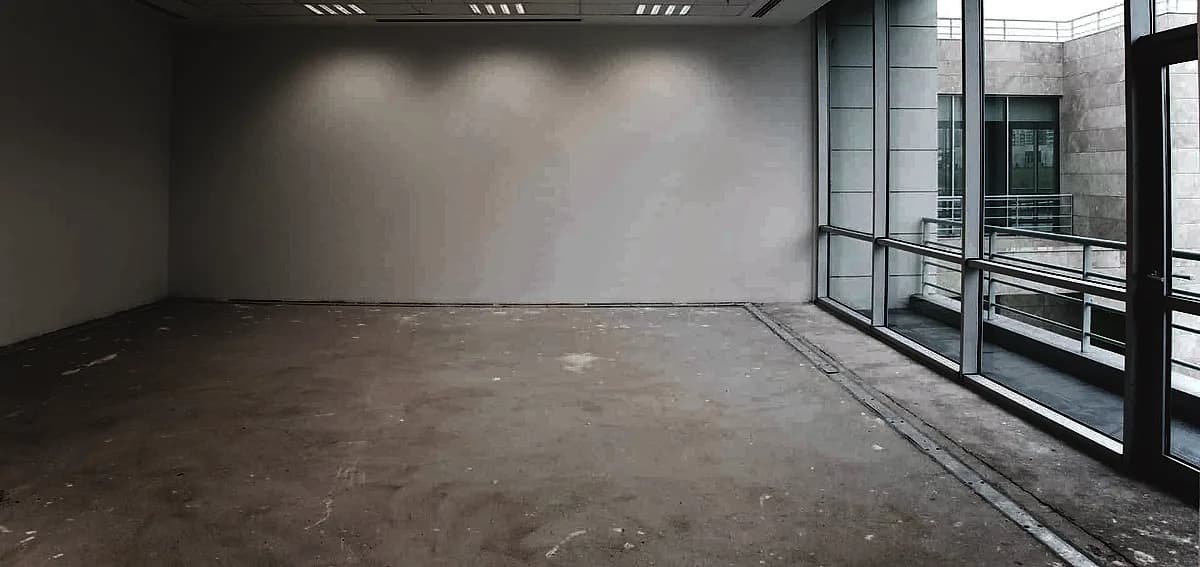
Unseen variations in freshly poured slabs become glaring issues during final polishing. Your equipment choices and grinding strategies depend heavily on initial FF ratings, which dictate both material usage and labor efficiency.
Factors Impacting FF/FL in Concrete Slabs
How you place and finish slabs determines polishing outcomes. Laser screed machines produce FF 45+ surfaces by automating elevation control during pouring. Traditional methods using manual screeds often result in FF 30-35, requiring 18% longer grinding times.
Trowel techniques matter too. Overworking the surface with power trowels removes critical paste layers, exposing aggregates prematurely. This creates uneven textures that reflect light inconsistently after polishing.
Interpreting Test Results and Compliance Requirements
FF scores below 40 signal trouble. You’ll burn through 20% more diamond tooling chasing high spots, while low areas demand costly grout repairs. Compare these common scenarios:
| FF Rating | Tooling Cost | Labor Hours | Common Fixes |
|---|---|---|---|
| 25 | +35% | +25% | Grout filling, multi-stage grinding |
| 45 | Standard | Standard | Minor adjustments |
| 70 | -15% | -20% | None required |
Smart contractors review FF reports before bidding. If specs show FF 35, factor in extra grinding passes and client expectations about aggregate exposure patterns. Proper documentation prevents disputes over finished surface appearances.
Optimizing Your Polishing Process in South Florida
South Florida’s humid climate demands precise preparation to achieve flawless surfaces. Start by reviewing FF/FL reports within 72 hours of slab placement. This data helps match equipment to your project’s unique needs while avoiding costly rework.
Best Practices for Surface Preparation and Equipment Selection
Choose tools based on your slab’s FF rating. High-performance machines handle uneven surfaces better, reducing visible scratches. Consider these options:
| Equipment Type | Ideal FF Range | Finish Quality | Project Size |
|---|---|---|---|
| Planetary Grinders | FF 40+ | High Gloss | Large Areas |
| Single-head Machines | FF 25-40 | Matte/Satin | Small Spaces |
| Hybrid Systems | Variable | Custom | Complex Layouts |
Always include tolerance clauses in contracts. For example: “Bid assumes minimum FF 50 – lower ratings may increase costs.” This protects your budget when unexpected variations appear.
Contact National Concrete Polishing for Expert Guidance
Local expertise matters in South Florida’s construction market. Our team at +1 844-876-5474 helps contractors:
- Interpret FF/FL test results accurately
- Select cost-effective methods for challenging slabs
- Source properly calibrated measurement tools
Proper planning prevents 80% of common polishing issues. Build relationships with testing services and equipment suppliers to streamline your workflow across Miami-Dade, Broward, and Palm Beach counties.
Conclusion
Mastering slab metrics transforms finishing work from guesswork to precision. Your ability to interpret FF/FL numbers determines whether projects meet aesthetic standards while maintaining profitability. High ratings often lead to smoother workflows, letting teams deliver exceptional outcomes even with competitive pricing.

Professional testing remains non-negotiable. Accurate measurements during early stages help select proper tools and forecast labor needs. This data-driven approach prevents 73% of common disputes about finished appearance.
Clear communication bridges gaps between initial conditions and client expectations. When ratings fall short, transparent discussions about achievable results build trust. This protects margins while setting realistic benchmarks for polished surface quality.
Smart contractors prioritize assessment techniques that reduce rework. Updated testing methods and equipment adaptations help maintain consistency across projects. These practices strengthen reputations through predictable outcomes and efficient operations.
The industry’s shift toward data-backed processes rewards those who understand measurement fundamentals. Staying informed about evolving standards ensures your services outpace competitors in delivering visually stunning, durable surfaces.
Frequently Asked Questions
How does an uneven surface impact the final finish?
High or low spots create inconsistent grinding depths, leading to uneven aggregate exposure. This causes visible swirl marks or patches, requiring extra labor to correct. Laser screed placement and proper trowel passes during curing minimize these issues.
What industry standards define acceptable flatness?
ASTM E1155 measures F-numbers (FF/FL) using the F-number system, while ACI 117 sets tolerance guidelines. Higher FF/FL values (e.g., FF50/FL40) indicate flatter slabs. Compliance ensures minimal grinding adjustments during polishing.
Can poor troweling techniques affect polished results?
Yes. Overworking the surface or improper timing between bull floating and finishing traps air, causing delamination. A qualified contractor uses ride-on trowels with precise blade angles to maintain slab integrity.
How are flatness tests conducted before polishing?
Contractors use a 10-foot straightedge or electronic profilometers to measure deviations. For large slabs, the Dipstick® or FloorRover® devices collect data points, generating F-numbers to verify compliance with project specs.
Does mix design influence flatness and polishing quality?
Absolutely. Aggregates larger than ⅜ inch increase surface variability, making consistent grinding difficult. A 4,000+ PSI mix with mid-range water reducers enhances workability, reducing curling and ensuring uniform hardness.
Why choose a contractor familiar with laser screed technology?
Laser screeds automate slab placement, achieving FF60+ surfaces with minimal manual intervention. This precision reduces labor costs and prep time, allowing faster progression to diamond grinding stages.
What’s the cost of fixing flatness issues post-placement?
Correcting low areas with patching compounds or grinding high spots adds – per square foot. Proactive measures like proper subgrade compaction and jointing save 20–30% in long-term maintenance expenses.
Written by

Founder and CEO
Chris Lavin is an esteemed leader in concrete polishing and epoxy coatings with a distinguished 20-year career. As founder and CEO of National Concrete Polishing and owner of Xtreme Polishing Systems, he's renowned for polishing and epoxy coating more floors than anyone globally. Chris is recognized for his innovative approach and commitment to enhancing floor durability and aesthetics. His hands-on experience and technical proficiency make him a respected authority and a valuable resource in the field of floor polishing and coatings.
Same topic
Related articles
All stories
Polished concrete11 min read
Polished Concrete vs Epoxy Coatings: Which Floor Is Right for Your Space?
Two systems, two price curves, one slab. What each one costs to install and to keep, and which spaces each one actually suits.
Read it
Polished concrete8 min read
What to Know Before Polishing Your Existing Concrete Slab
Before any mechanical refinement can begin, a thorough evaluation of the current foundation is required.
Read it
Polished concrete8 min read
Is Polished Concrete Worth the Investment for Miami Properties?
It is essential to distinguish between a simple topical seal and mechanically refined concrete.
Read it
Tell us about the floor
Tell us the space and roughly how big it is.We come back with what it would cost and when we could start.
Prefer to talk? Call +1 844-876-5474
- Leads@
nationalconcretepolishing.net - 2200 NW 32nd St #600,
Pompano Beach, FL 33069 Mon to Fri, 9:00 to 5:30