
The NCP blog
Office Building Concrete Floor Sustainability & LEED Guide
Commercial11 min read
The integration of sustainable concrete flooring in office environments extends far beyond simple material selection.
Sustainable building practices are now a regular part of commercial real estate, and LEED certification is one way office owners and developers show it. When they choose a floor, they ask two things: what it can contribute to certification, and what it costs to keep up over the years.
A concrete floor can support an office building’s sustainability goals, but LEED certifies projects, not flooring products, so a floor contributes only through the credits the project documents. Polished concrete flooring can stay in service for a long time with maintenance, and maintenance is never zero.
The integration of sustainable concrete flooring in office environments extends far beyond simple material selection. It encompasses a comprehensive approach that considers the entire lifecycle of the flooring system, from raw material extraction and manufacturing to installation, use, and eventual end-of-life disposal or recycling. This holistic perspective is essential for achieving meaningful LEED points and creating truly sustainable commercial spaces that benefit both occupants and the environment.
Choosing a concrete floor for an office with a LEED goal means looking at material sourcing, indoor air quality, energy performance and durability. LEED awards documented performance to the project, not to a floor material by itself.
Understanding LEED Certification and Concrete Flooring Integration
The Leadership in Energy and Environmental Design (LEED) rating system is a widely used green building rating system. As the U.S. Green Building Council describes it, a project must first complete all prerequisites and then earn points by selecting and satisfying credit requirements. Flooring is one of many inputs.
A concrete floor needs no carpet, tile or adhesive layers, which means fewer products to document. Whether it contributes to a credit depends on the project’s documentation, not on the material alone.
The LEED rating system evaluates buildings across several key performance areas, including sustainable site development, water efficiency, energy and atmosphere, materials and resources, indoor environmental quality, and innovation in design. Modern polished concrete floors can contribute to a few of them: Materials and Resources when an existing slab is reused, and Indoor Environmental Quality when the products used meet the low-emitting criteria. Energy credits are earned by analyzing the building’s energy performance, not through a floor finish.
The credits a project pursues set what has to be documented, such as material properties, installation methods and product emissions data, which come from the product manufacturers and the project team.
Where a Polished Slab Can Touch the Credits
- Materials and Resources: LEED v4.1 BD+C has a Building Life-Cycle Impact Reduction credit whose Option 3, Building and Material Reuse, counts reused building materials, including structural elements such as floors. To claim it, the project has to document how much of the existing structure it keeps.
- Indoor Environmental Quality: the Low-Emitting Materials credit looks at product categories on the whole project, and concrete counts as inherently non-emitting only when it has no integral organic-based surface coatings, binders or sealants. A guard, sealer or dye needs its own emissions documentation.
- Energy and Atmosphere: Optimize Energy Performance is earned by analyzing efficiency measures and energy performance for the building, so a floor finish is not a credit of its own.
Credit names and options are from LEED v4.1 BD+C. LEED v5 also exists and may name or structure credits differently, so confirm the version and the credits with the project’s LEED consultant.
Commercial projects particularly benefit from how different industries use polished concrete to achieve sustainability goals while maintaining professional aesthetics that support workplace productivity and employee satisfaction.
Material Sustainability and Environmental Impact Assessment
The environmental impact of flooring materials extends throughout their entire lifecycle, from raw material extraction and manufacturing to transportation, installation, use, and eventual disposal or recycling. How a concrete floor performs across these stages depends on the mix, the finish and how the space is used.
Raw material considerations for sustainable concrete flooring begin with the sourcing of cement, aggregates, and supplementary cementitious materials. Concrete mixes can incorporate recycled content, including fly ash from coal power plants, slag from steel production, and recycled concrete aggregates from demolished structures. In LEED v4.1, recycled content is counted under the Building Product Disclosure and Optimization, Sourcing of Raw Materials credit, which values recycled content by weight (postconsumer plus one-half of preconsumer).
Concrete is typically produced close to the job site, which shortens transport. Whether that counts toward a credit depends on how the project documents its products.
Finishing a slab does not produce cutting offcuts the way tile, carpet or sheet goods do, and it needs no adhesive or underlayment. Understanding why polished concrete is popular in Florida demonstrates how regional preferences align with sustainability goals.
End-of-life considerations for concrete flooring systems demonstrate additional sustainability advantages. Concrete floors can be recycled into aggregate for new concrete production, repurposed for other construction applications, or left in place during building renovations or demolitions. This recyclability supports circular economy principles and reduces the long-term environmental impact associated with flooring replacement cycles.
Energy Performance and Thermal Management Benefits
Concrete has thermal mass, but its effect on building energy depends on climate and design. Energy and Atmosphere credits such as Optimize Energy Performance are earned by analyzing the building’s energy performance, not by choosing a floor finish.
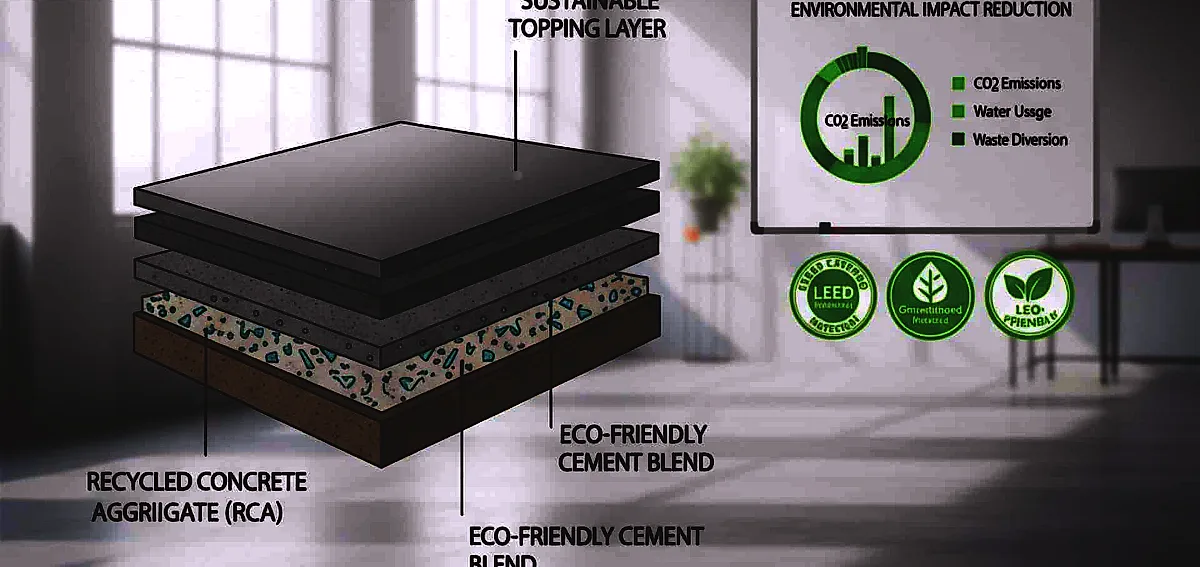
Thermal mass refers to a material’s ability to absorb, store, and release thermal energy, helping to moderate temperature fluctuations throughout daily and seasonal cycles. Concrete floors excel in this capacity, absorbing excess heat during warm periods and releasing stored thermal energy when temperatures drop. Oak Ridge National Laboratory notes that in certain climates massive building envelopes, including concrete, can be one of the most effective ways to reduce heating and cooling loads; that is a statement about envelopes, not floor finishes.
The surface characteristics of shiny concrete floor finishes contribute additional energy benefits through their light reflectance properties. A polished finish reflects light, which can make spaces feel brighter; Bob Harris notes in Concrete International that the final guard step provides a finish that maximizes light reflectance. Any lighting reduction would have to be modeled for the project.
Understanding how polished concrete affects building temperature is crucial for maximizing energy efficiency benefits. Radiant floor heating works with a concrete slab. The U.S. Department of Energy says radiant heating is usually more efficient than forced-air heating because it eliminates duct losses, and that electric radiant floors are usually only cost-effective with significant thermal mass, such as a thick concrete floor, and time-of-use electric rates.
The durability and longevity of concrete flooring systems contribute to long-term energy efficiency by eliminating the energy consumption associated with frequent flooring replacements and renovations. How long a concrete floor stays in service depends on the quality of installation, the level of maintenance, the climate and the intensity of use, as the NAHB study of home component life expectancy says of building components; it calls itself a general guideline only. A floor that stays in service longer avoids the embodied energy of repeated material production, transportation and installation.
Indoor Air Quality and Occupant Health Considerations
Indoor air quality represents a critical component of sustainable building design, directly impacting occupant health, productivity, and satisfaction while contributing to LEED Indoor Environmental Quality credits. Concrete flooring systems offer substantial advantages for maintaining healthy indoor environments by eliminating many of the contamination sources associated with traditional flooring materials and installation methods.
Volatile organic compound (VOC) emissions from flooring materials and adhesives represent a primary concern for indoor air quality in commercial buildings. Traditional flooring installations often require adhesives, underlayments, and materials that can continue emitting VOCs for months or years after installation. A concrete floor needs no adhesive, which removes that source. Under the LEED v4.1 low-emitting materials credit, concrete counts as an inherently non-emitting source of VOCs only if it has no integral organic-based surface coatings, binders or sealants, so the densifiers, dyes and guards used on the floor need their own documentation.
Concrete has no fibers that hold dust the way carpet does, and routine care is daily dust mopping, but polished floors are still porous and prone to staining, so spills should be wiped up promptly. Harris advises avoiding highly alkaline or acidic cleaners.
Understanding polished concrete benefits includes knowing that moisture coming up through a slab has to be tested and managed: ASTM F2170, the standard for measuring relative humidity in concrete slabs, says excessive moisture can cause debonding and deterioration of coatings and finish flooring.
Cured concrete is a stable material, but the densifiers, dyes and guards applied to it are separate products with their own emissions, and they need their own documentation.
Installation Best Practices and LEED Documentation Requirements
Documentation for a LEED project starts with the products and the installation. The credits a project pursues decide which records are needed, so planning the flooring scope with the project team early makes the submittal easier.
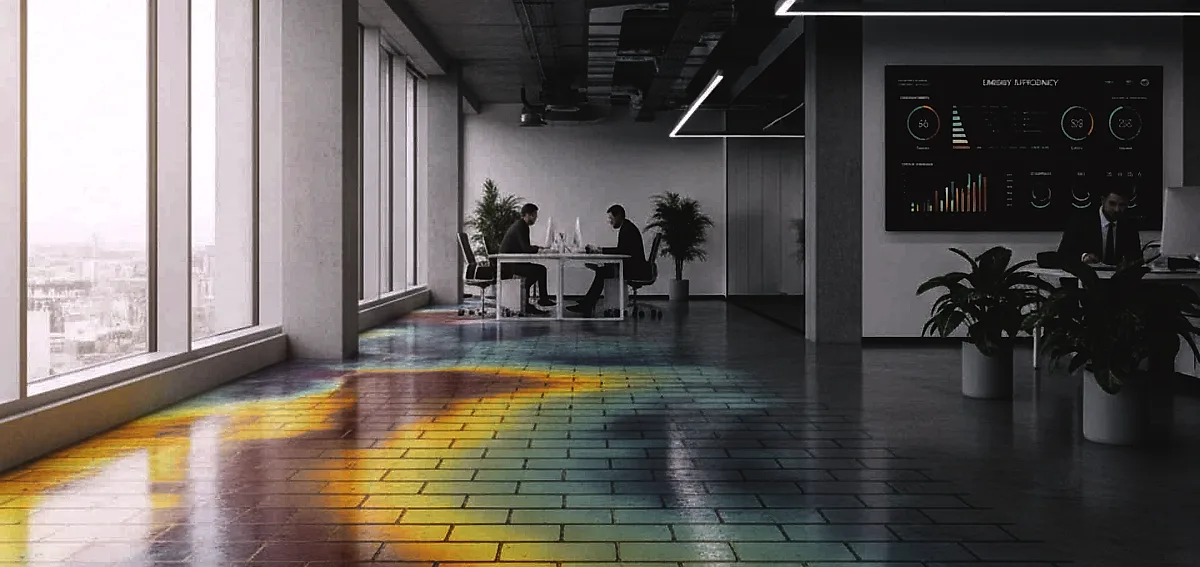
Pre-installation planning for a concrete floor in a LEED project begins with material selection and sourcing documentation. Depending on the credits pursued, projects may need records such as product data, recycled content and emissions test results to support their LEED submittal. Suppliers who can provide product documentation make the submittal easier.
Installation procedures for sustainable concrete flooring must address moisture management, surface preparation, and finishing techniques that support both performance and environmental goals. Moisture testing and, where needed, mitigation come before finishing, because excess moisture in a slab can cause finish failures. Understanding how polished concrete reduces maintenance costs helps building owners appreciate the long-term value of proper installation techniques.
Surface preparation techniques must balance performance requirements with environmental considerations, minimizing waste generation and avoiding materials that could negatively impact LEED certification goals. Mechanical vs chemical concrete polishing methods offer different environmental profiles that can influence which credits a project pursues.
Quality control records from the installation can feed a project’s LEED documentation. Regular testing of surface characteristics, moisture levels and installation parameters creates a record and identifies issues before they affect the project.
A maintenance plan that specifies cleaning methods and periodic assessment keeps the floor performing; as Bob Harris writes in Concrete International, floors that are not properly maintained will eventually lose their shine.
Frequently Asked Questions
How do concrete floors contribute to LEED certification points?
A concrete floor can support credits such as Building Life-Cycle Impact Reduction when an existing slab is reused, the Sourcing of Raw Materials credit for documented recycled content, and Low-Emitting Materials. Points go to the project and depend on its documentation, and energy credits are not earned through a floor finish.
What recycled content can be incorporated into sustainable concrete flooring?
Sustainable concrete mixes can include fly ash from power plants, slag from steel production, recycled concrete aggregates, and other post-industrial materials. Fly ash and slag replace part of the portland cement, and recycled aggregate replaces part of the natural aggregate. The Federal Highway Administration, for example, notes that typically 15 percent to 30 percent of the portland cement is replaced with fly ash, with higher percentages used for mass concrete placements. The share depends on the mix design and the project specification.
How long do concrete floors stay in service?
Service life depends on the quality of installation, the level of maintenance, the climate and the intensity of use, according to the NAHB study of home component life expectancy, which calls itself a general guideline only. A floor that stays in service longer avoids the impact of replacing it.
Do concrete floors improve indoor air quality in office buildings?
A floor that needs no adhesive removes that VOC source. Densifiers, dyes and guards have their own VOC content, and concrete stays porous, so it still needs a cleaning routine.
What maintenance does a concrete floor in a LEED project need?
Routine care is daily dust mopping and, where needed, a neutral cleaner. The guard is reapplied when it wears, on the manufacturer’s schedule. Maintenance is never zero.
Can an existing concrete floor be reused in a LEED project?
Existing concrete floors can often be polished, which reuses the slab. Whether that earns credit depends on the project’s LEED documentation.
How do concrete floors affect building energy performance?
The thermal mass of concrete can moderate indoor temperature swings, but the effect on HVAC energy depends on climate and building design. Polished surfaces also reflect light, which can make spaces feel brighter.
What documentation is required for LEED certification with concrete flooring?
The documentation depends on the credits a project pursues; typical records include product data, recycled content, emissions test results and installation records. Good record-keeping throughout the project makes the submittal easier.
Conclusion
A concrete floor can support a LEED project by reusing the slab and avoiding adhesives. How much it contributes depends on the product documentation and the credits the project pursues, and it can suit projects that prioritize sustainability.
The path to successful LEED certification through sustainable concrete flooring requires careful planning, expert installation, and comprehensive documentation of materials and processes. National Concrete Polishing installs polished concrete floors in offices and other commercial buildings.
Floors are one small part of a sustainable office building. A concrete floor can reuse the slab and avoid adhesives, and what it earns in a rating system depends on the documentation the project submits.
Written by

Founder and CEO
Chris Lavin is an esteemed leader in concrete polishing and epoxy coatings with a distinguished 20-year career. As founder and CEO of National Concrete Polishing and owner of Xtreme Polishing Systems, he's renowned for polishing and epoxy coating more floors than anyone globally. Chris is recognized for his innovative approach and commitment to enhancing floor durability and aesthetics. His hands-on experience and technical proficiency make him a respected authority and a valuable resource in the field of floor polishing and coatings.
Same topic
Related articles
All stories
Commercial12 min read
Cleanroom Floor Standards for Semiconductor, Biotech, and GMP Facilities
Semiconductor, biotech and GMP floors have written standards. What those standards require, and which concrete systems meet them.
Read it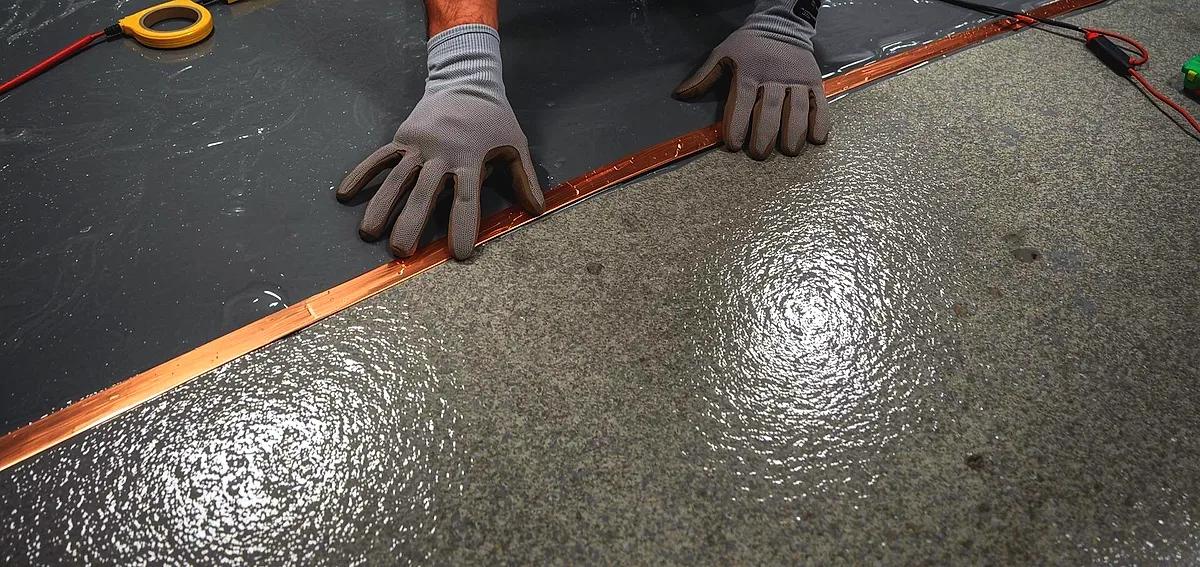
Commercial5 min read
Grounding Requirements for Floors in Fort Lauderdale Electronics Facilities
Grounding requirements for floors in Fort Lauderdale electronics facilities, including ESD epoxy standards and grounding strips.
Read it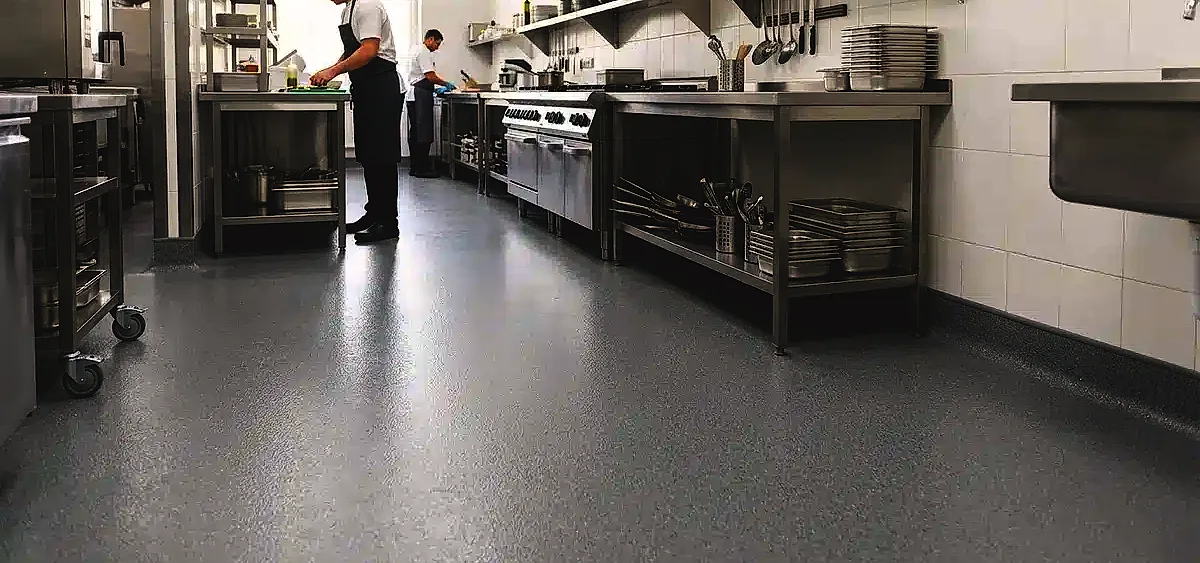
Commercial10 min read
Commercial Kitchen Floor Requirements in Florida
What Florida food code rules (Chapter 61C-4) ask of commercial kitchen floors: smooth, non-absorbent surfaces and coving at the walls.
Read it
Tell us about the floor
Tell us the space and roughly how big it is.We come back with what it would cost and when we could start.
Prefer to talk? Call +1 844-876-5474
- Leads@
nationalconcretepolishing.net - 2200 NW 32nd St #600,
Pompano Beach, FL 33069 Mon to Fri, 9:00 to 5:30