
The NCP blog
Polished Concrete Flooring vs. Other Flooring Types: What You Should Know
Polished concrete10 min read
Learn the pros and cons of polished concrete flooring versus other flooring options to make an informed decision for your business.
How do polished surfaces stack up against traditional alternatives like carpet or tile?
Choosing the right surface for your space involves more than aesthetics. You need to consider factors like long-term value, daily upkeep, and how the material performs under real-world conditions. Modern options now compete closely with conventional favorites, each offering distinct advantages depending on your priorities.
This guide breaks down key differences you’ll want to evaluate. We’ll explore scenarios where sleek, industrial-inspired surfaces outshine plush carpets or classic tiles, and situations where traditional choices might better suit your needs. National Concrete Polishing works mainly in South Florida, where climate, foot traffic, and design goals often shape which floor is the right one.
Introduction to Concrete Flooring Options
Modern spaces demand surfaces that combine resilience with visual appeal. The market offers five primary choices for residential and commercial projects: plush carpets, ceramic tiles, vinyl planks, laminate boards, and sleek finished slabs. Each solution brings unique strengths depending on your space’s demands.
Overview of Popular Flooring Alternatives
Carpet provides warmth and noise reduction but struggles with spills. Ceramic tiles handle moisture well yet feel cold underfoot. Luxury vinyl mimics wood grain while resisting scratches. Engineered hardwood offers timeless elegance but requires climate control. Laminate delivers budget-friendly durability with click-lock installation.
Industrial-inspired slabs have gained traction for their seamless look. These surfaces integrate with radiant heating systems and adapt to various textures. Commercial kitchens often choose them because a sealed slab is easy to clean, while retail spaces appreciate their reflective qualities.
Understanding Your Needs
Start by mapping your space’s traffic patterns. High-footfall areas need scratch-resistant materials. Moisture-prone zones require non-porous surfaces. Consider how much daily upkeep you’ll realistically manage.
Aesthetic preferences matter too. Do you want earthy textures or glossy finishes? Some materials allow intricate patterns, while others focus on minimalist appeal. Your choice should align with both functional needs and design vision.
Understanding Polished Concrete Flooring
Many homeowners overlook the potential beneath their feet when considering surface options. This method transforms existing slabs through mechanical refinement rather than adding layers. Specialists use diamond-embedded tools to grind the material in multiple stages.
The process begins with coarse grinding to remove imperfections. Each subsequent pass uses finer grits, creating a smoother texture. Densification follows, applying chemical hardeners that penetrate and strengthen the slab.
You can choose from three finish levels:
- Matte: Subtle sheen, ideal for rustic designs
- Satin: Balanced reflectivity for offices
- High-gloss: Mirror-like appearance for retail spaces
| Treatment | Process | Finish Options | Durability |
|---|---|---|---|
| Polished | Mechanical grinding + chemicals | Matte to glossy | Depends on traffic and upkeep |
| Stained | Color application | Opaque hues | Depends on the sealer and traffic |
| Sealed | Topcoat protection | Low sheen | Depends on the sealer and traffic |
Unlike painted or coated surfaces, this approach enhances the existing concrete floor. It eliminates the need for extra materials while providing lasting performance. The result combines industrial charm with practical resilience.
Polished Concrete Flooring: Pros and Cons
Property owners often focus on surface aesthetics without weighing long-term performance factors. Sleek modern surfaces offer distinct advantages but come with trade-offs that demand careful evaluation.
Key Benefits to Consider
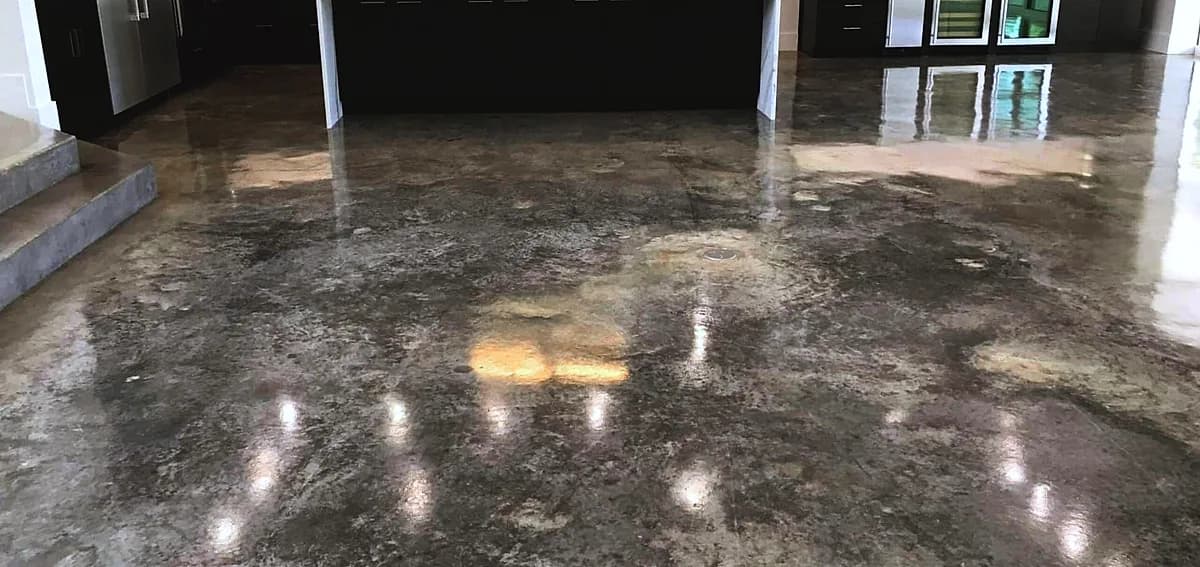
Polished concrete floors resist scratches well. A densifier makes the surface less permeable and a guard or sealer adds stain resistance, so spills are easier to clean up, but polished floors are still porous and prone to staining. How long the finish lasts depends on the quality of installation, the level of maintenance and the intensity of use, as the NAHB life-expectancy study says of home components in general.
Installation advantages include compatibility with radiant heating systems. You won’t need additional subfloor layers, maintaining ceiling heights in renovation projects. A glossier finish reflects light in a more mirror-like way than a matte one, since gloss describes how strongly a surface reflects light in a mirror-like direction.
| Feature | Benefit | Challenge |
|---|---|---|
| Durability | Holds up well under heavy traffic | Surface cracks may develop |
| Maintenance | Regular dry and damp mopping | Requires periodic resealing |
| Moisture Resistance | A guard or sealer limits absorption | Slippery when wet |
| Acoustics | None | Amplifies sound in open spaces |
| Safety | Non-combustible material | Hard surface causes foot fatigue |
Potential Drawbacks and Challenges
The hardness that ensures durability creates echo chambers in large rooms. Area rugs become essential for noise control in residential settings. Standing for extended periods may lead to joint discomfort without anti-fatigue mats.
Any wet floor raises the risk of slipping, and slip resistance varies with the gloss level of a polished floor, so entryways and wet areas may need a lower-gloss finish or an added anti-slip treatment. Over time, microscopic dust particles can emerge from surface wear. Repolishing restores the shine once it wears down, and how often that is needed depends on traffic and how well the floor is maintained.
Benefits of Polished Concrete Flooring
Builders and designers increasingly prioritize surfaces that marry sustainability with practicality. The advantages extend beyond visual appeal to deliver measurable performance enhancements. Let’s examine two critical areas where this solution outperforms traditional materials.
Durability and Low Maintenance
Surfaces treated through mechanical refinement withstand heavy use.Spills wipe up more easily from a densified, guarded surface, which can still stain if they sit, and the densified layer is harder to scratch.
Maintenance involves three simple steps:
- Dry mopping to remove debris, as often as traffic calls for
- Damp cleaning with pH-neutral solutions
- Re-guarding or resealing when the finish wears
The routine is simple, but it is not optional: floors that are not properly maintained will eventually lose their shine.
Environmental Advantages
Eco-conscious choices start with material efficiency. Polishing the existing slab means there is no new floor covering to buy, ship and eventually throw away. Polishing needs no flooring adhesive, so there is no adhesive to release solvents indoors; check the data sheet of any densifier or guard for its VOC content.
Drawbacks of Polished Concrete Flooring
While sleek surfaces offer modern appeal, they come with unique challenges that demand attention. Understanding these limitations helps you prepare practical solutions and make informed decisions for your project.
Acoustic and Safety Concerns
Hard surfaces amplify noise like drumheads. Conversations bounce across rooms, and dropped items sound like explosions. This echo effect worsens in open spaces with high ceilings. Adding area rugs or acoustic panels becomes essential for comfort.
Safety risks emerge when moisture meets glossy finishes. Spills create slippery zones, particularly near entryways or kitchens. Textured treatments reduce this hazard but may alter the seamless look you desire.
Maintenance and Surface Repair Issues
Microscopic dust particles develop over time from foot traffic. You’ll sweep more frequently than with carpeted areas. While cleaning is simple, the amount of upkeep surprises some owners.
Damage repairs require expertise. Matching existing finishes proves tricky, often leaving visible patches. Professional intervention becomes necessary for cracks or stains, adding unexpected costs.
| Challenge | Impact | Solution |
|---|---|---|
| Noise Reflection | Disrupts conversations | Install sound-absorbing decor |
| Moisture Slippage | Fall hazards | Apply anti-slip coatings |
| Dust Accumulation | Daily cleaning needs | Use microfiber mops |
| Repair Complexity | Higher restoration costs | Schedule professional maintenance |
Comparing with Other Flooring Types
Your flooring choice shapes daily experiences and long-term costs. Let’s examine how modern surfaces stack up against traditional options in real-world settings.
Material Matchup: Laminate, Carpet, and Tile
Industrial laminate now rivals natural materials. Some laminates come with a cork or foam underlayment that improves impact sound insulation. For upstairs apartments, ask for the impact insulation class (IIC) of the whole floor-ceiling assembly, which ASTM E492 measures in the lab. Laminates mimic wood grain convincingly but lack the thermal mass of denser surfaces.
Carpet remains popular for bedrooms and offices. Its sound-dampening fibers absorb footsteps and voices. However, stains and heavy traffic shorten its useful life; the NAHB study lists carpet at 8 to 10 years with appropriate maintenance and normal traffic.
| Option | Key Strength | Maintenance Need | Best For |
|---|---|---|---|
| Laminate | Acoustic control | Weekly sweeping | Multi-family buildings |
| Carpet | Comfort underfoot | Professional cleaning | Low-traffic zones |
| Tile | Moisture resistance | Grout sealing | Bathrooms |
Space-Specific Solutions
Residential spaces often prioritize warmth and noise control. Families with kids might layer rugs over hard surfaces. Pet owners frequently choose scratch-resistant laminate over delicate materials.
Commercial settings demand different priorities:
- Retail stores need slip-resistant surfaces
- Offices require easy-to-clean floors
- Restaurants prioritize stain-proof installations
The concrete look works well in industrial lofts but may feel cold in traditional homes. Consider your daily routines before finalizing your selection.
Installation and Finishing Process
Transforming your floors requires precision at every step. Professionals begin by clearing adhesives or old materials through grinding or chemical removers like Cure & Seal Remover. Cracked areas get filled with polyurea joint filler to create a seamless base.
Surface Preparation and Grinding Techniques
Specialists use diamond-embedded tools, and no single sequence fits every slab: the starting grit depends on the slab. A typical 800-grit job at National Concrete Polishing runs 30, 70 and 120 grit metal-bond tools, then 50, 100 and 200 grit resin pads, a densifier, and 400 and 800 grit resin pads.
| Stage | Grit Level | Purpose |
|---|---|---|
| Initial Grind | 30 to 120 (metal) | Remove coatings |
| Intermediate | 50 to 200 (resin), then a densifier | Smooth surface |
| Final Polish | 400 and 800 (resin); 1,500 and 3,000 are upgrades | Create shine |
Polishing Techniques and Densification
Chemical hardeners like LS Densifier get applied next. These solutions penetrate deep to strengthen the material. After curing, technicians continue with finer resin pads; 800 grit is our common finish, and 1,500 and 3,000 grit are upgrades.
Why hire experts? The process demands industrial equipment and knowledge of substrate variations. Professionals adjust techniques based on moisture levels and existing damage to ensure lasting results.
Aesthetic and Design Considerations
Contemporary interiors increasingly celebrate raw textures and functional beauty. This shift has transformed commercial spaces and urban residences alike, blending historical industrial elements with modern minimalism.
Modern Office and Industrial Design Trends
Open-plan workspaces now pair sleek surfaces with exposed structural elements. The polished concrete look complements steel beams and reclaimed wood accents, creating visual harmony between rugged and refined features.
Three finish options dominate current projects:
- Matte textures for collaborative areas
- Medium sheen in executive suites
- Mirror-like finishes in client-facing zones
Creative staining techniques let you customize surfaces to match brand colors or architectural themes. Decorative saw cuts introduce geometric patterns, while exposed aggregates add natural texture variations.
| Design Element | Common Application | Visual Impact |
|---|---|---|
| Matte Finish | Creative studios | Softens ambient light |
| High-Gloss | Retail displays | Amplifies space perception |
| Exposed Aggregate | Boutique hotels | Adds organic texture |
This approach bridges industrial heritage with contemporary style. Designers often combine these surfaces with statement lighting and modular furniture, proving utilitarian materials can achieve high-end sophistication.
Environmental and Longevity Benefits
The operation of buildings accounts for 30% of global final energy consumption, according to the IEA, so material choices matter for sustainability. Opting for surfaces that leverage existing structures creates immediate environmental wins while cutting long-term costs.
Energy Efficiency and LEED Credits
Your project gains hidden advantages through thermal mass properties. These surfaces absorb daytime heat and release it at night, which can ease heating and cooling loads in some climates. In certain climates, massive building envelopes can be one of the most effective ways to reduce heating and cooling loads, but that is a whole-building effect, not a promise from the floor finish.
Maintenance simplicity extends these advantages. The easy-clean surface needs only pH-neutral solutions, avoiding harsh detergents.
On a LEED project, polished concrete can help with the Low-Emitting Materials credit: LEED v4.1 lists concrete among the inherently non-emitting sources of VOCs, provided it has no integral organic-based coatings, binders or sealants, and the credit is scored for the whole project, 1 to 3 points depending on how many product categories qualify. Always consult green building experts to maximize your environmental strategy.
Economic Considerations in Flooring Choices
Smart financial planning requires looking beyond initial price tags. Your choice impacts budgets for years through installation expenses, cleaning routines, and replacement cycles. Materials that seem affordable per square foot today might cost more long-term due to frequent repairs.
Long-Term Cost Comparison with Alternatives
Durable surfaces can save money over time when they cut repair and replacement costs. While some options have lower upfront costs per square foot, they may cost more over time in repairs and replacement. High-traffic areas show these differences clearly: materials resisting daily wear reduce lifetime expenses.
Consider how people use spaces each day. Pet-friendly homes need scratch-resistant solutions. Commercial settings prioritize surfaces handling constant foot traffic without degradation. Maintenance time also matters: easy-clean materials free up hours weekly.
The right balance depends on your priorities. A higher initial investment can pay off if it lowers future costs. Evaluate total ownership costs rather than just installation numbers: a life-cycle cost analysis weighs a higher initial cost against future operating, maintenance, repair or replacement costs.
Frequently Asked Questions
How does polished concrete compare to laminate or carpet?
It is harder and more scratch-resistant than laminate or carpet. With a densifier and a guard it handles high-traffic areas well, but it is still porous and can stain if spills sit. However, it lacks the softness of carpet and may require area rugs for noise reduction.
Can you install this material over existing surfaces?
Yes, in many cases. Existing slabs can be ground and treated to achieve a smooth finish. However, cracks or unevenness might need repairs first. A professional assessment ensures the base is suitable for the process.
Is it slippery or noisy in residential spaces?
Any wet floor can be slippery, and slip resistance varies with the gloss level of a polished floor, so a lower-gloss finish or an anti-slip treatment is worth considering for wet areas. Noise can echo in rooms with minimal furnishings, but rugs or acoustic panels easily address this.
Does it contribute to eco-friendly building design?
Absolutely. It uses existing slabs, minimizing waste, and a glossy surface reflects light in a more mirror-like way. On a LEED project it can support the Low-Emitting Materials credit, which is scored for the whole project.
What’s the average cost compared to tile or hardwood?
Tile and hardwood prices vary widely by material and installer, so get quotes for the options you are comparing. Polished concrete is priced by the square foot, depending on the slab and the finish. Long-term cost depends on maintenance, which is never zero. Budgets vary based on decorative finishes or complex grinding requirements.
How long does the installation process take?
Grinding and polishing time depends on square footage and the sheen you want. At National Concrete Polishing, a bare polish is back in service the same day after the final clean, and a floor with a guard or sealer takes about 24 hours. Unlike carpet or vinyl, there’s no waiting for adhesives to dry. Delays occur only if major repairs are needed beforehand.
Can you customize colors or patterns?
Yes. Stains, dyes, or aggregates create unique designs. Architects often use decorative scoring or exposed aggregates to match modern office or industrial aesthetics. The versatility suits both minimalist and bold styles.
Are there temperature concerns in colder climates?
The surface can feel cool, but radiant heating systems integrate seamlessly. In homes, area rugs add warmth. Commercial spaces often pair it with HVAC systems to maintain comfort year-round.
Written by

Founder and CEO
Chris Lavin is an esteemed leader in concrete polishing and epoxy coatings with a distinguished 20-year career. As founder and CEO of National Concrete Polishing and owner of Xtreme Polishing Systems, he's renowned for polishing and epoxy coating more floors than anyone globally. Chris is recognized for his innovative approach and commitment to enhancing floor durability and aesthetics. His hands-on experience and technical proficiency make him a respected authority and a valuable resource in the field of floor polishing and coatings.
Same topic
Related articles
All stories
Residential7 min read
Polished Concrete Garage Floor vs Epoxy: Pros and Cons
This process smooths the surface, and a densifier hardens it, so polished concrete is used in high-traffic areas.
Read it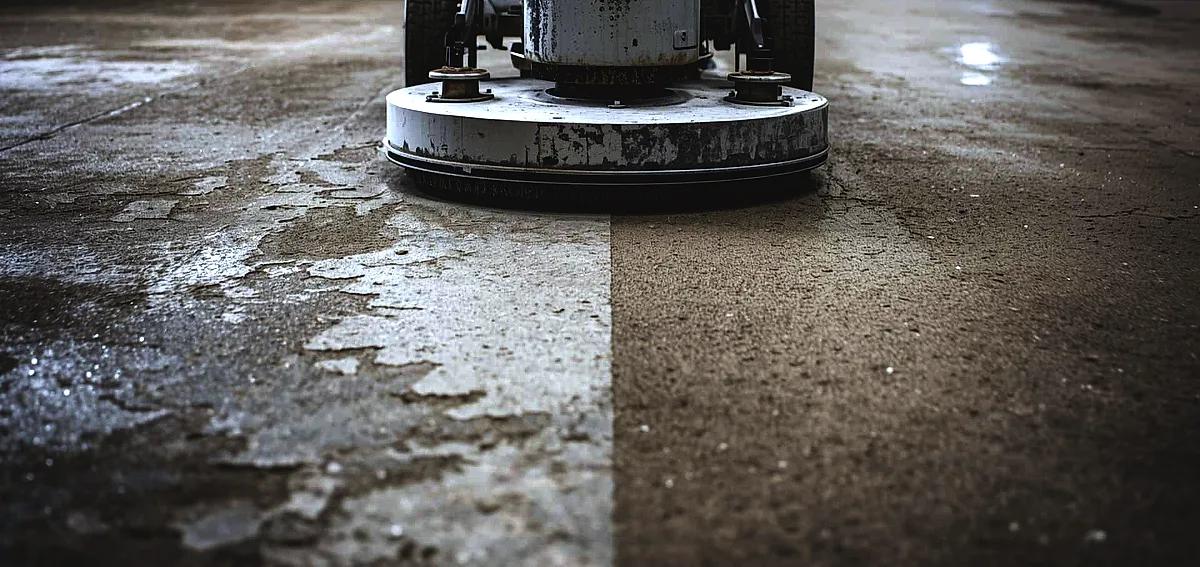
Polished concrete11 min read
Can You Polish Old Concrete? Transform Your Floors Today
Old concrete floors often hide tremendous potential beneath their weathered, dull surfaces.
Read it
Cost & ROI11 min read
How Much Does It Cost To Polish Concrete Floors?
Choosing polished concrete flooring for your residential or commercial space is a no-brainer these days.
Read it
Tell us about the floor
Tell us the space and roughly how big it is.We come back with what it would cost and when we could start.
Prefer to talk? Call +1 844-876-5474
- Leads@
nationalconcretepolishing.net - 2200 NW 32nd St #600,
Pompano Beach, FL 33069 Mon to Fri, 9:00 to 5:30