
The NCP blog
A Guide On Choosing The Right Densifier For Your Concrete Floor
Polished concrete6 min read
When selecting a densifier, key factors include traffic levels, maintenance needs, and Florida’s moisture conditions.
Choosing the right densifier for your concrete floor is important for improving surface strength, appearance, and resistance to wear, especially in Florida’s humid and high-traffic environments.
Concrete densifiers chemically harden the surface, making floors more durable and easier to maintain in warehouses, coastal properties, and retail spaces. The benefits include increased hardness, reduced dusting, enhanced stain resistance, and a polished finish in Florida’s heat and moisture.
Different types of silicate densifiers, such as sodium, potassium, and lithium, are used across the state depending on the floor’s use, finish goals, and environmental exposure. When selecting a densifier, key factors include traffic levels, maintenance needs, and Florida’s moisture conditions.
Avoiding common mistakes like overapplication or choosing the wrong product helps produce a longer-lasting, high-performance concrete surface in Florida’s unique climate.
What Is a Concrete Densifier?
A concrete densifier is a chemical hardener applied to concrete surfaces to fill pores and increase surface density. Once applied, it reacts with the calcium hydroxide in the concrete to form a gel that blocks pores and increases the hardness and impermeability of the surface layer. This process can improve durability, reduce dusting, and enhance the appearance of polished concrete.
How Densifiers Work in Concrete?
A densifier works in concrete by penetrating the surface and chemically reacting with free lime (calcium hydroxide) in the pores. This reaction forms a gel that fills the pores, creating a harder, less permeable surface layer. The Concrete Polishing Council notes that densifiers work by reacting with calcium hydroxide near the surface, so their effect is limited by carbonation or pozzolanic reactions.
What Are the Benefits of Using a Densifier for Your Concrete Floor?
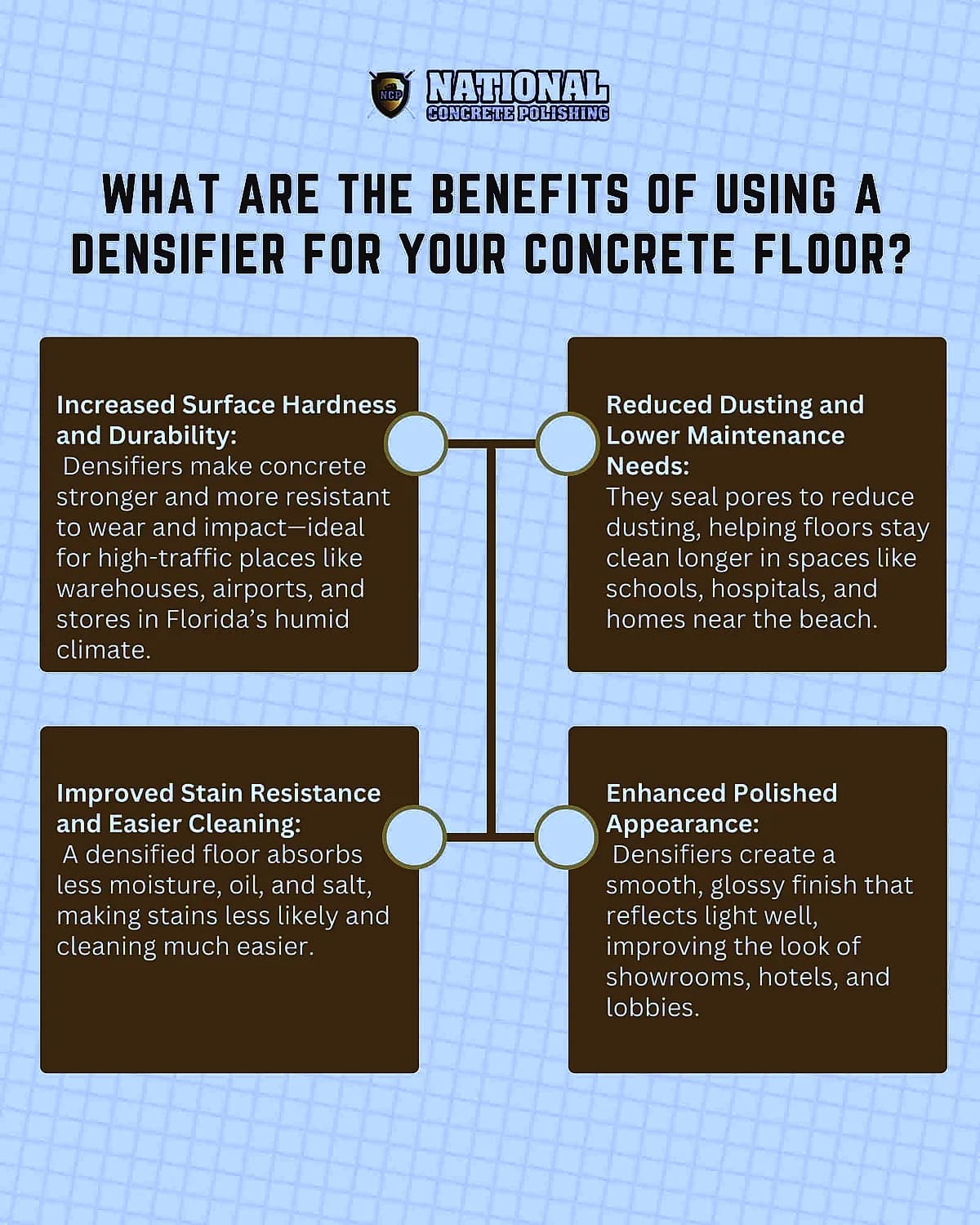
The benefits of using a densifier for your concrete floor are improved durability, reduced maintenance, better stain resistance, and a more attractive finish. These benefits make densifiers cost-effective for new and existing concrete surfaces.
The benefits of using a densifier for your concrete floor are as follows:
Increases Surface Hardness and Durability
Densifiers harden the surface layer, which helps it resist abrasion. This is especially valuable in Florida’s high-traffic environments like distribution centers, coastal retail stores, and busy airport terminals, where humidity and foot traffic accelerate surface wear.
Reduces Dusting and Maintenance Needs
By sealing micro-pores, densifiers help prevent dust formation. This can ease cleaning in healthcare centers, schools, and beachfront properties.
Improves Stain Resistance and Finish
Florida’s climate makes floors vulnerable to moisture, oil, and salt intrusion. A denser, less porous surface helps protect against staining from rainwater, cleaning chemicals, or sand tracked in from outdoors, making cleanup faster and easier.
Enhances Polished Concrete Appearance
Densifiers contribute to a smoother, glossier finish by creating a surface that polishes evenly. In Florida’s sunlit interiors, like showrooms and hospitality venues, this polished effect amplifies brightness and gives a clean, professional appearance.
What Are the Types of Silicate Densifiers Used in Florida?
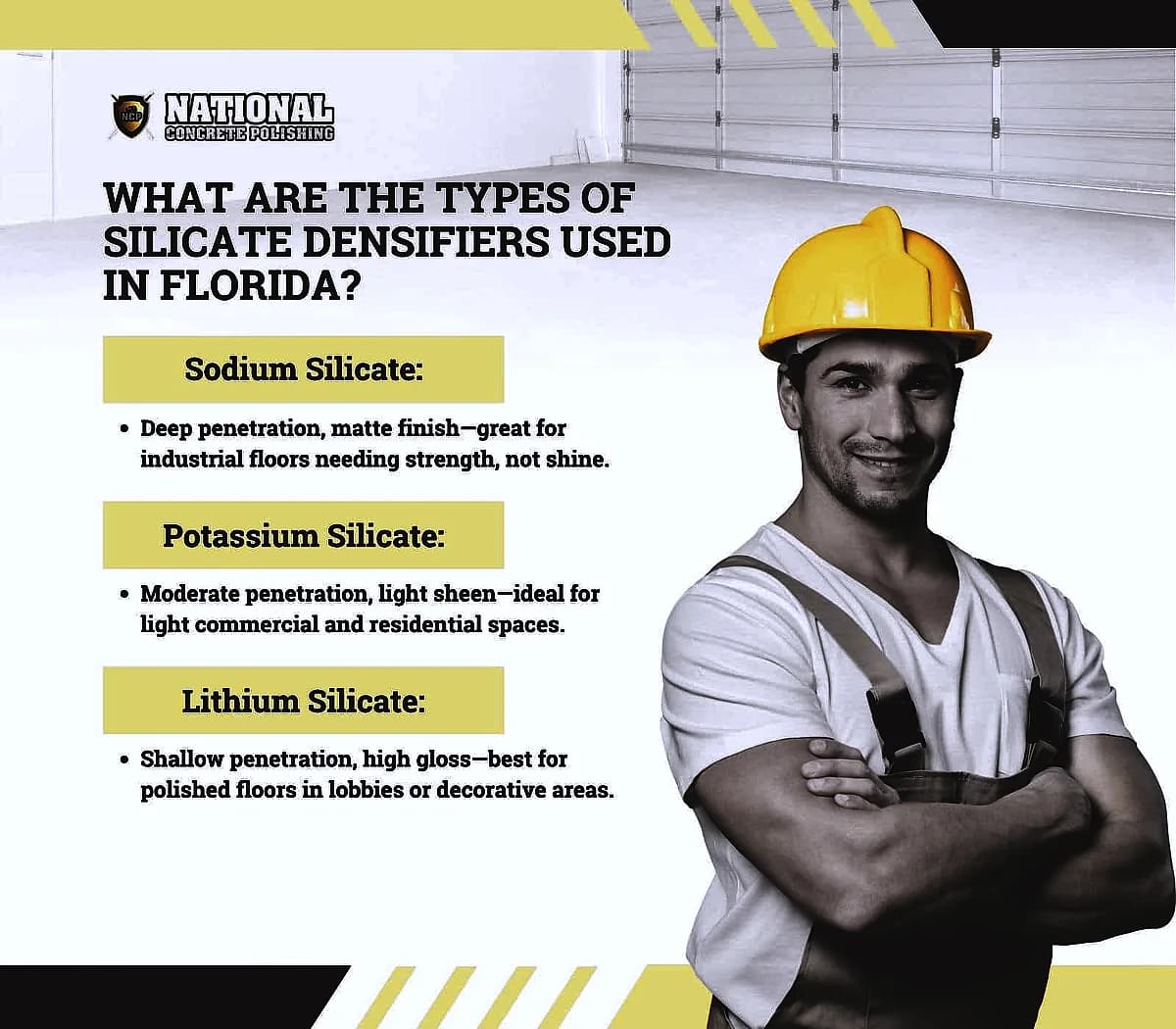
The types of silicate densifiers used in Florida are sodium silicate, potassium silicate, and lithium silicate. Depending on the environment and traffic level, products differ in formulation, so the data sheet governs penetration, finish and use.
The types of silicate densifiers used in Florida are as follows:
Sodium Silicate
Sodium silicate is one of the three silicate types. Products differ by formulation, so check the data sheet for what the product is made for.
Potassium Silicate
Potassium silicate is the second silicate type. As with sodium, the data sheet states what each product is made for.
Lithium Silicate
Lithium silicate has lower alkalinity and higher water resistance than other densifier types, and potentially a lower tendency to efflorescence compared to sodium and potassium alternatives, according to a peer-reviewed study. It can be used for polished concrete floors in showrooms, lobbies, or decorative spaces.
How to Choose the Right Densifier for Your Floor?
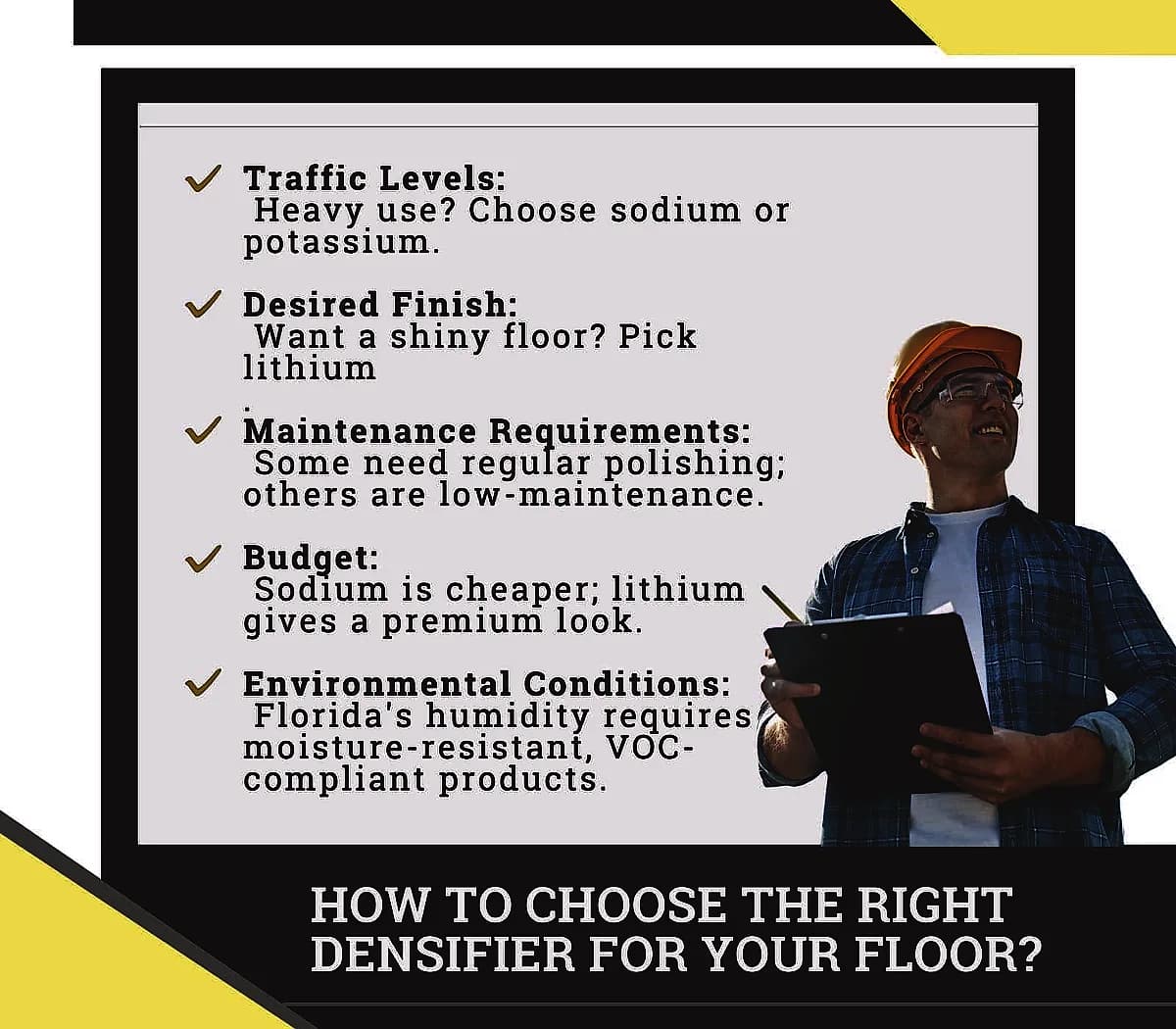
To choose the right densifier for your floor, match the product to your floor’s usage, aesthetic goals, and maintenance needs. The right densifier aligns with the surface’s foot or vehicle traffic exposure, desired finish, and long-term performance expectations.
To choose the right densifier for your floor, consider the following things:
- Traffic Load: Heavy foot or forklift traffic puts the most wear on the surface, so check the data sheet for the use each product is made for.
- Desired Finish: If gloss is a priority, ask the manufacturer what sheen the product is intended to support.
- Maintenance Frequency: Choose a densifier that aligns with your maintenance schedule; some require burnishing, while others are low-maintenance.
- Budget: Prices vary by product and coverage rate, so compare installed cost rather than price per gallon.
- Environmental Exposure: Consider VOC compliance and moisture levels; some densifiers work better in humid climates like Florida.
How to Apply a Concrete Densifier?
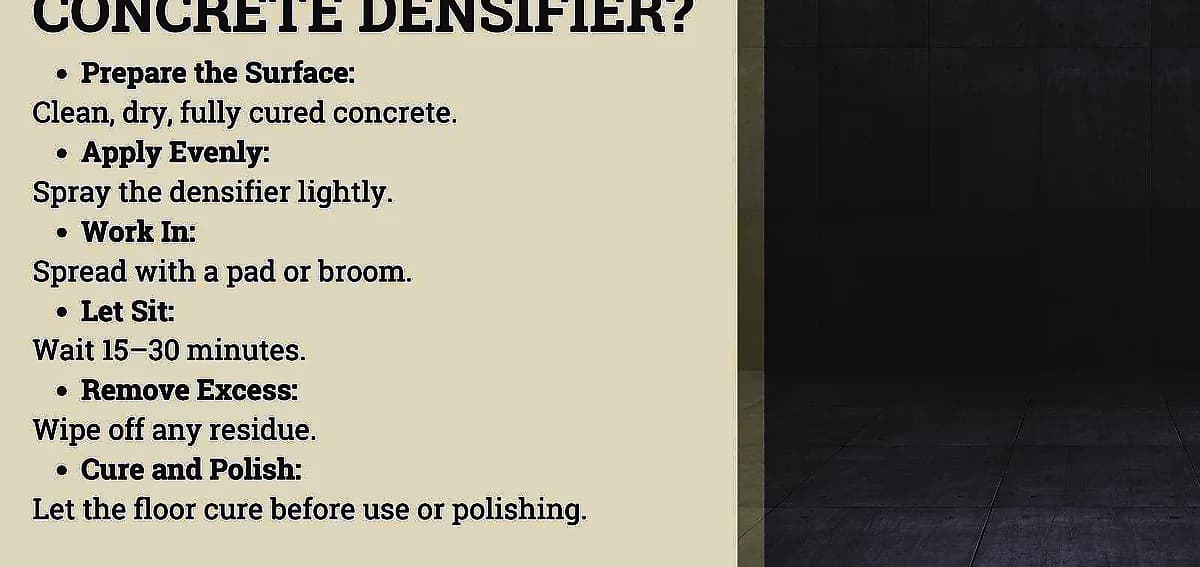
To apply a concrete densifier, ensure the surface is fully cured, clean, and free from contaminants. Proper application maximizes chemical reaction and provides even coverage and performance.
To apply a concrete densifier, the following steps must be followed:
- Surface Prep: Clean the concrete thoroughly, remove any coatings or dust, and ensure the surface is dry. For new concrete, follow the product data sheet. The Sikafloor-958 lithium silicate densifier sheet, for example, asks for a slab at least 7 days old and preferably 28 days old.
- Apply Densifier Evenly: Use a low-pressure sprayer to apply the densifier uniformly across the surface. Avoid over-saturating.
- Work into the Surface: Use a microfiber pad or soft broom to spread the densifier and work it into the pores.
- Let It Sit: Allow the densifier to dwell for the recommended time (5 to 10 minutes of keeping the surface wet on the Sikafloor-958 data sheet; other products differ) so it reacts with the concrete.
- Remove Excess: Wipe or squeegee off any remaining product to avoid surface residue or streaking.
- Cure and Polish: To enhance sheen and accelerate curing, let the surface cure before walking or polishing and burnishing.
Does a Slab Need More Than One Coat?
Sometimes. The Concrete Polishing Council notes that the required amount of densifier will vary with the slab’s initial hardness, and that the effect is limited by carbonation or pozzolanic reactions. Before polishing, ACI 310.1 asks for a Mohs hardness greater than 4 on the slab surface. Whether a second application is allowed depends on the product data sheet.
Do You Need a Sealer After a Densifier?
No, you do not need a sealer after a densifier. Many densifiers provide enough surface protection on their own. However, adding a compatible sealer offers additional benefits in environments with heavy staining risks or strict hygiene standards.
What Are the Benefits of Adding a Sealer After Densifier?
The benefits of adding a sealer after a densifier include added resistance to chemical spills and moisture, depending on the sealer. Professional concrete sealing and polishing applications can add resistance to staining from oils and acidic cleaners.
Densifying followed by sealing can raise gloss and color depth. Whether the two-step approach suits a floor depends on the traffic, the moisture and the maintenance plan.
What Are the Challenges of Adding a Sealer After a Densifier?
The challenges of adding a sealer after a densifier include potential moisture entrapment due to the state’s high humidity levels, which can lead to surface peeling or cloudiness. VOC emissions from some sealers are also a concern in enclosed, climate-controlled spaces. The need for reapplication, especially in areas exposed to salt air, UV rays, and heavy rainfall, increases long-term maintenance costs for Florida property owners.
What Are the Common Mistakes to Avoid When Choosing or Applying Densifiers?
The common mistakes to avoid when choosing or applying densifiers are using the wrong type, applying too much product, ignoring moisture conditions, and being upsold on unnecessary products. These errors can lead to poor performance and wasted money.
The following are the common mistakes to avoid when choosing or applying densifiers:
Over-Applying or Misapplying Densifier
Florida’s humid climate slows drying times, increasing the risk of streaks, hazing, or discoloration if excess densifiers aren’t properly removed. Always follow the manufacturer’s guidelines, especially for application timing and cleanup.
Choosing the Wrong Type for Your Surface
Not all densifiers perform equally in Florida’s high-traffic, moisture-prone environments. For example, lithium silicate has higher water resistance than other densifier types, according to a peer-reviewed study, but no densifier replaces moisture testing and the manufacturer’s guidance.
Ignoring Vapor Barrier and Subfloor Moisture Issues
Subsurface moisture is a frequent issue in Florida due to a high water table and tropical rainfall. Without concrete moisture testing, you cannot tell whether subsurface moisture will affect the densifier or a sealer applied over it.
Getting Upsold on Grit Levels or Sealers You Don’t Need
Some Florida contractors recommend high-grit polishing or multiple sealers for aesthetics, even when unnecessary for your floor’s function.
If you need expert guidance on choosing the right densifier for your specific project, contact us today for professional consultation.
Written by

Founder and CEO
Chris Lavin is an esteemed leader in concrete polishing and epoxy coatings with a distinguished 20-year career. As founder and CEO of National Concrete Polishing and owner of Xtreme Polishing Systems, he's renowned for polishing and epoxy coating more floors than anyone globally. Chris is recognized for his innovative approach and commitment to enhancing floor durability and aesthetics. His hands-on experience and technical proficiency make him a respected authority and a valuable resource in the field of floor polishing and coatings.
Same topic
Related articles
All stories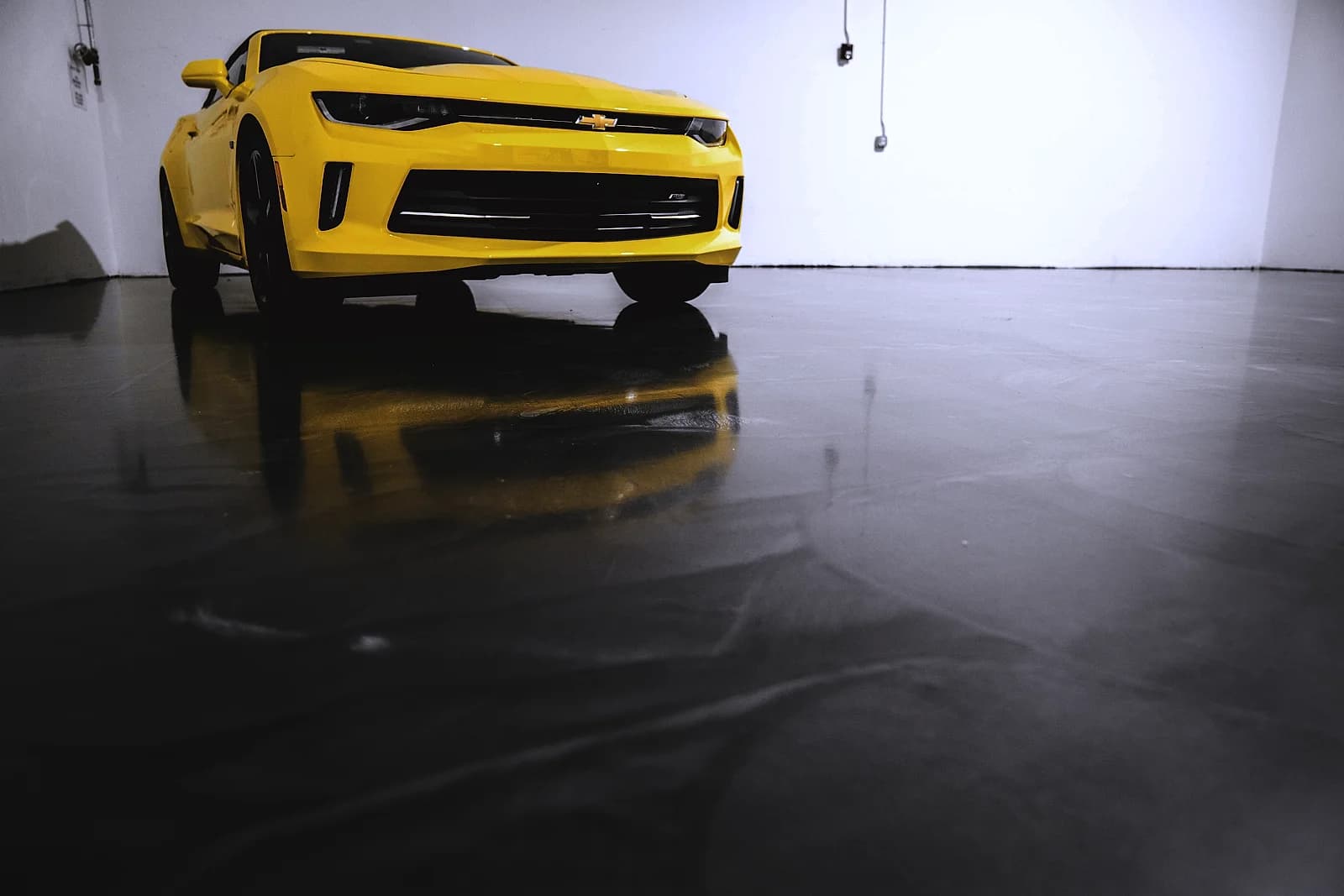
Residential7 min read
Polished Concrete Garage Floor vs Epoxy: Pros and Cons
This process smooths the surface, and a densifier hardens it, so polished concrete is used in high-traffic areas.
Read it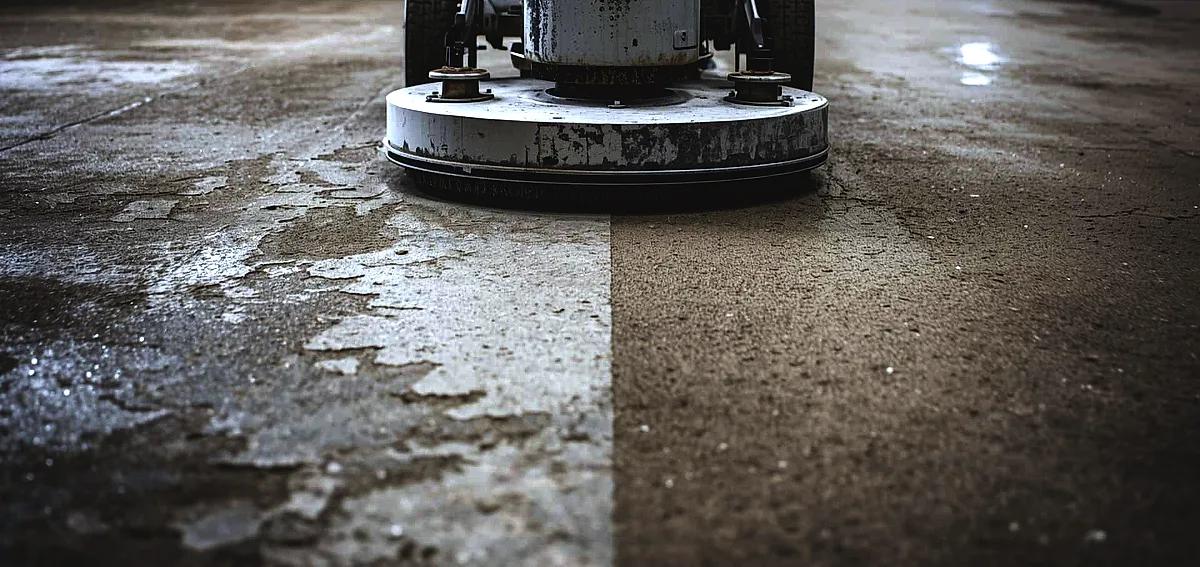
Polished concrete11 min read
Can You Polish Old Concrete? Transform Your Floors Today
Old concrete floors often hide tremendous potential beneath their weathered, dull surfaces.
Read it
Cost & ROI11 min read
How Much Does It Cost To Polish Concrete Floors?
Choosing polished concrete flooring for your residential or commercial space is a no-brainer these days.
Read it
Tell us about the floor
Tell us the space and roughly how big it is.We come back with what it would cost and when we could start.
Prefer to talk? Call +1 844-876-5474
- Leads@
nationalconcretepolishing.net - 2200 NW 32nd St #600,
Pompano Beach, FL 33069 Mon to Fri, 9:00 to 5:30