
The NCP blog
Matte Polished Concrete Finishes for Fort Lauderdale Residential Properties
Residential9 min read
Matte polished concrete stops the grinding process at a lower grit level than high-gloss finishes.
Matte polished concrete delivers the sophisticated, low-sheen aesthetic Fort Lauderdale homeowners want without the glare and maintenance demands of high-gloss finishes. This finish achieves a reflectivity level between 20-40 on the gloss meter scale, creating a subtle satin appearance that hides minor imperfections while showcasing the natural beauty of concrete. According to the Concrete Polishing Association of America (CPAA), matte finishes represent 35% of all residential polished concrete installations in humid climates like South Florida.
Fort Lauderdale’s tropical climate, with average humidity levels reaching 76% and temperatures regularly exceeding 85°F, makes matte polished concrete an ideal choice. The lower reflectivity means fewer visible footprints, water spots, and everyday wear patterns that plague high-gloss surfaces in humid environments. Professional installation costs range from $3 to $8 per square foot, delivering a floor that lasts 20-25 years with minimal maintenance.
What Makes Matte Polished Concrete Different
Matte polished concrete stops the grinding process at a lower grit level than high-gloss finishes. While high-gloss floors continue through 3000-grit resin polishing, matte finishes typically conclude at 400-800 grit diamond polishing. This creates a surface with micro-texture that diffuses light rather than reflecting it sharply.
The polished concrete reflectivity standards classify matte finishes in the Level 1-2 category (flat to satin), while high-gloss achieves Level 3-4 (semi-polished to high-polish). Research from the Portland Cement Association confirms that matte finishes retain 95% of the durability benefits of high-gloss while offering practical advantages for residential use.
The Science Behind Matte Finishes
During the concrete polishing process, diamond tooling progressively refines the surface. The grit sequence affects both appearance and performance:
30-60 grit: Initial grinding removes surface irregularities and exposes aggregate
100-200 grit: Densifier application penetrates and hardens the concrete matrix
400 grit: Flat matte finish achieved (Level 1)
800 grit: Satin matte finish achieved (Level 2)
The concrete densifier application occurs between grinding stages, filling microscopic pores with lithium silicate compounds that increase surface hardness by 40% according to ASTM C1028 testing protocols.
Benefits of Matte Polished Concrete for Fort Lauderdale Homes
Fort Lauderdale’s coastal environment creates specific challenges that matte polished concrete addresses better than many alternative flooring options. The International Facility Management Association (IFMA) reports that polished concrete requires 70% less maintenance than VCT and 50% less than hardwood in humid climates.
Superior Humidity Performance
Unlike wood, laminate, or carpet that absorb moisture and promote mold growth, concrete moisture mitigation combined with proper densification creates an impermeable surface. Testing by the International Concrete Repair Institute (ICRI) shows properly polished concrete achieves moisture vapor transmission rates below 3 lbs/1000 sq ft/24 hours, meeting the strictest flooring standards.
The matte finish provides additional humidity benefits. Water droplets and condensation that form on high-gloss surfaces become highly visible, creating a spotted appearance within hours. Matte textures diffuse these marks, maintaining a consistent appearance even during Fort Lauderdale’s most humid summer months.
Aesthetic Advantages for Modern Interiors
Contemporary residential design increasingly favors understated elegance over flashy finishes. Matte polished concrete complements the organic modern, coastal contemporary, and minimalist aesthetics popular in Fort Lauderdale’s luxury residential market. The finish works particularly well with:
Natural light: Reduces glare from floor-to-ceiling windows common in coastal properties
Neutral palettes: Complements whites, grays, and earth tones without competing for attention
Mixed materials: Pairs elegantly with wood accents, natural stone, and metal fixtures
Explore polished concrete color options to customize your matte finish with integral dyes or reactive stains that enhance the natural concrete character.
Matte vs High-Gloss Polished Concrete Comparison
Understanding the differences helps Fort Lauderdale homeowners make informed decisions about which finish best suits their lifestyle and aesthetic preferences.
| Feature | Matte Finish | High-Gloss Finish | Winner |
|---|---|---|---|
| Gloss Level | 20-40 (satin) | 70-90 (mirror) | Preference |
| Grit Sequence | Up to 400-800 | Up to 3000+ | Matte (faster) |
| Cost per Sq Ft | $3-$6 | $5-$8 | Matte |
| Shows Footprints | Minimal | Highly visible | Matte |
| Water Spot Visibility | Low | High | Matte |
| Maintenance Frequency | Every 3-5 years | Every 1-2 years | Matte |
| Slip Resistance (COF) | 0.50-0.60 | 0.40-0.50 | Matte |
| Light Reflection | Diffused | Sharp/mirror-like | Preference |
| Hides Imperfections | Excellent | Poor | Matte |
| Installation Time | 3-4 days | 4-6 days | Matte |
For detailed information on different polishing levels, see our guide to concrete polishing specifications.
Matte Polished Concrete Installation Process
Professional installation follows a systematic approach that ensures optimal results in Fort Lauderdale’s demanding climate. The entire process typically requires 3-5 days for a standard residential project of 1,000-2,000 square feet.
Pre-Installation Assessment
Before any grinding begins, technicians conduct thorough concrete substrate testing that includes:
Moisture testing: Calcium chloride and relative humidity tests per ASTM F1869 and F2170
Hardness evaluation: Mohs hardness testing determines appropriate diamond tooling selection
Surface profiling: Assessment of existing coatings, patches, and repairs that may affect results
The concrete surface profile determines the starting grit and overall approach for achieving a consistent matte finish.
Grinding and Polishing Sequence
The grinding sequence for matte finishes follows industry-standard protocols with specific modifications for South Florida conditions. Using professional concrete grinding equipment, technicians progress through:
Step 1: Coarse metal-bond diamond grinding (30-60 grit) to remove surface irregularities and achieve flatness within 1/8 inch over 10 feet
Step 2: Medium grinding (100 grit) to refine scratch patterns and prepare for densification
Step 3: Densifier application using lithium silicate compounds that react with calcium hydroxide in the concrete
Step 4: Fine grinding (200 grit) after densifier cure to remove excess and refine surface
Step 5: Final polishing (400-800 grit) to achieve desired matte sheen level
Step 6: Guard application using penetrating sealer that maintains matte appearance while providing stain resistance
Learn more about proper concrete sealing before polishing and how surface preparation affects final results.
Cost Factors for Matte Polished Concrete in Fort Lauderdale
Matte polished concrete represents one of the most cost-effective premium flooring options for Fort Lauderdale residential properties. The National Association of Home Builders reports polished concrete increases home value by an average of 2-3% while reducing lifetime flooring costs by up to 60% compared to hardwood or tile.
| Service Component | Price Range |
|---|---|
| Basic matte polish (existing concrete) | $3-$5 per sq ft |
| Premium matte polish (with densifier) | $4-$6 per sq ft |
| Matte polish with color stain | $5-$8 per sq ft |
| Coating removal (if needed) | $1-$3 per sq ft additional |
| Crack/damage repair | $50-$150 per linear foot |
| Guard/sealer application | $0.50-$1.50 per sq ft |
| 1,500 sq ft total project | $4,500-$9,000 |
The polished concrete for luxury homes guide provides detailed pricing for premium residential applications with custom features.
Maintaining Matte Polished Concrete Floors
One of the primary advantages of matte finishes is their forgiving maintenance requirements. Unlike high-gloss surfaces that show every imperfection, matte concrete remains attractive with basic care routines.
Daily and Weekly Care
Daily: Dust mop with microfiber pad to remove sand and grit that can cause micro-scratching
Weekly: Damp mop with neutral pH cleaner (pH 7-10) diluted per manufacturer specifications
Monthly: Auto-scrubber cleaning for larger residential spaces; check for any developing wear patterns
See our complete guide on maintenance for resurfaced concrete for detailed cleaning protocols and product recommendations.
Long-Term Maintenance
Matte polished concrete requires periodic re-application of guard or sealer to maintain stain resistance. In Fort Lauderdale residential settings, this typically occurs every 2-5 years depending on foot traffic intensity. Signs that resealing is needed include:
Water absorption test failure (water droplets absorb within 20 minutes rather than beading)
Increased staining from spills that previously wiped clean easily
Visible traffic patterns in high-use areas
The concrete sealer vs densifier comparison explains the different products used for ongoing maintenance and their specific applications.
Popular Applications in Fort Lauderdale Homes
Matte polished concrete works exceptionally well throughout Fort Lauderdale residential properties. The finish’s versatility and climate-appropriate performance make it suitable for multiple applications.
Main Living Areas
Open-concept living spaces benefit from the seamless, joint-free appearance of polished concrete. The matte finish reduces glare from large windows while maintaining brightness. Radiant heat compatibility makes polished concrete an energy-efficient choice, with the polished concrete thermal benefits reducing HVAC costs by 10-15% according to the Lawrence Berkeley National Laboratory.
Kitchens and Dining Areas
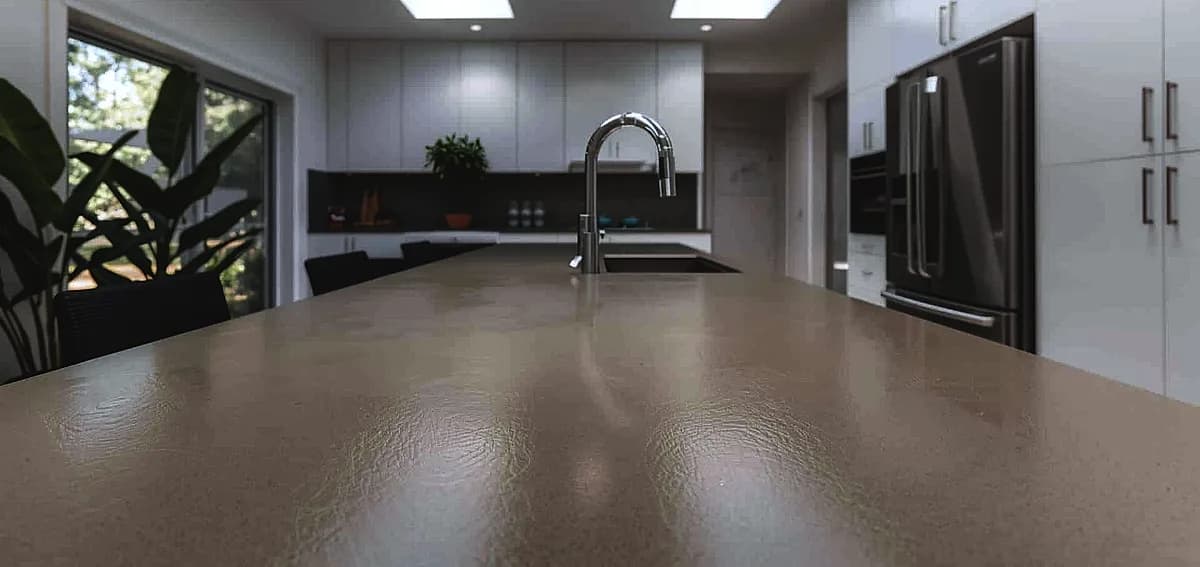
Food preparation areas demand flooring that resists staining and cleans easily. Matte polished concrete meets these requirements while providing slip resistance superior to tile or hardwood when wet. For homeowners interested in a cohesive design, concrete countertops can complement the floor finish for a unified aesthetic.
Indoor-Outdoor Transitions
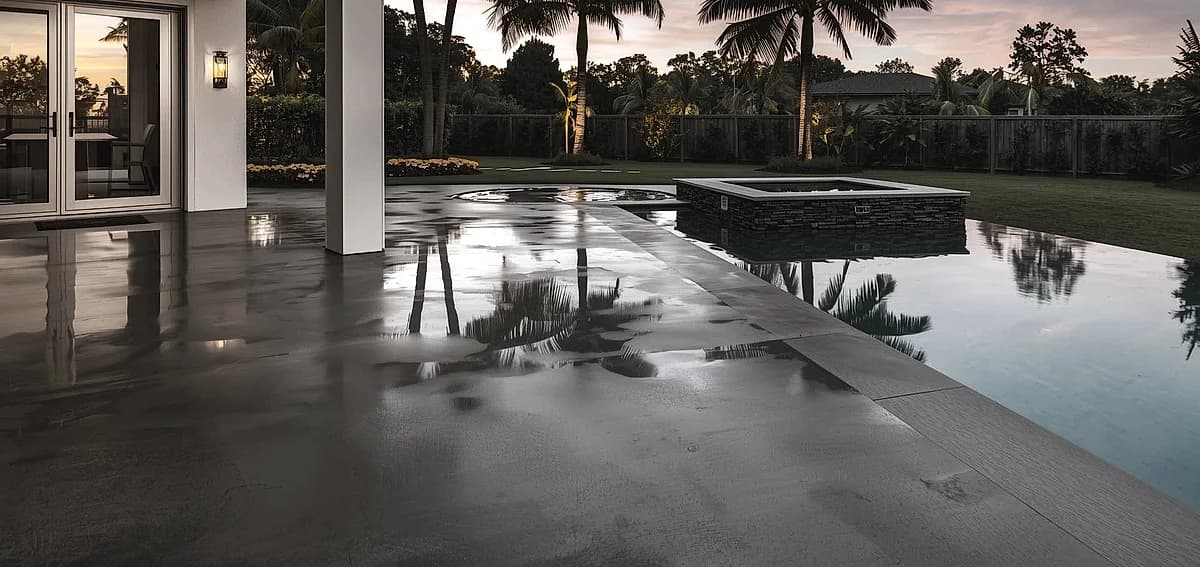
Fort Lauderdale’s lifestyle emphasizes indoor-outdoor living. Matte polished concrete creates seamless transitions from interior spaces to covered lanais and pool decks. The slip-resistant surface safely handles wet foot traffic from pools and the nearby Intracoastal Waterway or Atlantic beaches.
Review concrete floor finishes for residential spaces in Fort Lauderdale to compare matte polished concrete with other options for your specific application.
Frequently Asked Questions
How long does matte polished concrete last in Fort Lauderdale homes?
Properly installed matte polished concrete lasts 20-25 years or longer in residential applications. The concrete itself is permanent; only the surface treatment requires periodic maintenance. According to the Concrete Polishing Council, polished concrete outlasts tile, hardwood, and carpet by 2-4 times while requiring significantly less maintenance. In Fort Lauderdale’s humid climate, the moisture resistance of polished concrete provides additional longevity benefits compared to wood or laminate flooring that can warp or degrade over time.
Is matte polished concrete slippery when wet?
No. Matte polished concrete provides excellent slip resistance due to its micro-textured surface. Testing per ASTM C1028 shows matte finishes achieve a coefficient of friction (COF) between 0.50-0.60 when wet, exceeding the ADA minimum of 0.42 for accessible flooring. The lower grit level used for matte finishes creates more surface texture than high-gloss alternatives, making it a safer choice for bathrooms, kitchens, and pool deck transitions.
Can existing concrete floors be converted to matte polished concrete?
Yes. Most existing concrete floors in Fort Lauderdale homes can be polished to a matte finish. The process requires removing any existing coatings, tiles, or adhesives through concrete grinding methods. Factors affecting results include concrete age (ideally 28+ days cured), existing damage, and previous treatments. A professional assessment determines whether your existing slab is suitable for polishing or requires preliminary concrete resurfacing.
What is the cost difference between matte and high-gloss polished concrete?
Matte polished concrete typically costs 15-25% less than high-gloss finishes because it requires fewer grinding passes and less labor. For a 1,500 square foot Fort Lauderdale home, expect to pay $4,500-$9,000 for matte versus $6,000-$12,000 for high-gloss. The cost savings extend beyond installation; matte finishes require less frequent maintenance and are more forgiving of everyday wear, reducing long-term ownership costs.
How does Fort Lauderdale’s climate affect matte polished concrete?
Fort Lauderdale’s high humidity (averaging 76%) and warm temperatures create ideal conditions for matte polished concrete. Unlike wood that expands and contracts with humidity changes, polished concrete remains dimensionally stable. The densification process creates a moisture-resistant surface that prevents the mold and mildew growth common with other flooring types in tropical climates. Salt air exposure near the coast does not degrade polished concrete as it can with metal fixtures or certain tile grouts. Learn more about how humidity affects flooring in South Florida.
Can I add color to matte polished concrete?
Yes. Multiple coloring options work with matte finishes. Integral color added during concrete placement provides consistent color throughout the slab. Reactive acid stains create variegated, natural-looking earth tones. Water-based dyes offer broader color choices including vibrant hues. All coloring methods are compatible with the matte polishing process and maintain the low-sheen aesthetic. See polished concrete color options for detailed information on available treatments.
Written by

Founder and CEO
Chris Lavin is an esteemed leader in concrete polishing and epoxy coatings with a distinguished 20-year career. As founder and CEO of National Concrete Polishing and owner of Xtreme Polishing Systems, he's renowned for polishing and epoxy coating more floors than anyone globally. Chris is recognized for his innovative approach and commitment to enhancing floor durability and aesthetics. His hands-on experience and technical proficiency make him a respected authority and a valuable resource in the field of floor polishing and coatings.
Same topic
Related articles
All stories
Residential8 min read
What Restaurants Need to Pass a Health Inspection Floor Check
It endures heavy foot traffic, dropped equipment, boiling water spills, and harsh degreasing chemicals daily.
Read it
Residential9 min read
How Restaurants Replace Their Floors Without Closing for Long
The average food service establishment loses approximately $3,500 in daily revenue during unexpected closures in 2026.
Read it
Residential8 min read
Where Polished Concrete Beats Epoxy in a Home (and Where It Doesn’t)
Before evaluating specific rooms, it is essential to understand how these two flooring systems function.
Read it
Tell us about the floor
Tell us the space and roughly how big it is.We come back with what it would cost and when we could start.
Prefer to talk? Call +1 844-876-5474
- Leads@
nationalconcretepolishing.net - 2200 NW 32nd St #600,
Pompano Beach, FL 33069 Mon to Fri, 9:00 to 5:30