The NCP blog
What Equipment is Needed for Professional Concrete Polishing?
Polished concrete9 min read
Professional concrete polishing needs planetary grinders, diamond tooling, resin-bonded pads, dust extraction, and safety gear.
Professional concrete polishing requires specialized concrete grinding equipment including planetary grinders, diamond tooling, resin-bonded pads, dust extraction systems, and safety gear. Understanding this concrete grinding equipment guide helps contractors in Pompano Beach invest wisely in the right tools for delivering high-quality polished concrete floors. National Concrete Polishing uses state-of-the-art equipment to transform residential and commercial spaces throughout South Florida with durable, beautiful polished surfaces.
Overview
This comprehensive guide covers all essential equipment needed for professional concrete polishing operations. You’ll learn about grinding and polishing machines, diamond tool progression, specialized pads, dust control systems, edge equipment, and safety requirements. We’ll also explore equipment packages for different project sizes and how to select the right tools for residential versus commercial applications in Florida’s unique climate.
Grinding & Polishing Machines
Concrete grinding and polishing machines are the backbone of any professional operation, ranging from small handheld units to large ride-on models. Planetary grinders are most popular for their versatility and efficiency, featuring multiple rotating heads that cover more ground quickly while delivering consistent results. These machines use diamond-impregnated abrasive discs that effectively remove the top layer of concrete to reveal a smoother surface underneath.
Floor grinders range from 13-inch single-disc units ideal for small residential areas to 27-inch planetary machines designed for large commercial spaces. Walk-behind machines make polishing less physically demanding on larger concrete slabs, while handheld angle grinders remain essential for tackling edges, corners, and hard-to-reach spots. Variable speed models operating between 175-1750 RPM accommodate different pad requirements throughout the polishing progression.
Professional contractors should invest in machines capable of grinding, leveling, and polishing to maximize equipment utility across different project types. Single-phase motors that fit into standard washer/dryer outlets (220V) offer convenience for residential applications, while three-phase power provides superior performance for commercial operations.
Diamond Grinding Tools
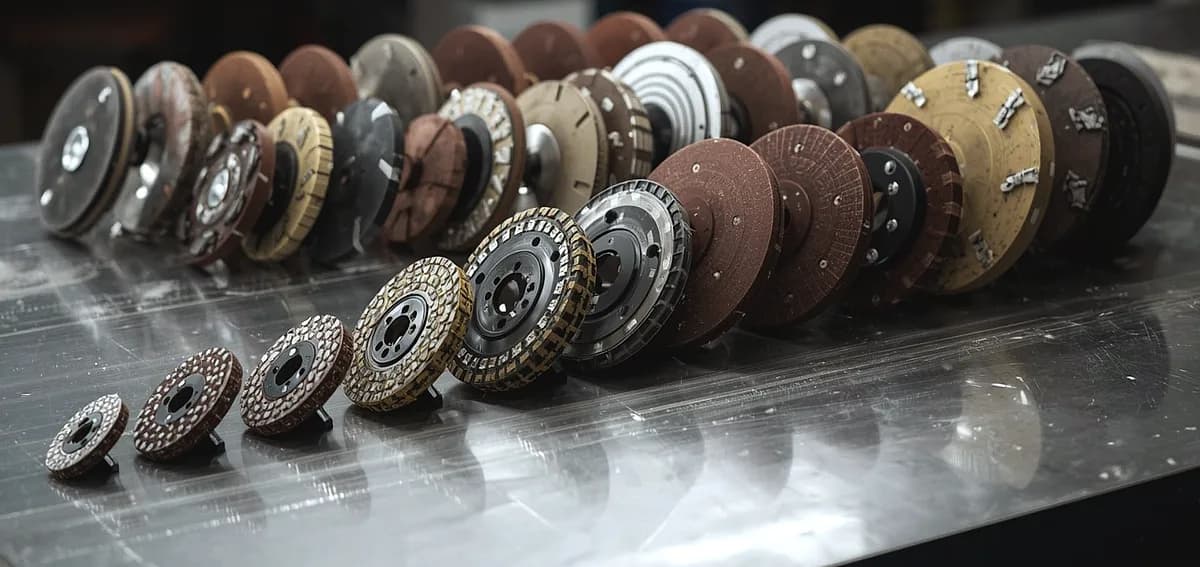
Diamond tools are where the transformation happens in concrete polishing, fitted with diamond blades or grinding wheels that attach to your machine. These tools come in various grit sizes to handle everything from coarse grinding to fine polishing, with each stage removing scratches from the previous while creating smaller ones.
The standard progression begins with coarse 30-50 grit metal-bonded diamonds for grinding and leveling the concrete surface. Medium grits (80-120) continue with metal bond for scratch removal and further leveling, followed by 150-200 grit metal bond or hybrid diamonds to prepare for the polishing process. Professional standards recommend a minimum of five steps for high-gloss finishes above 70 gloss units.
Metal-bonded diamonds work best for initial heavy grinding, removing spalls and leveling uneven slabs. Diamond grinding pad progression moves systematically through each grit level to avoid creating deep scratches that cannot be removed in later stages.
Resin-Bonded Polishing Pads
Polishing pads resembling high-tech sandpaper are critical components for achieving polished concrete floors. Resin-bonded pads are most commonly used for polishing stages because they’re durable and create smooth finishes, progressing through 400, 800, 1500, and 3000 grit levels. Each finer grit produces increasingly reflective surfaces, with 3000 grit creating the high-gloss reflection characteristic of professionally polished concrete.
Hybrid pads combining metal and resin are ideal for tough jobs like honing concrete surfaces or prepping decorative concrete for glossy coats. Some pads are designed specifically for epoxy floors, while others transition seamlessly between polished concrete and terrazzo applications. Professional contractors should stock a variety of pads to refine surfaces from initial grinding through final polishing stages.
Burnishing pads represent the final polishing stage, providing high-gloss finishes compatible with handheld polishers or burnishers. These specialized pads are available in various grit sizes and deliver the ultimate shine to completed projects.
Dust Extraction Systems
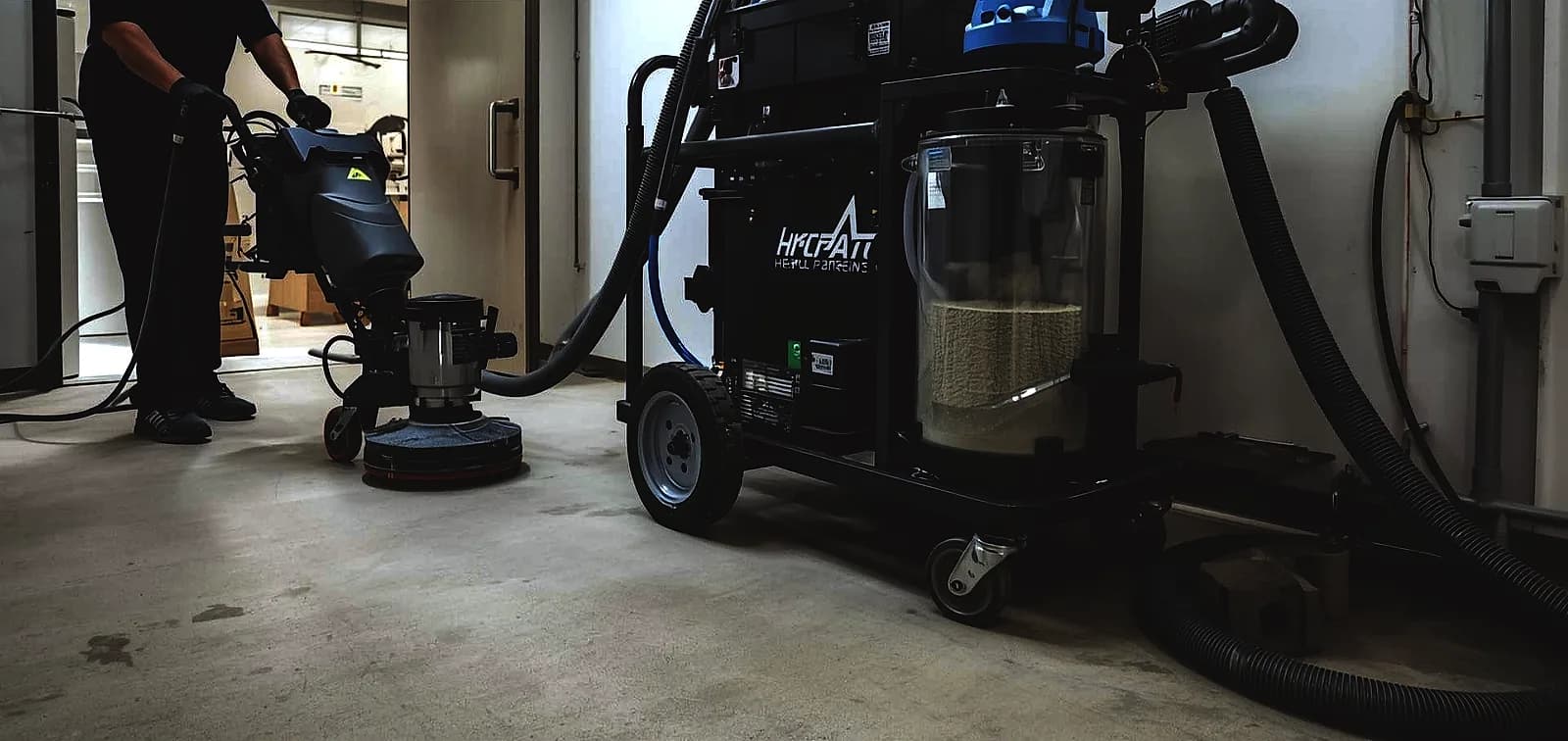
Dust extraction systems with HEPA filtration are mandatory equipment for professional concrete polishing operations. These systems must capture 99.97% of particles above 0.3 microns to comply with OSHA silica dust regulations. Proper dust control protects worker health while maintaining clean job sites that meet indoor air quality standards.
Equipment packages should include OSHA-certified vacuums matched to the dust production capacity of your grinding machines. Larger planetary grinders generate more dust and require correspondingly powerful extraction systems to maintain compliant working conditions. Dust shrouds attach to hand grinders to contain particles at the source before they become airborne.
Water flow systems offer an alternative approach, requiring 7-14 liters per minute for wet polishing operations. Wet polishing reduces airborne dust but creates slurry that requires cleanup and proper disposal, making dry HEPA systems more practical for most applications.
Edge Grinding Equipment
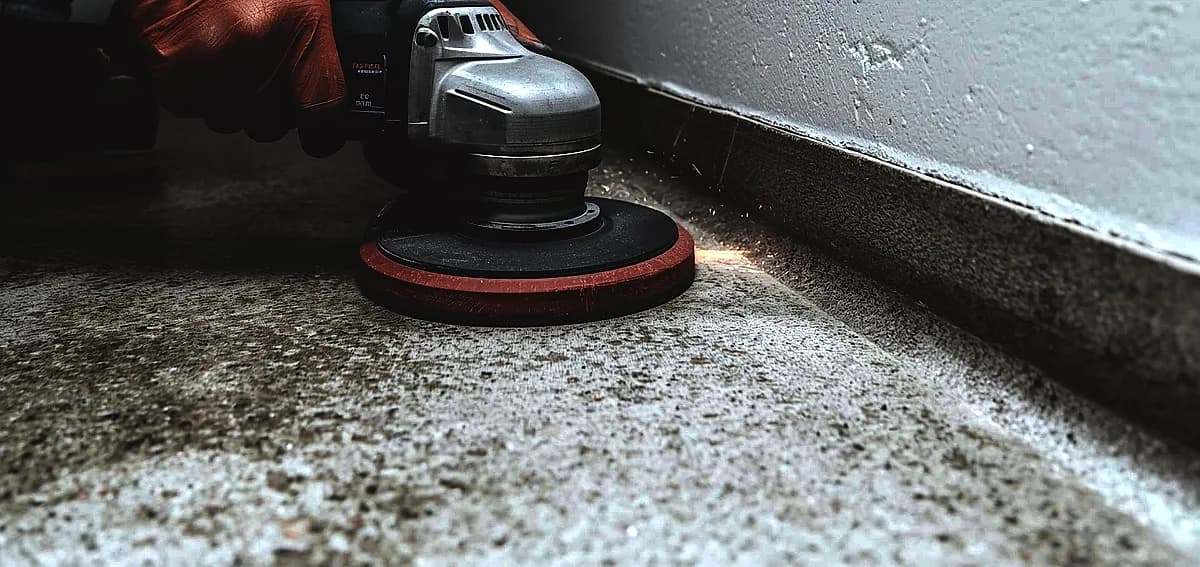
Edge grinders are essential for completing professional polishing projects in areas where larger machines cannot reach. These specialized tools handle corners, edges, and tight spaces with dedicated attachments designed for precision work. A complete edge grinding package typically includes a Rac-a-Tac kneeling stand, 5-inch Makita angle grinder, and fitting dustless vacuum.
Seven-inch angle grinders like the Dewalt model feature powerful 12-amp motors and ball bearings delivering desired finished results in edge areas. Variable speed triggers allow user control from zero to maximum settings without performance loss. These packages come complete with polishing materials scaled for specific applications, enabling contractors to match edge finishes perfectly with main floor areas.
Professional contractors should never skip edge equipment when purchasing polishing systems, as unfinished edges immediately identify amateur work. The specialized nature of edge grinding makes these tools essential additions to any complete concrete polishing operation.
Equipment Packages by Project Size
Starter Concrete Grinding Equipment
The Starter Concrete Grind & Polish Equipment Package costs approximately $12,680 and suits small-to-medium jobs under 2,000 square feet. These systems work efficiently for garage floors, driveways, and residential sites with production rates around 200 square feet per hour. Starter kits represent the best beginner equipment for flooring contractors adding polishing services to their offerings.
These packages include everything necessary for grinding, polishing, and edging smaller residential projects. Single-phase motors fit standard household outlets, eliminating the need for specialized electrical service. The main limitation is lower production rates compared to commercial equipment, making them less suitable for spaces exceeding 2,000 square feet.
Mid-Range Professional Equipment
Mid-range packages like the Genie 550 Pro cost around $13,550 and offer higher production rates due to increased machine weight. These systems produce sharper surface finishes while maintaining capabilities for grinding, polishing, and edging. Useful on-the-job accessories include LED lights and USB ports for enhanced work efficiency.
The Baby Mammoth four-head system priced at $28,250 provides high-powered performance for jobs requiring customized scratch and polishing patterns. Four rotating heads allow contractors to tackle floors of all sizes with greater versatility than smaller machines. These packages suit growing flooring businesses handling both residential and commercial projects.
Commercial-Grade Equipment
The Mammoth Pro Grind & Polish Equipment Package represents top-of-the-line professional gear at $39,380. This innovative machine excels at polishing, leveling, edging, and general grinding work across larger spaces. Essential for professional flooring contractors expanding to industrial and large commercial jobs, these systems deliver unmatched performance and production capacity.
Commercial packages include OSHA-certified vacuums and complete grinding metal sets for on-site customization. Higher equipment costs are offset by dramatically increased production rates and the ability to bid on lucrative large-scale projects.
Safety Equipment Requirements
Safety equipment protects workers from the significant hazards present during concrete grinding and polishing operations. N95 respirators are minimum respiratory protection for environments where dust extraction systems are properly functioning. Safety glasses shield eyes from flying debris and dust particles that grinders generate throughout the process.
Hearing protection rated 25+ NRR (Noise Reduction Rating) is essential, as grinding machines produce sustained high-decibel sound levels. Steel-toed boots protect feet from dropped equipment and heavy machinery, while knee pads reduce strain during edge grinding work. Brooms, squeegees, and dust pans maintain clean work areas and reduce slip hazards.
Professional contractors must prioritize safety equipment as essential operating costs rather than optional accessories. Worker safety directly impacts productivity, insurance costs, and legal compliance throughout your concrete polishing business.
Densifiers & Chemical Treatments
Pump-up sprayers apply concrete densifiers that chemically harden surfaces before final polishing stages. These chemical treatments react with concrete to fill pores and increase surface density, creating harder, more durable polished floors. Densifier application represents a critical step between grinding and final polishing that significantly impacts end results.
Stain products allow contractors to add color to polished concrete before final finishing. Stain guard sealers protect completed floors from moisture and chemical damage in high-traffic applications. These chemical treatments require dedicated sprayers kept separate from other equipment to prevent cross-contamination.
Maintenance & Cleaning Equipment
Auto-scrubbers maintain polished concrete floors after installation, removing dirt and debris without damaging surfaces. Burnishers with micro-fiber floor pads restore shine to polished concrete that has lost luster over time. This maintenance equipment extends the life of polished floors and keeps them looking their best between deep cleaning cycles.
Extension cords rated for 208 three-phase power (in-house or generator) ensure grinding equipment receives adequate electrical supply. Electrical infrastructure represents a significant consideration when planning equipment purchases and job logistics. Contractors should maintain backup electrical solutions to avoid project delays when power access challenges arise.
Selecting Equipment for Florida Applications
South Florida’s humid climate creates unique challenges for concrete grinding equipment that contractors must address. Moisture in concrete affects grinding efficiency and pad wear rates, making proper surface testing essential before beginning work. Equipment capable of both wet and dry polishing provides flexibility for different concrete conditions commonly encountered in Pompano Beach and surrounding areas.
Salt air exposure in coastal regions accelerates equipment corrosion, requiring contractors to invest in regular maintenance and protective measures. Stainless steel components and corrosion-resistant coatings extend equipment lifespan in harsh Florida environments. Proper storage in climate-controlled facilities protects valuable machinery between jobs.
Frequently Asked Questions
What is the most important piece of concrete polishing equipment?
The planetary grinder is the backbone of professional polishing, with multiple rotating heads that grind and polish large areas efficiently while delivering consistent results.
How much does professional concrete polishing equipment cost?
Starter packages begin around $12,680 for small jobs, mid-range systems cost $13,550-$28,250, and commercial-grade equipment runs $39,380+ for large-scale operations.
What grit progression is used for concrete polishing?
Professional polishing starts with 30-50 grit metal bond diamonds, progresses through 80-200 grit, then advances to 400-3000 grit resin-bonded pads for high-gloss finishes.
Do I need different equipment for edges and corners?
Yes, edge grinders with specialized attachments are essential for corners and tight spaces where larger planetary machines cannot reach.
What safety equipment is required for concrete polishing?
Required safety gear includes N95 respirators, safety glasses, hearing protection rated 25+ NRR, steel-toed boots, and knee pads for extended work.
Are dust extraction systems mandatory?
Yes, HEPA-filtered dust extraction systems capturing 99.97% of particles above 0.3 microns are mandatory for OSHA silica dust compliance.
What’s the difference between metal and resin-bonded diamonds?
Metal-bonded diamonds (30-200 grit) handle initial grinding and leveling, while resin-bonded pads (400-3000 grit) create polished, reflective finishes.
Can I rent concrete polishing equipment instead of buying?
Renting works for small one-time projects, but contractors performing regular polishing should rent or buy concrete polishing equipment based on quality control and profitability.
What electrical requirements do polishing machines have?
Small machines use single-phase 220V (standard dryer outlets), while commercial equipment requires 208 three-phase power from in-house service or generators.
How does Florida’s climate affect equipment selection?
High humidity impacts concrete moisture levels and pad wear, while salt air accelerates equipment corrosion, requiring corrosion-resistant components and regular maintenance.
Conclusion
What Equipment is Needed for Professional Concrete Polishing?Professional concrete polishing demands comprehensive equipment investment encompassing grinding machines, diamond tooling, dust extraction, edge equipment, and safety gear. While starter packages around $12,680 suit small residential operations, growing businesses should plan for mid-range or commercial-grade systems that deliver superior production rates and expanded capabilities. Understanding this concrete polishing specifications guide helps Pompano Beach contractors make informed purchases that match their project mix and growth trajectory. National Concrete Polishing uses industry-leading equipment to deliver exceptional polished concrete throughout South Florida, combining cutting-edge technology with expert technique for floors that exceed client expectations. Contact us today for a free estimate and discover how professional-grade equipment makes the difference between adequate results and stunning polished concrete that transforms your space.
Written by

Founder and CEO
Chris Lavin is an esteemed leader in concrete polishing and epoxy coatings with a distinguished 20-year career. As founder and CEO of National Concrete Polishing and owner of Xtreme Polishing Systems, he's renowned for polishing and epoxy coating more floors than anyone globally. Chris is recognized for his innovative approach and commitment to enhancing floor durability and aesthetics. His hands-on experience and technical proficiency make him a respected authority and a valuable resource in the field of floor polishing and coatings.
Same topic
Related articles
All stories
Polished concrete11 min read
Polished Concrete vs Epoxy Coatings: Which Floor Is Right for Your Space?
Two systems, two price curves, one slab. What each one costs to install and to keep, and which spaces each one actually suits.
Read it
Polished concrete8 min read
What to Know Before Polishing Your Existing Concrete Slab
Before any mechanical refinement can begin, a thorough evaluation of the current foundation is required.
Read it
Polished concrete8 min read
Is Polished Concrete Worth the Investment for Miami Properties?
It is essential to distinguish between a simple topical seal and mechanically refined concrete.
Read it
Tell us about the floor
Tell us the space and roughly how big it is.We come back with what it would cost and when we could start.
Prefer to talk? Call +1 844-876-5474
- Leads@
nationalconcretepolishing.net - 2200 NW 32nd St #600,
Pompano Beach, FL 33069 Mon to Fri, 9:00 to 5:30