
The NCP blog
What to Know Before Polishing Your Existing Concrete Slab
Polished concrete8 min read
Before any mechanical refinement can begin, a thorough evaluation of the current foundation is required.
According to data from the U.S. Green Building Council, utilizing a pre-existing foundation eliminates the need for supplementary floor coverings and reduces raw material waste by up to 90%. If you are evaluating options for your residential or commercial flooring, you may be wondering if your current foundation is a viable candidate for this treatment. We have the right article for you, covering the essential structural factors to evaluate, expected 2026 costs, and the mechanical steps required to restore an aged floor.
Assessing the Condition of Your Current Floor
Before any mechanical refinement can begin, a thorough evaluation of the current foundation is required. Not every poured floor is an immediate candidate for high-gloss restoration. A professional assessment identifies hidden flaws that could compromise the final aesthetic or structural integrity of the project.
As Marcus Thorne, Senior Structural Engineer at the Portland Cement Association, explains: “A floor must possess adequate compressive strength before it can withstand the aggressive friction generated by industrial diamond grinding equipment.” Older floors frequently exhibit signs of environmental stress that require remediation before the aesthetic work begins.
Identifying Cracks, Spalling, and Surface Damage
Surface blemishes are the most obvious indicators of structural wear. It is essential to identify spalling (the flaking or chipping of the top concrete layer) and delamination (the separation of the surface paste from the underlying aggregate). These issues often result from prolonged exposure to freeze-thaw cycles. Freeze-thaw cycles occur when absorbed moisture expands upon freezing, causing internal fractures that eventually break the surface.
Minor cracks are a natural characteristic of cured cement materials. Our crews routinely address these minor imperfections using polymer-modified overlays and flexible polyurea joint fillers. Major structural shifts, conversely, require extensive remediation to prevent the cracks from telegraphing through the final polished finish.
Moisture Vapor Transmission Rates
Moisture is a significant variable in any flooring project. Hydrostatic pressure can force trapped moisture upward through the porous capillary network of the foundation. Professionals measure this using relative humidity testing. According to the National Ready Mixed Concrete Association, floors exhibiting internal relative humidity levels above 85% require specialized moisture mitigation barriers before further sealing or coating.
Understanding the Mechanical Polishing Process
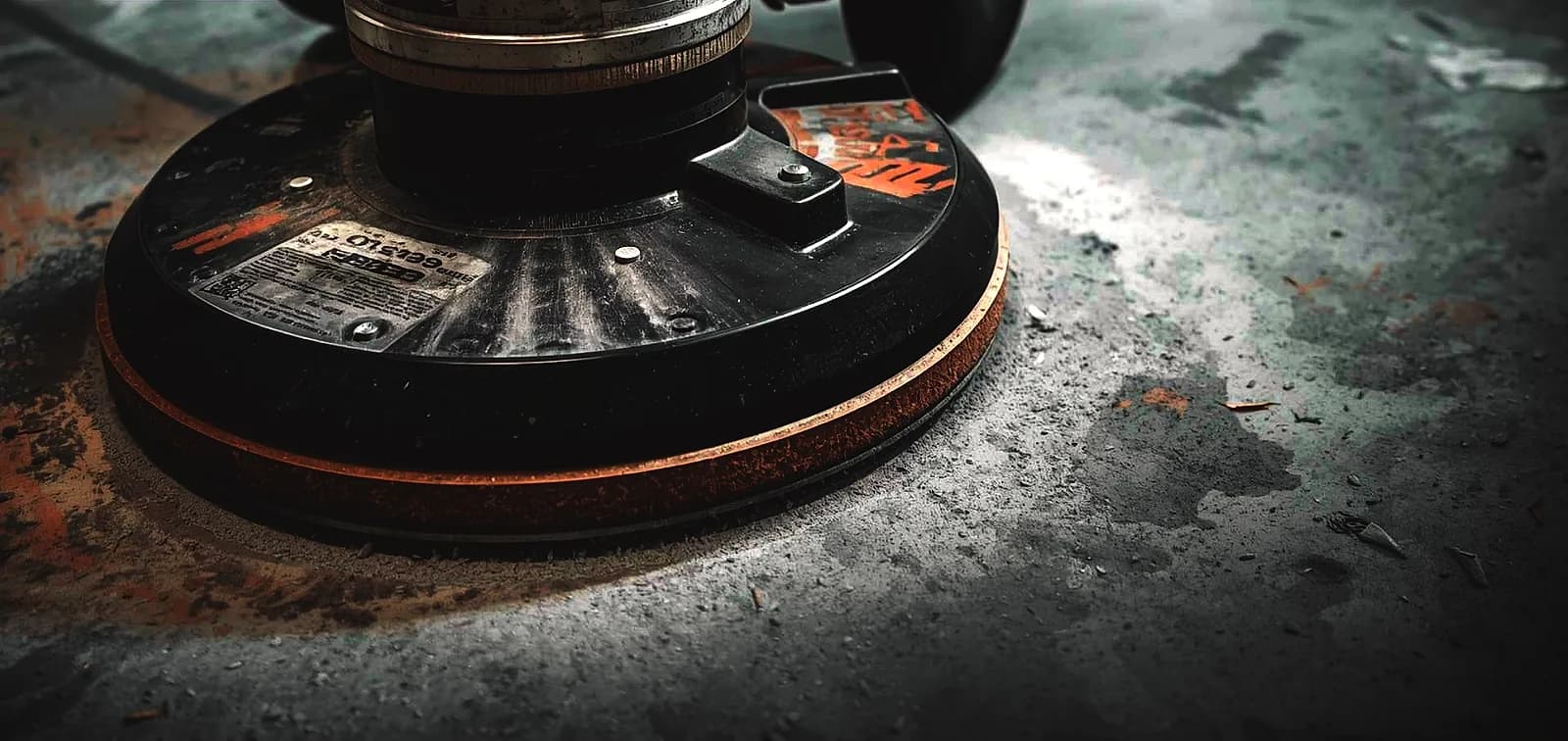
Transforming a dull, porous surface into a highly reflective architectural feature requires a multi-step mechanical process. This is not a simple topical application. It is a physical modification of the substrate itself.
Research from the U.S. Green Building Council indicates that mechanically densified surfaces increase abrasion resistance by up to 400% compared to untreated floors. The standard sequence involves four primary phases.
- Initial Grinding: Heavy planetary grinders equipped with coarse metal-bonded diamond abrasives remove the top layer of cement paste. This step eliminates surface stains, levels minor high spots, and exposes the desired amount of underlying aggregate.
- Surface Repair: Technicians fill visible cracks, divots, and expansion joints. Self-leveling overlays (fluid cementitious mixtures used to create a perfectly flat surface) may be applied to areas with extreme elevation changes.
- Densification: Technicians apply a liquid silicate densifier. This chemical penetrant reacts with the free lime inside the porous material to create calcium silicate hydrate crystals. This chemical reaction hardens the surface and permanently eliminates concrete dusting.
- Fine Polishing: Crews switch to progressively finer resin-bonded diamond pads. This phase builds the mechanical shine. The floor can be finished to varying degrees of reflectivity, from a satin matte finish to a high-gloss mirror shine.
Cost Factors and Long-Term Value in 2026
Budgeting for a flooring renovation requires analyzing both the upfront installation expenses and the long-term lifecycle costs. In 2026, the initial investment for mechanical refinement remains highly competitive against alternative floor coverings. The minimal maintenance requirements create significant long-term savings.
Prices vary based on the current condition of the foundation, the total square footage, and the desired level of aggregate exposure. Complex residential spaces with multiple small rooms generally cost more per square foot than vast, open commercial warehouses due to the difficulty of maneuvering heavy equipment.
2026 Flooring Lifecycle Comparison
| Flooring Type | Average Lifespan | 2026 Average Cost (Per Sq. Ft.) | Maintenance Level |
|---|---|---|---|
| Mechanically Refined Concrete | 20+ Years | $3.00 to $8.00 | Very Low |
| Commercial Epoxy Coatings | 10 to 15 Years | $4.00 to $10.00 | Low |
| Vinyl Composition Tile (VCT) | 5 to 10 Years | $2.50 to $5.00 | High (Stripping/Waxing) |
Limitations of Older Poured Foundations
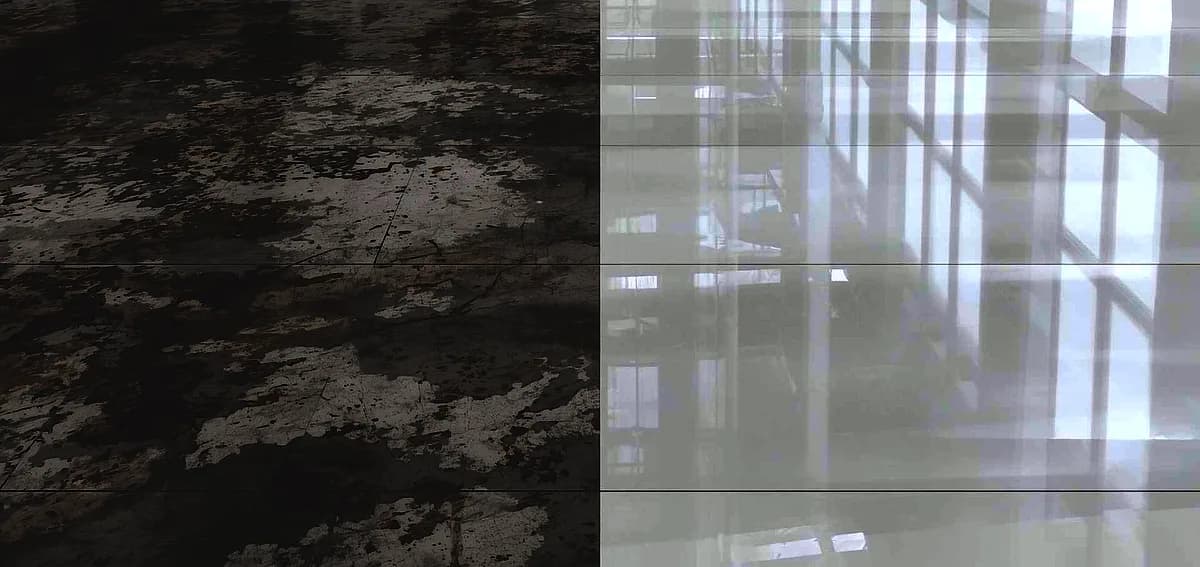
While mechanical restoration provides extraordinary durability, it is vital to set realistic aesthetic expectations. Older foundations possess unique historical traits that the grinding process will permanently reveal. The final aesthetic relies entirely on the quality of the original pour.
One common occurrence is ghosting. Ghosting refers to the faint visual outlines of previously removed tile grids, interior walls, or old plumbing trenches. Because the original cement cured at a different rate under these structures, the density variations remain visible even after aggressive grinding.
Furthermore, older floors rarely feature an even distribution of aggregate stones. You may notice dense clusters of large stones in certain areas and smooth patches of pure cement paste in others. We embrace these natural variations as an authentic industrial aesthetic. If a perfectly uniform color is required, applying a solid-color epoxy coating or a pigmented micro-topping may be a more suitable alternative.
Environmental Benefits and Sustainability
The modern architectural industry places a massive emphasis on sustainable building practices. Mechanical refinement excels in this category. The Environmental Protection Agency advocates for utilizing existing thermal mass to improve indoor temperature regulation.
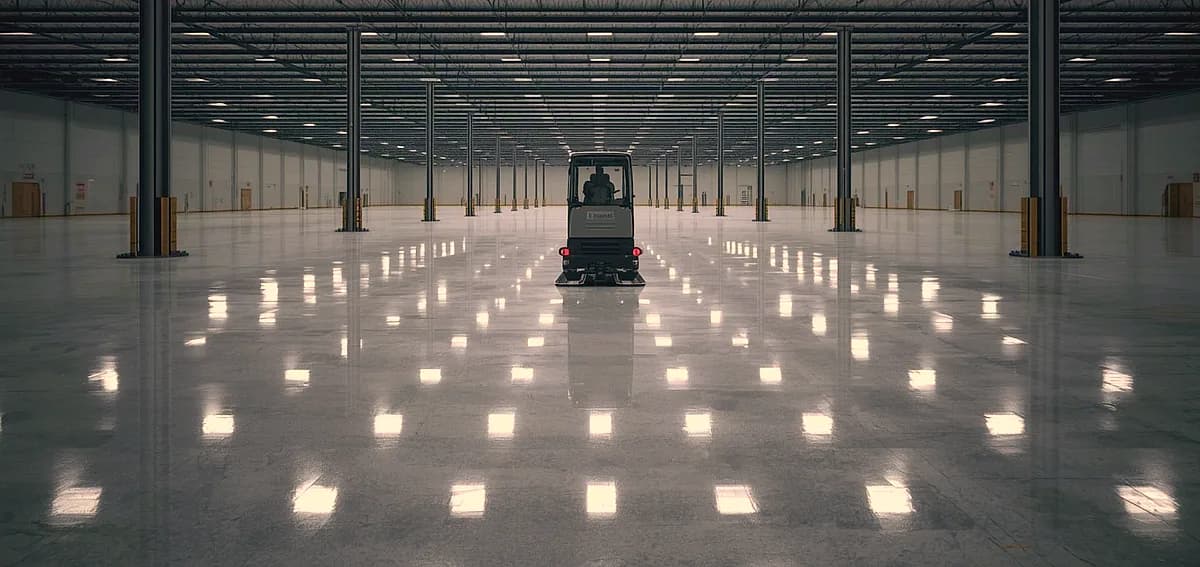
Additionally, refined floors contribute to superior indoor air quality. Because the finish relies on mechanical abrasion rather than thick chemical paints, the process emits zero Volatile Organic Compounds (VOCs). The highly reflective surface also magnifies ambient natural lighting. This reflectivity allows commercial facilities to reduce their dependence on artificial overhead lighting, lowering overall energy consumption.
Commercial Versus Residential Applications
The operational approach varies significantly between residential garages and commercial warehouse facilities. Commercial spaces prioritize extreme durability and resistance to heavy forklift traffic. These floors often require deep aggregate exposure and maximum densification to withstand constant abrasion.
Residential clients generally prioritize a flawless, highly decorative aesthetic. Homeowners often request specific dyes or intricate saw-cut patterns to match modern interior designs. Our residential crews take special precautions to protect adjacent baseboards, drywall, and cabinetry during the grinding process. Equipment must also be appropriately sized to navigate tight hallways and residential doorways.
Maintaining Your Refined Surface
A mechanically refined surface is exceptionally durable, but it still requires regular care to preserve its clarity. It is essential to implement a routine cleaning schedule. Dirt, sand, and ambient silica dust act as microscopic abrasives. When foot traffic drags these particles across the floor, they can gradually dull the high-gloss finish.
Consider using a wide microfiber dust mop daily to remove loose debris. For wet cleaning, ensure that all chemical agents are strictly pH-neutral. Traditional acidic cleaners, bleach, or ammonia will chemically etch the surface and destroy the protective calcium silicate bonds. Routine maintenance utilizing proper auto-scrubbers and neutral cleaners will keep the floor looking pristine for decades.
Frequently Asked Questions
Can you mechanically refine any existing poured floor?
Most structurally sound foundations are excellent candidates for this process. Floors with extreme foundational shifting, severe crumbling, or extensive moisture vapor transmission issues may require structural replacement first. A professional evaluation determines the exact viability of your specific slab.
How long does a densified and polished floor last?
With proper maintenance, a mechanically densified floor can last longer than 20 years. Because the process alters the actual substrate rather than just applying a topical coating, there is nothing to peel, chip, or flake away over time.
Will old cracks remain visible after the process?
Yes, old fractures typically remain visible. Our crews clean out existing fractures and fill them with color-matched polyurea joint fillers to create a smooth surface. These repaired lines blend into the floor but add to the natural, organic aesthetic of the foundation.
Does the heavy grinding process create dangerous airborne dust?
Professional crews utilize advanced equipment to eliminate airborne particulate matter. Our planetary grinders connect directly to specialized HEPA-filtered dust extractors. This vacuum system captures 99% of the silica dust directly at the grinding source.
Is a highly reflective surface slippery?
Despite their glass-like appearance, dry refined floors offer excellent traction. They routinely meet or exceed the OSHA standards for slip resistance. However, like any hard surface, they can become slippery when coated with water, oil, or fine dust.
Can you change the color of the existing foundation?
Yes, we can apply penetrating concrete dyes during the densification phase. Unlike topical paints, these translucent dyes penetrate the porous capillary network to alter the color from within. This allows the natural aggregate and variations of the floor to remain visible.
How long does the restoration process typically take?
The timeline depends entirely on the square footage, initial condition, and the amount of required patching. A standard two-car residential garage may take two to three days. A large commercial warehouse project can take several weeks to complete properly.
Does polishing remove deep oil stains from old garages?
Aggressive metal-bonded grinding removes superficial surface stains effectively. Deeply saturated oil or transmission fluid that has penetrated inches into the porous material may leave a faint permanent shadow. We apply specialized poultice degreasers to extract as much deep oil as possible before grinding begins.
Final Thoughts
Transforming an aging, dull foundation into a striking architectural element is an excellent investment for both residential and commercial properties in 2026. By understanding the structural requirements, the mechanical grinding phases, and the natural limitations of older slabs, you can make an informed decision about your flooring project. Our team at National Concrete Polishing is fully equipped to evaluate your current floor and guide you through the restoration process. If you are ready to explore the possibilities of a durable, eco-friendly surface, please reach out to our specialists.
Get in touch with our team today to schedule your comprehensive on-site consultation.
References
Written by

Founder and CEO
Chris Lavin is an esteemed leader in concrete polishing and epoxy coatings with a distinguished 20-year career. As founder and CEO of National Concrete Polishing and owner of Xtreme Polishing Systems, he's renowned for polishing and epoxy coating more floors than anyone globally. Chris is recognized for his innovative approach and commitment to enhancing floor durability and aesthetics. His hands-on experience and technical proficiency make him a respected authority and a valuable resource in the field of floor polishing and coatings.
Same topic
Related articles
All stories
Polished concrete11 min read
Polished Concrete vs Epoxy Coatings: Which Floor Is Right for Your Space?
Two systems, two price curves, one slab. What each one costs to install and to keep, and which spaces each one actually suits.
Read it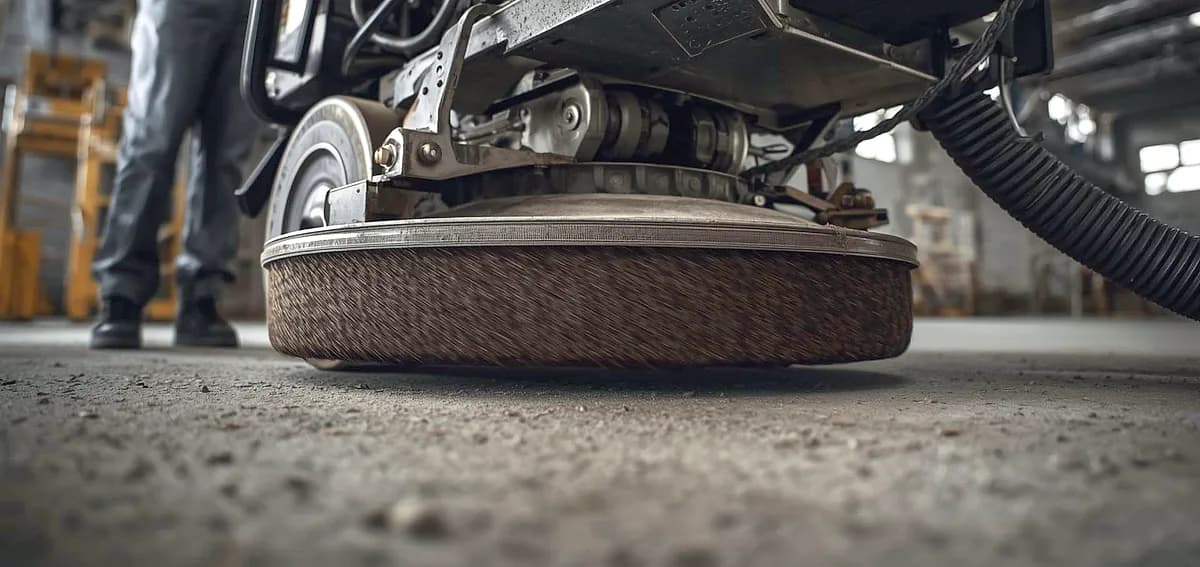
Polished concrete8 min read
Is Polished Concrete Worth the Investment for Miami Properties?
It is essential to distinguish between a simple topical seal and mechanically refined concrete.
Read it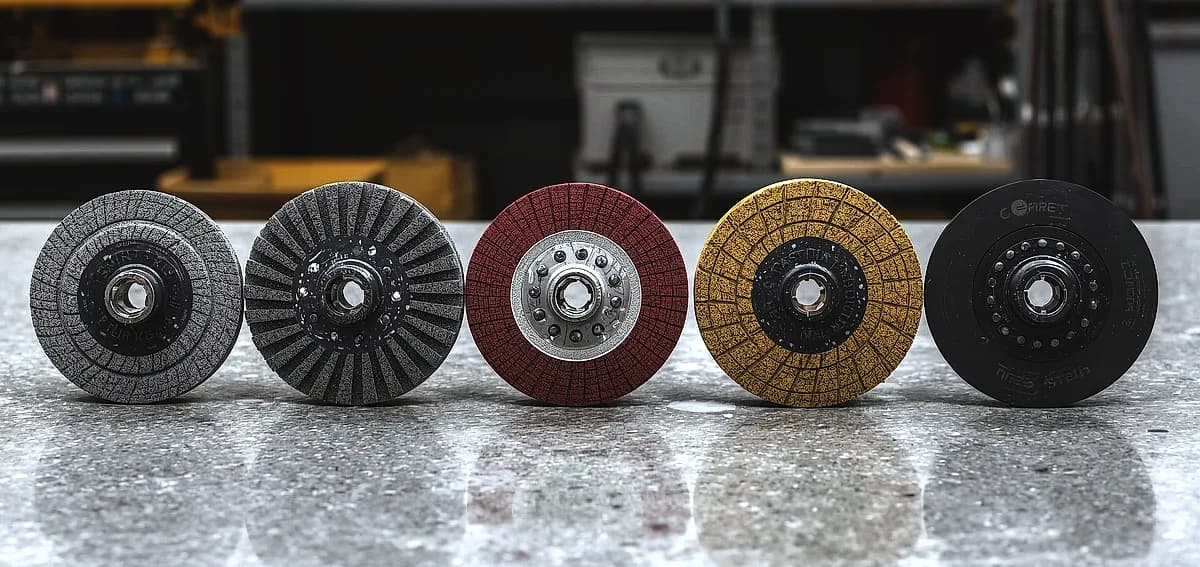
Polished concrete11 min read
Concrete Polishing Machine Rental in South Florida: What to Know
Understanding these categories helps you select the right tool for your project requirements and budget constraints.
Read it
Tell us about the floor
Tell us the space and roughly how big it is.We come back with what it would cost and when we could start.
Prefer to talk? Call +1 844-876-5474
- Leads@
nationalconcretepolishing.net - 2200 NW 32nd St #600,
Pompano Beach, FL 33069 Mon to Fri, 9:00 to 5:30