
The NCP blog
Concrete Polishing Dust Control Systems Indoor Air Quality
Polished concrete13 min read
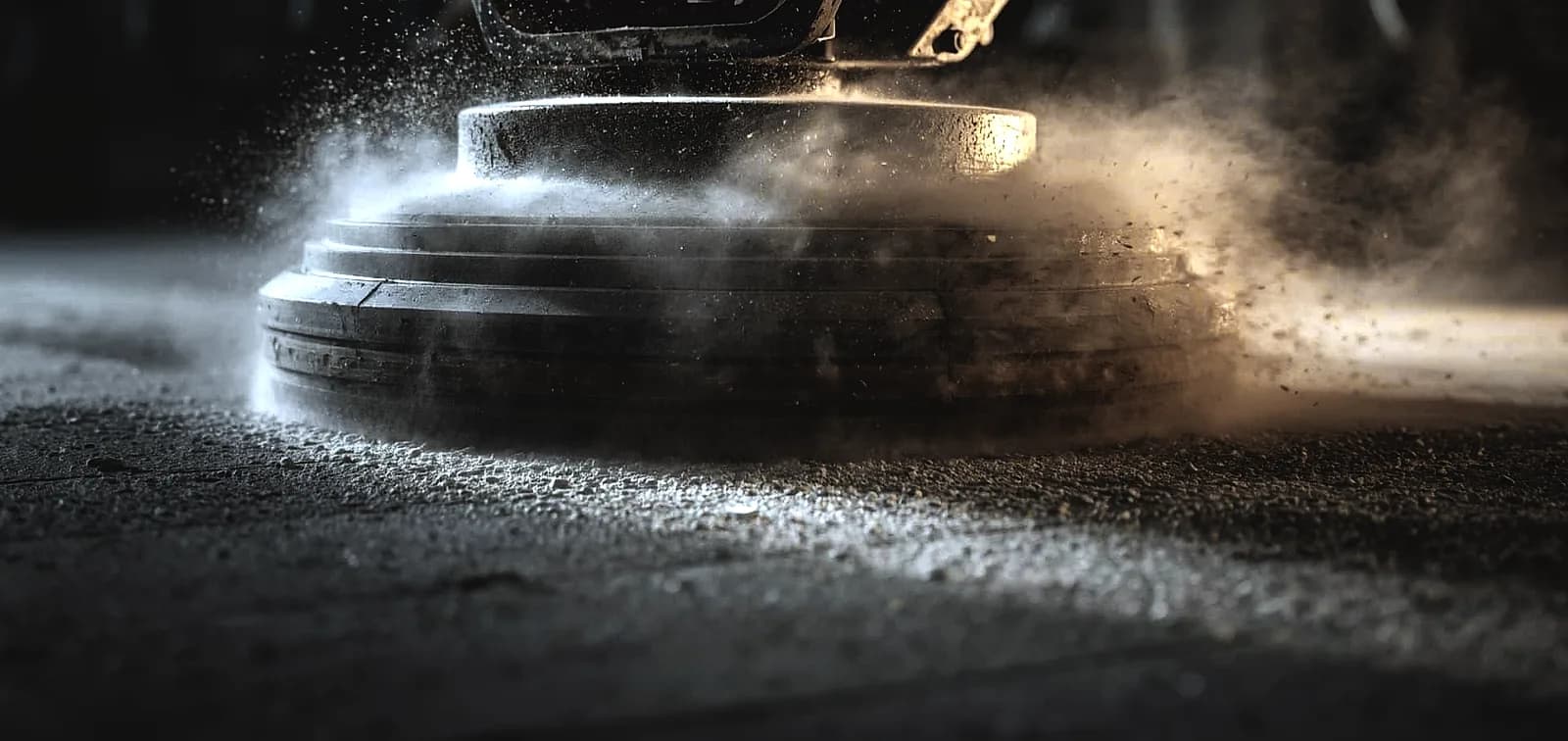
Concrete polishing involves the mechanical grinding and refinement of concrete surfaces using progressively finer abrasives.
Indoor air quality has become a critical concern in construction and renovation projects, particularly when it comes to concrete polishing operations. The process of transforming rough concrete surfaces into smooth, polished floors generates significant amounts of airborne particles that can pose serious health risks to workers and building occupants. Understanding and implementing effective concrete polishing dust control systems indoor air quality management is essential for maintaining safe working environments and protecting long-term health outcomes.
Concrete polishing involves the mechanical grinding and refinement of concrete surfaces using progressively finer abrasives. This process, while creating beautiful and durable flooring solutions, inherently produces substantial quantities of silica-containing dust particles. These microscopic particles can remain suspended in the air for extended periods, creating potential respiratory hazards and compromising indoor air quality standards. The importance of proper dust control cannot be overstated, as prolonged exposure to crystalline silica dust has been linked to serious health conditions including silicosis, lung cancer, and other respiratory diseases.
Professional flooring contractors like National Concrete Polishing recognize that effective dust management is not just about compliance with safety regulations—it’s about creating healthier work environments and delivering superior results for clients. Modern concrete polishing operations require sophisticated dust control systems that capture particles at the source, filter contaminated air, and maintain optimal indoor air quality throughout the project duration.
The evolution of dust control technology has revolutionized the concrete polishing industry, enabling contractors to perform high-quality work while minimizing environmental impact and health risks. Today’s advanced systems combine powerful vacuum collection, multi-stage filtration, and real-time air quality monitoring to ensure that polished concrete flooring solutions meet the highest safety and environmental standards. These technological advances have made it possible to perform concrete polishing in occupied buildings, sensitive environments, and areas with strict air quality requirements.
Key Takeaways
Health Protection Priority: Effective dust control systems are essential for protecting workers and building occupants from harmful silica dust exposure during concrete polishing operations, preventing serious respiratory health conditions.
Regulatory Compliance: Modern concrete polishing projects must comply with OSHA silica standards and EPA air quality regulations, making advanced dust control systems a legal requirement rather than an optional safety measure.
Multi-Stage Filtration: The most effective dust control systems employ multiple filtration stages, including pre-filters, HEPA filters, and specialized silica capture technology to achieve maximum particle removal efficiency.
Source Capture Technology: Direct attachment dust collection systems that capture particles at the point of generation are significantly more effective than ambient air filtration systems for concrete polishing operations.
Air Quality Monitoring: Real-time particle monitoring and air quality assessment tools enable contractors to verify system effectiveness and make immediate adjustments when necessary.
Equipment Integration: Modern polishing equipment is designed with integrated dust collection capabilities, ensuring seamless operation and maximum capture efficiency throughout the polishing process.
Environmental Benefits: Effective dust control systems protect not only immediate work areas but also prevent contamination of adjacent spaces and outdoor environments.
Project Quality Impact: Proper dust management improves visibility during work, reduces cleanup time, and enables better quality control throughout the concrete polishing process.
Understanding Concrete Polishing Dust Generation and Health Impacts
The concrete polishing process generates dust through mechanical abrasion as diamond-embedded tools grind and refine concrete surfaces. This dust contains crystalline silica, a naturally occurring mineral found in sand, stone, concrete, and masonry products. When concrete is cut, ground, or polished, respirable crystalline silica particles are released into the air, creating significant health hazards for anyone in the vicinity.
Crystalline silica particles are particularly dangerous because of their microscopic size—typically less than 10 micrometers in diameter—which allows them to penetrate deep into lung tissue. Once inhaled, these particles can cause scarring and inflammation in the lungs, leading to silicosis, a progressive and potentially fatal lung disease. The Occupational Safety and Health Administration (OSHA) has established strict exposure limits for crystalline silica, recognizing it as a known carcinogen that also increases the risk of kidney disease and autoimmune disorders.
The amount of dust generated during concrete polishing depends on several factors, including the hardness and composition of the concrete, the aggressiveness of the grinding process, the type of equipment used, and environmental conditions such as humidity and air circulation. Understanding how concrete placement techniques impact polishing is crucial for selecting appropriate dust control measures and ensuring effective protection. Harder concrete typically produces more dust, while softer concrete may generate larger particles that settle more quickly.
Beyond immediate health concerns, airborne dust from concrete polishing operations can impact indoor air quality for extended periods. Fine particles can remain suspended in the air for hours or even days after work is completed, continuing to pose health risks and potentially affecting building ventilation systems, electronics, and other sensitive equipment. This persistence makes it essential to implement comprehensive dust control strategies that address both immediate capture and long-term air quality management.
Advanced Dust Collection and Filtration Technologies
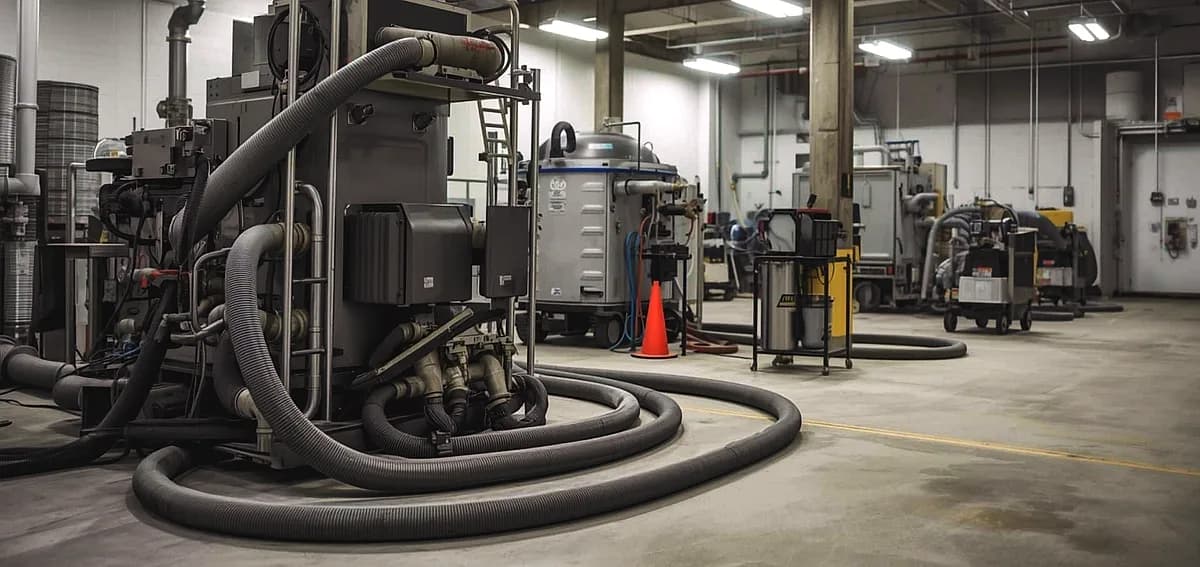
Modern concrete polishing dust control systems employ sophisticated collection and filtration technologies designed to capture and contain airborne particles with maximum efficiency. These systems typically feature multiple collection points, including direct-attachment vacuum systems that connect to polishing equipment and ambient air filtration units that clean the general work environment.
High-efficiency particulate air (HEPA) filtration represents the gold standard for concrete polishing dust control, capable of removing 99.97% of particles 0.3 micrometers or larger. However, many advanced systems now incorporate pre-filtration stages that capture larger particles before they reach the HEPA filters, extending filter life and maintaining optimal performance. Some systems also include specialized cyclonic separators that use centrifugal force to remove heavy particles from the airstream before filtration.
Vacuum collection systems designed for concrete polishing operations must provide substantial airflow and suction power to effectively capture dust at the source. These systems typically feature variable speed controls that allow operators to adjust suction power based on the specific requirements of different polishing stages. Proper concrete surface preparation combined with early grinding operations may require maximum suction to handle heavy dust loads, while final polishing stages may need more moderate airflow to prevent interference with the polishing process.
Advanced filtration systems also incorporate automatic filter cleaning mechanisms, such as pulse-jet cleaning or reverse airflow systems, that help maintain consistent performance throughout extended operations. These features reduce downtime for manual filter maintenance and ensure that dust collection efficiency remains high even during demanding projects. Some systems include filter monitoring technology that alerts operators when filters need replacement or cleaning, preventing system degradation that could compromise air quality protection.
The integration of smart technology into dust control systems has enabled real-time monitoring and adjustment capabilities that optimize performance based on actual working conditions. Sensors can detect particle concentrations, airflow rates, and filter condition, automatically adjusting system parameters to maintain optimal dust capture efficiency. This technology ensures that dust control systems respond dynamically to changing conditions during concrete polishing operations.
OSHA Compliance and Regulatory Requirements
The implementation of OSHA’s crystalline silica standard has fundamentally changed the requirements for dust control in concrete polishing operations. This regulation, which became fully effective in 2018, establishes a permissible exposure limit (PEL) of 50 micrograms per cubic meter of air averaged over an 8-hour workday. This represents a significant reduction from previous exposure limits and requires most concrete polishing operations to implement engineering controls to achieve compliance.
OSHA’s silica standard includes specific requirements for exposure assessment, methods of compliance, respiratory protection, medical surveillance, hazard communication, and recordkeeping. For concrete polishing operations, the standard essentially mandates the use of dust control systems that can demonstrate effective particle capture and air quality management. Employers must either conduct air monitoring to prove compliance with the PEL or implement specified control methods outlined in OSHA’s Table 1.
The regulatory framework also requires written exposure control plans that identify tasks that could result in silica exposure, describe engineering controls and work practices used to limit exposure, and establish procedures for restricting access to work areas where silica exposure may occur. These plans must be reviewed and updated regularly to reflect changes in work practices, equipment, or site conditions that could affect exposure levels.
Medical surveillance requirements under the silica standard apply to workers who are exposed above the action level (25 micrograms per cubic meter) for 30 or more days per year. This surveillance includes initial and periodic medical examinations, chest X-rays, and pulmonary function tests. For concrete polishing contractors, these requirements emphasize the importance of implementing effective dust control systems that minimize worker exposure and reduce the administrative burden of medical surveillance programs.
Training requirements under the silica standard mandate that workers receive instruction on health hazards associated with silica exposure, specific tasks that could result in exposure, engineering controls and work practices implemented to protect workers, and the contents of the employer’s written exposure control plan. This training must be provided before initial assignment and repeated annually, ensuring that all personnel understand the importance of proper dust control procedures.
Equipment Selection and System Integration
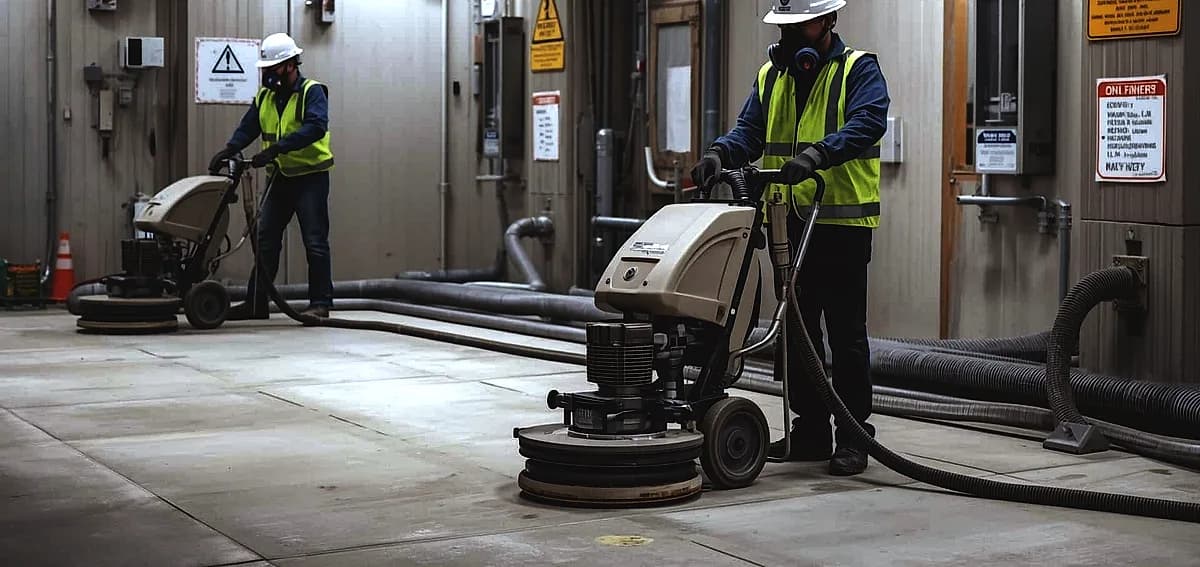
Selecting appropriate dust control equipment for concrete polishing operations requires careful consideration of project requirements, workspace characteristics, and performance specifications. The most effective systems integrate seamlessly with polishing equipment, providing consistent dust capture without interfering with work processes or compromising polishing quality. Modern concrete polishing machines are increasingly designed with built-in dust collection capabilities that optimize both performance and safety.
Portable dust collection systems offer flexibility for smaller projects or situations where permanent installation is not practical. These units typically feature wheels or casters for easy repositioning and may include battery power options for use in areas without convenient electrical access. However, portable systems must be carefully sized to provide adequate airflow and filtration capacity for the specific polishing equipment and work environment.
Stationary dust collection systems provide maximum power and capacity for large-scale concrete polishing projects, including warehouse concrete floor solutions and other commercial applications. These systems can support multiple polishing machines simultaneously and often include advanced features such as automatic filter cleaning, remote monitoring, and integration with building management systems. The installation of stationary systems requires careful planning to ensure proper ductwork design and adequate electrical supply.
The selection of appropriate vacuum hoses and connections is critical for maintaining system efficiency and operator convenience. Hoses must be sized to match the airflow requirements of both the polishing equipment and the dust collection system, while connection systems should provide secure attachment that prevents air leaks. Anti-static hoses are often preferred for concrete polishing applications to prevent static buildup that could interfere with dust collection efficiency.
System integration considerations include electrical compatibility, control system coordination, and maintenance accessibility. Many modern dust collection systems can be integrated with polishing equipment controls, automatically starting and stopping dust collection based on machine operation. This integration ensures consistent dust capture while reducing energy consumption and operator workload. Proper system integration also facilitates maintenance procedures and helps ensure long-term reliability.
Air Quality Monitoring and Performance Verification
Effective verification of dust control system performance requires comprehensive air quality monitoring that goes beyond simple visual assessment. Real-time particle counters and air quality monitors provide immediate feedback on system effectiveness and can detect problems before they result in significant exposure or air quality degradation. These instruments measure particle concentrations across different size ranges, enabling operators to verify that dust control systems are capturing both large and small particles effectively.
Personal air sampling represents the most direct method for assessing worker exposure to crystalline silica during concrete polishing operations. These measurements involve collecting air samples in the breathing zone of workers throughout their work shift, providing data that can be compared directly to OSHA exposure limits. Personal sampling results help validate the effectiveness of engineering controls and identify situations where additional protective measures may be necessary.
Area air monitoring provides valuable information about general air quality conditions in and around concrete polishing work areas. This monitoring can help identify potential exposure risks for workers not directly involved in polishing operations and verify that dust control systems are preventing contamination of adjacent areas. Area monitoring is particularly important in occupied buildings where retail concrete polishing work must be performed without disrupting normal building operations.
Continuous monitoring systems enable real-time tracking of air quality conditions throughout concrete polishing projects. These systems can provide immediate alerts when particle concentrations exceed predetermined thresholds, allowing for immediate corrective action. Some advanced monitoring systems can automatically adjust dust collection system parameters or shut down operations if air quality conditions become unacceptable.
Documentation and recordkeeping of air quality monitoring results are essential for demonstrating regulatory compliance and tracking long-term trends in system performance. Comprehensive records should include monitoring dates and times, equipment used, sampling locations, environmental conditions, and any corrective actions taken in response to monitoring results. This documentation provides valuable information for system optimization and helps establish best practices for future projects.
Best Practices for Implementation and Maintenance
Successful implementation of concrete polishing dust control systems requires careful planning, proper installation, and ongoing maintenance to ensure optimal performance throughout project duration. Pre-project planning should include assessment of workspace characteristics, identification of potential dust exposure sources, selection of appropriate control equipment, and development of detailed implementation procedures. This planning phase is critical for ensuring that dust control systems are properly sized and configured for specific project requirements.
Proper system setup and commissioning procedures help ensure that dust control equipment operates at peak efficiency from the start of concrete polishing operations. This includes verification of airflow rates, filter installation and sealing, electrical connections and controls testing, and initial air quality baseline measurements. Learning how to seal and polish concrete floors properly with integrated dust control can prevent problems that might compromise air quality protection or result in costly delays.
Regular maintenance schedules are essential for maintaining dust control system effectiveness throughout extended concrete polishing projects. Filter replacement or cleaning should be performed based on manufacturer recommendations and actual operating conditions, while vacuum system maintenance should include inspection of hoses, connections, and collection containers. Preventive maintenance helps prevent system failures that could result in exposure incidents or project delays.
Operator training is crucial for ensuring that dust control systems are used properly and effectively throughout concrete polishing operations. Training should cover system operation procedures, maintenance requirements, troubleshooting techniques, and emergency response procedures. Well-trained operators are more likely to recognize and address potential problems before they compromise system performance or worker safety.
Quality assurance procedures should include regular performance verification, documentation of system operation, and continuous improvement based on lessons learned from previous projects. Companies like National Concrete Polishing have developed comprehensive quality assurance programs that ensure consistent dust control performance across all projects, regardless of size or complexity. These programs help maintain high standards for worker protection and environmental stewardship while supporting efficient project completion, especially for industrial polished concrete applications requiring the highest safety standards.
Frequently Asked Questions
What are the main health risks associated with concrete polishing dust?
Concrete polishing dust contains crystalline silica, which can cause silicosis, lung cancer, kidney disease, and autoimmune disorders when inhaled. The microscopic particles can penetrate deep into lung tissue and cause permanent scarring.
How effective are modern dust control systems at capturing silica particles?
High-quality dust control systems with HEPA filtration can capture 99.97% of particles 0.3 micrometers or larger. When properly implemented, these systems can reduce airborne silica concentrations to levels well below OSHA exposure limits.
What OSHA requirements apply to concrete polishing operations?
OSHA’s crystalline silica standard requires exposure below 50 micrograms per cubic meter, implementation of engineering controls, written exposure control plans, worker training, and medical surveillance for highly exposed workers.
Can concrete polishing be performed in occupied buildings safely?
Yes, with proper dust control systems and air quality monitoring, concrete polishing can be performed safely in occupied buildings without compromising indoor air quality for other building occupants.
How often should dust control system filters be replaced?
Filter replacement frequency depends on operating conditions and dust loads, but typically ranges from daily to weekly during active concrete polishing operations. Systems with filter monitoring can provide specific replacement indicators.
What size dust collection system is needed for concrete polishing equipment?
System sizing depends on the polishing equipment specifications, workspace volume, and air change requirements. Professional assessment is recommended to ensure adequate capacity for specific project conditions.
Are portable dust collection systems as effective as stationary systems?
Portable systems can be highly effective when properly sized and positioned. However, stationary systems typically offer greater capacity and advanced features for large-scale or long-duration projects.
How can I verify that my dust control system is working effectively?
Real-time air quality monitoring, personal exposure sampling, visual inspection, and regular system performance checks provide comprehensive verification of dust control system effectiveness.
Conclusion
The implementation of effective concrete polishing dust control systems indoor air quality management represents a critical investment in worker health, regulatory compliance, and project quality. As the construction industry continues to recognize the serious health risks associated with crystalline silica exposure, the adoption of advanced dust control technologies has become not just a best practice but a fundamental requirement for responsible concrete polishing operations.
Modern dust control systems offer unprecedented capabilities for capturing and containing airborne particles while maintaining the efficiency and quality that clients expect from professional concrete polishing services. The integration of HEPA filtration, real-time monitoring, and intelligent control systems enables contractors to achieve compliance with stringent regulatory requirements while protecting the health and safety of workers and building occupants.
The evolution of dust control technology continues to advance, with new innovations in filtration efficiency, system integration, and performance monitoring emerging regularly. Companies like National Concrete Polishing that invest in state-of-the-art dust control systems position themselves as industry leaders while demonstrating their commitment to environmental stewardship and worker protection. These investments pay dividends through reduced liability exposure, improved worker retention, enhanced reputation, and the ability to work in sensitive environments that require the highest air quality standards.
Looking forward, the concrete polishing industry will likely see continued advancement in dust control technology, with increased automation, improved efficiency, and enhanced integration with polishing equipment. The companies that embrace these technologies today will be best positioned to meet the evolving demands of clients who prioritize health, safety, and environmental responsibility in their flooring projects.
Written by

Founder and CEO
Chris Lavin is an esteemed leader in concrete polishing and epoxy coatings with a distinguished 20-year career. As founder and CEO of National Concrete Polishing and owner of Xtreme Polishing Systems, he's renowned for polishing and epoxy coating more floors than anyone globally. Chris is recognized for his innovative approach and commitment to enhancing floor durability and aesthetics. His hands-on experience and technical proficiency make him a respected authority and a valuable resource in the field of floor polishing and coatings.
Same topic
Related articles
All stories
Polished concrete11 min read
Polished Concrete vs Epoxy Coatings: Which Floor Is Right for Your Space?
Two systems, two price curves, one slab. What each one costs to install and to keep, and which spaces each one actually suits.
Read it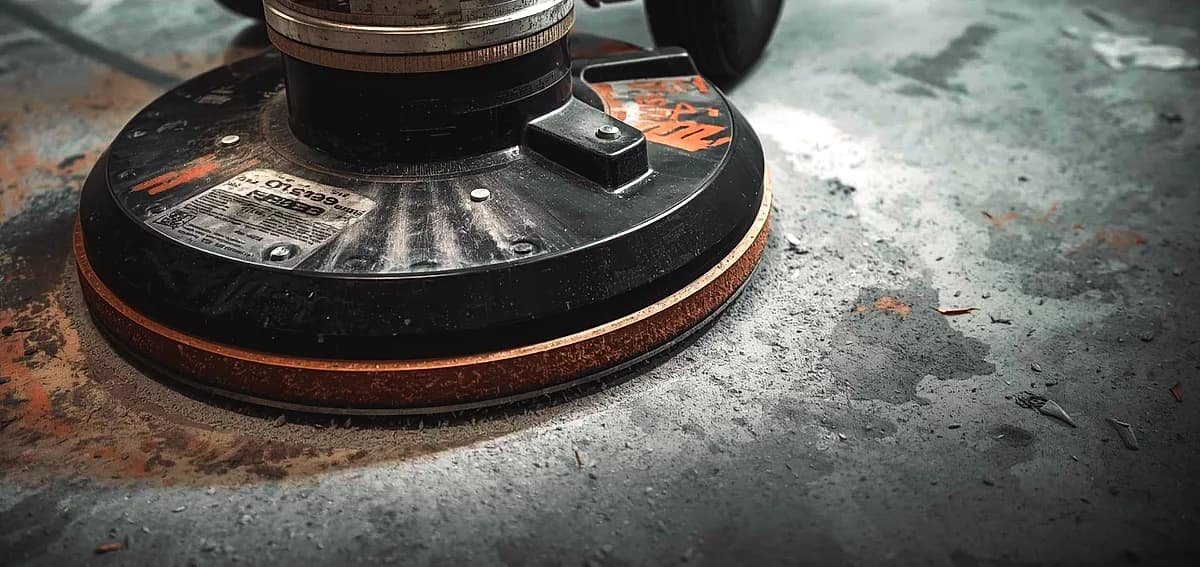
Polished concrete8 min read
What to Know Before Polishing Your Existing Concrete Slab
Before any mechanical refinement can begin, a thorough evaluation of the current foundation is required.
Read it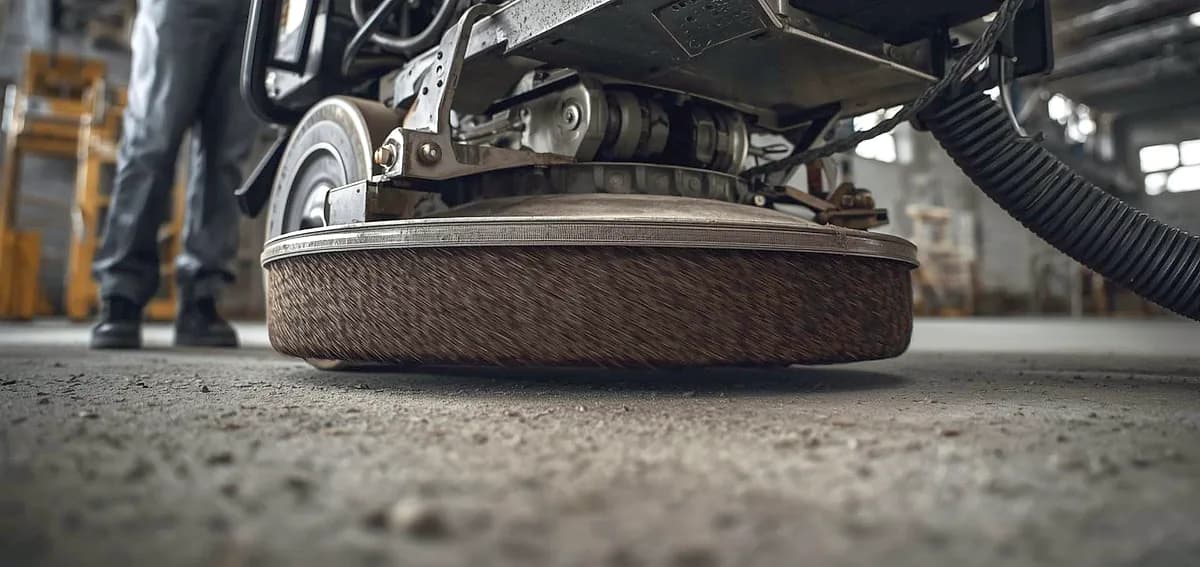
Polished concrete8 min read
Is Polished Concrete Worth the Investment for Miami Properties?
It is essential to distinguish between a simple topical seal and mechanically refined concrete.
Read it
Tell us about the floor
Tell us the space and roughly how big it is.We come back with what it would cost and when we could start.
Prefer to talk? Call +1 844-876-5474
- Leads@
nationalconcretepolishing.net - 2200 NW 32nd St #600,
Pompano Beach, FL 33069 Mon to Fri, 9:00 to 5:30