
The NCP blog
How Polished Concrete Keeps Your South Florida Building Cooler
Polished concrete14 min read
Polished concrete’s thermal benefits can reduce HVAC costs by 20-30% in South Florida’s subtropical climate.
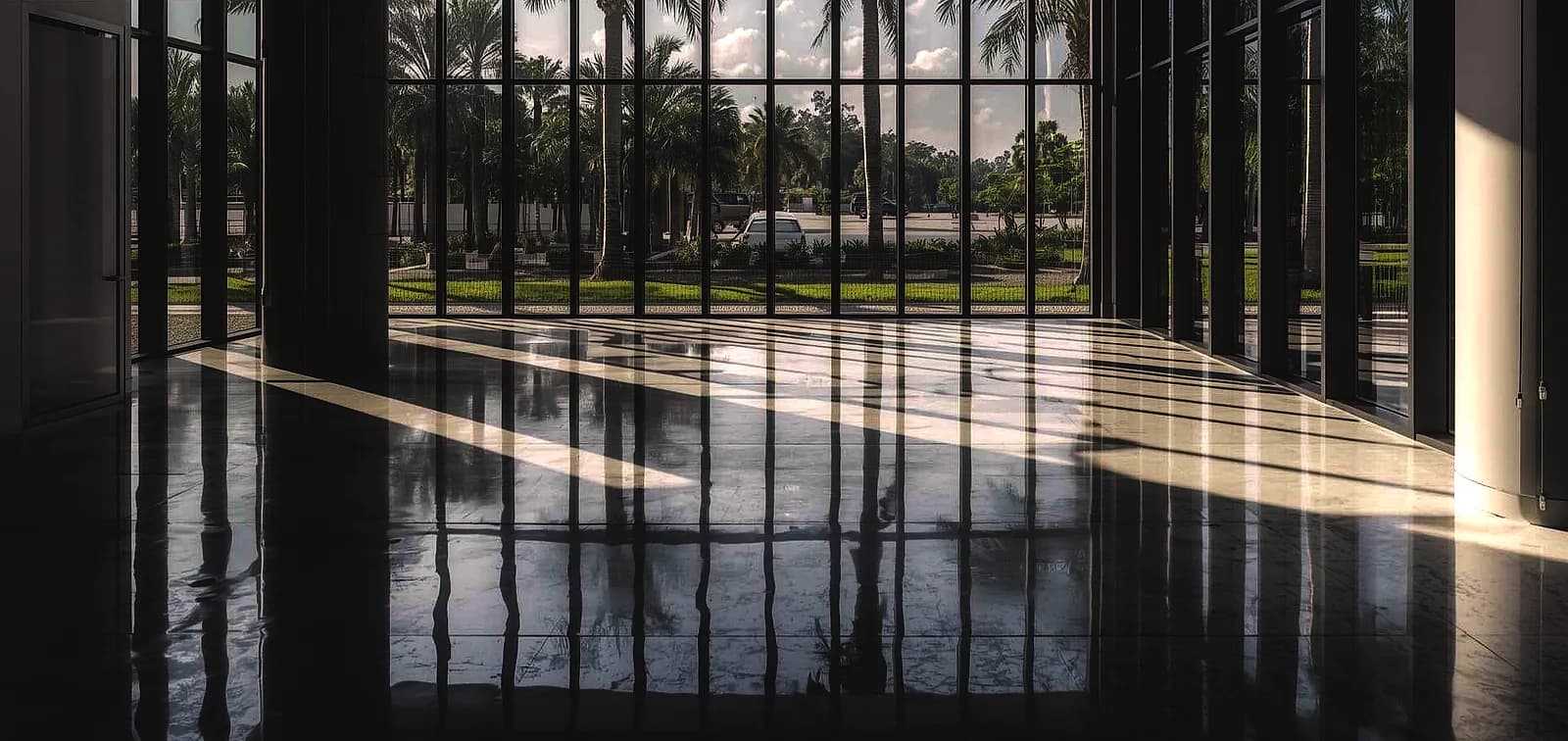
Polished concrete thermal benefits deliver measurable cooling advantages that reduce HVAC costs by 20-30% in South Florida’s demanding subtropical climate. Concrete’s high thermal mass allows it to absorb heat during scorching Miami days and release it gradually during cooler evenings, creating the “thermal flywheel” effect that naturally moderates indoor temperatures without excessive air conditioning.
The polished surface’s exceptional light reflectivity—returning 60-90% of incident light compared to 20-40% for carpet—reduces artificial lighting needs and prevents heat buildup from light fixtures that burden cooling systems. National Concrete Polishing helps Pompano Beach, Fort Lauderdale, and Miami property owners leverage these thermal advantages to create more comfortable indoor environments while dramatically reducing energy consumption in a region where cooling represents 40-60% of total building energy costs.
Overview
This comprehensive analysis explores how polished concrete’s physical properties create measurable cooling benefits for South Florida buildings. You’ll learn about thermal mass principles and how concrete stores and releases heat, the relationship between surface reflectivity and temperature control, and how polished concrete integrates with modern HVAC systems to maximize efficiency. We’ll examine real-world energy savings data, compare thermal performance against traditional flooring materials, and provide strategies for optimizing polished concrete’s cooling benefits in Miami’s unique climate.
Understanding Thermal Mass Principles
Thermal mass measures a material’s capacity to absorb, store, and release heat energy—a fundamental property that distinguishes concrete from lightweight flooring alternatives. Water possesses the highest thermal mass at 4.2 kJ/kg°C, while most building materials including concrete range from 0.8 to 1.3 kJ/kg°C. However, concrete’s advantage emerges from combining moderate specific heat with substantial mass—a typical 4-inch concrete floor slab weighs approximately 50 pounds per square foot, providing enormous heat storage capacity unavailable to thin floor coverings.
The ratio of surface area to volume affects how quickly materials absorb and release stored heat. Concrete floor slabs optimize this ratio by presenting large horizontal surfaces exposed to interior air while maintaining sufficient depth for meaningful heat storage. Research demonstrates that 75-100mm (3-4 inches) represents the optimum concrete thickness for accessible thermal mass on a diurnal heating and cooling cycle—thickness readily available in almost all building construction. This thermal capacity allows polished concrete floors to moderate temperature swings that would otherwise stress HVAC systems and create occupant discomfort.
The Thermal Flywheel Effect in Action
The “thermal flywheel” effect describes how concrete’s thermal mass creates 24-hour temperature stability by absorbing excess heat during peak hours and releasing it when needed. In South Florida’s climate, concrete floors absorb solar radiation streaming through windows during intense 85-95°F afternoon heat, preventing that thermal energy from immediately raising indoor air temperature and overworking air conditioning systems. The stored heat releases gradually during cooler evening and night hours when outdoor temperatures drop to 70-75°F—periods when buildings can more efficiently shed excess heat without mechanical cooling.
This thermal lag can provide cooling capacity of up to 25W/m² in passive concrete designs. For Miami buildings where afternoon heat creates peak cooling demands that stress both HVAC equipment and electrical grids, this natural temperature moderation reduces compressor cycling and extends equipment lifespan. The thermal flywheel effect proves particularly valuable in commercial spaces occupied primarily during daylight hours—concrete absorbs heat during business operations and releases it after hours when the building is unoccupied and can tolerate higher temperatures.
Light Reflectivity and Heat Reduction
Polished concrete’s highly reflective surface creates significant thermal benefits beyond thermal mass effects. The glossy finish reflects 60-90% of incident light depending on sheen level, compared to 20-40% for carpet, 30-50% for vinyl, and 40-60% for ceramic tile. This enhanced reflectivity reduces artificial lighting requirements by 20-30%, directly decreasing heat generated by light fixtures that would otherwise burden cooling systems. In large commercial facilities, lighting can account for 15-25% of cooling loads—heat that polished concrete’s reflectivity helps eliminate.
The bright, reflective surface also prevents radiant heat absorption from sunlight and artificial sources. Dark-colored floor materials absorb solar radiation and convert it to heat that radiates back into interior spaces, while polished concrete’s light-reflecting properties minimize this thermal gain. The reflectivity measured by concrete polishing directly correlates with cooling benefits—higher gloss levels provide greater light return and reduced heat absorption. For Miami buildings with substantial window areas that admit intense sunlight, reflective flooring represents a critical strategy for controlling solar heat gain.
Optimizing Concrete Thickness for Maximum Benefits
The 75-100mm (3-4 inch) thickness range represents optimal concrete depth for diurnal thermal mass benefits in South Florida applications. Slabs thinner than 3 inches lack sufficient mass to meaningfully moderate temperature fluctuations, while thicker slabs increase thermal storage but delay response times beyond the 24-hour cycle. This optimal thickness corresponds to standard construction practices—most residential and commercial concrete floors already meet or exceed these specifications.
The thermal benefits scale with concrete volume exposed to interior conditions. Covering concrete with carpet, vinyl, or other insulating materials effectively blocks thermal mass interaction with indoor air, eliminating cooling advantages. This explains why removing old flooring to expose and polish existing concrete slabs provides immediate thermal performance improvements—the previously hidden thermal mass becomes accessible to moderate interior temperatures. For new construction, designing exposed polished concrete from the outset maximizes thermal benefits while eliminating costs associated with traditional floor coverings.
Temperature Performance vs Traditional Flooring
Comparative temperature measurements reveal polished concrete’s cooling advantage over conventional materials. Carpet insulates concrete thermal mass while trapping heat against floors, creating surface temperatures 5-10°F warmer than polished concrete in identical conditions. The fibers prevent heat dissipation and block beneficial thermal mass interaction that would moderate temperatures. Vinyl flooring demonstrates similar insulating effects, raising surface temperatures 3-7°F above polished concrete while eliminating thermal mass benefits.
Ceramic tile over concrete provides some thermal mass access but reflects less light than polished concrete, offering intermediate thermal performance. Wood flooring insulates concrete thermal mass while absorbing and retaining heat, typically measuring 4-8°F warmer than polished concrete in controlled tests. These temperature differentials translate directly to cooling costs—every degree of indoor temperature reduction decreases air conditioning energy consumption by approximately 3-5%. In South Florida’s climate where year-round cooling dominates energy usage, these differences create substantial operational savings.
Energy Savings Quantification for South Florida
Real-world energy monitoring demonstrates polished concrete’s measurable impact on cooling costs in subtropical climates. Commercial facilities report cooling energy reductions of 20-30% after converting from carpet or vinyl to polished concrete, translating to savings of $0.50-$1.50 per square foot annually depending on building type and occupancy patterns. A typical 20,000-square-foot retail space or office building might realize $10,000-$30,000 in annual energy cost avoidance through polished concrete’s thermal benefits.
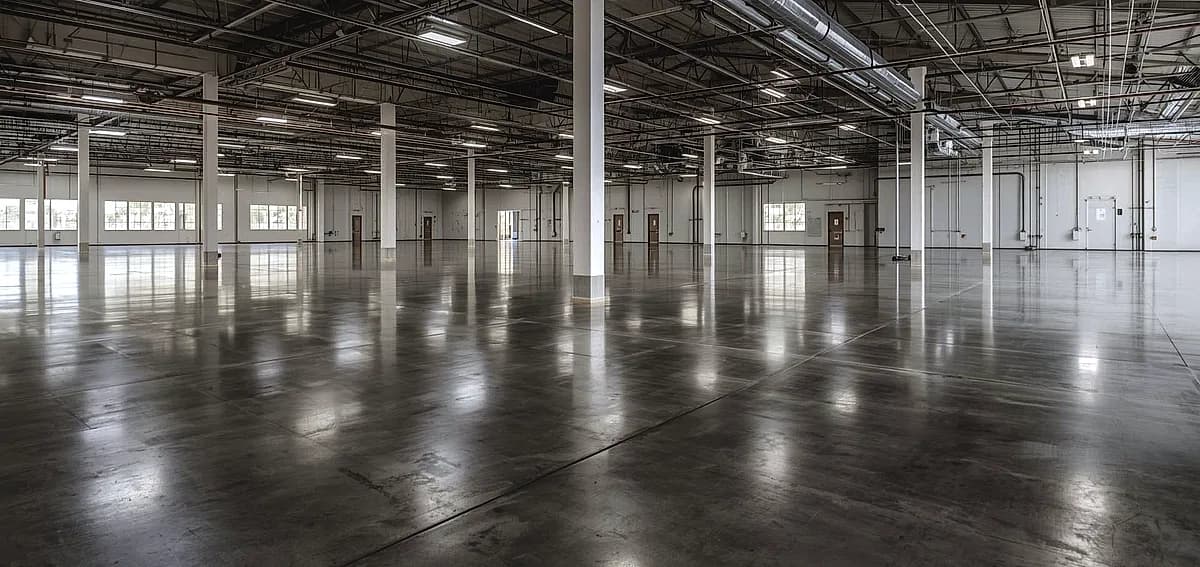
The savings prove particularly impressive during peak demand hours when utility rates reach premium levels. Polished concrete’s ability to reduce afternoon cooling loads helps buildings avoid demand charges that can constitute 30-50% of commercial electricity costs in Miami. These energy reductions also decrease HVAC equipment wear, extending system lifespan and reducing maintenance expenses. Warehouse facilities with extensive square footage and minimal temperature control report even greater savings, with some operations documenting 35-40% cooling energy reductions.
Integration with Radiant Cooling Systems
Polished concrete pairs exceptionally well with radiant cooling systems that circulate chilled water through tubing embedded in floor slabs. The concrete’s thermal mass and conductivity distribute cooling evenly across surfaces, creating comfortable 68-72°F floor temperatures without cold spots or drafts. This system eliminates forced-air cooling’s energy-intensive fans and ductwork, reducing cooling energy consumption by 30-40% compared to conventional air conditioning.
Radiant systems leverage polished concrete’s thermal properties by using the floor’s mass as a cooling reservoir that absorbs heat from occupants and equipment. The polished surface enhances system efficiency by eliminating carpet or tile that would insulate the cooling effect from interior spaces. For South Florida buildings pursuing maximum energy efficiency, radiant cooling with polished concrete represents cutting-edge technology that delivers superior comfort with minimal energy input. The combination proves particularly effective in commercial kitchens and industrial facilities where traditional air conditioning struggles to maintain comfortable temperatures.
Color Selection for Thermal Performance
Concrete color significantly impacts thermal performance through differential light absorption and reflectivity. Light-colored concrete—whites, light grays, and beiges—reflects maximum sunlight and artificial light, minimizing heat absorption while maximizing brightness benefits. These lighter shades can reflect 70-90% of incident light, providing optimal cooling performance for South Florida applications. The enhanced reflectivity reduces both direct thermal gain from absorbed radiation and indirect gain from reduced lighting needs.
Medium-gray concrete balances thermal performance with aesthetic preferences, reflecting 50-70% of light while maintaining the natural concrete appearance many designers prefer. Dark-colored concrete—charcoals, blacks, and deep earth tones—absorbs substantially more heat, raising surface temperatures 10-20°F above light alternatives in direct sunlight. While decorative concrete colors offer aesthetic appeal, dark selections compromise thermal benefits in Miami’s intense solar environment. For buildings prioritizing energy efficiency, lighter concrete colors deliver measurable cooling advantages that justify any aesthetic trade-offs.
Seasonal Performance in Subtropical Climate
South Florida’s limited seasonal temperature variation creates year-round cooling demands that magnify polished concrete’s thermal benefits. Unlike temperate climates where thermal mass benefits alternate between seasonal heating and cooling, Miami buildings require cooling 10-12 months annually—conditions where concrete’s heat absorption and delayed release provide consistent advantages. Summer months with 85-95°F outdoor temperatures and intense humidity see maximum thermal mass benefits as concrete moderates extreme heat.
Even during December-February “winter” periods when outdoor temperatures drop to 65-75°F, Miami buildings still require daytime cooling due to solar gain, occupant loads, and equipment heat. Polished concrete continues providing benefits by absorbing daytime heat and releasing it during cooler nighttime hours when natural ventilation can efficiently shed excess thermal energy. This consistent year-round performance distinguishes South Florida from northern climates where thermal mass alternately aids heating and cooling—in Miami, concrete’s thermal properties exclusively support cooling objectives. The climate-specific benefits make polished concrete particularly well-suited for subtropical applications.
Impact on HVAC System Sizing and Performance
Polished concrete’s thermal benefits allow HVAC designers to specify smaller, less expensive cooling equipment without compromising comfort. The reduced peak cooling loads resulting from thermal mass and reflectivity enable 15-25% equipment downsizing compared to buildings with insulating floor coverings. For a typical commercial installation requiring a 20-ton air conditioning system with carpet, polished concrete might allow a 15-17 ton unit—savings of $5,000-$8,000 in equipment costs plus reduced electrical infrastructure.
The moderated temperature swings also reduce HVAC cycling frequency, extending compressor lifespan and improving system reliability. Air conditioning systems in carpeted buildings may cycle 12-15 times per hour during peak conditions, while identical buildings with polished concrete cycle 8-10 times—a reduction that can extend equipment life by 30-40%. The decreased runtime also reduces maintenance requirements for filters, belts, and other consumable components. These combined benefits make polished concrete a strategic investment that pays dividends through both reduced energy consumption and lower equipment lifecycle costs.
Thermal Comfort and Occupant Satisfaction
Polished concrete creates superior thermal comfort through stable temperatures and cool-to-touch surfaces. The thermal mass effect eliminates the temperature swings common in lightweight buildings where thermostats cycle between 68°F and 76°F—instead maintaining steady 72-74°F conditions that occupants perceive as more comfortable. The cool floor surface provides direct cooling through conduction to feet and body contact, creating perceived temperature reductions of 2-4°F compared to actual air temperature.
This radiant cooling effect proves particularly welcome in Miami’s climate where high humidity makes warm surfaces uncomfortable. Unlike carpet that insulates and traps heat, polished concrete floors remain consistently cool even during afternoon heat peaks. Fitness centers, retail stores, and other high-activity spaces benefit especially from polished concrete’s cooling properties that help regulate body temperature during physical exertion. The combination of stable air temperatures and cool floor surfaces creates thermal environments that occupants consistently rate as more comfortable than alternative flooring systems.
Humidity Control Advantages
Polished concrete’s thermal properties indirectly support humidity control—a critical consideration in South Florida’s 75%+ relative humidity environment. The cool floor surface temperature remains above dew point under normal conditions, preventing condensation that would foster mold growth and degrade air quality. The thermal mass helps moderate humidity swings by preventing rapid temperature fluctuations that cause condensation on building surfaces.
The sealed, non-porous surface prevents moisture absorption that allows other flooring types to harbor mold, mildew, and bacteria. This moisture resistance combined with thermal stability creates healthier indoor environments—particularly important for healthcare facilities, schools, and other occupancies where air quality directly impacts health outcomes. The thermal and moisture control advantages work synergistically to reduce HVAC energy consumption while maintaining superior indoor environmental quality.
LEED Certification and Green Building Credits
Polished concrete’s thermal benefits contribute significantly to LEED certification through multiple credit categories. Energy and Atmosphere credits recognize measurable cooling energy reductions that lower operational carbon footprints. Indoor Environmental Quality credits acknowledge improved thermal comfort and stable temperatures that enhance occupant satisfaction. Materials and Resources credits reward polished concrete’s use of existing slabs without additional materials, reducing embodied energy compared to conventional floor coverings.
The combination of reduced artificial lighting needs, lower cooling energy consumption, and minimal maintenance requirements makes polished concrete a cornerstone of sustainable building design in South Florida. Projects pursuing LEED Silver, Gold, or Platinum certification often specify polished concrete as essential to achieving energy performance thresholds. The thermal benefits alone can contribute 2-4 LEED points through energy savings, while additional credits for materials, indoor air quality, and innovation push polished concrete’s total contribution to 6-8 points.
Maintenance Impact on Thermal Performance
Proper maintenance preserves polished concrete’s thermal benefits throughout its multi-decade lifespan. Regular cleaning with appropriate methods maintains surface reflectivity that maximizes light return and minimizes heat absorption. Dirt accumulation reduces reflectivity by 10-20%, diminishing thermal performance benefits. Simple dust mopping and occasional damp cleaning with pH-neutral cleaners maintain optimal surface conditions without harsh chemicals or intensive labor.
Periodic densifier reapplication every 3-5 years refreshes surface hardness and gloss, restoring any reflectivity loss from wear. This minimal maintenance requirement contrasts sharply with carpet requiring replacement every 5-7 years or vinyl demanding replacement every 8-10 years—interventions that temporarily eliminate thermal mass benefits and incur substantial material and labor costs. The longevity and low maintenance of polished concrete ensures consistent thermal performance throughout building lifecycles, maximizing return on initial investment.
Cost-Benefit Analysis of Thermal Advantages
Initial polished concrete installation costs $3-$8 per square foot depending on existing conditions and desired finish level. For a 10,000-square-foot commercial space, total investment ranges from $30,000-$80,000—comparable to high-quality carpet or tile installation. However, the thermal benefits create operational savings that generate positive return on investment within 3-5 years for typical South Florida applications.
Annual cooling energy savings of $0.50-$1.50 per square foot translate to $5,000-$15,000 yearly for this example space. Reduced HVAC equipment sizing saves $10,000-$15,000 in initial capital costs, while extended equipment life and reduced maintenance add another $2,000-$4,000 annually. Combined savings of $17,000-$34,000 in first-year costs plus $7,000-$19,000 ongoing annual benefits create compelling financial justification independent of polished concrete’s durability, aesthetics, and other advantages. For commercial property owners and facility managers, thermal benefits represent measurable value that directly impacts operating budgets and building profitability.
Frequently Asked Questions
How much can polished concrete reduce cooling costs in Miami?
Polished concrete typically reduces cooling energy by 20-30%, saving $0.50-$1.50 per square foot annually in South Florida applications through thermal mass and reflectivity benefits.
What is thermal mass and why does it matter in Florida?
Thermal mass is concrete’s ability to absorb and store heat, creating a “thermal flywheel” effect that moderates temperature swings and reduces peak cooling loads in Miami’s hot climate.
Does polished concrete feel cool to the touch in summer?
Yes, polished concrete stays 5-10°F cooler than carpet or vinyl flooring, providing comfortable cool-to-touch surfaces even during Miami’s hottest months.
What concrete thickness provides optimal thermal benefits?
Research shows 75-100mm (3-4 inches) represents the optimal thickness for thermal mass benefits on daily heating and cooling cycles—standard for most construction.
How does light reflectivity help cool buildings?
Polished concrete reflects 60-90% of light, reducing artificial lighting needs by 20-30% and eliminating heat generated by fixtures that would burden cooling systems.
Can polished concrete work with radiant cooling systems?
Yes, polished concrete pairs excellently with radiant cooling, distributing chilled water’s cooling effect evenly while eliminating insulating floor coverings that block thermal transfer.
What color concrete provides best cooling performance?
Light-colored concrete reflecting 70-90% of light provides optimal cooling, while dark colors absorb more heat and raise surface temperatures 10-20°F.
Does polished concrete help with humidity control in Florida?
Yes, the cool surface stays above dew point to prevent condensation, while thermal mass moderates humidity swings that occur with rapid temperature changes.
How do thermal benefits affect HVAC system sizing?
Buildings with polished concrete can use 15-25% smaller cooling equipment compared to those with insulating floors, reducing equipment and electrical costs.
Do thermal benefits contribute to LEED certification?
Yes, polished concrete contributes 2-4 LEED points through energy savings, plus additional credits for materials, indoor air quality, and sustainable design.
Conclusion
Polished concrete thermal benefits deliver measurable cooling advantages that reduce energy costs while enhancing comfort in South Florida’s demanding subtropical climate. The combination of thermal mass properties that moderate temperature swings, exceptional light reflectivity that reduces artificial lighting needs, and synergistic performance with modern HVAC systems creates cooling energy savings of 20-30%—translating to $0.50-$1.50 per square foot annually for typical Miami applications. These thermal advantages extend beyond simple cost savings to improve occupant comfort through stable temperatures and cool-to-touch surfaces, while supporting green building goals through LEED certification contributions and reduced operational carbon footprints. Polished concrete’s naturally cool properties make it ideally suited for Florida’s year-round cooling demands, where thermal mass and reflectivity provide consistent benefits without the seasonal trade-offs experienced in temperate climates.
National Concrete Polishing specializes in professional concrete polishing throughout Pompano Beach, Fort Lauderdale, and Miami, helping property owners leverage thermal benefits to create more comfortable, energy-efficient buildings that reduce operational costs while enhancing environmental performance. Contact us today to discover how polished concrete floors can transform your South Florida property into a cooler, more efficient space that saves money while improving occupant satisfaction.
Written by

Founder and CEO
Chris Lavin is an esteemed leader in concrete polishing and epoxy coatings with a distinguished 20-year career. As founder and CEO of National Concrete Polishing and owner of Xtreme Polishing Systems, he's renowned for polishing and epoxy coating more floors than anyone globally. Chris is recognized for his innovative approach and commitment to enhancing floor durability and aesthetics. His hands-on experience and technical proficiency make him a respected authority and a valuable resource in the field of floor polishing and coatings.
Same topic
Related articles
All stories
Polished concrete11 min read
Polished Concrete vs Epoxy Coatings: Which Floor Is Right for Your Space?
Two systems, two price curves, one slab. What each one costs to install and to keep, and which spaces each one actually suits.
Read it
Polished concrete8 min read
What to Know Before Polishing Your Existing Concrete Slab
Before any mechanical refinement can begin, a thorough evaluation of the current foundation is required.
Read it
Polished concrete8 min read
Is Polished Concrete Worth the Investment for Miami Properties?
It is essential to distinguish between a simple topical seal and mechanically refined concrete.
Read it
Tell us about the floor
Tell us the space and roughly how big it is.We come back with what it would cost and when we could start.
Prefer to talk? Call +1 844-876-5474
- Leads@
nationalconcretepolishing.net - 2200 NW 32nd St #600,
Pompano Beach, FL 33069 Mon to Fri, 9:00 to 5:30