
The NCP blog
How polished concrete reflectivity is measured
Polished concrete5 min read
Reflectivity is measured with gloss meters, distinctness of image (DOI) and light reflectance value (LRV), and what readings mean.
The reflectivity of high-gloss finishes is assessed with precise measurement systems like Light Reflectance Value (LRV), a scale from 0 (total absorption) to 100% (total reflection). South Florida flooring specialists at National Concrete Polishing emphasize that accurate assessments require more than casual observation.
The Concrete Polishing Council of the American Society of Concrete Contractors describes four appearance levels, rated by how sharp the reflections in the floor look. Finer final grits give a smoother surface with a sharper reflection. Professionals use meters to put numbers on these characteristics, so the result can be checked against the specification.
Proper evaluation helps owners and specifiers agree on the target finish before work starts. Industrial environments often prioritize lower glare levels, while retail spaces might favor maximum brightness. These decisions start with understanding technical benchmarks that govern modern flooring solutions.
Understanding Polished Concrete Reflectivity
Modern flooring assessments rely on more than surface-level observations. Professionals use specialized metrics to balance visual appeal with functional performance. These evaluations determine how spaces feel, operate, and consume energy.
Gloss Versus Distinctness of Image (DOI)
Gloss meters calculate shine intensity using standardized units (GU). They measure light bouncing off surfaces at fixed angles. While useful, this method misses critical details about visual clarity.
Distinctness of Image (DOI) assesses reflection precision. It shows how sharply objects mirror on floors. Unlike basic gloss readings, DOI accounts for light scattering and human perception. Surfaces with identical GU scores can vary significantly in actual appearance.
- Gloss quantifies brightness but not definition
- DOI reveals true mirror-like qualities
- Combined metrics prevent hazy finishes
Industrial and Commercial Benefits
Retail environments thrive with high DOI values. Crisp reflections enhance product displays and customer experiences. Museums and showrooms leverage this for dramatic lighting effects.
Warehouses prioritize controlled gloss levels. Excessive shine can create glare under bright lights. Factories balance light diffusion with slip resistance requirements. Proper measurements guide these decisions effectively.
Measuring both gloss and image clarity, instead of one, shows more of how a finish will look. Data-driven choices start from readings like these.
How polished concrete reflectivity is measured
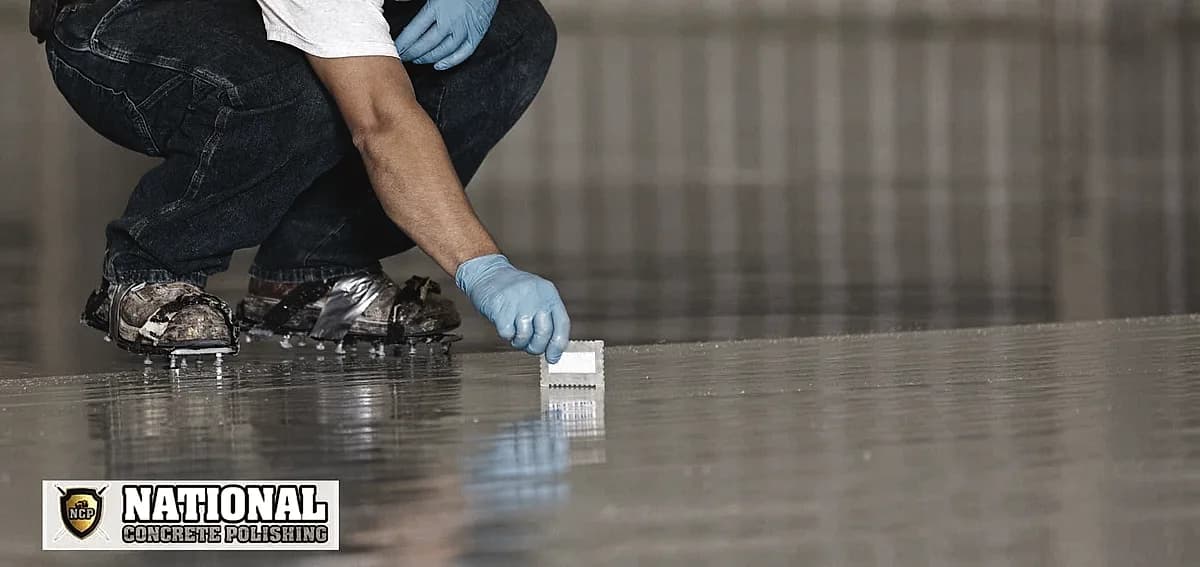
Accurate evaluation of floor shine begins with advanced technology. The Concrete Polishing Council's appearance chart says the image clarity meter and the glossmeter must be calibrated and used in accordance with ASTM D5767 and ASTM D4039.
Gloss Meters and Light Reflection Analysis
Specialized meters project light at 20°, 60°, or 85° angles, the geometries ASTM D523 covers. They record bounce-back intensity as gloss units (GU). Higher GU numbers mean more reflective surfaces. This data helps compare different floor sections for consistency.
Light Reflectance Value (LRV) rates how much visible light a surface reflects. White surfaces score near 100%, reflecting most ambient light. Darker finishes absorb more, lowering the value. Professionals take multiple readings to account for natural variations in your surface.
Portable DOI meters add another layer of insight. They assess reflection clarity using real-time analysis. Sharp mirror effects indicate high-definition finishes. Fuzzy images suggest light scattering issues needing correction.
- Angle selection depends on desired shine intensity
- GU standardization enables cross-project comparisons
- LRV impacts lighting system requirements
- DOI checks prevent hazy visual results
Techniques and Factors for Superior Floor Reflectivity

Mastering floor shine requires strategic material choices and methodical execution. Diamond abrasives and systematic refinement create surfaces that balance durability with light performance. National Concrete Polishing tailors these methods for South Florida’s climate and traffic demands.
Role of Diamond Grit in Achieving Different Polishing Levels
Diamond grit sizes shape your floor’s final appearance. Coarse metal-bond tools remove imperfections, while the 1,500 and 3,000 grit pads give the highest sheen. This progression determines light diffusion quality across four standardized tiers:
| Level | Name (CPC chart) | Image clarity (DOI) | Appearance |
|---|---|---|---|
| 1 | Exposed/Flat (Ground) | 0-9% | Flat or matte appearance |
| 2 | Exposed/Satin (Honed) | 10-39% | Satin appearance |
| 3 | Polished | 40-69% | Reflections can be identified but are not sharp |
| 4 | Highly Polished | Above 70% | Sharp, near-mirror reflections |
The council's appearance chart adds a third reading, haze, the cloudiness or milky look of reflections, which it computes from the gloss at 60 degrees minus the gloss at 20 degrees (ASTM D4039). It also calls for at least three tests on areas up to 1,000 square feet, and one more for each additional 1,000 square feet or part of it.
Step-by-Step Polishing Process Insights
Experts begin with metal-bond tools to flatten surfaces. A grout coat can fill microscopic gaps for a more uniform texture. Densifiers then harden the material before final polishing stages.
Each grit level builds upon the last, eliminating scratches from previous steps. Sealers lock in shine while protecting against stains. This layered approach maximizes light reflection without compromising durability.
Optimizing Lighting and Energy Efficiency
A brighter floor sends more light back into the room, but how much that lowers lighting needs depends on the fixtures, the room and the finish, so it takes a lighting calculation for the specific building. Balance gloss with slip resistance, especially in humid environments.
Level 3 gives reflections that can be identified but are not sharp. Regular maintenance helps preserve reflectivity and a consistent look.
Conclusion
The right floor finish starts with clear, measurable targets. Modern professionals combine gloss meters, LRV testing, and DOI analysis to deliver surfaces that meet exact specifications. These methods account for real-world visual perception, moving beyond outdated guesswork.
Measured targets help a warehouse keep glare under control and help a retail space get the crisp reflections that suit its displays. Each outcome starts with agreeing on the target before polishing begins.
National Concrete Polishing brings this expertise to South Florida facilities. Their team uses diamond grit selection to create durable surfaces. Call +1 844-876-5474 to discuss solutions balancing visual appeal with functional demands.
Documented readings give owners a baseline to compare against later, which helps when a floor needs maintenance or re-polishing. This approach keeps the target clear for the owner and the contractor.
Frequently Asked Questions
What tools measure shine on glossy surfaces?
Professionals use gloss meters to quantify surface luster. These devices calculate light reflection at specific angles (like 60°). Light Reflectance Value (LRV) gauges total visible light bounced off floors, helping determine brightness levels.
Why does diamond grit size matter during refinement?
Coarser diamond abrasives remove imperfections and expose aggregate. The finer resin steps, up to the 1,500 and 3,000 grit pads, give the highest sheen. Higher grits correlate with increased shine.
Can lighting design impact energy costs for commercial spaces?
Highly reflective finishes can return more ambient light to a room, which may lower the need for artificial light, but the saving depends on the fixtures and the building.
How long does the refinement process take?
Duration depends on slab condition, floor size and the sheen you want, because more steps take more time. A bare polish can be walked on the same day, after the final clean; with a guard or sealer, it is about 24 hours.
Are there standards for rating floor luster?
The Concrete Polishing Council's appearance chart defines four levels, from Level 1 (flat or matte) to Level 4 (highly polished), using distinctness of image and an optional gloss reading. ASTM D523 is the test method for specular gloss, so gloss readings can be compared across projects.
Does surface clarity affect slip resistance?
Not necessarily, and the relationship is not what most people expect. A Concrete International article by Bob Harris notes that, counterintuitively, testing has indicated that higher static coefficient of friction readings correspond with higher gloss levels. Because sheen alone does not predict traction, ask for a measured wet result on the finish you are considering.
Written by

Founder and CEO
Chris Lavin is an esteemed leader in concrete polishing and epoxy coatings with a distinguished 20-year career. As founder and CEO of National Concrete Polishing and owner of Xtreme Polishing Systems, he's renowned for polishing and epoxy coating more floors than anyone globally. Chris is recognized for his innovative approach and commitment to enhancing floor durability and aesthetics. His hands-on experience and technical proficiency make him a respected authority and a valuable resource in the field of floor polishing and coatings.
Same topic
Related articles
All stories
Residential7 min read
Polished Concrete Garage Floor vs Epoxy: Pros and Cons
This process smooths the surface, and a densifier hardens it, so polished concrete is used in high-traffic areas.
Read it
Polished concrete11 min read
Can You Polish Old Concrete? Transform Your Floors Today
Old concrete floors often hide tremendous potential beneath their weathered, dull surfaces.
Read it
Cost & ROI11 min read
How Much Does It Cost To Polish Concrete Floors?
Choosing polished concrete flooring for your residential or commercial space is a no-brainer these days.
Read it
Tell us about the floor
Tell us the space and roughly how big it is.We come back with what it would cost and when we could start.
Prefer to talk? Call +1 844-876-5474
- Leads@
nationalconcretepolishing.net - 2200 NW 32nd St #600,
Pompano Beach, FL 33069 Mon to Fri, 9:00 to 5:30