
The NCP blog
How Miami Retailers Stay Open During Phased Floor Installation Projects
Epoxy & coatings10 min read
Miami retailers lose an average of $2,800-$4,500 per day during full store closures for floor renovations.
Miami retailers lose an average of $2,800-$4,500 per day during full store closures for floor renovations. A phased floor installation retail open approach eliminates this revenue loss by dividing projects into sections completed during off-hours or low-traffic periods. According to the International Council of Shopping Centers (ICSC), stores that remain operational during renovations retain 85-92% of normal sales volume compared to complete shutdowns. This strategic methodology has become standard practice for Miami’s busiest retail environments, from Brickell boutiques to Dadeland Mall anchor stores.
The key to successful phased installation lies in detailed planning, rapid-cure coating systems, and professional coordination between contractors, store management, and building operations. This guide covers the specific strategies, timelines, and materials that allow Miami retailers to upgrade their floors without sacrificing a single day of business.
Why Phased Installation Matters for Miami Retail
Miami’s retail sector operates in one of the most competitive markets in the United States. The Florida Retail Federation reports that Miami-Dade County generates over $32 billion in annual retail sales, with peak traffic occurring during tourist seasons that span most of the calendar year. Closing for floor renovations during these periods means substantial revenue losses that many retailers cannot absorb.
The True Cost of Store Closure
Beyond direct sales losses, store closures create cascading financial impacts. The National Retail Federation estimates that temporary closures result in 15-25% customer attrition as shoppers establish new habits at competitor locations. For Miami retailers facing 3-5 day traditional floor installations, these hidden costs often exceed the direct revenue loss.
Employee scheduling complications add another layer of expense. Hourly workers may seek employment elsewhere during extended closures, forcing retailers to recruit and train new staff post-renovation. Salaried employees continue earning wages during non-productive closure periods.
Competitive Pressure in Miami Markets
Miami’s dense retail landscape means competitors are often within walking distance. Aventura Mall, Dolphin Mall, and Lincoln Road each contain dozens of similar retailers competing for the same customer base. A closed storefront with construction signage sends customers directly to nearby alternatives, potentially creating permanent shopping habit changes.
Planning a Phased Floor Installation Project
Successful phased installations require extensive pre-project planning that begins 4-6 weeks before work commences. This planning phase determines zone divisions, work schedules, material staging, and contingency protocols.
Zone Mapping and Traffic Analysis
Professional contractors analyze foot traffic patterns to determine optimal zone divisions. Point-of-sale data reveals which areas generate the most revenue per square foot, allowing planners to prioritize keeping high-value zones operational. A typical 5,000 square foot retail space divides into 3-5 zones, each completing in 8-16 hours.
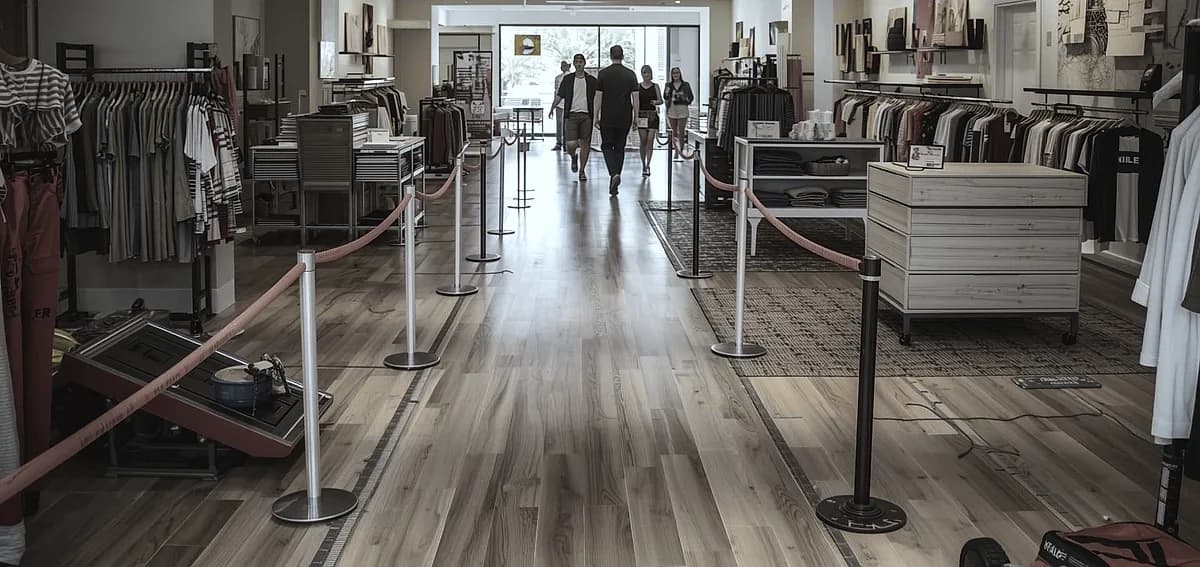
Zone boundaries follow natural store divisions when possible: fitting rooms, checkout areas, specific departments, and stock rooms. Physical barriers like temporary walls or strategic fixture placement maintain customer safety while creating visual separation from active work zones.
Scheduling Strategies
Miami retailers typically choose one of three scheduling approaches based on their operating hours and customer patterns:
Overnight installation works best for retailers with standard mall hours (10 AM – 9 PM). Crews arrive at 10 PM, complete one zone by 6 AM, and allow 4 hours of cure time before store opening. This approach adds 15-25% to project costs due to overtime labor rates but maintains 100% business continuity.
Off-peak daytime installation suits retailers with predictable slow periods. Many Miami stores experience minimal traffic between 11 AM and 3 PM on weekdays. Completing one zone during these windows maintains customer access while minimizing labor premiums.
Rolling weekend installation addresses retailers whose busiest periods occur during weekends. Work progresses Monday through Thursday, with full store access Friday through Sunday. This extends total project duration but protects peak revenue periods.
Fixture and Inventory Management
Moving merchandise and fixtures between zones requires careful choreography. Professional floor removal teams coordinate with store staff to relocate displays efficiently. Heavy fixtures like gondola shelving, display cases, and checkout counters may require furniture dollies or professional movers.
Inventory staging areas must be identified before work begins. Temporary stockrooms, adjacent vacant spaces, or off-site storage facilities prevent merchandise from interfering with installation work or becoming damaged by dust and fumes.
Rapid-Cure Coating Systems for Retail Environments
Traditional epoxy systems require 24-72 hours of cure time before accepting foot traffic, making them impractical for phased retail installations. Modern rapid-cure formulations return zones to service within 4-8 hours, enabling same-day or overnight completion.
Polyaspartic Coatings
Polyaspartic floor coatings cure to foot traffic hardness in 2-4 hours under Miami’s warm conditions. These aliphatic polyurea systems offer UV stability critical for storefronts with natural light exposure, preventing the yellowing that affects standard epoxies. The Polyurea Development Association confirms that polyaspartic systems achieve 90% cure within 6 hours at 75°F.
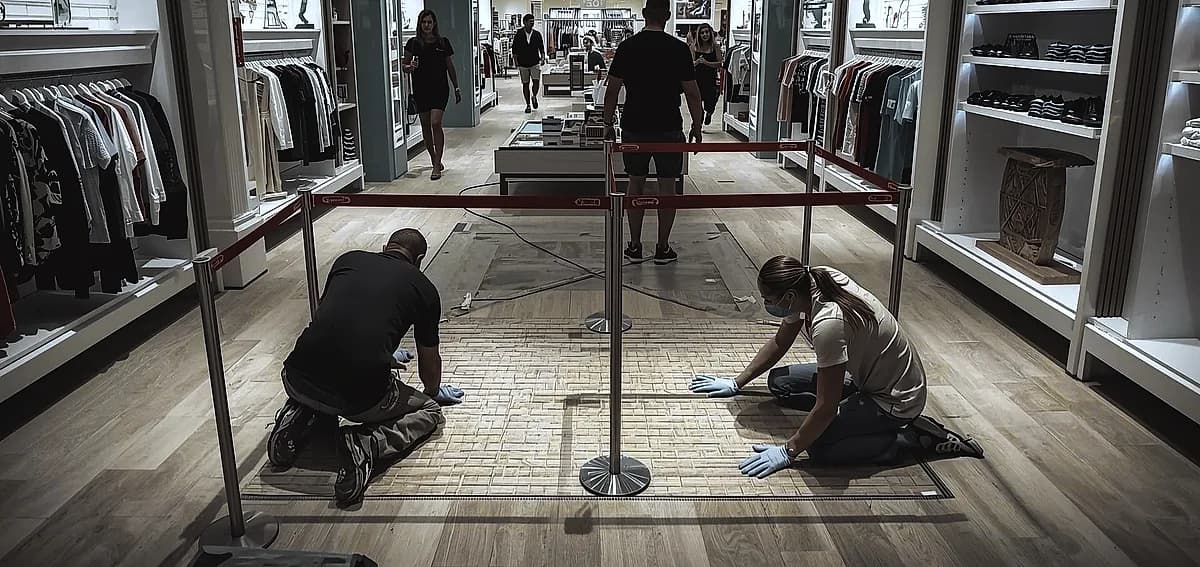
Application requires skilled technicians because the rapid cure time leaves little margin for error. Pot life (working time) ranges from 15-30 minutes depending on formulation and temperature, demanding efficient material management and experienced applicators.
Fast-Cure Epoxy Systems
Accelerated epoxy formulations achieve foot traffic readiness in 8-12 hours compared to 24+ hours for standard systems. These products use modified hardeners that speed chemical crosslinking without sacrificing final hardness or chemical resistance. Commercial epoxy systems designed for retail applications typically specify these faster formulations.
Moisture-Tolerant Primer Systems
Miami’s humidity creates concrete moisture challenges that can delay traditional installations. Moisture-tolerant primers bond to damp substrates and block vapor transmission, eliminating the need for extended drying periods. These primers add $0.75-$1.50 per square foot but prevent costly delays and adhesion failures.
Phased Installation Timeline Comparison
The following table compares different coating systems and their impact on phased retail installation schedules:
| Coating System | Cure Time | Zone/Night | Cost/Sq Ft | Best Application |
|---|---|---|---|---|
| Polyaspartic | 2-4 hours | 2-3 zones | $8-$12 | Overnight installation, tight schedules |
| Fast-Cure Epoxy | 8-12 hours | 1 zone | $6-$9 | Budget-conscious, weekend work |
| Standard Epoxy | 24-72 hours | N/A | $4-$7 | Full closure only |
| Polished Concrete | Immediate | 1-2 zones | $3-$8 | Minimal disruption priority |
| Metallic Epoxy | 16-24 hours | 0.5 zone | $10-$18 | Luxury retail, showrooms |
Safety and Customer Experience During Installation
Maintaining safe shopping environments during active floor work requires careful attention to barriers, signage, air quality, and customer communication.
Physical Barriers and Containment
Temporary barriers serve multiple functions: preventing customer access to work zones, containing dust and fumes, and maintaining professional aesthetics. Options range from simple stanchion-and-rope systems for overnight curing zones to full temporary walls with branded graphics for multi-day installations.
OSHA regulations require clear demarcation of hazardous areas during active work. Miami’s building codes add specific requirements for retail environments, including emergency egress maintenance and fire suppression system accessibility throughout the project.
Air Quality Management
Grinding and coating application generate airborne particles and volatile organic compounds (VOCs). Professional contractors use HEPA-filtered dust collection systems during surface preparation, capturing 99.97% of particles 0.3 microns and larger. Negative air pressure within work zones prevents contaminant migration to customer areas.
Low-VOC and zero-VOC coating formulations minimize odors that could affect customer comfort. The environmental impact of these modern systems is significantly reduced compared to traditional solvent-based products, making them suitable for occupied retail spaces.
Customer Communication Strategies
Smart retailers transform renovation disruption into marketing opportunities. Signage announcing “We’re Improving Your Shopping Experience” or “Exciting Changes Coming Soon” frames the project positively. Some Miami retailers offer discount incentives for customers who shop during renovation periods, turning potential inconvenience into loyalty-building engagement.
Social media updates showing project progress generate customer interest and anticipation. Before-and-after reveals drive traffic once the new floor is complete.
Phased Installation Success Examples
Brickell Fashion Boutique
A 3,200 square foot women’s clothing store in Brickell City Centre upgraded from worn VCT tile to polished concrete using four overnight phases. Work began at 10 PM each night, with grinding and densification completing by 4 AM. The absence of coating cure time meant staff could begin restocking and fixture placement at 6 AM, opening normally at 10 AM. Total project duration: 4 nights with zero lost business hours.
Electronics Retailer at Dadeland
A 12,000 square foot electronics store chose polyaspartic coating for its durability against shopping cart traffic. The space divided into six zones, with two zones completing each night over three consecutive nights. Rapid 3-hour cure time allowed furniture staging to begin before store opening. The project used commercial floor coatings with enhanced scratch resistance for high-traffic applications.
Miami Beach Restaurant
A busy Ocean Drive restaurant required commercial kitchen flooring that met health department regulations while maintaining continuous service. The project divided the 2,800 square foot space into dining room and kitchen phases. Kitchen work occurred during the restaurant’s Monday closure, while dining room phases completed during weekday lunch closures (2 PM – 5 PM). Food-safe coatings with antimicrobial properties met commercial kitchen regulations.
Choosing the Right Floor System for Retail
Different retail environments demand specific flooring characteristics. The right choice balances aesthetics, durability, maintenance requirements, and installation timeline constraints.
High-Traffic Retail Floors
Polished concrete excels in high-traffic environments because it hardens rather than wears over time. The densification process creates a surface that actually becomes more durable with foot traffic. Major retailers like Apple, Tesla, and luxury fashion brands specify polished concrete for this reason. Maintenance costs run 50-70% lower than coated alternatives over a 10-year lifecycle.
Specialty Retail and Showrooms
Metallic epoxy floors create dramatic visual impact for luxury retail, automotive showrooms, and high-end boutiques. The three-dimensional effects and custom color options allow brand-specific customization. Miami’s design-forward retail market frequently specifies these premium finishes for flagship locations.
Practical Retail Environments
Hardware stores, grocery retailers, and warehouse clubs prioritize durability and cleanability over aesthetics. Flake epoxy systems provide excellent wear resistance while hiding minor scratches and dirt between cleanings. The textured surface also improves slip resistance in environments where spills occur regularly.
Common Challenges and Solutions
Miami Humidity Complications
South Florida’s 75-80% average humidity can interfere with coating adhesion and cure chemistry. Humidity’s effects on epoxy include extended cure times, surface blushing, and adhesion failures. Professional contractors monitor dew point and substrate temperature throughout installation, using dehumidification equipment when conditions exceed acceptable parameters.
Existing Floor Conditions
Many Miami retail spaces contain multiple flooring layers from previous tenants. Floor removal of old VCT, carpet adhesive, or failed coatings adds time and cost to projects. Comprehensive site surveys before bidding prevent scope creep and schedule overruns. Shot blasting efficiently removes most existing floor coverings while simultaneously profiling the concrete for new coatings.
Coordination with Mall Management
Shopping center installations require coordination with property management for after-hours access, freight elevator scheduling, and compliance with center rules regarding noise, dust, and common area protection. Lead times of 2-4 weeks for management approval are common at major Miami properties.
Warranty and Maintenance Considerations
Professional phased installations should include comprehensive warranty coverage that accounts for the accelerated timelines and rapid-cure materials used in retail applications.
Standard epoxy flooring warranties cover adhesion failures, delamination, and material defects for 5-15 years depending on system and application. Ensure your warranty specifically covers rapid-cure products and phased installation methodologies.
Maintenance programs designed for retail traffic patterns extend floor lifespan significantly. Commercial epoxy cleaning protocols differ from residential applications, emphasizing daily dust mopping, weekly auto-scrubbing, and periodic re-application of wear coats in high-traffic zones.
Frequently Asked Questions
How much does phased retail floor installation cost compared to full closure?
Phased installation typically adds 15-30% to base project costs due to rapid-cure materials, overnight labor premiums, and additional mobilization/demobilization cycles. However, this premium is almost always offset by avoided revenue losses. A store generating $3,000 daily would lose $9,000-$15,000 during a traditional 3-5 day closure, far exceeding the phased installation premium on most projects.
Can any floor coating be installed in phases?
Polished concrete and polyaspartic coatings work best for phased installation due to minimal or rapid cure times. Standard epoxies with 24-72 hour cure requirements are impractical for overnight phasing but can work with weekend schedules. Metallic epoxies require extended cure times and careful blending between zones, making seamless phased installation more challenging.
How long does a typical phased retail floor project take?
Project duration depends on square footage and coating system. A 3,000 square foot store with polyaspartic coating typically completes in 3-4 overnight phases. A 10,000 square foot space might require 6-8 phases. Polished concrete progresses faster due to immediate walkability, often completing 1,000-1,500 square feet per night phase.
What happens if a zone is not ready for customers when the store opens?
Professional contractors build contingency time into schedules and maintain rapid-response capabilities for unexpected delays. If a zone cannot accept traffic at opening, temporary barriers remain in place and that zone becomes the next night’s starting point. Well-planned projects include backup zones that can absorb merchandise and fixtures if primary zones experience delays.
Do phased installations affect floor warranty coverage?
Reputable contractors provide identical warranty coverage for phased and conventional installations. The materials and processes are the same; only the scheduling differs. Ensure your contract explicitly confirms warranty terms apply to all project phases and that seam areas between phases receive the same coverage as continuous installations.
Can heavy fixtures remain in place during installation?
Permanently installed fixtures like built-in display cases or point-of-sale islands typically remain in place, with coating applied around their perimeters. Mobile fixtures, gondola shelving, and inventory must relocate between zones. Some retailers rent temporary storage containers placed in parking areas to hold merchandise during the project.
Professional Phased Floor Installation in Miami
National Concrete Polishing specializes in phased floor installations that keep Miami retailers operational throughout their renovation projects. Our commercial division has completed phased installations at major shopping centers throughout South Florida.
Every project begins with detailed traffic analysis and zone planning to minimize business disruption. Our rapid-response crews work overnight and during off-peak hours, using commercial-grade rapid-cure systems specifically formulated for occupied retail environments.
Contact our Miami commercial team for a free consultation and phased installation proposal. We also serve Fort Lauderdale, Pompano Beach, and retail locations throughout South Florida.
Written by

Founder and CEO
Chris Lavin is an esteemed leader in concrete polishing and epoxy coatings with a distinguished 20-year career. As founder and CEO of National Concrete Polishing and owner of Xtreme Polishing Systems, he's renowned for polishing and epoxy coating more floors than anyone globally. Chris is recognized for his innovative approach and commitment to enhancing floor durability and aesthetics. His hands-on experience and technical proficiency make him a respected authority and a valuable resource in the field of floor polishing and coatings.
Same topic
Related articles
All stories
Epoxy & coatings8 min read
DIY vs Professional Epoxy Flooring in Fort Lauderdale
Hardware stores heavily market all-in-one boxes that promise a showroom finish with minimal effort.
Read it
Epoxy & coatings8 min read
Can You DIY Epoxy Flooring in Miami? Pros, Cons, and Tips
Applying a durable floor finish in a tropical or highly humid climate presents unique environmental challenges.
Read it
Epoxy & coatings7 min read
DIY Epoxy Flooring in South Florida: Is It Worth the Risk?
However, these products generally contain high levels of water or solvents to extend their pot life.
Read it
Tell us about the floor
Tell us the space and roughly how big it is.We come back with what it would cost and when we could start.
Prefer to talk? Call +1 844-876-5474
- Leads@
nationalconcretepolishing.net - 2200 NW 32nd St #600,
Pompano Beach, FL 33069 Mon to Fri, 9:00 to 5:30