
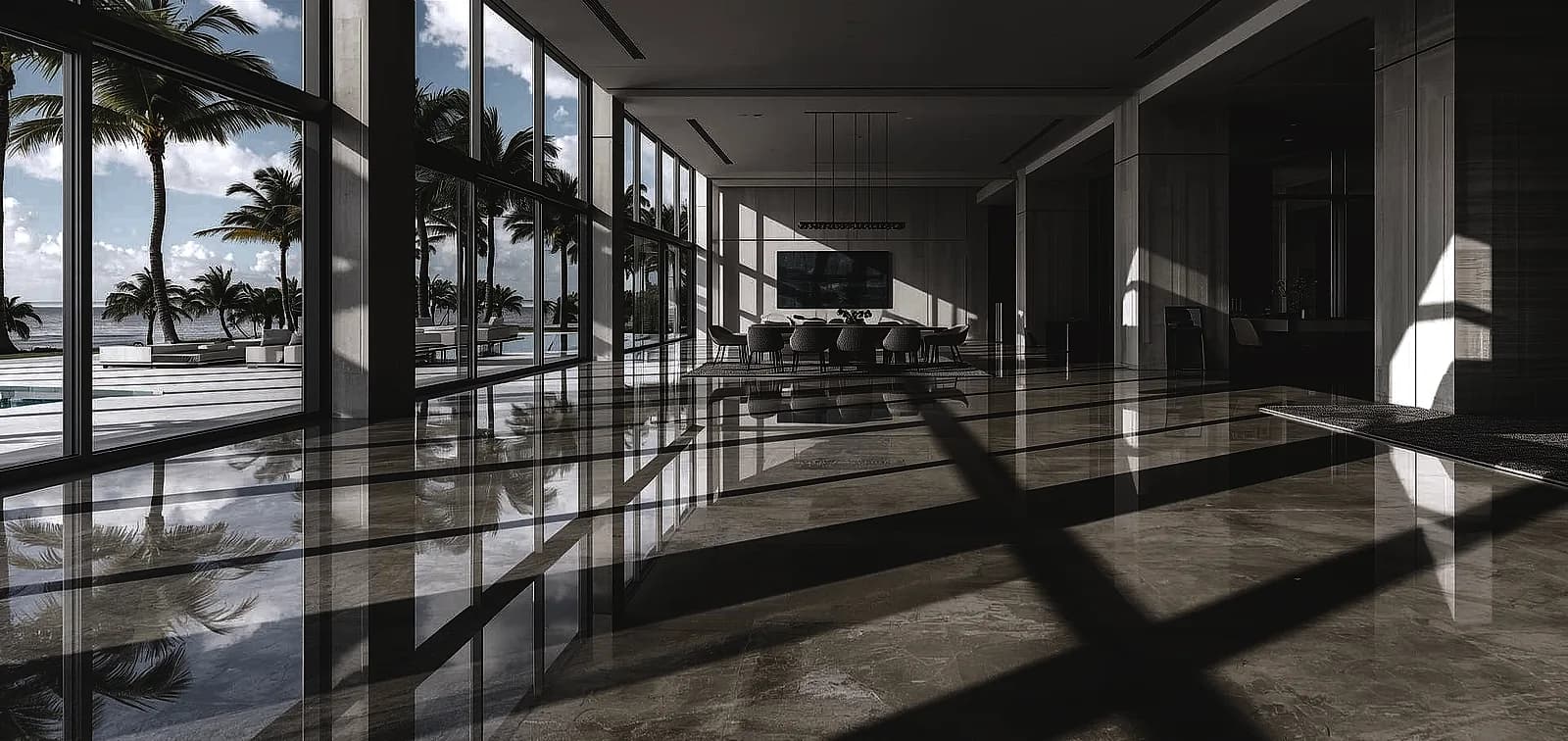
The NCP blog
Polished Concrete or Tiles for Your Miami Home? A Comparison
Residential9 min read
Understanding how polished concrete and tiles handle moisture determines long-term success and maintenance requirements.
When evaluating polished concrete vs tiles for Miami homes, polished concrete delivers superior durability, lower lifetime costs, and better performance in South Florida’s high-humidity environment. According to the Concrete Polishing Association of America (CPAA), polished concrete floors last 20-25 years without replacement, while the Tile Council of North America reports average tile lifespans of 10-15 years in high-moisture climates. Miami’s 76% average humidity, salt air exposure, and year-round temperatures above 80°F create conditions that accelerate grout deterioration in tile installations while polished concrete thrives.
This comprehensive guide examines both flooring options across critical performance categories specific to Miami-Dade County conditions, helping homeowners make informed decisions based on durability, maintenance, aesthetics, and total cost of ownership.
Quick Comparison: Polished Concrete vs Tiles
The following table summarizes key differences between polished concrete and tile flooring for Miami residential applications:
| Factor | Polished Concrete | Ceramic/Porcelain Tiles |
|---|---|---|
| Lifespan | 20-25+ years | 10-15 years (grout fails sooner) |
| Installed Cost/Sq Ft | $3-$12 | $8-$25 |
| Moisture Resistance | Excellent – seamless, densified surface | Moderate – grout absorbs moisture |
| Maintenance | Minimal – dust mop, occasional damp mop | High – grout sealing, cleaning, regrouting |
| Cooling Properties | Excellent thermal mass, stays cool | Good thermal mass, stays cool |
| Impact Resistance | High – monolithic, no crack points | Moderate – individual tiles can crack |
| Design Options | Colors, aggregates, scoring patterns | Unlimited patterns, colors, sizes |
| Sustainability | Excellent – uses existing slab | Moderate – requires new materials |
| Best For | Modern homes, open plans, low maintenance | Traditional styles, specific design needs |
Moisture Performance in Miami’s Climate
Miami’s subtropical climate creates unique challenges for flooring materials. Understanding how polished concrete and tiles handle moisture determines long-term success and maintenance requirements.
How Polished Concrete Handles Miami’s Humidity
Professional concrete polishing creates a seamless, monolithic surface with no joints or seams where moisture can penetrate. The polishing process includes chemical densification that fills microscopic pores in the concrete, reducing porosity by 40-60%.
According to the Portland Cement Association, densified polished concrete achieves moisture vapor transmission rates (MVT) below 1 lb per 1,000 square feet over 24 hours. This makes it virtually impervious to humidity-related damage, even in Miami’s 74-78% average relative humidity environment.
The thermal benefits of polished concrete also reduce condensation issues. Concrete’s thermal mass maintains stable surface temperatures, preventing the temperature differentials that cause moisture accumulation on flooring surfaces.
How Tiles Handle Miami’s Humidity
While ceramic and porcelain tiles themselves resist moisture, the grout between tiles creates significant vulnerability in humid climates. The Tile Council of North America reports that standard cement-based grout absorbs 8-12% of its weight in moisture, creating multiple problems in Miami homes.
Moisture absorption leads to grout discoloration, mold growth, and eventual deterioration. Miami homeowners typically see grout degradation within 3-5 years, requiring resealing or complete regrouting. Epoxy grout resists moisture better but costs 3-4 times more than cement grout and still requires maintenance.
Additionally, moisture vapor transmission from the concrete slab beneath tiles can cause efflorescence, tile lifting, and adhesive failures. These issues compound in Miami’s climate, where concrete slabs rarely dry completely due to constant humidity.
Durability and Lifespan Comparison
Polished Concrete Durability
Polished concrete achieves hardness ratings of 7-9 on the Mohs scale after densification, making it harder than marble (3-4 Mohs) and comparable to granite (6-7 Mohs). This hardness provides exceptional resistance to scratches, abrasions, and impact damage.
The CPAA reports that properly maintained polished concrete floors in commercial environments last 20-25 years before requiring significant restoration. In residential settings with lower traffic, lifespans can exceed 30 years. The residential benefits of polished concrete include this exceptional longevity combined with minimal maintenance requirements.
Unlike tiles, polished concrete has no individual pieces that can crack, chip, or become loose. The monolithic surface distributes impact forces across the entire slab, preventing localized failures.
Tile Durability
Porcelain tiles achieve PEI (Porcelain Enamel Institute) ratings of 4-5 for residential use, indicating good abrasion resistance. However, individual tiles remain vulnerable to impact damage. Dropped cookware, furniture legs, and heavy objects can crack tiles, requiring replacement.
Tile replacement creates color-matching challenges. Manufacturers discontinue tile lines every 3-5 years, making exact matches impossible for older installations. Homeowners must either accept visible patches or replace entire sections for uniformity.
Grout remains the weakest point in tile installations. Even with proper sealing, grout in high-traffic Miami homes shows visible wear within 5-7 years. Complete regrouting costs $3-$5 per square foot and requires 2-3 days of disruption.
Maintenance Requirements Comparison
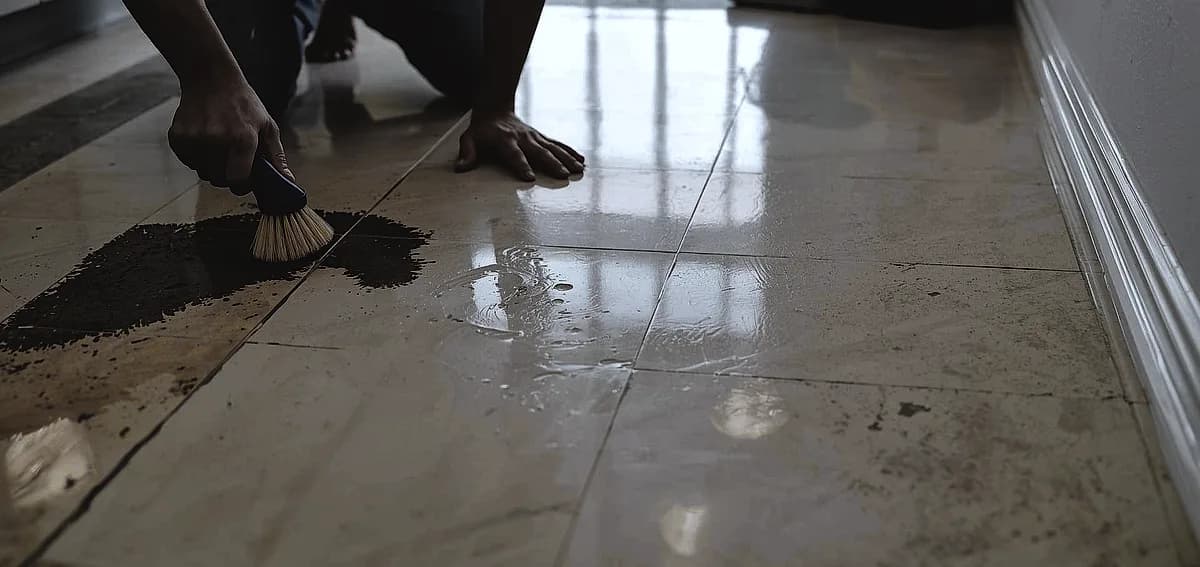
Polished Concrete Maintenance
Polished concrete requires minimal maintenance, making it ideal for busy Miami households:
Daily: Dust mop to remove sand and debris. Miami’s proximity to beaches makes this especially important, as sand acts as an abrasive.
Weekly: Damp mop with pH-neutral cleaner. No special products required. See our resurfaced concrete maintenance guide for detailed recommendations.
Annually: Professional inspection to identify wear patterns. Re-application of penetrating guard if needed (typically every 2-3 years).
Every 10-15 years: Light re-polishing to restore gloss if desired. This is optional and depends on traffic levels.
Total annual maintenance cost for polished concrete averages $0.05-$0.10 per square foot, the lowest of any hard flooring option.
Tile Maintenance
Tile maintenance in Miami’s humid climate requires consistent attention:
Daily: Sweep or vacuum. Sand accumulates in grout lines and acts as an abrasive during mopping.
Weekly: Mop with tile-appropriate cleaner. Avoid acidic cleaners that damage grout.
Monthly: Scrub grout lines to prevent mold and mildew growth. Miami’s humidity makes this essential.
Every 1-2 years: Apply grout sealer to maintain moisture resistance. Professional application recommended.
Every 5-7 years: Professional grout cleaning or regrouting. Deep cleaning costs $1-$2 per square foot; regrouting costs $3-$5 per square foot.
Total annual maintenance cost for tile averages $0.25-$0.50 per square foot, 3-5 times higher than polished concrete.
Design and Aesthetic Options
Polished Concrete Design Options
Modern Miami homes increasingly embrace polished concrete’s industrial-chic aesthetic. Design options include:
Aggregate exposure: Cream, salt-and-pepper, or full aggregate finishes reveal decorative stones within the concrete for unique visual effects.
Color options: Integral dyes and stains create virtually unlimited color choices, from earth tones to bold contemporary hues.
Gloss levels: Matte, satin, or high-gloss finishes allow customization from understated to dramatic reflectivity.
Scoring patterns: Saw-cut designs create geometric patterns, borders, or tile-like grids without actual grout lines.
For Miami’s luxury homes, polished concrete delivers the seamless, contemporary look favored by modern architects while eliminating the maintenance burden of traditional flooring materials.
Tile Design Options
Tiles offer the widest range of aesthetic options:
Patterns: Unlimited pattern options including geometric designs, mosaics, and custom murals.
Material looks: Porcelain tiles convincingly replicate wood, marble, travertine, and other natural materials.
Sizes: From 1-inch mosaics to 48-inch large-format slabs, with countless options between.
Textures: Smooth, textured, or 3D surfaces for various applications and slip resistance needs.
For homeowners seeking traditional Mediterranean, Spanish Colonial, or other historic Miami architectural styles, tiles provide authentic period-appropriate aesthetics that polished concrete cannot replicate.
Total Cost of Ownership Analysis
Initial installation costs tell only part of the story. Total cost of ownership over 20 years reveals significant differences:
| Cost Factor | Polished Concrete | Porcelain Tile |
|---|---|---|
| Initial Installation (1,500 sq ft) | $7,500-$12,000 | $15,000-$30,000 |
| Annual Maintenance | $75-$150 | $375-$750 |
| Resealing/Regrouting (20 yrs) | $500-$1,000 (guards) | $6,000-$12,000 (3-4 times) |
| Repairs (20 yrs) | $0-$500 | $1,500-$3,000 |
| 20-Year Total | $9,500-$16,000 | $30,000-$60,000 |
Over 20 years, polished concrete costs 50-75% less than tile flooring when accounting for maintenance, repairs, and grout restoration. This makes polished concrete the clear financial choice for cost-conscious Miami homeowners.
Environmental and Sustainability Factors
For environmentally conscious Miami homeowners, polished concrete offers significant sustainability advantages. The eco-friendly benefits of polished concrete include:
No new materials: Polishing transforms the existing concrete slab, eliminating manufacturing, transportation, and disposal of flooring materials.
Reduced energy costs: Polished concrete’s thermal mass absorbs and releases heat slowly, reducing HVAC loads by 10-15% according to Lawrence Berkeley National Laboratory research.
No VOC emissions: Unlike adhesives, grouts, and sealers required for tile installations, polished concrete uses water-based densifiers with zero volatile organic compound emissions.
Longevity: 20-25 year lifespan means fewer replacement cycles and reduced landfill impact compared to tiles requiring replacement every 10-15 years.
Tile production requires significant energy for kiln firing (1,800-2,200°F), transportation of heavy materials, and disposal of damaged tiles and old grout. The carbon footprint of tile flooring exceeds polished concrete by 3-4 times over a 20-year lifecycle.
Room-by-Room Recommendations for Miami Homes
Living Rooms and Great Rooms
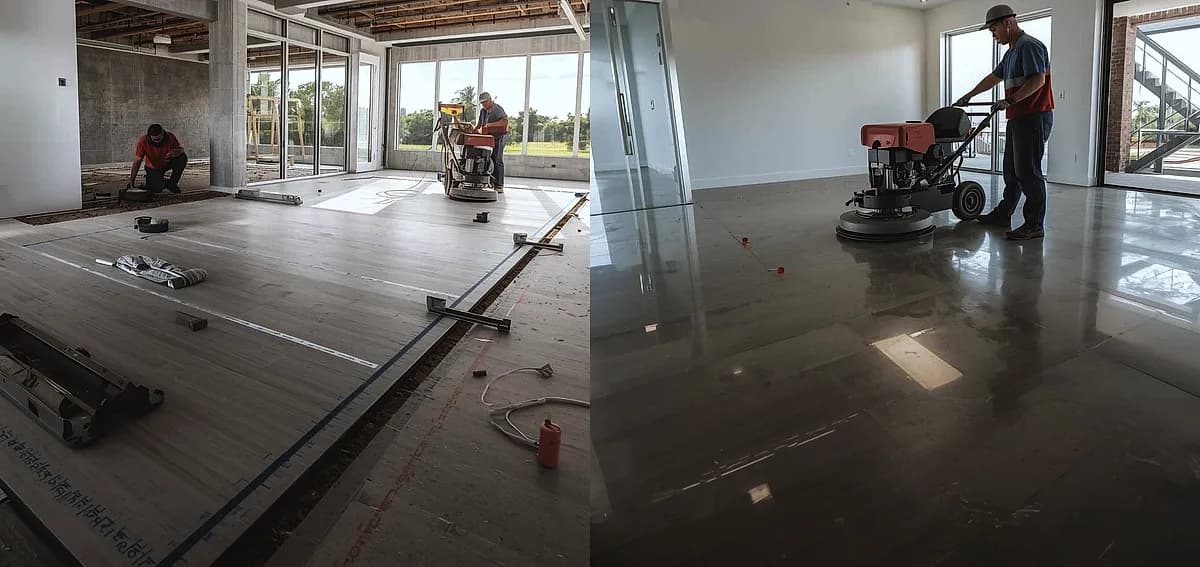
Winner: Polished Concrete. Open-concept Miami homes benefit from polished concrete’s seamless appearance across large spaces. The lack of grout lines creates visual continuity, and the reflective surface enhances natural light. High-gloss polished concrete achieves reflectivity standards above 80 gloss units, maximizing light distribution.
Kitchens
Winner: Polished Concrete. Kitchen spills, dropped items, and heavy appliance traffic favor polished concrete’s durability and seamless surface. Tiles crack under impact, and grout absorbs spills that cause permanent staining. Polished concrete resists all common kitchen chemicals and cleans effortlessly.
Bathrooms
Context-dependent. Both options work well when properly executed. Polished concrete requires proper sealing and may need texture for slip resistance in shower areas. Tiles offer traditional bathroom aesthetics but require vigilant grout maintenance in Miami’s humidity. For master bathrooms, polished concrete’s spa-like appearance increasingly appeals to luxury homeowners.
Covered Patios and Lanais
Winner: Polished Concrete. Miami’s covered outdoor spaces experience humidity, occasional rain exposure, and salt air. Polished concrete handles these conditions without the grout deterioration that plagues outdoor tile installations. The seamless surface also facilitates drainage and prevents pooling.
Pool Decks
Context-dependent. Pool decks require slip-resistant surfaces that both options can provide. Decorative concrete with textured finishes works well, as do non-slip porcelain tiles. However, tiles around pools require the most intensive grout maintenance due to constant water exposure and pool chemicals.
Frequently Asked Questions
Is polished concrete cheaper than tile in Miami?
Yes, significantly. Polished concrete costs $3-$12 per square foot installed, while quality porcelain tile runs $8-$25 per square foot. More importantly, 20-year total ownership costs for polished concrete ($9,500-$16,000 for 1,500 sq ft) are 50-75% lower than tile ($30,000-$60,000) when including maintenance, regrouting, and repairs.
Does polished concrete get slippery when wet?
High-gloss polished concrete can become slippery when wet, similar to polished marble or granite. Professional installers address this with anti-slip additives in penetrating guards or by specifying lower gloss levels (satin finish at 40-70 gloss units instead of high-gloss at 80+ GU). For areas prone to water exposure, textured or matte finishes provide excellent traction.
How long does polished concrete last compared to tile?
Polished concrete lasts 20-25 years or more with minimal maintenance, while tile installations in Miami’s humid climate typically require replacement or major restoration every 10-15 years due to grout failure. The concrete slab beneath polished concrete is essentially permanent; only the polish and guard require periodic refreshing.
Can I polish my existing concrete floor instead of installing tile?
In most cases, yes. Professional assessment determines if the existing slab is suitable for polishing. Factors include concrete condition, thickness, and any previous coatings or moisture issues. Even slabs with minor cracks or imperfections can often be repaired and polished successfully. The age of concrete affects polishing results, with older, fully cured slabs often producing superior finishes.
Is polished concrete cold underfoot in air-conditioned Miami homes?
Polished concrete maintains the ambient temperature of your home, typically feeling cool but not cold in air-conditioned spaces. This cooling effect is actually a benefit in Miami’s hot climate, reducing the sensation of heat during summer months. For homeowners who prefer warmer floors, radiant heating systems integrate seamlessly beneath polished concrete.
Which flooring is better for Miami homes with pets?
Polished concrete significantly outperforms tile for pet owners. The seamless surface has no grout lines where pet accidents can penetrate and cause permanent odor. Polished concrete resists scratching from pet claws better than tile glazes, and accidents clean up completely without staining when wiped promptly. Tile grout absorbs pet urine, creating permanent odor issues even after surface cleaning.
Get Professional Polished Concrete in Miami
National Concrete Polishing delivers stunning polished concrete floors throughout Miami-Dade County. Our certified installers use commercial-grade equipment and premium densifiers specifically formulated for South Florida’s demanding climate conditions.
Every installation includes professional assessment, moisture testing, and customized finishing to achieve your desired aesthetic. From cream polish to full aggregate exposure, we create floors that enhance your Miami home’s beauty while eliminating the maintenance burden of traditional flooring. Contact our Miami team for a free consultation and estimate. We also serve Fort Lauderdale, Pompano Beach, and all of South Florida.
Written by

Founder and CEO
Chris Lavin is an esteemed leader in concrete polishing and epoxy coatings with a distinguished 20-year career. As founder and CEO of National Concrete Polishing and owner of Xtreme Polishing Systems, he's renowned for polishing and epoxy coating more floors than anyone globally. Chris is recognized for his innovative approach and commitment to enhancing floor durability and aesthetics. His hands-on experience and technical proficiency make him a respected authority and a valuable resource in the field of floor polishing and coatings.
Same topic
Related articles
All stories
Residential8 min read
What Restaurants Need to Pass a Health Inspection Floor Check
It endures heavy foot traffic, dropped equipment, boiling water spills, and harsh degreasing chemicals daily.
Read it
Residential9 min read
How Restaurants Replace Their Floors Without Closing for Long
The average food service establishment loses approximately $3,500 in daily revenue during unexpected closures in 2026.
Read it
Residential8 min read
Where Polished Concrete Beats Epoxy in a Home (and Where It Doesn’t)
Before evaluating specific rooms, it is essential to understand how these two flooring systems function.
Read it
Tell us about the floor
Tell us the space and roughly how big it is.We come back with what it would cost and when we could start.
Prefer to talk? Call +1 844-876-5474
- Leads@
nationalconcretepolishing.net - 2200 NW 32nd St #600,
Pompano Beach, FL 33069 Mon to Fri, 9:00 to 5:30