
The NCP blog
Concrete Polishing Prices in Fort Lauderdale: What Affects Your Quote
Cost & ROI16 min read
This range reflects the fundamental variables of floor size, existing slab condition, and the desired level of sheen.
For a standard residential or light commercial space in Fort Lauderdale, budgeting between $4 and $12 per square foot captures most concrete polishing projects. This range reflects the fundamental variables of floor size, existing slab condition, and the desired level of sheen. A basic grind-and-seal on a pristine 1,000-square-foot garage sits at the lower end, while a multi-step, high-gloss mechanical polish with decorative saw cuts and integral color on a pitted warehouse floor climbs toward the premium tier. The final quote is never a mystery; it is a direct calculation of labor intensity, diamond tooling consumption, and chemical densifier application, all shaped by South Florida’s unique humidity and substrate challenges.
Understanding the Baseline: What Goes Into a Polishing Quote
When a contractor in Fort Lauderdale prepares a quote, they are not pulling numbers from a generic price book. They are performing a mental calculation of labor hours, diamond grit sequences, and chemical consumption. According to the American Society of Concrete Contractors (ASCC), the polishing process is classified by the number of grinding steps and the final grit achieved. A Level 1 finish (flat, but no clarity) requires fewer passes than a Level 4 finish (highly reflective, with maximum clarity). Each additional step consumes more diamond tooling segments, which wear down predictably against the concrete’s hardness. The Mohs hardness of the aggregate in South Florida slabs—often a mix of granite and limestone—dictates whether a contractor uses metal-bond diamonds for cutting or transitions quickly to resin-bond diamonds for refinement. This technical reality means two identical-looking floors can have vastly different quotes if one slab is softer and requires more aggressive initial grinding.
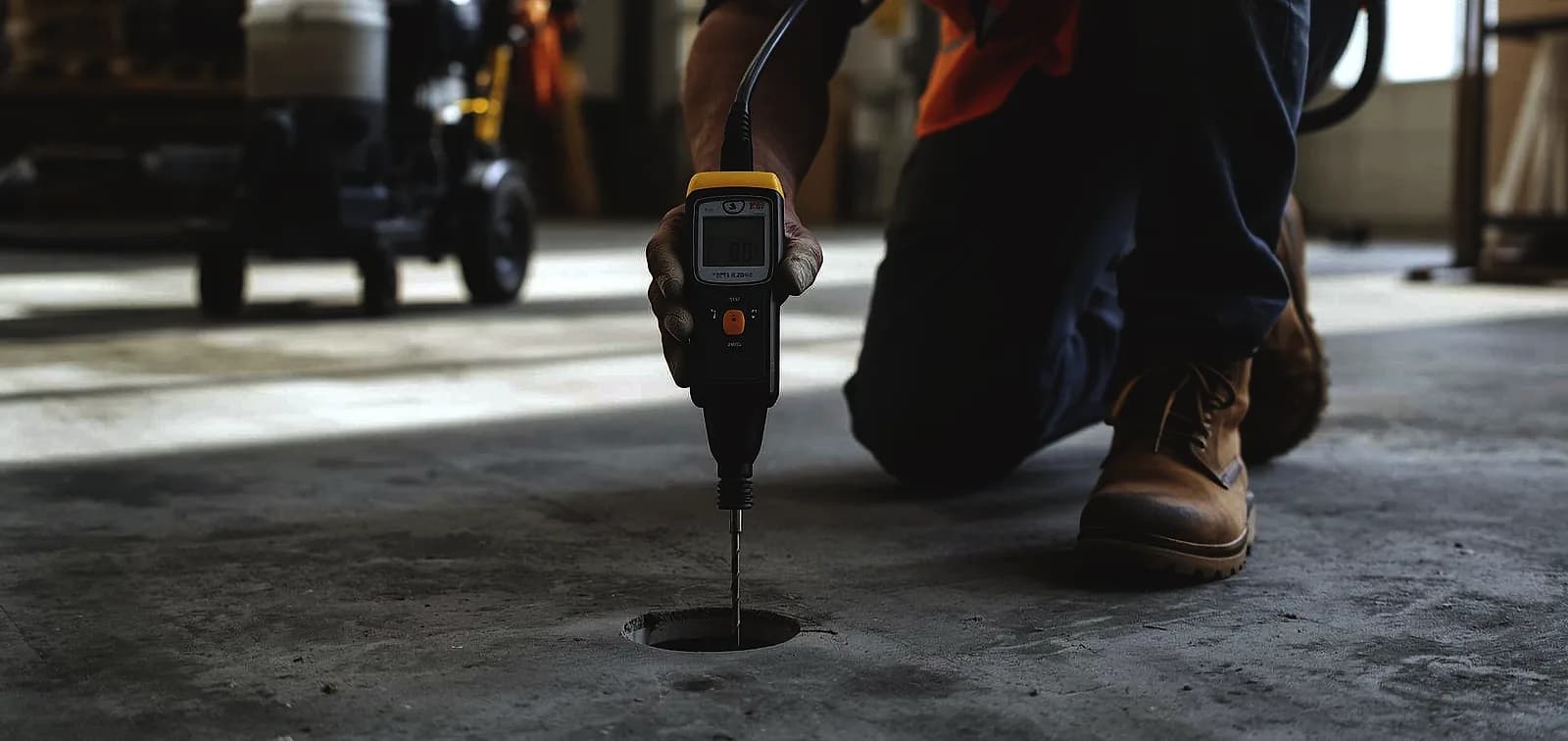
Research from the Portland Cement Association indicates that concrete slab hardness can vary by up to 40% within a single metropolitan area due to different aggregate sources used by ready-mix suppliers. A Fort Lauderdale contractor must test the slab’s hardness with a scratch kit before finalizing a bid. This is not an upsell; it is a necessary diagnostic that prevents underbidding a job that will consume twice the expected diamond tooling. As the team at National Concrete Polishing explains: “We never quote a polishing job without putting a diamond blade to the floor first. A slab poured in 1985 in Victoria Park is going to grind completely differently than one poured in 2020 in Flagler Village. The aggregate source changed, and that changes our tooling cost by hundreds of dollars on a large project.”
Square Footage and the Economy of Scale
The single most influential factor on your per-square-foot price is the total area being polished. A 300-square-foot residential sunroom will almost always command a higher rate than a 3,000-square-foot retail showroom. This is not because contractors penalize small jobs arbitrarily; it is because the fixed costs of mobilization—transporting a 1,200-pound grinder, a 300-pound high-speed burnisher, an industrial vacuum system, and a crew of two to three technicians—are amortized over fewer square feet. The Concrete Polishing Association of America notes that mobilization and setup can represent 15%–20% of the total project cost on jobs under 500 square feet, but drops to under 5% on jobs exceeding 2,000 square feet.
Data from a 2026 industry survey by The American Concrete Institute shows the following typical price breaks by square footage tier for a standard cream polish (Level 2 finish) in the Southeastern U.S.:
| Square Footage Range | Typical Price Per Sq. Ft. | Total Estimated Cost |
|---|---|---|
| 100 – 400 sq. ft. | $8.00 – $12.00 | $800 – $4,800 |
| 400 – 1,000 sq. ft. | $6.00 – $9.00 | $2,400 – $9,000 |
| 1,000 – 2,500 sq. ft. | $5.00 – $7.50 | $5,000 – $18,750 |
| 2,500 – 10,000 sq. ft. | $4.00 – $6.00 | $10,000 – $60,000 |
| 10,000+ sq. ft. | $3.50 – $5.00 | $35,000+ |
These figures assume a slab in fair condition with no major patching required. For a luxury home in Fort Lauderdale’s Las Olas Isles, where a high-gloss, full-aggregate exposure is desired, the rate can easily reach $10–$15 per square foot even on larger footprints due to the additional grinding steps and decorative work.
Slab Condition: The Hidden Cost Multiplier
Existing concrete is rarely perfect. In Fort Lauderdale, slabs face a unique set of stressors: high water tables, occasional saltwater intrusion in coastal zones, and decades of humidity cycling. Cracks, spalling, efflorescence, and previous adhesive residues from carpet or tile are common. The cost to remediate these issues is billed separately from the polishing itself and can dramatically reshape a quote. Crack repair using semi-rigid epoxy injection typically costs $3–$6 per linear foot. Patching spalled areas with a polymer-modified cementitious overlay can run $4–$8 per square foot of the affected area. If the entire slab requires a self-leveling underlayment to correct slope or extensive pitting, that alone can add $3–$5 per square foot to the entire project before a single diamond touches the floor.
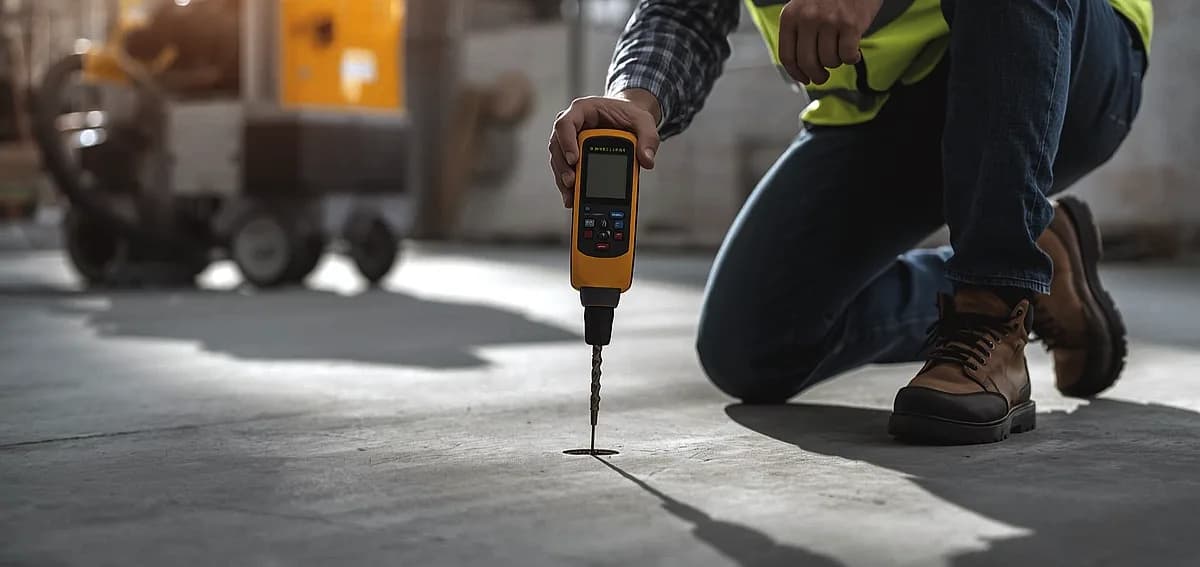
Moisture vapor transmission is a critical concern in South Florida. The ASTM International standard F2170 requires in-situ relative humidity testing within the slab. If readings exceed 75%–80% relative humidity, a moisture mitigation system—often a reactive penetrant or an epoxy moisture barrier—must be installed. This adds $2–$4 per square foot. Skipping this step in Fort Lauderdale is a recipe for delamination, blistering, and a ruined polish within months. As Maria Vasquez, a flooring forensics consultant with 18 years of experience in the Miami-Dade and Broward markets, states: “I have investigated over 200 polished concrete failures in South Florida. In 80% of cases, the root cause was either no moisture testing or ignoring the test results. The slab is a sponge sitting on saturated soil. You must address moisture before you polish, period.”
Grind Depth and Aggregate Exposure Levels
The aesthetic goal of the polish directly determines the number of grinding passes and the diamond grit sequence. The industry recognizes three primary exposure levels, each with a distinct cost implication:
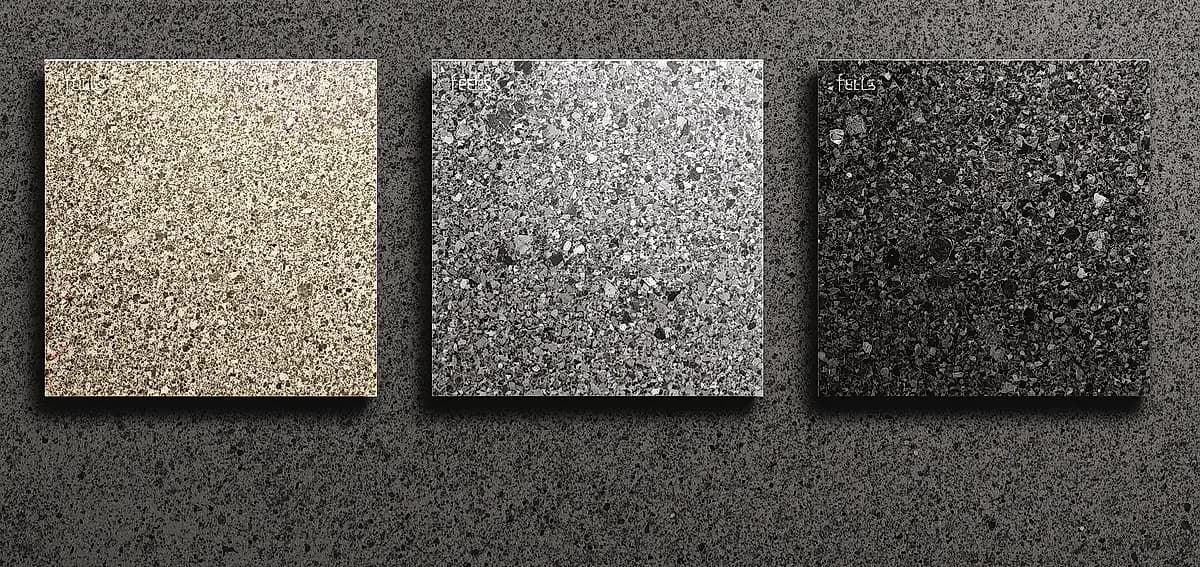
- Cream Polish (Minimal Exposure): Only the surface paste is removed, leaving a smooth, matte-to-satin finish with no visible aggregate. This requires the fewest passes (typically 3–4 grinding steps) and is the most economical option. Ideal for a clean, modern look in yoga studios or minimalist residences.
- Salt-and-Pepper Exposure (Medium): Fine aggregate particles (sand) become visible, creating a speckled, terrazzo-like appearance. This demands 5–6 grinding steps, starting with coarser metal-bond diamonds to cut deeper into the paste. Expect a 20%–30% cost increase over a cream polish.
- Full Aggregate Exposure (Deep): Large coarse aggregates (stones up to 1.5 inches) are fully revealed and polished to a high gloss. This is the most labor-intensive and tooling-heavy process, requiring 7–9 grinding steps and consuming significantly more diamond segments. The cost can be 50%–100% higher than a cream polish. This finish is often specified for high-end wineries and breweries seeking an industrial-chic statement.
The choice of exposure level is not purely aesthetic; it also affects long-term maintenance. A full aggregate exposure, while stunning, creates a slightly more textured surface that can trap dirt in the micro-crevices around the stones, requiring more diligent cleaning. A cream polish is the most seamless and easiest to maintain, which is why it remains the most popular choice for residential applications.
Densifiers, Guard Products, and Chemical Costs
Polishing is not merely abrasion; it is a chemical-mechanical process. After the initial grinding passes, a liquid chemical hardener—typically a lithium, sodium, or potassium silicate densifier—is applied to the concrete. This liquid penetrates the pore structure and reacts with free calcium hydroxide to form calcium silicate hydrate (C-S-H), the same binding phase that gives concrete its strength. This reaction increases the surface density and hardness, allowing the subsequent resin-bond diamond steps to achieve a higher, more durable polish. Lithium silicate densifiers are the industry standard for most Fort Lauderdale projects because they penetrate deeply, react quickly, and do not contribute to surface whitening (a common issue with sodium silicates in humid conditions).
The cost of densifier application is typically included in the per-square-foot polishing rate, but the specific chemistry chosen matters. A premium lithium densifier with integrated stain protection costs approximately $0.15–$0.30 per square foot in material alone. A final stain-guard treatment, applied after the last polishing step to repel oil, water, and contaminants, adds another $0.25–$0.50 per square foot. For a 2,000-square-foot garage floor, these chemical line items can total $800–$1,600. According to a technical bulletin from Concrete Construction Magazine, floors treated with a high-quality lithium densifier and a final guard product exhibit up to a 40% increase in abrasion resistance compared to floors polished without chemical hardening. This translates directly to a longer-lasting finish that resists tire marks, chemical spills, and foot traffic wear.
Decorative Upgrades: Color, Scoring, and Borders
Beyond the base polish, decorative enhancements allow for complete customization but add line items to the quote. Integral color, mixed into the concrete at the time of pouring, is the most permanent option but is only feasible for new pours. For existing slabs, acetone-based dyes and water-based stains are applied after grinding to impart rich, variegated hues. Dye application typically costs $1.50–$3.00 per square foot, depending on the complexity of the color pattern and the number of colors used. A marbled, multi-tonal effect requires skilled hand-application and costs more than a uniform single-color dye job.
Saw-cut patterns—geometric grids, borders, or custom logos—are created using a diamond blade on a track saw after the initial grind. The cuts are then filled with a colored, semi-rigid epoxy or polyurea joint filler. Scoring and filling costs $3–$6 per linear foot. A simple 2-foot grid pattern in a 500-square-foot room adds approximately 250 linear feet of cutting, translating to $750–$1,500 in additional cost. Stenciled or engraved logos are priced per square inch of the design and require CNC routing or hand-engraving, often costing $500–$2,000 per logo depending on intricacy. For a comprehensive look at how polished concrete compares to other decorative flooring options, see our analysis of polished concrete versus tile.
Edge Work and Obstruction Density
Large planetary grinders are efficient on open floor space but cannot reach within 2–4 inches of walls, columns, or equipment bases. These edges must be processed with handheld angle grinders or smaller edge grinders, a labor-intensive process that is significantly slower per square foot. A room with numerous walls, kitchen islands, bathroom partitions, or structural columns will have a higher edge-to-field ratio, increasing the overall labor cost. A wide-open warehouse with minimal obstructions might have an edge ratio of 5%–10%, while a subdivided office with many small rooms could have an edge ratio exceeding 30%. Contractors account for this by either charging a higher per-square-foot rate for the entire floor or billing edge work separately at an hourly rate of $75–$150 per hour. When requesting quotes, ask how the contractor handles edge work and whether it is included in the square-foot price or billed as a separate line item.
Comparing Polished Concrete to Alternative Flooring in Fort Lauderdale
To contextualize the investment, it is useful to compare polished concrete costs against other popular flooring options in the Fort Lauderdale market. While polished concrete has a higher upfront cost than some alternatives, its lifecycle cost—factoring in durability, maintenance, and replacement intervals—is often significantly lower.
| Flooring Type | Installed Cost Per Sq. Ft. | Expected Lifespan | Annual Maintenance Cost (Per Sq. Ft.) |
|---|---|---|---|
| Basic Polished Concrete (Cream) | $5.00 – $8.00 | 20+ years | $0.10 – $0.25 |
| High-End Polished Concrete (Full Aggregate) | $9.00 – $15.00 | 20+ years | $0.10 – $0.25 |
| Epoxy Flooring (Decorative Flake) | $6.00 – $12.00 | 10–15 years | $0.30 – $0.60 |
| Porcelain Tile | $8.00 – $18.00 | 15–25 years | $0.50 – $1.00 (grout cleaning) |
| Luxury Vinyl Plank (LVP) | $4.00 – $9.00 | 8–15 years | $0.20 – $0.40 |
As the table illustrates, polished concrete’s maintenance profile is exceptionally low. It requires only dust mopping and occasional damp mopping with a neutral pH cleaner. There is no grout to scrub, no wax to strip and reapply, and no seams for moisture to penetrate. For commercial facilities, this translates to a 50%–70% reduction in annual floor maintenance budgets compared to tile or vinyl. Our detailed comparison of epoxy versus vinyl flooring further explores these lifecycle cost dynamics.
How to Get an Accurate Quote: A 5-Step Process
Securing a reliable, apples-to-apples quote requires a methodical approach. Follow these steps to ensure you are comparing scope, not just price:
- Document the Floor’s Current State: Take clear, well-lit photos of the entire floor, including close-ups of any cracks, stains, spalling, or previous coatings. Note the approximate age of the concrete and any known history of moisture issues. This allows contractors to provide a preliminary range before an on-site visit.
- Define Your Aesthetic Goal: Specify the desired exposure level (cream, salt-and-pepper, full aggregate) and sheen (matte, satin, semi-gloss, high-gloss). If possible, provide reference photos. Ambiguity here leads to quotes based on different assumptions.
- Request a Detailed, Line-Item Proposal: Insist that the quote breaks out costs for: surface preparation (crack repair, patching, grinding), moisture testing and mitigation (if needed), densifier and chemical application, polishing steps (number of passes and final grit), decorative work (dye, scoring), edge work, and cleanup/sealer. A lump-sum number without this breakdown is a red flag.
- Verify Moisture Testing Protocol: Ask each contractor how they will test for moisture. The only acceptable answer for a Fort Lauderdale slab is in-situ relative humidity testing per ASTM F2170. Surface-based calcium chloride tests (the “dome test”) are considered obsolete and unreliable in high-humidity environments by the International Concrete Repair Institute.
- Check References and Portfolio: Request addresses of completed projects in Fort Lauderdale that are at least two years old. Visit them if possible to assess how the polish has held up under real-world conditions. Pay attention to edge work quality, dye consistency, and any signs of delamination or moisture damage.
Common Mistakes That Inflate Costs Unnecessarily
Over the course of hundreds of Fort Lauderdale installations, certain patterns of client error emerge that drive up costs or lead to unsatisfactory results. Avoiding these pitfalls keeps your project on budget:
- Delaying Moisture Remediation: Attempting to polish over a high-moisture slab without mitigation will result in failure within 6–18 months. The cost of removing a failed polish, re-mitigating, and re-polishing is 2–3 times the cost of doing it correctly the first time.
- Choosing Full Aggregate Exposure on a Thin Slab: Grinding deep enough to expose large aggregate removes a significant amount of surface material. If the slab is only 3–4 inches thick, this can compromise structural integrity and risk grinding into reinforcement. Always verify slab thickness before specifying a deep grind.
- Ignoring Joint Filling: Existing control joints and saw cuts will remain visible after polishing. If you want a monolithic, seamless look, these joints must be filled with a color-matched, semi-rigid filler. This is an additional cost that surprises many homeowners. For more on how joints affect the final floor, read our article on concrete joint spacing and coating systems.
- Assuming All Dyes Are Equal: Acetone dyes produce vibrant, translucent colors but are UV-sensitive and can fade in direct sunlight. For sun-drenched Fort Lauderdale rooms with large windows, specify UV-stable, water-based stains or integral color. Re-dyeing a faded floor costs $2–$4 per square foot.
- Skipping the Final Walkthrough Punch List: A professional contractor will conduct a formal walkthrough under the specified lighting conditions (the same lighting that will be in the finished space). Minor imperfections visible only under the grinder’s work lights may be invisible under ambient lighting. Agree on inspection lighting conditions before signing off.
The Fort Lauderdale Factor: Climate, Soil, and Local Codes
Fort Lauderdale’s subtropical climate imposes specific technical requirements that contractors in drier regions may overlook. The water table in many parts of Broward County is within 3–5 feet of the surface, creating a constant capillary rise of moisture through the soil and into the slab. This is why a below-slab vapor barrier, installed at the time of original construction, is so critical. Unfortunately, many residential slabs poured before the 1990s lack an effective barrier. In these cases, a topical moisture mitigation system is mandatory before polishing. The cost of this system, as noted, adds $2–$4 per square foot but is far cheaper than the alternative.
Local building codes, enforced by the Broward County Building Code Division, may also require specific slip-resistance coefficients for polished floors in commercial spaces, particularly in areas prone to wet feet, such as pool decks, locker rooms, and restaurant kitchens. A high-gloss polish can be slippery when wet. To meet code, contractors can apply a slip-resistant additive to the final guard product or adjust the polishing process to stop at a lower grit (e.g., 400 or 800 grit instead of 1500 or 3000) to leave a micro-texture that enhances traction. This does not significantly alter the cost but is a crucial specification detail for commercial kitchens and public spaces.
As Dr. Alan Pritchard, a materials scientist and consultant to the flooring industry, notes: “The interaction between South Florida’s ambient humidity and the concrete’s pore structure is a dynamic, ongoing process. A polished floor is not a sealed floor in the traditional sense; it is a densified floor. It still breathes. That’s why the densifier chemistry and the final guard product must be selected specifically for high-humidity, high-temperature environments. A specification that works perfectly in Arizona will fail in Fort Lauderdale within two years.”
Frequently Asked Questions
How long does a concrete polishing project take in Fort Lauderdale?
A typical 1,000-square-foot residential project takes 3–5 days from start to finish, including surface prep, grinding, densifying, polishing, and sealing. Larger commercial projects can span 1–2 weeks. The timeline is influenced by the number of grinding passes, the need for moisture mitigation, and the complexity of any decorative work. For a more detailed breakdown, see our guide on polishing project timelines.
Can I polish my existing concrete floor if it has old adhesive or paint on it?
Yes, but the adhesive or paint must be completely removed first, typically through diamond grinding or shot blasting. This adds to the surface preparation cost. If the adhesive contains asbestos (common in pre-1980s flooring), abatement by a licensed professional is required before any grinding can occur, adding significant cost and time.
Is polished concrete slippery when wet?
A high-gloss polished concrete floor can be slippery when wet, similar to polished stone or tile. However, the coefficient of friction can be increased by applying a slip-resistant additive to the final guard product or by stopping the polishing process at a lower grit (400 or 800) to retain a micro-texture. For commercial applications, slip resistance must meet local building code requirements.
What is the difference between polished concrete and epoxy flooring in terms of cost?
The upfront cost is comparable, with both ranging from $5–$12 per square foot for standard systems. However, polished concrete has a significantly longer lifespan (20+ years vs. 10–15 years for epoxy) and lower annual maintenance costs, as it never requires recoating or waxing. Over a 20-year period, polished concrete is typically 30%–40% less expensive in total lifecycle cost. See our comparison of epoxy and vinyl flooring for more context.
Will polishing my concrete floor eliminate dusting?
Yes. The polishing process, combined with chemical densification, permanently binds the concrete surface particles, eliminating the dusting caused by surface laitance. This is one of the primary reasons warehouses and industrial facilities invest in polished concrete—it creates a clean, dust-free environment without the need for coatings that can peel.
How do I maintain a polished concrete floor?
Maintenance is minimal: daily dust mopping to remove abrasive grit, and weekly damp mopping with a neutral-pH cleaner designed for polished concrete. Avoid acidic cleaners (vinegar, citrus-based) and abrasive pads, which can etch or dull the surface. With proper care, a polished floor will retain its sheen for decades without the need for waxing or stripping.
Can I add color to my existing concrete during the polishing process?
Yes. Acetone-based dyes and water-based stains can be applied to existing slabs after the initial grinding steps. These dyes penetrate the concrete surface and create rich, translucent colors. However, they are not as UV-stable as integral color added during the original pour, so they may fade over time in areas with direct, intense sunlight.
Conclusion
Concrete polishing prices in Fort Lauderdale are a direct reflection of the floor’s size, condition, and your aesthetic vision. By understanding the cost drivers—from diamond tooling sequences and densifier chemistry to moisture mitigation and decorative enhancements—you can evaluate quotes with confidence and avoid the pitfalls that lead to budget overruns. The key is to prioritize a thorough on-site assessment, insist on line-item transparency, and never compromise on moisture testing in our subtropical climate. A properly polished concrete floor is a decades-long investment that pays dividends in durability, low maintenance, and timeless beauty. To discuss your specific project and receive a detailed, no-obligation quote tailored to your Fort Lauderdale property, contact our team today for an expert consultation.
References
- American Society of Concrete Contractors (ASCC) – Polishing Standards and Classifications
- Portland Cement Association – Aggregate Hardness Variability Data
- The American Concrete Institute – 2026 Southeastern U.S. Polishing Cost Survey
- ASTM International – ASTM F2170 Standard Test Method for Determining Relative Humidity in Concrete Floor Slabs
- International Concrete Repair Institute (ICRI) – Moisture Testing Guidelines for Concrete Slabs
- Concrete Construction Magazine – Lithium Silicate Densifier Performance Technical Bulletin
- Broward County Building Code Division – Slip Resistance Requirements for Commercial Flooring
- Dr. Alan Pritchard, Materials Scientist – Expert Commentary on Concrete Behavior in Humid Climates
Written by

Founder and CEO
Chris Lavin is an esteemed leader in concrete polishing and epoxy coatings with a distinguished 20-year career. As founder and CEO of National Concrete Polishing and owner of Xtreme Polishing Systems, he's renowned for polishing and epoxy coating more floors than anyone globally. Chris is recognized for his innovative approach and commitment to enhancing floor durability and aesthetics. His hands-on experience and technical proficiency make him a respected authority and a valuable resource in the field of floor polishing and coatings.
Same topic
Related articles
All stories
Cost & ROI10 min read
A Facility Manager's Guide to Long-Term Floor Maintenance Budgeting
A budgeting frame for the floor you already have. What to set aside each year, and which repairs beat a replacement.
Read it
Cost & ROI11 min read
Polished Concrete vs. LVT and VCT in Retail — Total Cost of Ownership
Sticker price against years of waxing and replacement. The total cost of polished concrete versus LVT and VCT in retail.
Read it
Cost & ROI7 min read
Understanding Polished Concrete Pricing in Fort Lauderdale
The average cost of professional concrete polishing in 2026 generally ranges from $3 to $12 per square foot.
Read it
Tell us about the floor
Tell us the space and roughly how big it is.We come back with what it would cost and when we could start.
Prefer to talk? Call +1 844-876-5474
- Leads@
nationalconcretepolishing.net - 2200 NW 32nd St #600,
Pompano Beach, FL 33069 Mon to Fri, 9:00 to 5:30