
The NCP blog
How Concrete Joint Spacing Dictates Floor Coating System Selection
Polished concrete9 min read
This movement is driven by thermal fluctuations, moisture vapor transmission, and dynamic structural loading.
The distance between concrete joints directly dictates the required flexibility, preparation methods, and chemical composition of your floor coating system. Frequent joints require highly elastomeric coatings like polyurethanes to absorb movement, while widely spaced joints can safely support rigid epoxies without fracturing. Failing to match your coating’s elongation capacity to your substrate’s joint pattern is the leading cause of premature delamination, cracking, and catastrophic floor failure in commercial and industrial environments.
The Science of Substrate Movement and Stress Distribution
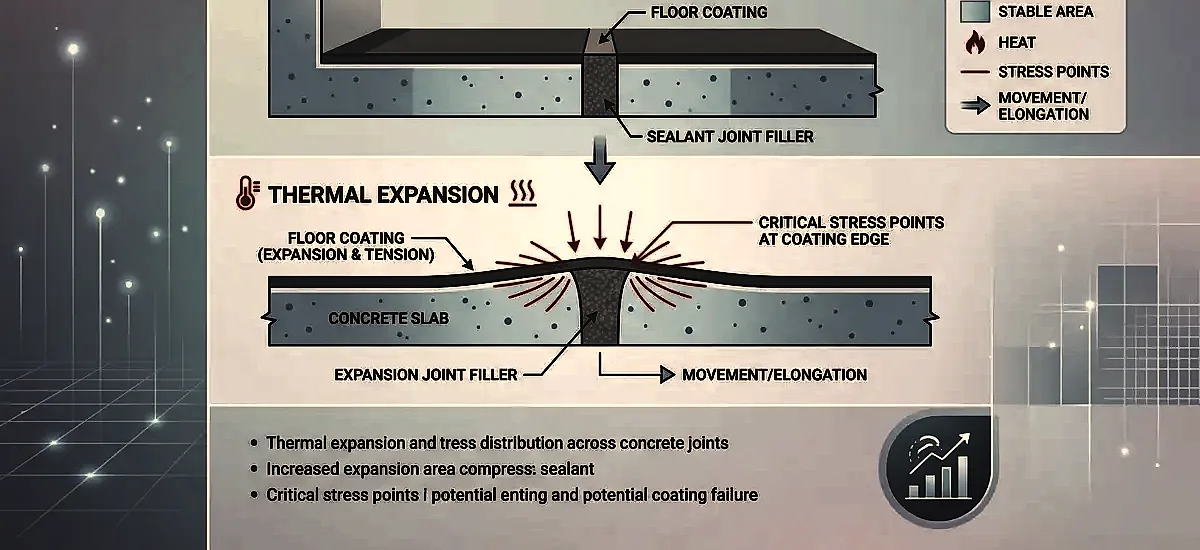
Concrete joints are engineered necessities, designed to control cracking by providing predetermined locations for the slab to move as it expands and contracts. This movement is driven by thermal fluctuations, moisture vapor transmission, and dynamic structural loading. When a continuous polymer coating is applied over these segmented substrates, it becomes subject to the exact same physical forces.
According to 2026 data published by the American Concrete Institute (ACI), thermal expansion can cause a standard 100-foot concrete slab to change length by up to 0.62 inches for every 100°F change in temperature. While this sounds microscopic, the resulting tensile stress is more than enough to shear a rigid coating right off the concrete surface.
As Dr. Marcus Vance, Lead Materials Engineer at the National Institute of Building Sciences, explains: “The correlation between joint frequency and polymer stress is absolute. Every joint acts as a hinge point. If you apply a coating with a 2% elongation capacity over a joint that experiences a 5% expansion cycle, the coating will fail 100% of the time. It is basic physics.”
Understanding these movement dynamics is critical when evaluating concrete and epoxy flooring options. The frequency of joints determines the number of potential stress concentration points across the floor. More frequent joints mean more stress points, increasing the likelihood of coating failure through reflective cracking or adhesion loss.
Matching Coating Flexibility to Joint Frequency
Different coating chemistries respond uniquely to substrate movement. The selection process must balance the need for surface hardness (abrasion resistance) with the need for flexibility (elongation capacity).
Rigid Coating Systems (Epoxies and Novolacs)
Rigid coating systems, including standard polyamine-cured epoxies and novolac systems, offer exceptional compressive strength, chemical resistance, and aesthetic appeal. However, their highly cross-linked molecular structure gives them an elongation capacity of typically less than 5%.
These systems perform best when applied over substrates with minimal movement, typically achieved through wider joint spacing (20 feet or greater). Wider spacing means larger concrete sections that experience more uniform thermal and moisture movement, reducing the differential stresses at the joints. When applied to slabs with tight joint spacing, the rigid nature of these coatings prevents them from stretching. This often leads to micro-fracturing at the joint edges, which eventually propagates into widespread delamination. If you’ve ever had to deal with fixing peeling epoxy floors, incompatible joint movement is frequently the hidden culprit.
Elastomeric and Flexible Systems (Polyurethanes and Polyaspartics)
Flexible coating systems represent a specialized category designed to accommodate substrate movement while maintaining protective properties. These systems offer superior elongation characteristics, making them ideal for substrates with frequent joint spacing (10-15 feet or less) or active movement patterns.
Modern aliphatic polyurethanes can accommodate elongation of 50% to over 200%. This flexibility allows them to bridge across minor cracks and absorb the differential movement between adjacent concrete sections without fracturing. Polyaspartic coatings, while slightly less flexible than pure polyurethanes, still offer significantly better movement accommodation than rigid epoxies, making the polyaspartic vs epoxy decision critical for highly jointed floors.
Step-by-Step Surface Preparation for Highly Jointed Floors
Surface preparation requirements vary significantly based on concrete joint spacing. Frequent joints add immense complexity to preparation procedures, influencing equipment selection, material requirements, and labor costs. In 2026, industry standards dictate a rigorous protocol for preparing jointed substrates.
- Subsurface Evaluation: Before any mechanical preparation begins, contractors must assess what lies beneath the slab. Using ground-penetrating radar to scan the concrete floor helps identify hidden voids, moisture pockets, or structural anomalies near joint lines that could exacerbate movement.
- Mechanical Profiling: The surface must be mechanically profiled, typically via shot blasting or planetary diamond grinding, to achieve the proper Concrete Surface Profile (CSP). Frequent joints can interrupt mechanical preparation patterns, requiring meticulous hand-grinding along joint edges to prevent damage.
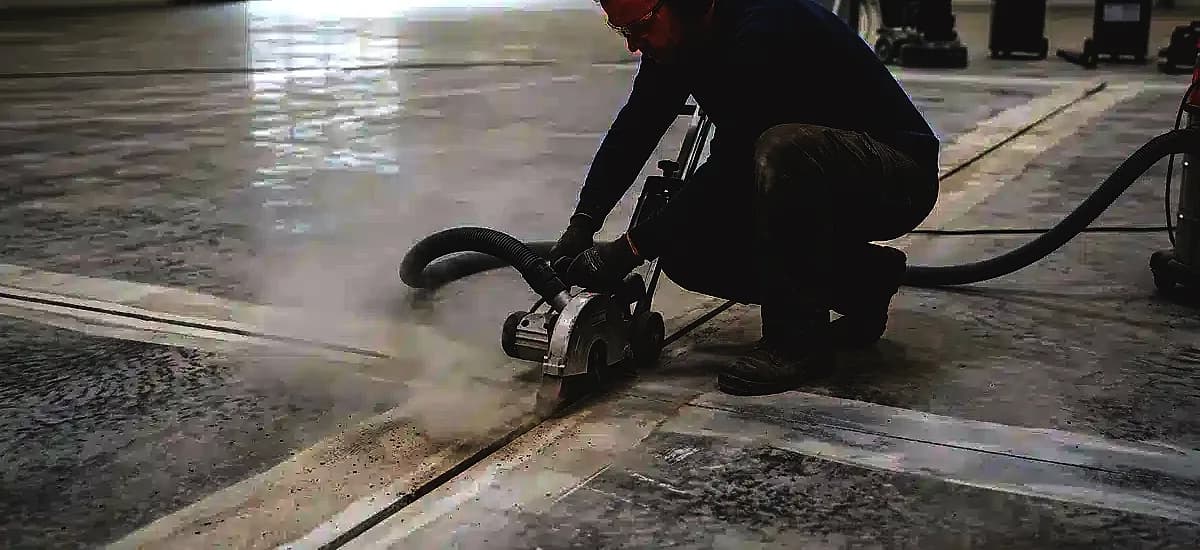
- Joint Chasing and Cleaning: Every linear foot of joint must be “chased” with a v-blade diamond saw to remove old sealants, debris, and laitance. A vacuum system must extract all microscopic dust from the joint cavity.
- Moisture Testing: Joints act as primary pathways for moisture vapor transmission. Testing must be conducted specifically at joint intersections. According to ASTM International standards (ASTM F2170), relative humidity probes should be placed near joints to ensure moisture levels do not exceed the coating manufacturer’s tolerances.
- Joint Filling: Static control joints are typically filled with a semi-rigid polyurea or epoxy joint filler. The filler must be shaved perfectly flush with the concrete surface. Active expansion joints, however, must be honored (brought up through the coating) using a flexible elastomeric sealant.
- Primer Application: Joints may require specialized penetrating primers that offer enhanced flexibility to properly prepare the joint edges and adjacent concrete.
2026 Coating System Comparison Matrix
To simplify the selection process, the following table outlines how different coating chemistries align with specific joint spacing parameters and movement profiles.
| Coating Chemistry | Ideal Joint Spacing | Elongation Capacity | Best Application Environment |
|---|---|---|---|
| Standard 100% Solids Epoxy | 20+ feet | 2% – 5% | Heavy manufacturing, wide-pour warehouses |
| Polyaspartic Aliphatic Polyurea | 12 – 20 feet | 15% – 30% | Commercial retail, rapid return-to-service areas |
| Aromatic Polyurethane | 8 – 15 feet | 50% – 150% | Parking decks, mechanical rooms, high-vibration zones |
| Elastomeric Membrane Systems | Under 8 feet | 200%+ | Suspended slabs, highly dynamic structural floors |
Economic Impact and Lifecycle Costs in 2026
The economic impact of concrete joint spacing on coating system selection extends far beyond initial material costs. In 2026, industry surveys reveal that substrates with joints spaced closer than 10 feet incur, on average, a 34% increase in surface preparation costs compared to wide-pour slabs.
This cost increase is driven by the sheer volume of joint filler required, the specialized labor needed to chase and shave the joints, and the increased consumption of flexible bridging primers. More joints typically mean higher material costs and a more labor-intensive application process.
However, attempting to cut costs by applying a cheap, rigid epoxy over a highly jointed floor is a false economy. Sarah Jenkins, Director of Facilities Management at the Commercial Real Estate Consortium, notes: “We tracked flooring lifecycle costs across 40 commercial properties. Facilities that ignored joint spacing dynamics and installed rigid coatings over tight joints saw a 68% higher failure rate within the first three years. The cost of grinding off failed epoxy and reinstalling the correct flexible system was triple the cost of doing it right the first time.”
Furthermore, structural issues like bouncy or springy commercial floors exacerbate joint movement. If a floor has high deflection (bounce) under load, the joints will experience vertical shear forces. In these scenarios, even standard flexible coatings may fail, requiring highly specialized elastomeric isolation membranes.
Real-World Application: Environmental Challenges
Environmental conditions during application and curing significantly impact how a coating interacts with concrete joints. Temperature and humidity dictate the cure rate, which in turn affects the polymer’s final cross-link density and flexibility.
For instance, applying coatings in environments with massive temperature swings (like unconditioned warehouses or outdoor parking decks) means the concrete is actively expanding or contracting while the coating is curing. If a rigid coating cures while the joint is fully expanded (cold conditions), it will be immediately subjected to compressive stress when the facility warms up.
Contractors must utilize advanced testing methods to verify the coating is fully cured before subjecting the floor to thermal shock or heavy forklift traffic. According to guidelines from the Occupational Safety and Health Administration (OSHA) regarding floor safety, premature loading of coated floors near joint lines is a primary cause of trip hazards resulting from delaminated polymer shards.
Frequently Asked Questions
Can I just fill the joints with epoxy and coat over them?
No. Filling active control joints with a rigid epoxy paste and coating over them will almost certainly result in reflective cracking. The concrete will still expand and contract, and because the epoxy filler cannot stretch, the movement will tear the coating directly above the joint line.
What is the difference between a control joint and an expansion joint?
A control joint (or contraction joint) is a deliberate cut made in the concrete to dictate where shrinkage cracks will occur. An expansion joint (or isolation joint) goes completely through the slab to separate it from walls, columns, or other slabs, allowing for independent structural movement. Expansion joints must never be coated over; they must be honored with flexible sealants.
How do I know if my concrete joints are moving too much for a standard coating?
Professional contractors use crack monitors and structural assessments to measure joint deflection. If the joint exhibits vertical shear movement (one side moving up while the other stays flat) under load, standard coatings will fail. This requires structural stabilization before any coating is applied.
Are polyaspartic coatings flexible enough for 10-foot joint spacing?
Generally, yes. High-quality aliphatic polyaspartic coatings possess an elongation capacity of 15% to 30%, which is typically sufficient to handle the horizontal thermal movement of slabs with 10-foot joint spacing, provided the joints are properly filled with a compatible semi-rigid polyurea.
Why do my floor joints look darker under my clear floor coating?
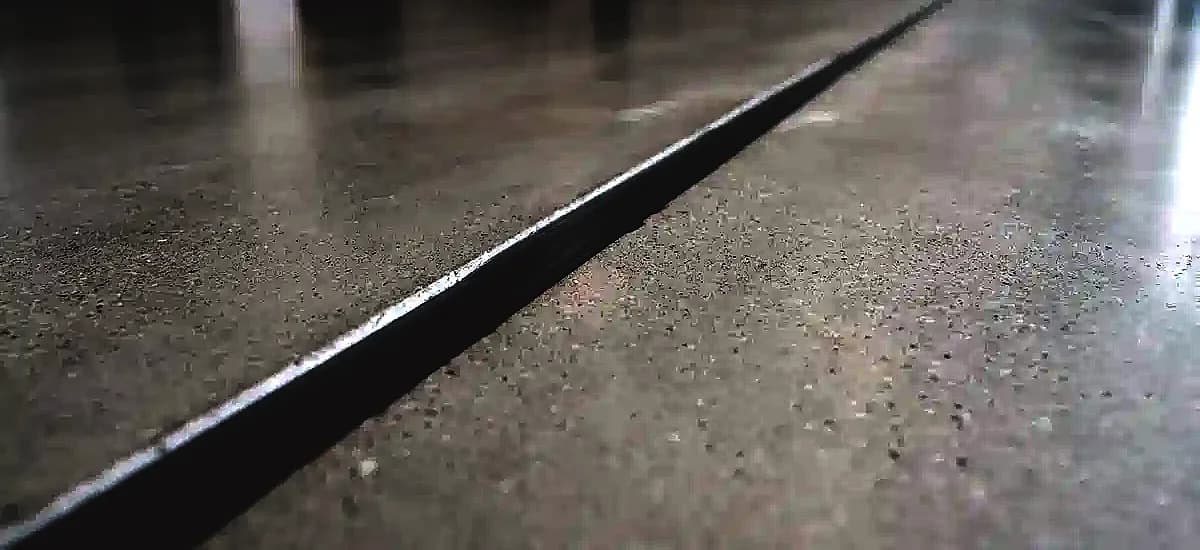
This is known as “joint shadowing.” It occurs because the joint filler material absorbs the clear coating differently than the surrounding concrete, or because moisture vapor is concentrating at the joint line. Using a pigmented primer or a 100% opaque topcoat eliminates this aesthetic issue.
Does joint spacing affect polished concrete the same way it affects coatings?
No. Because polished concrete is a mechanical refinement of the slab itself rather than a topical film, it cannot “peel” or “delaminate” at the joints. However, the joints in a polished floor must still be properly filled to protect the edges from spalling under hard-wheeled traffic. You can explore various concrete floor finishes to see which option best suits your joint layout.
Conclusion
Understanding how concrete joint spacing affects coating system selection is the foundational step in engineering a durable, long-lasting floor. The physics of thermal expansion and structural movement cannot be ignored. By accurately assessing your slab’s joint frequency, movement patterns, and environmental exposure, you can select a coating chemistry—whether a rigid epoxy or a highly elastomeric polyurethane—that will work in harmony with your concrete rather than fighting against it.
Ignoring these principles leads to inevitable failure, costly downtime, and expensive remediation. Don’t leave your facility’s flooring investment to chance. If you are planning a commercial or industrial flooring project and need expert guidance on matching the right coating technology to your specific substrate conditions, contact us today to schedule a comprehensive site evaluation and joint assessment.
Written by

Founder and CEO
Chris Lavin is an esteemed leader in concrete polishing and epoxy coatings with a distinguished 20-year career. As founder and CEO of National Concrete Polishing and owner of Xtreme Polishing Systems, he's renowned for polishing and epoxy coating more floors than anyone globally. Chris is recognized for his innovative approach and commitment to enhancing floor durability and aesthetics. His hands-on experience and technical proficiency make him a respected authority and a valuable resource in the field of floor polishing and coatings.
Same topic
Related articles
All stories
Polished concrete11 min read
Polished Concrete vs Epoxy Coatings: Which Floor Is Right for Your Space?
Two systems, two price curves, one slab. What each one costs to install and to keep, and which spaces each one actually suits.
Read it
Polished concrete8 min read
What to Know Before Polishing Your Existing Concrete Slab
Before any mechanical refinement can begin, a thorough evaluation of the current foundation is required.
Read it
Polished concrete8 min read
Is Polished Concrete Worth the Investment for Miami Properties?
It is essential to distinguish between a simple topical seal and mechanically refined concrete.
Read it
Tell us about the floor
Tell us the space and roughly how big it is.We come back with what it would cost and when we could start.
Prefer to talk? Call +1 844-876-5474
- Leads@
nationalconcretepolishing.net - 2200 NW 32nd St #600,
Pompano Beach, FL 33069 Mon to Fri, 9:00 to 5:30