
The NCP blog
Metallic Epoxy Floor Ideas for Miami Residential Properties
Residential12 min read
Metallic epoxy flooring transforms a standard concrete slab into a seamless, three-dimensional work of art.
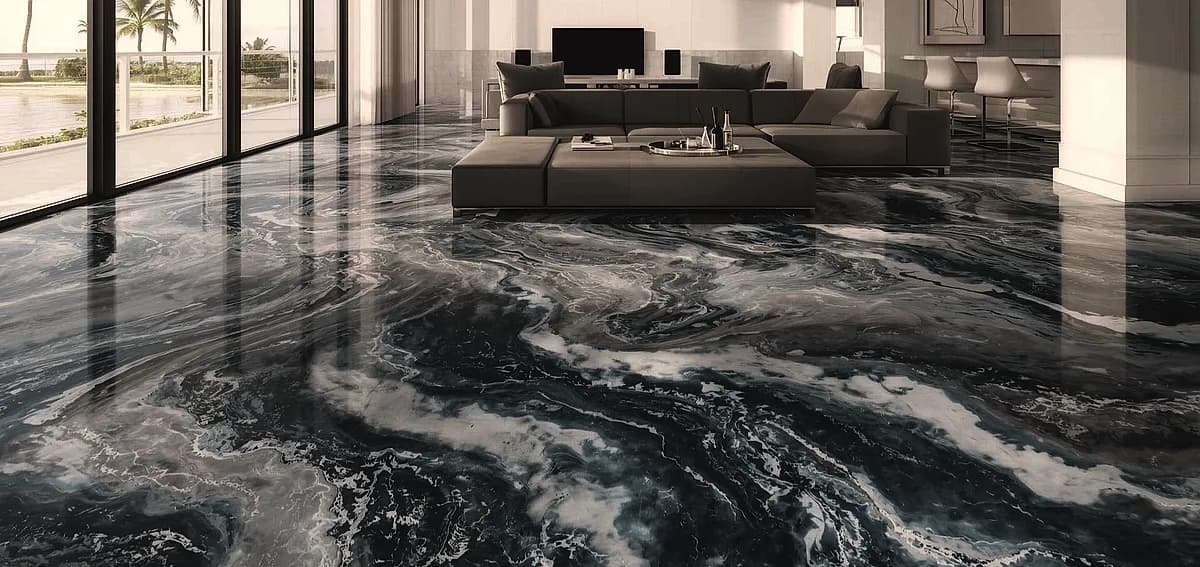
Metallic epoxy flooring transforms a standard concrete slab into a seamless, three-dimensional work of art. The system uses a pigmented, high-build epoxy resin mixed with metallic powders that, when manipulated during installation, create swirling patterns, lava-flow effects, and pearlescent depth. For Miami homeowners, this floor offers16 a practical16 solution that handles humidity, resists salt air, and delivers16 a show-stopping aesthetic that tile or hardwood simply cannot match. The16 final surface is non-porous, antimicrobial, and reflects light in ways that make interior spaces feel larger and more luxurious.
Why Metallic Epoxy Floors Thrive in Miami’s Climate
Miami’s subtropical environment presents16 unique challenges for residential flooring. High relative humidity, frequent afternoon thunderstorms, and saline coastal air accelerate16 deterioration in conventional materials. Metallic epoxy floors, however, form a monolithic, impermeable membrane that blocks moisture transmission from the concrete substrate. According to the American Concrete Institute, properly installed epoxy coatings reduce water vapor transmission rates by over 90% compared to unsealed concrete. This16 characteristic prevents efflorescence, mold growth, and adhesive failures that plague other flooring types in South Florida.
The thermal properties of metallic epoxy also contribute to energy efficiency. Research from the U.S. Department of Energy indicates that reflective flooring surfaces can reduce artificial lighting requirements by up to 20%. The high-gloss metallic finish bounces natural and artificial light deep into living spaces, reducing the need for overhead fixtures during daylight hours. For Miami homes with expansive glass doors and windows, this light reflectivity enhances the indoor-outdoor living experience that defines the region’s architectural style.
Design Possibilities:16 Color Palettes and Visual Effects
The design flexibility of metallic epoxy floors far exceeds that of polished concrete or traditional tile installations. Installers manipulate the resin during its working time to create distinct visual effects. The most popular techniques include the marbled swirl, the lava flow, and the galaxy effect. Each technique requires specific pigment ratios and application motions. A marbled swirl uses two to three complementary metallic pigments dragged through a base coat with a notched squeegee. The lava flow effect demands a thicker application and a controlled tipping motion that creates cellular patterns resembling molten rock.
Color selection for Miami residences should consider both aesthetic16 preferences and practical thermal performance. Lighter metallic pigments—pearl white, champagne, and soft silver—reflect more solar radiation and help maintain cooler interior temperatures. Darker pigments—deep bronze, charcoal, and midnight blue—absorb heat and work better in north-facing rooms or spaces with minimal direct sunlight. As Maria Torres, Lead Designer at Miami Floor Studio, explains: “We’re seeing a strong shift toward ocean-inspired palettes in 2026. Homeowners want floors that echo Biscayne Bay’s turquoise depths or the Atlantic’s storm-gray surface. These colors connect the interior to Miami’s coastal identity without sacrificing durability.”
Popular Metallic Epoxy16 Pigment Combinations
- Coastal Drift: Pearl white base with silver and soft blue veining—ideal for beachfront condos.
- Sunset Coral: Warm copper base with rose gold and bronze accents—suits Mediterranean-style homes.
- Midnight Storm: Charcoal base with deep purple and gunmetal swirls—dramatic statement for modern interiors.
- Tropical Sand: Beige base with gold and champagne highlights—complements natural wood and rattan furnishings.
- Urban Industrial: Graphite base with silver and black lava effects—pairs with exposed brick and steel beams.
Installation Process: From Concrete Prep to Final Cure
Installing a metallic epoxy floor requires meticulous surface preparation. The concrete substrate must achieve a minimum tensile strength of 3,000 psi and a moisture vapor emission rate below 3 pounds per 1,000 square feet per 24 hours. In Miami, where the water table sits high, moisture mitigation is non-negotiable. Contractors use calcium chloride tests or in-situ relative humidity probes to verify substrate conditions before proceeding. Skipping this step leads to delamination, blistering, and catastrophic coating failure within months.
The installation sequence follows a strict timeline. First, the slab undergoes diamond grinding to open the concrete’s pore structure and remove contaminants. Next, cracks and control joints receive a semi-rigid epoxy filler. The primer coat—a low-viscosity, 100%-solids epoxy—penetrates the concrete and creates a chemical bond. Once the primer tacks up, the metallic body coat is applied at a thickness of 10 to 15 mils. This is the artistic phase where installers manipulate pigments to achieve the desired visual effect. Finally, a UV-stable aliphatic polyurethane topcoat seals the floor and provides scratch resistance. The entire process typically spans three to five days, with full chemical cure achieved in seven days.
Step-by-Step Installation Timeline
- Day 1: Diamond grind concrete surface (CSP 2-3 profile), repair cracks, vacuum dust.
- Day 2: Apply moisture-mitigating epoxy primer, allow to cure for 8-12 hours.
- Day 3: Apply metallic epoxy body coat, manipulate pigments for desired pattern.
- Day 4: Inspect for defects, apply first layer of UV-stable polyurethane topcoat.
- Day 5: Apply second topcoat layer, allow 24-hour light foot traffic cure.
- Day 7: Full chemical cure achieved; furniture and heavy items can be placed.
Cost Analysis and Return on Investment
The financial commitment for a metallic epoxy floor in Miami varies based on square footage, substrate condition, and design complexity. As of 2026,16 the average cost ranges from $8 to $15 per square foot for professional installation. A 500-square-foot living area typically totals $4,000 to $7,500. This16 price includes surface preparation, primer, metallic body coat, and two layers of UV-stable topcoat. Compared to high-end porcelain tile ($12-$25 per square foot installed) or engineered hardwood ($10-$20 per square foot), metallic epoxy offers a competitive mid-range option with16 superior longevity.
The return on investment extends beyond initial cost savings. Metallic epoxy floors eliminate the need for grout cleaning, waxing, or periodic refinishing. A study by the National Association of Home Builders found that seamless flooring systems reduce annual maintenance expenditures by approximately 40% compared to tile floors with grout lines. For Miami homeowners who rent their properties seasonally, this durability translates to faster turnover between tenants and fewer repair callbacks. Additionally, the unique aesthetic can serve as a differentiator in Miami’s competitive real estate market, potentially increasing resale value.
| Flooring Type | Installed Cost per Sq. Ft. | Average Lifespan | Annual Maintenance Cost |
|---|---|---|---|
| Metallic Epoxy | $8 – $15 | 20+ years | $0.50/sq. ft. |
| Porcelain Tile | $12 – $25 | 15-20 years | $1.20/sq. ft. |
| Engineered Hardwood | $10 – $20 | 10-15 years | $1.50/sq. ft. |
| Luxury Vinyl Plank | $5 – $10 | 8-12 years | $0.80/sq. ft. |
Comparing Metallic Epoxy to Other Miami Flooring Options
When evaluating epoxy against vinyl or polished concrete versus tile, several performance metrics stand out. Vinyl plank flooring, while affordable, cannot withstand Miami’s humidity without expansion gaps that trap dirt and moisture. Tile floors, though durable, introduce grout lines that require frequent sealing and harbor mold in shower-adjacent areas. Polished concrete offers a similar seamless look but lacks the 3D visual depth and color customization of metallic epoxy. As James Chen, Materials Engineer at FloorTech Solutions, notes: “Metallic epoxy occupies a unique position—it delivers the seamless hygiene of polished concrete with the decorative potential of high-end tile, all while forming a moisture barrier that neither alternative provides.”
For homeowners considering epoxy over existing tile, metallic systems offer a viable retrofit solution. However, the tile must be mechanically abraded to create a bonding profile, and any loose or hollow-sounding tiles require replacement before coating. This approach saves demolition costs but demands rigorous adhesion testing. The primer adhesion test—a simple cross-hatch pull-off—verifies that the epoxy will bond securely to the prepared tile surface.
Maintenance Protocols for Long-Term Performance
Maintaining a metallic epoxy floor requires consistent but straightforward care. Daily dust mopping with a microfiber pad removes abrasive grit that can dull the topcoat over time. Weekly wet cleaning should use a pH-neutral cleaner specifically formulated for epoxy surfaces; acidic or alkaline cleaners degrade the polyurethane topcoat and cause yellowing. The metallic epoxy maintenance regimen also includes quarterly inspections for scratches or wear patterns in high-traffic zones.
In Miami’s coastal environment, salt residue presents an additional concern. Airborne salt particles settle on floor surfaces and, when combined with humidity, form a corrosive slurry. Rinsing floors with clean water after storm surges or periods of open-window ventilation prevents salt buildup. For homes with direct beach access, installing walk-off mats at entry points reduces the volume of sand and salt tracked onto the epoxy surface. According to the International Concrete Repair Institute, floors subjected to saline exposure benefit from an additional topcoat layer every three to five years to maintain protective thickness.
Recommended Cleaning Products and Frequency
- Daily: Microfiber dust mop, dry sweep.
- Weekly: pH-neutral epoxy floor cleaner, damp microfiber mop.
- Monthly: Inspect for scratches; spot-clean with isopropyl alcohol for stubborn marks.
- Quarterly: Full inspection under bright light; document any wear patterns.
- Annually: Professional assessment; re-coat high-traffic areas if needed.
Common Installation Mistakes and How to Avoid Them
Even experienced contractors can encounter pitfalls when installing metallic epoxy in Miami’s climate. The most frequent error is inadequate moisture testing. A concrete slab may appear dry on the surface while harboring dangerous moisture levels below. The calcium chloride test, specified by ASTM F1869, provides quantitative data that must inform go/no-go decisions. Another common mistake involves applying the metallic body coat too thinly. To achieve the signature 3D effect, the epoxy layer must maintain a minimum thickness of 10 mils; thinner applications result in flat, uninspiring finishes that fail to showcase the metallic pigments.
Temperature and humidity control during application also prove critical. Epoxy resins cure through an exothermic chemical reaction sensitive to ambient conditions. In Miami’s summer months, slab temperatures can exceed 90°F, accelerating cure times and reducing the working window for pigment manipulation. Professional installers combat this by scheduling applications during early morning hours and using slow-cure hardeners formulated for high-temperature environments. As Roberto Alvarez, Senior Installer at South Florida Epoxy Systems, advises: “Never apply metallic epoxy when the slab temperature exceeds 85°F or the relative humidity surpasses 75%. These conditions cause amine blush—a waxy surface film that prevents topcoat adhesion and ruins the floor.”
Environmental and Health Considerations
The environmental impact of epoxy flooring has improved significantly with advances in resin chemistry. Modern metallic epoxy systems use low-VOC, water-based primers that emit fewer volatile organic compounds during installation. The U.S. Green Building Council recognizes certain epoxy formulations as contributing to LEED credits for low-emitting materials. For Miami homeowners with respiratory sensitivities or young children, specifying zero-VOC topcoats ensures indoor air quality remains uncompromised during and after installation.
The longevity of metallic epoxy floors also contributes to their sustainability profile. A floor that lasts 20-plus years reduces the frequency of tear-outs and replacements, keeping construction waste out of landfills. When eventual removal becomes necessary, the epoxy can be mechanically ground from the concrete substrate, and the underlying slab can be repurposed for a new flooring system without demolition. This cradle-to-cradle approach aligns with Miami’s growing emphasis on resilient, sustainable building practices.
Frequently Asked Questions
Can metallic epoxy floors be installed over existing tile?
Yes, metallic epoxy can be applied over existing tile provided the tile surface is mechanically abraded to create a bonding profile. All loose or cracked tiles must be replaced, and grout lines must be filled with an epoxy patching compound. A primer adhesion test should be performed before full application to verify bond strength. This retrofit approach avoids the cost and mess of tile demolition.
How long does a metallic epoxy floor last in a Miami home?
A professionally installed metallic epoxy floor with a UV-stable polyurethane topcoat typically lasts 20 to 25 years in residential settings. The lifespan depends on maintenance practices, sun exposure, and traffic levels. Annual inspections and periodic re-coating of worn areas extend the floor’s service life significantly. Floors in direct, unfiltered sunlight may require topcoat renewal every five to seven years.
Are metallic epoxy floors slippery when wet?
Metallic epoxy floors can become slippery when wet if no anti-slip additive is incorporated into the topcoat. Professional installers address this by mixing aluminum oxide grit or polymer beads into the final polyurethane layer. These additives create a textured surface that maintains slip resistance without compromising the glossy appearance. For pool decks and bathrooms, a higher concentration of anti-slip media is recommended.
What is the difference between metallic epoxy and regular epoxy flooring?
Regular epoxy flooring uses solid pigments that produce a uniform, opaque color. Metallic epoxy incorporates reflective metallic powders—typically aluminum, copper, or zinc—that create depth, movement, and a three-dimensional appearance. The application technique also differs: metallic epoxy requires artistic manipulation during the curing window to develop swirls and patterns, while standard epoxy is simply rolled or squeegeed into place.
Can I install a metallic epoxy floor myself?
DIY metallic epoxy kits are available but rarely produce results comparable to professional installations. Achieving the signature 3D effect requires experience with resin rheology, pigment dispersion, and timing. Additionally, consumer-grade kits often lack the UV stabilizers and moisture-mitigating primers necessary for Miami’s climate. Improper surface preparation leads to delamination, and mistakes during the artistic phase cannot be corrected once the epoxy cures.
How do metallic epoxy floors handle Miami’s humidity?
Metallic epoxy floors handle humidity exceptionally well when installed with proper moisture-mitigation protocols. The epoxy forms a non-porous barrier that prevents water vapor from passing through the concrete slab. However, if moisture testing is skipped and a high moisture vapor emission rate is present, the epoxy can delaminate. Professional contractors always perform calcium chloride or RH probe testing before installation.
What colors work best for small Miami condos?
For small condos, lighter metallic pigments—pearl, champagne, soft silver—reflect more light and make spaces feel larger. Avoid dark, saturated colors that absorb light and visually shrink the room. A single-pigment application with subtle veining creates an expansive, airy feel. High-gloss finishes further enhance the perception of space by reflecting light deep into corners.
Does metallic epoxy increase home value in Miami?
Metallic epoxy floors can increase home value by offering a unique, low-maintenance16 flooring option that appeals to buyers seeking modern, durable finishes. The seamless surface eliminates grout lines and carpet seams that trap allergens, a selling point for health-conscious buyers. In Miami’s luxury market,16 a custom metallic epoxy floor serves as a distinctive architectural feature that differentiates a property from comparable listings.
Conclusion
Metallic epoxy floors represent a convergence of art and engineering uniquely suited to Miami’s residential landscape. The seamless, moisture-resistant surface handles the region’s humidity and salt air while delivering a visual impact that transforms ordinary concrete into a design focal point. From ocean-inspired color palettes to lava-flow patterning techniques, the customization possibilities are virtually limitless. The key to a successful installation lies in rigorous substrate preparation, climate-appropriate material selection, and the expertise of a professional installer who understands South Florida’s specific demands. Whether renovating a waterfront condo or building a new home, metallic epoxy flooring offers a durable, beautiful, and practical solution that will perform for decades. For a personalized consultation on metallic epoxy options for your Miami residence, contact our team today to schedule an on-site evaluation.
References
- American Concrete Institute. “Guide for the Use of Epoxy Compounds with Concrete.” https://www.concrete.org
- U.S. Department of Energy. “Energy Efficiency in Residential Buildings.” https://www.energy.gov
- National Association of Home Builders. “Life Cycle Cost Analysis for Flooring Materials.” https://www.nahb.org
- International Concrete Repair Institute. “Moisture-Related Failures in Resinous Flooring.” https://www.icri.org
- ASTM International. “ASTM F1869: Standard Test Method for Measuring Moisture Vapor Emission Rate of Concrete Subfloor Using Anhydrous Calcium Chloride.” https://www.astm.org
- U.S. Green Building Council. “LEED v4.1 for Building Design and Construction.” https://www.usgbc.org
Written by

Founder and CEO
Chris Lavin is an esteemed leader in concrete polishing and epoxy coatings with a distinguished 20-year career. As founder and CEO of National Concrete Polishing and owner of Xtreme Polishing Systems, he's renowned for polishing and epoxy coating more floors than anyone globally. Chris is recognized for his innovative approach and commitment to enhancing floor durability and aesthetics. His hands-on experience and technical proficiency make him a respected authority and a valuable resource in the field of floor polishing and coatings.
Same topic
Related articles
All stories
Residential8 min read
What Restaurants Need to Pass a Health Inspection Floor Check
It endures heavy foot traffic, dropped equipment, boiling water spills, and harsh degreasing chemicals daily.
Read it
Residential9 min read
How Restaurants Replace Their Floors Without Closing for Long
The average food service establishment loses approximately $3,500 in daily revenue during unexpected closures in 2026.
Read it
Residential8 min read
Where Polished Concrete Beats Epoxy in a Home (and Where It Doesn’t)
Before evaluating specific rooms, it is essential to understand how these two flooring systems function.
Read it
Tell us about the floor
Tell us the space and roughly how big it is.We come back with what it would cost and when we could start.
Prefer to talk? Call +1 844-876-5474
- Leads@
nationalconcretepolishing.net - 2200 NW 32nd St #600,
Pompano Beach, FL 33069 Mon to Fri, 9:00 to 5:30