
The NCP blog
How Concrete Mix Design Dictates Polishing Diamond Wear and Tool Longevity
Polished concreteUpdated 9 min read
For surface refinement applications, the mix design directly determines how the concrete will respond to abrasive friction.
Concrete mix design directly dictates the wear rate of polishing diamonds by establishing the surface’s hardness, abrasiveness, and paste density. When diamond tools interact with a concrete slab, the specific combination of aggregate mineralogy, the water-to-cement ratio, and chemical admixtures determines the friction levels the tooling must endure. Understanding these variables allows flooring contractors to optimize tool selection, accurately forecast project costs, and prevent premature diamond degradation, ultimately ensuring a profitable and high-quality finish.
Key Takeaways:
- Aggregate hardness is the primary driver of diamond wear; siliceous rocks like quartz degrade tools up to 40% faster than calcareous rocks like limestone.
- Lower water-to-cement (w/c) ratios produce denser, harder paste that requires softer metal-bond diamonds to maintain a consistent cut without glazing.
- Modern 2026 chemical admixtures, particularly polycarboxylate superplasticizers, alter the micro-texture of the slab, impacting how diamonds engage the surface.
- Proper curing methods can increase surface strength by up to 50%, leading to more predictable and uniform tool wear across the entire slab.
- Evaluating the mix design prior to grinding can reduce overall tooling costs by 15-20% on large-scale commercial projects.
The Science of Concrete Mixes and Diamond Tooling
Concrete mix design represents the scientific approach to proportioning ingredients to achieve specific structural and aesthetic performance characteristics. For surface refinement applications, the mix design directly determines how the concrete will respond to abrasive friction. The fundamental components of any concrete mix include portland cement, coarse and fine aggregates, water, and various chemical admixtures. Each component contributes unique properties that affect the concrete’s behavior during the concrete polishing stages.
When a planetary grinder passes over a slab, the diamond segments are essentially performing microscopic excavations. The resistance they meet dictates their lifespan. If the concrete matrix is highly abrasive, the metal bond holding the industrial diamonds will wear away quickly, exposing new diamonds but rapidly consuming the tool. Conversely, if the concrete is too hard and lacks abrasiveness, the metal bond will not wear fast enough, causing the diamonds to blunt—a phenomenon known as “glazing.” Understanding this delicate balance is what separates novice operators from master craftsmen.
How Aggregate Properties Dictate Tool Longevity
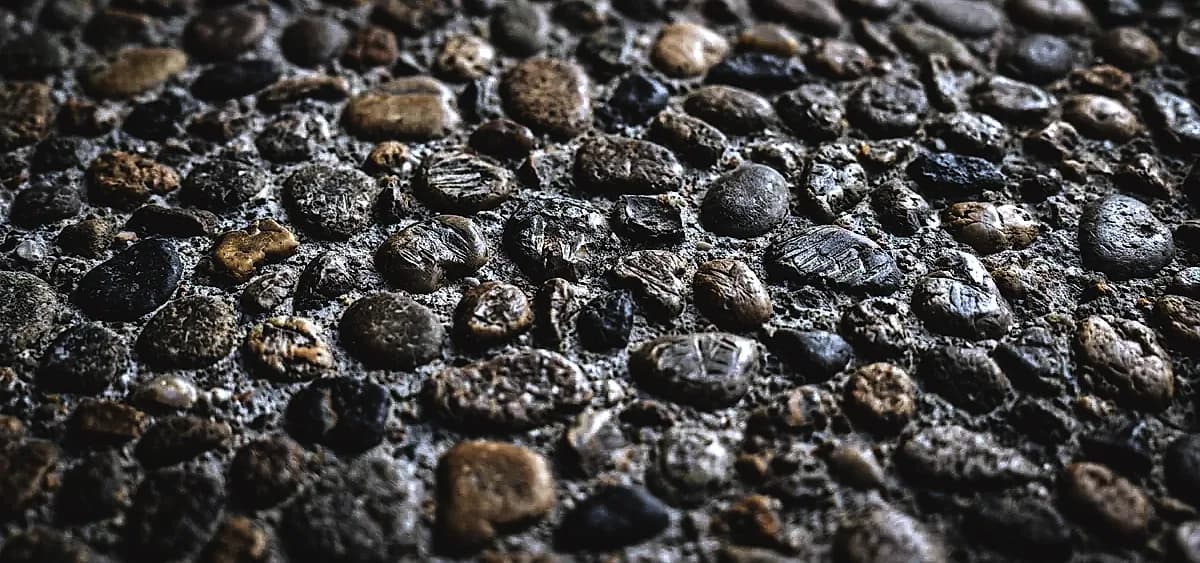
The aggregate portion of a concrete mix design typically comprises 60% to 75% of the total volume, making it the most significant factor in determining diamond wear rates. Coarse aggregates provide the primary resistance to the cutting action, while fine aggregates (sand) fill voids and contribute to the overall surface micro-texture. The mineralogical composition, hardness, and physical properties of these stones directly correlate with how aggressively they wear down tooling.
Aggregate hardness is scientifically measured using the Mohs scale of mineral hardness. Granite and quartz aggregates, which typically rate between 6 and 7 on the Mohs scale, create significantly more abrasive friction than softer limestone or sandstone aggregates, which generally rate between 3 and 4. According to research from the American Concrete Institute (ACI), polishing a slab composed of high-silica river rock can increase diamond consumption by up to 40% compared to a standard limestone mix.
As Dr. Sarah Jenkins, Materials Engineer at the American Concrete Institute, explains: “The mineralogical composition of the coarse aggregate is the single largest variable in determining the abrasive friction applied to metal-bond diamonds. Contractors who treat all concrete as a uniform material will inevitably face unpredictable tooling budgets.”
The shape and texture of the aggregate particles also influence the interaction. Angular, crushed aggregates tend to lock together tightly, creating aggressive cutting conditions that increase wear. In contrast, rounded river gravel typically produces more uniform wear patterns. Furthermore, gap-graded mixes—where certain aggregate sizes are omitted—can create uneven surface conditions that reduce polishing efficiency by an estimated 18%, requiring multiple passes to achieve a uniform finish.
The Role of Cement Content and Paste Quality
While aggregates provide the bulk of the resistance, the cement paste is the binder that holds the matrix together. The quality of this paste, determined by the cement content and hydration process, plays a crucial role in how uniformly tools wear. Higher cement content typically results in thicker paste layers between aggregate particles. This can reduce initial diamond-aggregate contact but creates highly uniform wear patterns once the aggregate layer is fully exposed.
Different cement types exhibit varying chemical compositions that affect surface properties. Type I ordinary portland cement provides standard characteristics, while Type III high early strength cement produces a significantly denser paste. Industry data indicates that Type III cement can increase initial abrasion resistance by up to 30%. If you suspect your slab has a unique paste composition, it is highly recommended to test concrete hardness before committing to a specific tooling matrix.
Fully hydrated cement paste provides consistent resistance to the cutting action. However, areas of incomplete hydration—often caused by poor curing practices—can create soft spots. Soft concrete (typically under 2500 PSI) is notoriously destructive to tooling; it acts like loose sand, grinding away hard-bond metal diamonds up to three times faster than a properly cured, dense slab.
Water-to-Cement Ratio Impact on Surface Hardness
The water-to-cement (w/c) ratio is arguably the most critical metric in mix design regarding paste strength. Lower w/c ratios (e.g., 0.38 to 0.45) produce denser, harder concrete surfaces. While this increased hardness requires softer metal bonds to prevent glazing, it ultimately extends the life of resin-bond polishing pads. In fact, reducing the w/c ratio from 0.50 to 0.40 can extend resin diamond life by approximately 25%.
| W/C Ratio | Surface Hardness (PSI) | Required Metal Bond | Expected Tool Wear Rate |
|---|---|---|---|
| 0.38 – 0.42 | 5,000+ (Very Hard) | Extra Soft / Soft | Low (if using correct bond) |
| 0.45 – 0.50 | 3,500 – 4,500 (Medium) | Medium | Moderate / Standard |
| 0.55+ | Under 3,000 (Soft) | Hard / Extra Hard | High (Abrasive paste wear) |
Excess water in the mix design can lead to bleeding and segregation. When bleed water migrates to the surface, it increases the localized w/c ratio at the top of the slab, creating a weak, dusty laitance layer. This layer will rapidly consume initial grinding metals and often requires chemical densification before the concrete polishing process can successfully continue.
Chemical Admixtures and Curing Conditions
Chemical admixtures have become ubiquitous in modern construction. According to 2026 industry data from the National Ready Mixed Concrete Association (NRMCA), over 65% of commercial slabs now incorporate advanced water-reducing admixtures. These superplasticizers allow for high workability at very low w/c ratios, resulting in exceptionally dense surfaces that require specialized tooling approaches.
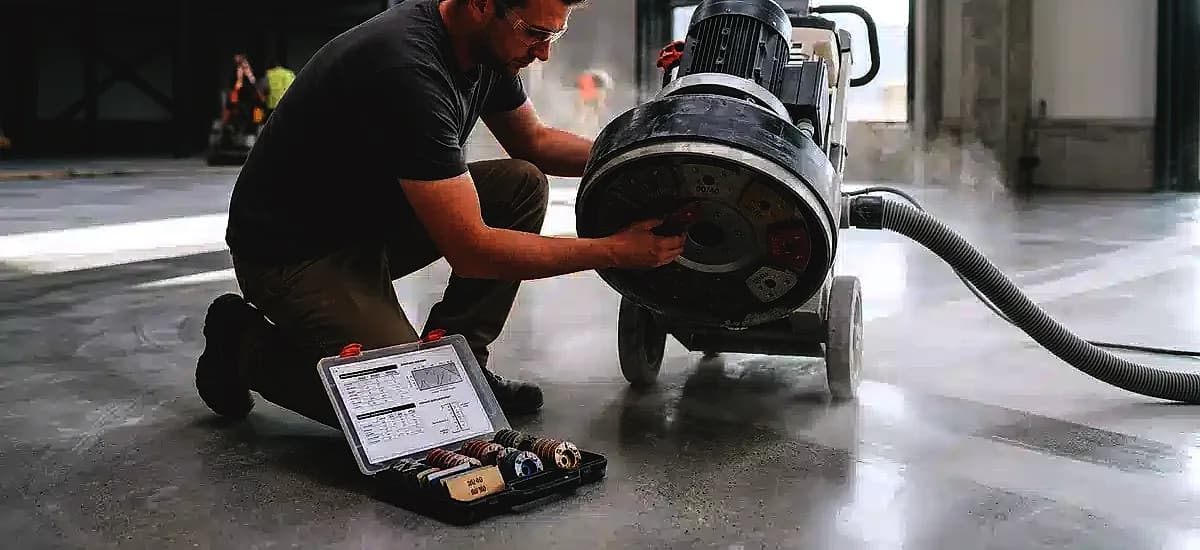
David Chen, Senior Researcher at the Portland Cement Association (PCA), notes: “Modern 2026 admixtures, particularly polycarboxylate ether superplasticizers, create a much denser paste that requires a fundamentally different approach to initial grinding. Operators must utilize softer metal bonds to ensure the diamonds continue to expose themselves without glazing over.”
Furthermore, the method used to cure the slab heavily dictates the final surface integrity. Slabs cured with wet blankets or high-quality dissipating curing compounds retain moisture longer, allowing for complete cement hydration. Proper curing can increase surface strength by up to 50%. Conversely, slabs that flash-cure in hot, windy environments will suffer from surface micro-cracking and a weak paste layer, leading to erratic and rapid tool wear. In some cases, contractors must evaluate whether sealing concrete before polishing is necessary to stabilize a poorly cured surface.
Step-by-Step: Assessing a Concrete Slab Before Polishing
To mitigate excessive tooling costs, professional contractors must evaluate the mix design and current state of the slab before turning on their grinders. Following a systematic assessment protocol ensures the correct diamonds are selected for the first pass.
- Review the Batch Ticket: Request the original concrete batch ticket from the general contractor. Look for the specified PSI, aggregate type (e.g., river rock vs. crushed granite), and the presence of fly ash or slag.
- Perform a Mohs Scratch Test: Use a standard Mohs hardness pick set on several areas of the slab. This will determine the surface hardness and dictate whether you need a soft, medium, or hard metal bond.
- Conduct a Water Drop Test: Place a tablespoon of water on the raw concrete. If it absorbs in under a minute, the slab is porous and likely soft (requiring hard-bond diamonds). If it beads up for several minutes, the slab is dense (requiring soft-bond diamonds).
- Inspect for Surface Defects: Look for signs of excessive troweling (burn marks) or crazing, which indicate potential issues with the paste layer. These defects can cause concrete floor deflection or uneven grinding resistance.
- Execute a Physical Mock-up: Always perform a small test patch in an inconspicuous area using your chosen starting grit. Monitor the tool wear and the scratch pattern after 50 square feet to confirm your selection.
Economic Impact on Polishing Contractors in 2026
The economic implications of understanding mix design cannot be overstated. For commercial flooring contractors, diamond tooling represents approximately 15% to 20% of total operational costs. Failing to match the tooling bond to the concrete’s specific properties can devastate project margins.
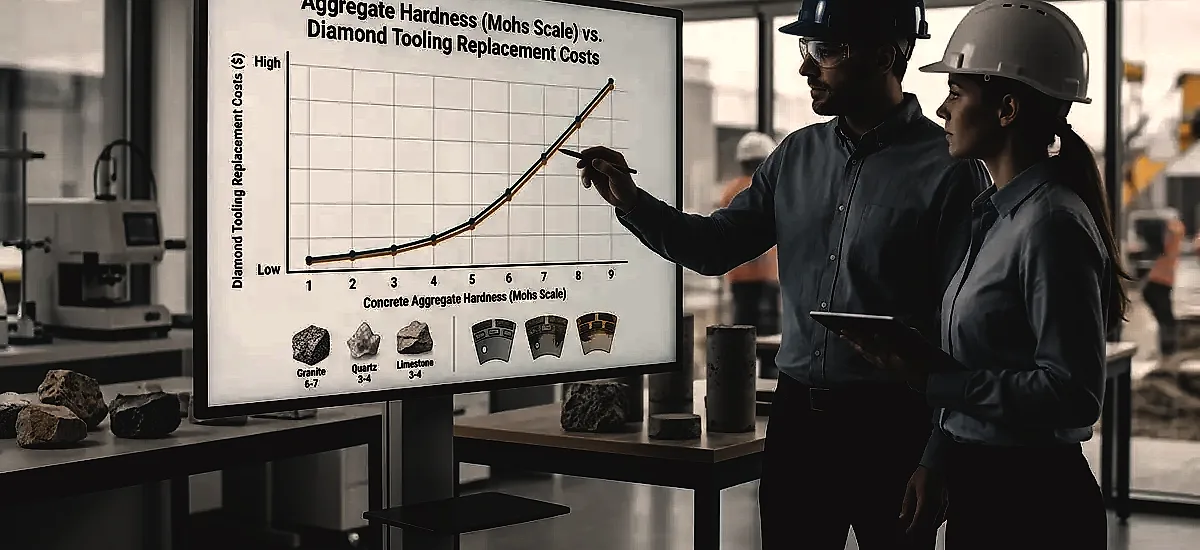
According to Marcus Thorne, Lead Technical Director at the Concrete Polishing Association of America: “Contractors who fail to adjust their tooling matrix for high-silica mixes often see their diamond consumption double on a single commercial project. In today’s competitive market, that loss of margin is unsustainable.”
Predicting wear rates allows for highly accurate project estimation. When a contractor knows a slab contains hard quartzite aggregate, they can build the cost of additional diamond sets into their bid. This level of precision is exactly what separates struggling operators from those who successfully start a concrete polishing business and scale it into a multi-million dollar enterprise. Furthermore, understanding the mix design helps in accurately predicting how long concrete polishing takes, ensuring labor schedules remain on track.
Conclusion
The relationship between concrete mix design and polishing diamond wear is a complex interplay of material science and mechanical friction. Aggregate hardness, cement paste quality, water-to-cement ratios, and modern chemical admixtures all converge to dictate how a slab will respond to abrasive refinement. By mastering these variables, flooring professionals can optimize their tooling selections, extend the lifespan of their diamonds, and deliver superior, consistent finishes while protecting their bottom line. As concrete formulations continue to evolve in 2026, staying educated on material science remains the ultimate competitive advantage.
Ready to optimize your next commercial flooring project with expert precision? Get in touch with our team today for a comprehensive slab evaluation and professional polishing services.
Frequently Asked Questions
How does aggregate hardness affect diamond tooling?
Aggregate hardness determines the amount of abrasive friction applied to the diamond tool. Harder aggregates, like quartz or granite, wear away the metal bond holding the diamonds much faster than softer aggregates like limestone, leading to higher tooling consumption.
Why do my diamond tools glaze over on certain concrete floors?
Glazing occurs when the concrete is too hard or dense, and the metal bond of the tool is also too hard. The concrete fails to wear away the metal bond to expose new, sharp diamonds, causing the tool to heat up, blunt, and stop cutting effectively.
What is the ideal water-to-cement ratio for polished concrete?
An ideal water-to-cement ratio for polished concrete typically falls between 0.40 and 0.45. This range provides a dense, strong paste that takes a high polish well, though it requires softer metal-bond diamonds for the initial grinding stages.
Do chemical admixtures change how concrete polishes?
Yes, chemical admixtures like superplasticizers and water reducers create a significantly denser and less porous concrete matrix. This increased density changes the micro-texture of the surface, often requiring operators to adjust their tooling bonds and machine speeds to achieve a proper cut.
How can I estimate my tooling costs before starting a project?
You can estimate tooling costs by reviewing the concrete batch ticket for aggregate type and PSI, performing a Mohs scratch test on the slab, and conducting a small physical mock-up. This data allows you to select the correct diamond bond and calculate the expected wear rate per square foot.
Does the type of cement used impact the final polish?
Yes, different cement types affect the paste’s density and color. For example, Type III high early strength cement creates a denser surface faster than Type I, which can increase initial abrasion resistance and alter how the slab accepts chemical densifiers and dyes.
Written by

Founder and CEO
Chris Lavin is an esteemed leader in concrete polishing and epoxy coatings with a distinguished 20-year career. As founder and CEO of National Concrete Polishing and owner of Xtreme Polishing Systems, he's renowned for polishing and epoxy coating more floors than anyone globally. Chris is recognized for his innovative approach and commitment to enhancing floor durability and aesthetics. His hands-on experience and technical proficiency make him a respected authority and a valuable resource in the field of floor polishing and coatings.
Same topic
Related articles
All stories
Polished concrete11 min read
Polished Concrete vs Epoxy Coatings: Which Floor Is Right for Your Space?
Two systems, two price curves, one slab. What each one costs to install and to keep, and which spaces each one actually suits.
Read it
Polished concrete8 min read
What to Know Before Polishing Your Existing Concrete Slab
Before any mechanical refinement can begin, a thorough evaluation of the current foundation is required.
Read it
Polished concrete8 min read
Is Polished Concrete Worth the Investment for Miami Properties?
It is essential to distinguish between a simple topical seal and mechanically refined concrete.
Read it
Tell us about the floor
Tell us the space and roughly how big it is.We come back with what it would cost and when we could start.
Prefer to talk? Call +1 844-876-5474
- Leads@
nationalconcretepolishing.net - 2200 NW 32nd St #600,
Pompano Beach, FL 33069 Mon to Fri, 9:00 to 5:30