
The NCP blog
Why Some South Florida Commercial Floors Feel Bouncy and Springy
Commercial6 min read
That unexpected give beneath your feet often signals deeper problems with the underlying concrete structure.
Walking across a commercial floor that feels bouncy or springy can be unsettling. That unexpected give beneath your feet often signals deeper problems with the underlying concrete structure. Understanding concrete floor deflection bounce is essential for South Florida business owners who depend on stable, reliable flooring for daily operations. This phenomenon affects warehouses, retail spaces, manufacturing facilities, and office buildings throughout Miami, Fort Lauderdale, and Pompano Beach.
South Florida’s unique combination of sandy soils, high water tables, and humid conditions creates particular challenges for concrete floor stability. When floors begin to feel soft or springy underfoot, the problem rarely resolves itself and typically worsens as structural integrity declines.
Overview
This article explains what causes commercial concrete floors to feel bouncy, how to identify warning signs early, and what solutions exist to restore floor stability. You will learn about the structural mechanics behind floor deflection, why South Florida’s environment accelerates these problems, and how professional assessment and repair can protect your commercial investment.
What Causes Concrete Floors to Feel Bouncy
Concrete floors develop a bouncy feel when they lose proper support from below. Several factors contribute to this problem in South Florida commercial properties.
Soil Settlement and Void Formation
The ground beneath concrete slabs can shift, compress, or erode over time. In South Florida, sandy soils are particularly prone to this movement. When soil settles unevenly or washes away, voids form beneath the concrete. As people or equipment move across these unsupported sections, the slab flexes downward and creates that distinctive bouncy sensation.
Heavy rainfall throughout Miami-Dade and Broward counties accelerates soil washout. Water flowing beneath slabs carries away fine particles, gradually enlarging voids until the concrete deflects noticeably.
Structural Design Limitations
Some buildings experience bouncy floors because the original slab was not designed for current loads. ACI 318 establishes deflection limits of L/360 for floor members, meaning a 30-foot span should not deflect more than one inch under load. When buildings change use or add heavier equipment, floors may exceed these limits.
Older structures may have thinner slabs or inadequate reinforcement for modern commercial applications. A warehouse converted from light storage to heavy manufacturing often shows signs of excessive deflection.
Moisture-Related Deterioration
South Florida’s humidity creates persistent moisture challenges for concrete flooring. Excess moisture beneath slabs weakens the subgrade, causes soil expansion and contraction, and deteriorates concrete over time. The Florida Building Code requires vapor retarders and proper drainage to prevent moisture-related problems.
How South Florida Conditions Accelerate Floor Problems
South Florida’s unique environment creates specific challenges for concrete floor stability.
Sandy Soil Composition
The region’s sandy soils drain quickly but do not hold shape well under sustained loads. Sand particles shift and settle over extended periods, removing support from beneath concrete slabs. Sandy soils also erode easily when exposed to flowing water from leaking pipes, poor drainage, or heavy rain.
High Water Table Effects
Many South Florida properties sit above shallow water tables that rise and fall with seasonal rains and tidal influences. This fluctuating water level repeatedly saturates and dries soil beneath foundations, affecting density and bearing capacity.
Properties near the coast experience additional stress from salt intrusion, which affects both soil chemistry and concrete integrity. Combined with water movement effects, coastal commercial properties face accelerated floor stability challenges.
Warning Signs of Excessive Floor Deflection
Recognizing early indicators allows intervention before damage becomes severe.
Physical Sensations
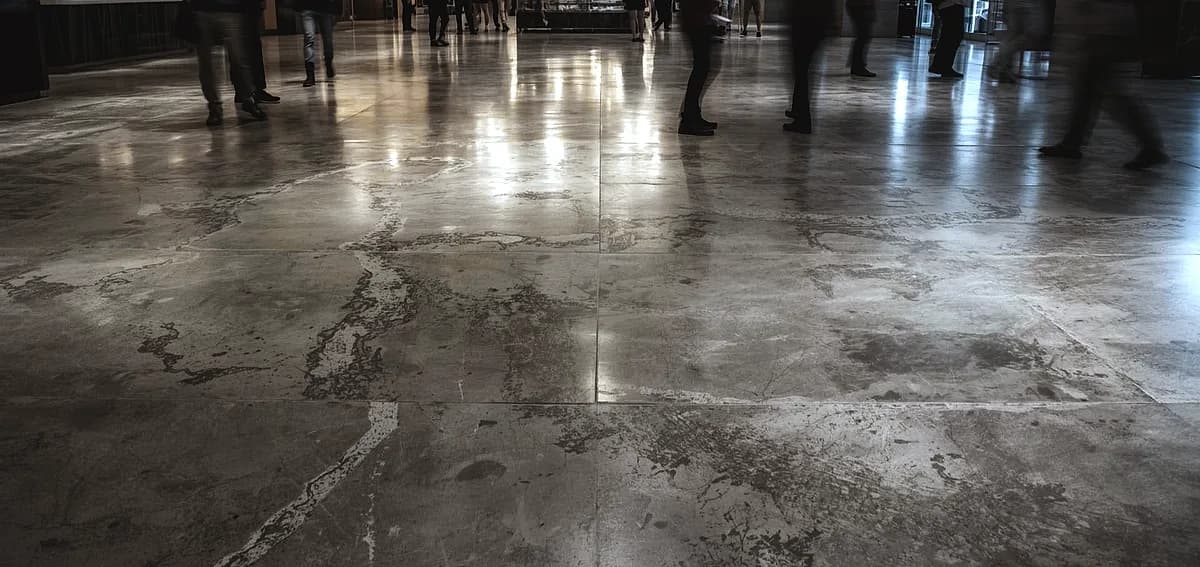
The most direct indicator is the sensation of bounce or springiness when walking. Floors should feel solid underfoot. Any perceptible give suggests the slab is moving more than standards allow. Equipment operators often notice problems first—forklifts and pallet jacks may feel unstable crossing certain sections.
Visual Clues
Cracks appearing around columns and along joint lines often indicate settlement or excessive deflection. Separation between floor slabs and walls or columns shows where floors have dropped relative to fixed elements. Damage to finished coverings—epoxy coatings that debond, tile grout cracks, and carpet seams that separate—often traces back to slab deflection.
Professional Assessment and Diagnosis
Identifying the specific cause of floor bounce requires systematic evaluation.
Floor Level Surveys
Precise measurement of floor elevations reveals depressions that may not be visible to casual observation. Survey data shows where floors have settled and identifies patterns suggesting specific causes.
Subgrade Evaluation
Ground penetrating radar identifies voids, soil density variations, and reinforcing steel location. This non-destructive testing reveals conditions that cannot be seen from above. Core drilling provides direct evidence of slab thickness, concrete condition, and subgrade material.
Repair Solutions for Bouncy Commercial Floors
Several repair approaches address bouncy floors depending on the underlying cause and severity.
Polyurethane Foam Injection
For floors where voids cause deflection, polyurethane foam injection provides effective solutions. Contractors drill small holes through concrete and inject expanding foam that fills voids and lifts settled sections. The foam cures quickly, allowing rapid return to service without adding significant load to stressed soil.
Slab Jacking
Traditional concrete resurfacing methods include slab jacking, where contractors pump cement mixture beneath slabs to fill voids. This approach suits situations requiring substantial material volume to restore support.
Steel Pier Installation
Severe settlement may require deep foundation solutions. Steel piers driven to bedrock transfer building loads to stable material below. Though more expensive than injection methods, piers offer the most durable solution for serious settlement problems.
Protecting Floors with Proper Coatings
Proper surface treatments help protect repaired floors from future problems.
Epoxy Floor Systems
Commercial epoxy coatings create durable, chemical-resistant surfaces. Quality epoxy systems bond strongly to properly prepared concrete and withstand heavy use. Application requires thorough surface preparation including shot blasting or grinding.
Polished Concrete Options
Polished concrete transforms slabs into attractive, durable surfaces without adding coating layers. The polishing process densifies concrete, making it harder and more resistant to wear. Polishing works best on structurally sound slabs corrected for deflection issues.
Preventive Maintenance
Ongoing maintenance identifies developing problems early and protects repairs.
Regular inspections should note new cracks, changes in floor feel, or visible settlement. Maintain proper drainage to prevent water accumulation that erodes soil beneath floors. Floor joints require periodic inspection and maintenance to prevent water infiltration.
Frequently Asked Questions
Why does my warehouse floor feel bouncy in some areas but not others?
Localized bounce typically indicates voids beneath specific sections. Soil erosion, settlement, or poor original compaction may affect some areas while leaving others stable.
Can bouncy floors cause equipment damage?
Yes. Excessive deflection stresses equipment, particularly forklifts and automated systems requiring level surfaces. Deflection also accelerates wear on wheeled equipment.
Will epoxy coatings fix bouncy floor problems?
No. Surface coatings cannot address structural deficiencies. Floors should be stabilized before applying epoxy or other treatments. Coatings over bouncy floors often debond or crack.
What causes floor bounce after heavy rain in South Florida?
Rain saturates soil beneath slabs, temporarily reducing load-bearing capacity. Poor drainage allows water accumulation, and erosion may remove supporting material.
How much floor deflection is too much?
ACI standards limit deflection to L/360, meaning one inch maximum for every 30 feet of span. Noticeable bounce typically exceeds this limit.
Can I repair bouncy floors without business interruption?
Many methods including foam injection allow continued operations. Floor leveling can proceed in sections while maintaining access to other areas.
How do I prevent floor bounce from returning after repairs?
Address underlying causes including drainage problems and plumbing leaks. Proper surface treatments protect repairs from moisture.
How long do floor stabilization repairs last?
Properly executed repairs typically last decades. Polyurethane foam injection and pier installation provide permanent solutions when correctly applied.
Sources
- American Concrete Institute. ACI 318-19: Building Code Requirements for Structural Concrete and Commentary. https://www.concrete.org/store/productdetail.aspx?ItemID=318U19
- Florida Building Code, Chapter 19: Concrete. 2023 Edition. https://codes.iccsafe.org/content/FLBC2023P1/chapter-19-concrete
Get Your Floors Professionally Evaluated
Bouncy or springy commercial floors need professional attention before problems worsen. National Concrete Polishing provides comprehensive floor assessment and repair services throughout South Florida. Our experienced team evaluates floor conditions, identifies underlying causes, and recommends cost-effective solutions tailored to your facility’s needs.
Contact us today to schedule your free floor evaluation and protect your commercial investment.
Written by

Founder and CEO
Chris Lavin is an esteemed leader in concrete polishing and epoxy coatings with a distinguished 20-year career. As founder and CEO of National Concrete Polishing and owner of Xtreme Polishing Systems, he's renowned for polishing and epoxy coating more floors than anyone globally. Chris is recognized for his innovative approach and commitment to enhancing floor durability and aesthetics. His hands-on experience and technical proficiency make him a respected authority and a valuable resource in the field of floor polishing and coatings.
Same topic
Related articles
All stories
Commercial9 min read
How Polished Concrete Solves Office Acoustic Problems
Hard floors and noise complaints. What polished concrete does to sound in an open office, and how to spec around it.
Read it
Commercial10 min read
Flooring for Hotel Wet Areas, Kitchens, and Parking Decks
Kitchens, pool decks and parking structures punish a floor daily. Which systems hold up in hotel service areas, and why.
Read it
Commercial11 min read
Specifying Floors for a New Hotel Build
For owners and architects on a new build. What to write into the flooring spec so the hotel opens on a floor that lasts.
Read it
Tell us about the floor
Tell us the space and roughly how big it is.We come back with what it would cost and when we could start.
Prefer to talk? Call +1 844-876-5474
- Leads@
nationalconcretepolishing.net - 2200 NW 32nd St #600,
Pompano Beach, FL 33069 Mon to Fri, 9:00 to 5:30