
The NCP blog
The Complete 2026 Guide to Concrete Edge Polishing in South Florida
Polished concreteUpdated 8 min read
The answer lies in systematic material transformation tailored to the local environment.
Concrete edge polishing in Florida requires a specialized mechanical and chemical process adapted specifically for high humidity, salt-laden air, and unique regional soil compositions. By utilizing a progressive series of diamond abrasives—ranging from 30-grit metal-bonded pads to 3000-grit resin-bonded discs—alongside lithium silicate densifiers and salt-resistant sealers, contractors create a non-porous, highly reflective surface. This methodical approach ensures the perimeter of a room matches the open floor in both durability and aesthetic brilliance, preventing the premature wear and moisture intrusion commonly seen in coastal environments.
The Science of Concrete Edge Polishing in Coastal Climates
What separates a lackluster perimeter from a gleaming architectural feature? The answer lies in systematic material transformation tailored to the local environment. Edge work is notoriously difficult because the perimeters of concrete slabs are often hand-troweled during the initial pour, making them denser and less flat than the center of the room. When you introduce Florida’s extreme weather variables, the complexity multiplies.
How Humidity and Salt Air Alter the Curing Process
In coastal regions like Miami and Fort Lauderdale, ambient moisture fundamentally changes how chemicals interact with concrete substrates. High relative humidity (RH) slows the evaporation of water-based densifiers and sealers. According to 2026 guidelines from the American Concrete Institute (ACI), applying surface treatments in environments with over 75% RH without proper climate control can reduce the coating’s lifespan by up to 40%.
“Salt-laden air introduces chlorides into the microscopic pores of untreated concrete, which can lead to efflorescence and structural degradation,” explains Dr. Sarah Jenkins, a Coastal Materials Engineer. “By mechanically refining the surface and applying specialized polymers, we effectively lock out these corrosive elements.”
The Role of Substrate Hardness in South Florida
The aggregate used in South Florida concrete is predominantly locally sourced limestone, which is relatively soft on the Mohs hardness scale compared to river rock used in northern states. Before beginning any mechanical abrasion, professionals must prioritize testing the substrate’s hardness. This dictates the type of metal-bonded diamonds required; soft concrete actually requires hard-bonded diamond tooling to prevent the abrasives from wearing out prematurely.
Step-by-Step Edge Polishing Process for Florida Properties
Achieving a mirror-like finish along walls and fixtures requires precision execution. The multi-stage refinement process must be followed meticulously to ensure the edges blend seamlessly with the main floor.
- Surface Preparation and Profiling: The process begins with removing existing mastics, glues, or coatings using a 30-grit or 40-grit metal-bonded abrasive. Technicians also address any structural cracks, often treating expansion joints with flexible polyurea compounds to prevent future spreading.
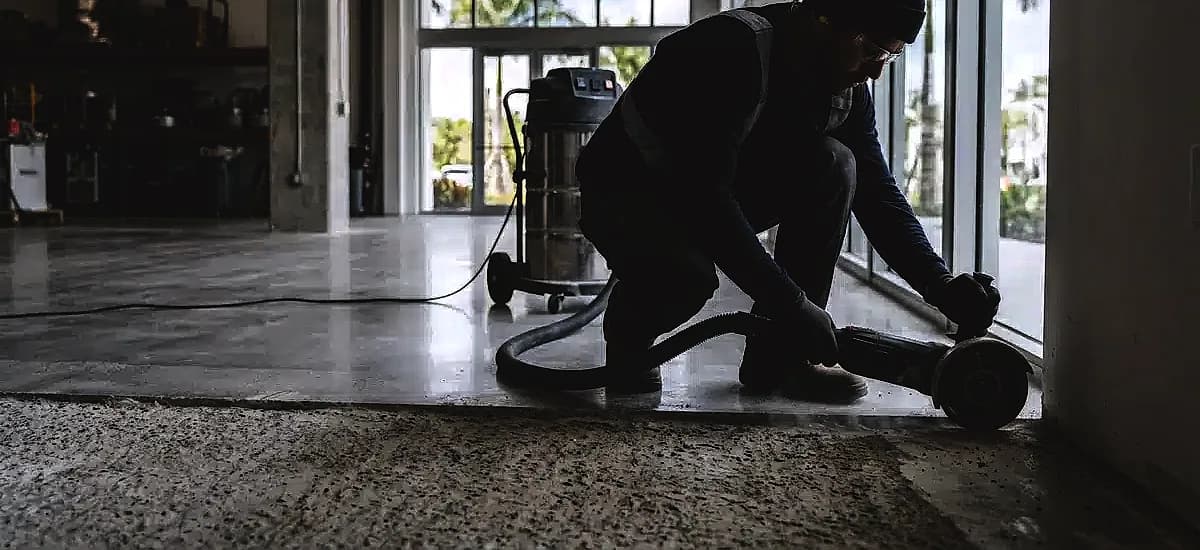
- Coarse Grinding (Leveling): Using specialized hand-held edge grinders, operators level the perimeter to match the field. This step removes the “cream” layer of the concrete, exposing the sand or aggregate beneath.
- Scratch Refinement: The floor is transitioned through 80-grit and 150-grit hybrid or transitional pads. This removes the deep gouges left by the aggressive metal tooling.
- Chemical Densification: Once the pores are opened, a liquid lithium silicate densifier is applied. This chemical reacts with the free calcium hydroxide in the concrete to form calcium silicate hydrate (CSH), creating a dense, hardened surface.
- Fine Polishing: The mechanical process resumes with resin-bonded diamond pads, progressing from 400-grit up to 3000-grit, depending on the desired gloss level. The friction generates heat, which helps achieving a perfectly smooth surface.
- Protective Sealing: Finally, a penetrating micro-guard or stain-resistant sealer is burnished into the floor. Applying protective sealants is non-negotiable in Florida to guard against accidental spills and salt tracking.
Essential Equipment for Precision Edge Work
Professional results begin with industrial-grade machinery designed for exacting standards. The perimeter of a room cannot be reached by large, walk-behind planetary grinders, necessitating specialized tools.
Edge Grinders and Variable RPMs
Modern edge grinders feature variable speed controls (RPMs) and adjustable heads that allow technicians to grind flush against baseboards without causing damage. Operating at speeds between 600 and 1,500 RPMs, these machines maintain consistent downward pressure. “The biggest mistake novice contractors make is using a standard angle grinder for edge work,” notes Marcus Thorne, a 15-year veteran in surface restoration. “Without a specialized shroud and leveling wheels, you inevitably create gouges and an uneven profile known as ‘birdbaths’.”
Dust Containment and Air Quality
Grinding concrete produces crystalline silica dust, a known respiratory hazard. To comply with 2026 OSHA regulations, all edge grinders must be connected to industrial vacuums equipped with HEPA filtration. These multi-stage filtration systems capture 99.97% of airborne particles down to 0.3 microns. This not only protects indoor air quality—a standard heavily monitored by the Environmental Protection Agency (EPA)—but also prevents microscopic dust from settling into the freshly opened pores of the concrete, which would otherwise cause a cloudy finish.
Comparing Floor Finishes: Why Polished Concrete Wins
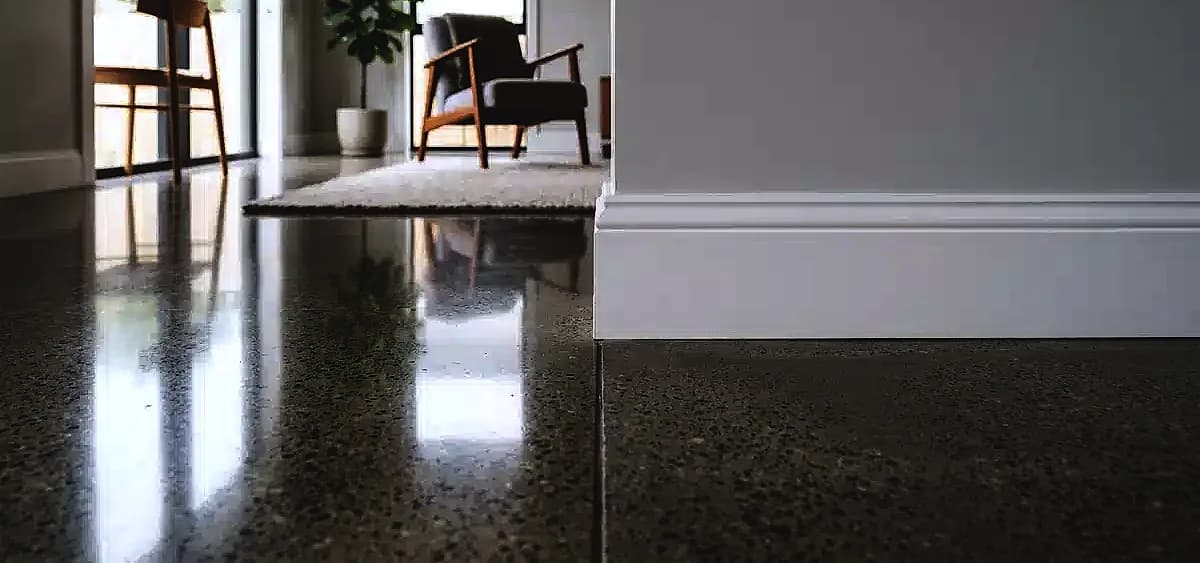
Modern properties demand surfaces that balance form and function. When evaluating flooring options for coastal environments, polished concrete consistently outperforms traditional materials in longevity, maintenance, and environmental impact. Furthermore, the natural thermal advantages of polished slabs help keep Florida interiors significantly cooler during the summer months.
| Feature | Polished Concrete | Luxury Vinyl Tile (LVT) | Commercial Carpet |
|---|---|---|---|
| Lifespan in Coastal Climate | 20-25+ years | 8-12 years | 5-7 years |
| Moisture Resistance | Extremely High (Non-porous) | Moderate (Seams can fail) | Low (Prone to mold) |
| Light Reflectivity | Up to 45% enhancement | 10-15% | 0% |
| Maintenance Requirements | Damp mopping, neutral cleaner | Chemical stripping/waxing | Deep extraction shampooing |
| Salt Corrosion Resistance | High (with proper densifier) | Moderate | Low |
Overcoming South Florida’s Unique Environmental Challenges
South Florida’s tropical environment reshapes standard surface treatment protocols. Elevated humidity and salt concentrations demand customized execution plans. Without proper adjustments, project timelines can stretch unpredictably, and the final durability of the floor is compromised.
Moisture Mitigation and Dehumidification Strategies
Ambient moisture extends drying phases significantly. In an arid climate, a densifier might dry in 30 minutes; in Miami during August, it could take several hours. Contractors combat this by deploying industrial desiccant dehumidifiers to maintain indoor temperatures between 50-70°F and relative humidity below 50%. This controlled environment ensures that the chemical reactions required for densification occur at the optimal rate.
Furthermore, technicians must measure the Vapor Moisture Emission Rate (MVER) of the slab before sealing. If the MVER exceeds 3 pounds per 1,000 square feet per 24 hours, a moisture-mitigating epoxy primer may be required before the final polishing stages to prevent delamination.
Preventing Salt Corrosion on Finished Surfaces
Salt air is relentless. To combat this, 2026 best practices dictate the use of silane-siloxane penetrating sealers for properties within 5 miles of the coastline. These specialized compounds penetrate up to 1/4 inch into the concrete matrix, creating a hydrophobic barrier that repels water and dissolved chloride ions, ensuring the edges remain pristine for decades.
Common Pitfalls in Edge Polishing (And How to Avoid Them)
Even minor oversights during surface treatment can undo days of hard work. Recognizing early warning signs helps preserve both aesthetics and structural integrity over time.
- Rushing the Grit Progression: The most common error is jumping from a 50-grit pad directly to a 200-grit pad to save time. This leaves deep micro-scratches that become glaringly obvious once the floor is brought to a high gloss. Each consecutive grit must be used to erase the scratch pattern of the previous one.
- Improper Densifier Application: Applying too little densifier leaves the concrete soft and vulnerable to dusting. Conversely, over-applying the chemical without scrubbing off the excess results in a stubborn, white crystalline residue (whiting) that is incredibly difficult to remove.
- Ignoring Edge Blending: Failing to overlap the edge grinder’s path with the large planetary grinder’s path creates a distinct “halo” effect around the perimeter of the room. Skilled operators use a 50% overlap technique to ensure a seamless transition.
Maintenance Protocols for 2026 and Beyond
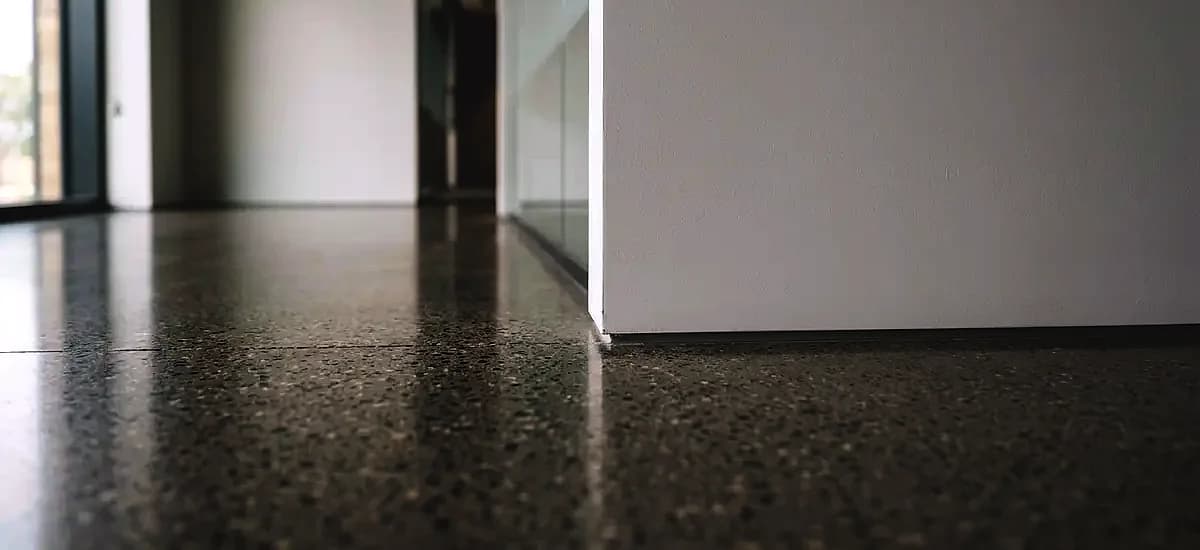
The longevity of a polished edge relies heavily on proper post-installation care. While these surfaces are incredibly durable, they are not entirely maintenance-free. Daily cleaning should involve dry dust mopping to remove abrasive silica sand tracked in from outside. For wet cleaning, facility managers must strictly use pH-neutral cleaners.
Avoid acidic compounds like vinegar, citrus cleaners, or harsh degreasers at all costs. Acids react with the calcium in the concrete, etching the surface and instantly destroying the polished shine. Research from the National Ready Mixed Concrete Association (NRMCA) indicates that implementing a strict pH-neutral cleaning regimen extends the high-gloss lifespan of polished concrete by an average of 7 to 10 years before requiring a light re-burnishing.
Frequently Asked Questions
What makes polished surfaces ideal for South Florida’s climate?
High humidity and salt air in coastal areas can warp wood and degrade carpet. Polished slabs are non-porous, resist moisture absorption, prevent mold growth, and easily withstand the temperature shifts common in regions like Miami or Fort Lauderdale.
Why is grit progression critical during the grinding phase?
Starting with coarse abrasives removes imperfections, while progressively finer discs refine the surface. Skipping stages leaves microscopic scratches and uneven textures, which drastically reduces reflectivity and compromises the floor’s long-term durability.
How long does it take to complete a residential edge polishing project?
Most residential jobs take 3 to 5 days, depending on the slab’s initial condition and the home’s square footage. Proper preparation, chemical curing, and multi-stage refinement require adequate time to ensure a flawless, crack-resistant finish.
Can existing cracks near baseboards be repaired during the process?
Yes. Professionals use specialized polyurea or epoxy fillers to address damage and bridge cracks before the grinding phase begins. Proper repair ensures a smooth, uniform appearance and prevents future structural deterioration.
How do contractors manage humidity during polishing in Florida?
Contractors utilize industrial dehumidifiers and digital moisture meters to test slabs before applying densifiers and sealants. In humid areas like Naples or Tampa, controlling the indoor climate prevents the clouding or delamination of final coatings.
What maintenance is required after the installation is complete?
Routine dry sweeping and occasional damp mopping with a microfiber pad preserve the shine. It is critical to avoid acidic cleaners; only pH-neutral products should be used to protect the surface without dulling the mechanical polish.
Conclusion
Mastering concrete edge polishing in Florida requires a deep understanding of material science, specialized equipment, and the unique environmental challenges posed by coastal climates. By adhering to strict abrasive progressions, utilizing advanced lithium densifiers, and controlling ambient moisture, property owners can achieve a seamless, mirror-like finish that stretches from wall to wall. These highly durable, light-reflective surfaces not only elevate the aesthetic of any space but also offer decades of low-maintenance resilience against salt air and humidity. If you are ready to transform your residential or commercial floors with industry-leading techniques, contact our team today to schedule a comprehensive site evaluation.
Written by

Founder and CEO
Chris Lavin is an esteemed leader in concrete polishing and epoxy coatings with a distinguished 20-year career. As founder and CEO of National Concrete Polishing and owner of Xtreme Polishing Systems, he's renowned for polishing and epoxy coating more floors than anyone globally. Chris is recognized for his innovative approach and commitment to enhancing floor durability and aesthetics. His hands-on experience and technical proficiency make him a respected authority and a valuable resource in the field of floor polishing and coatings.
Same topic
Related articles
All stories
Polished concrete11 min read
Polished Concrete vs Epoxy Coatings: Which Floor Is Right for Your Space?
Two systems, two price curves, one slab. What each one costs to install and to keep, and which spaces each one actually suits.
Read it
Polished concrete8 min read
What to Know Before Polishing Your Existing Concrete Slab
Before any mechanical refinement can begin, a thorough evaluation of the current foundation is required.
Read it
Polished concrete8 min read
Is Polished Concrete Worth the Investment for Miami Properties?
It is essential to distinguish between a simple topical seal and mechanically refined concrete.
Read it
Tell us about the floor
Tell us the space and roughly how big it is.We come back with what it would cost and when we could start.
Prefer to talk? Call +1 844-876-5474
- Leads@
nationalconcretepolishing.net - 2200 NW 32nd St #600,
Pompano Beach, FL 33069 Mon to Fri, 9:00 to 5:30