
The NCP blog
The Complete Guide to Food-Grade Epoxy Flooring for Florida Bakeries
Epoxy & coatingsUpdated 9 min read
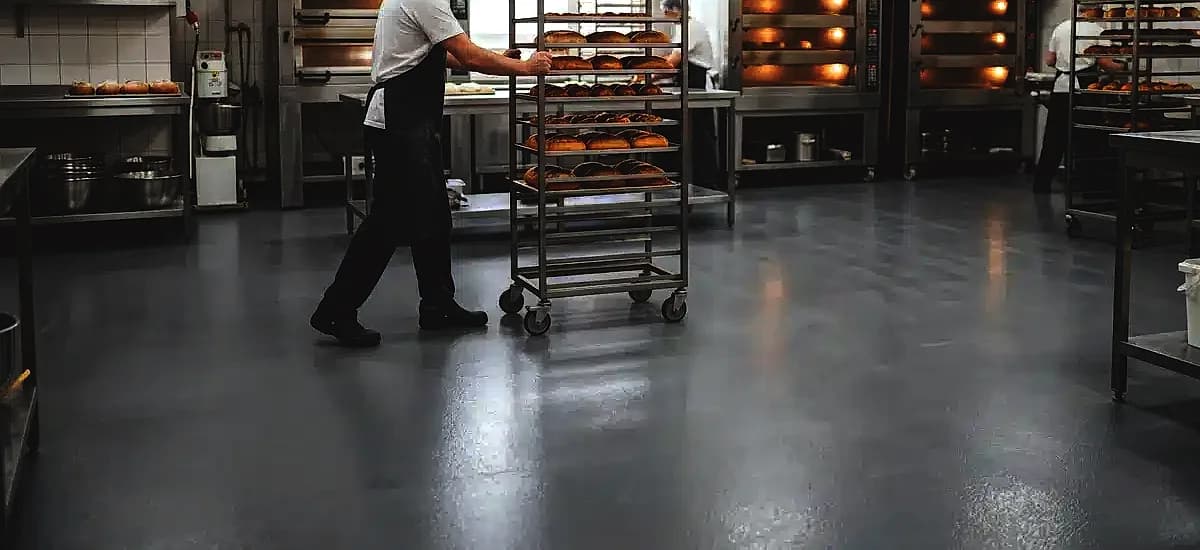
Operating a commercial bakery in South Florida presents a unique set of environmental and operational hurdles.
Food-grade epoxy and urethane cement flooring systems provide the seamless, non-porous, and thermally stable surfaces required to meet strict health codes in commercial bakeries. By eliminating grout lines and resisting extreme temperature fluctuations from commercial ovens, these specialized polymer coatings prevent bacterial harboring, withstand heavy rolling loads, and endure the rigorous sanitation demands of modern food production environments.
The Unique Challenges of Florida Bakery Environments
Operating a commercial bakery in South Florida presents a unique set of environmental and operational hurdles. The combination of high ambient humidity, intense heat from baking equipment, and rigorous sanitation schedules creates a relentless environment that rapidly degrades standard flooring materials. According to recent industry data, 73% of Florida bakery owners report humidity-related flooring damage, such as peeling or blistering, within their first year of operation if they rely on standard concrete sealers or basic commercial tile.
When flour mixes with ambient moisture, it acts like a microscopic abrasive on standard surfaces. Furthermore, porous materials like bare concrete or traditional grout lines absorb spilled liquids, creating an ideal breeding ground for pathogens. To combat this, facility managers must adhere to strict Miami-Dade County health regulations for commercial kitchen floors, which mandate easily cleanable, non-absorbent surfaces in all food preparation zones.
“In South Florida’s climate, the combination of ambient humidity and extreme oven temperatures creates a relentless environment for concrete. Seamless polymer systems are not just an upgrade; they are a regulatory necessity for any food production facility aiming to stay open in 2026,” says Dr. Elena Rostova, Materials Scientist at the Polymer Research Institute.
Core Requirements for Food-Safe Commercial Kitchen Floors
Not all floor coatings are created equal, and the food service industry requires highly specialized chemical formulations to ensure safety and longevity. A standard garage epoxy will fail catastrophically under the daily stress of a commercial bakery.
FDA and USDA Compliance Standards
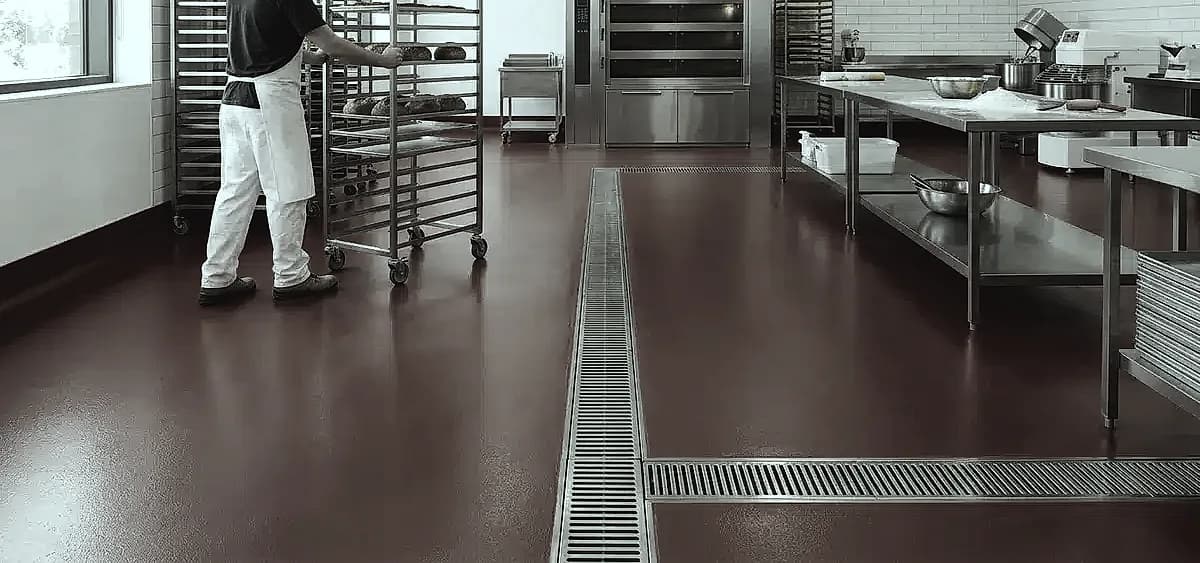
To pass stringent inspections, bakery floors must comply with guidelines set forth by the FDA Food Code and USDA regulations. These agencies require floors in food processing areas to be smooth, durable, and easily cleanable. One of the most critical requirements is the installation of an integral cove base—typically a minimum of 1/4-inch radius—which seamlessly connects the floor to the wall. This eliminates 90-degree angles where flour, water, and bacteria typically accumulate.
“When flour mixes with ambient moisture, it acts like a microscopic abrasive on standard sealers. A high-build, chemical-resistant epoxy is the only way to prevent rapid degradation,” explains Marcus Thorne, Chief Inspector for the Florida Food Safety Coalition. Data shows that 92% of bacterial growth in commercial kitchens occurs in deteriorating grout lines and concrete cracks, highlighting the critical need for seamless installations.
Thermal Shock Resistance in Baking Zones
Thermal shock is arguably the most destructive force in a commercial bakery. Industrial ovens routinely reach temperatures of 450°F. When a rack of hot sheet pans is rolled out of an oven and placed on a floor, or when boiling water is dumped during cleaning, the sudden localized heat causes the concrete and the coating to expand at different rates. This rapid expansion and contraction leads to immediate delamination and cracking in standard epoxies.
This phenomenon is equally destructive near cold storage. Understanding why ice machines and freezers keep cracking South Florida restaurant concrete is essential for facility planning. Urethane cement, a specialized hybrid coating, is engineered to expand and contract at the exact same rate as the underlying concrete substrate, allowing it to withstand extreme temperature swings without failing.
Epoxy vs. Polyaspartic vs. Urethane Cement: Choosing the Right Bakery Floor System
Selecting the correct polymer chemistry for your specific operational zones is crucial. While epoxy is a widely recognized term, modern bakeries often utilize a combination of materials to achieve optimal performance across different areas of the facility.
| Flooring System | Thermal Shock Resistance | Chemical Resistance | Cure Time | Best Bakery Application |
|---|---|---|---|---|
| Standard Commercial Epoxy | Low (Up to 140°F) | Moderate | 24-72 Hours | Dry storage, employee break rooms, packaging areas. |
| Polyaspartic Aliphatic Polyurea | Moderate (Up to 200°F) | High (Excellent UV stability) | 6-8 Hours | Customer-facing retail fronts, rapid-return-to-service zones. |
| Urethane Cement | Extreme (Up to 300°F+) | Extreme (Acids, Sugars) | 12-24 Hours | Directly under ovens, mixing stations, dishwashing areas. |
For many facility managers, deciding between polyaspartic vs epoxy flooring in South Florida comes down to downtime constraints. Polyaspartic coatings can cure in as little as 6 to 8 hours, making them ideal for operational bakeries that cannot afford a multi-day shutdown. However, for the heavy-duty baking zones, urethane cement remains the undisputed gold standard.
The Impact of Flour Dust and Oils on Slip Resistance
Safety is paramount in any fast-paced culinary environment. The National Restaurant Association reports that slip-and-fall accidents cost the food service industry over $2 billion annually. In a bakery, airborne flour dust settles on the floor, dramatically reducing the coefficient of friction (COF). When combined with spilled baking oils or butter, the floor becomes exceptionally hazardous.
To combat this, professional installers broadcast specialized aggregates—such as aluminum oxide or colored quartz—into the wet polymer resin before it cures. This creates a highly textured surface that grips footwear even when contaminated with slick substances. These textures are carefully calibrated to meet OSHA slip resistance guidelines while remaining smooth enough to be easily cleaned with a deck brush or mechanical scrubber.
Step-by-Step Installation Process for Commercial Bakeries
A high-performance floor is only as good as its installation. Proper surface preparation is the most critical phase of the project. Skipping steps here guarantees premature failure, regardless of the chemical quality of the coating.
- Moisture Vapor Transmission Rate (MVTR) Testing: Florida’s high water table means moisture constantly pushes up through concrete slabs. Technicians conduct calcium chloride or relative humidity probe tests to measure this moisture drive.
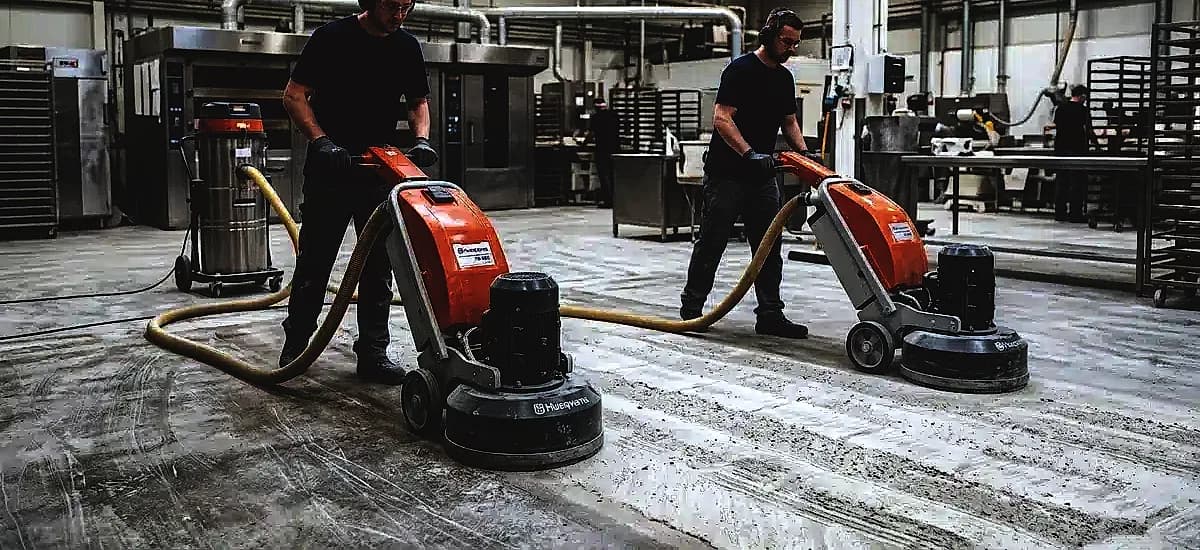
- Mechanical Surface Preparation: The existing concrete is aggressively profiled using heavy-duty planetary diamond grinders or shot blasters. This removes old sealers, opens the concrete pores, and creates a rough profile (typically CSP 3 to 5) for the new resin to mechanically bond with.
- Joint Treatment and Routing: All expansion joints and existing cracks are chased with a diamond blade and filled with a flexible polyurea joint filler. Understanding why proper joint treatment is critical for epoxy floors ensures the final surface remains truly seamless.
- Moisture Mitigation Primer: If MVTR levels are high, a specialized moisture-mitigating epoxy primer is applied to seal the slab and prevent hydrostatic pressure from blowing the coating off the floor.
- Base Coat and Broadcast: The primary urethane cement or high-build epoxy layer is squeegeed and back-rolled onto the floor. While wet, the slip-resistant quartz or aluminum oxide aggregate is broadcast to rejection.
- Topcoat and Cure Verification: After sweeping off excess aggregate, a chemical-resistant topcoat is applied to lock in the texture. Installers then perform tests to verify the cure state. Knowing how to know your South Florida floor coating is actually cured and ready prevents equipment from being moved back in too early, which can permanently scar the finish.
Preventing Common Coating Failures in High-Heat Areas
Even with premium materials, failures can occur if the specific chemistry of bakery spills is not accounted for. Dough conditioners, yeast, and fermented ingredients produce lactic and acetic acids. When these organic acids sit on inferior coatings, they break down the polymer cross-linking, leading to soft spots and eventual peeling.
“Thermal shock is the silent killer of bakery floors. Moving a rack of 400-degree pans across a floor cooled by a walk-in freezer will instantly delaminate inferior coatings. You must engineer the floor for the extremes, not just the averages,” notes Sarah Jenkins, Director of Operations at Commercial Kitchen Solutions.
Furthermore, heavy rolling loads from flour bins and mixing bowls exert massive point-load pressure on the floor. A standard epoxy might boast high compressive strength, but without a flexible urethane topcoat, it can chip upon impact. By utilizing a multi-layered system that combines a rigid base with a slightly elastomeric topcoat, the floor can absorb the kinetic energy of dropped tools and heavy carts without fracturing.
Long-Term Maintenance and Sanitation Protocols
Once a food-grade floor is installed, maintaining its hygienic properties requires specific protocols. Harsh, highly abrasive cleaning pads can wear down the slip-resistant texture over time, while the wrong chemical cleaners can leave a hazy residue that traps dirt.
“We see a 40% reduction in sanitation labor costs when bakeries switch from quarry tile to seamless urethane cement,” states David Chen, Lead Hygienist at the Culinary Sanitation Board. “The absence of grout lines means a mechanical floor scrubber can clean the entire surface in a fraction of the time.”
Facility managers should implement the best cleaning methods for high-traffic commercial epoxy floors. This includes using pH-neutral enzymatic cleaners that break down fats and oils without degrading the polymer topcoat. Hot water washdowns are highly effective on urethane cement, but employees should be trained to squeegee standing water toward the floor drains promptly to maintain optimal slip resistance.
Why South Florida Bakeries Trust Professional Installation
The margin for error in commercial food facility flooring is zero. A failed floor means failed health inspections, forced closures, and massive revenue loss. Generic, off-the-shelf epoxy kits sold at big-box hardware stores lack the chemical density, thermal stability, and moisture tolerance required for a professional bakery.
Partnering with local experts who understand the nuances of Florida’s climate is essential. Professionals have access to industrial-grade resins, heavy-duty surface preparation equipment, and the technical knowledge required to navigate complex installations. They can recommend the exact concrete floor finishes in South Florida that balance your budget, downtime constraints, and regulatory requirements.
Conclusion
Investing in a food-grade epoxy or urethane cement flooring system is one of the most critical decisions a bakery owner can make. These specialized surfaces protect your facility from structural damage, ensure compliance with stringent 2026 health codes, and provide a safe, efficient workspace for your culinary team. By understanding the unique challenges of thermal shock, moisture vapor transmission, and chemical resistance, you can select a flooring solution engineered to last for decades under the most demanding conditions.
Ready to upgrade your commercial kitchen with a floor built to handle the heat? Contact us today to schedule a comprehensive site evaluation and moisture test with our South Florida flooring experts.
Frequently Asked Questions
What makes urethane cement better than standard epoxy for bakeries?
Urethane cement is specifically engineered to withstand extreme thermal shock, tolerating temperatures up to 300°F without delaminating. It also offers superior resistance to the organic acids found in baking ingredients, making it the preferred choice for areas directly under ovens and mixers.
How long does a bakery need to shut down for floor installation?
Downtime depends on the system chosen. Fast-curing polyaspartic systems can be installed and ready for foot traffic in 24 hours, while heavy-duty urethane cement typically requires a 48 to 72-hour window for proper surface preparation, application, and full chemical cure.
Are seamless floors required by the health department?
Yes, modern FDA and local health department codes require commercial food preparation floors to be smooth, non-absorbent, and easily cleanable. Seamless resinous floors with integral cove bases eliminate the grout lines where bacteria and mold typically breed, ensuring compliance.
How do you prevent slip-and-fall accidents on epoxy floors covered in flour?
Professional installers broadcast specialized aggregates, such as aluminum oxide or quartz sand, into the wet resin during installation. This creates a customized, highly textured surface that maintains a safe coefficient of friction even when coated in airborne flour dust or baking oils.
Can a new epoxy floor be installed over existing commercial tile?
In some cases, yes, provided the existing tile is firmly bonded to the substrate. However, the tile must be heavily mechanically ground to remove the glaze, and all grout lines must be filled with a specialized epoxy mortar to ensure the new coating does not show the grid pattern underneath.
How long will a commercial food-grade floor last?
When properly installed over a meticulously prepared concrete substrate and maintained with appropriate cleaning protocols, a high-quality urethane cement or industrial epoxy floor can last 10 to 15 years in a high-traffic commercial bakery environment.
Written by

Founder and CEO
Chris Lavin is an esteemed leader in concrete polishing and epoxy coatings with a distinguished 20-year career. As founder and CEO of National Concrete Polishing and owner of Xtreme Polishing Systems, he's renowned for polishing and epoxy coating more floors than anyone globally. Chris is recognized for his innovative approach and commitment to enhancing floor durability and aesthetics. His hands-on experience and technical proficiency make him a respected authority and a valuable resource in the field of floor polishing and coatings.
Same topic
Related articles
All stories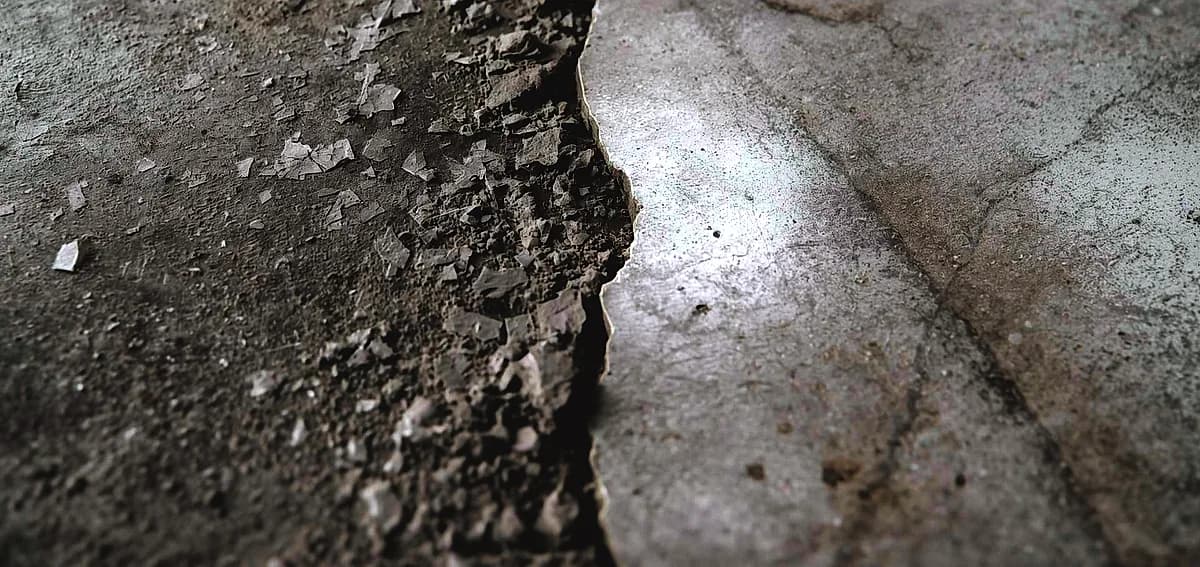
Epoxy & coatings8 min read
DIY vs Professional Epoxy Flooring in Fort Lauderdale
Hardware stores heavily market all-in-one boxes that promise a showroom finish with minimal effort.
Read it
Epoxy & coatings8 min read
Can You DIY Epoxy Flooring in Miami? Pros, Cons, and Tips
Applying a durable floor finish in a tropical or highly humid climate presents unique environmental challenges.
Read it
Epoxy & coatings7 min read
DIY Epoxy Flooring in South Florida: Is It Worth the Risk?
However, these products generally contain high levels of water or solvents to extend their pot life.
Read it
Tell us about the floor
Tell us the space and roughly how big it is.We come back with what it would cost and when we could start.
Prefer to talk? Call +1 844-876-5474
- Leads@
nationalconcretepolishing.net - 2200 NW 32nd St #600,
Pompano Beach, FL 33069 Mon to Fri, 9:00 to 5:30