
The NCP blog
Strategic Timing: When Pompano Beach Seasonal Businesses Should Schedule Floor Renovations
Epoxy & coatings8 min read
Pompano Beach operates on a highly predictable economic cycle driven by seasonal tourism and winter residents.
The optimal time for Pompano Beach seasonal businesses to schedule commercial floor renovations is between May and early October. This strategic five-month window leverages the natural drop in tourist traffic, allowing facility managers to complete extensive surface preparation, coating application, and chemical curing without disrupting peak revenue-generating months. By planning upgrades during the off-season, businesses protect their operational income while ensuring environmental conditions are professionally managed for long-lasting flooring performance.
The 2026 Economic Rhythm of Pompano Beach Businesses
Pompano Beach operates on a highly predictable economic cycle driven by seasonal tourism and winter residents. The peak season, running from November through April, brings a massive influx of visitors escaping colder northern climates. According to 2026 data from Florida tourism research, hotel occupancy rates in Broward County frequently surpass 85 percent during these peak months. For many local establishments, this six-month window generates upwards of 60 percent of their total annual revenue.
Conversely, the off-season spanning May through October presents a distinct operational lull. While summer brings higher humidity and frequent afternoon thunderstorms, foot traffic decreases substantially. This seasonal rhythm creates a natural, low-risk window for facility improvements. Attempting major renovations during peak season not only disrupts customer flow but can result in severe financial penalties due to forced closures.
“Scheduling your facility upgrades during the summer lull isn’t just about convenience; it’s a critical financial strategy to protect your peak-season revenue,” explains Sarah Jenkins, Director of Commercial Operations at the South Florida Business Bureau. “A one-week closure in September might cost a fraction of what a two-day closure in February would cost a beachfront restaurant.”
How Environmental Factors Dictate Floor Coating Success
Commercial floor coating installation is fundamentally a chemical process that responds directly to environmental conditions. Temperature, ambient moisture, and concrete substrate conditions dictate how polymer coatings bond, cure, and perform over their projected 15-year lifespan.
Temperature and Curing Dynamics
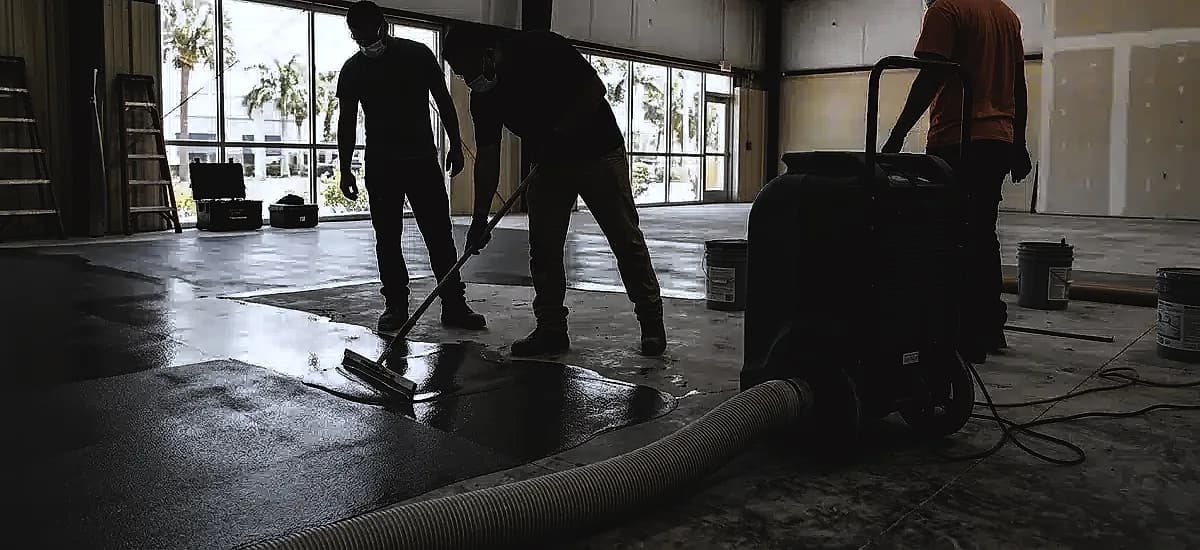
Most industrial resin systems require concrete substrate temperatures between 55°F and 85°F for proper cross-linking and adhesion. While South Florida rarely dips below this range, the intense summer heat can drastically accelerate curing times. This reduced “pot life” requires experienced technicians to adjust their application techniques, often working in smaller sections or utilizing specialized slow-cure formulations. Industry standards dictate that the substrate temperature must remain at least 5°F above the dew point throughout the entire installation process to prevent invisible moisture barriers from forming.
Moisture Mitigation in South Florida
Humidity is the primary adversary of successful floor coatings. Relative humidity below 85 percent provides the optimal microclimate for resinous flooring installation. When moisture levels exceed this threshold, the risk of catastrophic adhesion failure increases exponentially. High humidity can also cause a cloudy, defective finish or a waxy surface layer known as amine blush.
To combat this, professionals utilize industrial dehumidification and climate control systems. “When relative humidity exceeds 85 percent, the risk of amine blush and adhesion failure skyrockets. We rely on industrial dehumidification to control the microclimate, regardless of the thunderstorms outside,” notes Dr. Marcus Thorne, Materials Scientist at the Polymer Coating Institute.
Month-by-Month Guide to Scheduling Facility Improvements
Selecting the exact month for your project requires balancing weather patterns, business traffic, and contractor availability. The following table outlines the pros and cons of scheduling during different phases of the off-season.
| Timeframe | Advantages | Considerations |
|---|---|---|
| May – June | Tourist crowds have departed; weather is relatively consistent before peak storm season. | Requires early planning during the busy end-of-season wrap-up. |
| July – August | Absolute lowest point for foot traffic; ideal for complete facility shutdowns. | Peak heat and humidity require strict interior climate control and winter floor coating advantages are lost. |
| September – Early October | Optimal balance of decreasing humidity and high contractor availability. | Must be completed before late October when early snowbirds begin arriving. |
Industry-Specific Timelines for Commercial Renovations
Different business models require tailored approaches to facility downtime. Understanding your specific industry requirements ensures compliance and minimizes operational friction.
Restaurants and Food Service
Food service establishments require seamless, antimicrobial flooring that meets stringent health department standards. The walking-working surfaces standards mandated by OSHA require commercial floors to remain clean, dry, and hazard-free. Restaurants should schedule installations during their slowest weeks, typically late August through mid-September. This timing allows for a complete chemical cure before fall menu launches and the heavy foot traffic of holiday dining.
Retail Stores and Boutiques
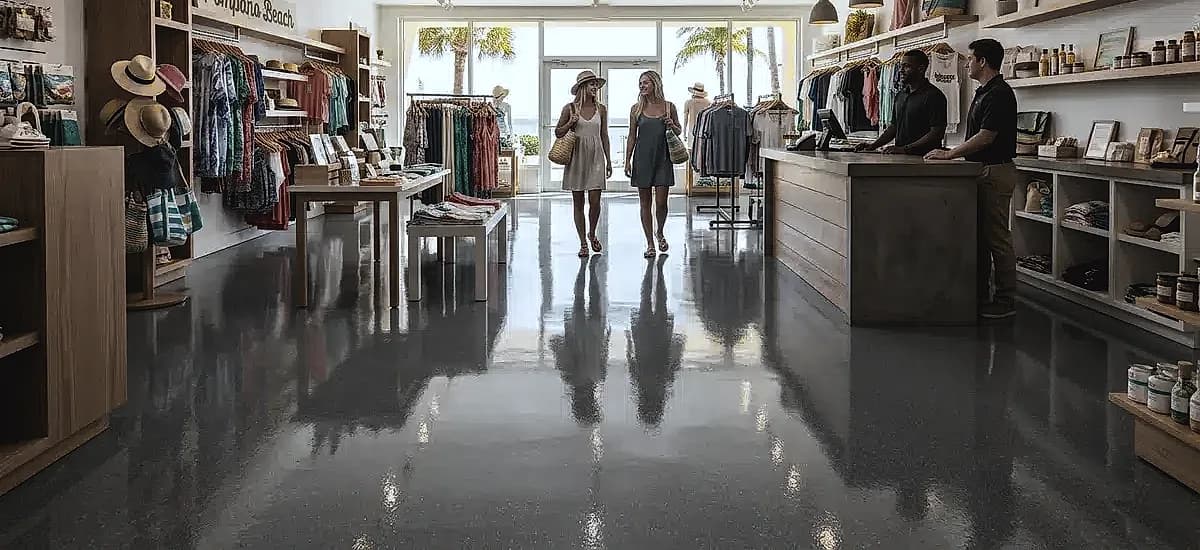
Retail businesses serving seasonal residents should aim to complete all floor work by late October. This provides a crucial buffer for restocking inventory, building new displays, and conducting staff training before the November rush. For larger showrooms that cannot afford a complete shutdown, implementing phased floor installation strategies allows the business to remain partially open while sections of the floor are upgraded sequentially.
Hospitality and Lodging
Hotels, resorts, and vacation rentals face tighter scheduling windows since they maintain a baseline of year-round visitors. Facility managers must carefully coordinate upgrades in high-traffic areas like lobbies and corridors. When upgrading these spaces, it is also critical to ensure ADA floor slope compliance to prevent liability issues. Phased installations during the lowest occupancy weeks in September are highly recommended.
Marine and Outdoor Recreation
Boat dealerships, dive centers, and outdoor equipment retailers require heavy-duty, chemical-resistant coatings capable of withstanding saltwater, motor oils, and intense UV exposure. Scheduling these commercial flooring solutions in September perfectly bridges the gap between the end of summer boating activity and the peak of the winter fishing season.
The 5-Step Commercial Floor Installation Process
Understanding the timeline of a professional installation helps business owners set realistic expectations. A standard commercial project typically requires 7 to 14 days and follows a strict sequence of events.
- Assessment and Moisture Testing (Days 1-2): Professionals evaluate the existing slab. This includes calcium chloride tests to measure moisture vapor emission rates and concrete hardness testing to determine the appropriate preparation method.
- Mechanical Surface Preparation (Days 3-5): Using heavy machinery like planetary grinders or shot blasters, technicians remove old coatings and open the concrete pores. The concrete surface profile standards dictate the exact texture required for the specific resin being applied.
- Repairs and Priming (Days 6-7): Cracks, spalls, and joints are filled with polyurea or epoxy patching compounds. A moisture-mitigating primer is then applied to seal the slab and create a bonding layer.
- Coating Application (Days 8-10): The base coat, broadcast media (like quartz or vinyl flakes), and UV-stable topcoats are applied. Each layer requires specific curing intervals before the next can be laid down.
- Curing and Return to Service (Days 11-14): While light foot traffic may be permitted after 24 to 72 hours, it is vital to verify your floor coating is fully cured before moving heavy equipment. Full chemical resistance typically takes up to 28 days.
Avoiding Costly Scheduling Mistakes
Even with a solid understanding of the seasonal timeline, property managers frequently make errors that compromise their projects. The most common mistake is waiting too long to initiate the process.
“Property managers who wait until October to book their renovations often find themselves pushed into November, directly interfering with their holiday traffic,” warns David Chen, Lead Project Estimator at Coastal Facility Management. “You need to initiate contact at least 4 to 6 weeks before your desired start date.”
Another critical error is underestimating the project duration by attempting to rush the preparation phase. Proper substrate preparation accounts for roughly 70 percent of a coating’s long-term success. “Rushing this phase to reopen faster is a guaranteed path to premature failure, leading to peeling floors and a total redo the following year,” states Elena Rodriguez, Senior Inspector for the Florida Commercial Flooring Association.
Finally, business owners must account for the concrete polishing timeline and weather contingencies. While interior work proceeds regardless of rain, material deliveries and exterior staging can be delayed by tropical weather systems common in late summer.
Frequently Asked Questions
What is the absolute best month to install commercial flooring in Pompano Beach?
September offers the optimal combination of lower humidity, decreased tourist traffic, and sufficient time before the peak season begins. Late August also works exceptionally well for businesses wanting an extra time cushion before their fall inventory arrives.
Can floor coatings be successfully installed during Florida’s rainy season?
Yes, interior installations can proceed year-round provided there is proper climate control. Professional contractors utilize heavy-duty dehumidification equipment to maintain relative humidity below 85 percent, completely independent of the outdoor weather conditions.
How long must my business close for a complete floor coating installation?
Most commercial projects require 5 to 10 business days from initial preparation through the return to full service. Some advanced polyaspartic systems cure much faster than traditional resins, potentially reducing operational downtime to just 2 to 3 days.
Will the 2026 hurricane season affect my floor renovation project?
Active tropical storms may delay projects by a few days due to logistical issues with material delivery and power availability. However, professional contractors build weather contingencies into their schedules, ensuring the overall summer window still provides ample opportunity for completion.
How far in advance should I schedule with a commercial flooring contractor?
You should contact flooring contractors 4 to 8 weeks before your desired installation date. Highly sought-after periods like September often book up quickly as property managers rush to complete improvements before the snowbirds arrive.
Does commercial floor coating installation require permits in Pompano Beach?
Commercial flooring work may require specific municipal permits depending on the scope of the renovation and whether structural changes are involved. A reputable contractor will handle all permit requirements and inspections as part of their comprehensive project management.
Conclusion
Timing your facility upgrades correctly is a fundamental aspect of running a successful seasonal business in Pompano Beach. By scheduling your commercial floor renovations between May and October, you capitalize on reduced foot traffic, mitigate the risks of peak-season closures, and provide contractors with the necessary time to execute flawless surface preparation and moisture control. Whether you manage a beachfront restaurant, a boutique retail space, or a high-traffic hotel lobby, proactive scheduling ensures your property looks immaculate and performs safely when the 2026 winter crowds return.
Ready to secure your spot during the optimal off-season window? Contact us today for a comprehensive facility assessment and a customized project timeline designed around your business’s unique seasonal rhythm.
Written by

Founder and CEO
Chris Lavin is an esteemed leader in concrete polishing and epoxy coatings with a distinguished 20-year career. As founder and CEO of National Concrete Polishing and owner of Xtreme Polishing Systems, he's renowned for polishing and epoxy coating more floors than anyone globally. Chris is recognized for his innovative approach and commitment to enhancing floor durability and aesthetics. His hands-on experience and technical proficiency make him a respected authority and a valuable resource in the field of floor polishing and coatings.
Same topic
Related articles
All stories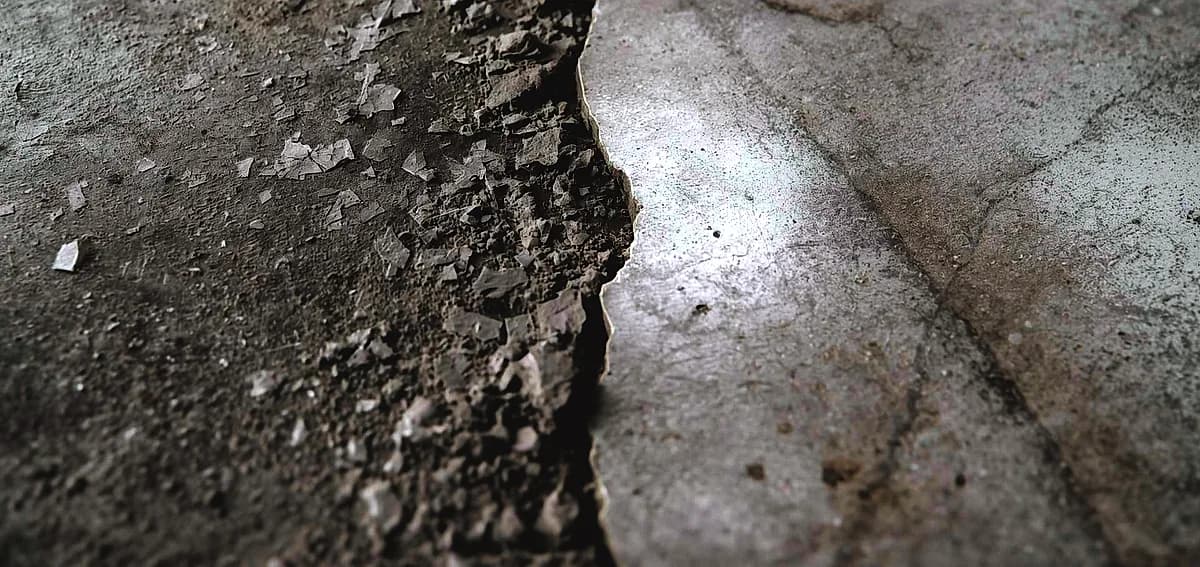
Epoxy & coatings8 min read
DIY vs Professional Epoxy Flooring in Fort Lauderdale
Hardware stores heavily market all-in-one boxes that promise a showroom finish with minimal effort.
Read it
Epoxy & coatings8 min read
Can You DIY Epoxy Flooring in Miami? Pros, Cons, and Tips
Applying a durable floor finish in a tropical or highly humid climate presents unique environmental challenges.
Read it
Epoxy & coatings7 min read
DIY Epoxy Flooring in South Florida: Is It Worth the Risk?
However, these products generally contain high levels of water or solvents to extend their pot life.
Read it
Tell us about the floor
Tell us the space and roughly how big it is.We come back with what it would cost and when we could start.
Prefer to talk? Call +1 844-876-5474
- Leads@
nationalconcretepolishing.net - 2200 NW 32nd St #600,
Pompano Beach, FL 33069 Mon to Fri, 9:00 to 5:30