
The NCP blog
Polished Concrete vs Stained Concrete: Which is Right for Your Project?
Polished concrete15 min read
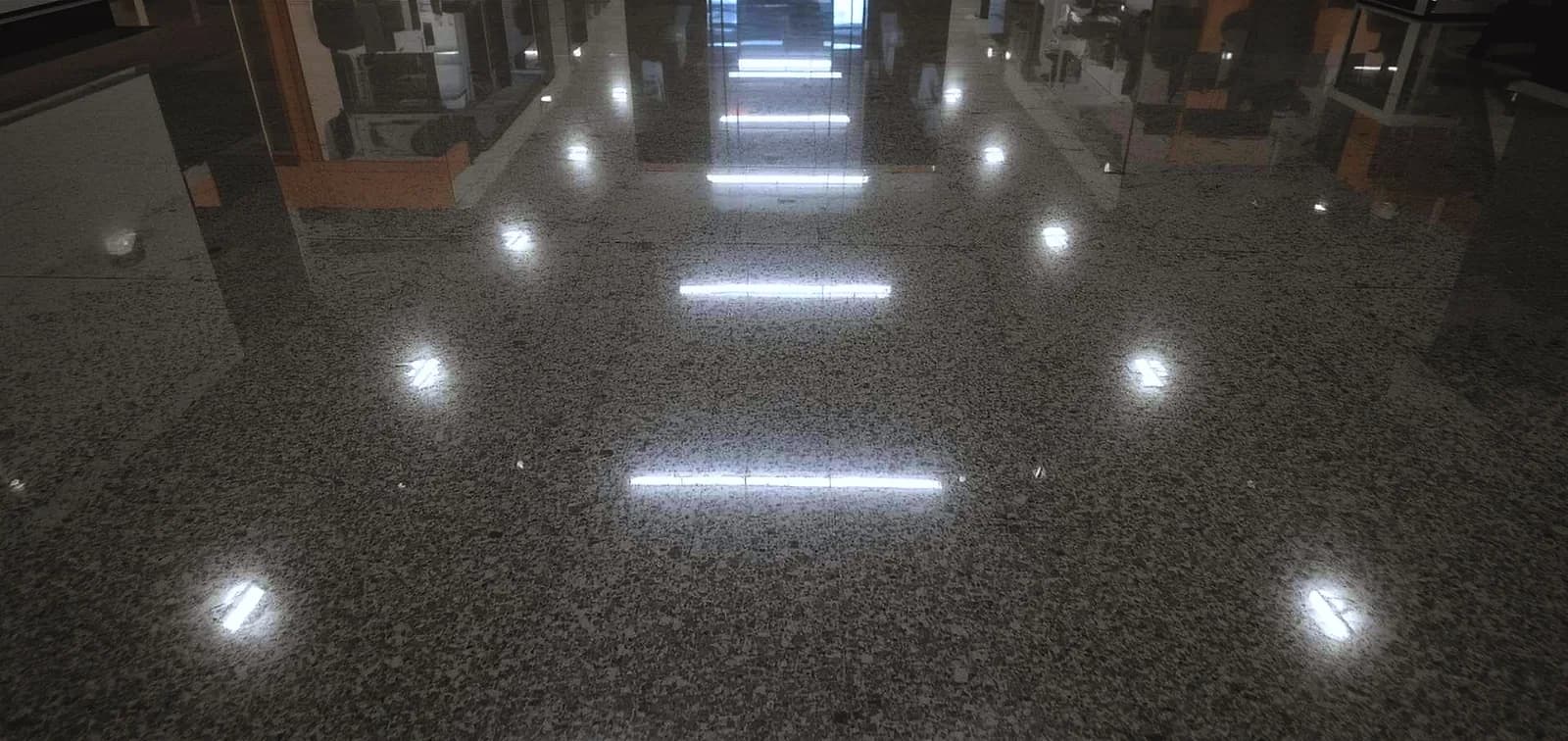
Polished and stained concrete both turn plain slabs into durable surfaces, but through very different processes.
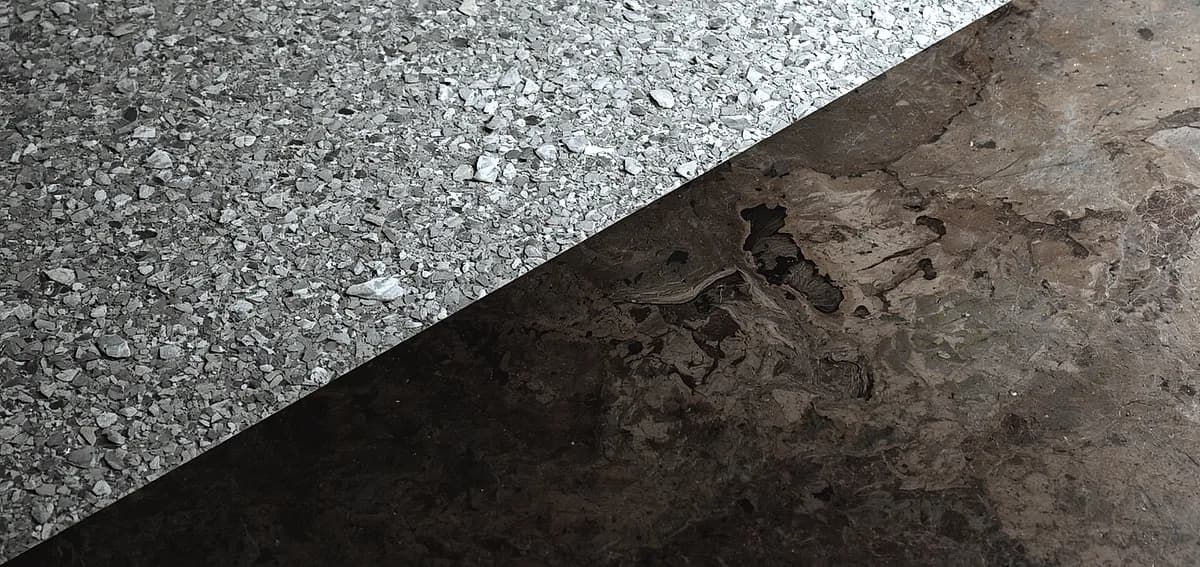
Choosing between polished concrete and stained concrete represents one of the most important decisions in your flooring project. Both finishes transform ordinary concrete slabs into attractive, durable surfaces, but they achieve dramatically different results through entirely different processes. Polished concrete uses mechanical grinding to create a smooth, reflective surface that exposes aggregates and develops a high-gloss shine. Stained concrete applies chemical or water-based colorants that penetrate the surface to create rich, variegated earth tones or vibrant custom colors.
The choice between these two approaches affects everything from upfront costs and long-term maintenance to aesthetic possibilities and performance characteristics. Polished concrete flooring typically costs $5-8 more per square foot but offers superior durability and virtually maintenance-free performance for decades. Stained concrete provides lower initial investment with greater color control but requires protective sealers that need periodic reapplication to maintain appearance and stain resistance.
Understanding the fundamental differences between these finishes helps you make the right choice for your specific application, whether you’re planning a commercial warehouse in Miami, a retail showroom in Fort Lauderdale, or a residential space in Pompano Beach. This comprehensive comparison examines process, appearance, cost, durability, maintenance, and ideal applications to guide your flooring decision.
Understanding Polished Concrete
The Mechanical Polishing Process
Polished concrete achieves its finish through a multi-step mechanical grinding process using progressively finer diamond abrasives. Contractors start with coarse-grit diamonds (30-40 grit) to remove surface imperfections, coatings, and laitance while exposing aggregate to the desired depth. Each successive grinding step uses finer diamonds (80, 150, 400, 800, 1500, 3000 grit) to refine the surface, removing scratches from previous steps and increasing smoothness and reflectivity.
The process typically includes densifier application after initial grinding steps to harden the concrete and fill microscopic pores, creating a denser substrate that polishes to higher clarity. This chemical densification step transforms weak, porous concrete into a solid, dust-free surface before final polishing creates the characteristic high-gloss finish. The result is essentially refined concrete—no coatings, no dyes (unless added for color), just the natural concrete slab polished smooth.
Appearance and Design Options
Polished concrete showcases the natural beauty of the concrete slab itself. The aggregate (sand, stone, glass) embedded in the concrete becomes visible depending on how deep contractors grind—a cream finish removes only the top layer showing minimal aggregate, while salt-and-pepper and full aggregate exposures reveal progressively more stone. The natural concrete color—typically gray, though influenced by cement type and aggregate—provides the base appearance.
For color customization, contractors can apply concrete dyes during the polishing process to create translucent color shifts from black to vibrant blues, greens, reds, or custom hues. Unlike stains that create variegated patterns, dyes produce uniform color changes across the entire surface. The gloss level is also customizable from matte (400 grit) to satin (800 grit) to high-gloss (3000 grit), each providing different reflectivity and visual impact suitable for various design aesthetics.
Durability and Performance Characteristics
Polished concrete ranks among the most durable flooring options available. The densification and polishing process creates a surface that resists abrasion, moisture, and chemical exposure far better than untreated concrete. In high-traffic commercial environments like warehouses and retail stores, polished floors withstand forklift traffic, constant foot traffic, and wheeled equipment without showing wear patterns that plague other flooring types.
The surface hardness increases significantly during polishing—densified and polished concrete tests 30-40% harder than untreated slabs. This hardness translates into scratch resistance, impact resistance, and longevity exceeding 20-30 years in commercial applications with proper maintenance. Unlike coated systems that wear through at the surface, polished concrete maintains performance because the finish is the concrete itself, ground and refined throughout its depth.
Maintenance Requirements and Long-Term Care
Polished concrete offers remarkably low maintenance compared to virtually all alternative flooring systems. Daily dust mopping or sweeping removes abrasive particles, while weekly or bi-weekly damp mopping with pH-neutral cleaners handles soil accumulation. No stripping, waxing, or coating reapplication is required—the maintenance that makes VCT and other flooring systems labor-intensive and expensive over their lifetime.
Periodic reapplication of densifier or guard (every 3-5 years in residential, 1-2 years in heavy commercial) can enhance stain resistance and refresh appearance, but isn’t strictly necessary for floor performance. Spills wipe away easily before they stain, though the concrete remains somewhat porous to oils and acids if left sitting for extended periods. For facilities prioritizing minimal maintenance overhead, polished concrete’s simple care routine provides significant operational savings over decades of use.
Understanding Stained Concrete
The Chemical Staining Process
Concrete staining applies chemical or water-based colorants that penetrate the concrete surface to create permanent color. Acid stains—the most traditional option—contain metallic salts dissolved in acid that react with calcium hydroxide in the concrete to produce color through a chemical reaction. This reactive process creates natural variation and mottling as the stain reacts differently with varying mineral content throughout the slab, producing organic, earth-tone colors (browns, tans, terra cottas, greens, blues).
Water-based stains use acrylic polymers and pigments that penetrate concrete pores without chemical reaction, offering broader color ranges including bright reds, yellows, and custom hues. These non-reactive stains provide more predictable, uniform color but less of the organic variation that makes acid stains distinctive. Both types penetrate surface pores rather than sitting on top like paint, making the color relatively permanent though protective sealers are required to prevent wear and fading.
Appearance and Design Possibilities
Stained concrete delivers rich, translucent color with unique variegation that cannot be replicated with paint or coatings. Acid stains create organic, mottled patterns where color intensity varies based on concrete porosity, trowel marks, and mineral content—no two installations look identical. This natural variation appeals to designers seeking one-of-a-kind floors with character and depth.
Water-based stains offer virtually unlimited color options from subtle earth tones to vibrant designer colors, with more uniform appearance than acid stains. Contractors can layer multiple stain colors, create custom patterns, incorporate stenciled designs, or combine staining with saw-cut patterns to achieve highly decorative results. The translucent nature of stains allows the concrete texture to show through, maintaining a natural stone appearance that solid coatings cannot match.
Sealer Requirements and Protection
Unlike polished concrete that derives durability from the concrete itself, stained concrete requires protective sealers to maintain appearance and performance. The staining process opens concrete pores and the acid etches the surface (in the case of acid stains), creating a weakened surface layer that would wear away and allow color to walk off without sealer protection. Multiple coats of high-solids sealer (minimum two coats, preferably three) fill the pores and create a protective barrier.
Sealers come in various types—acrylic, epoxy, polyurethane, polyaspartic—each offering different levels of protection, gloss, and durability. Higher-quality sealers cost more but last longer and provide better stain resistance. In demanding environments like restaurant dining rooms or commercial kitchens, additional sacrificial wax coats (three or more) protect the sealer itself, allowing periodic wax stripping and reapplication without disturbing the underlying stain and sealer system.
Durability and Maintenance Considerations
Stained concrete’s durability depends heavily on sealer quality and maintenance. Well-sealed stained floors resist staining from spills and withstand moderate traffic effectively, but the sealer layer is the weak point—it can scratch, wear thin in traffic patterns, and degrade from UV exposure or harsh cleaning chemicals. High-traffic areas may show wear within 2-3 years and need sealer touch-up or reapplication, while low-traffic residential applications can last 5-7 years between resealing.
Maintenance requires more care than polished concrete. Harsh cleaners, abrasive scrubbing, and acidic spills can damage sealers and compromise protection. Regular sweeping and pH-neutral mopping maintain appearance, but the sealer’s gloss finish shows scratches more readily than polished concrete’s matte-to-satin finishes. Long-term maintenance includes periodic sealer reapplication—a significant recurring cost that polished concrete largely avoids.
Cost Comparison: Polished vs. Stained
Initial Installation Costs
Polished concrete typically costs $3-12 per square foot installed depending on the level of polish (grit level achieved), aggregate exposure depth, and whether color dyes are added. Basic polishing to 400-800 grit with minimal aggregate exposure runs $3-5 per square foot, while high-gloss finishes (3000 grit) with full aggregate exposure and color dyes reach $8-12 per square foot. Large commercial projects achieve economies of scale with lower per-square-foot costs than small residential spaces.
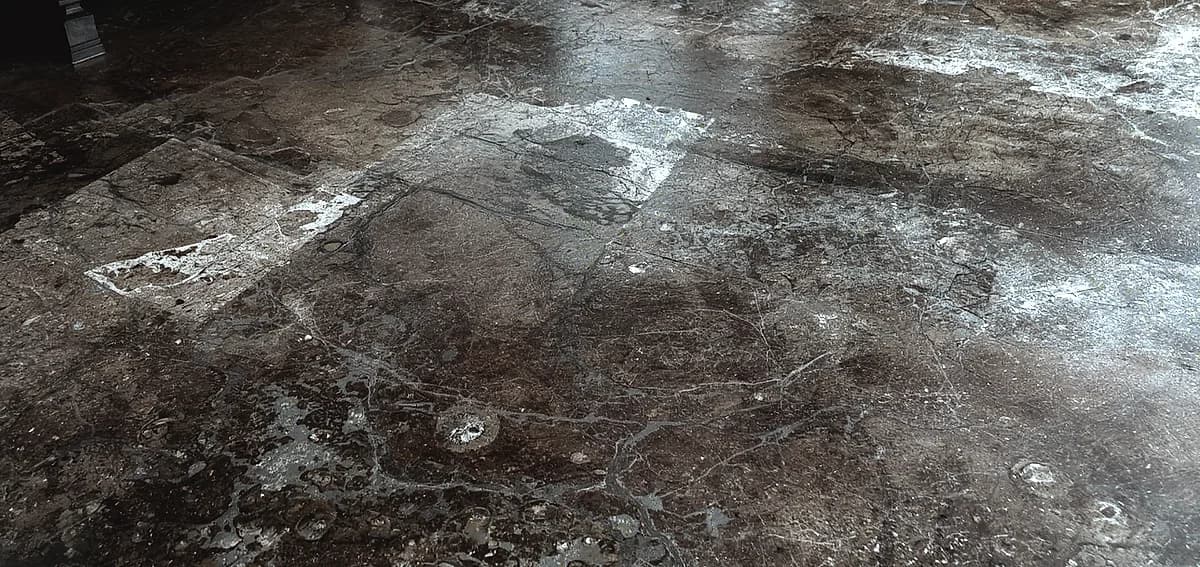
Stained concrete costs $2-10 per square foot installed depending on stain type, design complexity, and sealer quality. Basic acid stain with solid-color application and standard acrylic sealer starts around $2-4 per square foot, while complex multi-color designs, custom patterns, or premium urethane sealers reach $8-10 per square foot. Water-based stains typically cost slightly more than acid stains due to material costs and application complexity.
Long-Term Cost of Ownership
While initial costs favor stained concrete, long-term ownership costs often make polished concrete more economical. Polished floors require virtually no maintenance beyond routine cleaning—no sealer reapplication, no wax stripping, no coating replacement. Over 20 years, maintenance costs might total $500-1,000 for occasional densifier refresh and professional deep cleaning.
Stained concrete requires sealer reapplication every 3-7 years depending on traffic and wear. Professional resealing costs $1-3 per square foot each cycle. For a 1,000-square-foot space, this means $1,000-3,000 every 5 years, totaling $4,000-12,000 over 20 years plus the ongoing labor and disruption of resealing projects. When total cost of ownership (installation + 20-year maintenance) is calculated, polished concrete often proves less expensive despite higher upfront investment.
Return on Investment for Commercial Projects
Commercial facilities analyzing return on investment frequently favor polished concrete despite the $5-8 per square foot premium over stained concrete. The superior durability eliminates floor replacement cycles that other systems require every 10-15 years. A commercial epoxy floor coating might cost less initially but need replacement after 10-15 years, while polished concrete can last 30+ years with minimal intervention.
The maintenance labor savings compound dramatically over years. A facility with 10,000 square feet of flooring saves thousands annually in janitorial costs, floor maintenance supplies, and operational disruptions from refinishing projects. For retailers, restaurants, and offices, these operational savings justify the higher installation cost within 3-5 years, making polished concrete the financially prudent choice for long-term facility planning.
Durability and Performance Comparison
High-Traffic Commercial Applications
Polished concrete dramatically outperforms stained concrete in high-traffic commercial environments. Warehouses, distribution centers, manufacturing facilities, and busy retail stores subject floors to constant forklift traffic, heavy foot traffic, and abrasion that quickly wear through sealers protecting stained floors. Polished concrete’s hardened surface resists this abuse without showing traffic patterns or requiring maintenance for years.
Stained concrete works well in moderate-traffic commercial spaces like office lobbies, showrooms, or boutique retail where aesthetics matter and traffic is controlled. The sealer protects adequately in these applications, and the lower initial cost allows design budgets to stretch further. However, high-traffic zones like building entrances, checkout areas, or restaurant dining rooms will show wear requiring touch-up within 2-3 years even with quality sealers.
Residential Applications and Lifestyle Fit
For residential applications, both systems perform well with the choice largely driven by aesthetic preferences and maintenance tolerance. Polished concrete suits homeowners wanting minimal maintenance and contemporary industrial aesthetics in basements, garages, or living spaces. The natural concrete look with exposed aggregate provides understated elegance without bright colors or dramatic patterns.
Stained concrete appeals to homeowners seeking warmer earth tones, custom colors, or decorative patterns that polished concrete’s natural gray cannot provide. The translucent color and natural variation create inviting spaces in living rooms, kitchens, or outdoor patios. Residential traffic levels are low enough that sealer maintenance every 5-7 years remains manageable, and homeowners often appreciate the ability to refresh color through resealing if design preferences change.
Moisture and Chemical Resistance
Polished concrete offers good moisture resistance through densification that fills pores, though it remains somewhat permeable to water over time. Spills wipe away easily before penetration occurs, but standing water or continuous moisture exposure can eventually penetrate and cause staining or efflorescence. Chemical resistance is moderate—polished floors resist most common household and commercial chemicals but can be etched by strong acids left sitting for extended periods.
Stained concrete’s moisture and chemical resistance depends entirely on sealer quality. High-quality epoxy or polyurethane sealers create impermeable barriers that protect against water, oils, and many chemicals effectively. However, sealer damage from scratching or wear creates entry points for moisture and chemicals. In demanding environments like commercial kitchens or food processing facilities, neither system provides the chemical resistance of specialized epoxy floor coatings designed for harsh environments.
Maintenance Requirements Compared
Daily and Weekly Care Routines
Polished concrete requires simple daily dust mopping or sweeping to remove abrasive grit, plus weekly or bi-weekly damp mopping with pH-neutral cleaner and water. That’s the complete routine—no special products, no waxing, no complicated procedures. Spills wipe away with damp cloths, and the floor maintains appearance with minimal effort. This simplicity makes polished concrete ideal for facilities with limited janitorial budgets or homeowners wanting carefree flooring.
Stained concrete needs similar daily sweeping but requires more careful wet cleaning to protect sealers. Use only pH-neutral cleaners specifically approved for sealed concrete—harsh chemicals, ammonia, or acidic cleaners damage sealers and compromise protection. Spills need immediate attention to prevent penetrating damaged sealer areas. The cleaning routine itself isn’t difficult, but it demands more product awareness and care to avoid inadvertently damaging the protective sealer system.
Long-Term Maintenance and Refinishing
Polished concrete’s long-term maintenance consists primarily of optional densifier reapplication every 3-5 years (residential) or 1-2 years (heavy commercial) to maintain stain resistance and refresh appearance. Some facilities operate 10+ years without reapplication in low-traffic areas. If the gloss dulls in traffic lanes, light buffing with finer diamond pads restores shine without full repolishing—a relatively inexpensive refresh.
Stained concrete requires sealer reapplication every 3-7 years as the protective coating wears thin. This process involves cleaning, light abrading or chemical stripping to remove old sealer, and applying fresh sealer coats—a significant project requiring floor clearing and 24-72 hour cure time. Waxed floors need periodic stripping and rewaxing every 6-12 months. These recurring maintenance cycles create ongoing costs and operational disruptions that polished concrete largely avoids.
Cleaning Product Compatibility
Polished concrete tolerates most common cleaning products except strong acids or harsh degreasers that can etch the surface. Standard pH-neutral floor cleaners, mild dish soap, or dedicated concrete cleaners work safely. The robust nature of the mechanically hardened surface forgives cleaning mistakes that would damage more sensitive systems.
Stained concrete requires careful cleaner selection to avoid damaging sealers. Ammonia, bleach, citrus cleaners, and acidic products can cloud, discolor, or break down sealer coatings. Even seemingly mild cleaners with high or low pH can cause problems over time. This sensitivity requires training janitorial staff and homeowners on approved products—a source of ongoing education and potential mistakes that polished concrete’s forgiving nature eliminates.
Ideal Applications for Each System
When Polished Concrete Makes Sense
Polished concrete excels in:
- High-traffic commercial spaces: Retail stores, shopping centers, offices, warehouses, distribution centers
- Industrial facilities: Manufacturing plants, auto shops, aircraft hangars needing durable, dust-free floors
- Institutional buildings: Schools, hospitals, airports, municipal buildings with limited maintenance budgets
- Modern residential spaces: Contemporary homes valuing industrial aesthetics and minimal maintenance
- Sustainable building projects: LEED certification and green building initiatives favoring low-VOC, long-life flooring
The mechanical durability, low maintenance, and contemporary appearance make polished concrete the smart choice for facilities prioritizing performance and lifecycle cost over decorative possibilities.
When Stained Concrete Makes Sense
Stained concrete works best for:
- Decorative residential spaces: Living rooms, dining rooms, kitchens, patios wanting warm earth tones or custom colors
- Boutique retail and hospitality: Restaurants, cafes, galleries, spas where decorative appearance drives customer experience
- Outdoor living spaces: Patios, pool decks, outdoor kitchens wanting color without slippery high-gloss finishes
- Historical renovations: Period buildings where natural-looking color complements architecture
- Budget-conscious projects: Initial cost constraints where aesthetic priorities justify future maintenance investment
When decorative appearance, warm colors, or budget limitations are primary drivers, stained concrete delivers beautiful results that polished concrete’s natural gray cannot match.
Combining Both: Stained and Polished Concrete
Many projects combine staining (or dyeing) with polishing to achieve colored floors with mechanical durability. Contractors apply concrete dyes during the polishing process, then continue polishing to develop gloss and hardness. This hybrid approach costs more than either system alone ($8-15 per square foot) but delivers custom color with polished concrete’s superior performance characteristics.
The color sits within the densified, polished concrete rather than relying on surface sealers for protection, creating more durable colored floors than traditional stained concrete. For commercial retail spaces or high-end residential projects wanting both aesthetics and performance, this combined approach offers the best of both systems despite the premium cost.
Frequently Asked Questions
What’s the main difference between polished and stained concrete?
Polished concrete is a mechanical grinding process creating smooth, reflective surfaces. Stained concrete applies chemical or water-based colorants for decorative color. Polishing creates durability through concrete refinement; staining provides color through penetrating dyes or reactive stains.
Which is more expensive: polished or stained concrete?
Polished concrete typically costs $5-8 more per square foot initially ($3-12 vs $2-10), but lower long-term maintenance often makes it less expensive over 20-year ownership when resealing costs are included.
Which lasts longer: polished or stained concrete?
Polished concrete lasts 20-30+ years with minimal maintenance. Stained concrete lasts similarly long, but sealers need reapplication every 3-7 years to maintain appearance and protection. The concrete itself is permanent in both cases.
Is polished concrete more durable than stained concrete?
Yes, polished concrete offers superior durability in high-traffic environments. The mechanical hardening creates scratch-resistant, wear-resistant surfaces. Stained concrete’s durability depends on sealer quality, which wears faster than polished surfaces.
Can you stain polished concrete or polish stained concrete?
Yes, contractors can apply concrete dyes during polishing for colored polished floors. You can also polish over existing stained concrete, though old sealers must be removed first through grinding—essentially starting the polishing process from scratch.
Which requires less maintenance: polished or stained?
Polished concrete requires significantly less maintenance—just sweeping and occasional mopping. Stained concrete needs similar cleaning plus periodic sealer reapplication every 3-7 years, making it more maintenance-intensive long-term.
Does stained concrete need sealer?
Yes, stained concrete requires multiple coats of high-quality sealer to protect the color and concrete surface. Without sealer, the color would wear away and the etched surface would deteriorate rapidly from traffic.
Can polished concrete be any color?
Natural polished concrete is gray with aggregate colors visible. Concrete dyes applied during polishing create uniform custom colors (black, brown, red, blue, green). The color options are more limited and uniform than stained concrete’s variegated earth tones.
Which is better for outdoor applications?
Stained concrete with UV-stable sealer works well outdoors for patios and decorative areas. Polished concrete is less common outdoors as gloss finishes become slippery when wet, though lower-grit matte finishes can work for covered outdoor spaces.
Is polished concrete slippery?
High-gloss polished concrete can be slippery when wet. Lower-grit finishes (400-800 grit) provide better traction. Stained concrete’s slip resistance depends on sealer texture—matte sealers offer more grip than high-gloss options.
Conclusion
The choice between polished concrete and stained concrete ultimately depends on your priorities: durability and low maintenance versus decorative appearance and color options. Polished concrete delivers unmatched performance for high-traffic commercial environments where long-term cost of ownership and minimal maintenance justify the higher initial investment. Its contemporary industrial aesthetic and natural gray tones suit modern design sensibilities while providing 20-30+ years of virtually carefree service.
Stained concrete offers the color variety, warmth, and decorative possibilities that polished concrete cannot match. For residential spaces, boutique commercial applications, and projects where appearance drives value more than extreme durability, stained concrete’s earth tones and custom colors create inviting environments. The trade-off is more intensive maintenance including periodic sealer reapplication that adds long-term cost and effort.
For many projects, the question isn’t which system is “better” but which better serves your specific needs. High-traffic commercial facilities benefit from polished concrete’s performance advantages, while decorative residential and hospitality spaces thrive with stained concrete’s aesthetic versatility. Understanding these differences ensures your flooring choice delivers the appearance, performance, and value your project requires.
Written by

Founder and CEO
Chris Lavin is an esteemed leader in concrete polishing and epoxy coatings with a distinguished 20-year career. As founder and CEO of National Concrete Polishing and owner of Xtreme Polishing Systems, he's renowned for polishing and epoxy coating more floors than anyone globally. Chris is recognized for his innovative approach and commitment to enhancing floor durability and aesthetics. His hands-on experience and technical proficiency make him a respected authority and a valuable resource in the field of floor polishing and coatings.
Same topic
Related articles
All stories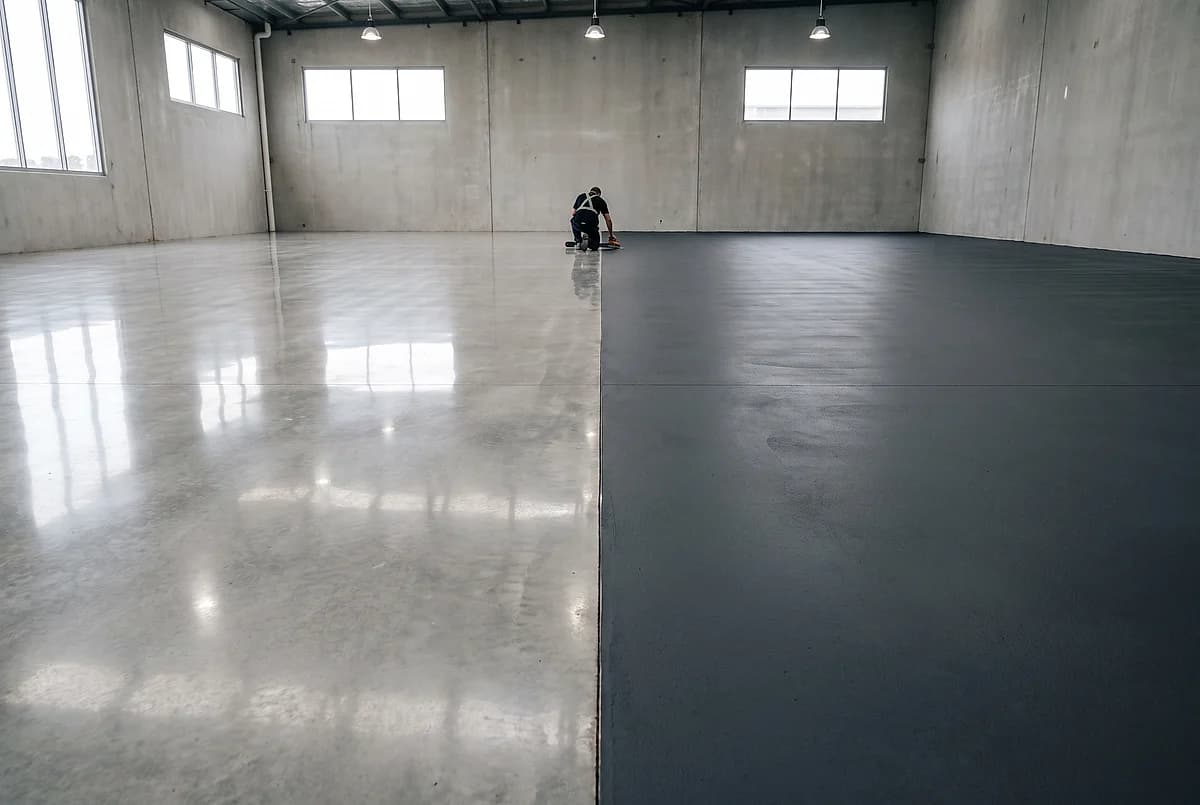
Polished concrete11 min read
Polished Concrete vs Epoxy Coatings: Which Floor Is Right for Your Space?
Two systems, two price curves, one slab. What each one costs to install and to keep, and which spaces each one actually suits.
Read it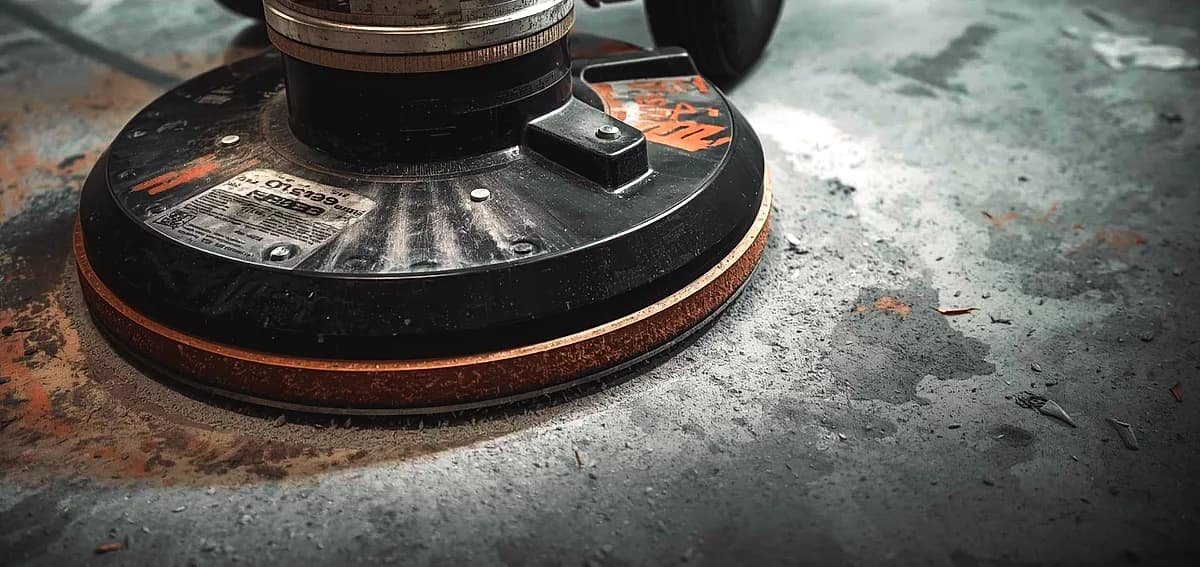
Polished concrete8 min read
What to Know Before Polishing Your Existing Concrete Slab
Before any mechanical refinement can begin, a thorough evaluation of the current foundation is required.
Read it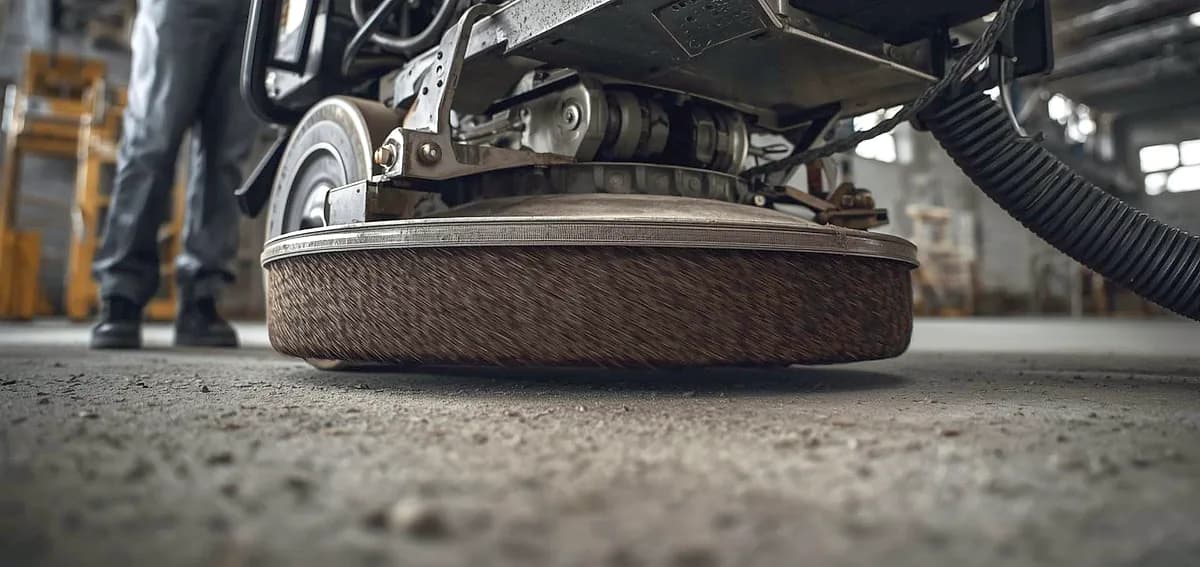
Polished concrete8 min read
Is Polished Concrete Worth the Investment for Miami Properties?
It is essential to distinguish between a simple topical seal and mechanically refined concrete.
Read it
Tell us about the floor
Tell us the space and roughly how big it is.We come back with what it would cost and when we could start.
Prefer to talk? Call +1 844-876-5474
- Leads@
nationalconcretepolishing.net - 2200 NW 32nd St #600,
Pompano Beach, FL 33069 Mon to Fri, 9:00 to 5:30